
By Sonia Laughland
While the legislature burns through another session arguing about the budget, a few thousand Alaskans will spend Memorial Day weekend doing something more useful. They will be learning to feed themselves.
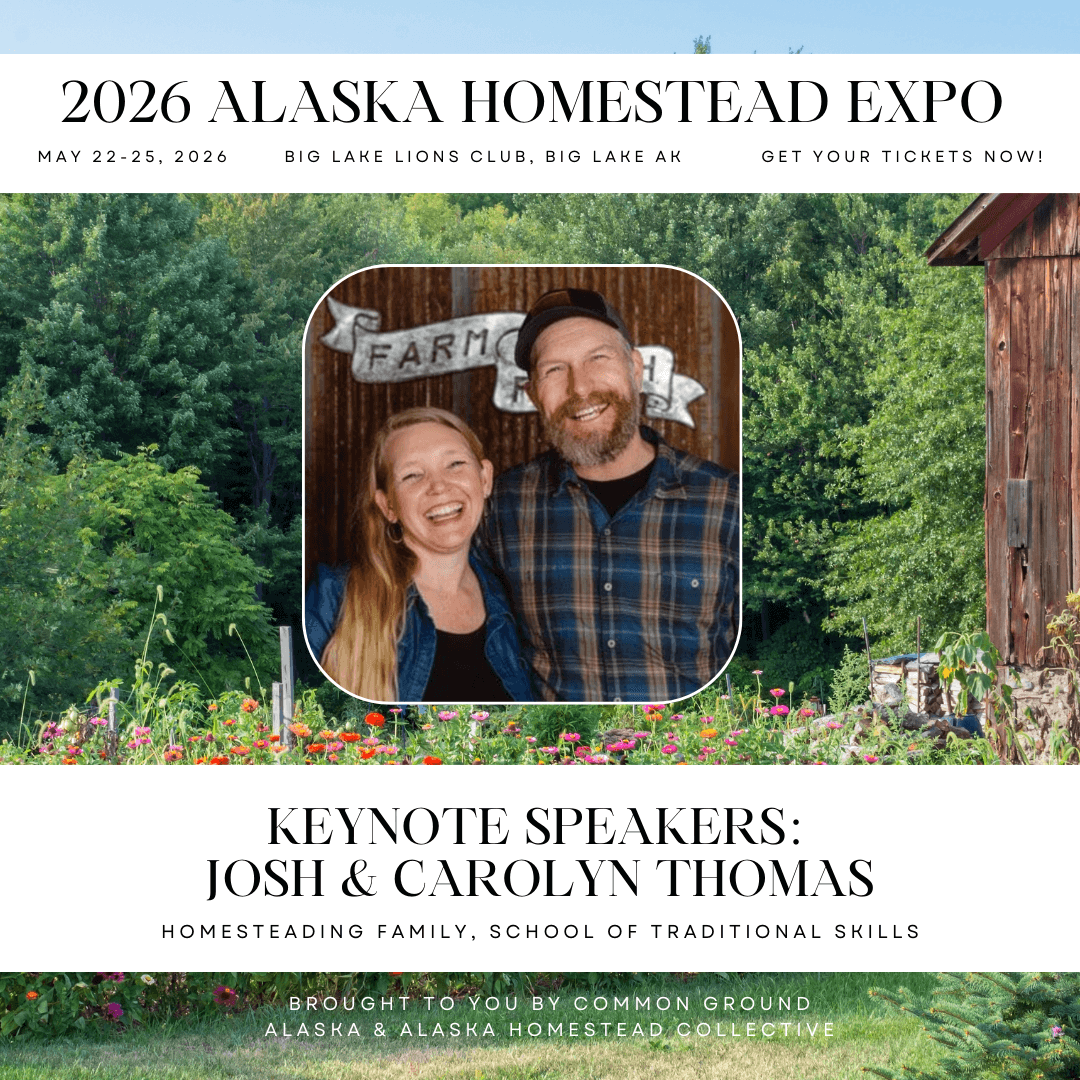
The 3rd Annual Alaska Homestead Expo & Marketplace runs May 22–23 at the Big Lake Lions Club, organized by Common Ground Alaska. Common Ground Alaska is a teaching farmstead that has been quietly building something the State can’t seem to figure out— a community of Alaskans committed to real food, practical skills, and genuine independence.
No task force needed. No line item. Just people showing up.
What’s Actually There
Two full days in person. Topics running from whole-cow butchery and iron forging to food fermentation, medicinal herbs, livestock care, and off-grid systems. Additional classes continuing live via weekly Zoom sessions through the summer. The keynote speakers are Josh and Carolyn Thomas of Homesteading Family, nationally known educators who have built a following teaching families how to grow, preserve, and live off the land.

But the backbone of this event is the Alaskan instructors. Dozens of them— people who have figured out how to make homesteading work in this specific place, with its 90-day growing seasons, its brutal winters, and its supply chains that could snap without warning. That knowledge doesn’t come from a YouTube channel. It comes from years of doing it here.
There’s also a wide selection of vendors at the marketplace featuring Alaska makers, growers, and small businesses— the kind that don’t need a subsidy to exist.
Why It Matters
The vast majority of food Alaskans eat is imported— a figure commonly cited at 95 percent, and one Governor Dunleavy used when signing the Administrative Order creating the state’s Office of Food Security. The number has been around since the late 1970s and experts debate the exact methodology, but nobody seriously argues the dependency isn’t real. That number does not get talked about much in Juneau, but the families heading to Big Lake this month know it well. They’re not waiting on a food security study. They’re building root cellars, freeze-drying harvests, making pasta from scratch, and growing their own herbal medicine cabinet.
The Expo added a dedicated family learning tent this year for exactly that reason: because this kind of knowledge transfers through practice, not curriculum.
The Details
This year’s condensed format is a direct response to attendee feedback. Organizers heard that travel is getting harder for many Alaskans, so they tightened the in-person schedule to two focused days during which you can hit the marketplace, attend sessions, and view demonstrations. Then you get virtual access to all the recordings from the weekend and additional virtual sessions extending into the summer, so you don’t have to miss a thing.
In-person/hybrid ticket (Friday & Saturday plus all Zoom sessions): $85
Virtual ticket (livestream and Zoom only): $45
Marketplace-only: $5
Tickets and full schedule can be found at commongroundalaska.com.
The Big Lake Lions Club is about 45 minutes from Anchorage. Worth the drive — and if you can’t make it in person, the virtual option means there’s no excuse to miss it!
If you are just starting out and think this event is only for people with a barn and five acres— it’s not. Half the people in attendance will be exactly where you are, and that’s the whole point.


