After Governor Bill Sheffield and Justice Jay Rabinowitz combined to gerrymander me out of my State Senate seat, I ran for the State House in 1984, hoping to figure out a way to get revenge.
I got elected, but the House Republican minority of the 14th Alaska Legislature had around 14 members, and we were completely ineffective.
Sitka’s Rep. Ben Grussendorf was the Democratic Speaker, but he was only a figurehead. The power in the House was Finance Chair Al Adams of Kotzebue.
In the 13th Legislature, Al had been Finance Committee chair in a Republican organization. R’s and D’s didn’t mean anything to Al. He was in Juneau for his people, the Alaska Natives. He led the six members of the Bush Caucus, and they called the shots.
I was from South Anchorage, originally from California, and I didn’t have any experience with Alaska Natives. I quickly learned that they didn’t allow personal ambition or vanity to interfere with what was good for the group. They were communal, and Al was a prime example.
He was a brilliant guy, and he worked his butt off. He never showed any ego, and was as mild mannered and kind as a guy could be. Everybody loved and respected Al. When I left the Legislature I was proud to call him a friend.
Right now the Alaska House is adrift, with no one able to form a majority organization. But there apparently is one legislator who has the potential to bring people together – Josiah Patkotak from the North Slope.
Al Adams didn’t just serve the Native people of Alaska. He served the whole state. In his spirit, perhaps Josiah should step forward and take a leadership role. At least for the next two years.
I never got my revenge on Jay Rabinowitz, but I played a significant role in taking Bill Sheffield down. Day after day I raised hell on the House floor, demanding the appointment of a special prosecutor to investigate his corruption. His Attorney General, Norm Gorsuch, was an honorable guy, and he knew I was right under the law. When he did as I was demanding, and appointed Dan Hickey, the die was cast. We almost impeached Sheffield, and he was resoundingly defeated in the 1986 Democratic primary.
Identity Inc, an Anchorage-based advocacy group for those with alternative gender and sexual preferences, is encouraging children to get in touch with the organization if the children want help getting puberty blocking chemical treatments. In a social media post, Identity Inc. tells kids they will be put in contact with the Rainbow Youth Project USA, which helps children get the chemical treatments that are the first step in transgenderism. Once children block their progress through puberty by using hormones, they can then later get surgically castrated, have their breasts removed, and get other surgeries to change their appearance so they look more like the opposite gender.
Boys who take these drugs can force their voices to remain at a higher range and they may be able to prevent facial and chest hair from appearing. For girls, they can prevent the onset of their menstrual cycle, and can slow down the growth of breasts. Children who are enticed to go this route face a lifetime of dependency on pharmaceuticals and many of them endure side effects in what is still uncharted and unregulated medical territory.
Rainbow Youth Project USA offers financial help for youth who wish to transition their gender appearance, which is also called “gender affirming care.”
But wait, there’s more: For those children living in states that prohibit Medicaid public funds from being used for such a purpose, the Rainbow Youth Project USA will offer help, including scheduling appointments for children with physicians who do this kind of work.
Identity Inc. offers a list of Alaska health care providers who are working in this field, which the group calls “LGBTQIA2S+ Affirming Physical Health Providers” at this link. The list of Alaska physicians includes what Identity refers to as pediatric endocrinologists, or those doctors who work with youth with hormone disorders.
Jan. 17 is the first day of the 2023 Alaska legislative session in Juneau. For Alaskans who want to travel to Juneau to speak with their lawmakers or observe proceedings, Alaska Airlines has returned with the one-time 30% discount off a 3-day advance or 7-day advance coach fare to the state capital.
The program is called Club 49, and it gives Alaskans a deal so they can get to their isolated seat of government, which has no roads in or out.
Only one discount code is issued per member of the Club 49 program, and the discount is valid between any Alaska Airlines city in Alaska except Prudhoe Bay, and does not apply to flights operated by partner carriers. Flights must be purchased and travel must be completed by May 17. Baggage is free, which means you can take your skis and head up to the local Eaglecrest ski area. Hotel rooms in Juneau can be had for under $150 a night currently.
Those who want to extend their trips to Juneau can then take advantage of a quick hop to Seattle. Today, Alaska Airlines has a one-way fare from Juneau to Seattle posted at Club 49for $80. (The Seattle Kraken hockey team plays Detroit Red Wing in Seattle on Feb. 18, the day that fare is valid.)
The Anchorage Assembly will meet Thursday to interview and vote on applicants who have filed with the Municipal Clerk’s office for the temporary District 2, Seat C, which is being vacated by Rep. Jamie Allard, whose last day on the Assembly will be Jan. 17. The Thursday meeting to interview the candidates is planned for 2-3 pm on the ground floor of the Loussac Library, with the vote taken in a special meeting to be called immediately after the interviews.
The interviews and vote should be live on the Assembly’s YouTube page.
Filing for the seat, which will be interim until April 25, closes at 5 pm on Tuesday.
Several people have filed already, including three Republicans, two no-party candidates, and one Democrat”
Scott Myers: Myers is a Republican, and a realtor from Eagle River who is also interested in the two-year seat.
Ken McCarty: McCarty is a Republican, and a retired legislator, who ran for Senate against Sen.-elect Kelly Merrick and lost in 2022.
Jason Thomas: Thomas is an undeclared candidate (no party), and is a lawyer who filed a challenge to Republican Rep. David Eastman’s ability to serve in office, thus an indication that he is a hardline liberal.
Arthur Isham: Isham, a registered nonpartisan, is the owner and principal of Aerospace Logistics Services. He was Democratic Party nominee Joe Hackenmueller’s campaign treasurer for his legislative run.
Jim Arlington: Arlington, a registered Democrat and Democratic Party State Central Committee officer, is employed by Afognak Leasing.
David Syzdek: Syzdek, a registered Republican, is a software developer. He knows code.
There may be others who file for the seat by the 5 pm deadline on Wednesday. Check back with Must Read Alaskafor updates.
There are hundreds of stretches and long lonesome miles of road in Wyoming, and not a charging station to be found.
That’s one reason the Wyoming legislature is looking at a resolution that has been introduced to phase out new electric vehicle sales by 2035 — they’re bad for the state’s economy, which is part cowboy, part oil and gas, part tourism.
“The proliferation of electric vehicles at the expense of gas-powered vehicles will have deleterious impacts on Wyoming’s communities and will be detrimental to Wyoming’s economy and the ability for the country to efficiently engage in commerce,” according to the bill. It notes that the batteries used in electric vehicles contain critical minerals, and the domestic supply of those rare earth minerals is limited and at risk for disruption. China has become the dominant supplier for the minerals needed to build electric car batteries.
What’s more, those critical minerals and spent batteries need to go somewhere when they reach the end of their useful life, and that’s a landfill nightmare. “The critical minerals used in electric batteries are not easily recyclable or disposable, meaning that municipal landfills in Wyoming and elsewhere will be required to develop practices to dispose of these minerals in a safe and responsible manner,” according to the legislation, which refers to electric cars as a “misadventure.”
Adding new power charging stations would require “massive” amounts of new power, according to the lawmakers.
While 15 other states have moved to reduce or ban gas-powered cars, the Senate resolution instructs Wyoming’s secretary of state to send a copy of SJ0004 to Gov. Gavin Newsom of California, who has been at the forefront of banning gas-powered cars since becoming governor in 2019.
The bill says that before the ban would go into effect, Wyoming residents would be encouraged to not purchase electric vehicles.
The bill has been referred to the Senate Minerals, Business & Economic Development Committee.
Scott Kendall, the lawyer who wrote Ballot Measure 2 and who was the force behind the recall attempt on Gov. Mike Dunleavy in 2019, has an idea for the Alaska House of Representatives: Expel Rep. David Eastman from the Legislature.
The Legislature, already suffering from low esteem in the public’s eye, got a lecture from Kendall on the topic this week.
In one of the many opinion pieces that Kendall routinely gets published by the Anchorage Daily News, Kendall says that Eastman is ineligible to serve, based on a court ruling by Superior Court Judge Jack McKenna. The ruling came after Wasilla liberal activist Randall Kowalke and the radical Northern Justice Project tried to convince the court that Eastman violated the “disloyalty clause” of the Alaska Constitution, due to his membership in a group called Oath Keepers.
“Specifically, Judge McKenna found two critical facts: First, that Rep. Eastman belonged to the Oath Keepers; and second, that the Oath Keepers as an organization has, through words and conduct, taken concrete action to attempt to overthrow by violence the United States government,” Kendall wrote.
Kendall is trying to get the House to do what the courts won’t do, and he is attempting to give the Legislature some cover for removing Eastman, using the Alaska Constitution as his justification: “Our disloyalty clause states: ‘”‘No person who advocates, or who aids or belongs to any party or organization or association which advocates, the overthrow by force or violence of the government of the United States or of the State shall be qualified to hold any public office of trust or profit under this constitution.'”
The McKenna ruling was clear, however, that Eastman can serve in the Legislature. He will be sworn in on Tuesday with 59 other lawmakers.
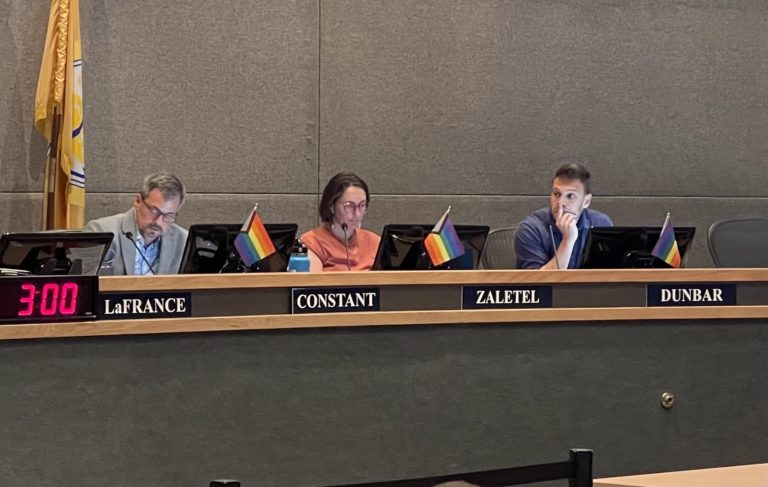
Kendall says the disloyalty clause requires Eastman to be thrown out, even though his Wasilla district re-elected him by over 51% in November, even with two other Republicans on the ballot. Eastman said, that under this type of thinking, whoever the majority party is in the Legislature can use nearly any excuse to refuse to seat any member of the minority party. Republicans could refused to seat Sen.-elect Forrest Dunbar, who swore an oath to defend the U.S. Constitution, only to be caught saying, on the public record, that the Constitution is “shot through with racism.”
According to Kendall, “the judge grafted on an additional requirement found nowhere in the constitution’s text — that Rep. Eastman somehow specifically state that he desires that the Oath Keepers succeed in their goal. This was an error. There is no specific intent language in the constitution, and this was not a case regarding potential criminal liability. This case concerned only the qualifications to serve in public office in Alaska — a privilege granted under our constitution, but not an absolute right. Because the facts at trial showed Rep. Eastman belongs to an insurrectionist organization, he is ineligible to serve.”
By public office, Kendall seems to imply he means elected office, when in fact the disloyalty clause, if interpreted to the letter, would mean a prohibition from serving in any position in government, including dog catcher.
There are hundreds of Alaskans who have signed up as members or donors to Oath Keepers, which the federal government recognizes as a charitable organization and to which it grants tax benefits as a 501(c)(3) nonprofit with the IRS. Kendall is attempting to make an organization that has legal standing with the federal government into an outlaw group, when even the federal government has not de-certified or revoked Oath Keepers’ tax status.
Kendall goes on to give the Legislature more justification for expelling Eastman: “Section Three of the 14th Amendment, which was enacted after the First Amendment, thereby limiting it, prohibits individuals who previously swore an oath to the constitution and then engaged in insurrection from serving in federal, state or local office. Added after the Civil War, it is at its core a democracy preservation provision — people who try to overthrow the government cannot be permitted to run it.”
Trying to overthrow an elected official is par for the Kendall course. He tried to run Gov. Mike Dunleavy out of office through a recall petition and he is now trying to get Anchorage Mayor Dave Bronson impeached through Kendall’s signature throat-cutting law-fare.
In 2021, the Democrats in the House attempted to do the very thing that Kendall is suggesting. Democrats attempted to remove Eastman, but their efforts failed because they could not find a legal path. Will the Legislature take Kendall’s advice and make an attempt once more?
Glacier Oil & Gas, a privately-held, independent oil and gas company with assets in Cook Inlet and the North Slope, has been sold to Pontem Energy and Sweat Equity Partners of Texas. Glacier Oil & Gas has been producing in Alaska for 25 years, and the company has produced more than 31 million barrels of oil. It may have about 9 million barrels remaining of proven reserves.
Glacier’s focus is solely on Alaska — operating both onshore and offshore oil assets in the Cook Inlet at the West McArthur River Unit as well as off the Osprey Platform at the Redoubt Unit. Additionally, Glacier operates the Badami Unit on the North Slope. Glacier operates all its fields and owns drilling, production and transportation infrastructure associated with its fields.
Pontem Energy Capital is an investment group founded by three energy operations and principal investing partners. Sweat Equity Partners is family of companies in software, clean technology, property technology and domestic energy; both are based in Texas. The president of Sweat Equity Partners, Andrew White, ran for the Democratic nomination for governor of Texas, winning a position in the May 2018 run-off election. He later promoted something he called a “handshake holiday,” in this op-ed, as part of his response to the Covid pandemic.
Republicans on the House Committee on Oversight and Accountability filed legislation Thursday to ban federal employees from helping Big Tech companies censor Americans.
Committee Chairman Member James Comer of Kentucky, House Committee on Energy and Commerce Chair Cathy McMorris Rodgers of Washington State, and House Committee on the Judiciary Chairman Jim Jordan of Ohio introduced the “Protecting Speech from Government Interference Act” (H.R. 140). It prohibits Biden Administration appointees and federal bureaucrats from using their authority or influence to promote censorship of speech or pressure social media companies to censor speech.
“The Biden Administration has eroded Americans’ First Amendment rights by bullying social media companies to censor certain views and news on their platforms. From COVID-19 to the Biden family’s suspicious business schemes, Biden Administration officials are quick to label inconvenient facts as disinformation and then pressure social media companies to suppress content on their platforms. This threatens Americans’ First Amendment rights. To protect freedom of speech, our bill stops the federal government from pressuring social media companies to silence Americans expressing views online. I look forward to House leadership bringing this bill up for a vote soon so that we can hold the Biden Administration accountable for attacking Americans’ constitutional rights,” said Rep. Comer.
Under the Biden Administration, federal officials have used their positions, influence, and resources to police and censor ordinary Americans’ speech expressed on social media platforms.
For example, former White House Press Secretary Jen Psaki used a July 2021 press briefing to call for Facebook to ban specific accounts from its platform and later in February 2022 called upon Spotify and other major tech platforms to limit what the Administration views as “mis- and dis-information.”
Reports have uncovered concerted government efforts to pressure Twitter and Facebook to go beyond their existing community rules to caveat certain posts and suspend users viewed as spreading misinformation.
Most recently, Twitter has released information revealing government pressure to censor Covid information.
“The actions taken by the Biden administration to pressure Big Tech to censor content online are an attack on our fundamental right to free speech. House Energy and Commerce Republicans have repeatedly condemned the troubling actions carried out by radical progressive administration officials to silence Americans and manipulate the truth. It’s time for this behavior to end. I am pleased to join my colleagues, Reps. Comer and Jordan, once again on this important legislation to protect Americans’ first amendment rights,”said Rep. McRogers.
“The collusion between bureaucrats and Big Tech has gone on for far too long. Government agencies shouldn’t censor the free speech of Americans. The Protecting Speech from Government Interference Act is an important first step toward transparency and accountability for Biden’s bureaucrats and Big Tech,” said Rep. Jordan.
Summary of the Protecting Speech from Government Interference Act:
Prohibition on Federal Employee Censorship: The bill prohibits federal officials from using their official authority, influence, or resources—including contracting, grantmaking, rulemaking, licensing, permitting, investigatory, or enforcement actions—to promote the censorship of lawful speech or advocate that a third party or private entity censor speech.
Penalties for Federal Employees Engaging in Censorship: The bill includes the same established penalties for federal officials who engage in political activities in their official capacity as prohibited under the Hatch Act, including disciplinary actions such as removal, reduction in pay grade, debarment from federal employment, or monetary civil penalties.
Special Prohibitions for High Level Officials: The bill further protects American’s lawful speech by prohibiting “further restricted employees”—senior federal officials whose duties and responsibilities extend beyond normal duty hours or their office—from engaging in censorship in a personal capacity. This includes any employee of the Executive Office of the President and Presidential agency appointees.
Violators could face the same penalties that government employees now face if they violate the Hatch Act, which includes fines, reduction in rank or pay, or firing. Mentioned specifically in the bill are officials at the highest levels, banning them from advocating for censorship.
Starting Tuesday, all veterans will be able to access emergency mental health care at any Veterans Administration medical facility or even at an outside clinic, for free. Department officials announced the policy Friday as part of the VA’s commitment to preventing suicide among veterans.
Starting Jan. 17, veterans in acute suicidal crisis will be able to go to any VA or non-VA health care facility for emergency health care at no cost – including inpatient or crisis residential care for up to 30 days and outpatient care for up to 90 days. Veterans do not need to be enrolled in the VA system to use this benefit, the Veterans Administration said.
This expansion increases access to acute suicide care for up to 9 million veterans who are not currently enrolled in VA.
In September, the VA released a report, showing that veteran suicides decreased in 2020 for the second year in a row, and that fewer veterans died by suicide in 2020 than in any year since 2006.
The final policy will:
Provide, pay for, or reimburse for treatment of eligible individuals’ emergency suicide care, transportation costs, and follow-up care at a VA or non-VA facility for up to 30 days of inpatient care and 90 days of outpatient care.
Make appropriate referrals for care following the period of emergency suicide care.
Determine eligibility for other VA services and benefits.
Refer eligible individuals for appropriate VA programs and benefits following the period of emergency suicide care.
Eligible individuals, regardless of VA enrollment status, are:
Veterans who were discharged or released from active duty after more than 24 months of active service under conditions other than dishonorable.
Former members of the armed forces, including reserve service members, who served more than 100 days under a combat exclusion or in support of a contingency operation either directly or by operating an unmanned aerial vehicle from another location who were discharged under conditions other than dishonorable.
Former members of the armed forces who were the victim of a physical assault of a sexual nature, a battery of a sexual nature, or sexual harassment while serving in the armed forces.