Monday, August 10, 2026
Home Blog Page 761

Alaska Airlines to hire 3,500 new workers in 2023

While Google announced it is laying off 12,000 workers worldwide, many of them on the West Coast, Alaska Airlines has announced plans to hire more than 3,500 new employees this year. That would increase the 23,000 strong Alaska Airlines workforce by over 15%.

“As we continue to grow and bring dozens of new airplanes into our fleet, we need thousands of people to join the Alaska family,” the airlines said online.

The company, based in Seattle, is looking for maintenance technicians, contact center agents, flight attendants, pilots, customer service agents, and software engineers. Most of the jobs are based in Seattle or Portland, with more up and down the West Coast.

Some of the jobs have benefits like the ability to work from home and flexibility of schedules are also available with some roles. Many of the positions do not require previous airline experience. The openings will be posted at careers.alaskaair.com throughout the year. In Alaska at present, there are various jobs open in Anchorage, Fairbanks, Sitka, King Salmon, Juneau, and Nome and nearly all of them have $1,000 or more signing bonuses.

Win Gruening: Juneau Assembly review of dock proposal raises questions of conflict

By WIN GRUENING

At a Dec. 19 Committee of the Whole work session, Juneau City Manager Rorie Watt requested the Assembly approve an appropriation for $200,000 (subsequently raised to $300,000) for a study of the optimal location of a cruise ship dock at the downtown subport property.  That request will be up for comment and approval at the next regular Juneau Assembly meeting on January 30.

The redundant study, according to the request, will aid the city in taking the planning lead for any new dock plans and is in “the best interests of the port, Juneau and the cruise ship industry.”

In fact, it’s only in the best interests of a few naysayers.

While the request is couched in general terms to advance dock planning for Juneau’s port, it’s unquestionably targeting Huna Totem Corporation’s cruise ship dock proposal (Aak’w Landing) located on the downtown waterfront.

The action raises serious questions of conflict about the city’s role in approving portions of that project. It doesn’t appear that anyone knows what the study will eventually cost or how detailed it will be. But it will likely delay development by giving city staff a vehicle to micro-manage every aspect of the private investment and perhaps eventually kill it.

It wouldn’t be the first time that has happened.  In 2019, the Archipelago Project was hailed as a model public-private partnership.  It would have transformed an unimproved gravel lot on the South Franklin waterfront into 20,000 square feet of prime commercial space. It addressed ways to manage cruise passenger congestion while adding revenue to property and sales tax coffers. Eventually it was shelved over stalled negotiations regarding the excessive number of required parking spaces. It was a giant opportunity lost and this premier downtown property still sits vacant today.

It seems as if the Assembly is more inclined to meddle rather than limit their primary role to general oversight and, in this case, approving the tidelands lease. As long as this project (or any project) complies with existing zoning regulations and municipal ordinances, the expectation should be that permits would be granted.

With this project, the perception is exactly opposite. City staff have publicly stated their preference that all docks on the waterfront be owned and controlled by the borough. 

Therein lies the conflict.  

Tourism Manager, Alix Pierce, formally recommended to the Assembly that the Manager “enter into discussions with the owners of the private docks to create a pathway to municipal management of the waterfront. Methods that should be explored include dock acquisition (friendly or even adversarial) or other creative methods.” (emphasis added).

The city is still smarting from losing the bid for the subport property in 2019 after placing dead last out of five bidders. Pressured by anti-cruise activists to reject the dock project, assembly members recently voted to delay adopting cruise ship tourism policy objectives recommended by the Visitor Industry Task Force (VITF) to allow more public comment. The report recommendations have been endlessly debated for several years and include limiting the number of large cruise ships, reducing congestion, electrifying docks, mitigating emissions, and allowing CBJ input on ship scheduling.

Delaying action, dreaming up duplicative studies, and perhaps levying unnecessary requirements that the city deems beneficial will be cheered by some as an opportunity to slow-roll the project, hoping it becomes unfeasible, allowing the city to ultimately take control or ownership of the property.

The Assembly’s anxiety about major city waterfront development is understandable but that should not interfere with evaluating and approving private projects like this.  There will be ample opportunities along the way to review plans and suggest modifications. Unfortunately, the default position at the city seems to be “how can we throttle this project back?”

Aak’w Landing has the potential to attract an estimated $150 million in private investment when all phases are complete.  It supports the goals listed in the VITF Report. Second-guessing by the city at this early stage is inappropriate.

If city leaders continue to brainstorm ways to obstruct this venture, the community of Juneau risks losing a privately funded world-class development that furthers the Assembly’s stated goal of assuring Juneau has a vibrant, diverse, local economy.

After retiring as the senior vice president in charge of business banking for Key Bank in Alaska, Win Gruening became a regular opinion page columnist for the Juneau Empire. He was born and raised in Juneau and graduated from the U.S. Air Force Academy in 1970. He is involved in various local and statewide organizations.

Reasons for ballot rejection: Signatures, postmarks

Win Gruening: Judging our judges, balancing the judicial selection process

Win Gruening: Juneau Christmas, past and present

Mayor’s Office says deputy chief of staff ‘no longer working’ for him, but there’s another side of story

Mayor Dave Bronson’s office issued a statement Friday afternoon saying Brice Wilbanks, his former 23-year-old deputy chief of staff, is no longer employed with the municipality of Anchorage. Wilbanks was Bronson’s campaign manager during his run for office in 2021, and was one of his closest allies until a few days ago.

“Mr. Wilbanks is no longer employed. Mayor Bronson takes these allegations very serious and does not condone what has been alleged. Which is why in order to avoid any potential conflict it has been referred to the Alaska Department of Law. The Mayor remains committed to working on behalf of the nearly 300,000 people of Anchorage,” the statement from the Mayor’s Office said.

The “these allegation” portion seems to refer, without saying so precisely, to statements made by the city’s Ombudsman Darrel Hess, who has accused someone — an unnamed person — of reviewing security videos to find out who had been entering the Ombudsman’s office, where whistleblower complaints are taken.

Former Municipal Manager Amy Demboski is one person who had gone into the Ombudsman’s Office as she was building a case against people in the Bronson Administration concerning improper contracts. If Wilbanks had been reviewing security tapes, he may have been within his right as deputy chief of staff to do so. Cameras at City Hall do not point exactly to the door of the Ombudsman’s Office. But this would become a matter contested in court — whether those tapes were being used to intimidate employees from being whistleblowers.

Hess has referred his concerns to the city prosecutor, who has subsequently referred the case to the Anchorage District Attorney’s Office (State Department of Law) for possible legal action for what Hess describes as a “breach of duty, misconduct, or illegal activity by Municipal personnel.”

At this point, the allegations all go one way, with Wilbanks having to fend for himself legally. Wilbanks is not speaking to the media about the dust-up but his attorneys have sent a letter saying that Hess acted inappropriately and that Wilbanks was denied due process. Wilbanks’ attorneys, Phil Weidner and Lisa Rosano, are asking that he be reinstated and put on administrative leave.

What is unclear is how Wilbanks’ name was released to the mainstream media and bloggers, which are generally using all forces available to run a campaign against the mayor. Since the Ombudsman did not name Wilbanks directly in his memo, the information spilled out in some other way, which may also become actionable in court, since it is a personnel matter.

It appears that Wilbanks may be joining former Municipal Manager Amy Demboski in a wrongful discharge action against Bronson, if only to restore his reputation.

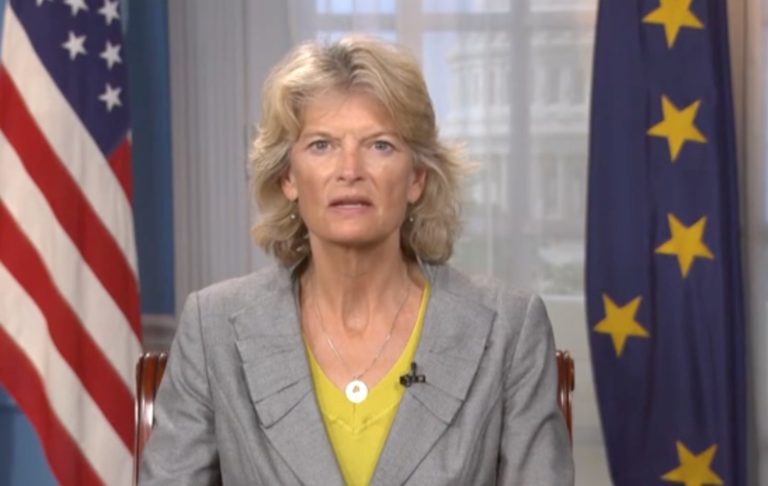
Names to know: Murkowski staffs up with five new hires

U.S. Sen. Lisa Murkowski announced that she is growing her staff with these changes:

Promotions:

Angela Ramponi is being promoted from senior policy advisor to the position of legislative director. Angela has managed Sen. Murkowski’s healthcare portfolio for the past four years, advancing the senator’s priorities as a senior member of the Senate HELP and Appropriations committees. Angela also covered many state and local government issues and played a key role in drafting the bipartisan infrastructure law. Prior to joining Murkowski’s office, she acted as legislative liaison and policy analyst for the Alaska Department of Commerce, Community and Economic Development. She holds a master of public health from the Dartmouth Institute for Health Policy and Clinical Practice. She graduated magna cum laude from Brown University with a bachelor of arts in Public Health and Biology. Angela grew up in Soldotna.

Mike Songer joins Senator Murkowski’s D.C. office as the new National Security Advisor after serving as Murkowski’s Pprofessional staff member of the Senate Committee on Indian Affairs. Mike worked in the office of the late U.S. Congressman Don Young as his Senior Legislative Assistant and Defense Policy Advisor before joining the Indian Affairs Committee. He served in the USAF, including deployments to Afghanistan and Iraq, followed by a term serving as a Hill Vets fellow. He holds a master of business administration in Aerospace and Defense from the University of Tennessee.

New Staff: 

Emma Ashlock joins Senator Murkowski’s D.C. office as an Intern. Emma is from Anchorage and graduated from Alaska Middle College School. She earned a bachelors in Politics Science from the University of Alaska – Fairbanks. She previously served as summer intern in Senator Murkowski’s D.C. office in 2018. Emma will assist with Arctic policy research and correspondence until July 2023.

Major Robert Bruce joins Senator Murkowski’s office as the new United States Air Force (USAF) Fellow. His most recent assignment was serving as a fellow for the office of the Air Force Reserve Legislative Affairs with duty at the U.S. Department of State where he coordinated legislative activity and correspondence between the State Department and members of Congress. After enlisting in the Air Force in 1998, he graduated in 2007 from Southern Illinois University with a Bachelor of Science in Education and then later commissioned.  He has served in a variety of tactical and staff level positions and most recently served as the Commander of the Force Support Squadron at Travis AFB.

Gabe Crabtree joins Murkowski’s Anchorage office as a staff assistant. Gabe grew up in Anchorage where he graduated from Grace Christian School. Prior to joining Murkowski’s office, Gabe worked on Murkowski’s 2022 campaign team. 

Doson Nguyen joins Murkowski’s D.C. office as the new HillVets fellow. Doson has a bachelor of science from the University of North Dakota and is currently working on completing his juris doctorate from the University of Akron School of Law. Doson served as a judicial extern at the US Court of Federal Claims in D.C. prior to joining Murkowski’s office. He previously served as a fellow at the Center for Intellectual Property Law and Technology as well as a student director at the Akron Law Alumni Association. He is a former combat medic in the U.S. Army and a medical sectionleader with the National Guard from 2010-2018.

Aaron Stuvland, PhD, joins the office as American Political Science Association congressional fellow. Dr. Stuvland will support Murkowski’s Energy and Lands team. Dr. Stuvland teaches political science at the Schar School of Policy and Government at George Mason University. He previously taught in the Connecticut State Community College system and served as the managing editor for Congress and the Presidency at American University. He earned a PhD and MA in Political Science from George Mason University and a BA in Political Science from Northwest Nazarene University.

“As we kick off a new Congress, I’m proud to announce these changes to my growing team as I continue my work to represent all Alaskans. These individuals each bring unique skills, experience, and knowledge to the table, which will help us better serve the unique needs, challenges, and opportunities that we face in our state. I look forward to all the good work we have ahead and benefits it will bring Alaska,”  Murkowski said.

Dunleavy appoints Jude Pate to AK Supreme Court

Alaska Governor Mike Dunleavy appointed Superior Court Judge Jude Pate of Sitka to the Alaska Supreme Court. Judge Pate was selected from a list of individuals nominated by the Alaska Judicial Council.

Pate has been an Alaska resident for 29 years and has practiced law for 28 years. He graduated from Lewis & Clark Northwestern School of Law in 1993 and is currently a superior court judge in Sitka. Judge Pate fills the vacancy created by Chief Justice Dan Winfree’s retirement.

Pate was appointed to the Superior Court by Alaska Governor Bill Walker, who served one term as Alaska’s 11th governor. Pate was born in Nuremberg, Germany, to a U.S. Army family. He was raised in Kansas and in Europe and moved to Sitka in 1993 after graduating from law school. He worked as the legal counsel for the Sitka Tribe of Alaska, and also was in private practice. Pate served as an assistant public defender in Sitka for 12 years.

The Alaska Judicial Council in December forwarded to Gov. Mike Dunleavy its four nominees for the vacancy.

The lawyers selected by the council were Anchorage Superior Court Judge Dani Crosby, Department of Law attorney Kate Demarest, Fairbanks attorney Aimee Oravec, and Pate.

Dani Crosby: An Alaska resident for more than 36 years who has practiced law for more than 26 years, she graduated from Gonzaga University School of Law in 1996 and is a Superior Court judge in Anchorage.

Kate Demarest: An Alaska resident for over 12 years who has practiced law for 14 years, she graduated from the University of Minnesota Law School in 2008 and is a senior assistant attorney general in the Opinions, Appeals, and Ethics section at the Department of Law in Anchorage.

Aimee A. Oravec: An Alaska resident for over 23 years who has practiced law for 24 years, she graduated from Washington University in St. Louis School of Law in 1998 and is currently general counsel for Doyon Utilities, LLC.

Jude Pate: An Alaska resident for over 29 years, he has practiced law for more than 28 years. Pate graduated from Lewis and Clark Northwestern School of Law in 1993 and is a superior court judge in Sitka.

The council voted unanimously for Oravec and Crosby. Pate and Demarest were advanced with a 5-1 vote, with member Kristie Babcock voting no on Demarest and member Geraldine Simon voting no on Pate.

The Alaska Judicial Council is a commission created by the Alaska Constitution comprised of three Alaska Bar Association attorneys, three non-attorneys, and the Chief Justice of the Alaska Supreme Court. The governor is required by law to choose a justice from the names the council forwards to him.

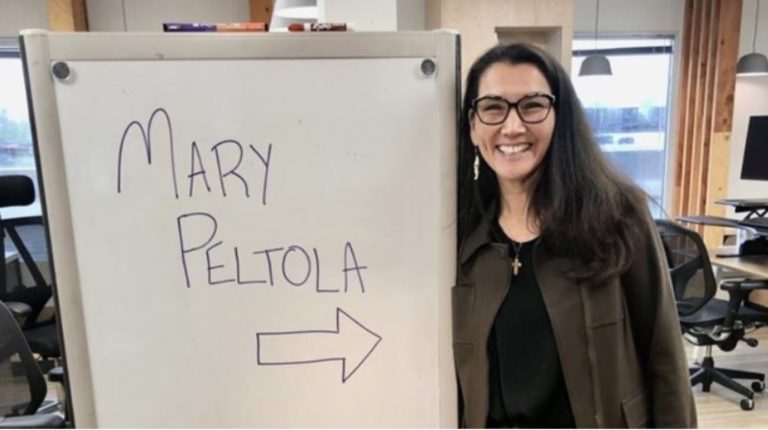
USA Today: Rep. George Santos and Mary Peltola have something in common — resumes that don’t hold up

USA Today looked into the claims of congressional members to see if Rep. George Santos was the only one who has embellished his resume What it found out was that Rep. Mary Peltola also has stretched her educational credentials, when she reported she had four years of college, when her alma mater can only account for two.

“One of the discrepancies was Rep. Mary Sattler Peltola, D-Alaska, whose congressional biography states she attended the University of Northern Colorado from 1991 to 1994. The university confirmed her attendance, but only from 1991 to spring 1993. And it added in an email, “’our records reflect that no entity has requested this information except for you, today.'”

That’s an educational embellishment of at least 25% or even 50%. If she started in the fall of 1991 and left in the spring of 1993, it’s really just a two-year attendance. Peltola’s office did not respond to requests for comment, USA Today wrote.

When she was in the Alaska House, Peltola’s official education biography was more expansive on the Legislature’s website, as published in in 2008, but she still said she attended University of Northern Colorado for from 1991-94:

Education: 
University of Northern Colorado, 1991-94 
University of Alaska Fairbanks, 1994-95 
University of Alaska Southeast, 1995-97 
University of Alaska Anchorage, 1997-98

Rep. Santos, a Republican from Long Island, NY, claimed to have degrees from Baruch College and New York University, neither of which have a record of Santos earning any degree – a fact only publicized after he was elected in November, the newspaper reported.

The reporter checked 93 freshmen elected in 2022, and all of their credentials held up to scrutiny, except for those of Santos, Peltola, and Troy Carter of Louisiana. Educational background checks for 91 out of 93 freshman members held up, in most cases for all of their cited degrees. About a dozen universities did not respond and the two discrepancies that emerged both were minor compared to Santos’ embellishment.

“Rep. Troy Carter, D-Louisiana, stated on his congressional website that he earned a Master of Business Administration from Holy Cross University, which in 2021 said Carter earned a Master of Science in Management, “a degree that typically takes less time to complete than an MBA.”

About a dozen of the newspaper’s background queries yielded no response from the corresponding universities.

Through her teeth: Rep. Peltola said Inflation Reduction Act is about cost of living, but Al Gore tells Davos it’s really a climate change act

11

At Davos Switzerland, where the World Economic Forum has convened with the world’s super-wealthy, former Vice President Al Gore said what budget hawks have known all along: The Inflation Reduction Act is really a climate change bill.

“In my country, we passed the ‘Inflation Reduction Act,’ which is primarily a climate act, $369 billion, which will actually be much larger than that, because the heavy lifting is done by tax credits that are very long-term, some of them actually open-ended, and the early investments that have already been triggered by it give a great deal of reason, many reasons, for believing it’s going to be much larger than $369 billion,” Gore said. “So I’m very encouraged by that.”

Gore was saying what others have already noted.

Nick Begich III of Eagle River, took to Twitter on Thursday to remind voters that Congresswoman Mary Peltola supported the Inflation Reduction Act, which he says has nothing to do with reducing inflation:

“We must be honest and transparent: the Inflation Reduction Act has never been about reducing inflation. It’s about taxing Americans who choose to use traditional energy, in order to subsidize those who don’t,” Begich said. “@Rep_Peltola should know spending 360+ Billion in taxpayer funds in this way makes Alaskan oil and gas less competitive,” tipping his hat to Gore for “finally telling the truth.”

Begich, a Republican, ran for the congressional seat in 2022. Peltola won in the ranked choice voting scheme set up by Democrat operatives from both inside and outside the state.

Peltola was not in office when the House passed the Inflation Reduction Act, but has repeated that it is a bill to help Americans cope with inflation.

The Biden White House says that with the Inflation Reduction Act’s investments, “America is on track to decrease greenhouse gas emissions by about 40 percent below 2005 levels in 2030—positioning America to meet President Biden’s climate goals of cutting greenhouse gases at least in half in 2030 and reaching net zero by no later than 2050.”

At Davos this week, Gore spoke passionately about climate change. He said that the world is losing the climate battle and he attacked political leaders and the World Bank. He attacked oil companies and coal mines. He criticized the appointment of an oil company executive as the next president of COP28, the next United Nations conference on climate change, on the calendar for December.

“We cannot let the oil companies and gas companies and petro-states tell us what is permissible,” he shouted, getting a standing ovation from many of the young, wealthy people in the audience, some of whom arrived in Davos on private jets.

The bill, passed entirely by Democrats in Congress, commits $745 billion in spending during the worst inflation crisis created by overspending by Washington. It adds $599 billion in taxes, and $146 billion to the national debt, with $45 billion added to the debt in the first five years.

The bill paints adds $80 billion to hire 87,000 new Internal Revenue Service agents to go after working families, conducting more than 700,000 more audits a year on families making less than $75,000 a year, and one million more audits on families making less than $200,000.

Begich repeatedly called out Peltola during the campaign to insist this was a climate change bill, in spite of what Peltola was saying.

“Democrats used the national inflation crisis to deceive the public, intentionally mislabeling their climate package as the ‘Inflation Reduction Act.’ Rather than meaningfully addressing inflation, the bill greatly expands the IRS with the addition of tens of thousands of new agents in order to pay for a set of leftist climate goals. The bill’s provisions are intended to migrate Americans away from secure and reliable sources of traditional energy, including Alaskan oil and gas,” Begich told Must Read Alaska. “During the campaign, Mary Peltola repeatedly voiced her support for this boondoggle but failed to mention how it hurts Alaskans. Alaska deserves a representative who will actually put the people of Alaska over politics.”

Mayor Bronson’s deputy chief of staff resigns

Mayor Dave Bronson has lost another key member of his executive team in the continuing dust-up in his office: Brice Wilbanks has resigned. Wilbanks was Bronson’s campaign manager and then came on board as the deputy chief of staff. Must Read Alaska has learned that Wilbanks is pursuing work outside of government.

The resignation comes at a time when the mayor is under fire for numerous allegations by former City Manager Amy Demboski that are now prompting the Anchorage Assembly to enact emergency ordinances that relate to contracts and personnel.

The Mayor’s Office leaked the information about Wilbanks’ resignation to a blogger in the same way it leaked information on Demboski after she was fired by the mayor. In the leak, the Mayor’s Office is saying that Wilbanks tried to rescind his resignation, but was let go.

Demboski was fired on Dec. 19, after which she said that the mayor’s staff leaked information to certain people in the media in an attempt to destroy her reputation. Demboski is currently the interim host of the morning drive-time show on 650 KENI.

Demboski said that Bronson fired her because she had brought to his attention unlawful and unethical activities and uses of municipal resources involving lobbyist contracts, sole source contracts, and the hiring of Larry Baker as a consultant.

Demboski and Kendall said that firing her for using vulgar language in the office is a “fig leaf” to cover up for the real reason, which is retaliation.

Coordinated attack on estates, capital gains: Seven states have new wealth tax legislation this year

By JASON WALCZAK | TAX FOUNDATION

In a coordinated effort, lawmakers in seven states that collectively house about 60 percent of the nation’s wealth—California, Connecticut, Hawaii, Illinois, Maryland, New York, and Washington— introduced wealth tax legislation on Thursday.

The campaign is part of a broader national focus on new taxes on investment, entrepreneurship, and wealth. For instance, a pending proposal in New York would yield a nearly 30 percent tax on wealthy New York City residents’ capital gains income, about 50 percent higher than the 20 percent federal tax on long-term capital gains.

Elsewhere, lower estate tax thresholds would impose the tax on the upper middle class and not just the very wealthy—including the small businesses and farms policymakers have long worked to protect from estate taxes to avoid forcing them to break up to pay the tax. And the wealth taxes themselves would vary across the seven states, partly due to differing state constitutional constraints.

Not that constitutions will always stand in the way of legislative proposals. A wealth tax is transparently in conflict with Washington’s state constitution, but that has not stymied prior proposals and it isn’t standing in the way of a new effort to be unveiled on Thursday. California proposals have tended to include exit taxes—designed to continue to tax those who respond by leaving the state—that implicate a host of federal constitutional provisions, a reality that has provoked little consternation among supporters. And most prior proposals would tax worldwidenet worth for state residents, with all the constitutional questions that raises.

The constant across all seven states, or wherever such taxes are proposed: wealth taxes are economically destructive, their base is almost impossible to measure accurately, and they create perverse incentives and promote costly avoidance strategies. Very few taxpayers would remit wealth taxes—but many more would pay the price.

Proponents sometimes argue that wealth taxes are small and that the rich can afford them. But because the rates are on net worth—not on income—they cut deeply into investment returns, to the detriment of the broader economy. Average taxpayers may not care if the ultra-wealthy have lower net worths. But they will certainly care if innovation slows and investments decline.

We are not accustomed to thinking about taxes in terms of stocks (accumulated wealth) rather than flows (income streams). To most people, it’s not intuitive how a wealth tax rate compares to something we better understand, like income tax rates.

Imagine a $50 million investment, held for 10 years and earning a 10 percent nominal annual rate of return in a 3 percent annual inflation environment. Without a wealth tax, that investment would yield $46.5 million in investment returns, in current dollars, after 10 years. With a 1 percent wealth tax, it would yield $37.3 million. The wealth tax would wipe out nearly 20 percent of the gains. If the gains were realized at the end of 10 years, a 1 percent wealth tax would have reduced gains by as much as the 20 percent federal capital gains tax.

In current dollars (valued at the start, not the end, of the investment period), that 1 percent annual wealth tax becomes a 14.5 percent effective tax on net income ($6.3 million of $43.6 million in pre-tax gains). But because each year there was less principal to invest than there would have been absent the annual tax, another $2.9 million is forgone not as tax revenue but as investment gains that never materialized. The result: a 1 percent wealth tax erodes 19.8 percent of the investment income.

If prior efforts are any indication, some of these proposals (like Washington’s) will have a base of fairly liquid, publicly traded investments, for which there is a known market value. But others, potentially including California’s, would tax all assets of the wealthy, many of which lack a known market value. This could include tangible assets, like artwork, as well as nonfinancial intangible assets, like trademarks or goodwill, which can be nearly impossible to value. Worst of all, it can include ownership stakes in closely held corporations and partnerships, which often defy evaluation.

A promising tech startup might briefly be valued at hundreds of millions of dollars but fold without ever turning a profit. Another might fly under the radar until suddenly acquired for billions of dollars. Owners of the former might face insurmountable wealth tax burdens on a hypothetical net worth that never generates actual income and ultimately vanishes, while owners of the latter might avoid any wealth tax on a company that presumably had significant value before a price tag was affixed by its acquisition.

Taxing wealth consisting of unrealized gains from publicly traded assets is relatively straightforward, since some portion of the shares could be sold in satisfaction of tax liability. (This would, of course, still have consequences for some wealthy investors who are trying to maintain a controlling interest, and conflicting treatment of capital gains at the federal and state levels would create confused incentives.)

But with private business assets, the tax can be much more consequential: some portion of the company or its assets may have to be sold to pay taxes on gains that only exist on paper. The owners are asset rich but cash poor.

Even for the most public of public figures, net worth is not only difficult to assess, but also difficult to project. And wealth taxes are imposed regardless of whether there is any income at all, and regardless of whether net worth is increasing or decreasing.

In current dollars, Elon Musk lost $226 billion between November 2021 and December 2022. Sixty-two percent of his wealth frittered—not to say twittered—away. And he at least had investments to liquidate had he been required to pay wealth tax on the much higher November 2021 valuation. For many entrepreneurs in the earlier stage of their venture, not only might their net worth prove highly volatile (and difficult to assess), but they also may have few ways to generate the cash flow necessary to pay the tax.

At either end of that spectrum, of course, there is the prospect of exit: those subject to a wealth tax could decamp to another state, a move that is far easier at the state than the national level. In fact, the economic consequences—both from outmigration and lower economic activity—are so significant that even at the national level, most countries have abandoned any wealth taxes they once had.

Thirteen OECD countries have imposed wealth taxes since 1965, but the number dwindled to three—in Norway, Spain, and Switzerland—by 2022, with governments increasingly acknowledging the economic harms intrinsic to such taxes. However, Colombia’s new left-wing government reinstituted a wealth tax for the start of the current calendar year. That is the only recent example for states to follow, amid a general trend of repudiation and repeal. (France has a tax on high-end real property, but no longer on other sources of wealth.)

From thirteen to four, at the national level, where exit is comparatively difficult. Yet seven states want to try this experiment in the United States?

California has previously considered an 0.4 percent state wealth tax, which proponents estimated would have raised about $7.5 billion a year—equal to 4.2 percent of state revenue at the time, and just under 1.1 percent of combined federal and state tax revenue from California, more than the tax share under three of the four national wealth taxes in OECD countries.

People will move. California knows people will move. Its response: an exit tax, and wealth taxes owed for years after leaving the state. This almost certainly runs afoul of the Commerce Clause of the U.S. Constitution and interferes with the constitutionally protected right of travel.

But that’s where the economic illogic of wealth taxes leaves states: contemplating constitutionally dubious taxation of nonresidents to counter the simple reality that wealth taxes undercut investment and drive entrepreneurs and innovators out of state.

Jason Walczak is vice president of State Projects at the Tax Foundation. He has authored or coauthored tax reform guides on Alaska, Iowa, Kansas, Louisiana, Nevada, New  York, Pennsylvania, South Carolina, West Virginia, and Wisconsin. Jared’s work is regularly cited in The New York Times, The Wall Street Journal, The Washington Post, Los Angeles Times, Politico, AP, and many other prominent national and state outlets. More at the Tax Foundation.