Saturday, August 15, 2026
Home Blog Page 694

Sen. Sullivan joins 42 senators saying ‘no’ to raising debt ceiling without spending cuts, budget reforms

Alaska U.S. Sen. Dan Sullivan is part of a group of 43 Republicans who put Senate Majority Leader Chuck Schumer on notice this weekend: They are committed to opposing raising the national debt ceiling without substantive spending and budget reforms. 

Sen. Lisa Murkowski did not sign the letter, and neither did Sen. Susan Collins of Maine, Sen. Mitt Romney of Utah, Sen. Rand Paul of Kentucky, Sen. John Kennedy of Louisiana, of Sen. Josh Hawley of Missouri.

As the national debt has soared since President Barack Obama took office, the U.S. Treasury Department has borrowed more money to pay for government spending. The curb on this borrowing is known as the legislative debt ceiling. The nation is at the point where the Treasury Department has spent the maximum amount authorized by Congress, and lawmakers must vote to suspend or raise the limit on borrowing.

“It is now clear that Senate Republicans aren’t going to bail out Biden and Schumer, they have to negotiate. I thank my colleagues for joining my effort to emphasize this point in the clearest possible terms,” said Sen. Mike Lee of Utah, who led the group.

The nation’s economy is in free fall due to unsustainable fiscal policies, the group’s letter said. The total national debt stands at over $31.7 trillion. In fact, the U.S. government has averaged nearly $1 trillion in deficit spending every year since 2001.

“This trajectory must be addressed with fiscal reforms. Moreover, recent Treasury projections have reinforced the urgency of addressing the debt ceiling. The House has taken a responsible first step in coming to the table with their proposals. It is imperative that the president now do the same.

“As such, we will not be voting for cloture on any bill that raises the debt ceiling without substantive spending and budget reforms,” the letter concluded.

The letter is signed by Senators Mike Lee, John Barrasso, Marsha Blackburn, John Boozman, Mike Braun, Ted Budd, Shelley Moore Capito, Bill Cassidy, Katie Britt, John Cornyn, Tom Cotton, Mike Crapo, Ted Cruz, Kevin Cramer, Steve Daines, Joni Ernst, Deb Fischer, Lindsey Graham, Chuck Grassley, Bill Hagerty, John Hoeven, Cindy Hyde-Smith, Ron Johnson, James Lankford, Cynthia Lummis, Roger Marshall, Mitch McConnell, Jerry Moran, Markwayne Mullin, Pete Ricketts, James Risch, Marco Rubio, Mike Rounds, Tim Scott, Rick Scott, Eric Schmitt, Dan Sullivan, John Thune, Thom Tillis, Tommy Tuberville, J.D. Vance, Roger Wicker, and Todd Young.

Sen. Chuck Schumer, majority leader, said the Senate might consider a bill that only raises the debt ceiling but does not address the demands of these Republicans. With a 51-49 majority in the Senate, Schumer needs nine Republicans to get to the 60-vote threshold to raise the ceiling.

At this point, he probably cannot count on all of the six who did not sign the letter but who are fiscal hawks, such as Sen. Paul, Sen. Kennedy, and Sen. Hawley. He may be able to count on Sens. Murkowski, Romney, and Collins, who often side with Democrats, but they would not be enough to raise the national debt.

Read up on deficit spending at this Treasury Department guide.
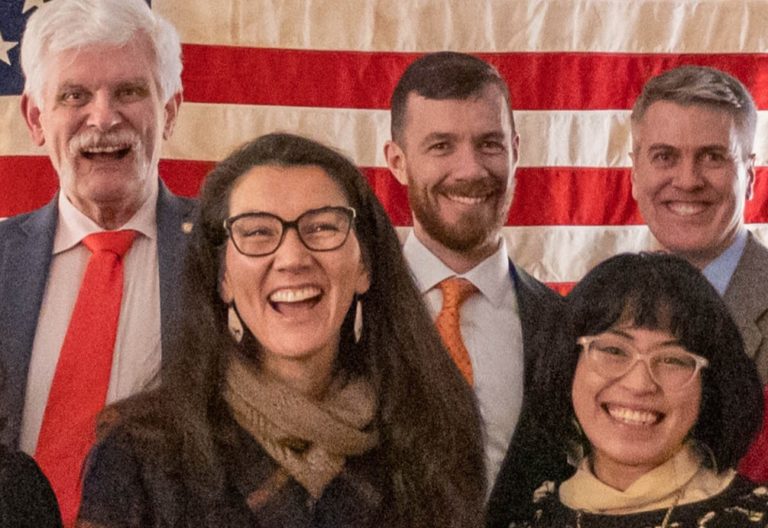
Peltola searching for a fundraiser

Rep. Mary Peltola is advertising for a fundraising associate, to be located in Washington, D.C., with opportunity to travel.

During her first quarter of fundraising for reelection, Peltola spent far more than she brought in. She raised $369,000 in the first quarter, spent more than $579,000 in the same time period, and a significant amount of the spending was on fundraising. She ended the quarter had $483,556 cash on hand, a 30% decrease over what she started with in January.

Peltola and her chief of staff, who was her former campaign manager, were spotted in Palm Springs, Calif. over the weekend; the well-heeled community is a fundraising destination for many politicians from both sides of the aisle.

According to the job description in Society of Financial Service Professionals, the successful applicant will:

  • Schedule regular call time sessions required to meet stated fundraising goals
  • Staff and support candidate during scheduled call time sessions by taking notes and conducting donor research as needed
  • Conduct pledge follow-up with donors, including timely emails, letters, and calls
  • Maintain integrity of donor database by accurately recording all notes, follow ups, and other donor information in NGP
  • Other fundraising duties as assigned to support event, email, and political fundraising programs.
  • Plan, manage, and recruit for small and large-scale fundraising events and build fundraising swings for the candidate
  • Provide regular, accurate, and timely projections to the campaign leadership for events and meetings
  • Maintain a working knowledge of donors and institutions engaged, identifying new potential funding partners and opportunities to collaborate with existing partners in new ways
  • Build and maintain relationships with donors and potential donors
  • Provide the necessary information and preparation for the candidate to maintain relationships with major donors, institutional partners, and allies
  • Manage and staff call time when needed
  • Staff events and finance meetings

Qualifications and Requirements

  • Must be willing to be located in Washington DC, this work can not be done remotely
  • Must have access to a laptop, smartphone, and driver’s license- access to a car is beneficial
  • Experience building and executing fundraising events of all sizes
  • Knowledge of campaign finance laws
  • Political strategy/acumen
  • Relationship cultivation and management
  • Flexibility to work outside normal business hours that include evenings and weekends, and work extended hours to accomplish the requirements of the position
  • Excellent and persuasive written, verbal, and public presentation skills
  • 3+ cycles of working experience in political fundraising
  • Alaska experience preferred
  • Knowledge of NGP, ActBlue
  • Willingness to travel

Tlingit & Haida Central Council leaves AFN

The Central Council of the Tlingit & Haida Indian Tribes of Alaska voted May 1 to leave Alaska Federation of Natives. The announcement was made May 8.

Tlingit & Haida is the largest federally recognized tribe in Alaska with more than 35,000 tribal citizens and has been a long-standing member of AFN, which was formed in 1966 and holds a mission to enhance and promote the cultural, economic and political voice of the entire Alaska Native community. 

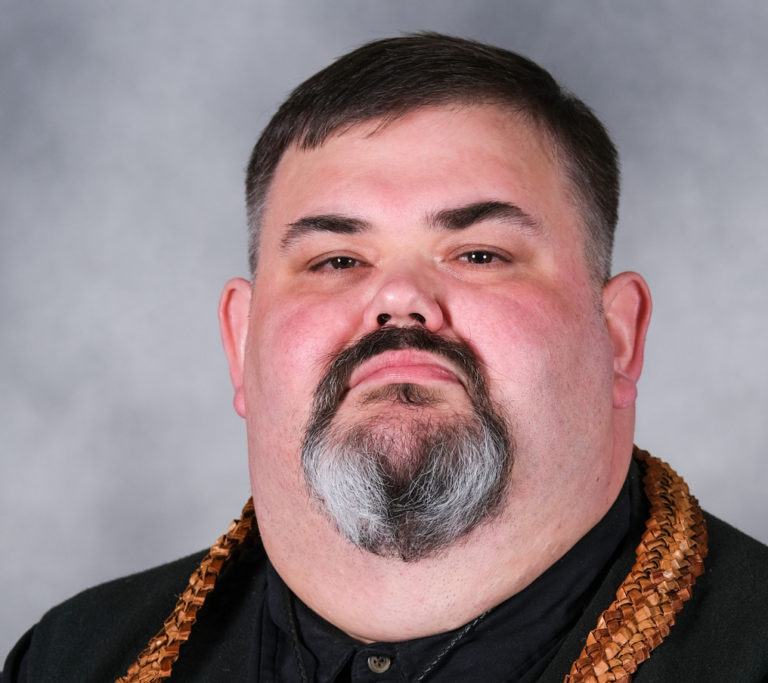
Over the course of the past nine years, Tlingit & Haida President Richard Chalyee Éesh Peterson and the Executive Council have been working toward strengthening the Tribe’s sovereignty through economic development initiatives and building the infrastructure for advancing the Tribe’s priorities.

Below are statements from Peterson and other Executive Council members:

“We are working every day toward strengthening our sovereignty and preserving our way of life for generations to come. It has always been in the best interest of the Tribe to directly promote, advance and advocate for our people and communities, and we have positioned the Tribe and strategically built our capacity to do just that. The truth of the matter is our Executive Council has diverse areas of expertise and this has been a true strength in the governance of our Tribe. We have also built up a Governmental Affairs team that supports our work on important legislation, federal/state tribal issues, budget priorities, and funding opportunities. We will continue to collaborate with AFN where it is needed,” said President Peterson.

“The Alaska Federation of Natives has a long history of providing advocacy and they will continue to provide a forum for Alaska Native people. Tlingit & Haida will remain engaged in Alaska Native policy conversations nationally, across our State and within our region. We will continue to provide direct advocacy and advancing the goals and interests of Tlingit & Haida, our tribal citizens, and our communities,” said First Vice President Jacqueline Pata.   

“From protecting our lands, waters, and way of life, to advocating on behalf of our communities and for the need for wellness, healing, protection and support for our tribal citizens and families, we’ve carved our own path and know the solutions that are needed. It is critical we do the work every day exercising our sovereignty, and to be intentional and focused to elevate the voice of our Tribe and represent our people we serve,” said Second Vice President Rob Sanderson Jr. 

“No one knows the needs of our region, communities and people better than we do. We will continue to protect our way of life, exercise our inherent sovereignty and jurisdiction through self-government and self-determination, and promote the dignity and welfare of our tribal citizens,” said Third Vice President Catherine Edwards. 

“Tlingit & Haida has supported AFN from its inception and will continue to support the common interests of AFN member Alaska tribal governments and ANCSCA [Alaska Native Claims Settlement Act] corporations. Today, Tlingit & Haida makes clear we directly express our inherent sovereign powers and collaborate with other governments and entities,” said Fourth Vice President Will Micklin.

“Tlingit & Haida has seen tremendous growth. With a focus on economic sovereignty and the well-being of our tribal citizens, this growth has been very intentional as the Tribe’s policy priorities continue to grow and move forward. President Peterson has established strong relations within the federal government and, through our Executive Council’s advocacy at every level, we are strengthening our sovereignty every day. This all has a greater impact than relying on anyone else to do the work for us. We have the inherent right to self-govern and that is what we will continue to lean on,” said Fifth Vice President Clinton Cook Sr.

In 2019, two of the large ANSCA regional corporations — Arctic Slope Regional Corp. and Doyon — also left. But Doyon kept its reasons quiet until last week.

“Doyon’s decision to withdraw from AFN was made by the Doyon Board of Directors after significant deliberation and after a long history of sharing our concerns with AFN leadership.  Doyon engaged with AFN for over a decade, sharing our concerns and advocating for continued improvement in the AFN organization, decision-making, and services provided to its members; these requests were all made well prior to the decision to withdraw,” Doyon said in a statement that was released eight days ago.

“In the years following the 2012 reform effort at AFN, Doyon recognized that AFN reform efforts needed to continue.  AFN still needs to complete the work outlined by AFN Resolution 09-05, including a review of the AFN resolutions process. The needed work on conflict resolution among various Native constituents was highlighted at the 2022 AFN Convention when a proposed resolution addressing subsistence fish declines on the Yukon River was met with impasse and conflict,” Doyon said.

“Doyon remains engaged in Alaska Native policy conversations, whether across our State or within our region. Doyon’s membership in AFN does not preclude Doyon from direct advocacy or furthering and advancing the goals and interests of Doyon, Limited, our shareholders, and our communities,” the corporation said. The full release is at this link:

Linda Boyle: What will you do when the next ‘pandemic’ comes?

By LINDA BOYLE, MSN, DM, ALASKA COVID ALLIANCE

During the three-year “pandemic,” our First Amendment rights were terribly violated. The government used fear to control people. We were told to stop living our lives, stop seeing family, stop traveling, and don’t ever visit dying relatives. Information was suppressed; mainstream media was in lockstep with the government on its messaging.  

Freedom of Speech appeared to only exist if you were parroting whatever “information” the government determined to be valid.  Case in point:  Sen. Elizabeth Warren asked Amazon to stop carrying Robert F. Kennedy Jr.’s book “Truth about Covid” because it contained “misinformation” about “vaccines and treatment.”

And it came as no surprise when the 9th Circuit Court of Appeals said Warren had not violated Kennedy’s First amendment rights.

With Covid “measures”, people were isolated and the “loneliness epidemic” in the US increased by 5%.  People were hurting.  And worse, people were dying alone.  

More and more information is now coming out concerning how most of the decisions made by the federal government did little to stop the “pandemic”. Those who made these decisions for lock down, “vaccines”, to “stop” you from getting Covid, and the closure of schools are rapidly backpedaling and seem to forget both what they said and the mandates they imposed.  

They are backtracking and are telling us none of this was their doing.  And they have no plans to take any responsibility for those decisions. 

Instead of owning up to their mistakes, it seems these overlords would rather lie or at best stretch the truth or claim amnesia.  They never intended to “follow the science”.

Just watching Randi Weingarten, head of the American Federation of Teachers, tell the House Select Committee she was always in favor of reopening schools when in fact, this teacher’s union did its best to keep schools closed.  Incredible demands were made to include massive amounts of additional funding and the suspension of teacher evaluations. The Los Angeles branch of the AFT demanded Medicare for all. 

During her testimony, Weingarten feigned amnesia at one point and used her age of “65” to explain why she couldn’t answer the question. She evaded several questions concerning her interactions with the CDC and the White House. She did finally admit she had the cell phone number of Dr. Rochelle Walensky, the head of the CDC. Iowa Congresswoman Miller-Meeks, a physician, responded that not even she had Dr. Walensky’s cell number.  

This is the same teacher’s union whose members were seen on YouTube dancing. And another member was seen having fun at a Caribbean resort while her students were stuck at home, not being educated.  

Weingarten was in Ukraine discussing that country’s educational needs. How did she plan to help them during the war and especially since we were still in a “pandemic”? Somehow European travel was okay; Caribbean travel was okay; but classroom in-person teaching was not okay. 

Private schools and those charter schools not run by school districts managed to stay open with minimal effect on anyone’s health and children’s overall learning. But those students going to brick-and-mortar schools were shut out of the learning process. This placed our most vulnerable children even further behind having to depend on Zoom to “learn.”

Researchers validated a huge learning decline during Covid lockdowns. Children lost about 35% of knowledge and skills they would have gained had they been in a physical school classroom. Those deficits unfortunately remained constant for the 2.5 years that we lived through Covid lockdowns and mask mandates. 

Online school also impacted social and emotional development. Further studies showed an inequality gap was created between children of different socioeconomic backgrounds.  

The lower income and minority students lost the most. The achievement gap, so strongly touted by the education industry, grew even greater.

Besides the debacle caused by shutting down the schools in most states, we also had the “largest expansion of government power at least since the New Deal”.  Dr Fauci rose to fame during the pandemic and was lauded by the mainstream media as a superstar.  

He’s been clear that mistakes were made he’s also been clear that none of this was his fault. He said he didn’t have the power to shut things down—but people trusted him and then they made their decisions based on the information he gave them.

The Atlantic magazine a few weeks ago published an article that asked for amnesty for those who told us to wear masks, socially isolate, and fear the disease. It said we should kiss and make up with the government leaders who have tortured us for three years with unrealistic mandates. They said we should forgive and move on.  

That’s nearly impossible to do. People who did not bend to the will of the government lost their jobs for not getting the jab. People were pitted against each other with nasty language used to describe those who thought differently. 

Good doctors had their licenses suspended. People who did not agree with the established dialogue were minimalized, doxed, made fun of and kicked off social media.  

No, we don’t plan to forget. We need to push for accountability. If not, the government will be back again with even more control and suppression of our First Amendment rights. It worked well for them the last time.  It’s all a matter of control.  

The real question is what will you do when the next “pandemic” comes? Will you surrender your First Amendment rights?  

Will you obey and not visit your dying loved ones in the hospital?  

Will you separate yourself from your friends and relatives who do not agree with you and bow down to the government?

Or will you stand up for yourself, your family, your neighbors, your friends, and all Americans who disagree with the heavy hand of the government? 

Linda Boyle, DM, MSN, is a member of the Alaska Covid Alliance.

Gov. Greg Abbott deploys new border force to fight ‘catastrophic disaster’ as Title 42 ends

By BETHANY BLANKLEY | THE CENTER SQUARE

Texas Gov. Greg Abbott said Monday he is deploying a tactical border force ahead of the public health authority Title 42 ending on Thursday.

The plans were unveiled on the tarmac of the Austin Bergstrom International Airport.

As he spoke, the new Texas National Guard Tactical Border Force Unit began loading up behind him into black helicopters and C-130 military planes.

“President [Joe] Biden is laying down a welcome mat to people across the entire world saying that the United States border is wide open and it will lead to an incredible amount of people coming across the border illegally,” Abbott said, which will “cause a catastrophic disaster in the United States.”

Citing Biden administration estimates that 13,000 foreign nationals are expected to cross the southern border illegally every day, he said that amounts to about 4.7 million people who “will be coming across the border illegally,” or more “than there are residents of the massive city of Chicago.”

In response, he said, “Texas is doing more than any other state in the United States of America to defend the southern border.”

Adjutant General of the Texas Military Department Major General Thomas Suelzer said the Texas National Guard has executed a multiphase response to Title 42 ending. Phase 1 began last month and is complete, he said, involving shifting troops to hot spots along the border. Last month, 200 additional troops were deployed to El Paso and they also erected 22,000 miles of concertina wire barriers to block illegal entry between ports of entry.

“Yesterday two quick reaction forces were deployed,” Suelzer said to opposite ends of the Texas-Mexico border. One is currently deployed in El Paso. Another is arriving in the Rio Grande Valley later Monday, he said.

“What you are seeing behind you is phase 3,” he said. The tactical border unit is comprised of 450 personnel who are being deployed to El Paso and to the RGV. The same operation will occur again with over 200 personnel leaving for the RGV Tuesday, he said, completing phase 3 of the operation.

This is in addition to Texas having already deployed 10,000 National Guard troops and 1,200 Texas DPS troopers to the border.

Suelzer also said he “had the honor of eating dinner with these troops last night. I can tell you the morale is high among the troops and their dedication to the state of Texas is inspirational.”

Despite Texas troops effectively blocking illegal entry between ports of entry south of El Paso, the city declared a state of emergency after thousands arrived at ports of entry believing the border is open and were released into the community by Border Patrol agents. With no money and no means for transportation or plans, people from all over the world have taken over and set up tents on sidewalks downtown and in surrounding areas.

In the RGV in Brownsville, guardsmen last week shut down a major crossing between ports of entry, Abbott said. The same tactic will be deployed elsewhere where troops will use aircraft, boats, night vision equipment, and riot gear “to prepare for anything they may encounter as they are protecting and securing our border,” he said.

Their efforts are different than the 1,500 military personnel deployed by the Biden administration tasked with assisting Border Patrol agents with processing foreign nationals into the U.S.

“They’re doing paperwork,” Abbott said. “They’re not actually going to be on the border to secure the border. The goal of the president is not to stop the people from coming across the border illegally. Our job and what we’re focused on, is trying to stop the people coming across illegally.”

The governor said there wouldn’t be any “entanglement” between Texas troops and those the president deployed “because the president is not going to have his troops down there trying to secure the border.”

“Texas has the ability to secure the border,” Abbott said in response to a reporter inquiry. “If we were acting in isolation, we would have secured the border. We are doing everything possible to try and stop people from crossing the border. At the very same time the president of the United States is putting out the welcome mat. The cartels know it’s the federal government that controls the immigration process. The cartels are working in collaboration with President Biden and the federal government to facilitate that illegals cross the border.”

Referring to Texas, he said, “we are being overrun by our own federal government. Texas is being undermined by our own federal government and our efforts to secure our border. It’s only Joe Biden and his open border policies that’s hindered out ability to secure the border.”

Who were awarded honorary doctorates at UAF this weekend?

At the 101st graduation ceremony at the University of Alaska Fairbanks on Saturday, two Alaska Natives were singled out for honorary advanced degrees. They are:

Richard Chalyee Éesh Peterson

Richard Chalyee Éesh Peterson of Juneau received an honorary doctor of laws degree. He is Tlingit from the Kaagwaantaan clan, Eagles Nest house, and a lifelong resident of Southeast Alaska. He grew up in Kasaan, a community on Prince of Wales Island, and became the youngest mayor in Alaska in 1997.

He has served as president of the Central Council of the Tlingit and Haida Indian Tribes of Alaska, a federally recognized tribe in Southeast Alaska, since 2014, and is serving his third term. He leads the largest regional tribe in the state with a focus on economic development, tribal sovereignty and community sustainability.

Helen (Dick) MacLean

Helen (Dick) MacLean received an honorary doctor of education degree. She was born in 1945 in a tent at spring camp and grew up in Lime Village, located along the Stony River in Southwest Alaska. Elders trained MacLean in the Dena’ina language, and she was charged as a young girl to be a culture bearer. For decades, MacLean has worked with students of all backgrounds, from preschoolers to college students. She is a master instructor of the Dena’ina language and has a long history of working with doctoral students as a mentor and advisor. She was the primary instructor in two films, “Living Dena-ina” and “Dena’ina Birch Baskets.”

MacLean served as an elder advisor to UAF’s rural development seminars and has been vital in developing Dena’ina curriculum for university courses. She is considered the most skilled living Dena’ina first language speaker and is known for her ability to bridge Western pedagogy and Indigenous ways of knowing.

Also recognized, but with the designation “Meritorious Service,” were four other individuals:

Joan Braddock, Carl Benson, Jason Gootee and Ron Inouye received Meritorious Service Awards, which recognize service to the university or an Alaska community.

Microbiologist and UAF alumna Joan Braddock has been a part of the UAF community for more than four decades. She earned her doctorate in oceanography from UAF in 1989 and joined the faculty the following year. Her scientific research focused on bioremediation of environmental contaminants, especially petroleum. Throughout her career, she served as a professor and then dean of the College of Natural Science and Mathematics. She retired with emeritus status in 2009. In addition to being a donor and consistent volunteer at the university, Braddock has returned twice to provide temporary leadership to units with vacancies: once as interim dean of the College of Fisheries and Ocean Sciences and another as director of the University of Alaska Press.

Alumnus Jason Gootee has remained an active part of UAF since he graduated in 2005. He is a past president of the UAF Alumni Association Board of Directors, currently chairs the UAF Chancellor’s Board of Advisors and serves as a director on the University of Alaska Foundation Board of Directors. Gootee, who is Moda Health’s vice president for sales and strategic marketing development, lives in Oregon with his wife, Katie, and their four children but returns frequently to Fairbanks. He is an avid hockey fan and, together with his father, established the Gootee Family Hockey Scholarship to support UAF student-athletes.

Ron Inouye has served the university for many years as both an employee and an advocate. His university career started in 1970 as an instructor at the Ketchikan Community College. Prior to his 17 years at the Rasmuson Library’s Alaska and Polar Regions Collections, he also worked at the UAF Center for Northern Educational Research. At the library, many of his years were dedicated to indexing Alaska’s periodicals. Today, the index is widely used by historians, researchers and students. During his time there, he also served as the interviewer for numerous oral history recordings. Inouye is a philanthropist and volunteer for numerous university and community organizations, serving with the Friends of the University of Alaska Museum of the North and the Rasmuson Library’s Rare Book Endowment Committee.

Professor emeritus Carl Benson has been associated with UAF for more than 60 years. His career as a researcher and professor of geophysics and geology has been marked by significant contributions to snow and ice science in Alaska, Greenland and Antarctica. He taught and mentored some of today’s leading scientists in the field. He worked at the university from 1960 until 1987, including a three-year term as chairman of the Department of Geology and Geophysics, and has continued his research, teaching and service long after retirement. He continues to give guest lectures and attend graduate student thesis and dissertation defenses. He and his wife, Ruth, are donors, volunteers and participants in the UAF community. Outside UAF, he is active in civic issues, sharing information via public testimony and newspaper columns.

1,088 awards conferred on approximately 1,023 students:

  • 76 occupational endorsements
  • 133 certificates
  • 190 associate degrees
  • 435 bachelor’s degrees
  • 176 master’s degrees
  • 32 doctorates
  • 47 recommendations for education licensure

Diversity breakdown:

  • 610 women, 393 men, 20 specified other genders
  • 57 Alaska Native/American Indian
  • 41 Asian American
  • 38 Black or African American
  • 71 Hispanic or Latino
  • 590 Caucasian or white
  • 12 Hawaiian or Pacific Islander
  • 89 other or unknown
  • 24 international
  • Average age: 33; median age: 30

ConocoPhillips Alaska reports income of $416 million in first quarter, and owed $464 million in taxes

ConocoPhillips Alaska reported net income of $416 million in the first quarter of 2023.

During the quarter, ConocoPhillips Alaska incurred an estimated $464 million in taxes and royalty payments due. That included $320 million to the State of Alaska and $144 million to the federal government.

Additionally, in the first quarter of 2023, ConocoPhillips Alaska reported it invested $406 million in capital in the Alaska.

“ConocoPhillips Alaska spent $1.1 billion in 2022, and in 2023, is projected to increase capital spend as the Willow project has commenced construction. Alaska’s existing fiscal regime (SB21) is clearly working to promote new and ongoing investment,” said Erec Isaacson, president, ConocoPhillips Alaska.

“We remain committed to investing in projects on the North Slope that will deliver new barrels and contribute significantly to the State’s economy through job growth and revenue generation.”

Since 2007, ConocoPhillips Alaska has incurred more than $43 billion in taxes and royalties to the State of Alaska and the federal government.

Of that amount, about $33 billion went directly to the state. In that same period, ConocoPhillips Alaska’s earnings were approximately $25 billion.

Doyon acquires Fairweather, LLC

Doyon, Limited, the Alaska Native regional corporation for Interior Alaska, acquired Fairweather, LLC, an oilfield support services company in Alaska, the corporation announced May 1.

The acquisition will support Doyon’s existing operations on the North Slope and provide expertise in oilfield support, weather, logistics and medical services, according to a Doyon news release announcing the acquision.

Fairweather was founded in 1976 by Sherron Perry with a focus on providing aviation weather observation services to remote regions of Alaska. Responding to the growth of the emerging oil and gas industry, Fairweather expanded its operations to include a number of highly sought-after support services designed to support exploration and production activities.

Originally a part of the Edison Chouest Offshore companies, Fairweather provides advanced logistics and drilling support, remote medical support, meteorological and oceanographic forecasting, aviation and airstrip support, and bear guard security. Fairweather supports its remote operations professionals with highly skilled teams of licensed health, safety and environmental professionals.

“We are pleased to cross the finish line on this agreement with Doyon,” said Rick Fox, Fairweather senior vice president and general manager, who has led the company since 2012. “Fairweather has over 80 years of management experience, and over 180 employees, with expertise in oilfield services, aviation, medical services, airport and weather support, and expediting and logistics services. We know our business model will continue to support Alaska’s North Slope.”

Fairweather’s 180 team members will join the Doyon Oil Field Service Pillar, which includes Doyon Drilling, Mid-Alaska Pipeline, Doyon Associated, and Doyon Anvil.

The companies provide Arctic drilling, pipeline ownership construction, maintenance and operations, camps, engineering, and procurement services to Alaska’s oil and gas industry.

“We are very pleased to have Fairweather join our family of companies,” Doyon President and CEO Aaron Schutt stated in the release. “Fairweather has a well-earned reputation, and there are many synergies between our existing Doyon oil field services companies and Fairweather. We are both Alaska-based companies focused on our employees, customers, safety, and successful project outcomes for our clients.”

Doyon, Limited has more than 20,400 shareholders and was established under the 1971 Alaska Native Claims Settlement Act. Doyon has subsidiaries in oilfield services, government contracting, and tourism, is also the largest private landowner in Alaska and one of the largest in North America.

Public testimony opportunities for May 8-11 include carbon credit program

Among items up for public testimony this week in Juneau is the governor’s bill on carbon credits.

SB 48, subject to public testimony at 9 am on May 8 in Senate Finance, would allow the state to negotiate and lease land for “carbon management” and establish a carbon offset program for state land, authorizing the sale of carbon credits. Some people object to the plan because it is not actually developing natural resources. Others object because it allows the state to enter into no-bid contracts.

The British newspaper The Guardian has reported that more than 90% the forest carbon offsets approved by the world’s leading certifier, Verra, “are largely worthless and could make global heating worse.”

Another bill of interest to Alaskans is HB 4, a repeal of the ranked-choice general election and open primary. It would have Alaska go back to its previous election system before 2020’s Ballot Measure 2 passed narrowly. Recent polls show that the majority of Alaskans want to go back to the simple system they had before.

A bill sponsored by Sen. Scott Kawasaki changes election law by establishing a ballot tracking system and a ballot curing process. With SB 138, the ballot curing process requires the Division to notify voters if the signature on their ballot does not match the one on their registration. Other updates to the election system include tightening and clarifying residency requirements for voting in order to clean Alaska’s voter rolls and replacing the witness signature requirement with a signature verification system. The bill would also have the State of Alaska pre-pay postage on ballots that are mailed in.

Those and other bills subject to public hearings this week:

HB 169FISHERIES REHABILITATION PERMIT/PROJECTH FISHERIESMay 8 9 am
SB 140INTERNET FOR SCHOOLSS FINANCEMay 8 9 am
SB 48CARBON OFFSET PROGRAM ON STATE LANDS FINANCEMay 8 9 am
SB 138ELECTIONS; VOTER REG.; CAMPAIGNSS FINANCEMay 9 1:30 pm
HB 4ELECTIONS:REPEAL RANK CHOICE/OPEN PRIMARYH STATE AFFAIRSMay 9 3 pm
SB 95LICENSE PLATES: SPECIALTY ORGANIZATIONSS FINANCEMay 10 9 am
SB 125AK HOUSING FINANCE CORP: SUSTAIN ENERGYS FINANCEMay 11 9 am
HB 121UTILITIES: RENEWABLE PORTFOLIO STANDARDH ENERGYMay 11 10:15 am
SB 141NAMING RAYMOND & ESTHER CONQUEST BRIDGES TRANSPORTATIONMay 11 1:30 pm
SB 129MATT GLOVER BIKE PATHS TRANSPORTATIONMay 11 1:30 pm