Suzanne LaFrance, who served on the Anchorage Assembly until declining to run for reelection in April, filed a letter of intent to run against Mayor Dave Bronson for mayor. That makes two in the race, for now. The election will take place next March-April.
LaFrance has led the leftist opposition to Bronson and has taken every opportunity to criticize him during her Assembly chairwoman’s report every other week. Although she aligns with the hard left, she is a registered nonpartisan.
She was defeated by Rep. James Kaufman for the Alaska Legislature in 2020. After growing up in Palmer, she attended the University of Portland and Purdue University. She was politically involved with the radical Great Alaska Schools Anchorage group, which advocated for more school spending. She and her husband have three children.
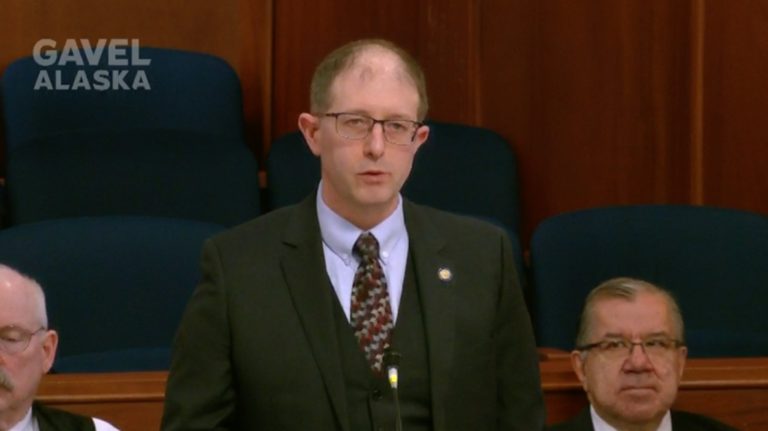
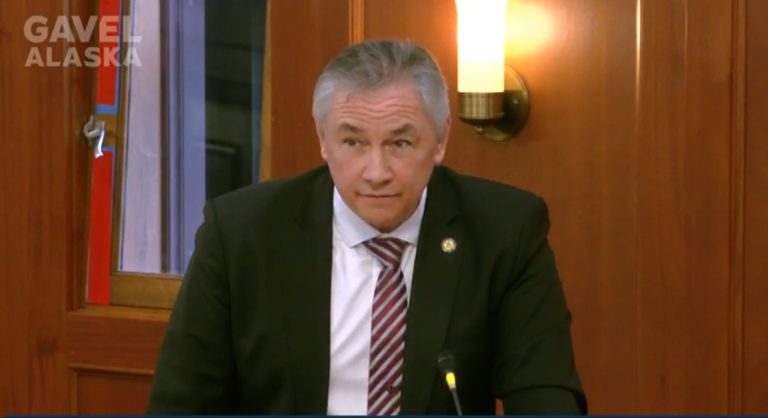
A character assassination on University of Alaska Board of Regents nominee Bethany Marcum by Democrat Sen. Jesse Kiehl of Juneau was the low point in the deliberations about whether Marcum, executive director of the conservative Alaska Policy Forum, would be added as a regent.
Marcum’s confirmation failed, closely, in a joint session of the Alaska Legislature. Democrats and liberal Republicans voted against her.
All other nominees by the governor to various boards and commissions were accepted, but leftists in the Legislature spoke passionately against Marcum, characterizing her policy positions as anti-education, and saying that all she wants to do is cut the budget for the university.
The dirtiest attack came when Sen. Kiehl said Marcum came into his office once as an advocate on an education issue and told him that she was “just a mom” who didn’t know how things work around here, and then tearfully beseeched him to see her point of view on education. At the time, he was taking the meeting as a legislative aide on behalf of the late Sen. Dennis Egan, his predecessor.
Kiehl said later he found out that she had been a legislative aide, and in his mind this contradicted her statement of being a mom who didn’t know how things worked. He challenged her integrity.
It was very much reminiscent of what former Rep. Ivy Spohnholz did during the confirmation of Karl Johnstone to the Board of Fish in 2019, when she stood on the floor of the session and accused Johnstone of sexual harassment of someone — relaying a third-hand story she had heard, which she told without disclosing the source of the accusation. It was at the height of the “me too” craze, and Spohnholz used an anonymous attack a man who had served as a judge in Alaska for many years, and who was not able to stand up and refute her attacks.
As for the Keihl attack on Marcum, she told Must Read Alaska that it’s astounding since “I’ve never been a mom and certainly have never told anyone that I am.”
Several Republicans defended Marcum on Tuesday. Rep. David Eastman said it was inappropriate for Kiehl to attack the character of a nominee in that manner.
Especially effective was Sen. Shelley Hughes, who stood up and began by stating, “I’m just a mom and sometimes I don’t know how things work around here.” Hughes is in the super-minority in the Senate, banished from all committee assignments by the liberal majority.
Hughes said that accusing Marcum of lacking integrity was unfair and pointed out that, not only does Marcum have a bachelor’s and master’s degree, she has had additional education in Japan and Hungary, and she has spent years studying and publishing important information about education in Alaska. Hughes and other Republicans said that it’s important to have a diversity of opinion on the Board of Regents, and not every regent needs to be rah-rah for the University of Alaska system, which has plenty of critics around the state for quality and performance.
Rep. Dan Saddler also spoke to the importance of the diversity of opinion, and reminded the body that there are other people (Sen. Patty Murray of Washington State) who say they are just “moms in tennis shoes.” It’s an idiom that should not be considered an absolute when weighing someone’s integrity.
Marcum, who was out of state when the vote occurred, said it went about as she expected.
Clearly, as expressed by several Democrats, her role as a strong advocate on the Redistricting Board set Democrats and people like Republican Sen. Cathy Giessel against her.
Anchorage Mayor Dave Bronson accepted the resignation of Anchorage Public Library Deputy Director Judy Eledge.
Eledge is having knee replacement this month and said that this is a good time for her to take off and move into retirement.
Eledge has been planning to retire for many months, even before her surgery was scheduled.
She has been subject to vicious personal attacks by the Anchorage Daily News for remarks that a library employee surreptitiously recorded of her, and then gave the recordings to a the ADN’s most partisan writers.
The recordings are of Eledge saying:
“I worked in an Alaska Native village. If it wasn’t for the white man and his oil money, they’d still be raping their daughters in caves.”
“I don’t have the same views about Eskimos as other people at the library. I worked in Barrow; I know they diddle their kids. It’s a well-known secret, people just don’t talk about it. I knew a 2nd grader that had gonorrhea. They send their FAS [fetal alcohol syndrome] babies to Anchorage because they don’t want to take care of them.’”
“The atmosphere here has gone downhill with woke movements like Black Lives Matter … I’m telling you, the woke culture is killing libraries and this country. If I could get rid of those employees, I could turn this library around for the good.”
“There are too many ‘liberals’ working in libraries.”
Eledge was originally appointed as the director of the library, after it became clear that the institution needed stronger, more caring leadership. However, she was not able to be confirmed by the leftist Assembly, and so she moved back to a deputy position that was not subject to confirmation. Virginia McClure was hired as head librarian.
In recent months, the newspaper and the Assembly have worked together to attack Eledge for her conservative views and her determination to return the library system to a safe place for children and families. The Loussac Library had become a daycare center for homeless and drug-addicts, and there have been several violent incidences at the library that revealed it’s no longer a safe place to bring children. One woman was stabbed and sustained lifelong disability when she was trying to return library books.
But leftists have worked hard to get Eledge removed altogether, and started a petition, calling Eledge a racist and a bigot. The Assembly has a resolution requesting her resignation on its May 9 agenda.
“One of your top priorities was to return the AK Collection to the rotunda of the library, where it had been prior to the 2017 flood. Our Director Virginia McClure recently received the Initial draft plans for the renovated Alaska room, and great progress has been made to begin the subsequent phases to return the AK Collection to its original location.
“As requested, a plan to begin the process of a new downtown library that had been stalled for many years is now back in progress. With the help of a newly formed downtown library committee and the Anchorage Library Foundation, the Old City Hall has been chosen for the downtown library per your request. We were also successful in obtaining additional funding from the AK Legislature, and a historical code analysis has been completed. We recently met with Maintenance and Operations to discuss the next steps.
“Significant efforts have been made to improve safety at the library. After a patron was stabbed in February 2022, we began to ensure our code of conduct was strictly enforced, with the help of concerned employees. A safety committee was formed and recommendations from this committee were instituted. One of the safety guidelines we implemented was the “one bag rule”. We implemented a ticket system that allowed individuals coming into the library with luggage, such as travelers or homeless individuals, to lock their items in a secure closet to be retrieved upon leaving the library. We had the opportunity to share this safety enhancement with Chair LaFrance shortly after changes were made.
“I am confident that the team at the library will continue to serve you and the city well. While we successfully achieved a lot during my time as Deputy Director, there is much more to accomplish within our library system. Moving forward, I believe that even more positive accomplishments can be achieved if politicizing these positions can be avoided. I wish your administration and the municipal library system all the best,” she concluded.
The Alaska State Legislature has confirmed all of Gov. Mike Dunleavy’s appointees to lead state departments.
In addition, Commissioner Jason Brune of the Department of Environmental Conservation was confirmed unanimously to be the Lt. Governor’s successor.
The confirmed commissioners are:
Commissioner Jen Winkelman, Department of Corrections
Commissioner Jen Winkelman started with the Department of Corrections in 2001. She has served as a Probation/Parole Officer in various capacities with the Division of Pretrial, Probation, and Parole (DP3) and the Division of Institutions in Fairbanks, Palmer, and Juneau. Most recently, she was the Director of DP3. Born and raised in Fairbanks, she has a bachelor’s degree in justice from the University of Alaska- Fairbanks. She previously served on the Fairbanks and Juneau reentry coalitions and the Interstate Commission for Adult Offender Supervision. She serves on the Governor’s Council for Homelessness and the Alaska Police Standards Council.
Commissioner Heidi Hedberg, Department of Health
Commissioner Heidi Hedberg has been with the state since 2009, serving in various capacities within the Division of Public Health, Department of Health, and most recently, as the Director for the Division of Public Health. She holds a Bachelor of Science degree from Alaska Pacific University. She moved to the state in 1995 from Seattle, Washington. Prior to her state service, she worked with various non-profit organizations for twelve years. She also chairs the Governor’s Advisory Council on Opioid Remediation and serves on the Governor’s Council on Homelessness and State Emergency Response Commission.
Commissioner John Boyle, Department of Natural Resources
Commissioner John Boyle moved to Alaska in 2010 after graduating from law school to serve a judicial clerkship in Fairbanks. Following the conclusion of the clerkship, he moved to Utqiagvik to work as an Assistant Borough Attorney and later Chief Advisor to the Mayor and Director of the North Slope Borough’s Government and External Affairs department. In 2016 he moved to BP as their Director of Government Affairs before joining Oil Search (now Santos) as Government Affairs Manager. He earned a Juris Doctorate from J. Ruben Clark Law School at Brigham Young University and a Bachelor of Science in Management and Finance at Brigham Young University.
Commissioner Adam Crum, Department of Revenue
Prior to being appointed commissioner of the Department of Health & Social Services in 2018, Commissioner Adam Crum was executive vice president of his family’s company, Northern Industrial Training. Commissioner Crum is active in community service organizations and has served as a board member for groups like the Salvation Army and MyHouse, a group that works specifically with homeless youth. Both groups work with clients with mental health, substance use disorder, transitional housing, and workforce development issues. He has a bachelor’s degree in psychology from Northwestern University and a Master of Science in Public Health from Johns Hopkins University.
Commissioner Kim Kovol, Department of Family and Community Services
Commissioner Kim Kovol has over 25 years of experience in the private sector in executive leadership, management, operating licensed childcare facilities, organizational development, restructuring logistics, and working in the human and social services realm with youth and adults. Prior to being appointed commissioner, Commissioner Kovol was Special Assistant to Governor Dunleavy with a social services portfolio focusing on Domestic Violence, Sexual Assault, Missing and Murdered Indigenous Persons, Human and Sex Trafficking, Homelessness, Foster care, Early Childcare, Eldercare, Opioids / Fentanyl, and Suicide Prevention. Commissioner Kovol has a bachelor’s degree in liberal arts and studies (K-8 Education) from San Diego State University and a Master of Social Work from the University of Alaska Anchorage.
Suicide, falls, violence, and snowmachines: A study of data gathered between 2016 and 2021 shows that Alaska has the highest traumatic brain injury-related death rate in the United States, surpassing the national average by more than double. The study was published by the State of Alaska’s Section of Epidemiology this week.
About 43% of all TBI-related deaths in Alaska were attributed to suicide, with young adults disproportionately affected.
Individuals between the ages of 25 and 34 experienced TBI-related mortality rates from suicide that were over three times the national average in 2019. Additionally, one in four deaths among individuals under the age of 30 were connected to TBIs.
Unintentional falls accounted for a significant proportion of traumatic brain injuries in Alaska, contributing to 39% of TBI-related emergency department visits between 2016 and 2021, and 44% of TBI-related hospitalizations from 2017 to 2021.
Among adults aged 15 to 34 years, motor vehicle crashes were the most common cause of both TBI-related emergency room visits and hospitalizations. Unintentional falls dominated as the primary mechanism of injury for emergency room visits among individuals 35 years and older, as well as for hospitalizations among those 45 years and above.
The study revealed several other demographic statistics:
The mortality rates were higher among those 85 years and older, and among males, American Indian/Alaska Native people, and those residing in the Northern Region of the state.
Patients hospitalized following a TBI in Alaska with evidence of intentional self-harm were over eight times more likely to succumb to their injuries than those with unintentional injuries.
Alaska Natives have a disproportionately higher rate of TBI-related mortality, with an age-adjusted rate exceeding three times the national average.
Rates of TBI attributable to assault were significantly higher among males, being 1.6 and 3.7 times higher than females for emergency visits and hospitalizations, respectively.
In terms of TBI-related hospitalizations, motor vehicle crashes took precedence in the Southwest and Northern regions, with all-terrain vehicle and snowmachine-related injuries accounting for a striking 39% of all TBI hospitalizations in the Northern region.
TBIs occur when individuals experience a bump, blow, or jolt to the head, or a penetrating head injury that disrupts normal brain function, ranging from mild to severe cases that can lead to prolonged unconsciousness, coma, or even death.
A school district poster that promotes Native values that the district wants to instill in students does not violate the U.S. Constitution, a Ketchikan judge has ruled.
Two parents wanted the poster taken down from the walls of the Ketchikan Charter School because, among the values on the poster is “Reverence for Our Creator,” which pushes a religious perspective.
Students at the school are subject to a behavior modification program based on how well they expresse the Native values — values that were determined by Southeast Alaska Native leaders two decades ago.
The poster refers to things like having pride in clans, being strong, having courage, and being good stewards of the land and sea.
Judge Katherine Lybrand said that the parents, one of whom is a teacher at the school, didn’t convince her that “Reverence for Our Creator” is a religious statement. She added that even if the statement was religious, it didn’t force behavior on anyone.
“The mere display of the posters around the District’s schools does not foster excessive entanglement or coerce students to believe a certain thing (and in fact there was no testimony that any student has felt coerced in any way),” Lybrand wrote, and that the poster promoting values is “more akin to reciting the pledge of allegiance than the posting of the Ten Commandments because the poster as a whole demonstrates that its purpose is to promote place-based learning and cross-cultural understanding, not to promote a religious belief.”
The Alaska Senate passed House Bill 8 on Monday, which excerpts low-powered electric bikes from most state motor vehicle regulation. The bill had earlier passed the House. HB 8 specifies that bikes with electric motors generating less than 750 watts of power will not be subject to motorcycle regulations, and will be permitted on sidewalks and bike trails where motorized vehicles are not allowed.
Most ebikes stop providing electric assist while the rider is pedaling after the speed reaches 20 miles per hour, or 28 mph for what’s called a Class 3 bike.
The publication Bicycle Retailer and Industry News reported that ebike sales grew 300% in the past five years making them the fastest growing segment of the bicycle industry.
According to Precedence Research, the global e-bike market size was valued at $17.56 billion in 2021 and is expected to reach over $40.98 billion by 2030, poised to grow at a compound annual growth rate of 9.6% from 2021 to 2030.
The House bill was the brainchild of freshman legislator Rep. Ashley Carrick of Fairbanks, a member of the Democrat minority. The Republican majority has been supportive of several minority-authored bills like this one, and several Republicans signed on as cosponsors.
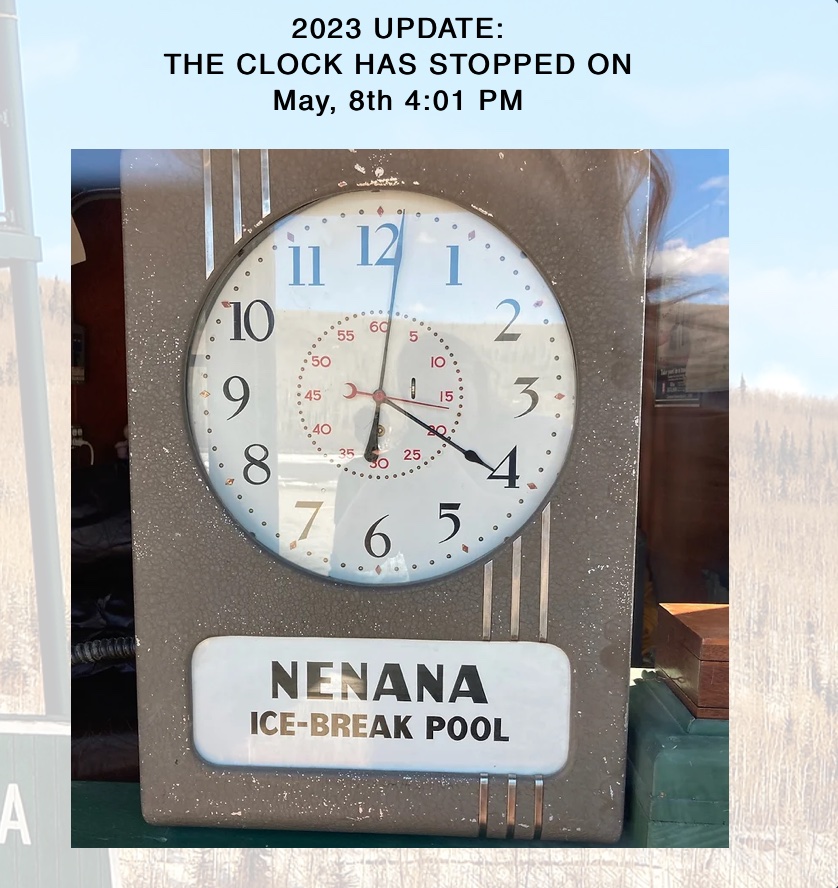
The alarm went off on the Nenana River tripod on May 8, and the clock stopped at 4:01.17 pm, marking the end of this year’s Nenana Ice Classic.
The Nenana Ice Classic is an annual ice pool contest held in Nenana, in which people buy tickets and guess the exact time the Tanana River ice will break up at Nenana. The proceeds of the charitable gaming event go to nonprofit organizations.
The ice usually breaks up between April 20 and May 20, and as it flows downstream, it tips the tripod, which is tethered to a clock. When the clock stops, the winning time is set.
The Ice Classic is Alaska’s greatest guessing game, the organization says. “In 1917 a group of engineers surveying for the Alaska Railroad bet $800 putting in their guesses when the river would break up. This fun little guessing game has turned into an incredible tradition that has now continued for over 106 years!”
On Monday, the Alaska House passed House Bill 120, a significant achievement for freshman House Rep. Frank Tomaszewski, a Republican of Fairbanks. The bill introduces a new provision allowing non-resident students to obtain hunting, fishing, and trapping licenses at a discounted cost. This legislation maintains existing regulations and tag fees without any changes.
The bill passed with a vote of 36-4, with Republican Reps. David Eastman and Sarah Vance, and Democrat Reps. Sara Hannan and Andy Josephson voting no.
Over the past several decades, hunting and personal use fishing have experienced a decline, resulting in a reduction in funding for conservation efforts. To address this issue, various federal statutes such as the Pittman-Robertson Act, Dingell-Johnson Act, and Migratory Bird Hunting Stamp Act have tied conservation funding to excise taxes on items like firearms, ammunition, archery equipment, and fishing gear.
Subsequently, the revenue generated from these taxes is allocated to state fish and game departments to support vital conservation and management initiatives. Alaska, in its commitment to conservation, matches this funding through revenue derived from hunting and fishing licenses.
Rep. Tomaszewski emphasized the importance of fostering a love for hunting, fishing, and trapping among the younger generation to safeguard Alaska’s cultural heritage and conservation endeavors.
“We cannot overlook the direct connection between our hunters and our ability to conserve. Encouraging younger individuals to partake in these splendid outdoor activities is paramount,” he said.
By reducing the cost of licenses for non-resident students, the bill encourages their participation in these activities, especially considering the financial burdens already borne by many students due to college expenses.