Sunday, August 16, 2026
Home Blog Page 662

Justice Department watchdog report: Jeffrey Epstein killed himself

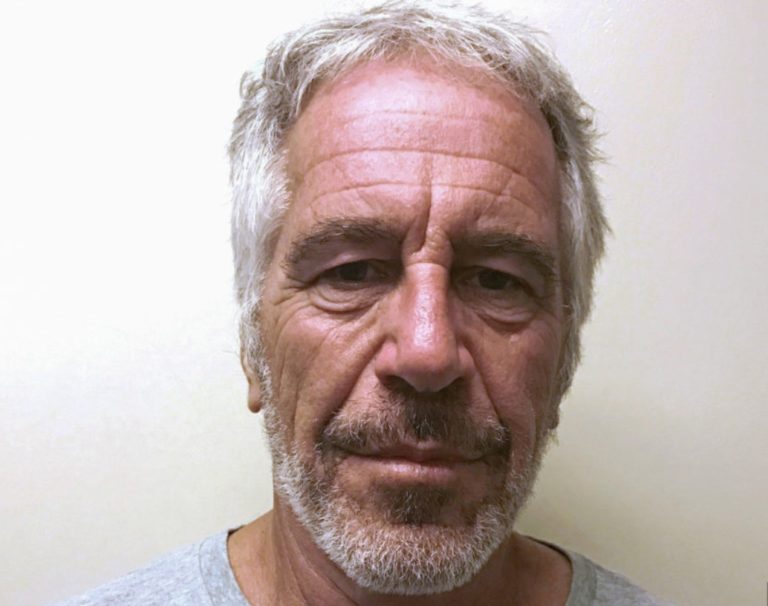
Jeffrey Epstein, the high-flying financier and pedophile who got caught trafficking girls, didn’t exactly get killed by the prison system.

But even though he had reportedly attempted suicide in jail two weeks earlier, the prison system left him alone in his cell with an excess of bed linens, and in a unit where the 24-hour surveillance cameras were not working. Only one prison worker was on duty for 24 hours straight. Guards at the prison routinely falsified their check-in documents.

The report from the Inspector General Michael Horowitz, who serves as the Justice Department’s watchdog, said that it was merely negligence, misconduct, and poor job performance by the prison system of New York City that allowed Epstein to hang himself in August of 2019.

The federal investigation found no evidence that he was killed by anything other than state incompetence and what many would see as dereliction of duty.

Epstein hung himself with those extra bed linens issued to him, Horowitz said in his report.

The report contradicts many theories that say Epstein was killed in prison by those who don’t want his list of sex clients, to whom he marketed underage girls, to get out to the public, which would have happened if he had gone to trial.

Even though he has been dead for nearly four years, the men who preyed on girls at Epstein’s private island have never faced justice. And there were dozens, if not hundreds of powerful men who visited Epstein’s island during the time in question.

Epstein was once a member of the high-and-mighties of the world. Visitor logs show he visited the White House 17 times while Bill Clinton was president — twice on the same day on three different occasions.

The pedophile is connected loosely to Alaska by way of former Anchorage Daily News publisher Alice Rogoff, who brought Epstein’s child groomer, Ghislaine Maxwell, to Alaska for a trip to see the Iditarod Sled Dog Race.

The two were pals in another venture — Arctic economic interests. Maxwell, who set up young girls to be ready for rape by wealthy men, is now serving 20 years in prison, but once she was part of the Arctic Assembly, and founded an environmental nonprofit called Terra Mar, ostensibly to “save the oceans,” but more likely a way to launder various funds through a tax-exempt organization.

Maxwell and former ADN owner Alice Rogoff were friends and colleagues back in the days when Rogoff owned and shaped the political landscape of the state, pushing Bill Walker into power as governor, and trying to get her hands on the Alaska Permanent Fund. Rogoff encouraged Walker to use the fund as collateral to borrow money for Alaska projects she was interested in, particularly around Port Clarence. Rogoff was married to Carlyle Group founder David Rubenstein, and their daughter, Gabrielle Rubenstein, now serves on the Permanent Fund Board of Trustees.

“Ghislaine Maxwell abruptly torpedoed her oceanic non-profit in the wake of the scandal surrounding her associate Jeffrey Epstein,” wrote Business Insider in 2019.
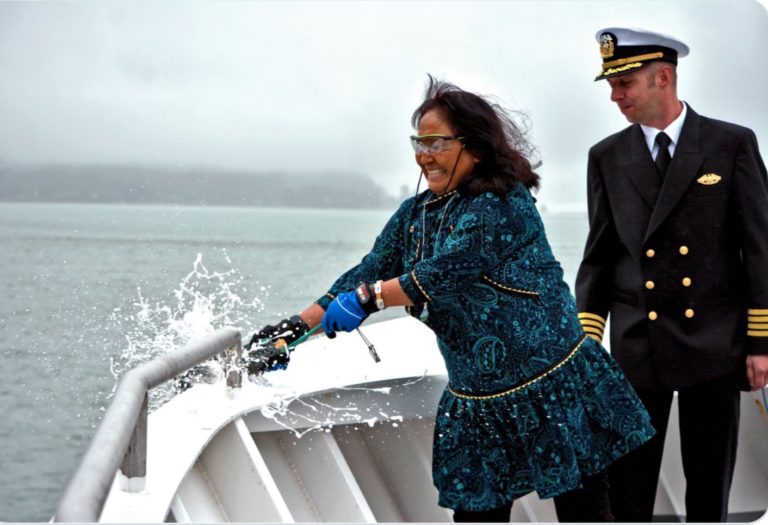

MV Hubbard, delayed for years by Gov. Walker, finally in service in Upper Lynn Canal

The Alaska Marine Highway ferry MV Hubbard is finally in service in Upper Lynn Canal. It was constructed at the Vigor Shipyard in Ketchikan, the second Alaska Class ferry built at the relatively new shipyard. The first was the Taslina.

While the Hubbard has been making its laps for a month, it was finally christened by First Lady Rose Dunleavy on Monday, with the ceremonial smashing of a champagne bottle near its bow.

The Hubbard currently serves as a day boat between Juneau, Haines, and Skagway.

As originally designed, it didn’t have crew sleeping quarters, because it was to be purpose built for the northern Lynn Canal, and crew members would go to their own homes after their shifts. But that wasn’t satisfactory for labor unions, whose members make a lot more money when they sleep on the ship — they wanted overnight routes.

During the administration of Bill Walker, the governor and the labor unions changed the contract for the boat to add crew quarters. In 2018, after Walker was ceremoniously dumped from office, the spokeswoman for the Department of Transportation cryptically said, “The primary reason the ACFs [Alaska Class ferries] cannot be deployed this summer on the planned routes is the previous administration, for whatever reasons, did not make the necessary revisions to the marine union contracts and modifications to the Haines terminal.”

Thus, a ferry that was originally supposed to be in service in 2018 needed additional appropriations, and was some of its brand new interior was torn apart and retrofitted. Nearly a decade after it was funded for about $30 million by the Legislature, it’s finally in service, at an additional cost of $16 million.

The Alaska Class ferry, which is a day boat concept, began in 2006 under Gov. Frank Murkowski. It would be part of a plan to extend Juneau’s road north and shorten the trip between the three communities. Service throughout Southeast Alaska could be greatly improved, if getting in and out of a Juneau road system was not so time-consuming. Other ferries could be deployed elsewhere in the system.

That plan never materialized because Gov. Walker killed the Juneau Access project and said the ship was needed for overnight runs, which was preferred by the labor unions.

The $16 million retrofit added eight single person staterooms on the bridge deck, and eight two-person staterooms on the upper deck. Additional work included the installation of a galley, scullery, and crew mess spaces on the upper deck; a new fan room on the bridge deck; and extension of the existing port stair tower to the bridge deck to serve the new accommodations. Adding overnight quarters for crew greatly increases the cost of running the ferry.

Even though it has the $16 million add-ons, it’s currently just a day boat, as originally planned.

The MV Hubbard is 280 feet long, seats up to 300 passengers and carries 53 standard vehicles. The passenger amenities include observation lounges with comfortable chairs, a covered heated solarium, a cafeteria-style cafe, a children’s play area and a quiet room. 

‘Inaugural Nine’ graduate from Alaska Policy Forum Leadership Academy

Alaska Policy Forum graduated nine Alaskans from its inaugural Alaska Leadership Academy in May. The group of Alaskans participated in eight months of leadership programming with experts from around the country on topics ranging from crisis management, public speaking, team building, Alaska Statehood Compact and Constitution, and on-camera media training.

The Alaska Policy Forum, founded in 2009, is a fiscally focused conservative think tank that weighs in on matters such as government budgets, regulations, taxation, and free-market policies. The organization, funded by private donors, sees the need to grow the skills of Alaskans who may emerge as the next leaders of the state in elected office or other public policy roles.

The first graduates are:

  • Carolina Anzilotti, Palmer
  • Taunnie Boothby, Willow
  • Catherine Chambers, Anchorage
  • John Coe, Anchorage
  • Kathy Henslee, Anchorage
  • Grant Robinson, Anchorage
  • Dan Rogers, Anchorage
  • Andrew Satterfield, Anchorage
  • Frank Tomaszewski, Fairbanks

The upcoming class of the Alaska Leadership Academy will begin this fall and carry through winter, with applications due Aug. 1. Reach out to the Alaska Policy Forum to nominate someone for the course, or offer financial support for the project to grow informed, well-spoken thought-leaders by sending a note or calling 907-334-5853.

Mayor takes action on tramp camp nightmare on Ingra Street, where 200 homeless are creating neighborhood friction

Anchorage Mayor Dave Bronson toured the squalid conditions that have developed on the site of the old Alaska Native Hospital at 3rd Avenue and Ingra. About 200 vagrants — people who can’t or won’t follow the rules of regular structured shelters — are in tents and tarps at that location, a result of the Anchorage Assembly refusing to allow a solution that would address this particular population.

The mayor released the following statement concerning the large number of prohibited homeless camps and ramshackle structures at the site of 3rd Avenue and Ingra Street:

“Today I directed municipal resources to clean up the growing number of homeless camps at 3rd and Ingra. We are taking immediate action to clean up the illegal structures, pallets, accumulating trash, and abandoned vehicles on the property that previously was the old Alaska Native Hospital. Code enforcement will be tagging abandoned vehicles and those will be removed as soon as possible,” he said.

Bronson was responding to a publicity campaign by local property owners who call themselves the “3rd Ave. Radicals,” a tongue-in-cheek reference to those who are hardworking property owners and taxpayers trying to keep the area safe and trying to improve neighborhood conditions.

“We are going to protect public property and the safety of residents and businesses in the area, while respecting the rights of all citizens,” the mayor said.

A video of the mayor touring the site today can be found at this link.

The mayor started his morning with a staff meeting at City Hall, asked his senior staff how many had been to the site, where it gets worse by the day. Today, it was field trip day, as Bronson wanted his entire staff to walk the site and see what the people living around the area are dealing with.

Bronson is working on fencing, security and control in the short term, and working on a contract to get 24-hour security at the site. He has asked police to step up patrols.

The biggest item is land where Davis Park encampment is. With about 100 people littering the area, this is military land leased to the city, and it’s now a large illegal encampment the military wants out of there. Those people will drift over to the Native Hospital land, where it’s already grim. There are only, for example, two portable toilets for the 200 who are already encamped. With 100 more likely to come into that area, it’s going to get worse before it gets better.

The “3rd Ave. Radicals” hope that between site security and better police protection, some of the open drug use, drug dealing and illegal activities will be reduced. Some of the criminals will respond to police presence by finding other places to camp across the city.

Meanwhile, the Anchorage Assembly has not allowed the mayor to solve the problem and has also refused to come up with a plan it can agree on.

Two Alaska Native tribal groups get millions from Biden tribal grants

The Biden Administration today announced the the Tribal State Small Business Credit Initiative awards, which are being given directly to tribal governments under the American Rescue Plan.

A total of $73 million will be allocated to 39 tribal governments to support tribal enterprises and small business owners. Fifteen of the awards were announced today.

The Inupiat Community of the Arctic Slope, approved for up to $2.9 million, will administer an equity/venture capital program. Through this initiative, the ICAS Economic Development Department will invest in tribally owned small businesses.

Similarly, Ninilchik Village, approved for up to $689,038, will focus on an equity/venture capital program aimed at providing engineering services. Ninilchik Village Tribe has about 1,000 members, including American Indians who have settled there and been accepted into the tribe.

The 2023 SSBCI awards represent a substantial increase from the program’s original allocation in 2010, with President Biden’s American Rescue Plan, which has driven the national debt to over $32 trillion, contributing more than six times the previous funding amount.

The reauthorization and expansion of the SSBCI program under the American Rescue Plan are projected to benefit 100,000 small businesses nationwide, facilitating the flow of tens of billions of dollars in new small business financing over the next decade, the White House said.

Now the Administration will go on tour to tout the awards. President Biden, Vice President Kamala Harris, First Lady Jill Biden, and other administration leaders will travel across the country over three weeks, highlighting the administration’s spending on manufacturing, infrastructure, and cost-saving initiatives. It’s a campaign tour in thin disguise.

Breaking: Over $1 billion awarded to Alaska for broadband expansion

The Alaska Broadband Office got more than $1 billion to help deploy broadband throughout Alaska — but fiber to everyone will cost $1.7 billion, sources say.

The Department of Commerce’s National Telecommunications and Information Administration has announced that Alaska has been awarded a staggering $1,017,139,672.42 as part of President Joe Biden’s “Investing in America” program. This funding, allocated under the “Internet for All” initiative, aims to provide affordable and reliable high-speed Internet service to every American.

The announcement was made by President Biden, Vice President Kamala Harris, and Secretary of Commerce Gina Raimondo during a press conference held at the White House.

“With this funding, along with other federal investments, we’re going to be able to connect every person in America to reliable high-speed internet by 2030,” Biden said.

Raimondo emphasized the significance of this investment, stating, “What this announcement means for people across the country is that if you don’t have access to quality, affordable high-speed Internet service now – you will, thanks to President Biden and his commitment to investing in America.”

The funds for the initiative are part of the $42.45 billion Broadband Equity, Access, and Deployment program established by President Biden’s Bipartisan Infrastructure Law. Each state, along with the District of Columbia and five territories, will administer grant programs within their borders to ensure widespread access to high-speed Internet.

According to a White House fact sheet, Texas will get the largest award of $3.3 billion. California, Missouri, Michigan, and North Carolina will each be awarded over $1.5 billion. The allocation for Alaska is the largest among on a per capita basis, due to the unique challenges the state faces due to its remote geography.

Eligible entities, including states, the District of Columbia, and territories, are to receive their formal notice of allocation on June 30. Following this, they have 180 days to submit their initial proposals outlining the implementation of their grant programs.

Starting July 1, entities can begin submitting their proposals, which will be approved by the NTIA on a rolling basis. Once an initial proposal is approved, eligible entities will be permitted to access at least 20% of their allocated funds to get started.

For more information on the allocations for each state, the District of Columbia, and the territories, InternetForAll.Gov.

Shuffling deck chairs on Titanic? Fox slides Jesse Watters into the slot where Tucker Carlson held forth

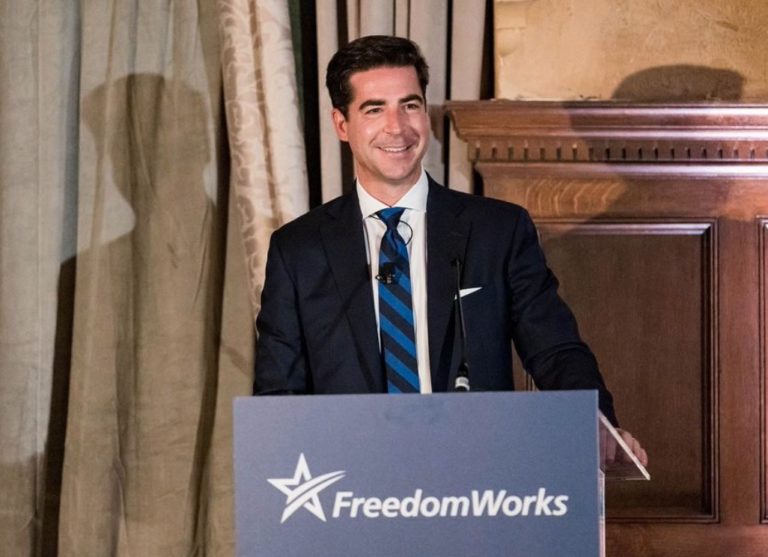
Fox News announced Monday that Jesse Watters will replace news commentator Tucker Carlson in the nightly lineup as the 8 pm (4 pm Alaska) anchor. Laura Ingraham moves to the 7 pm slot, Sean Hannity remains at 9 pm, and Greg Gutfeld moves to 10 pm.

Watters became popular during segments of the political talk show The O’Reilly Factor, with Bill O’Reilly, making his way with a man-on-the-street interview that became its own show, “Watters’ World” in 2015. Fox fired O’Reilly in 2017 over sexual harassment claims. He was at the time, the network’s biggest draw.

Carlson was fired in April, in an instance many believe to be part of a deal made with Dominion Voting Systems, which sued Fox News for defamation for allowing hosts, contributors, and guests to speak badly about the voting system company.

Meanwhile, Carlson has moved to Twitter to produce his show, which is a much shorter segment at this stage than his Fox News hour. His last episode had over 28 million viewers.

Tucker Carlson’s June 22 episode on Twitter.

Fox, according to Nielsen live plus same day data for May 2023, verged 1.09 million total day viewers, 1.42 million total primetime viewers, 135,000 adults 25-54 in primetime and 126,000 adults 25-54 in total day. But Fox News saw substantial audience drop off in primetime with Carlson now out of the equation.

“The network dropped -32% in average total primetime viewers and -44% in the A25-54 demo, as well as -16% in total day viewers—and -22% in the total day A25-54 demo versus the previous month,” Nielsen reported.

Rick Whitbeck: An inventory of the damage Biden has done to Alaska

By RICK WHITBECK | POWER THE FUTURE

Even before Joe Biden took up residence at 1600 Pennsylvania Avenue in January 2021, there was clear writing on the wall for the damage his administration would do to Alaska’s energy community.

We just didn’t know how bad it was going to get.

After all, his campaign was riddled with promises to the radical environmental movement.  Two were going to be exceptionally impactful to our state: a first-day ban of oil and gas leasing on federal lands and in federal waters.

Then, an immediate closing of the Coastal Plain of the Arctic National Wildlife Refuge (ANWR) to development, even after Congress had authorized its opening in 2017 and after its initial lease sale had been held and winning bidders contracted with in early 2021. 

When the eco-Left saw its champions named to Cabinet-level positions in the Departments of Energy, Interior, Transportation and the EPA, astute Alaskans knew it was going to be a long four years. 

And we were correct.  

The Biden administration has – to date – carried out over 55 administrative and executive orders related to resource development projects or opportunities in Alaska.  As tracked by U.S. Senator Dan Sullivan, only two have been what could even be considered “wins” for the state, and one came with a huge trade-off.

When ConocoPhillips’ Willow project was approved back in March, the environmental movement acted like team Biden had committed eco-treason. 

In fact, while the re-authorization of Willow was something to celebrate, it came with a series of exceptionally damaging long-term trade-offs. First, the project was scaled back from five drill pads to three, which will limit the amount of oil that can be recovered. 

The much bigger impact will come from the 13.8 million on-shore, and 2 million off-shore acres that were ordered off-limits to any future development efforts. Those lands and waters all are adjacent to where oil and gas deposits have already been discovered.  How many jobs and how much more revenue to local, state and federal coffers were sacrificed in the name of “going green”?

There have been significant efforts from radical environmental organizations to thwart other development projects across our state, and they’ve been given a boost from Team Biden.

The Ambler mining district is known to be rich in copper and critical and strategic minerals that are needed if the country is to establish domestic supplies to help us ‘go green’ and transition from fossil fuels to renewables.  While that idea in and of itself is nonsensical, so is the ongoing fight over accessing the Ambler district via a congressionally authorized corridor. 

From the cries of “social and environmental justice” emanating from the Left, you’d think the plan was to build a 10-lane superhighway through the most pristine area of Earth.  In fact, the 211-mile, 2-lane gravel road will be strictly controlled and private, allowing only for extracted components to reach the Dalton Highway and the rest of Alaska’s road system.

The Pebble Mine in Southwest Alaska is the western world’s largest deposit of copper, which faces a worldwide shortage under the Left’s ‘green’ agenda.  The rabid nature of the environmental movement against Pebble has been going on for nearly two decades. Even after the U.S. Army Corps of Engineers released its final environmental impact statement providing an unabashed thumbs-up for the project, the mine’s permits were disallowed for ‘public interest’ reasons that reeked of political shenanigans. 

Next, the EPA vetoed the project, citing watershed regulations that were just overturned by the Supreme Court in Sackett vs EPA.  It will be interesting to see what narrative the Left uses to attempt to deny Pebble going forward.  They certainly won’t be based on facts, since the science is clear that the mine’s plan for development is sound.

If past is prologue, the next 17 months will see the Biden administration attempt to circumvent federal laws, the Supreme Court and science to build its case for protecting the planet at any cost.  Those efforts will continue to land Alaska in the crosshairs of radical environmentalists, their wealthy ideologue donors from the Lower 48 and the small-yet-vocal minority of Alaskans who would rather see development efforts cease altogether.

If you want to help counter those misguided efforts, I invite you to contact me at [email protected].  Let’s talk about building a coalition of rational, like-minded Alaskans who will work for a brighter, better energy future.  We can – and must – do that for the sake and future of the Great Land.

Rick Whitbeck is the Alaska State Director for Power The Future, a national nonprofit organization that advocates for American energy jobs. In addition to emailing him at [email protected], you can follow him on Twitter @PTFAlaska.

Peltola turns back on middle class, votes to save Biden’s mortgage rates penalizing good credit borrowers

In a move to protect middle-class borrowers from President Joe Biden and his higher interest rates for people with good credit, the House of Representatives passed the Middle-Class Borrower Protection Act.

Alaska Rep. Mary Peltola voted against the passage of the Middle-Class Borrower Protection Act, a bill that garnered bipartisan support of 14 Democrats and that aims to create safeguards against fee changes based on borrowers’ debt-to-income (DTI) ratios. It institutes a one-year freeze on the Biden Federal Housing Finance Agency’s increase of mortgage rates for good-credit borrowers, so that poor-credit borrowers can get better mortgage rates. The punishing rule went into effect in June.

“Why would you punish people by making it more expensive for people that have been most responsible? On the credit score piece, it’s not even clear that it only helps people who are poor. I mean, there are wealthy people who don’t manage their credit well,” Rep. Warren Davidson told reporters. Davidson, who is a Republican from Ohio, is a co-sponsor of the legislation.

The bill’s other co-sponsor, Rep. Tom Emmer of Minnesota, expressed concerns about the Biden Administration’s socialist agenda, stating, “Homeownership already feels out of reach, and now this administration wants to subsidize individuals with a history of financial irresponsibility and penalize Americans who have worked hard to build strong credit.”

Emmer’s office conducted a survey among constituents that revealed that 93% of the 6,000 respondents believed that prospective homebuyers with good credit should not be required to subsidize high-risk borrowers.

Peltola did not survey her constituents before voting against overturning the rule. The measure passed the House with a vote of 230 to 189 and proceeded to the Senate for further deliberation.