One day after the Ninth Circuit Court of Appeals overturned a Seattle judge’s ruling that had shut down the Southeast Alaska chinook troll fishery, the Alaska Department of Fish and Game delivered the catch limit news to the troll fishermen, specifying the number of kings they are allowed to catch during the upcoming season.
Commercial trollers will have a total allocation of 74,800 chinook salmon during the first retention period, which begins July 1. Based on data from past years, the department thinks that the goal will be reached in 9-10 days, depending on weather.
The Alaska Department of Fish and Game had already announced that between October 2022 and September 30, 2023, trollers would be permitted to harvest 149,100 treaty chinook. Those are not fish originating from Alaska hatcheries. This represents a reduction of 44,100 fish compared to the previous year, amounting to a 30% decrease.
The adjustment in harvest limits can be attributed to the Pacific Salmon Commission’s implementation of a more conservative approach to setting chinook harvest caps for Southeast Alaska. As the regulatory body overseeing fishing practices along the West Coast of the United States and Canada, the PSC makes the catch allocations between the two countries under the U.S.-Canada Pacific Salmon Treaty.
Following the allocation decision, the Alaska Board of Fisheries must approve the management plans that divide the state’s catch among various gear types and user groups.
More information on the exact details of the commercial Southeast chinook fishery can be found at this ADF&G announcement.
Meanwhile, Wild Fish Conservancy, which brought the lawsuit to try to shut down commercial king trolling in Southeast Alaska, said “the appeals process is just beginning,” indicating that the group may make an appeal to the U.S. Supreme Court. That appeal could likely be after the July troll fishery, which is is just four days away.
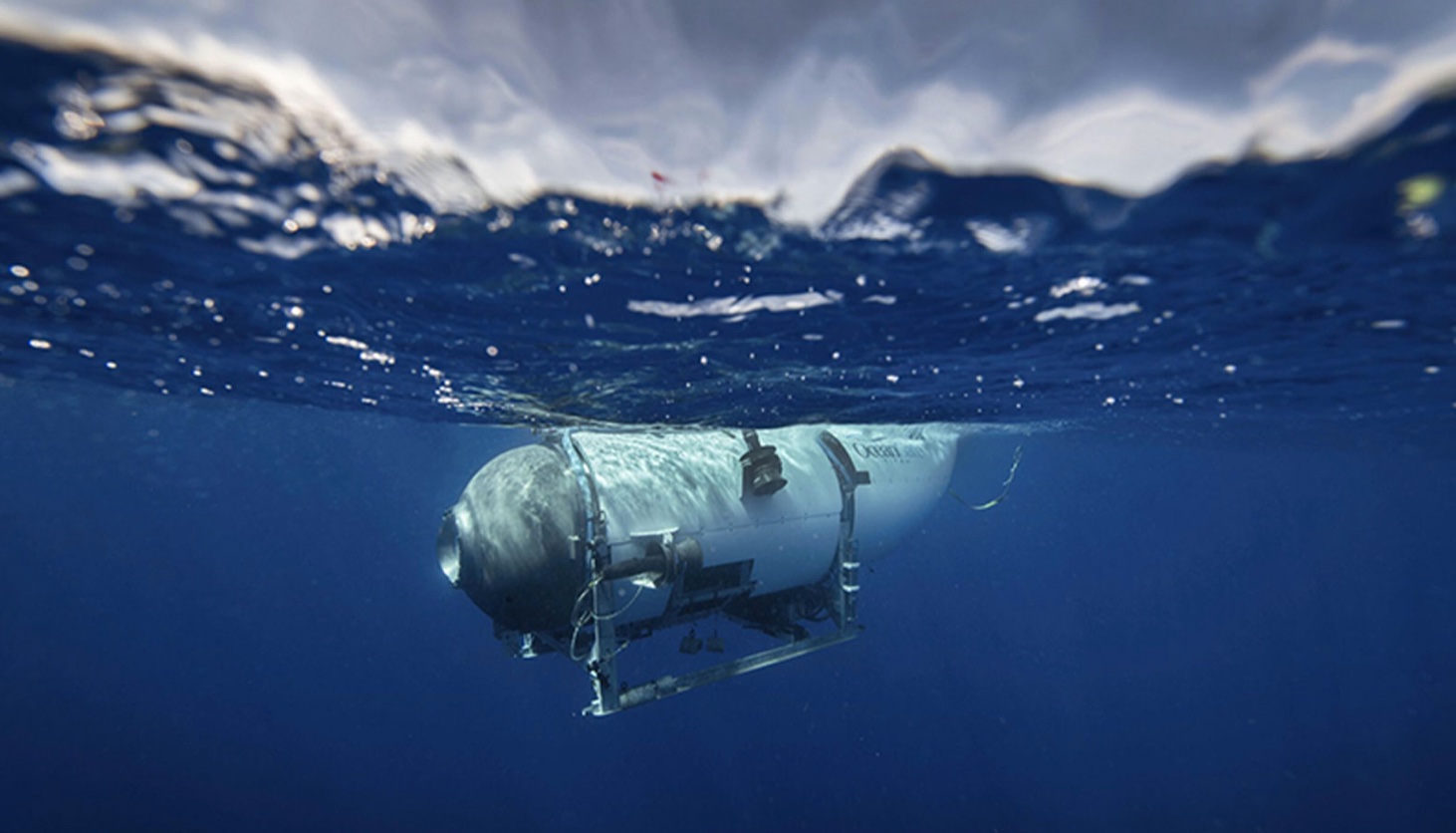
Anyone who has read or watched Tom Clancy’s “The Hunt For Red October” knows that the U.S. Navy knew of the catastrophic failure of the “Titan’s” hull if not at the time it happened, as soon as the computers reviewed the sound recordings, say a few hours later. Despite the spin from the Biden-media, there was nothing secret.
The United States has had a line of sonobuoys and hydrophones from Murmansk to New York since the early days of the Cold War. If it happens in the North Atlantic, an American submarine or listening station knows about it.
Suffice it to say that I don’t believe anything the Biden Regime says about anything so it wouldn’t surprise me if they ordered the Coast Guard and Navy to string the “Search for Titan” drama out just to cover for Hunter Biden’s bad news, but I don’t know for sure and that is giving them more credit for smart than I like to give them. Maybe it was some sort of sham; maybe they’re just that stupid.
I want to talk about boats not politics. Those of us who’ve been around boats and boating know the term “Six Pack License.” A “Six Pack” isn’t a license; it is a description of a type of boat technically called an “uninspected passenger vessel.”
All those pretty and not-so-pretty things you see bobbing around out there on a holiday weekend are mostly “uninspected passenger vessels.” Almost all the consumer boats are uninspected passenger vessels, meaning they are not built under Coast Guard supervision nor to Coast Guard specifications except in regard to a limited number of safety requirements.
The ”Six Pack” comes from the fact that if you’re a licensed professional mariner, no matter what your rating from 25 ton to unlimited ocean, you cannot take more than six passengers for hire in an uninspected passenger vessel.
If the USCG wants to mess with you about it, they can. If you’re licensed and you take a party out and some of them bring some nice wine to express their appreciation, you can’t legally take it if you have more than six aboard. You sure as hell can’t charge a quarter million bucks to ride an uninspected submersible if you have more than six paying passengers on it.
So, let’s address “The Hunt for Titan.” It is clear that the owner did everything in his power to avoid Coast Guard supervision and inspection of his vessel. He built an “uninspected passenger vessel” to go 14K meters to the bottom of the Atlantic Ocean. He made it down and back a few times.
I had a mid-range uninspected passenger vessel for several years. From what I could see, mine was much better equipped than the “Titan.” It was strictly a good-weather boat. It was pretty safe up until the seas got into the six-foot range, but then uncomfortable and at times downright scary. I could have sold you a ticket to cross the Gulf of Alaska or even run to Kodiak or the Aleutian Chain, and we might have made it safely; a good weather eye and good luck goes a long way, but if anything at all had gone wrong, we were going to die. The guys on the “Titan” had it better; as the French guy said, if anything goes wrong, you’re dead before you know anything is wrong. On the surface, it takes a while to die from cold water and exposure. A Mustang life suit really just helps them find the body.
People will be screaming for retribution, but I think he gamed the system. He built the deep-sea submersible version of a Bayliner Capri, a Sunday afternoon play boat, and sold tickets to take it two miles down in the North Atlantic. I think he found and used a loophole in the USCG regulations and any claim against him would have to be some sort of tort/negligence claim.
At the time they wrote the regulations, the USCG probably wasn’t thinking that some fool would try to take a beer keg or a propane tank to the bottom of the ocean as a passenger vessel. The Pakistani guy and his son probably didn’t know enough to know better, but a couple of the others were experienced mariners and explorers who should have known better than to get inside that thing. What were they thinking?
Art Chance is a retired Director of Labor Relations for the State of Alaska, formerly of Juneau and now living in Anchorage. He is the author of the book, “Red on Blue, Establishing a Republican Governance,” available at Amazon.
It was the tale of two Alaskas in Southcentral on Saturday, and two different types of Alaskans sorting themselves out into festivals as different as they were entertaining.
While downtown Anchorage — very much Joe Biden country — was taken over by rainbows, drag queens, and men in ill-fitting tutus, the Mat-Su Valley was the site of kilt-wearing he-men having a tug-of-war competition and women participating in Celtic feats of strength.
The pride parade, a celebration of gay lifestyle, returned to Anchorage after having shied away from celebrating for the past three years due to fears over Covid.
In the parade were Rep. Jennie Armstrong of downtown Anchorage, Rep. Andrew Gray of East Anchorage, and Sen. Forrest Dunbar of East Anchorage, who wore a Bud Light necktie for the occasion.
Meanwhile, while Dunbar hoisted a rainbow flag as he traipsed through Anchorage, in the Mat-Su, the Scottish Highland Games were the place for hoisting big logs into the air.
At the Alaska State Fairgrounds, the field of play included the tug-o-war, caber toss (log throwing), and the sheaf (bale of hay) tossing competitions, all under a Chamber of Commerce sky. The festival included Scottish bagpipes, heavy athletics, Celtic dance, drumming, kilted mile, scotch tasting, tea tent, salmon tossing, tug-of-war, vendors, historical demonstrations, ax throwing, and children’s events, all of which continued on Sunday in a family-friendly environment.
Siemens Energy, whose subsidiary Siemens Gamesa is the world’s second-largest wind turbine manufacturer, disclosed significant problems with its wind turbine components, causing its shares to plummet and forcing the company to revise its profit forecast for the year.
On Thursday, the German company announced a “substantial increase in failure rates of wind turbine components” after conducting a thorough review of its operations.”
As a result of the findings, Siemens Energy’s board initiated an extended technical review expected to incur costs exceeding $1.09 billion, far surpassing the initial estimations. The unexpected surge in component failures dealt a severe blow to the company’s financial prospects, leading to a drastic drop of over 37% in Siemens Energy’s shares on Friday.
Siemens Gamesa said earlier this year the outlook for the wind industry remains good, pointing to the U.S. Inflation Reduction Act, which is making massive taxpayer-funded investments in wind energy.
Although fires are relatively rare, the industry and its manufactured high-tech components are relatively new, and more breakdowns may be expected, according to Wind Systems Magazine, which wrote, “Tens of thousands of wind turbines are expected to be installed over the next few years — and with this boost in numbers comes both an increase in expected frequency and greater public scrutiny over wind turbine fires.”
The magazine estimates the number of wind turbines estimated to catch fire per year varies between 1-in-2,000 to 1-in-15,000. As more turbines are installed and existing ones age, the number of fires may increase. Each of these fires could cost as much as $8 million, according to the magazine, quoting insurance writers.
“As most wind-turbine towers exceed 250 feet, they are often out-of-range for ground-based firefighting. Sending a team up to fight the fire presents a significant health and safety risk. Therefore, if no fire suppression system is in place, it will be left to burn out, irreparably damaging the turbine,” the writer points out.
There is also the hazard to those on the ground, as spinning, burning components fall from the sky. Fields and crops can catch fire, and wildfires can spread quickly.
According to Siemens Energy, the magnitude of the component failure problem suggests that it may be occurring in a significant portion of its installed fleet of wind turbines, ranging between 15% and 30%.
The revelations at Siemens have sent shockwaves throughout the renewable energy industry, as Siemens Energy’s wind turbines are widely used globally.
There are currently 70,800 wind turbines across the U.S., according to the U.S. Geological Survey, and Siemens Gamesa has installed more than 10,000 of those wind turbines, totaling approximately 20 gigawatt of installed capacity. In Iowa alone, Siemens Gamesa has erected nearly 1,400 wind turbines for a total of almost 3.5 gigawatt. Since 2005, an average 3,000 turbines have been built in the U.S. each year.
Alaska’s largest wind farm, the Eva Creek Wind Farm operated by Golden Valley Electric Association, has 12 wind turbine generators, developed by manufacturer Goldwind Americas, a wholly-owned subsidiary of Chinese multinational Xinjiang Goldwind Science & Technology Co., Ltd.
During May, the Eva Creek Wind Farm put 5.778,010 kilowatt-hours of power into the electric grid, enough to power 9,630 Interior homes per month (using an average of 600 kWh/month), the association said. May’s capacity factor was 31.6%.
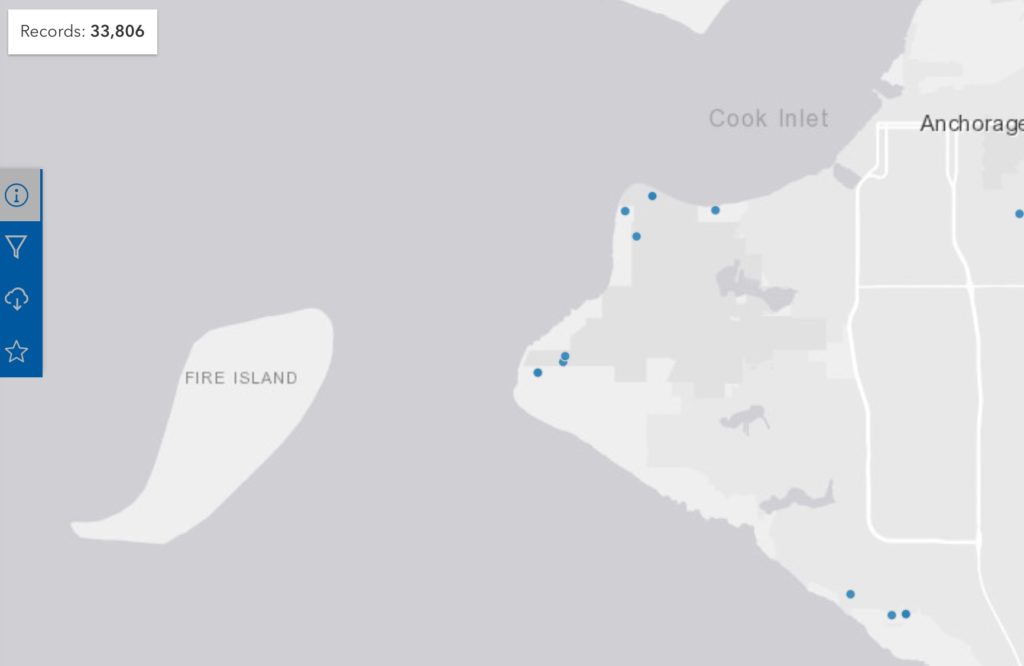
Cook Inlet Region Inc. (CIRI) operates the second-largest wind farm in Alaska on Fire Island in Cook Inlet, where 11 turbines produce about 2% of the annual power generation for Chugach Electric Association, the state’s largest power utility. The original footprint on Fire Island was built with primarily an appropriation from the State of Alaska, and federal money. CIRI’s wind farm is in its 12th year, and the Native corporation has hopes of tripling its wind turbines.
At the time of its construction, there were two bald eagle nests on Fire Island, and the developer, enXco Development Corporation, said the 11-turbine wind farm would not pose any hazard to those nests. Must Read Alaska was not able to determine if those nests remain active on the island, but there are none listed on the State of Alaska bald eagle nest map at this link.
U.S. Sen. Dan Sullivan is at it for a second year, trying to stop Russian seafood from flooding the U.S. grocery freezers. Although there is a presidential-level prohibition in place, Russia slips millions of tons of seafood to the American consumer through another country, typically China.
The loophole in the law is the subject of Sullivan’s U.S-Russian Federation Seafood Reciprocity Act of 2023. Over 18 months ago, Sullivan first attempted to pass his U.S-Russian Federation Seafood Reciprocity Act by unanimous consent, but the bill was blocked by Senate Democrats.
The current version was blocked Thursday by Sen. Ed Markey, a Massachusetts Democrat, just like it was last year.
Markey’s own state seafood industry is not supporting him in his opposition to Sullivan’s legislation. In February, the Massachusetts Seafood Collaborative called upon elected leaders to sanction Russian seafood imports. The Massachusetts Seafood Collaborative is a group of harvesters, processors and wholesalers who admit they profit off of such imports, but the group said it would stand on its values.
“Let us not forget, Massachusetts was the cradle of our own fight for independence against an imperial power, therefore, to do anything other than stand in solidarity with the courageous Ukrainian people would be to betray our values,” the collaborative said in a statement. “Therefore, we are calling on our elected officials to immediately sanction Russian fish exports into the US. We are happy to sacrifice our own economic interests for the interests of a people under siege. We are proud to do our small part in combating evil and aggression and to stand with Ukraine.”
Sullivan said to continue to allow these fish to slip through is to support Russian oligarchs, and that is against America’s interests.
“If you’re a big fisherman in Massachusetts or the great state of Alaska…you cannot export one fish to Russia. Nine years of a ban. And guess what? The United States lets Russian seafood into America almost duty free … That is called unfair by any measure,” Sullivan said last year, when he first introduced the measure.
“If you’re against this bill, you’re for Russian oligarchs who are still avoiding sanctions on seafood, you’re against the American fishermen whether in Alaska or Massachusetts – because they’re getting screwed by this uneven trade relationship – and you’re helping the Chinese. I can’t imagine anyone being against this,” he said last week on the Senate floor.
The bill tackles the issue of Russia-origin seafood that has been reprocessed in China other countries and subsequently imported into the United States. The importing of Russia seafood undermines America’s fishing families, strengthens Russia, and aids the Putin war machine.
Sullivan’s bill broadens the application of President Joe Biden’s executive order, which only banned “unaltered” imports of seafood from Russia. Now, the Russians simply launder their seafood through China, which has no such restriction.
Russia has made strides in building modern industrial super-trawlers that plunder the ocean, hauling in hundreds of tons of seafood a day in an indiscriminate way with their massive nets. The ships have not only catch capabilities, they have processing machinery and freezers on board — all with efficiencies that are said to be devastating to the ocean’s food chain.
Russia has had a prohibition on the import of U.S. seafood products since 2014, after U.S. sanctions were imposed by the Obama Administration in response to the Russian invasion and annexation of the Crimean Peninsula. Since 2018, Sen. Sullivan has made sanctions on Russian overfishing and importation to the United States a priority.
The Russian Wagner Group mercenary leader Yevgeny Prigozhin cut a deal Saturday and will exile himself to neighboring Belarus after his fighters, some 5,000 of them, came within 120 miles of Moscow, in a mutiny launched against the Russian military.
“We will destroy everything that stands in our way,” the Wagner Group chief had been quoted as saying earlier, angered by friendly fire attacks on his men on the frontlines of the war on Ukraine.
But then, according to the Kremlin, President Vladimir Putin agreed to drop treason charges against Prigozhin if he left the country. The deal was reportedly brokered by Belarus President Alexander Lukashenko and was announced by the Belarusian foreign ministry on Twitter.
Lukashenko reportedly held negotiations with Prigozhin throughout Saturday and said that the Wagner Group leader accepted the proposal of the Belarus leader, who is sometimes referred to as “the last dictator in Europe.”
Occupied by Nazi Germany, Belarus was retaken by Stalinist Russia in 1944 and remained under Soviet control until 1991, when it declare its independence. Since 1994, it has been run by Lukashenko and is an authoritarian state.
As leader of the private mercenary army, Prigozhin has been a key figure in prosecuting the war against Ukraine. Early Saturday, his group of fighters took control of Russia’s military regional headquarters in Rostov-on-Don. This remarkable move is the equivalent of a group of militia in the United States taking control of U.S. Central Command in Tampa. It looked like a civil war in the military was quickly developing.
Within hours, Prigozhin, who was once a trusted insider who was close with Putin, announced that he ordered his forces to return to their respective bases.
As for the official response from the United States, it was curious.
The U.S. State Department on Saturday nonchalantly published a press release about pollinating birds and habitat. The White House kept up a steady stream of Twitter postsabout LGBTQ+ issues and the coming anniversary of the Dobbs decision by the Supreme Court last year, and repeating how awful the decision was and how much the nation needs to have a national abortion law such as Roe v. Wade.
Readers are advised that war reporting is incomplete, comes from unreliable sources, and is subject to disinformation campaigns from various parties.
A group of property owners who call themselves the “3rd Avenue Radicals” say that crime has gotten to the breaking point in their area of Anchorage.
And by breaking point, they don’t only mean windows being broken, but graffiti, bike-theft rings, stolen vehicles, open illegal drug trades, public inebriation, and more.
The group said on Facebook that it’s sending out an SOS. They are unimpressed with the efforts of the mayor and Assembly alike and they want the community to rally to their cause.
“We are sending out an SOS! “The residents and business owners of East 3rd Avenue are currently being victimized on a daily basis by individuals who have moved in and taken over the former Native Hospital Site at 3rd and Ingra,” wrote the 3rd Avenue Radicals on their Facebook page.
“We have criminals living and hiding amongst our most vulnerable, finding protections from their crimes by the MOA’s fear of Martin VS. Boise,” they wrote, referring to the Supreme Court upholding a Boise, Idaho lawsuit by six homeless plaintiffs against the city’s anti-camping ordinance.
“In the past 24 hours business/property owners have had their truck broken into and wallet stolen, windows shot out with a BB gun, and buildings tagged by the criminals operating a bike chop shop on the site (which was reported directly to the Mayor over a month ago, no action). A local towing company dumped a burned out junk car on the site which had since been removed, only after a resident involved APD. (All this in just in the last 24 hours),” the group wrote.
In one instance, a business owner was unloading a delivery van and it was stolen from him in the middle of the delivery. Another business owner found a man hiding in the back room of his warehouse, having gained entry somehow.
“We have collectively witnessed all sorts of illegal activities, non-stop drug dealing, even fist fights in the street,” the group said. There’s no security, no law enforcement, and only one dumpster and two portable toilets, which is inadequate for the 150 homeless people now occupying the site. That particular area has been a favorite for homeless people in Anchorage over the years.
The 3rd Avenue Radicals, who are clean-cut property owners and taxpayers, say that the Bronson Administration and the Anchorage Assembly have allowed the massive unsanctioned camp to form, turning a blind eye to the damage being done.
“When you express your concerns to the Mayor, Assembly, Code Enforcement, APD, we get a lot of excuses why nothing can be done. The Chief of Police even gave residents a lecture at a recent meeting at city hall about how we should be performing citizen’s arrests! WE should be arresting the criminals!” the group wrote. “The people and businesses of East 3rd Avenue are currently being sacrificed. The reputations of our businesses tarnished severely, and no one is doing anything about it.”
While the Assembly has blocked every attempt by the mayor to create solutions for the chronically homeless, it has also stalled its own solutions.
The Third Avenue Radicals formed in 2020, during the last severe situation in their area, when they were trying to get former Mayor Ethan Berkowitz to take their concerns seriously.
While the general public’s attention has been captured all week by the disappearance and implosion of a private ocean submersible filled with billionaires, significant developments in the Russia-Ukraine war have unfolded.
These developments include a surprise financial aid award from the Department of Defense, an internal civil war developing within the Russian military, led by prominent warlord Yevgeny Prigozhin, and an announcement by JP Morgan and Blackrock of a “Ukraine Development Fund.”
Early last week, the Pentagon revealed an accounting error that resulted in an additional $6.2 billion being freed up for assistance to Ukraine in its ongoing fight against Russian advances.
In a separate incident, Russia is grappling with a massive internal military conflict. Yevgeny Prigozhin, the leader of the private military company Wagner and a former close ally of Russia President Vladimir Putin, turned against the Kremlin. Prigozhin publicly blames the Russian government for a deadly missile attack on one of Wagner’s training camps in Bakhmut, Ukraine, and he has vowed retribution.
President Putin addressed the nation in an early morning televised speech, denouncing Prigozhin’s advances as “treason” and vowing not to back down, warning of the risk of civil war and saying he will crush the mutiny by the man who started out at Putin’s chef.
The situation rapidly escalated into armed confrontations, with Wagner’s forces seizing control of a military headquarters in Rostov-on-Don in southern Russia, and capturing facilities further north in Voronezh, located in southwestern Russia, according to the Times of London.
Prigozhin’s rebel army, estimated to consist of 25,000 fighters, is reportedly marching toward Moscow, aiming to overthrow Russia’s military leadership.
The exact arrival time of the Wagner forces in Moscow remains uncertain, with estimates ranging from four to 20 hours. Recent sightings of Wagner forces near the region of Lipetsk suggest that the rebel army is rapidly approaching the capital, according to international media outlets. Unconfirmed reports said Wagner’s fighters have passed through Lipetsk, just 300 miles from Moscow. Readers are reminded that all of the reporting on war in real time is unreliable and subject to disinformation.
Two more developments in the tension include a report that a Russian spy plane, an IL-18, was shot down by anti-aircraft forces belonging to the Wagner group. The Times of London reports that Putin may have flown out of Moscow with two private jets: “There is confusion about Putin’s whereabouts after reports that two of his private jets took off today.”
FlightRadar24, a website that tracks aircraft movement, reports that GNSS jamming is strong in and around Moscow and St Petersburg. This occurs when a radio signal is deployed that makes GPS devices unable to determine the position of an aircraft.
If there’s war, then there’s money to be made. In the financial world, Financial Times reported on June 19 that BlackRock and JPMorgan Chase are working with the Ukrainian government on a reconstruction bank that would to “steer public seed capital into rebuilding projects that can attract hundreds of billions of dollars in private investment. The Ukraine Development Fund remains in the planning stages and is not expected to fully launch until the end of hostilities with Russia. But investors will have a preview this week at a London conference co-hosted by the British and Ukrainian governments.”
But with Putin’s government and war effort in turmoil, it appears the investment opportunity, which will no doubt include taxpayer funds.
“The World Bank estimated in March that Ukraine would need $411bn to rebuild after the war, and recent Russian attacks have driven that figure higher. The Kyiv government engaged BlackRock’s consulting arm in November to determine how best to attract that kind of capital, and then added JPMorgan in February. Ukraine president Volodymyr Zelenskyy announced last month that the country was working with the two financial groups and consultants at McKinsey. No formal fundraising target has been set but people familiar with the discussions say the fund is seeking to raise low-cost capital from governments, donors and international financial institutions and leverage it to attract between five and 10 times as much private investment,” Financial Times reported last week.
A judge has found 49-year-old Nathan Benton of Kodiak guilty of two counts of sexual abuse of a minor in the second degree, and two counts of sexual abuse of a minor in the third degree.
Benton, who worked for the Kodiak School district for several years, chose not to have a jury trial, but to be tried by a judge. After the four day trial, retired Supreme Court Justice Joel Bolger, who serves as a judge as needed, found Benton guilty for events that happened in Kodiak in 2020.
Factors involved in this case include the 1990’s “Satch Carlson” law that applies to adults who are 10 years older than the minor-age victim, and the fact that they were living in the same home at the time of the abuse.
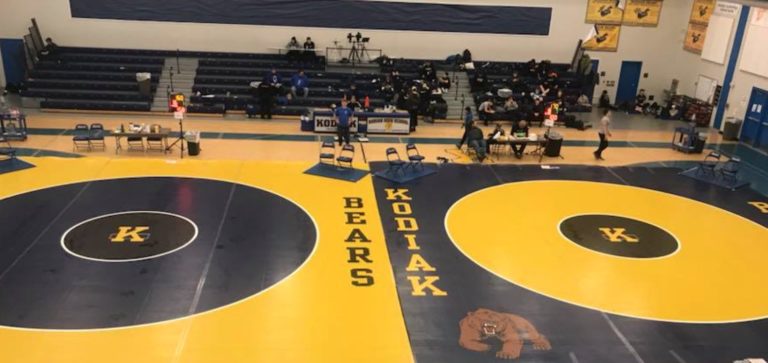
Benton, who resigned in 2021, was the middle and high school assistant wrestling coach in Kodiak. The family of the former female wrestler who police identified as the victim sued the Kodiak Island Borough School District for not adequately vetting its hires and for not acting to intervene when accusations of “grooming” behavior were made, which ultimately led to the sexual abuse.
Benton is being held without bail pending sentencing, which is scheduled for Nov. 30. He could receive between five years and 99 years.