Monday, August 17, 2026
Home Blog Page 656

Ketchikan votes to put controversial, hyper-sexualized manual for teens in adult section of library

The Ketchikan City Council has reversed an earlier vote and, by a margin of 4-3, has placed “Let’s Talk About It” in the adult section of the Ketchikan Public Library. The book was in the teen section, as it is in many libraries across the country, including Anchorage’s Loussac Library.

“Let’s Talk About It” is graphically illustrated to show how to administer oral sex, what gay sex looks like with some precision, and has descriptions of how to perform anal sex and why teens should access porn and participate in sending sexual pictures of themselves over the internet. Nationally, it is a book that has enraged parents and created distrust of public institutions that seem bent on delivering hyper sexualized material to children.

In Anchorage, the book is available in the Teen Underground, a special library room just for teens where many sex manuals and gay promotions are located and where adults are not allowed, except for the teen librarian.

In June, the Ketchikan City Council had voted 4-3 to leave the book in the teen section of the library. But Councilwoman Abby Bradberry filed a motion to reconsider, and the Thursday vote went against the book. Teens are still able to access the book in the adult section of the library.

IRS to auction off seized land in Willow, Wasilla, Sterling

The Internal Revenue Service will hold auctions next week, with property in Willow, Wasilla, and Sterling being sold to the highest bidders.

The first action is Wednesday, July 12, for property in Willow and Wasilla with one pacel in Willow and three in Wasilla, all three about an acre in size.

On Thursday, a 7-acre parcel in Sterling will go on the auction block.

More information on how to bid on the parcels is here and at this link.

Bidders must show that they have 10% of the bid amount prior to placing a bid and will have 60 days to pay the remainder.

Tshibaka: New poll shows main cause of 2022 low voter turnout in Alaska

By NIKI AND KELLY TSHIBAKA

Thomas Jefferson observed that ours is not a “government by the majority,” but rather a government by the “majority who participate.” The outcomes of our elections, and our nation’s future, are determined as much by those who do not vote as they are by those who do. 

Our vote is our voice, a regular reminder to elected officials that they temporarily steward – they do not permanently own – the powers they wield. Their authority to govern us is conditional and based solely on our consent, as expressed through our vote.

Perhaps that is why the late Supreme Court Justice, Louis Brandeis, believed the most important political office any of us will ever hold is that of private citizen.

He further warned that under our republican form of government, the duties of that office, such as our right (and corresponding duty) to vote, could not be neglected without causing “serious injury to the public.” 

Similarly, Plato warned, rather indelicately, that among the injuries private citizens suffer when they do not fulfill the duties of their office is that they will “end up being governed by [their] inferiors.”

The late drama critic and co-founder of The American Spectator, George Jean Nathan, made a similar observation, noting that “[b]ad officials are the ones elected by good citizens who do not vote.”

It therefore was particularly alarming that the November 2022 election resulted in the lowest recorded voter turnout rate in our state’s history, while the country experienced the second-highest midterm voter turnout rate the Census Bureau has recorded in four decades. As the voices of our sister states’ citizens thundered at the polls, the voices of Alaska’s citizenry were barely a whisper. 

Recognizing that democracies decline and tyrannies transcend when the public does not vote, Preserve Democracy explored why our state experienced such a precipitous drop in voting last year. Was it because we no longer trusted our politicians, did we forget to vote en masse, or was it something else? 

In an effort to unearth what happened, Preserve Democracy conducted a statewide poll through Cygnal, which the New York Times, among others, has recognized for the accuracy of its polling. The results of the poll were informative.

The following were the most common voluntary and involuntary reasons Alaskans gave for not voting in 2022.

Most common involuntary reasons for not voting were:

  • Out of town:  26.5%
  • Sick or disabled:  12.8%

Most common voluntary reasons for not voting:

  • Lack of trust in the integrity of elections:  13.0%
  • Concern about the new ranked-choice voting (RCV) system:  6.3%.

An approximately equal percentage of Republicans (15%) and Democrats (16%) said they did not vote because of concern regarding the new RCV system, as well as 3% of Independent/Unaffiliated voters. Women voters, older voters, and voters who are people of color said they were less likely to vote because of RCV.

In addition, a majority of the respondents (51%) had a negative view of RCV, while 29% had a positive view of it. When asked how they would vote today regarding 2020’s Ballot Measure 2, which instituted RCV, a majority of the respondents said they would vote to keep traditional voting in place (older voters and Alaska-Native voters were more likely to vote to reject RCV).  

Finally, 4 in 10 voters believed RCV gives an unfair advantage to one party over another, including 75% of Republicans, 15% of Democrats, and 36% of Independent/Unaffiliated respondents. 

Readers will reach different conclusions regarding the results of the poll, but our main takeaway is that the poll’s data indicates there is great reason for hope with respect to future elections in Alaska.

Consider that almost 40% of the individuals who did not vote indicated they were either out of town, sick, or disabled, which is a challenge that can be addressed going forward by ensuring voters are better informed on how to request absentee ballots, and by improving our outreach efforts to remind them to return their absentee ballots before the established deadlines.

Such a coordinated effort could substantially increase future voter turnout rates; preserve the vigor and vitality of our republic; raise Alaskans’ voices from a whisper to a roar; and safeguard the office of private citizen, Alaska’ highest and most powerful political office. 

We encourage our fellow Alaskans to stand together by working to increase voter turnout. In the words attributed to Benjamin Franklin, we still have a “Republic, if you can keep it.”

Niki Tshibaka is a former federal civil rights attorney and government executive. Kelly Tshibaka is the founder of Preserve Democracy and former U.S. Senate candidate for the State of Alaska. They have five amazing children, one of whom voted for the first time in November 2022.


Texan, Kodiak resident were the two who died in Old Harbor plane crash

The names of the two people who died as a result of the Kodiak Island plane crash on July 2 have been positively identified as:

  • 91-year-old Byron Chitwood of Greenville, Texas
  • 73-year-old Rodney Murdock of Kodiak

Alaska State Troopers recovered their bodies on July 3 and sent them to the State Medical Examiner for autopsy and positive identification.

Chitwood was the former mayor of Greenville, Texas, and had also served on the city council of the community about 50 miles north of Dallas. His two sons were seriously injured in the crash, which occurred when they were returning from their annual fishing trip to Alaska.

Chitwood was a member of the Rotary Club, Hunt County Master Gardeners and Hunt County Shared Ministries/FISH. According to the Herald Banner online news website, Chitwood was a veteran of the U.S. Navy and will be buried in the military cemetery in Grand Prairie, next to his wife, who passed away in July 2020.

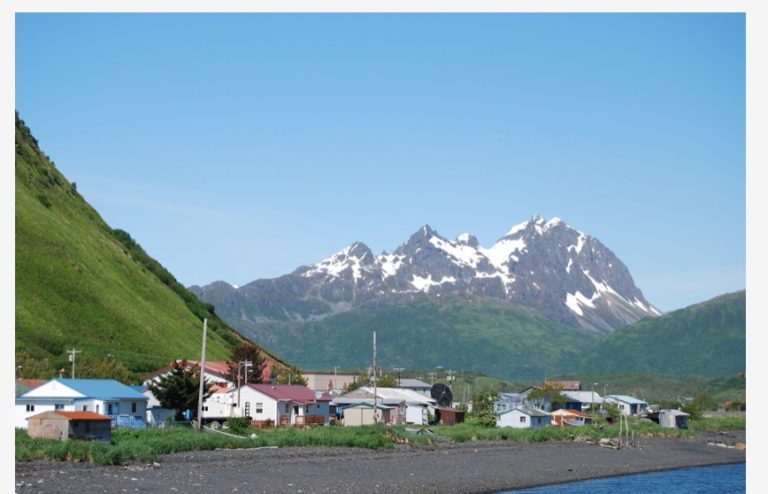
Murdock owned an appliance repair business in Kodiak and was returning to Kodiak from working at Old Harbor, sources told Must Read Alaska.

The three who survived the crash were seriously injured had been medevaced off the island for advanced care after the Piper PA-32-300 operated by Vertigo Air Taxi crashed in mountainous area about three miles north of Old Harbor.

Photo credit: Alaska Municipal League

Dunleavy names two to State Board of Education & Early Development

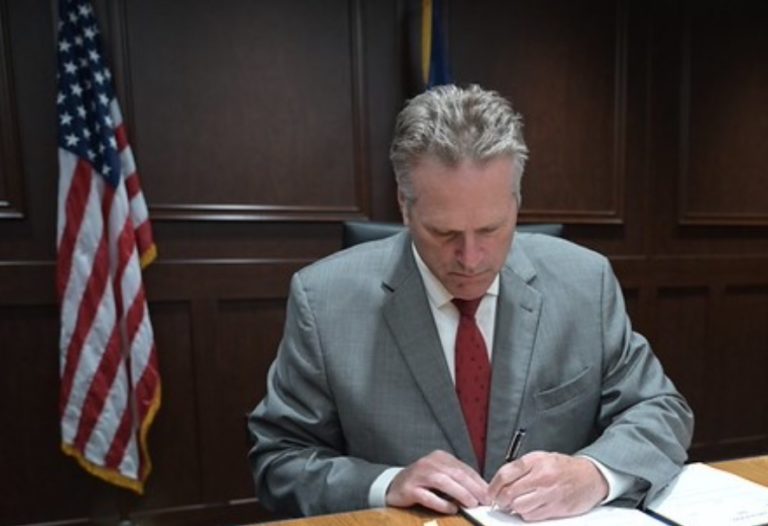
Gov. Mike Dunleavy has named two Alaskans to the nine-member State Board of Education and Early Development, subject to confirmation by the Alaska Legislature.

Barbara Tyndall of North Pole is a 1996 graduate of University of Alaska Fairbanks, and is a longtime teacher in the Interior, including North Pole Christian School. She has served on the board of a crisis pregnancy center and Fairbanks Youth Advocates. She also served on the Alaska Women’s Commission and Alaska Juvenile Justice Advisory Committee.

Pamela Dupras of Anchorage has a bachelors degree in elementary education from Alaska Pacific University. She is a teacher in the Anchorage School District who has also worked in education around the state, including being a specialist in English as a second language, in Palmer and Kodiak. She taught on the North Slope and Glennallen. Since 2021, she has served on the Alaska Native Cultural Charter School Academic Policy Committee.

The two complete the board upon the expired terms of members Keith Hamilton and Sandra Kowalski.

Bombs away: Murkowski and Democrat senators support Biden’s sending cluster bombs to Zelenskyy

The Biden Administration announced on Friday it is sending cluster munitions to Ukraine to help in the fight against the Russian invasion.

Cluster munitions are controversial and President Biden has in the past condemned Russia’s use of these weapons as a possible war crime.

U.S. Sens. Lisa Murkowski (R-AK), Mark Kelly (D-AZ), Joe Manchin (D-WV), and Tammy Duckworth (D-IL) released statements on the administration’s decision to provide additional weapons and capabilities to Ukraine, including cluster bombs.

“After visiting Kyiv, I believe more strongly than ever that the U.S. must do more to help Ukraine and its citizens defend their country from Russia’s catastrophic aggression. While a decision like this could never be made lightly, it ultimately became necessary to ensure Ukraine prevails in this catastrophic war,” Murkowski said. “As a senior member of the Defense Appropriations Subcommittee, I traveled to Ukraine and met with President Zelenskyy and his senior military leadership. Discussions with them underscored the urgent need for greater support from allies. Our nation heard them, we stand with them, and support decisive action to enable Ukraine to retake its sovereign territory and put an end to Russia’s indiscriminate killing of innocent civilians—the exact concern that would normally prevent our nation from sharing these munitions in the first place.”

Cluster munitions are cluster bombs, that carry dozens or hundreds of smaller bomblets, When the canisters are dropped from aircraft or launched by artillery, they can cause extensive damage to civilians nearby.

The BBC notes that more than 100 countries, including the UK, France and Germany, have signed an international treaty called the Convention on Cluster Munitions, banning the use or stockpiling of these weapons due to their indiscriminate effect on civilian populations.

Anybody within the strike area of the cluster bomb is very likely to be killed or seriously injured. Further, there are a large number of the bomblets that do not detonate, and can detonate if children or others pick them up.

“Vladimir Putin continues to commit war crimes and atrocities against the Ukrainian people. In April, I had an extensive, in-depth discussion with President Zelenskyy and his national security team in Kyiv on what was working on the battlefield and what was not. They are outmatched by Russia’s use of tens of thousands of artillery cluster rounds that are more effective against certain targets, and it’s part of what’s preventing them from getting the upper hand,” said Senate Airland Armed Services Subcommittee Chairman Mark Kelly. “Ukraine’s success is a national security imperative for us, and they have asked for these rounds to deploy in self-defense on their own soil because they see it as critical to their survival. I appreciate the work from the administration that went into this plan and will continue working with them and my colleagues in the Senate to provide Ukraine with the weapons and support they need to beat Putin and win this war.” 

“Earlier this year I was proud to lead an eye-opening congressional trip to Ukraine and Poland with Senators Kelly and Murkowski and guest Brad Paisley where we met with U.S., Polish, and Ukrainian military and civilian leadership, including President Zelenskyy, and a recurring item of discussion was the transfer of U.S. cluster munitions to Ukraine. President Zelenskyy made it clear that these munitions would play a significant role in bringing this conflict to an end, and based on what we saw firsthand, I believe that sufficient trust and expertise have been established with Ukrainian military forces to ensure these munitions are used as safely and efficiently as possible. It is our responsibility as a world power and democratic leader to continue to support the brave people of Ukraine as they defend their democracy and freedom,” said Senator Manchin.

“The human suffering caused by Putin’s unprovoked and inexcusable attack on Ukraine’s sovereign territory demands our sustained attention, which is why I support the Biden Administration’s commitment to continually improving the Ukraine Security Assistance Initiative to ensure we are providing our ally with adequate capabilities to defend their people and beat back Russia’s forces,” said Senator Duckworth. “Our country and the world remain in awe of the bravery of the Ukrainian people who are so effectively defending their homeland and their freedom. I’m proud to stand in solidarity in this fight to protect Ukraine’s territorial sovereignty, its people and its right to self-governance.”

Ninth Circuit: No evicting squatters on public lands unless they are given shelter

The Ninth Circuit Court of Appeals has again denied municipalities and communities the authority to remove homeless encampments from sidewalks, streets, and public lands unless adequate shelter is provided for the people being removed.

The decision came as an response to a lawsuit by homeless people originating in Grants Pass, Ore., where local authorities were forcibly evicting squatters from both public and private properties.

The court’s ruling on Wednesday stems from a previous decision made in July 2020 by a court in Medford, which deemed Grants Pass’s ordinances regulating homelessness as unconstitutional.

The ordinances were criticized for being cruel and unusual punishment and for imposing excessive fines. One of the city’s ordinances specifically prohibited homeless individuals from using essential items such as blankets, pillows, or cardboard boxes for protection from the elements while sleeping within city limits. Other ordinances included “anti-sleeping” and “anti-camping” measures, a “park exclusion” ordinance, and a “park exclusion appeals” ordinance. Violations of these ordinances could result in civil fines amounting to several hundred dollars per offense, with repeat offenders facing potential bans from all city properties. Additionally, individuals found on city property after receiving an exclusion order could be subject to criminal prosecution for trespassing.

In response to the initial ruling by the Medford court, Grants Pass appealed the decision to the Ninth Circuit Court, where a three-judge panel upheld the decision last year. Seeking further review, the city requested that all judges on the Ninth Circuit Court hear the case. However, on Wednesday, the judges voted against granting that request.

This case drew on a previous ruling known as Marvin v. City of Boise in 2018. The Marvin ruling declared that “the Eighth Amendment prohibits the imposition of criminal penalties for sitting, sleeping, or lying outside on public property for homeless individuals who cannot obtain shelter.”

The recent Ninth Circuit decision emphasized that the Martin v. City of Boise ruling served as the backdrop for the entire litigation. Consequently, any attempt to criminally punish homeless individuals for sleeping in public areas, in the absence of suitable alternatives or shelters, would be considered a violation of the Eighth Amendment.

One of the plaintiffs died before the decision was given by the Ninth Circuit, but judges said that would not make the case moot.

The dissenting judges wrote, “we must preserve for our localities the ability to make tough policy choices unobstructed by court-created mandates that lack any sound basis in law. The expanding constitutional common law our court is fashioning in this area adds enormous and unjustified complication to an already extremely complicated set of circumstances.”

Judge Daniel Collins wrote in a separate dissent that:

  • Martin v. City of Boise is a “deeply flawed” decision that seriously misconstrued the Eighth Amendment and the Supreme Court’s caselaw construing it;
  • Even if Martin were correct in its Eighth Amendment holding, the panel majority’s decision in Johnson greatly expands Martin’s holding in a way that is egregiously wrong; and
  • The panel majority’s decision makes things worse by combining its gross misreading of Martin with a flagrant disregard of settled class- certification principles.

Petersburg Catholic Church burns

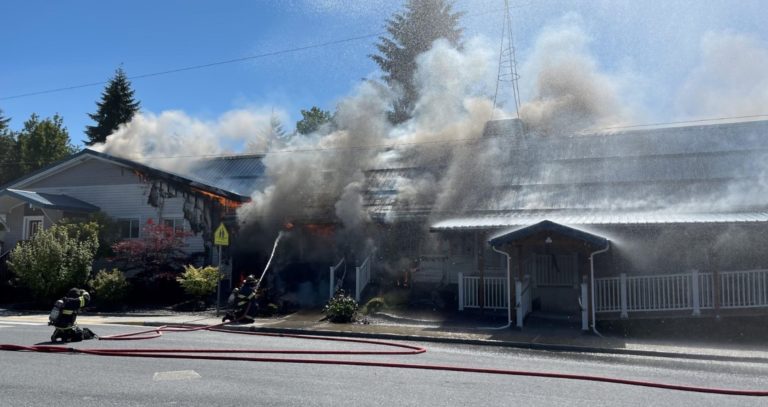
Petersburg’s Catholic Church, St. Catherine of Sienna, burned on Thursday and appears completely destroyed. Volunteer firefighters fought the blaze for over 10 hours, as smoke poured down the street.

The fire began while people were inside the church preparing to receive communion in the noon hour. All inside were able to escape.

Sources say that the fire was started by someone who was burning weeds around the outside of the building, and the fire got away from him. Firefighters said the structure is a total loss. Although the sanctuary was largely spared, the smoke damage is extensive.

The State Fire Marshal’s Office will investigate the blaze.

A votive Mass of Saint Catherine of Siena was celebrated Friday morning at Holy Cross Parish in Anchorage for the people of St Catherine’s Parish.

Photo: St. Catherine of Siena Catholic Church Facebook page.

Northern Pacific Airways gears up for first commercial flight next week

Northern Pacific Airways, America’s newest carrier that is based in Anchorage, is gearing up for its inaugural commercial flight on July 14. The airline will take passengers from easy-to-use Ontario, California’s international airport to Las Vegas.

In preparation for the inaugural flight, Northern Pacific Airways has been conducting multiple proving runs around the West with representatives from the Federal Aviation Authority on board to ensure federal requirements are met. It’s flown its Boeing 757-200s from Anchorage to Moses Lake, Wash., and Ontario, Calif., where the company has its maintenance hangar.

FLOAT Alaska LLC, which bought some of Ravn’s assets during bankruptcy, is the parent company of Northern Pacific Airways, launched last month and has been flying proving runs with its Boeing 757-200 from Anchorage to Moses Lake, Wash.’s Grant County Airport and Ontario Airport.

The 757-200, which is a narrow-body aircraft can operate with a lower cost per mile, has a flight range of 4,000 miles, and can accommodate up to 200 passengers. The airline will be based in Anchorage, with Anchorage eventually serving as the one-stop fueling stopover to Asia.

As part of its launch, the airline has leased an area of the Ted Stevens Anchorage International Airport’s North Terminal to serve as a passenger lounge, and has invested $6 million into the lounge project.

“As a new long-haul airline, Northern Pacific Airways plans to offer flights between a range of points in the United States and select cities in East Asia through Anchorage, Alaska. The airline plans to serve cities in the states of New York, Florida, California, and Nevada, with direct flights to cities in Japan and Korea through Anchorage over the Northern route,” the company says on its corporate website.

The inaugural flight still has a handful of seats available for those who want to be part of Northern Pacific Airways history. Check availability at this link.

Although the longer term goal is to fly to Asia through Anchorage, the airline will start with the Ontario-Las Vegas route due to the complications of international travel in an era of geopolitical instability.

The delay has been largely because of the Russia war on Ukraine and regulatory requirements that have been tangled due to the closure of Russia air space. As a result, the company is branching into charter flights in partnership with Air Planning, a large group air charter brokerage.

CEO Rob McKinney explains the problem with getting the Extended-range Twin-engine Operations Performance Standards (ETOPS) authority needed in this YouTube interview:

The Ontario-Las Vegas flight starting next week will begin with one flight to Las Vegas every Friday. The return flights are on Sundays. Other low-cost carriers on that route are Southwest Airlines and Frontier Airlines, which operate multiple flights daily.

Alaska Airlines, which is one of the oldest airlines in the country, is based in Seattle. The owners of Northern Pacific Airways are based in California.

CEO McKinney has said that eventually 250 jobs will be located in Anchorage, and he expects tax revenues will bring millions of dollars to the State of Alaska.