Monday, August 17, 2026
Home Blog Page 654

Secret Services closes investigation with no answers on cocaine found in West Wing

By BRETT ROWLAND

Congressional oRepublicans raised questions about the security of the White House on Thursday after a U.S. Secret Service probe failed to find out how cocaine ended up in the White House. 

House Committee on Oversight and Accountability Chairman James Comer, R-Ky., said he expected better from the Secret Service.

“The White House is supposed to be the most secure residence in the world, but today Secret Service officials failed to answer basic questions or provide any meaningful information related to security failures and cocaine being found at the White House,” he said in a statement. 

Comer said the Secret Service must “reassess their security operations to prevent illegal substances from entering the White House.”

The U.S. Secret Service said Thursday it closed its investigation into cocaine found at the White House because of a “lack of physical evidence” 11 days after the illegal drug was found in one of the nation’s most secure buildings.

“There was no surveillance video footage found that provided investigative leads or any other means for investigators to identify who may have deposited the found substance in this area,” the U.S. Secret Service said in a statement. “Without physical evidence, the investigation will not be able to single out a person of interest from the hundreds of individuals who passed through the vestibule where the cocaine was discovered. At this time, the Secret Service’s investigation is closed due to a lack of physical evidence.”

Officers from the U.S. Secret Service Uniformed Division discovered what later turned out to be cocaine July 2 inside a vestibule leading to the lobby area of the West Executive Avenue entrance to the White House. The stash was located inside a receptacle used to store electronic and personal devices before entering the West Wing. After finding what was then an unknown white powder, the Secret Service temporarily closed down the White House as a precaution.

Last week, the White House declined to provide additional information about the matter, but said the cocaine was found in a “heavily traveled area.”

“We have confidence that the Secret Service will get to the bottom of this,” White House press secretary Karine Jean-Pierre told reporters at the time.

U.S. Rep. Chip Roy, R-Texas, said the White House is supposed to be the “most secure location on the planet.”

“You better damn well believe that if [the Biden administration] wanted to go figure out where that cocaine came from, the Secret Service of the United States in the White House could figure it out,” Roy said during an interview with Fox News

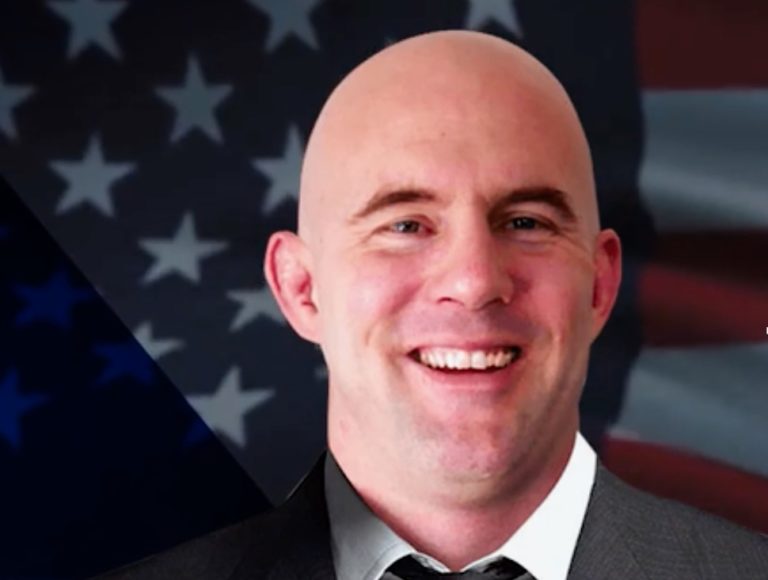
Breaking: Nick Begich announces run for Congress for ’24

On the Amy Demboski Show on 650 KENI, Nick Begich announced he is running for Congress, taking on Rep. Mary Peltola, who is a Democrat.

Begich called into the show toward the end of the two hours on Thursday, and talked about energy issues, congressional oversight, geopolitical concerns, and more before saying, “I’m in.”

Begich highlighted the opportunity that Alaskans still have in front of them, with 25% of America’s estimated undiscovered oil reserves and nearly every critical mineral on the critical minerals list.

Alaska is poised to answer the nation’s pivot away from Chinese production, he said.

Begich first filed for Congress in 2021. After Congressman Don Young died in 2022, Peltola won the seat in the first open-primary, ranked-choice voting scenario that Alaskans had experienced under the new voting system ushered in by Ballot Measure 2. Sarah Palin came in second, and Nick Begich was third.

No other candidate has yet announced to run against Peltola, who comes up for reelection next year and who has already started running.

Nick Begich is from a family known to many as Democrats, but he comes from the Republican side of the family and since high school he has been a Republican; he was a member of his high school’s Republican Club. His grandfather was a conservative Democrat, Congressman Nick Begich, who died in a plane crash over Prince William Sound in 1972. Since 1973, Alaska was represented by Republican Don Young until Peltola replaced him.

“Mary Peltola also voted against legislation that would support domestic energy production, Alaska’s largest economic driver. She’s even voted in favor of lower minimum sentences for criminals convicted of violent crimes such as carjacking and robbery!,” Begich said in a press release. Peltola votes with radical squad member Rep. Ilhan Omar 98% of the time, according to ProPublica.

Edit: Nick Begich’s website is now up with a new look.

This story will be updated.

Rob Yundt: Let’s fix the Mat-Su water setback issue to make it fair to all

By ROB YUNDT

When Mokie Tew and I ran for the Matanuska-Susitna Borough Assembly, we both promised two things:

  1. We’d fight for a fiscally responsible government.
  2. We’d defend all residents of the Matanuska-Susitna Borough against an overreaching bureaucracy.

We are proud to say that we both have repeatedly delivered on these promises. But we need your help to do it again.

On July 18, we are establishing a working group to fix a nearly 40-year-old issue with our half-written water body setback code, and we need those residents who are affected by this to come serve.

I’ve heard the argument that there is nothing wrong with the 75-foot setback that is currently in place, and if it was simply a setback rule, I would agree.

However, due to the incomplete nature of the ordinance, it has placed undue financial burden on those who had built homes closer than 75 ft to the water’s edge prior to the ordinance being enacted.

Last year I had a concerned constituent reach out to me regarding repairs that he needed to make to his home to preserve the structural integrity. Now he lives in a home badly in need of repair but cannot fix it due to the incomplete nature of the current setback ordinance, which prescribes no remedy for homeowners to become compliant with the current Matanuska-Susitna Borough code.

Other owners who were “grandfathered” in, who have homes closer to the lake than the 75-foot setback are finding that they cannot sell their homes unless they can find a cash buyer or are able to do an owner finance deal.

Homeownership is the single largest store of wealth that most Alaskans have and these upstanding Mat-Su residents who have lived in their homes for decades are finding that it’s nearly impossible for them to access that, through no fault of their own. 

I was not elected to ignore situations like this. I will not stand by idly by and ignore him or the other 672 homeowners that are also finding themselves in a similar situation. We, as a community, owe it to these folks to finish the ordinance that was created in the 1980’s and give these homeowners a path forward. I was elected to lead and fix tough problems, and that’s exactly what Mokie and I are working tirelessly to do.

Are you, or someone you know, one of the 700+ homeowners, who through no fault of your own, can’t get financing on your home because it accidentally violates the 75-foot waterbody setback ordinance? Was your home affected by the 2018 earthquake but cannot be repaired because it violates this setback? Are you required to sell your home for a cash deal only because it violates the rule? 

We recognize that most (673) homes in violation were built prior to the adoption of the set back rule in 1987. The remaining homes accidentally violated the rule because of the Borough’s lack of permitting requirements that would have prevented future builds from occurring within the prohibited 75 feet.

What are the solutions? Bulldoze and start new? Hire a moving company to move these homes? What about homes that don’t have 75 feet from a waterbody to build? After nearly 40 years of code violations with no path for homeowners to become compliant, Mokie and I have introduced a much-needed solution, but we need your feedback and approval.

Ordinance 23-049’s top priority is to protect our precious water source while still providing a means for owners to become compliant. If adopted, the ordinance would provide a permit only if: 1) a civil engineer develops plans constructed in accordance with local, state, and federal laws and 2) the owner is solely responsible for maintaining the Borough approved pollution mitigation plan.

Right now, homes out of compliance pose a potential pollution to our water supply because we lack regulations, yet these homeowners have no intention of causing issues. This waterbody permit would provide an incentive to these homeowners to spend the extra money on a mitigation plan and its implementation, which is in the best interests of all residents. 

If you are a homeowner affected by this waterbody set back, please contact Mokie, myself, or Mayor Edna Devries to join our task force of concerned borough citizens, industry experts, professional engineers, and governing officials to create a common-sense reform that will protect our water for generations to come. Call or text my cell phone at any time at 907-232-8340.

Rob Yundt serves on the Mat-Su Borough Assembly.

Gun Owners of America sues ATF over ‘zero tolerance’ shutdown of gun stores

Gun Owners of America, a prominent Second Amendment advocacy group, on Tuesday filed a lawsuit against the Bureau of Alcohol, Tobacco, Firearms, and Explosives over its controversial “zero tolerance” policy aimed at shutting down gun stores.

The lawsuit, titled Morehouse Enterprises v. ATF challenges the ATF’s rigid inspection guidelines for federal firearms licensees implemented in January 2022, which make it easy for the agency to pull a gun store’s federal license.

The gun-rights group argues that the ATF’s zero tolerance policy infringes on the rights of law-abiding citizens and is a weaponization of federal agencies for political purposes.

In a statement to Fox News Digital, GOA Senior Vice President Erich Pratt criticized the Biden administration’s approach: “This zero tolerance policy towards lawful commerce guaranteed by the Second Amendment is just the latest example of this Administration weaponizing federal agencies against their political enemies.”

Pratt called for defunding the ATF, asserting there is an immediate need to protect the rights of gun owners.

Sam Paredes, a board member of the Gun Owners Foundation highlighted the detrimental impact the ATF’s policies have on small businesses, saying “It’s ridiculous that good people trying to make an honest living are facing this assault on their livelihoods simply over inconsequential paperwork errors.”

The lawsuit came after the ATF targeted a North Dakota gun store, Morehouse Enterprises. Morehouse had already filed a lawsuit against the ATF, after which the agency conducted a surprise inspection of Morehouse, and found five violations — out of 5,000 gun sales or purchases by Morehouse. Before Morehouse filed its lawsuit, it had never gotten a visit for the ATF, which is now trying to suspend Morehouse’s gun store license.

David Boyle: Sen. Tobin likens protection of girls to burning a cross on someone’s lawn

By DAVID BOYLE

Now’s the time to protect girls’ sports for biological girls. The State Board of Education has issued a proposed regulation to prohibit transgender males-to-females from participating in girls’ sports activities.

You don’t have to be a parent, grandparent, uncle, or aunt to participate in the public comment period, which ends soon. You only have to be an Alaskan resident to save girls’ sports.

You can help by providing your comments to support girls in K12 sports. Your comment doesn’t have to be long or complex. You can merely say, “I support the proposed regulation as published.” 

Or you can personalize it with your child’s experiences in sports. How has K-12 sports helped your child succeed in school?  Has your child learned to act as a team?  Has your child’s participation in sports helped improve her academics?  And has your child learned how to better interact socially with fellow students?

There are some who oppose this regulation. These include the ACLU-AK, Planned Parenthood of Alaska, and some notable state legislators.

Sen. Loki Tobin is leading the charge to allow transgender “females” to participate in K12 girls’ sports. It seems as if she wants to kill girls’ sports.

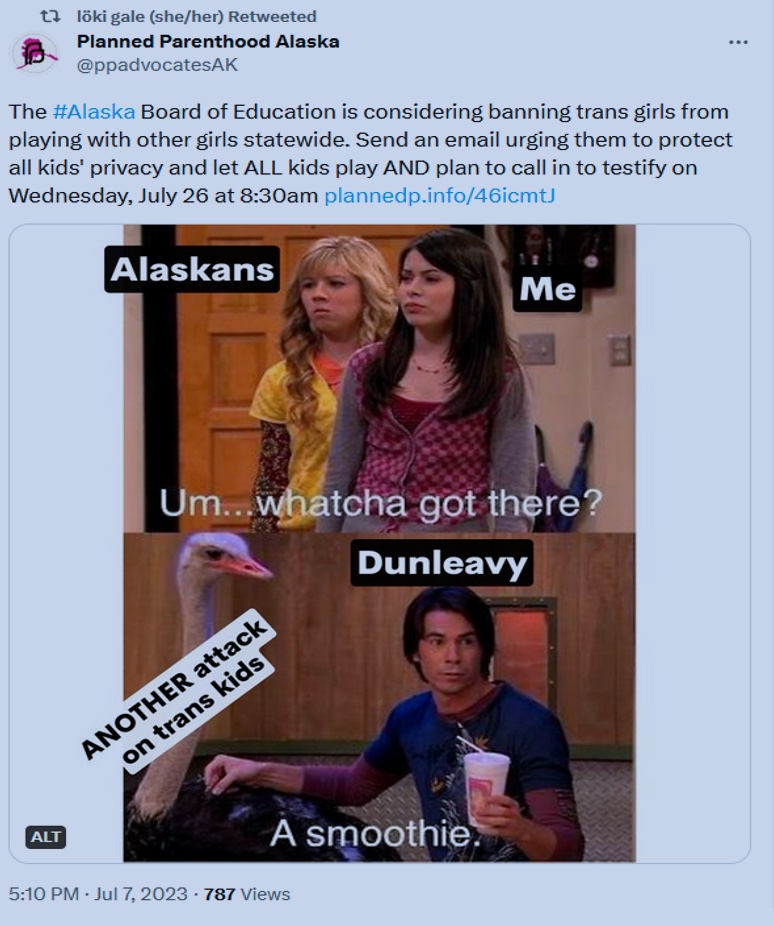
Here is one of her tweets comparing those who support keeping girls’ sports for only biological girls. Note the comparison to the Ku Klux Klan (a radical group which was formed by the Democratic Party following the end of the Civil War):

When did girls’ sports become a race issue? It’s apparent when the Left dislikes something, they attack by using race or some “phobia” to demean the messenger. Sen.Tobin has also allied with Planned Parenthood of Alaska to push for transgender females participation in girls’ sports:

Planned Parenthood of Alaska has a preformatted letter that its supporters can send to the State Board of Education.

Planned Parenthood says that not allowing transgender females to participate in girls’ sports will “profoundly violate all students’ privacy by forcing educators and coaches to identify and separate transgender youth from their peers.”

Planned Parenthood does not mention the privacy of the biological females in locker rooms.

Sen. Tobin sent an admonishing letter to James Fields, Chair of the State Board of Education and Early Development. Tobin wrote:

“Instead, the proposed regulations will override the thoughtful and often extremely personal input of parents, guardians, teachers, and administrators in favor of inserting government bureaucracy into the process”. 

The irony is that she believes teachers and administrators, who are government bureaucrats, should play an equally important role in the decision to allow transgender females to participate in biological girls’ sports.  

In her letter, Sen. Tobin further asks, “Will the state be sanctioning nonprofit volunteers and school activity directors to check genitals?”

This refers to the proposed regulation which would require the ASAA (Alaska Schools Activities Association) to restrict participation in girls’ sports to only those who were female at birth.

She has taken that statement and amplified it to literally pulling down children’s pants.  Sad.  

Even if you do not have any girls participating in sports activities, it is important that your voice be heard.  Otherwise, this may be the death knell for K12 girls’ sports.

You can email your comments to Janell Andrews at [email protected]

But hurry!  You only have till 4:30, July 21st to provide comments.  And keep it simple.

Here is a link to the proposed regulation change (https://aws.state.ak.us/OnlinePublicNotices/Notices/View.aspx?id=211543).

Alaska Board of Education resolution: Preserve opportunity, safety, fairness for all athletes

David Boyle is the Must Read Alaska education writer.

Lucy and the football: Assembly that wanted Golden Lion for housing now won’t pay for it

It’s Lucy and the football at the Anchorage Assembly.

The Anchorage Assembly, finally having the chance to open the Golden Lion hotel for housing, delayed approving funding for the a property that it approved the purchase of from the proceeds of the sale of Municipal Light & Power.

The Golden Lion, initially intended to be a drug rehabilitation center under the previous administration of Mayor Ethan Berkowitz, faced opposition from the community and a nearby preschool operator. Under the leadership of Mayor Dave Bronson, plans have shifted to convert the building into affordable housing for vulnerable individuals struggling to afford rent, but not a flophouse for homeless individuals or druggies.

The Assembly did approve on Monday paying for $479,000 in repairs to the building, which is located at the corner of 36th Avenue and New Seward Highway. But it would not approve the $250,000 in operating funds to open the building and house people. The Assembly will take up the appropriation and the lease agreement with Henning Inc. on July 25.

The mayor’s team has contracted with Henning, a nonprofit that managed the Sullivan Arena wintertime homeless shelter for street people who were unsuited for structured shelters but still needed to be kept safe from sub-freezing temperatures. Henning is ready to move 17 people into the Golden Lion next week. The hotel can hold up to 80 people.

According to the mayor’s team, that would take care of more than 10% of the problem. There are 775 people living on the streets and in the greenbelts around Anchorage and when temperatures drop into the 30s, they need to be offered a warm shelter at night, even if it means a cot or foam mattress on the floor of some facility.

The Golden Lion was something the Assembly fought to have open but which was something the current mayor initially balked at, instead preferring to work on a navigation center to help homeless people find solutions tailored to their individual situations. The Assembly blocked that navigation center project after paying for it, and it remains unfinished.

Now that the mayor is on board with the Golden Lion as part of the solution, the Assembly is balking and is picking apart the plan.

That plan is to rent the rooms out at the Golden Lion for about $200 a week, which is about as cheap a rent as anyone can find in Anchorage. Henning Inc. will oversee maintenance, security, utilities, and administration of the facility, whose target occupants are individuals in need of a little help around the edges of daily living. Case managers will assist them in finding more stable long-term housing options.

The Golden Lion would function as housing, rather than shelter. Tenants would pay rent, and it is assumed most tenants will have some financial assistance to do so from Social Security, Medicare, or federal housing vouchers.

In other words, federal taxpayers will be paying the rents on these rooms that are owned by the city and are to be managed by the nonprofit.

Another site owned and operated by the city is the Sockeye Inn in Midtown, which is designed for older indigent people.

Although Bronson submitted his request to the Assembly for $250,000 to support the Henning contract, Assemblywoman Meg Zaletel had a problem with the terms of contract. In her day job, Zaletel is the executive in charge of the Anchorage Coalition to End Homelessness, a group that in no way has been helpful in reducing homelessness in Anchorage, and has no accountability to funders.

Assembly Chair Chris Constant said he was uncomfortable with the contract with Henning. Assemblyman Daniel Volland said that $800 was too much to charge in rent, so he also had a problem with the contract.

Observers note that with this Assembly, it’s always something, and nothing has ever been good enough for them, as they let the clock run out on summer and precipitate another crisis this fall. On Tuesday night, they pulled the football out from the kicker one more time.

NTSB initial report shows ‘unusual wind’ event was factor in deadly Shaktoolik Cessna crash last month

The preliminary investigation conducted by the National Transportation Safety Board suggests that challenging wind conditions played a significant role in the plane crash near Shaktoolik on June 16 that resulted in the deaths of the pilot, Jim Tweto, and a passenger.

The ill-fated flight of the Cessna 180H aircraft operated by Golden Eagle Outfitters, Inc. crashed, was being conducted in support of a remote bear hunting excursion.

Jim Tweto, an experienced bush pilot renown throughout Alaska’s aviation community, had departed earlier with two hunters and informed the waiting guides that he would return to pick them up after dropping off the clients. However, upon his return to the remote off-airport mountain ridgeline airstrip, wind conditions changed.

According to a witness, the wind conditions were unstable, with gusts intensifying during the hour-long wait for the pilot’s return. The witness, who had flown with Tweto on numerous occasions, described the gusting winds as a factor that had increased throughout the duration of their stay at the airstrip.

The airstrip, situated atop a downward-sloping, rock and grass-covered ridgeline, had a length of approximately 750 feet. Normal departures involved landing uphill on a 060° heading and departing downhill on a 240° heading. Previous departures saw the aircraft temporarily disappearing below the airstrip after takeoff, only to reappear and climb out of the valley.

As the witness observed the initial portion of the downhill takeoff roll, nothing appeared out of the ordinary. However, when the engine noise and the sight of the climbing aircraft failed to materialize, the witness rushed to the ridgeline’s edge. They discovered that the aircraft had impacted the tundra 300 feet below the airstrip. The witness promptly sent an SOS alert and descended to the crash site to search for survivors.

A helicopter pilot, responding to the accident site approximately 45 minutes later, noted that the wind conditions on the day of the crash were “unusual.” The winds varied, gusting from the north at speeds of 10 to 12 knots, calming briefly, then shifting to gusts of 5 knots from the south, only to repeat the pattern.

NTSB investigation of the airstrip uncovered a small cluster of trees positioned about two-thirds of the distance from the departure end on the left side of the runway, in a downslope direction. One of the trees, measuring approximately 12 feet in height and four inches in diameter, had fractured about four feet from its base. The separated portion of the tree was found adjacent to the trunk, displaying fragments of red paint that matched the color of the accident airplane.

Detailed examination of the wreckage revealed that the aircraft impacted the tundra in a steep nose-down and wings-level attitude approximately 1,200 feet from the broken tree. The impact displaced the wings, with the leading edge of the right wing uniformly crushed aft along its span. Both the upper and lower wing skins exhibited compression damage. Flight control continuity was established despite several breaks and separations, which were consistent with impact and overstress failure.

The engine was separated from the airframe and came to rest inverted behind the left wing. The propeller hub was fractured, and the propeller blades were separated from the hub. Interestingly, the right horizontal stabilizer and elevator did not display leading-edge impact signatures, and the elevator remained attached. In contrast, the left horizontal stabilizer showed a concave dent perpendicular to the leading edge, approximately one foot outboard of the stabilizer root. Tree sap and embedded tree fibers were also observed in the leading edge of the horizontal stabilizer.

While the investigation into the exact cause of the crash is still ongoing, the NTSB’s preliminary findings indicate that the challenging wind conditions, characterized by gusting and unpredictable shifts, likely contributed to the accident. The presence of the fractured tree, coupled with the observed tree sap and fibers on the stabilizer, suggests a possible interaction between the aircraft and the trees during takeoff.

Spokane spent millions on vagrant problem, but it just grew

By TIMOTHY SCHUMANN | THE CENTER SQUARE

Spokane County commissioners asked the hard questions and came up with few answers about the efficacy of millions of dollars spent on homelessness only to see more people on the streets.

The frustration came after a strategic planning meeting Monday, with commissioners getting bogged down in details about the implementation of an interlocal agreement regarding a new regional homeless authority.

“I guess one of my questions […] is again, what is helping make a difference, or not, versus what have we been doing?” asked Commissioner Mary Kuney.

uney pointed out that what they’ve been doing hasn’t been working because, as recent point-in-time count numbers have shown, most metrics related to homelessness in Spokane County are on the rise.

“What’s causing our numbers to go up because we’re putting more money into prevention?” asked Kuney, noting that even if the interlocal agreement establishes a new regional homeless authority, commissioners will still be responsible for spending their constituents’ tax monies wisely.

Commissioner Josh Kerns echoed the concern.

“How much money went through this community for rental assistance over the last three years to keep people in their houses, and the number still went up? Like you said, why?” asked Kerns.

The general tone of the discussion was one of addressing root causes and spending taxpayer funds efficiently and effectively.

Sharing the sentiment, Commissioner Al French asked if a comparison to Tacoma’s policy would be possible, given that they’re of a similar size to Spokane, and much of the City of Spokane’s policy drives policy county-wide.

“Since [Tacoma’s] numbers are considerably lower than ours, what are they doing differently than we are that is driving their numbers down? Is there a policy decision that we’ve made that is attracting more, or are they just shifting more of their homeless into Seattle and King County?” asked French.

“If that’s the solution, maybe we need to start getting a bus to Kootenai County,” joked French.

The same county whose sheriff recently warned off Washington criminals for the 4th of July holiday weekend with the slogan, “Don’t come to Kootenai County on vacation, and leave on probation.”

Despite being a joke, the quip from French moved the conversation to one of geography.

It was noted that Spokane is a “receiving entity,” offering many more services than any of the nearby counties, including those in Idaho.

Tacoma was referred to as a “sending entity,” and Seattle as the “receiving entity,” implying that disparity was the cause for the increasing numbers in Spokane County.

“Our geographic region is not just Spokane County; it’s the nine counties that surround us. Stevens to Whitman, Canada to Oregon,” commented Commissioner French, highlighting the immense size of the geographic region of Spokane, which covers the better part of a third of the state of Washington.

The meeting went on to discuss other funding issues but ultimately concluded with more questions than answers.

The commissioners agreed to continue the discussion next week.

Ketchikan City Council increases cruise ship head tax, adds pot stores

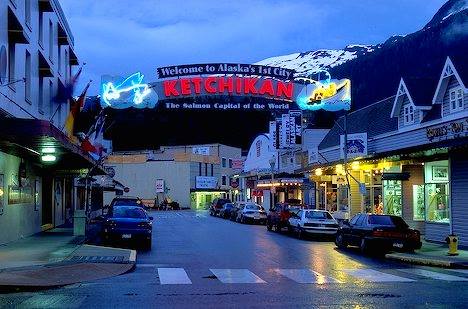
Those landing in Ketchikan on cruise ships will pay more in passenger fees next year. The head tax has gone from $9 for those disembarking at the city dock, to $11 per passenger, and in 2025 the tax will go up again to $12. Instead of the $6 paid now for lightered passengers and private dock passengers, the tax will be $8 in 2024. The decision was made by the Ketchikan City Council.

Compared to Juneau, where passenger taxes are $5 plus a $3 port “fee,” it’s a bold move for the First City, a way of nickel-and-diming tourists, who see these various port fees and head taxes tacked onto their fares under the category of “port taxes and fees.”

At the same meeting, the city council approved doubling the number of pot shops within city limits from two to four — one pot shop for every 2,000 men, women, and children in the city.

The Ketchikan city staff recommended the increase because it will bring in more revenue to the city.

Between the two cannabis shops in the city and the two in the borough, there are four cannabis retailers in Ketchikan. There will soon be six for a population of 14,000 between the city and borough.