Home Blog Page 628

Dark Brandon drops into Detroit, shows strikers sympathy for 12 minutes before heading to Hollywood

27

The trip to Michigan was like a visit to In-N-Out Burger, a drive-by as President Joe Biden flew to California to campaign for reelection.

Biden flew on Air Force One to Detroit and, after carefully descending the stairs of his Boeing 747, spent just 12 minutes at the picket line of the United Auto Workers strike. They are asking for a 40% wage increase and a 32-hour work week.

Biden spoke for 87 seconds, took some photos, and then went back to his motorcade and sped to the airport, where he carefully walked up the short stairs installed for his aged abilities, and jetted to California for fundraisers with Hollywood celebrities.

It was a “Dark Brandon” move, showing the fighting, edgy and slightly sinister side of Biden. Dark Brandon is a term the Biden Administration coined a year ago to describe Biden’s alter ego.

Biden was stealing the thunder from former President Donald Trump, the Republican front-runner for the 2024 presidential nomination, who has plans to attend a rally with the strikers in the auto industry, long planned for the same time as the Republican debate on Wednesday evening.

Biden fist-bumped strikers for the cameras and told the crowd, “You deserve the significant raise you need and other benefits,” joining the list of elected officials who choose to put their thumbs on the scale of worker-management disputes in an age of spiraling inflation and worker shortages.

Biden has called himself the most “pro-union president” in history, and indeed, this is the largest strike to ever get the explicit support of an elected president.

But the people of Instagram were not particularly impressed with his PR push in Detroit. They pointed out his policies killing the oil industry and propping up electric vehicles, and how high the cost of living is in America under Bidenomics.

The three factories the UAW has targeted for strikes are the ones that are most profitable for the American auto industry: General Motors’ plant in Wentzville, Mo., makes Chevy Colorado and the GMC Savana. Ford Motors’ plant in Wayne, Mich., makes Ford Rangers and Ford Broncos, and the Stellantis mothership in Toledo, Ohio, makes Jeep Wranglers and Jeep Gladiators. The strike did not call attention to the money-losers — the electric vehicles that are being made but are not being sold.

The supply of EVs in stock has swelled nearly 350% this year, according to Axios. The surplus is now more than 92,000, representing a three months’ worth of EVs sitting gathering dust as their batteries drain. It’s nearly twice the industry average for traditional cars. An average EV costs more than $64,000.

“What do all these vehicles have in common?” asked the Washington Examiner in an editorial that called attention to the strike’s focus on the profitable traditional vehicles. “Unlike electric vehicles that lose money, these vehicles are among the Big Three’s most profitable products. They are also exactly the type of vehicle President Joe Biden wants to eliminate by 2032, when his new regulations mandate that two-thirds of all cars sold in the United States must be EVs.”

EVs have fewer parts than gasoline models, which means fewer jobs for auto workers. And all the manufacturers for things like mufflers, catalytic converters, and fuel injectors will have to close, the newspaper pointed out.

Vice President Kamala Harris said that auto workers’ fears over a shift to electric vehicles is a “perspective that some people have [that] is grounded in a very old, false choice.”

Former Vice President Mike Pence, running for president, told CNBC, “American autoworkers know that Joe Biden has chosen Beijing over Detroit and that is a key factor driving the UAW strike.” Former President Donald Trump called it a “PR stunt.”

Biden, however, was not on the picket line so much to support the workers as he was to get the UAW endorsement — well worth an hour of his time, and hundreds of thousands of gallons of jet fuel. According to GoBankingRates.com, during the Obama Administration, which ended in January of 2017, it cost over $206,000 per hour to fly the president on Air Force One. For the hour and a half trip from Washington, D.C. to Detroit, the cost of the flight alone for Biden was well over a quarter million dollars — just for the Detroit leg of his trip, a campaign junket paid for by U.S. taxpayers.
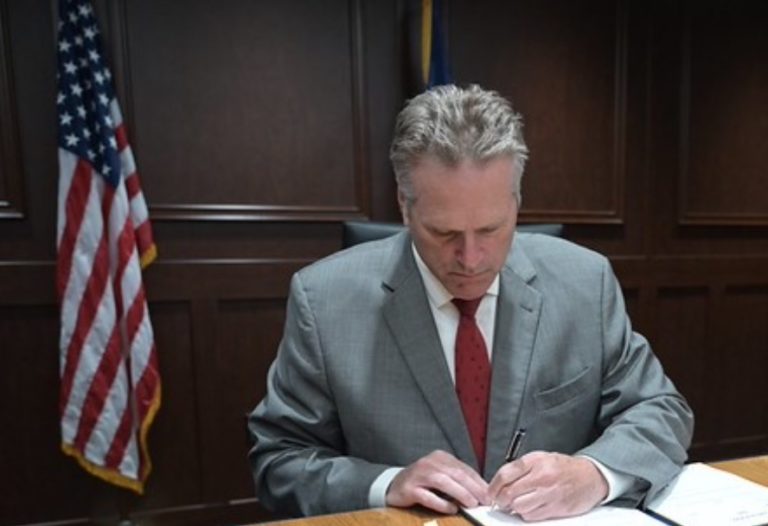

Dunleavy instructs departments to prepare for unstable federal government operations

28

The State of Alaska will try to minimize impacts to Alaskans in the event of a federal government funding gap, said Gov. Mike Dunleavy on Tuesday. The federal government runs out of spending authority on Saturday at midnight, if Congress and the president are not able to resolve their spending differences.

Dunleavy instructed state departments to evaluate federal programs administered by the state and review potential impacts to Alaskans.

Dunleavy said he is committed to continuing essential government services funded by the federal government and administered by the State where it has the authority to do so. Alaska would seek reimbursement following a shutdown. 

The longest previous federal shutdown was 34 days. When there was a shutdown during President Trump’s Administration, Trump took steps to keep programs going important to Alaska. During the Obama Administration, there were no such allowances for the state, and Obama even shut down hunting on federal lands during hunting season because the president closed parks and access to federal lands.

The State of Alaska is prepared to continue state-administered federally funded programs for that 34-day length of time. If a federal government shutdown were to continue beyond that timeframe, the State will reevaluate the situation if necessary, and prioritize programs that most directly impact the life, health, and safety of Alaskans, Dunleavy said.

The State of Alaska administers many programs on behalf of the federal government. Federal programs that are mandatory by law, authorized outside of the annual appropriations process and have existing carry-forward funds, or classified by the federal administration as “excepted” due to life, health and safety implications would continue to operate during a shutdown.

These categories include programs such as Medicaid and federal air traffic control. Further guidance from the federal government on program impacts is expected in the coming days.

Although the federal government is not required by law to reimburse states for expenses incurred during a federal government shutdown, reimbursement has occurred following every previous shutdown.

Approximately 4,700 state executive branch positions are at least partially federally funded. Employees in these positions would see no disruption in their pay and will continue to report to work.

A small number of federal employees work within state departments. Their status would be determined by the guidance from the federal agency that employs them. 

The Alaska Department of Labor and Workforce Development has developed a FAQ specifically to address Unemployment Insurance questions associated with the potential government furlough for federal employees.

Kelly and Niki Tshibaka launching podcast with national focus

Kelly Tshibaka will be launching a nationally focused podcast show called, ”STAND,” that she says will be “where courage is contagious and cowardice comes to die.”

Tshibaka is a former government watchdog and former candidate for U.S. Senate, having run against Sen. Lisa Murkowski. The show is co-hosted by her husband, Niki Tshibaka, a former Department of Justice civil rights attorney and Alaska government executive.

STAND will feature inspiring guests to equip and empower the audience to boldly stand up to life’s challenges, one episode at a time.

Through discussions with guests like presidential candidate Larry Elder; former Acting Director of National Intelligence Ric Grenell; former Governor of Wisconsin Scott Walker; social media influencer Alex Bruesewitz; former Acting U.S. Attorney General Matt Whitaker; Oakland NAACP member Seneca Scott; Dr. Martin Luther King, Jr.’s niece, Dr. Alveda King; and Alaskan leaders and influencers, STAND will explore fresh perspectives and meaningful solutions to encourage the audience to take a stand that will make a difference, she said.

STAND will go live in November, broadcast on podcast platforms and Youtube (@TheStandShow).

It also will be aired on TV and radio stations across Alaska at 5pm on Thursdays, including KVNT 1020 AM, 92.5 FM, 104.5 FM, KCFT channel 35 (Anchorage & Mat-Su), KCFT via GCI Yukon 19 (KPB, Valdez, Anchorage, Mat-Su), KJNP channel 4 and Dish Network 4 in Fairbanks, North Pole, Eielson AFB, and surrounding areas. 

Learn more about STAND at standshow.org.

Earlier this year, Kelly Tshibaka also formed a nonprofit education group, Preserve Democracy, to help spread the word about the downside of ranked choice voting.

Too big to derail? Amazon is sued by FTC and Democrat-run states for monopolist powers, practices

30

The Federal Trade Commission and 17 state attorneys general from mostly Democrat-run states today sued Amazon.com, alleging that the online retail and technology company is a monopolist that uses a set of interlocking anticompetitive and unfair strategies to illegally maintain its monopoly power.

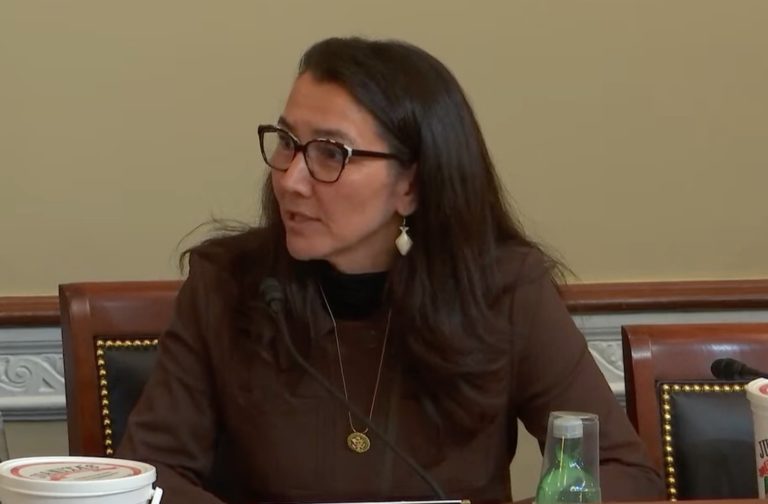
This action comes on the same time the Alaska delegation announced that Sens. Lisa Murkowski and Dan Sullivan oppose the merger of grocery chains Kroger and Albertsons. Rep. Mary Peltola was early in her opposition to the merger, which could effect Fred Meyer, owned by Kroger, and Safeway/Carrs, owned by Albertsons.

Surprisingly, Washington state is also run by Democrats but is the corporate home of Amazon, and did not join in the lawsuit.

Amazon is used heavily by Alaskans and is expanding its corporate footprint in the state, where cargo comes through the Ted Stevens Anchorage International Airport.

The company will be opening its first sorting facility in Anchorage in 2024, to be housed in a now-vacant Midtown warehouse that was once used by Sears, a once mighty company that declared bankruptcy in 2018 and reorganized into a small, 12-store company.

The FTC and its state partners say Amazon’s actions allow it to stop rivals and sellers from lowering prices, degrade quality for shoppers, overcharge sellers, stifle innovation, and prevent rivals from fairly competing against Amazon.  

The complaint alleges that Amazon violates the law not because it is big, but because it engages in a course of exclusionary conduct that prevents current competitors from growing and new competitors from emerging.

By stifling competition on price, product selection, quality, and by preventing its current or future rivals from attracting a critical mass of shoppers and sellers, Amazon ensures that no current or future rival can threaten its dominance. Amazon’s far-reaching schemes impact hundreds of billions of dollars in retail sales every year, touch hundreds of thousands of products sold by businesses big and small and affect over a hundred million shoppers. 

“Our complaint lays out how Amazon has used a set of punitive and coercive tactics to unlawfully maintain its monopolies,” said FTC Chair Lina M. Khan. “The complaint sets forth detailed allegations noting how Amazon is now exploiting its monopoly power to enrich itself while raising prices and degrading service for the tens of millions of American families who shop on its platform and the hundreds of thousands of businesses that rely on Amazon to reach them. Today’s lawsuit seeks to hold Amazon to account for these monopolistic practices and restore the lost promise of free and fair competition.”

“We’re bringing this case because Amazon’s illegal conduct has stifled competition across a huge swath of the online economy. Amazon is a monopolist that uses its power to hike prices on American shoppers and charge sky-high fees on hundreds of thousands of online sellers,” said John Newman, Deputy Director of the FTC’s Bureau of Competition. “Seldom in the history of U.S. antitrust law has one case had the potential to do so much good for so many people.”

The FTC and states allege Amazon’s anticompetitive conduct occurs in two markets—the online superstore market that serves shoppers and the market for online marketplace services purchased by sellers. These tactics include:

  • Anti-discounting measures that punish sellers and deter other online retailers from offering prices lower than Amazon, keeping prices higher for products across the internet. For example, if Amazon discovers that a seller is offering lower-priced goods elsewhere, Amazon can bury discounting sellers so far down in Amazon’s search results that they become effectively invisible.
  • Conditioning sellers’ ability to obtain “Prime” eligibility for their products—a virtual necessity for doing business on Amazon—on sellers using Amazon’s costly fulfillment service, which has made it substantially more expensive for sellers on Amazon to also offer their products on other platforms. This unlawful coercion has in turn limited competitors’ ability to effectively compete against Amazon.

Amazon’s illegal, exclusionary conduct makes it impossible for competitors to gain a foothold, the litigants say. With its amassed power across both the online superstore market and online marketplace services market, Amazon extracts enormous monopoly rents from everyone within its reach. This includes:

  • Degrading the customer experience by replacing relevant, organic search results with paid advertisements—and deliberately increasing junk ads that worsen search quality and frustrate both shoppers seeking products and sellers who are promised a return on their advertising purchase.
  • Biasing Amazon’s search results to preference Amazon’s own products over ones that Amazon knows are of better quality. 
  • Charging costly fees on the hundreds of thousands of sellers that currently have no choice but to rely on Amazon to stay in business. These fees range from a monthly fee sellers must pay for each item sold, to advertising fees that have become virtually necessary for sellers to do business. Combined, all of these fees force many sellers to pay close to 50% of their total revenues to Amazon. These fees harm not only sellers but also shoppers, who pay increased prices for thousands of products sold on or off Amazon.  

The FTC, along with its state partners, are seeking a permanent injunction in federal court that would prohibit Amazon from engaging in its unlawful conduct and pry loose Amazon’s monopolistic control to restore competition.

Connecticut, Delaware, Maine, Maryland, Massachusetts, Michigan, Minnesota, New Jersey, New Hampshire, New Mexico, Nevada, New York, Oklahoma, Oregon, Pennsylvania, Rhode Island, and Wisconsin joined the Commission’s lawsuit.

The Commission vote to authorize staff to file for a permanent injunction and other equitable relief in the U.S. District Court for the Western District of Washington was 3-0.

Swipe left: Serial bank robbery suspect identified via Tinder dating website

14

It may be one of the worst dating profiles ever: Failed bank robber.

Anchorage resident Tyler Ching, 34, was arrested Sept. 22 in connection with two robberies at a credit union and bank in Anchorage.

On Sept. 19, authorities allege that Ching entered the Global Credit Union located on Industry Way. Ching menacingly approached two patrons in conversation with a bank teller, and brandished what appeared to be a gun. He demanded the teller fill a bag with cash.

Making his escape, he took about $2,320 with him. The next day, he repeated the pattern at the Wells Fargo Bank on Jewel Lake Road, making off with $2,820.

Meanwhile, the FBI put a photo out of the suspect and someone in the community recognized him from the Tinder dating app. He was also identified by an employee of the Anchorage Police Department, who knew a mutual acquaintance.

Ching, a registered voter with the Green Party of Alaska, according to the Division of Elections, worked at a coffee shop not far from the Wells Fargo branch. He faces two counts of bank robbery and could serve up to 20 years in prison for each count.

Ching was arrested in Cooper Landing and is lodged at the Anchorage Correctional Complex

Help wanted: Who made the Wednesday Republican debate stage?

21

Seven Republican presidential candidates are included in the Wednesday night Republican National Committee presidential debate, candidates determined through polling and fundraising strength. Former President Donald Trump will again not attend. He is the candidate who is polling far and away as the most likely nominee.

The debate stage candidates are:

  • Florida Gov. Ron DeSantis
  • Entrepreneur Vivek Ramaswamy
  • Former Vice President Mike Pence
  • Former U.N. Ambassador Nikki Haley
  • South Carolina Sen. Tim Scott
  • Former New Jersey Gov. Chris Christie
  • North Dakota Gov. Doug Burgum

Former Arkansas Gov. Asa Hutchinson did not make the cut, after he failed to reach the threshold in polling.

DeSantis will have the center-stage podium, due to strength in polling and fundraising. Flanking DeSantis to his right and left will be Ramaswamy and Haley, who are in second and third place in many polls.

Candidates for this debate needed to show they have at least 50,000 unique donors, which includes more than 200 from 20 states or territories. For the first debate, the requirement was 40,000 unique donors.

The debate will take place at the Ronald Reagan Presidential Library in Simi Valley, Calif., and will air on Fox Business Network at 9 p.m. Eastern, 5 p.m. Alaska Time.

The debate will be also be live-streamed exclusively on Rumble, which has brought out the long knives from competitors in online media and the mainstream media itself, which calls it a haven for disinformation and extremists:

Sullivan introduces bill to ensure military members, including reservists, paid during shutdown

16

Alaska Sen. Dan Sullivan, Roger Wicker (R-Miss.), and Ted Cruz (R-Texas), along with 11 of their Senate colleagues, introduced S. 2835, the Pay Our Military Act of 2023, which would ensure America’s military service members — Army, Air Force, Marine Corps, Navy, Coast Guard and Space Force — are paid in the event of a government shutdown. The federal government runs out of spending authority on Sept. 30.

Wicker serves as ranking member of the Senate Armed Services Committee, on which Sullivan also serves. Cruz serves as ranking member of the Senate Committee on Commerce, Science and Transportation, which has jurisdiction over the Coast Guard, and on which Sullivan also serves.

The legislation would appropriate funds to pay members of the Armed Forces, including reservists, if a temporary or full-year federal funding bill is not passed and signed by Oct. 1. The Pay Our Military Act would also fund the pay of civilian Department of Defense (DOD) and Department of Homeland Security (DHS) personnel and contractors whom each department’s respective secretary determines are “providing support to members of the Armed Forces.”

“We have entered the most dangerous period in American history since the end of World War II—a new era of authoritarian aggression led by the dictators in Beijing and Moscow,” said Sullivan. “All Americans count on our military members to be ready to respond to threats to the homeland, wherever and whenever they may arise. The last thing our brave men and women in uniform need to be worrying about is whether they will get a paycheck, and whether their families are taken care of back home. I urge my colleagues on both sides of the aisle to come together and pass our commonsense legislation to alleviate those concerns as we face a potential government shutdown. Senators and congressmen often like to say how much they support our military members—now they have an opportunity to show it.”

“Following the blockage of my bicameral, bipartisan legislation, the Pay Our Coast Guard Act, by some Senate Democrats, it has become apparent that there are politicians in this chamber who intend to leave parts of our military unfunded in the event of a government shutdown,” Sen. Cruz said. “Defunding our military dangerously undermines our national security and hinders the men and women who bravely protect Texas and our great nation. I urge all of my colleagues—on both sides of the aisle and in both chambers—to pass this legislation expeditiously and pay our military in the event of a government shutdown.”

Cosponsors of the bill include Senators Ted Budd (R-N.C.), Steve Daines (R-Mont.), Lindsey Graham (R-S.C.), Marco Rubio (R-Fla.), Thom Tillis (R-N.C.), Tommy Tuberville (R-Ala.), Kevin Cramer (R-N.D.), Cindy Hyde-Smith (R-Miss.), Mike Rounds (R-S.D.), Rick Scott (R-Fla.), J.D. Vance (R-Ohio), and Lisa Murkowski (R-Alaska). Rep. Jen Kiggans (R-Va.) has introduced companion legislation in the House.

Last week, Senators Cruz and Sullivan attempted to pass the Pay Our Coast Guard Act, legislation to ensure Coast Guard personnel receive pay and allowances in the event of a government shutdown if the other members of the Armed Forces receive pay and allowances. However, the bill was blocked by Senate Democrats.

Peltola’s staff says she’ll return to D.C. if her vote is needed this week

22

Rep. Mary Peltola’s office has started breaking its silence. Two weeks has passed since the death of Eugene Peltola, the congresswoman’s husband, in a plane crash.

The communications director for Peltola said that while Mary Peltola is still home in Alaska grieving with her family, she will return to Washington, D.C. if her vote is needed to avert a “shutdown” of the federal government.

The federal government won’t actually shut down but will lack some spending authority on Sept. 30. Many programs continue, such as military, Department of Homeland Security, and nearly all entitlement payments, such as SNAP benefits and Medicare.

But other programs move into a limited role, and some programs that the public is used to having access to may be temporarily unavailable. Federal workers who are furloughed during a funding pause get all their pay once they are invited to return to work.

Peltola’s vote on this matter is not actually essential, since she is in the Democrat minority in the House.

Certain members of the Republican caucus believe they need to focus leadership’s attention on what is happening not just now, but 10 years from now. The Congressional Budget Office says the nation will be $50 trillion in debt by the end of the decade. The current national debt exceeds $33.1 trillion. That’s $14.3 billion per day being added to U.S. debt in just one week, and with another $3 billion per day of interest expense, it’s over $17 billion per day of added debt.

These Republicans have pushed the issue to try to curb excessive government borrowing.

Peltola also announced that a $50 million grant was awarded by the Department of Energy to replace a coal plant in Healy with wind energy and pumped thermal energy storage, which Peltola says will lead to a more reliable Railbelt electric power grid “and showing that Alaska is a natural proving ground for clean energy technology.”

Sullivan says Biden’s border is a ‘dereliction of duty’

26

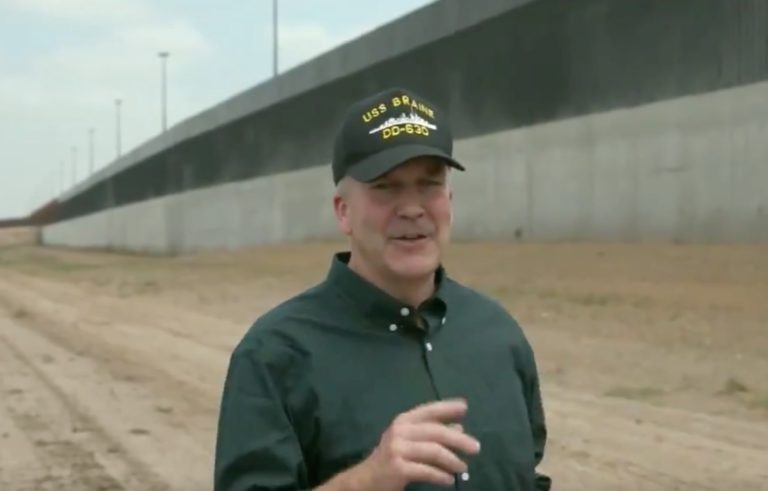
U.S. Sen. Dan Sullivan is the cosponsor of a bill that would redirect $15 billion from the IRS enforcement account to the crisis on the southern border, where just last month, more than 260,000 illegal immigrants poured over a border that has been abandoned by the Biden Administration.

That’s more than 8,300 illegals per day penetrating the border without any accountability, and the flood of migrants has not let up in September.

On Monday, Sullivan released the following statement regarding the record-breaking number of illegal border crossings on the southern border this August.

“There are no excuses for the Biden administration’s disastrous handling of our southern border. The numbers released by Customs and Border Protection reveal more than 200,000 illegal encounters last month ALONE. It is a humanitarian crisis. It is a national security crisis. It is a health crisis. Americans nationwide, including Alaskans, are impacted by this crisis.

“This dereliction of duty by President Biden is allowing thousands of criminals, including human and drug traffickers, to pour into our country. We are already dealing with a scourge of drug overdoses nationwide—largely driven by fentanyl. Alaska is no exception. My state experienced the largest percent increase in drug overdose deaths in the country. Until we get our wide-open border under control—and I’ve been there to see it—this problem will only get worse under President Biden’s inaction.

“I’m calling on President Biden, yet again, to do his job and secure our southern border. Even Democrats are finally becoming outraged at this failure to act. The President needs to step up, enforce the law, and put an end to this catastrophe.”

The president early in his administration assigned the border problem to Vice President Kamala Harris, who was supposed to coordinate diplomacy with Mexico and stem the tide of humanity pouring into the United States. She has failed in every measure.

Sen. Sullivan’s Securing Our Border Act would redirect $15 billion from IRS enforcement funds that were included in the Inflation Reduction Act (IRA) to instead be spent on border security. The legislation is endorsed by the National Border Patrol Council, which represents approximately 18,000 agents and support personnel, many of which are assigned to the U.S. Border Patrol.

CBP is the largest law enforcement agency in the country, and more than 85 percent of the agency’s Border Patrol agents (approximately 16,878 of 19,648) are concentrated on the southern border. The agents are outnumbered 7-to-1 by illegal immigrants alone.

Sullivan visited the southern border in 2021 with U.S. Sens. Ted Cruz (R-Texas), John Thune (R-S.D.), John Barrasso (R-Wyo.), Susan Collins (R-Maine), John Hoeven (R-N.D.), Mike Lee (R-Utah), Steve Daines (R-Mont.), Cindy Hyde-Smith (R-Miss.), and Mike Braun (R-Ind.).

In 2022, all 50 Democrats blocked Sullivan’s amendment to the Inflation Reduction Act (IRA) that would have directed $500 million to be allocated to the U.S. Customs and Border Protection to secure the southern border. The funds were instead earmarked for “sustainability and environmental” programs at the Department of Homeland Security.