Western Washington transit agencies promised to take steps to improve safety following a University of Washington report that found small traces of fentanyl and methamphetamine in the air and on surfaces of transit vehicles.
According to the report, out of 78 air samples collected by UW researchers, 25% had detectable fentanyl and 100% had detectable methamphetamine.
Out of 102 surface samples, 46% had detectable fentanyl and 98% had detectable methamphetamine.
Researchers collaborated with five transit agencies, which also provided funding: King County Metro, Sound Transit, Everett Transit and Community Transit in Snohomish County, and Tri-Met in the Portland metro area.
Sound Transit said it is taking several steps to enhance safety and security, including enforcement of transit code of conduct, more frequent and enhanced cleaning protocols, and improved filtration on light rail vehicles.
In a statement, King County Metro said that the report’s findings reaffirmed its strategies are the right ones. Metro’s strategies include discouraging or preventing drug use on transit as the first step in reducing drug levels in the air and on surfaces. The department has 120 transit security officers, and is budgeted to grow to 140.
King County Metro recently upgraded ventilation on its transit vehicles, and its buses are outfitted with MERV-11 and MERV-13 filters, which are considered the best possible filtration available for transit vehicles and capable of filtering airborne viruses and drug smoke particulates.
The agency said it is in the process of converting the remaining 448 buses from MERV-11 to MERV-13 filters in the coming weeks. Daily wipe-downs of high-touch areas and the driver’s area also will continue.
Community Transit, the public transit authority of Snohomish County, said it is expanding the agency’s Transit Security Officer program. Officers work closely with others, including the Transit Police Unit, social workers, service ambassadors and field supervisors.
The agency intends to upgrade air filters on its buses from MERV-7 to MERV-13 filters. Community Transit is working to complete installation of the new filters by the end of September.
Everett Transit said it is prioritizing developing an early and coordinated response to discouraging the impacts of illegal substance use on its public transit.
The State of Alaska took its fight against the U.S. Forest Service to court on Friday, contesting the Biden Administration’s repeal of President Donald Trump’s 2020 Alaska Roadless Rule. The complaint, filed in U.S. District Court in Alaska, aims to restore the Trump-era rule, emphasizing its importance to Southeast Alaska’s economic and socioeconomic development.
Southeast Alaska once had a vibrant timber industry, but starting with the administration of President Bill Clinton, the timber companies have been locked out of any reasonable access to timber harvesting because they are not allowed to build roads in almost any part of the forested area of the national forest. Logging by helicopter in the small tracts provided by the Forest Service is uneconomic.
Court battles had continued for decades, and finally the Trump Administration had restored the ability to build limited access roads in the Tongass. Then came the Biden Administration, which almost immediately reinstated the Clinton roadless rule in the Tongass.
“Alaskans deserve access to the resources that the Tongass provides – jobs, renewable energy resources, and tourism. It’s not acceptable for a government plan to treat human beings within a working forest like an invasive species,” said Gov. Mike Dunleavy.
The Tongass National Forest, spanning almost 17 million acres, is the largest forest in the country, and is home to over 71,000 Alaska residents.
“The Tongass National Forest has robust environmental protections in place, and the Roadless Rule is both unnecessary and continues to cripple the future of Alaskan communities,” said Alaska Attorney General Treg Taylor. “The State seeks to obtain a final and enduring win with this litigation, in what it hopes to be the final chapter of this long-running saga.”
California’s law that prohibits open carry of handguns without a license is on thin legal standing.
The 9th Circuit Court of Appeals has ordered a lower court to reconsider its ruling because the lower court had “abused its discretion” when it did not prevent the open-carry handgun law from being enforced while it is being challenged.
The Appeals Court instructed the lower court with language that will ultimately make it more difficult to uphold the ban.
The Ninth Circuit judges sent the ruling back to the district judge and provided instructions on how she should view the constitutional questions, giving the lower court judge side rails that make it more difficult for the state to prove its laws are constitutional.
The case involves two men — Mark Baird and Richard Gallardo — who want to exercise their right to openly carry handguns in California.
California says that in counties that have over 200,000 residents, open carry is prohibited without a license. Although Baird and Gallardo do live in counties smaller than 200,000, were not able to get open-carry permits from California.
The two men have been litigating the matter since 2019 and have asked the lower court on three different occasions to stop enforcing the law that criminalizes open carry.
The district judge, who is an Obama appointee, denied the men’s request for a preliminary injunction in 2020.
Baird and Gallardo took their case to the Ninth Circuit to get a reversal of that denial. A three-judge panel granted their wish on Thursday. The judges on the panel were two Trump appointees and a George W. Bush appointee, who found that the district court judge had abused the legal standard when she denied the preliminary injunction.
“This appeal presents the question whether, in a case in which a plaintiff alleges a constitutional violation, a district court can deny a motion for a preliminary injunction without analyzing the plaintiff’s likelihood of success on the merits,” Judge Lawrence VanDyke wrote in the ruling. “The answer to that question is clear: a district court may not do so.”
The panel gave the lower court judge instructions on how she must consider the law in her ruling. She will be required to determine if California’s sweeping open-carry ban is covered by the Second Amendment. She must also consider if the State of California can show that an open-carry ban was in place when the Second Amendment or the 14th Amendment was ratified.
The lower court judge must also determine if Baird and Gallardo are likely to win their appeal on the basic right to open carry.
On a 51-48 vote, the U.S. Senate confirmed Democrat Gwynne Wilcox to her second five-year term on the National Labor Relations Board. Both Sen. Lisa Murkowski and Sen. Dan Sullivan of Alaska, were the only Republicans to vote in favor. In a separate procedural vote, her confirmation was sealed 51-48, with only Murkowski and Sullivan voting with democrats, as West Virginia’s Sen. Joe Manchin, a Democrat, voted against Wilcox, and Democrat Sen. Cory Booker was absent.
The vote gives 15 more months to the board’s Democratic majority that hears unfair labor practice cases brought by unions, and also has oversight for union elections.
Wilcox’s confirmation maintains a 3-1 advantage that Democrats have on the board. President Joe Biden has not named a Republican to fill the Republican seat that has been vacant since last year, and he appears to be in no hurry to do so.
Murkowski told Bloomberg News that she had assurances from the White House that a candidate to fill the Republican vacancy at the NLRB has been sent to the White House and will receive Senate consideration.
Democrats objected Thursday afternoon to unanimous passage of Sen. J.D. Vance’s proposed legislation that would ban federal mask mandates through the end of 2024.
Without unanimous passage, Vance’s bill must work through Senate committees before possibly being returned to the floor for a vote.
Sen. Ed Markey, D-Massachusetts, objected on the Senate floor, saying the bill is a distraction and misleading, saying every health care option should be available to officials at the local level.
“This bill is a red herring. It’s a distraction. It’s misleading and it’s meant to distract what the GOP stands for right now, which is gimmicks,” Markey said. “They will make us less safe because they will be tying the hands of health care professionals.”
Vance, R-Ohio, said the legislation does not stop anyone from wearing a mask and allows local communities to make their own mask decisions. It would prevent a federal mandate.
“The legislation doesn’t prevent anyone from wearing a mask,” Vance said. “What I would like is for the freedom of a school child to not be thrown out of class because he doesn’t wear a mask. We are about to have some serious respiratory problems. We always do in the fall, and maybe it will be worse this fall and this winter than before. I think that what our children need is for us not to be chicken little about every single little respiratory problem. We cannot repeat the anxiety, the stress and the nonstop panic of the last couple of years.”
On Tuesday, Vance announced the proposed legislation that would stop any federal official, including the president, from implementing a mask mandate through the end of next year.
It would stop mandates for domestic air travel, public transit systems or primary and secondary schools, along with colleges and universities.
It would also stop airlines, transit authorities and educational institutions from refusing to serve anyone not wearing a mask.
Co-sponsors include Sens. John Barrasso, R-Wyoming; Josh Hawley, R-Missouri; Eric Schmitt, R-Missouri; Mike Braun, R-Indiana; Cynthia Lummis, R-Wyoming; Roger Marshall, R-Kansas; Ted Budd, R-North Carolina; Marsha Blackburn, R-Tennessee; and Katie Britt, R-Alabama.
THEY SHOULD JUST KEEP FLYING ON ADMINISTRATIVE HOT AIR
By SUZANNE DOWNING
The Biden Administration has been flying cabinet and subcabinet members to and from Alaska all summer. From Transportation Sec. Pete Buttigieg to Interior Sec. Deb Haaland, EPA Administrator Michael Regan, and Health Assistant Sec. Rachel Levine, it’s been an impressive parade of diversity, equity, and inclusion sock puppets who regurgitate the party line.
The Big Guy himself arrives in state on Monday to – oddly enough – commemorate the anniversary of the 9-11 terrorist attacks on the United States.
Biden’s trip through Alaska is merely an afterthought that is also a travel convenience for him, as he fits in a short wreath-laying ceremony on Joint Base Elmendorf-Richardson because Air Force One needs to top off on its way back from communist Vietnam.
JBER has little-to-no actual connection to the events of Sept. 11, 2001, other than the fact that our military members were put on high alert, as were all military personnel across the nation. His plans are being criticized for being tone deaf.
While Biden is making nice with the new president of Vietnam, who is a Communist Party apparatchik, it’s worth remembering for a moment that the first firefighter to enter the burning Pentagon was a Vietnam War veteran, Alan Wallace, who had served as a medic during the Tet Offensive, working 24-hour shifts saving lives of the wounded as rockets fell around him on top of the hospital. Biden could not be bothered to return on time to honor the heroism of those like Wallace who rushed into the fire at the Pentagon to save lives, and to mourn the losses of the sons and daughters of America that day.
Biden’s visit to Alaska is also awkward for another reason. After this week’s latest economic attack by Biden on Alaska, he will not be warmly welcomed by most leaders of the 49th state. As far as elected and civic leaders are concerned, Biden should ride a dog-faced pony back to D.C. and leave the jet fuel to those who appreciate how it gets made in this world.
On Wednesday, the Biden administration drove a knife into the state’s fragile economy and its future hopes by yanking back already-signed leases for oil and gas in the Arctic National Wildlife Refuge’s 1002 area. He’s bound and determined to shore up his environmentalist, one-issue-voter base, which has been threatening to leave him over an earlier decision this year to approve the ConocoPhillips’ Willow Project.
He also ordered no more oil and gas in the National Petroleum Reserve-Alaska.
The Biden cancellation of these required leases brings the total to 55 executive orders and actions that have targeted Alaska’s economy since Biden took office.
Then, to make the slap sting even harder, the Interior Department announced it will hold a new ANWR lease sale … Insert your own laugh track here.
The Biden Administration is pretending to hold another lease in order to pretend to be meeting the letter of laws that require the federal government to hold lease sales. Joe Biden doesn’t intend to honor those lease sales any more than he did the last one. It’s Kabuki theater.
As Alaska Sen. Dan Sullivan has asked: What investor in their right mind would invest in such a playacting lease, with the federal government jerking leaseholders around, like it does?
Rep. Mary Peltola, who won the right to represent Alaska after the death of Congressman Don Young, says she is “deeply frustrated” by the reversal of the lease agreements. This has been her modus operandi whenever the Biden Administration goes against Alaska’s best interests: She’s frustrated. Or sad. Or disappointed. But she backs Biden nonetheless in his bid for reelection.
What did Peltola do on the very day that Biden canceled Alaska’s economy? She held a Juneau fundraiser for her reelection campaign that featured special guests California Democrat Rep. Eric Swalwell and Michigan Democrat Rep. Dan Kildee, who co-sponsored a bill in 2021 to permanently ban energy development in the portion of Alaska’s Arctic set aside for oil and gas.
Biden and Peltola are two peas in a pod. While Biden is pleading with OPEC to produce more oil, and a few months ago gave Chevron permission to restart Venezuela oil sales, he’s destroying American energy independence with each passing day.
This is how you would bring America to its knees if you were bent on destroying free markets and prosperity, says Rick Whitbeck, Alaska director for Power the Future.
“You damage the ability for the country to respond to international changes in supply,” says Whitbeck. “Sudden geopolitical power plays create emergencies that will bite us hard if we don’t have a solid domestic energy solution.”
Biden, Peltola and the Democrats are playing games with Alaska and America’s future. They are advancing policies that run up the national debt, run down the private sector economy, weaken the military, and destroy our energy independence.
They are playing right into the hands of despots abroad in China, Russia and across the Middle East who cheer on these sock puppets who determined to erode America from within.
U.S. Sen. J.D. Vance says he plans to ask for unanimous passage today of his bill banning federal mask mandates until the end of next year.
If the move fails, Vance, R-Ohio, said it shows Democrats plan to bring back masks.
“Democrats insist they have no plans to mandate masking again. So, let’s hold them to their words and end the specter of Covid-19 tyranny for good,” Vance said in a news release. “Today, I will go to the Senate floor to request unanimous consent on my ‘Freedom to Breathe Act.’ That means if no one objects, the bill passes automatically. But if Senate Democrats block my legislation, they must be planning to reinstate mask mandates once again.”
On Tuesday, Vance announced the proposed legislation that would stop any federal official, including the president, from implementing a mask mandate through the end of 2024.
It would stop mandates for domestic air travel, public transit systems or primary and secondary schools, along with colleges and universities.
It would also stop airlines, transit authorities and educational institutions from refusing to serve anyone not wearing a mask.
Thursday morning, the freshman senator said Dr. Anthony Fauci told CNN that Covid-19 cases are spiking and people should again begin wearing masks.
“We all know how this goes. It starts with mask mandates, then social distancing, and then forced lockdowns to ‘slow the spread,’” Vance said. “None of it works, but it costs us dearly. It robbed us of our basic freedoms and shattered our national unity amid a crisis. We cannot let it happen again.”
The most recent numbers from the U.S. Centers for Disease Control show hospital admissions related to Covid-19 rose 15.7% from July 28 to Aug. 26.
In Ohio, those numbers increased 15%.
Ohio lifted its statewide mask mandate in June 2021, nearly a year after Gov. Mike DeWine issued it.
In March 2024, California primary voters will decide whether or not they wish to require hotels to shelter unhoused individuals in vacant rooms. It is a plan that could be adopted by the Anchorage Assembly, which is moving its homeless plans in that direction.
The ballot measure by Unite Here Local 11, a regional hospitality union becoming a major political powerhouse in Southern California and Arizona, has critics wondering why the union would push forward a measure they argue would only put union members in harm’s way.
The answer, critics say, is power over the hotels as they bargain for higher wages in response to skyrocketing cost of living and being able to reassure their members that they can drive sufficient action on homelessness and the availability of affordable housing — without regard to fallout for the city’s residents and its still-recovering tourism industry.
Under the measure, hotels must report vacant rooms to the City of Los Angeles Housing Department by 2 pm each day. The department would then refer unhoused individuals to those hotels, paying a “fair market rate” for lodging them. Notably, hotels would not be required to hold these vacant rooms for program participants, and hotels would be unable to refuse to accept such vouchers or put in rules specifically for voucher holders. Additionally, the measure would require “market demand for the project, and the project’s impact on affordable housing, transit, social services, employees, and local businesses” to be considered in land use permits for hotel developments with 100 or more rooms, and require hotel development projects with 15 or more rooms to replace demolished or converted housing with an equivalent amount of affordable housing at or near the project site.
Unite Here 11 represents over 32,000 members in the hospitality industry employed in hotels, restaurants, airports, sports arenas, and convention centers across Southern California and Arizona. The union is currently involved in a two-month-old, citywide strike, which the union said in a news release is motivated by the high cost of living — especially housing. Due to an enduring housing shortage and little new construction, a Los Angeles Times analysis of U.S. Census data found the county maintains the highest rate of overcrowding in the United States, more than New York City.
In a statement published by Local 11, Jovani Ramirez – a cook who works at both the Beverly Hilton and Fairmont Century Plaza and commutes from Santa Clarita – said, “I am going on strike because I work two full-time jobs to provide for my four children. I need free family healthcare because my youngest son is autistic. It is morally wrong that I work 16 hours a day in our most prosperous industry but cannot afford to live in Los Angeles.”
However, the bargaining group of hotels negotiating with the union contends the organization has refused to talk since July 18. Bargaining group spokesperson Keith Grossman said the hotels offered an immediate $2 per hour wage increase, a total $6.25 per hour wage increase, and a $1.50 per hour healthcare benefits increase he says is “consistent with agreements between other Unite Here locals and in several other major cities,” and that the refusal “raises legitimate concerns about why Local 11 continues to rely on disruptive tactics that harm our communities and damage the interests of union hotel employees throughout the Los Angeles region.”
Through its membership, the union easily gathered the 126,000 signatures required for the ballot measure. While the Los Angeles City Council could have voted to approve the measure outright to make it law today, it instead unanimously opted to send the measure to voters.
“It shows they aren’t thrilled about it as an idea but they don’t want to be the ones to say no to the union, so they threw it to the public as a ballot measure,” Center for Union Facts Communications Director Charlyce Bozzello told The Center Square. “Hotels could become akin to homeless shelters. That’s bad for paying guests, that’s bad for the tourism industry in Los Angeles, and it’s really, really bad for hotel employees.”
CUF is the primary organization opposing the ballot measure and has initiated a media blitz to counter it, launching a television and social media advertising campaign in Los Angeles and a website, HomelessHotels.com, cataloging episodes of violence and abuse against hotel workers through California’s ongoing, statewide Project Roomkey program to place homeless individuals in hotels.
The 501(c)3 organization notes how LA Grand workers were exposed to violence, destruction, illness and bodily fluids including feces, urine and blood on a regular basis. A homeless individual threatened staff in a Little Tokyo hotel with a knife before being shot and killed by the police in the lobby. It says 49 Project Roomkey participants have died while in the program, including eight deaths at one Los Angeles hotel.
CUF filed a complaint against Los Angeles City Councilmember Hugo Soto-Martinez for co-sponsoring a motion to raise the minimum wage for tourism industry employees in the city to $30 by 2028 after being paid $68,618 by the union in 2021, $19,101 in 2022 as a lead organizer. In their complaint, the CUF notes the union-backed minimum wage proposal includes waivers for hotels that participate in a “bonafide collective bargaining agreement,” a tool former Unite Here Local 11 President Tom Walsh told the Los Angeles Times would cause non-union hotels to be less resistant to unionization.
“Local 11 does have a history of pushing controversial or unpopular policies then making sure if a hotel allows their staff to unionize or signs a neutrality agreement, they can get a carveout from that policy,” said Bozello. “That’s going to add a lot of dues-paying members for them.”
Polling from the American Hotel and Lodging Association, which represents all of the hotels in the United States, conducted by Public Opinion strategies with a sample size of 500 Los Angeles voters found that while 98% of voters say homelessness is a crisis in the city, 86% say the city should not prioritize housing people experiencing homelessness in hotels, 81% say such a policy would unfairly burden hotel staff, and 59% say they would be less likely to visit a city and stay in a hotel there if they knew the city would require all hotels to lodge homeless individuals next to regular guests.
“Who’s going to book a room in the city of Los Angeles? People have choices. No one is going to choose to stay in a hotel under those circumstances,” said Chip Rogers, President and CEO of the American Hotel and Lodging Association, in an interview with The Center Square.
Nonetheless, Rogers acknowledges that the language around the measure is “all about solving homelessness and housing affordability” and that voters would “actually have to read all the language to see the part about paying guests next to homeless in hotels.”
While the union acknowledged The Center Square’s request for an interview, an interview could not be secured by the time of publication.
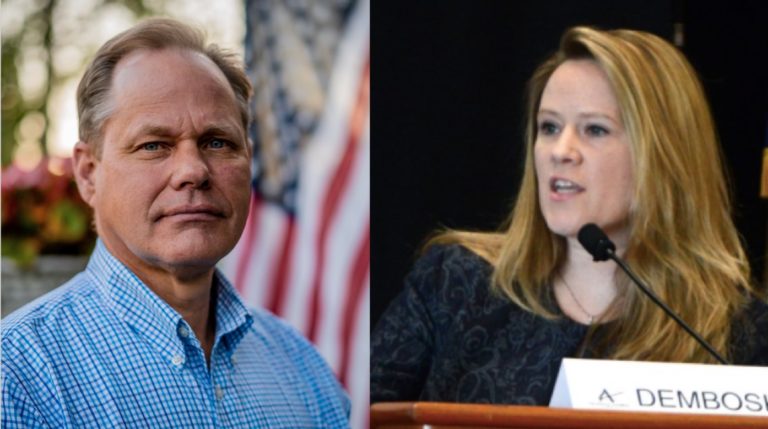
After being fired by Mayor Dave Bronson last December, and after the Anchorage Assembly refused to approve a negotiated settlement, former Anchorage Municipal Manager, Amy Demboski has taken legal action against the mayor and the municipality. Her lawsuit alleges “reckless disregard for the law and ethical standards.”
Some of the allegations were already known when Demboski threatened legal action against the city in January. But her lawyer Scott Kendall, who is a political foe of the mayor and supporter of opponent Suzanne LaFrance, has driven the knife deeper, including accusations of gender discrimination, retaliation, violations of whistleblower protections, and an inappropriate workplace relationship among members of his staff. Also, the lawsuit claims, defamation.
The Anchorage Assembly had been asked to settle the lawsuit with Demboski for $550,000, but the liberal majority, knowing this would become key to a campaign against the mayor, decided to refuse paying the agreed-to amount.
There are two unnamed co-defendants in the lawsuit, which names Bronson and the Muni.
Some of the accusations are essentially the same as those previously raised in Demboski’s initial complaint, but the new 24-page legal document introduces accusations of dysfunction, mismanagement, and even corruption in the Bronson administration. The accusations allege Larry Baker, an advisor to Bronson, acted wrongly regarding the navigation center the mayor proposed for Tudor and Elmore Roads, a project that was agreed to by the Assembly, but later was rejected by the same body.
The Assembly majority is hoping to use this red-on-red lawsuit as a form of an independent expenditure group against the mayor, who is running for reelection. This would mean that taxpayers will pay for the city’s expenses in the lawsuit, which will no-doubt damage the mayor’s hopes for reelection next April.