
Thursday, August 20, 2026
Home Blog Page 619

Anchorage Assembly to consider former waste transfer site for homeless navigation center

41

The Sept. 12 meeting of the Anchorage Assembly will again take up consideration of a navigation center for the homeless in Anchorage, a concept that has been advocated for by Mayor Dave Bronson’s since he was elected, but which has been blocked by the hostile Assembly majority that is bent on destroying the mayor and has used the homeless crisis as a weapon.

Assemblyman Randy Sulte says that a navigation center, a place where homeless can be directed toward housing, social services, and health care, could be set up at the former waste transfer site on 56th Ave.

The center would be situated in midtown, the heart of Assemblywoman Meg Zaletel’s district. She runs the Anchorage Coalition to End Homelessness, a nonprofit that pays her well over six figures to oversee the city’s homeless industrial complex. The coalition has proven largely ineffective in addressing homelessness.
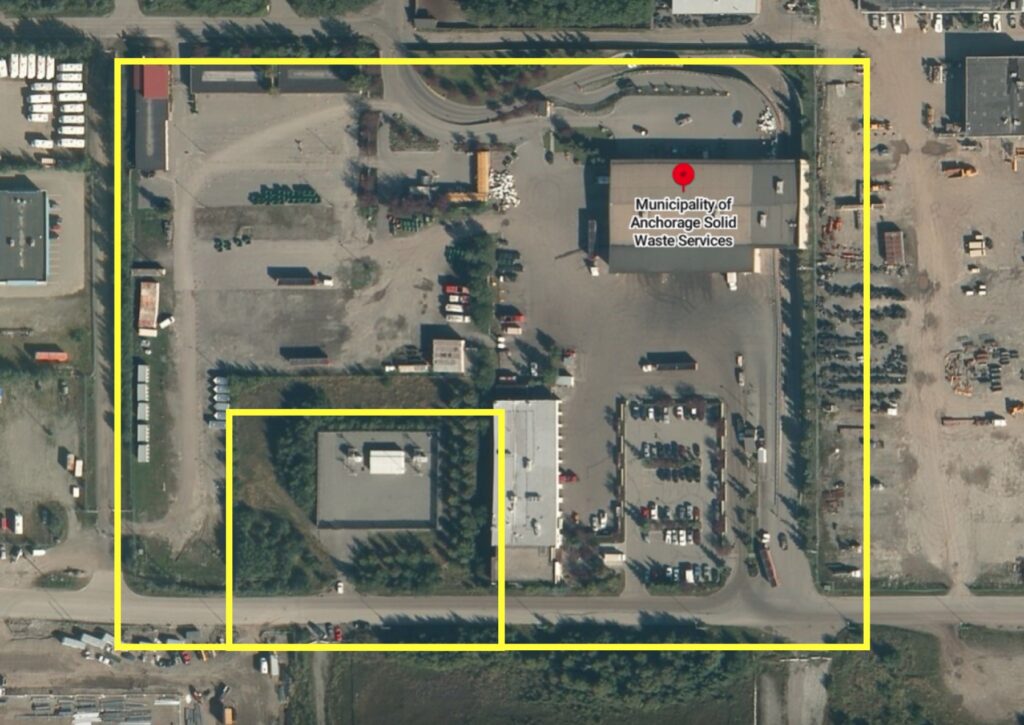
Recently, Solid Waste Services opened up a new waste transfer site at 1208 E. 56th Ave, and vacated the one next door at 1140 E. 56th. The vacated site is 448,000 square feet of fenced area, with a sheltered maintenance garage building of about 14,400 square feet and a two-story administration building of about 4,800 square feet, which has offices, bathrooms, showers, a kitchen, and lockers that were once used by waste management workers.

Sulte is asking the Assembly to approve a resolution that asks the mayor to make a good-faith effort to evaluate the site for use as a navigation center.

The mayor’s original plan, approved of and mostly funded by the Assembly, was never built after the Assembly’s hostile majority became incensed that the mayor had gone ahead with site preparation work at the Elmore and Tudor Roads site he had chosen for the navigation center, without final procedural approval. Instead of having the center ready for last winter, the homeless had to go back to the Sullivan Arena, and the project has now been abandoned because of the Assembly’s change of heart.

Even though the materials for the proposed Elmore-Tudor center had been agreed to and mostly paid for by Assembly appropriation, they sit in warehouses in Eagle River and in materials yards in the Lower 48, ever since the hostile majority pulled its support.

Currently, tent and trailer encampments are spread throughout greenbelts and byways of Anchorage, as temperatures drop into the mid-40s at night. The standoff by the hostile Assembly has pushed the homeless crisis into the fall of 2023, giving the mayor few choices for how to keep homeless people safe.

Mayor Bronson has already stated that the Sullivan Arena, now cleaned up and repaired after being used as cold-weather emergency shelter since 2020, will not be used again for that purpose. He wants to return it to an entertainment venue, the purpose for which taxpayers approved when it was built. The destruction of the property by the vagrants and addicts that used it over the past three years was costly to repair.

The Sulte resolution would repurpose a recently vacated public building and property and would ask the mayor to request an appropriation from the Assembly to remodel the site.

Homeless navigation centers are low-barrier emergency shelters that also connect homeless people with services and pathways to permanent housing. The clients for these types of shelters are typically those who are at the bottom of the economic rung, who have severe drug and alcohol problems, mental health issues, and no families willing or able to take them in. Low barrier means that there are few rules or requirements for sobriety, as there are in most shelters.

The Assembly meets at the ground floor of the Loussac Library on 36th Avenue, and meetings begin at 5 pm.


Fifth Circuit Appeals Court overrules lower court on government’s bad advice against Ivermectin for Covid

Last week, the Fifth Circuit Court of Appeals reversed a lower court’s ruling that had said sovereign immunity protects the Food and Drug Administration from any liability for telling the public to stop taking Ivermectin, a drug that is relatively safe when used correctly, well-studied, and has been used by many for the prevention and treatment of Covid-19.

Judges Clement, Elrod, and Willett wrote, “FDA argues that the Twitter posts are ‘informational statements’ that cannot qualify as rules because they ‘do not ‘direct’ consumers, or anyone else, to do or refrain from doing anything.’ We are not convinced.”

“We are very pleased with this development and extremely proud of our colleagues for taking a stand against a government health agency that is clearly overstepping its authority,” said Pierre Kory, M.D., M.P.A., president and chief medical officer of the Front Line COVID-19 Critical Care Alliance.

“The FDA’s campaign against ivermectin continues to be used as an excuse by hospitals to deny access to a lifesaving treatment and weaponized by medical boards to threaten the licenses of doctors who stray from the mainstream to prescribe a drug that has been proven in controlled trials to safely treat hundreds of thousands of patients around the world,” he said.

The lawsuit, Apter et al v. Dep’t. of Health and Human Services, was brought by Robert Apter, MD, Mary Talley Bowden, MD, and FLCCC co-founder, Paul E. Marik, MD, and first filed in the U.S. District Court on June 2, 2022.

The lawsuit stated that the FDA acted outside of its authority and illegally interfered with the doctors’ ability to practice medicine with an aggressive effort to stop the prescribing of ivermectin for the prevention and treatment of COVID-19. The case was later dismissed by the court citing that the FDA had “sovereign immunity,” giving the agency absolute protection from any wrongdoing or harm in directing the public, including health professionals and patients, to not use ivermectin, a drug that has received full FDA approval for human use. Earlier this year, Apter et al filed an appeal in the U.S. Court of Appeals for the Fifth Circuit requesting the Court reverse the lower court’s dismissal of the lawsuit.

The Court’s reversal was issued last week with the ruling stating, the “FDA is not a physician. It has authority to inform, announce, and apprise—but not to endorse, denounce, or advise. The Doctors have plausibly alleged that FDA’s Posts fell on the wrong side of the line between telling about and telling to.”

The ruling goes on to say the “FDA can inform, but it has identified no authority allowing it to recommend consumers ‘stop’ taking medicine.”

And finally, “Even tweet-sized doses of personalized medical advice are beyond FDA’s statutory authority.”

“The work of the legal team at Boyden Gray has been nothing short of superb,” Kory added. “We are very fortunate to have them on the side of our doctors in this case.”

It’s certain the federal government will appeal to the U.S. Supreme Court.

The Fifth Circuit Court’s ruling can be found here: https://covid19criticalcare.com/wp-content/uploads/2023/09/Apter-Reversal-22-40802_Documents.pdf

The FLCCC filed its amicus brief in support of the lawsuit in February of this year. A copy of the brief can be found here: https://covid19criticalcare.com/wp-content/uploads/2023/02/FLCCC-Apter-v-HHS-Amicus-2-13-23-FINAL.pdf

Tom Boutin: Assembly is wrong to try to force new city hall on voters again

By TOM BOUTIN

I urge voters to once again turn down the full faith and credit long-term bond ballot measure for a new City Hall.

A project requesting the leveraging of all private real estate, residential and commercial, needs to have broad and deep support, but this downtown office building clearly does not have that.

Moreover, effectuating a lien immediately after residential property assessments increased so much this year, as commercial property assessments did last year, may be unscrupulous and is afflicted security for bonds.

Is it coincidental that City and Borough of Juneau leadership increased assessed values on private property when intending to sell bonds against property taxes – and without reducing the mill rate appropriately? Didn’t we vote this down less than a year ago?

Yes, and I think the best and most concise explanation was given when an AM radio interviewer this past summer asked the then-departing city manager that question. He emphatically answered, “so what?” Juneau leadership undeniably doesn’t care what we think.

That same city manager then sought and obtained money to better educate us this time around, indicating he believes we voted it down because we’re uninformed and/or stupid. One woman told me she voted no only because the ballot didn’t give her an option to vote hell no.

Wherever I go I hear additional voter concerns. Exempting debt payments from the mill rate cap detracts from already flagging Assembly credibility. A public debt issuer should first build a reputation for truthfulness and transparency.

Another concern is that voters are supposed to believe that this project is immune from the inflation that has increased the cost of seemingly all other Alaska public capital projects by 80% or more during the past three to six years. I worry that this city government would run out of bond proceeds when construction is only half complete.

Then, believing they have taxpayers over a barrel, the Assembly could say they need to sell completion bonds — possibly doubling the amount of debt. Insidiousness of that sort would be completely in character. Note that long-term interest rates have doubled, but the Assembly is silent about that. (One can hope that the election will bring veracity to the Assembly and raise the overall integrity.) There are many alternatives to borrowing against the full value of private property.

If, as the Assembly claims, eliminating space now rented by city government will meet bond payments then that should be the security for the debt rather than our property taxes — our homes and businesses. State and municipal debt in Alaska has been secured by lease payments, theater tickets, mineral production, fishing license fees, airport landing fees, electricity sales, student loan payments, energy production and governmental enterprise earnings.

However, as a Juneau voter I disagree with most debt right now because it allows profligate spending to continue while burdening a future generation with the invoice.

This Assembly makes frequent high-dollar bets and expenditures without asking what voters think. Only when they want to secure bonded indebtedness with our full faith and credit, using the assessed value of our property, do they ask for our opinion and commitment. When we disapprove they ask us again, spending our money to re-educate us.

Please vote no on this ballot measure and please vote very carefully on the Assembly races.

Tom Boutin is a Juneau resident who has served as chief of staff for the Alaska State Bond Committee, the Alaska State Pension Investment Board and the Alaska Retirement Management Board. He also was the CEO of the Alaska Industrial Development and Export Authority, a state-owned bank. In addition, he worked for many years in the forest products industry.

Pelosi, age 83, will run for another two years, saying she needs to promote ‘San Francisco values’

Former House Speaker Nancy Pelosi announced on Friday that is is seeking reelection to the House in 2024, and that she will be part of a Democrat all-hands-on-deck push to regain the majority, now held by Republican.

Pelosi, 83, made the surprise announcement in San Francisco, which she has served for decades. She also posted on X/Twitter her intentions to run.

“Now more than ever our City needs us to advance San Francisco values and further our recovery. Our country needs America to show the world that our flag is still there, with liberty and justice for ALL. That is why I am running for reelection — and respectfully ask for your vote.”

Pelosi was born March 26, 1940, and will turn 84 during next year’s campaign cycle. If she succeeds in winning another term, she will be nearly 87 at the end of that term.

Police state: New Mexico’s Democrat governor bans all guns in Albuquerque, except for police

Gov. Michelle Lujan Grisham announced on Friday an order that temporarily outlaws firearms, both openly and concealed, in Albuquerque and throughout Bernalillo County for the next 30 days.

This sweeping measure applies regardless if individuals possess a firearm permit.

Grisham, a Democrat, issued the executive order Thursday, categorizing gun violence as a public health emergency in the state of New Mexico.

During a Friday press conference, she admitted that legal challenges are likely to this unprecedented order and expressed doubt about its legality.

The order states that “no person, other than a law enforcement officer or licensed security officer, shall possess a firearm, either openly or concealed, within cities or counties averaging 1,000 or more violent crimes per 100,000 residents per year since 2021.”

The order’s immediate effect is limited to the city of Albuquerque and Bernalillo County, as clarified Grisham. Enforcement will primarily be carried out by the New Mexico State Police. Grisham emphasized that their presence in the state’s largest city will be “significant” over the coming month to ensure compliance.

Violating this public health order is expected to result in misdemeanor charges, according to Grisham. The order does not pertain to possession of firearms on private property or at licensed gun dealers.

This order came after a shooting incident near Isotopes Park in Albuquerque, where an 11-year-old boy was killed in an incident believed to be a road rage dispute.

Second Amendment and constitutional advocates are expected to sue the governor over the infringement upon the U.S. Constitution.

Alex Gimarc: Chugach Electric board starts its move to renewables

By ALEX GIMARC

The August issue of the Chugach Outlet notified the Chugach Electric Association membership that studies are under way for renewable energy projects.  

The lead article noted that Chugach issued request for proposals seeking projects that could provide at least 100,000 megawatt hours of renewable energy per year. 

They selected a pair of projects, a 122-megawatt wind farm west of Mount Susitna and a 120- megawatt solar farm near Point MacKenzie. There is a third 500-kilowatt solar project on Chugach property in Anchorage that is also being studied.  

Each of the projects would provide two to four times the desired renewable power, something the new Chugach Electric Association board majority believes they need for their renewable portfolio.  

The studies are supposed to determine grid impact, integration costs, and economic impact to the system. Note that The Outlet piece does not mention cost of any of these proposals. Apparently, they are free.  

The problem with free stuff, as every single man has learned with varying levels of pain at a young age is that the free stuff is often the very most expensive stuff. And Biden Administration funded renewables will be very, very expensive to Chugach members, most likely in sharp increases in monthly electric costs and sharp decreases in overall system reliability. Yes, this means blackouts.

Chugach’s most recent dalliance with renewables was the 18-megawatt Fire Island Wind farm which came online in 2012. For several years, its real time output was visible on the Chugach website and its additional costs were broken out on our monthly bills.  

But over the last 11 years that has gone away, likely due to the complexity associated with the merger with ML&P. Rates are detailed in a complex document called the Electric Service Tariff.  

Chugach reports that Fire Island produces about 30% of its rated output. In contrast, its hydro and natural gas generation runs in the 90 – 95% range.  

This variability is a critical feature of proposed renewables and leads to all sorts of integration problems. The more renewables there are, the more difficult it is to keep the electricity in the system at constant levels. In places like California and Texas, with high penetration of renewables into their grids, this variability has led to system instability and blackouts at the most inopportune times.

Depending on whose bogus numbers you believe, somewhere between 10 – 30% of renewable penetration into any electric system renders the system unstable.  

Given that the Railbelt is around 850 megawatts, that number is 85-255 megawatts, so use 20%, 170 megawatts as a ceiling, with smaller being better for keeping the lights on. And the Chugach Board is toying with bringing more than that online to meet some sort of carbon free or renewable portfolio requirement.  

Renewable advocates, like the ones recently elected to the Chugach Board, are very good at pointing to the shiny object of carbon-free future, zero emissions, and renewable portfolio standards as rationale for their lofty promises. 

The problem is while the feds can provide free money for new renewable installations, they never provide any money for storage or integration. And storage is the most important part or renewables, as it smooths out the highly variable output of the renewable systems. Storage for a renewable generation plant is as expensive as the renewable power plant.  

Instead, the advocates simply dump the variable output into the grid hoping it will all sort itself out via operational magic done throttling the output of existing generation, hydro and natural gas-fired turbines here in the Railbelt.  

Clearly, this is all in the early stages.  But if we have learned anything about renewables here and in the Lower 48 it is the following:

  • They are always more expensive for the consumer.
  • They are destructive to the environment (large physical footprint, windmill destruction of birds).
  • The more of them we use, the less stable it will make the overall grid.
  • Storage is never included.
  • Existing CO2 powered generation is rarely retired (in the US), as it is needed for backup when the sun isn’t shining and the wind isn’t blowing.

Given that thanks to the Left, we have transitioned into a low- to no-trust society, I would suggest that the time of “trust me” for these sorts of promises is long past. And if the Chugach Board isn’t answering obvious questions or holding public discussions with a complete array of supporting data and public information, it is because they don’t want you to know.  

I will follow this as it proceeds, writing from time to time as we find out more. Meanwhile, I will also be looking for a propane / natural gas-fired home generator, as cold and dark seems to be in our not-so-distant future if this board majority gets what they want.

Alex Gimarc lives in Anchorage since retiring from the military in 1997. His interests include science and technology, environment, energy, economics, military affairs, fishing and disabilities policies. His weekly column “Interesting Items” is a summary of news stories with substantive Alaska-themed topics. He was a small business owner and Information Technology professional.

Press leftward: Nonprofits pledge $500 million to save regime media

By JASON COHEN | DAILY CALLER NEWS FOUNDATION

A coalition of 22 groups, including prominent left-wing organizations, have pledged more than $500 million to fund local media publications over the course of five years, according to an announcement posted on Thursday.

The new coalition is called “Press Forward,” and many of the groups in it appear to have a left-wing bias based on their funding and initiatives, although the group states it “is independent of ideology.” The coalition plans to reverse the downward trajectory of local news outlets and “close longstanding inequities in journalism coverage and practice,” according to the announcement of its formation.

Since 2005, about 2,500 newspapers have ceased operations, according to The New York Times. This number is rising and many that are still in business have been forced to reduce staff.

Press Forward will allocate the $500 million to fund grants to support local newsrooms, provide resources to diverse publications and assist in developing collaborative tools such as legal support and membership programs, according to the announcement.

The MacArthur Foundation is leading the coalition and has pledged $150 million in grants, according to the NYT. It has frequently contributed to left-wing organizations such as Planned ParenthoodTides Foundation and Environmental Defense Fundaccording to its grants database, giving more than $5 million to each, according to InfluenceWatch.

Knight Foundation is also donating $150 million and has previously given over $1.2 million to nine universities and nonprofits to “combat disinformation in communities of color” in 2022, according to its website.

Kroger, Albertsons to sell off Carrs, Safeway to clear path for merger

21

Kroger and Albertsons said Friday they will sell 413 stores, including Carrs and Safeway, along with other assets for about $1.9 billion.

This sell-off of assets would create more certainty for completing a merger that is opposed by major labor unions and Rep. Mary Peltola, who is in lockstep with the AFL-CIO.

The 413 stores will be sold to C&S Wholesale Grocers in a move that was clearly anticipated by the companies involved, even before the unions began vocally opposing the merger.

Kroger, which owns Fred Meyer, will also sell several of its other entities and private label brands. C&S will get eight distribution centers and two offices.

All fueling stations and pharmacies associated with the divested stores will stay with them as they are shed from the Kroger/Albertsons alliance.

Kroger offered $20 billion to buy Albertsons, and take on about $4.7 billion of Albertson’s debt. The deal is expected to close early next year, if the Federal Trade Commission does not cave into the unions trying to prevent the merger.

Biden extends his 9-11 emergency powers over military by a year

On Thursday, President Joe Biden ensured the emergency that began after Sept. 11, 2001 will extend another year, giving him broad powers over the organization of the military.

The proclamation, “The National Emergency with Respect to Certain Terrorist Attacks,” means the nation will be in a state of emergency for at least 23 years since Muslim terrorists attacked the country, killing nearly 3,000 people in New York, Virginia, and Pennsylvania.

The one-year extension of President George W. Bush’s original Proclamation 7463 comes just four days before the 22nd anniversary of the attacks on the World Trade Center and the Pentagon.

“Because the terrorist threat continues, the national emergency declared on September 14, 2001, and the powers and authorities adopted to deal with that emergency must continue in effect beyond September 14, 2023.  Therefore, I am continuing in effect for an additional year the national emergency that was declared on September 14, 2001, with respect to the terrorist threat,” the proclamation says.

Biden will spend Sept. 11 traveling home from Vietnam, and will make a quick stop for fuel in Alaska, where he will take part in a brief ceremony at Joint Base Elmendorf-Richardson.

Aviators in Alaska will be observing a temporary flight restriction around Anchorage on Sept. 11, due to the president’s stopover.