Saturday, August 15, 2026
Home Blog Page 538

Kassie Andrews: ‘Green’ rate case puts Chugach Electric vs. ratepayers and taxpayers

By KASSIE ANDREWS | MASTER RESOURCE

With the start of the Alaska legislative session next week, pre-filed bills have trickled in. Legislation for a green bank, renewable portfolio standards, carbon capture utilization and storage, and Cook Inlet gas incentivizes appear imminent this session.

Alaska is an oil and gas state. In 2022, natural gas, oil, and coal fueled two-thirds of Alaska’s electricity generation, with hydro at 29 percent and wind, solar and biomass accounting for the last 3 percent. In personal and mass transportation, electric vehicles are riding on government subsidies to get a foothold, even more so than in the Lower 48.

In 2022, Alaska ranked in the top five oil producers in the United States, producing about 4 percent of the total. Alaska is first in oil and gas contribution to total GDP as a state. Proved oil reserves are the fourth largest of any state. Alaska ranks fourth in the nation in natural gas extraction; however the majority of this is primarily used for reinjection into the ground on the North Slope to maintain oil reservoir pressure and low-cost oil production.

GREEN POLLUTION

So how does the state’s electricity get polluted by “green” politics? Big Environmentalism and Washington, D.C., abetted by Alaskan politicians, have found a way. 

First, proclaim a local natural-gas supply crisis. Second, hike gas rates in the name of “conservation” to reduce usage and make cost-prohibitive green energy solutions less uncompetitive.

In the middle of all this is Alaska’s major electric company (a cooperative), Chugach Electric Association, which has agreed to “decarbonize” by at least a 35 percent carbon reduction by 2030, and 50 percent by 2040.

BACKGROUND

On Oct. 30, 2020, Municipal Light & Power was acquired by the Chugach Electric Association. The sale was roughly $1 billion, approved by the voters of Anchorage in April of 2018. Today, Chugach Electric provides service to over 90,000 members. 

The co-op is the sole electric utility provider to Alaska’s largest city, Anchorage, which is where roughly 40 percent of Alaskans reside. Chugach, along with other adjacent utilities on the same grid, provide power to 75 percent of Alaska’s population along the Railbelt. During the acquisition, it was said: “The combination of the two utilities is expected to lead to lower long-term rates for all utility ratepayers with an estimated savings of more than $200 million over the next 15 years.” 

Since that time, as discussed here, we’ve been fed a narrative of a looming gas shortage in the Cook Inlet, where 80 percent of the energy load for Alaska’s largest population center comes from. Contracted gas supply has become a political football, with Alaskans on the hook for all of the risk. A Green New Deal faction is opening the door for mega-grifters after taxpayer/ratepayer dollars to push a delusional “energy transition” upon Alaskans, regardless of cost or risk.

Written into the acquisition of ML&P was a requirement by the RCA to combine rate classes. The proposed rate increase, or “rate case,” was filed with the RCA on June 30, 2023. According to the Chugach FAQs, the proposed rates come with an interim increase of 3.6 percent, effective September of 2023, and a permanent increase to base rates that equate to approximately a 5.8 percent increase on an total bill basis, with final implementation complete in September of 2024. 

The promise of rate increases not being due in part to the sale, is up for debate. The area for savings is mostly found in the fuel component of the cost. With the Chugach board adding decarbonization goals to its Strategic Plan (“reducing our carbon intensity by at least 35 percent by 2030 and at least 50 percent by 2040, using 2012 as the baseline year without a material negative impact on rates”), one begins to wonder how such a grand idea is paid for if not in the fuel rates, or base rates. Did ratepayers actually even ask for that?

INTERVENORS

A total of 12 parties have joined onto the rate case, all representing their own special interests either being in opposition to the increase and others seeing this as an opportunity to introduce ulterior motives.  These include the University of Alaska, City of Seward, JL Properties, Inc, United States Military (ULFSC), Renewable Energy Alaska Project (REAP), and American Association of Retired Persons (AARP) to name the most influential.

In an Oct. 18, 2023, webinar, REAP and the AARP discuss the rate design, with statements in part “incentivizing certain consumer behaviors” and “aligning them in a way that helps us to address these gas prices” and “this pivotal moment and how unique it is to have this general rate case happening right now at the same time as we are considering solutions to the gas crisis in Cook Inlet.”

AARPs position is that the largest increases are proposed for residents with the lowest usage, in a release stating “This case could set a precedent for the future, when we are likely to see additional rate increases as Cook Inlet gas runs short and companies seek to transition to higher-cost alternatives. We want to make sure there’s someone at the proverbial table to ensure that residential households are treated fairly as cost increases are allocated now and in the future.”

In this press release, REAP capitalizes on the narrative that there is a looming gas shortage (according to the USGS there is no shortage); REAP uses this as leverage to weasel their way into the discussion on Alaska’s energy, stating in part:

“REAP is intervening to advocate for innovative rate design for Alaska’s largest electric utility that will reduce dependency on imports of foreign LNG by promoting energy conservation, consumer investment in rooftop solar and other natural gas-conserving technologies. REAP seeks to protect consumers and foster economic resilience in the region.”

And: “It is a pivotal moment for Alaska’s energy future. This RCA proceeding will set permanent rates for the foreseeable future, including the next few years when Railbelt Alaskans must work to minimize the negative impacts of a dwindling local gas supply. It is imperative that Chugach adopts a rate design that promotes energy conservation. Chugach’s own consultant report shows that doing so can extend the life of our local natural gas resources, buy us time to diversify our over-reliance on a single fuel source, and allow us to take advantage of renewed and enhanced federal tax credits for clean energy.”

EARTHJUSTICE

The most consequential detail of all – “REAP’s effort will be supported by lawyers at Earthjustice.”

Earthjustice’s stated goal is to: “End the Extraction and Burning of Fossil Fuels. Earthjustice works alongside communities impacted by coal, oil, and gas and uses the power of the law to loosen the fossil fuel industry’s destructive grip on our world. Earthjustice is the premier nonprofit public interest environmental law organization. We wield the power of law and the strength of partnership to protect people’s health, to preserve magnificent places and wildlife, to advance clean energy, and to combat climate change.  We are here because the earth needs a good lawyer.”

This is not Earthjustice’s first rodeo in Alaska.  Earthjustice, along with NRDC (lawyers, not scientists) was instrumental in the delayed approval of the ConocoPhillips Willow development and key to the insertion of language resulting in an alternative leaving 53 million barrels of oil in the ground, contrary to the maximum benefit and settlement of the citizens of Alaska (Article VIII).  This alternative was the lowest “Social Cost of Carbon.”  Earthjustice has also filed suit against the federal government for the approval of exports from the potential Alaska LNG Project.

The million-dollar question is – why certain organizations were allowed standing on this rate case, specifically REAP, and what is their overall motive? The decision is interesting when you consider they don’t own anything, and the needs of the members are to be represented through the Board and Board elections. 

With renewables badly needing any leverage or deal they can force us all into, and Chugach agreeing to net zero targets – could this be the long game for legislative record and promises? If the idea of renewables is so great that it requires federal subsidies, and most of the opportunity for cost savings within the rates is in fuel price, how exactly does REAP think they have standing to enter a conversation about our rates, if not extortion? 

REAP’s involvement in the rate case should have been vehemently rejected by all commissioners. Only one RCA member dissented in the decision to allow both REAP and Ethan Schutt, who oversaw the CIRI Fire Island Wind Farm project, onto the rate case. This dissent was under the basis that it would “broaden the basis” and “delay the process.”  Regardless, even if the RCA wanted to allow everyone in to hear them all out, the irrelevance of a few will come at a cost to Alaskans, and with Earthjustice involved, that cost is bound to be big. 

The likes of REAP have no cost or risk to answer for.  They are as much a stakeholder in the Railbelt’s generation as a tick to a dog.  The hot match of our legislators should be applied to their backsides to make them fall off in the weeds where they belong.

TROUBLE AHEAD?

Gov. Mike Dunleavy appointed four out of the five members on the RCA commission. These NGO’s influence over the RCA and others will be a convenient straw dog to point to in the end – After all, the energy task force, the renewable portfolio standardcarbon reductiongreen bank, et al. is the governor’s plan.  In his words

“The trends are clear: For over 30 years, natural gas prices have only risen in the Cook Inlet while the cost of renewable generation has plummeted. With unrest in Eastern Europe rising and renewables now being the cheapest form of generation on earth, it’s time for Alaskans to consider where we want to be 20 years from now. We have a responsibility to look beyond the immediate future and toward the world our children will inherit. Remaining captive to a costly and unpredictable fuel marketplace is not an option. It’s time to cut the talk and put Alaska on a path toward energy independence.”

It gets worse. Alaskan Republican legislators are holding seminars with these radical eco-non-governmental organizations. Who needs Earthjustice when our costume conservatives have been co-opted or have placed themselves in service to ENGOs perfidiously against their citizen constituents?

CALL TO ACTION

How can good folks follow and affect the outcome?

With needs of members of the rate payers ultimately represented by your local utility board, a great opportunity for Chugach rate payers exists this spring.  Two board seats for the Chugach Board of Directors are up for election in 2024.  Candidate applications and resumés are due to the Nominating Committee by 5 p.m. Wednesday, Jan. 24, 2024.  Forms available here

If successful in our endeavors to elect free-market board members, it will take another two years (spring 2026) to complete a majority board changeout.  Voter apathy is a big problem in local utility elections.  Please vote.

With the start of the Alaska legislative session less than one month away, prefile release bills will begin to trickle in.  Legislation for a Green Bank, Renewable Portfolio Standards, Carbon Capture Utilization and Storage (CCUS) and Cook Inlet gas incentivization appear imminent this session.  These types of bills (or anything at the capital at all for that matter) receive very little attention in the way of public input.  Track legislation and opportunities for public testimony here.

Kassie Andrews is an energy expert on Alaskan politics and resource development. A lifelong Alaskan, her career in energy has involved project management, construction, and finance. This opinion first appeared in the Master Resource free-market energy blog and is reprinted with permission.


Darin Schilmiller sentenced to 99 years in murder of Cynthia Hoffman

8

Darin Mitchell Schilmiller of New Salisbury, Indiana, was sentenced Thursday by Anchorage Superior Court Judge Andrew Peterson to 99 years, with none suspended for his role in the murder of 19-year-old Cynthia Hoffman near Thunderbird Falls in Chugiak in 2019. He won’t be eligible for parole for 45 years, when he is 70 years old.

Schilmiller, 25, previously pleaded guilty to one count of solicitation to commit murder in the first degree.

On June 2, 2019, Cynthia Hoffman was shot and killed by her friends on the banks of the Eklutna River near Thunderbird Falls. Afterward, her body was dumped in the Eklutna River. Later, it was discovered that Schilmiller had solicited the murder of Hoffman from then 18-year-old Denali Brehmer of Anchorage. Schilmiller also solicited child pornography from Brehmer; conduct that led to additional charges by the U.S. Attorney’s Office.

Schilmiller’s sentencing occurred over three days. The judge gave him the maximum sentence; he could have been sentenced for as little as 15 years.

The State requested a sentence of 99 years with none suspended and an order restricting Schilmiller’s eligibility for discretionary parole. Schilmiller requested a sentence of 70 years with 20 years suspended.

Members of Cynthia Hoffman’s family provided victim impact statements at sentencing. Her father, Timothy Hoffman, described her as his “right hand man.” Her uncles described her as precious, vibrant, beautiful, and fun loving.

Judge Peterson called the case “extremely sad” and “shocking.” He described it as a premeditated murder-for-hire that was an “assassination” of Cynthia Hoffman.

Peterson found that Schilmiller’s conduct was among the most serious solicitation to commit first-degree murder cases and among the most serious contract killing cases. He further found that Schilmiller committed the murder “for the mere thrill of it” and called him a “worst offender” for purposes of sentencing based on the conduct in this case, saying that Schilmiller will “always be a risk to the community.”

The court also expressed hope that the sentence would be a deterrence to others, recognizing that if it encourages one person to not commit a murder going forward, then it is a successful outcome.

Other defendants were charged with causing Hoffman’s death. Denali Brehmer’s sentencing is scheduled for Feb. 12, 2024, in front of Judge Peterson. Caleb Leyland’s sentencing is scheduled for June 10, 2024, in front of Judge Peterson.

Kayden McIntosh’s case is pending trial.

The case was investigated by the Anchorage Police Department’s homicide unit, the Federal Bureau of Investigation based out of Alaska and Indiana, and the Indiana State Police. Schilmiller is currently in the custody of the Alaska Department of Corrections.

Google rolls out ‘Sensitive Event’ rules for 2024

Google, the multinational tech giant, has announced updates to its “Inappropriate Content Policy,” to take effect in February 2024 to provide a clearer definition of what constitutes a “Sensitive Event.” The update comes just before the 2024 Super Tuesday, when when the greatest number of U.S. states hold primary elections, caucuses, and presidential preference polls.

The policy update aims to reinforce Google’s commitment to preventing the spread of what it sees as insensitive or exploitative content during critical events that have significant social, cultural, or political impact.

A “Sensitive Event,” according to Google’s updated policy, refers to an unforeseen event or development that poses a substantial risk to Google’s ability to deliver high-quality, relevant information and ground truth.

Google, owned by Alphabet Inc., is a multinational company operated by Bay Area liberals. In the 2020 election cycle, Google employees gave $5,437,048 to Democrat candidates (88% of donations went to Democrats), and $766,920 to Republican candidates (12% of Google employee donations went to Republicans).

During a Sensitive Event, Google may take various actions to uphold its content standards. Examples of Sensitive Events provided by Google include civil emergencies, natural disasters, public health emergencies, acts of terrorism, conflicts, or mass acts of violence. These events can have far-reaching consequences and demand responsible content management, the company said.

To prevent the spread of inappropriate content during Sensitive Events, Google outlined a series of prohibitions in its updated policy, some of which are as follows:

1. Exploitative Products or Services: Google prohibits the promotion and sale of products or services that exploit, dismiss, or condone the Sensitive Event. This includes actions like price gouging, artificially inflating prices to limit access to vital supplies, or offering products or services that are insufficient to meet the demand during a Sensitive Event.

2. Keyword Manipulation: It is against Google’s policy to use keywords related to a Sensitive Event with the intention of driving additional traffic to content that may exploit or misrepresent the situation.

3. Victim Blaming: Google strictly forbids claims that victims of a Sensitive Event were responsible for their own tragedy. This also extends to any insinuations that victims do not deserve support or remedies. Additionally, Google prohibits claims that victims from specific countries were responsible for a global public health crisis.

The policy updates come as Google continues to refine its content moderation practices to maintain the type of messaging it prefers on its platforms.

By providing a more precise definition of “Sensitive Events” and outlining specific prohibitions, Google is exerting greater influence over messaging during times of crisis.

Recently, Google, which owns YouTube, has removed several channels operated by people who represent political ideas the company doesn’t approve of.

Google, which sent out the notice about the “Sensitive Event” policy update on Thursday, encourages its users to report any content that violates these updated policies, as community feedback plays a crucial role in identifying and removing inappropriate content from its platforms.

Report: Alaska one of top states seeing biggest jump in gender dysphoria diagnoses

A new insurance claims data report using information from the Atlas All-Payor Claims Dataset reveals that Alaska is among the top states experiencing a dramatic increase in medical and mental health diagnoses of gender dysphoria, a mental health condition in which a person believes they are born with the wrong sexual organs.

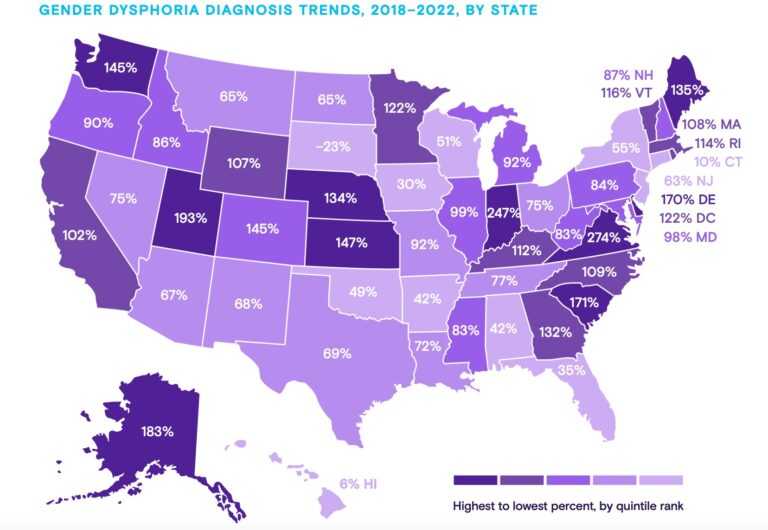
Alaska has witnessed the fourth-highest surge in insurance claims related to transgender or gender dysphoria cases, registering a 183% increase from 2018 to 2022.

In that timespan, the report showed that 49 out of 50 U.S. states experienced a remarkable increase in gender dysphoria diagnoses. South Dakota was the sole exception, with a decrease in the number of residents identifying as a different gender than they were born with, as outlined in the report.

Virginia, Indiana, Utah, and Alaska saw the highest rise in gender dysphoria diagnoses among U.S. states.

A significant portion of individuals seeking gender-shifting care, which can include irreversible surgeries, hormone therapies, and other treatments, are under the age of 18. The report indicated that young people now make up approximately 18% of Americans with gender dysphoria, a notable increase from the 10% reported in 2016.

Transgenders are less likely to have college degrees, or be employed, insured, or married, the report said. Additionally, transgender individuals reported having more days of poor mental and physical health compared to their non-transgender peers, according to the data.

Insurance claims for mental services among those with gender dysphoria exploded in the period studied, with 60-minute sessions increasing 127% from 2019 to 2022 (data for 2018 was not available). Insurance claims for 45-minute sessions jumped more than 77% from 2018 to 2022, while claims for 30-minute sessions grew a whopping 177%.

Other common mental health services for patients with gender dysphoria include group and family psychotherapy.

Some states have banned the drastic medical treatments that doctors refer to as “gender-affirming care” for those under the age of 18. Alaska is not one of those states.

Ohio was the 23rd state to ban the treatments for youth, although the state’s Gov. Mike DeWine vetoed the ban; he has since seen that veto overridden by the State House.

The report itself shows a clear bias toward transgender treatment for children and youth, stating that laws banning the gender hormone and surgical treatments for youth have a negative health impact on these individuals.

“Nearly every mainstream medical organization asserts that gender-affirming healthcare, including mental health services and hormone therapy, improves transgender folks’ quality of life and constitutes medically necessary care,” the report states.

Read the report at this link.

Jon Faulkner: Implosion of the ivory tower

By JON FAULKNER

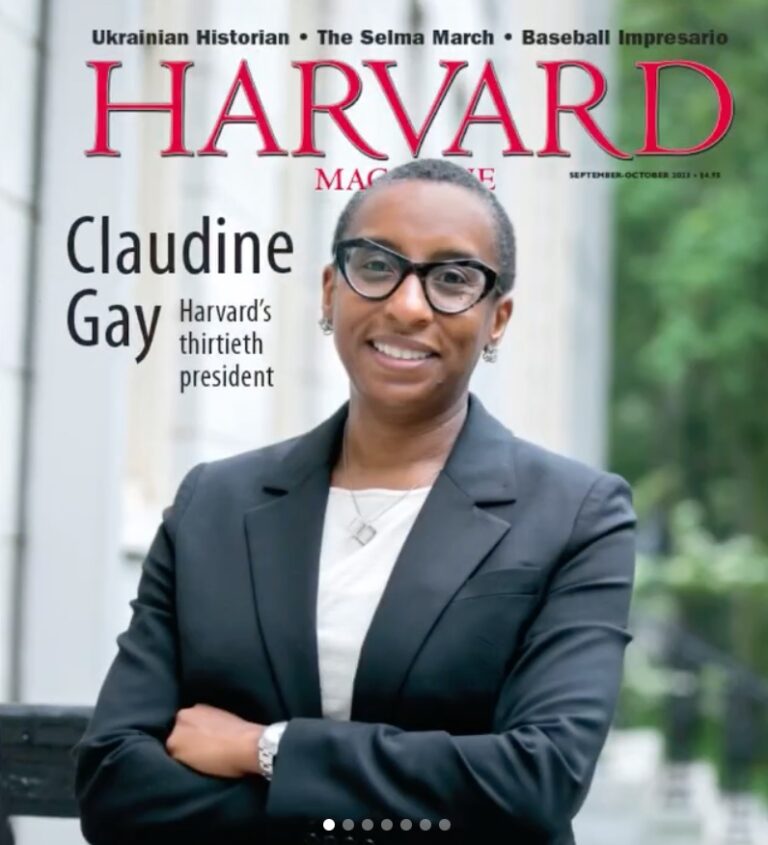
Last week’s resignation of Harvard University President Claudine Gay was a watershed event in the history of America. Her fall symbolizes a low point in our nation’s academic aspirations and the implosion of the ivory tower.

How did this once revered institution of higher learning self-destruct? 

Harvard may be at the top, but it is not alone in its abandonment of basic tenants of academia and the pursuit of truth. In March, 2023 Stanford’s Associate Dean for DEI (Diversity, Equity, Inclusion) Tirien Steinbach aided the disruption of a speaking event by U.S. Fifth Circuit Court of Appeals Judge Kyle Duncan.

Steinbach was disciplined and later resigned, but the event was cathartic for a nation facing this sudden reality:  If these people represent our nation’s brightest and most promising leaders, our country is doomed. 

Such censorship on campus is not new. For years, speakers, faculty and students have been shouted down, openly spurned, and canceled on many campuses. Steinbach was acting out a familiar DEI playbook.

So, what caused Gay’s resignation and why is this so profoundly significant for Americans? 

Major media spun it as instigated by petty charges of plagiarism, abetted by her blown testimony to Congress, during which she couldn’t summon the courage to denounce Hamas as a terrorist organization bent on Israel’s destruction.

Insider elites point to the money machine, to Harvard’s $50 billion endowment and Gay’s diminished effectiveness as a money manager. The money trail is further complicated by an upset Congress that holds hearings—and the purse strings to vast grants doled out to Harvard annually.

Adding fuel to that fire was Alaska’s Sen. Dan Sullivan’s well-timed tour of his alma mater and Widener Library, which focused national attention on just how bad things had become at Harvard. 

These were contributing factors, but the implosion of the ivory tower required more—a massive trigger that offends the core beliefs of an entire nation.

Before being named Harvard’s president, Gay was instrumental in the implementation of DEI for Harvard. More than likely, this work qualified her for the post. Speculation aside, it is Gay’s subsequent reactions to events that galvanized national attention on her ideology—not her skin color—and on DEI’s repudiation of core educational values.

Until recently, evidence of DEI’s underlying philosophy was sanitized by mainstream media. Gay’s debacle exposed it for what it is—a belief system that promotes race-based intolerance. It took time, but we now know the truth: DEI undermines much of what our nation stands ready to fight for.

How does an institution like Harvard actually implode under its own weight? The actions by the Board of Directors of the Harvard Corporation in response to allegations of plagiarism by Gay offers context.  

According to billionaire Harvard “insider” Bill Ackman, when Gay was first accused of plagiarism, the BOD denied the claims as “demonstrably false” and then threatened the New York Post with “immense liability” if it ran the story.

This, of course, is a familiar tactic: Threaten people with retaliation when confronted with an ugly truth.

The board eventually got the story cancelled but secretly launched a private investigation of its own, outside the prescribed process to verify faculty plagiarism. When the board finally acknowledged Gay’s plagiarism, they characterized it as “unintentional” and created new language to describe it, like “duplicative language.”

When the truth emerged, Gay’s defenders railed against “the process.” Deception with words and their meaning is apparently ground that intellectual elites find fertile.        

Diversity, Equity, and Inclusion are popular concepts most Americans unconditionally embraced, which is precisely why they were selected. However, DEI hijacked the English language to cloak itself in these noble principles, like a wolf parading around in sheep’s clothing. DEI, we now know, is a political movement based on a divisive oppressor-oppressed world-view designed to weaken America from within.

Ackman offered this summary: “There is no commitment to free expression at Harvard other than for DEI-approved views. This has led to…Harvard’s having the lowest free speech ranking of 248 universities assessed by the Foundation of Individual Rights and Expression.”

A simple word like “equality” illustrates the deception and duplicity of the ivory tower—in whatever context one chooses. Americans have always—and still do—embrace equality to mean “equality of opportunity.” Americans reject non-level playing fields and work tirelessly to eradicate favoritism based on skin color, creed, religion, and gender. We are a multicultural, highly tolerant society which believes in individual initiative. This is the real reason Americans are incensed over our country’s abysmal performance with public education—historically, it has been the best means to level the field and promote equality. 

DEI, on the other hand, believes equality means “equality of outcome” and this requires active force and intervention to achieve.

This is not a far-right conspiracy theory: it is what many of our county’s elite educators believe. It seeks nothing less than societal transformation—using government as the leverage to accomplish it. DEI is a suppression machine, an anti-freedom philosophy that thrives on creating victims in order to advance what is ultimately an economic equalization scheme. Until now, those who challenged it were labeled racists, branded with the equivalent of a “Scarlet Letter” designed to disgrace.  Weapons of choice are modern and effective—mostly social media. Speech itself, if it can’t be censured or outlawed, is distorted by new words like “microagression”, designed for one purpose–intimidation.  

Bill Ackman describes DEI’s “power pyramid” at the top of which DEI places the oppressors–all whites, Jews and Asians (who are now dubbed “white adjacent”)–and at the bottom are the oppressed—certain people of color, LGBTQ people, and women. It is only those they deem oppressors who are racist—no one else is capable of it. Such a divided world based on skin color alone holds that one is either racist, or anti-racist—which partly explains how DEI exploits race to alienate us from one another. One cannot merely be “not racist,” which means one must admit to being racist or adopt DEI’s model of resistance to all oppressors and work to dismantle anything producing unequal outcomes.   

Mirroring a near-communist model, DEI seeks to erase all forms of meritocracy and differential outcomes, which are viewed as the basis of racism. Therefore, any educational or economic system, any admission policy which creates divergent outcomes among a population of different skin color is considered racist. All forms of grading or evaluation such as exams are racist. Capitalism, which has done more to lift humanity out of poverty, poor education, and ill-health than any rival economic system in history, is DEI’s ultimate evil.

The U.S. has become a highly polarized nation and DEI has thrived in this space, even contributed to it. That math and sciences are rejected by DEI as tools of the oppressor is due to these subjects having foundation in “empirical fact”—i.e. not subject to distortions or shading of truth. Could it be that our nation has lost sight of what it means to educate? Did Harvard abandon our youth in favor of becoming a political machine?

Underlying DEI’s ideology is a grand deception upon which their mission rests—that American slavery is justification to label all white people as oppressors, and to effectively punish them for crimes never committed. 

A judgment rendered so blindly is unjust.  Any verdict that treats as equally worthy of punishment the man who gave his life to free slaves, as compared to the man who owned them, is immoral. To foment and exploit division where none exists is wrong, and to condemn any race of people not for their own actions but for those of their ancestors and for their skin color defies logic and justice. No descendants of slave owners today are guilty by mere association, as it renders such persons guilty by virtue of no crime, no sin, and no direct trespass against another person. If such persons are deemed oppressors by ancestral association, we descend into Witch Trials (which, interestingly, some believe is happening).

Conversely, having dark skin, a less mainstream sexual identity or being born a woman does not create de-facto servitude or status as “oppressed.”

There is no moral defense of slavery. The hard truth is that men of every race have proven capable of unleashing unimaginable horrors against their neighbor—of their own race and others. American slavery is one such horror, but there are two vital lessons from our history that must never be forgotten. The first is that war unleashes misery and destruction beyond toll-indiscriminately. The Civil War cost 620,000 American lives, and yet 80 years later, during WWII, 6 million Jews died after being racially targeted for extermination.

And that prompts the second lesson–that what distinguishes a free and equal society from a monstrous and tyrannical one is a government of, by and for the people, secured by a system of justice that applies equally to all. Dred Scott was a heinous decision, but it was rendered by a court that would review and correct its decision, eventually leading to unprecedented human progress on every front—including equality and human rights–and stands today as a model of justice to the world. As imperfect as it is, it provides a system to resolve disputes peaceably, to evolve as a society, and to protect human liberties and inherent rights that ideally can never be taken from us.    

The intellectual disconnect that spawned DEI is crumbling, aided by an effete and aloof Ivy League leadership. Harvard alumni are agitating for change. The University recently removed portions of its DEI policies from its website. U-Penn is re-writing their constitution. Congress seems poised to act. 

Harvard professor and renowned author Steven Pinker wrote “A five-point plan to save Harvard from itself” which has gained nationwide traction. He prefaced his plan by stating that Harvard needs to … embark on a long-term plan to undo the damage they have inflicted on themselves…” 

Under the heading of “Free Speech,” Pinker writes “Deplorable speech should be refuted, not criminalized. Outlawing hate speech would only result in students calling anything they didn’t want to hear “hate speech.” He calls for institutional neutrality, arguing that Harvard should not act like a branch of the State Department, stating, “It is a forum for debate, not a protagonist in debates.” 

Like most Americans, Pinker wants to teach our country to advance opinions by reason and not by force. He laments that our universities have become cloning factories, “…monopolized by extreme ideologies, such as the conspiracy theory that the world’s problems are the deliberate designs of a white heterosexual male colonialist oppressor class.”

Finally, Pinker calls for disempowering DEI, which he accuses of “enforcing a uniformity of opinion, a hierarchy of victim groups, and the exclusion of freethinkers.”

Like the ancient tower of Babel, the ivory tower has fallen. Now it’s time to re-build.

Jon Faulkner is the president of Alaska Gold Communications, Inc., the parent company of Must Read Alaska. He is a graduate of Harvard University.

Ohio House overrides governor on transgender treatments for kids

The Ohio House voted to override a veto by Gov. Mike DeWine of legislation that limits medical care for transgender minors and bans transgenders from being allowed to participate in female sports in high school and college competitions.

DeWine surprised his fellow Republicans when he vetoed House Bill 68 last month. The bill sets 18 as the age of patients for when doctors can prescribe puberty blockers and perform gender transition surgery on young people.

DeWine said decisions about transgender medical care should be left to families and their physicians, but bill supporters say that gender transition surgeries and treatments are becoming far too common, and are now profit centers for doctors and clinics who mutilate and confuse children.

The vote to override the governor’s veto was a resounding 65-28. The Ohio Senate will vote on Jan 24.

Chris Christie drops presidential bid

Republican presidential candidate Chris Christie has announced he is dropping out of contention for the nomination for president.

Christie made the announcement in Windham, New Hampshire. He did not endorse any of the other Republican candidates.

“I would rather lose by telling the truth than lie in order to win. It’s clear to me tonight that there isn’t a path for me to win the nomination, which is why I’m suspending my campaign tonight,” he said in his remarks.

Christie, the former governor of New Jersey, had been the attack dog who went after former President Donald Trump during the three Republican debates last year. His decision is being seen as a help to candidate Nikki Haley as the Jan. 15 Iowa caucus kicks off the primary season for Republicans, and New Hampshire’s primary follows close behind, on Jan. 23.

Before he made his announcement, he was caught on a live microphone saying that Haley “is going to get smoked, she’s not up to this.”

“I mean look, she’s spent like $68 million so far, just on TV — spent $68 million so far — $59 million by DeSantis, and we spent 12. I mean, who’s punching above their weight and who’s getting a return on their investment, you know?” Christie said. “And she’s gonna get smoked. And you and I both know it. She’s not up to this.” 

Listen here:

Jenny Di Grappa jumps into Anchorage mayor’s race

Last year, Jenny Di Grappa briefly ran for Anchorage Assembly against midtown incumbent Felix Rivera, but dropped after a few weeks. Now, she has filed to run for Anchorage mayor.

She is the chief of philanthropy and community relations at the Food Bank of Alaska. She has worked and volunteered in the non-profit sector for over 17 years, focusing her efforts on organizations that serve Alaska’s youth.

Di Grappa, who has kept her voter registration private at the Division of Elections, received her master’s degree in public administration from the University of Alaska Southeast and her bachelor’s degree in environmental science from the University of Alaska Anchorage. She completed the Catalyst for Nonprofit Excellence with Context International and the Foraker Group.

Born and raised in Fairbanks, she grew up helping her mom train for the Iditarod and Yukon Quest.

Others in the race are incumbent Mayor Dave Bronson, Suzanne LaFrance, Chris Tuck, Bill Popp, Dustin Darden, and Darin Colby. The first day for filing with the Anchorage Municipal Clerk is Jan. 12, but candidates also have to file with the Alaska Public Offices Commission.

While it’s unusual for someone serious to file for the mayor’s seat just two months before ballots go out in the mail, March 13, Di Grappa may be a candidate who is actually looking to boost her name recognition in advance of another political run — for state Senate, perhaps.

World Economic Forum releases gloomy forecast: Climate change plus disinformation are 2024 risks

Climate change and disinformation emerged as big threats to the world in the latest Global Risks Perception Survey by the World Economic Forum.

Ahead of next week’s elite gathering in Davos, Switzerland, the World Economic Forum released results of a survey Wednesday that shows that world opinion leaders think extreme weather, misinformation, and disinformation are severe global risks over the coming two years and beyond.

The survey is sure to inform the discussions of the various breakout sessions of world leaders and influential global players who gather yearly to get on the same page.

“Amid increasing division and uncertainty that continue to destabilize the world, the World Economic Forum Annual Meeting 2024 is set to bring together more than 2,800 leaders across geographies and industries to advance dialogue, strengthen cooperation and deepen partnerships on critical global challenges,” the organization wrote.

“As we enter 2024, a fairly pessimistic outlook,” said Saadia Zahidi, managing director of the WEF. She said in terms of the overall outlook, about half the experts who were surveyed said in that within two years the world is on the precipice of fairly severe risks, and another 30% said the risks were fairly catastrophic. Within 10 years time, two-thirds of the people surveyed think the risks will be extreme.

The report, published Jan. 10, said “disruptive capabilities of manipulated information are rapidly accelerating, as open access to increasingly sophisticated technologies proliferates and trust in information and institutions deteriorates.”

Such manipulation of information may “radically disrupt electoral processes in several economies over the next two years,” which was paired with the 2024 busy election cycle across many nations, including the United States, India, and Mexico.

“In the next two years, a wide set of actors will capitalize on the boom in synthetic content, amplifying societal divisions, ideological violence and political repression – ramifications that will persist far beyond the short term,” the report said.

The potential for misinformation and disinformation is linked to the expansion of artificial intelligence, especially when it gets “in the hands of bad actors, to flood global information systems with false narratives.”

Governments are beginning to regulate and punish creators of online disinformation, and are developing rules around artificial intelligence, the report said.

“Generally however, the speed and effectiveness of regulation is unlikely to match the pace of development. Synthetic content will manipulate individuals, damage economies and fracture societies in numerous ways over the next two years. Falsified information could be deployed in pursuit of diverse goals, from climate activism to conflict escalation,” the report said.

“The widespread use of misinformation and disinformation, and tools to disseminate it, may undermine the legitimacy of newly elected governments,” the report said, concerning the upcoming election cycle.

“Resulting unrest could range from violent protests and hate crimes to civil confrontation and terrorism,” the report said.

Governments are not the only ones who will be censoring in 2024. Google announced it will censor election-related material that is artificial intelligence bots don’t approve of leading up to the 2024 presidential and other elections. Meta, which owns Facebook, announced that it will restrict some content in the coming election cycle. In the past, tech companies have largely targeted conservatives and anti-authoritarian content.

Zurich Insurance Group and Marsh McLennan conducted the survey of world opinion leaders and shaped the results ahead of next week’s annual World Economic Forum meeting.

The Global Risks Perception Survey is the WEF’s way of “harnessing the expertise of the Forum’s extensive network of academic, business, government, civil society and thought leaders.”