Saturday, August 15, 2026
Home Blog Page 536

Pusher politics: Democrats in House, Senate want psychedelic drugs for mentally ill Alaskans

In spite of recent research that shows today’s cannabis and mushroom use is leading to psychotic episodes, Anchorage Democrat Sen. Forrest Dunbar and Democrat Rep. Jennie Armstrong believe that drugs like psilocybin and LSD should be used to treat mental health. Neither are health professionals or have any credentials that would lend credence to their claims. Both are freshmen legislators, and Dunbar is powerful in the Senate as a member of the Democrat-dominated majority and chair of the Community and Regional Affairs Committee, while Armstrong is in the House minority but is part of the “Freshmen Caucus,” which is trying to undermine Republican House Speaker Cathy Tilton.

The two Anchorage Democrats introduced companion legislation to establish an “Alaska Mental Health and Psychedelic Medicine Task Force” to address Alaska‘s “ongoing mental health crisis.”

The task force would have a membership consisting of politically appointed commissioners (or their designee) from the Departments of Health, Military and Veterans Affairs, and Commerce Community and Economic Development, specialists from the mental health community, advocates from domestic violence and sexual assault survivor organizations, representatives from the Alaska Native health community, and state lawmakers. The body would be joined by “psychedelic healthcare professionals.” Members would be paid per diem and travel expenses for their meetings from the state budget.

The task force would focus on four main goals: “Assess the potential role of psychedelic medicine in mental health treatment, identify barriers to implementation and equitable access, formulate licensing and insurance requirements for healthcare practitioners, and explore legal and regulatory frameworks for the legalization and public health implications of psychedelic medicines.”

“We have an ongoing mental health crisis in Alaska from the highest rates of domestic violence, drug and alcohol addiction, military suicides, and homelessness. There have been numerous positive outcomes with the controlled use of psychedelics throughout the nation, and it is time to explore all the tools in the toolbox if we want to resolve many of the mental health issues Alaskans face daily,” said Sen. Dunbar. “As we shift our thinking and approach to mental health treatment, Alaska can be at the forefront of new treatment options and improve the quality of life for those suffering through mental health dilemmas and their families.”

In October, an off-duty Alaska Airlines pilot who was sitting in a jump seat tried to open an exit while a flight was airborne. Later it was determined that the man had been using psychedelic mushrooms in days leading up to the fight, although not on the day of the flight.

Studies also show that frequent use of marijuana can lead to psychotic episodes. Marijuana was made largely legal in Alaska after voters passed Ballot Measure in 2014; mental health in the state has deteriorated since it went into effect in 2015, some Alaskans have pointed out.

The National Institutes of Health reports, “There is now reasonable evidence from longitudinal studies that regular cannabis use predicts an increased risk of schizophrenia.” How these mental health issues would be treated with psychedelics is a new frontier for a state that already has significant drug-abuse problems.

But Dunbar and Armstrong say that clinical research for therapeutic uses of psychedelics like LSD, psilocybin, and MDMA for anxiety, addiction, and PTSD have shown positive outcomes “with limited adverse effects, leading toward advanced medical education, research, and public policy.”

It’s full speed ahead for Dunbar and Armstrong. SB 166 and HB 228. They argue that the U.S. Department of Veterans Affairs funds research on psychedelics, such as MDMA and psilocybin, for treating PTSD and depression in veterans. Taxpayers are paying for this research.

“The move follows the Federal Drug Administration’s breakthrough status, allowing accelerated clinical trials, in turn piquing interest from veterans, researchers, and lawmakers,” according to Dunbar.

The proposed task force would be required to meet at least four times in 2024 and submit a detailed findings and recommendations report to the legislature and the governor by Dec. 31, 2024. The Legislature convenes on Tuesday, at which time pre-filed bills such as SB 166 and HB 228 will be assigned to committees.


Sen. Shelley Hughes files bill targeting deepfake AI use by state agencies and political operations

Mat-Su Valley Sen. Shelley Hughes filed Senate Bill 177 in advance of Tuesday’s legislative session. It addresses state agency potential use of artificial intelligence (AI), data privacy, cybersecurity, and the use of political deepfakes. 

A deepfake is an artificial image or video that is generated through machines that are programmed for what is known as “deep” learning. The images and videos produced are increasingly credible to the human eye and brain.

“With the increasing availability of AI to streamline work processes, transparency and guidelines for the use of AI by state agencies is paramount to ensure appropriate deployment and to protect Alaskans from potential harm. By requiring human oversight/responsibility for AI, a publicly posted inventory of AI in use by state agencies, and regular impact assessments – that include a review and public report of benefits, liabilities, risks, accountability mechanisms in place, decision appeal processes, and effects on the liberty, finances, livelihood and privacy interest of individuals among other items – we will ensure AI is working for the people of Alaska appropriately,” Hughes said.

The senator acknowledged that AI cannot be stopped and is already part of daily life. For example, every time a person uses a map program on a smart phone, artificial intelligence is deployed.

“As policymakers, we must work to harness this tool for good and safeguard against bad actors,” Senate Hughes said. “It is also vital we take the individual Alaskan into account; with the vast amount of data state agencies have and may input into algorithms that generate AI outputs, we must ensure data privacy and strong cybersecurity are as airtight as possible.” 

Among specific items in the bill is a ban on State of Alaska agencies using a system that employs artificial intelligence for 30 consequential decisions if the system involves 31 (1) biometric identification, including facial recognition, emotion recognition, cognitive behavioral manipulation of individuals or groups, or social scoring.

State agencies would also be banned from using a system that employs artificial intelligence for consequential decisions if the system uses data hosted in the People’s Republic of China, including the Hong Kong Special Administrative Region and Macao Special Administrative Region, the Republic of Cuba, the Islamic Republic of Iran, the Democratic People’s Republic of Korea, the Russian Federation; or the Bolivarian Republic of Venezuela under the regime of Nicolás 13 Maduro Moros.

SB 177 addresses the use of politically motivated deepfakes, digital alterations of a person, usually employed to spread false information with malevolent intentions.

Hughes said that in 2024 will be bombarded with deepfakes and that “it is important the legislature address this relatively new AI phenomenon. With easily accessible AI available to develop deepfakes, the likelihood of their creation during the 2024 election cycle is inevitable.”

Her bill would require a clear disclosure on a political deepfake that the communication has been manipulated by AI.

“Setting parameters for state agencies and protecting Alaskans when it comes to AI – that is the purpose of this legislation. I look forward to a lively discussion with the legislature and citizens about this emerging technology, this digital frontier, as it relates to the public arena,” she said.

Deepfakes are now seen frequently in the presidential campaign, with videos and images of President Joe Biden and former President Donald Trump frequently altered and posted across social media platforms to turn people against the candidates, based on false information. Deepfakes can also mimic voices and make it appear that someone is saying something they are not saying. They are now used in combination with video image alterations that show a subject’s mouth moving as if he or she is actually speaking the deepfake words.

Hughes is part of what could be described as a super-minority of Republicans in the Senate, comprised of herself, Sen. Mike Shower, and Sen. Rob Myers, all who have been excluded from a majority that is dominated by Democrats but that has eight colluding Republicans in it (Republicans Cathy Giessel, Gary Stevens, Kelly Merrick, James Kaufman, Click Bishop, Jesse Bjorkman, and David Wilson are the minority of the Democrat-dominated Senate Majority.) Hughes, Shower, and Myers are Republicans who were not invited to be part of the majority, as it would have made the majority more conservative.

Because of the exclusion of Hughes from the majority, it’s not certain that the majority leadership will even allow her bill on deepfakes and artificial intelligence to be considered and voted on. That will be at the discretion of Senate President Gary Stevens and Democrat Senate Rules Chair Bill Wielechowski. The bill may be given “death by committee” with numerous committee referrals in order to tamp down Hughes’ voice in the Senate.

Because this is the second session of the 33rd Legislature, if SB 177 does not pass this year, it will die and supporters would have to filed it anew in 2025, after this year’s election is far in the rearview mirror.

Video: White House evacuates ‘non-essential personnel’ due to violent pro-Hamas protest outside

The U.S. Secret Service ordered a temporary evacuation of non-essential White House personnel and journalists on Saturday as a mass protest against Israel took place outside the White House gates.

Police in the District of Columbia reported that some protestors threw items at them, and the fence at the White House was damaged. Video shows the protesters shaking the fence so hard it came loose from its moorings. Protesters were shouting “F*ck Joe Biden!” and “Break it down!” They carried signs that proclaimed, “GENOCIDE JOE,” and “JOE BIDEN YOU CAN’T HIDE. WE CHARGE YOU WITH GENOCIDE.” They spray-painted graffiti on national monuments in Lafayette Park, across from the White House.

Secret Service are seen pushing back on the fence to reinforce it from the White House side as protesters pressed and shook the gates.

No arrests were made, Secret Service said.

The news of the violence at the White House, which occurred while the president was not in Washington, was not reported by the New York Times on Sunday. The Washington Post wrote an extensive and sympathetic account of the grievances of the rioters but made no mention of the evacuation of the White House.

Federal judge: Gun bans in post offices are unconstitutional

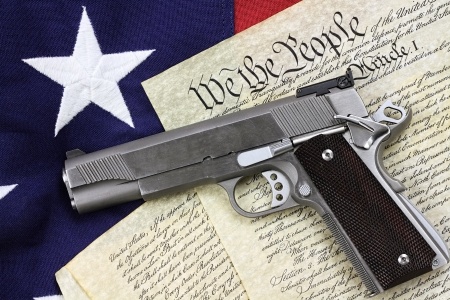
A federal judge in Florida has ruled that a federal law banning the possession of guns in post offices is unconstitutional.

U.S. District Judge Kathryn Kimball Mizelle cited a 2022 ruling from the U.S. Supreme Court that reinstated Second Amendment rights. Mizelle dismissed part of a charge against Emmanuel Ayala, a postal worker who brought a gun to work.

Ayala was a Postal Service semi-truck driver hauling packages out of a facility located in Tampa, Florida, and had a concealed weapons permit. He carried a Smith & Wesson 9mm firearm in his fanny pack for self-defense while on the job. From time to time, he wore that fanny pack onto Post Office property when retrieving his semi-truck from work “for extra protection on the short walk” to and from the employee parking lot.

On Sept. 14, 2022, Ayala wore his fanny pack, with the gun inside, as he walked from the employee parking lot through the metal turnstiles and into the post office. Federal agents from the U.S. Postal Service’s Office of Inspector General stopped him and tried to detain him. He was later indicted by a grand jury.

Mizelle said the charge against Ayala violated his Second Amendment rights , adding “a blanket restriction on firearms possession in post offices is incongruent with the American tradition of firearms regulation.”

Additionally, “nothing in Supreme Court dicta establishes that the United States may ban firearms in all government buildings. Second, the scope of the Second Amendment right is a legal question, not a factual one, and I need not hold an evidentiary hearing to resolve it. Instead, the government bears the burden to identify historical evidence supporting its challenged regulation.”

She said that post offices existed since the nation’s founding, but federal law didn’t ban guns in government buildings until 1964 and didn’t add post offices to the ban until 1972. No tradition dating back to the 1700s justified such a ban, she said.

“But the Supreme Court has been clear: the government must point to historical principles that would permit it to prohibit firearms possession in post offices,” Mizelle wrote.

In fact, she wrote, “Since the Post Office’s creation, mail carriers have faced the risk of violence. Passengers of nineteenth-century stagecoaches, which carried mail, ‘risked death or injury if coaches were attacked by robbers or Indians.'”

Mizelle has a record of protecting constitutional rights. She is the same judge who ruled in 2022 that the federal government could not force airlines and public transportation to require passengers to mask up when on transportation premises, aircraft, trains, buses, and the like.

The judge declined to dismiss a separate charge for Ayala resisting arrest.

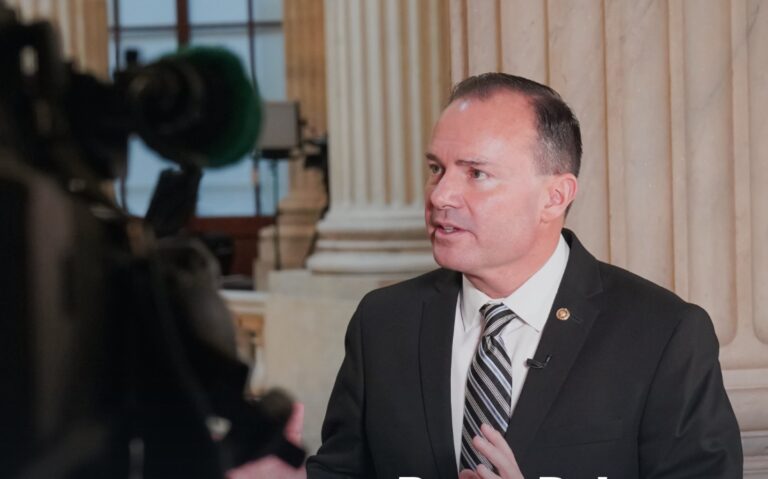
Sen. Mike Lee becomes 21st senator to endorse Trump: ‘America first over America last’

As the Iowa Republican Caucus is right around the corner, Republican Utah Sen. Mike Lee on Friday endorsed former President Donald Trump for president, bringing to 21 out of the 49 Republicans in the U.S. Senate who endorse Trump.

“Look, whether you like Donald Trump or not, whether you agree with everything he says or not, he is our one opportunity to choose order over chaos and putting America first over America last,” Lee told Fox News host Laura Ingraham on Friday.

Lee said that voters have the choice between “order” over “chaos” and that it is time to get behind Trump.

“Look, whether you like Donald Trump or not, whether you agree with everything he says or not, he is our one opportunity to choose order over chaos and putting America first over America last,” Lee said. “It’s time to get behind him.”

He said Trump kept his promises that he campaigned on.

“In presidential campaigns, there are always a lot of promises made,” Lee said. “My favorite kinds of political promises are promises kept. Donald Trump has kept promises that he’s made as he’s campaigned in the past. We know what kind of president he will be.”

On Tuesday, Sen. John Barrasso of Wyoming became the 20th senator to endorse Trump, and is now the highest-ranking Senate Republican to have done so.

“America was better off under President Donald Trump’s leadership,” Barrasso said in a statement.

The Iowa Caucus kicks off the caucus and primary season. It is scheduled for Jan. 15 in the middle of brutal winter weather pinning down residents in the Midwest. On Saturday, it was -9 in Des Moines, and some areas of the state have wind chill temperatures at -45, expected to last through noon on Tuesday.

21 senators who endorsed Trump include:

Sen. Mike Lee (R-Utah)

Sen. Katie Britt (R-Ala.)

Sen. Tommy Tuberville (R-Ala.)

Sen. Tom Cotton (R-Ark.)

Sen. Rick Scott (R-Fla.)

Sen. Mike Braun (R-Ind.)

Sen. Roger Marshall (R-Kansas)

Sen. Cindy Hyde-Smith (R-Miss.)

Sen. Roger Wicker (R-Miss.)

Sen. Josh Hawley (R-Mo.)

Sen. Eric Schmitt (R-Mo.)

Sen. Steve Daines (R-Mont.)

Sen. Ted Budd (R-N.C.)

Sen. Kevin Cramer (R-N.D.)

Sen. John Hoeven (R-N.D.)

Sen. JD Vance (R-Ohio)

Sen. Markwayne Mullin (R-Okla.)

Sen. Lindsey Graham (R-S.C.)

Sen. Marsha Blackburn (R-Tenn.)

Sen. Bill Hagerty (R-Tenn.)

Sen. John Barrasso (R-Wyo.)

House members who have endorsed Trump:

Speaker Mike Johnson (R-La.)

Rep. Robert Aderholt (R-Ala.)

Rep. Jerry Carl (R-Ala.)

Rep. Barry Moore (R-Ala.)

Rep. Gary Palmer (R-Ala.)

Rep. Mike Rogers (R-Ala.)

Rep. Dale Strong (R-Ala.)

Rep. Andy Biggs (R-Ariz.)

Rep. Eli Crane (R-Ariz.)

Rep. Paul Gosar (R-Ariz.)

Rep. Debbie Lesko (R-Ariz.)

Rep. Darrell Issa (R-Calif.)

Rep. Kevin McCarthy (R-Calif.), now former representative

Rep. Lauren Boebert (R-Colo.)

Rep. Gus Bilirakis (R-Fla.)

Rep. Byron Donalds (R-Fla.)

Rep. Matt Gaetz (R-Fla.)

Rep. Carlos Gimenez (R-Fla.)

Rep. Anna Paulina Luna (R-Fla.)

Rep. Brian Mast (R-Fla.)

Rep. Cory Mills (R-Fla.)

Rep. Bill Posey (R-Fla.)

Rep. John Rutherford (R-Fla.)

Rep. Greg Steube (R-Fla.)

Rep. Mike Waltz (R-Fla.)

Rep. Daniel Webster (R-Fla.)

Rep. Buddy Carter (R-Ga.)

Rep. Andrew Clyde (R-Ga.)

Rep. Mike Collins (R-Ga.)

Rep. Marjorie Taylor Greene (R-Ga.)

Rep. Mike Bost (R-Ill.)

Rep. Mary Miller (R-Ill.)

Rep. Jim Banks (R-Ind.)

Rep. Erin Houchin (R-Ind.)

Rep. Tracey Mann (R-Kan.)

Rep. Andy Barr (R-Ky.)

Rep. Clay Higgins (R-La.)

Rep. Steve Scalise (R-La.), House majority leader

Rep. Jack Bergman (R-Mich.)

Rep. Bill Huizenga (R-Mich.)

Rep. John James (R-Mich.)

Rep. Lisa McClain (R-Mich.)

Rep. John Moolenaar (R-Mich.)

Rep. Tim Walberg (R-Mich.)

Rep. Tom Emmer (R-Minn.), House majority whip

Rep. Brad Finstad (R-Minn.)

Rep. Michelle Fischbach (R-Minn.)

Rep. Pete Stauber (R-Minn.)

Rep. Mike Ezell (R-Miss.)

Rep. Michael Guest (R-Miss.)

Rep. Trent Kelly (R-Miss.)

Rep. Mark Alford (R-Mo.)

Rep. Eric Burlison (R-Mo.)

Rep. Jason Smith (R-Mo.)

Rep. Matt Rosendale (R-Mont.)

Rep. Ryan Zinke (R-Mont.)

Rep. Jeff Van Drew (R-N.J.)

Rep. George Santos (R-N.Y.), former

Rep. Elise Stefanik (R-N.Y.)

Rep. Claudia Tenney (R-N.Y.)

Rep. Virginia Foxx (R-N.C.)

Rep. Richard Hudson (R-N.C.)

Rep. Troy Balderson (R-Ohio)

Rep. Mike Carey (R-Ohio)

Rep. Bill Johnson (R-Ohio)

Rep. Jim Jordan (R-Ohio)

Rep. Max Miller (R-Ohio)

Rep. Mike Turner (R-Ohio)

Rep. Josh Brecheen (R-Okla.)

Rep. Kevin Hern (R-Okla.)

Rep. Cliff Bentz (R-Ore.)

Rep. John Joyce (R-Pa.)

Rep. Mike Kelly (R-Pa.)

Rep. Dan Meuser (R-Pa.)

Rep. Scott Perry (R-Pa.)

Rep. Guy Reschenthaler (R-Pa.)

Rep. Lloyd Smucker (R-Pa.)

Rep. Russell Fry (R-S.C.)

Rep. William Timmons (R-S.C.)

Rep. Joe Wilson (R-S.C.)

Rep. Chuck Fleischmann (R-Tenn.)

Rep. Diana Harshbarger (R-Tenn.)

Rep. David Kustoff (R-Tenn.)

Rep. Andy Ogles (R-Tenn.)

Rep. John Rose (R-Tenn.)

Rep. Brian Babin (R-Texas)

Rep. Michael Burgess (R-Texas)

Rep. John Carter (R-Texas)

Rep. Monica De La Cruz (R-Texas)

Rep. Pat Fallon (R-Texas)

Rep. Tony Gonzales (R-Texas)

Rep. Lance Gooden (R-Texas)

Rep. Wesley Hunt (R-Texas)

Rep. Ronny Jackson (R-Texas)

Rep. Troy Nehls (R-Texas)

Rep. Keith Self (R-Texas)

Rep. Pete Sessions (R-Texas)

Rep. Beth Van Duyne (R-Texas)

Rep. Randy Weber (R-Texas)

Rep. Roger Williams (R-Texas)

Rep. Burgess Owens (R-Utah)

Rep. Ben Cline (R-Va.)

Rep. Morgan Griffith (R-Va.)

Rep. Carol Miller (R-W.Va.)

Rep. Alex Mooney (R-W.Va.)

Rep. Harriet Hageman (R-Wyo.)

Governors who have endorsed Trump:

Gov. Mike Dunleavy (R-Alaska)

Gov. Sarah Huckabee Sanders (R-Ark.)

Gov. Jeff Landry (R-La.)

Gov. Tate Reeves (R-Miss.)

Gov. Henry McMaster (R-S.C.)

Gov. Kristi Noem (R-S.D.)

Gov. Greg Abbott (R-Texas)

Gov. Jim Justice (R-W.Va.)

One House member has endorsed Nikki Haley:

Rep. Ralph Norman (R-S.C.)

One governor has endorsed Nikki Haley:

Gov. Chris Sununu (R-N.H.)

Four House members have endorsed Ron DeSantis:

Rep. Laurel Lee (R-Fla.)

Rep. Rich McCormick (R-Ga.)

Rep. Thomas Massie (R-Ky.)

Rep. Chip Roy (R-Texas)

Rep. Bob Good (R-Va.)

Two governors have endorsed Ron DeSantis:

Gov. Kim Reynolds (R-Iowa)

Gov. Kevin Stitt (R-Okla.)

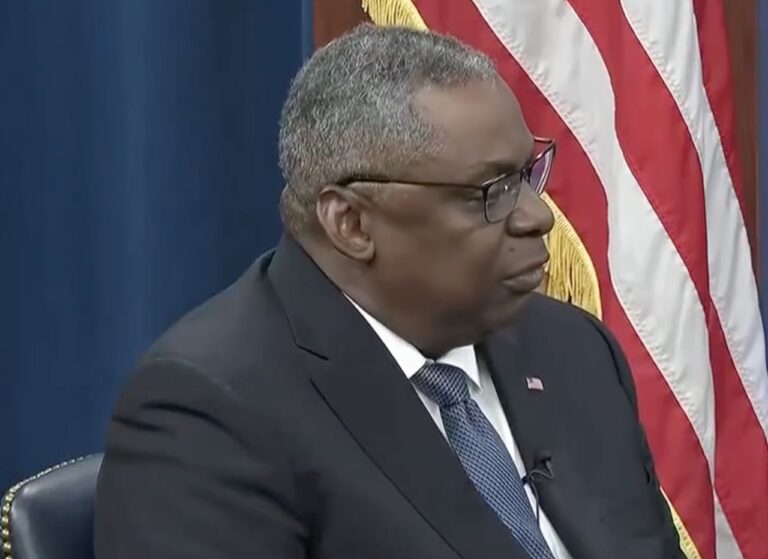
Day 13: Sec. of Defense Austin still in hospital

Saturday marks the 13th day that Secretary of Defense Lloyd Austin remains hospitalized at Walter Reed National Military Medical Center, after suffering complications from a Dec. 22 surgery for prostate cancer at the hospital, kept secret from the president. Austin returned to the hospital on Jan. 1 and was admitted to the intensive care unit, something he also kept secret from the president and nation for four days.

Sec. Austin has been in the hospital for 14 of the past 24 days.

The Pentagon issued a statement Saturday that indicated it does not know when Austin will be released: “Secretary Austin remains hospitalized at Walter Reed National Military Medical Center and is in good condition. He’s in contact with his senior staff and has full access to required secure communications capabilities and continues to monitor DOD’s day-to-day operations worldwide. We do not have a specific date for Secretary Austin’s release from the hospital at this time but will continue to provide daily updates until then.”

On Friday, President Joe Biden acknowledged that Austin had used poor judgment when he went into the hospital without telling the commander in chief, Congress or the public.

During a campaign stop at a coffeeshop in Allentown, Penn., Biden was asked by a reporter, “Do you have confidence in Secretary Austin?”

Biden responded with just two words:

There reporter followed up, “Was it a lapse in judgment for him not to tell you earlier?”

Biden responded with just one word, “Yes.”

Austin was in the intensive care unit for three days before Biden, who was on vacation in the Bahamas, was notified. Also not notified that Austin was in intensive care was Deputy Defense Secretary Kathleen Hicks, who had been notified that she was taking over some of his duties. She, too, was on vacation in Puerto Rico.

On Thursday, the U.S. and Britain carried out dozens of air strikes on Houthi military targets, widening the various conflicts in the Middle East, which began when Hamas terrorists conducted a terrorist attack on Israel on Oct. 7. Other U.S. military action has been ongoing in the Middle East throughout Austin’s hospitalization.

On Friday the Department of Defense inspector general opened up an investigation into the order of events that started before Austin was first hospitalized Dec. 22, such as when his first diagnosis for cancer was made, who knew, when they knew, why he did not tell the president, and how the chain of command was secured for the several weeks since the secretary’s medical crisis began.

When Austin first revealed the hospitalization, on Jan. 5, he said, through the Defense Department, that the initial procedure that took Austin to the hospital was “elective.” Walter Reed Hospital later admitted that it was not elective but required prostate surgery.

Sen. Sullivan congratulates Taiwan on democratic election, while President Biden blurts out: ‘We don’t support independence’

22

The nation of Taiwan conducted elections and retained the independent-minded incumbent, with voters turning away from the China-aligned candidate.

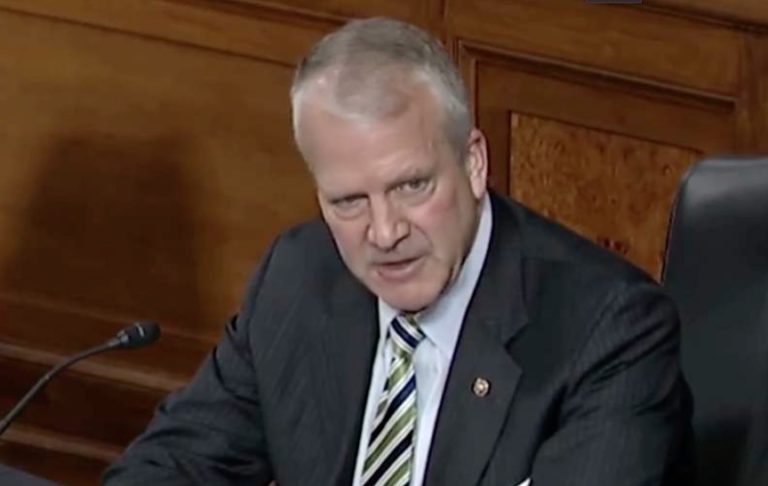
U.S. Sen. Dan Sullivan, who studies Taiwan and China issues routinely, issued a statement, congratulating President-elect Lai Ching-te and Vice President-elect Hsiao Bi-khim, who favor ties with the United States.

Senator Sullivan and Sen. Tammy Duckworth of Illinois said in a statement, “Just two days ago, the Senate unanimously approved a resolution sponsored by nearly half its members commending Taiwan on this historic occasion. The ties between the U.S. and Taiwan are deep and strong. They have held fast for more than 70 years—thanks in no small part to the U.S. Senate and the Taiwan Relations Act (TRA) it passed in 1979.

“It is critical that America stand with Taiwan because Taiwanese democracy has a challenge that others do not. It is under persistent, severe threat from the Chinese Communist Party and its military. Even during Taiwan’s election—in fact, because of its elections—it was forced to deal with attempts at coercion,” Sullivan said. “To Taiwan’s great credit, it resisted. The U.S. must continue to work hand-in-glove with Taiwan and use all instruments of national power to preserve peace in the region.”

As President Biden boarded Marine One on his way to Camp David for the weekend, he took questions from reporters. The first question was: “Mr. President, do you have a reaction to the Taiwan election?”

Biden said just one line, “We do not support independence.” It was a clear signal to China that he is pro-communist China ruling the island nation-state.

The United States does not recognize Taiwan as a separate country from China, although since 1949 it has been ruled by a separate government than China, which seeks to bring it back under communist control.

“As a leading democracy and a technological powerhouse, Taiwan is a key U.S. partner in the Indo-Pacific. Though the United States does not have diplomatic relations with Taiwan, we have a robust unofficial relationship,” the State Department says.

Climate czar John Kerry leaving Biden Administration to work on Biden reelection campaign

President Joe Biden’s climate czar, former Sen. John Kerry, will leave the Biden Administration to work on the president’s reelection campaign. The news was leaked on Saturday.

Kerry was one of Biden’s first cabinet members, sworn in on Jan. 20, 2021 as the nation’s first special presidential envoy for climate, and the first person to have a “climate” seat on the National Security Council.

Biden said in 2021 that Kerry would have a seat at every table around the world “as he combats the climate visits to meet the existential threat we face.”

“John Kerry’s decision to step down from his role as the Biden Administration’s Special Presidential Envoy for Climate presents an opportunity to improve both transparency and Constitutional governance, said Michael Chamberlain, director of the watchdog group, Protect the Public Trust. “Despite heading an extremely powerful office in the State Department and lacking Senate confirmation, Mr. Kerry’s chain of command bypassed the Secretary of State and went directly to the President. His office was also infamous for attempts to avoid the transparency the American public expects. PPT was one of the few entities able to pry records out of Mr. Kerry’s office but what little did trickle out revealed staff attempting to avoid federal records requirements (discussing scheduling a call or meeting “focusing on all the elements we can’t put on paper,” for instance) and outsourcing foreign policy to influential special interest groups. We wish Mr. Kerry all the best but nevertheless are hopeful that his absence will signal a turn toward an office that will respect the norms, traditions, and obligations that will help restore the public’s evaporating trust in its government.”

Kerry was the 2004 Democrat Party presidential nominee and was a U.S. senator representing Massachusetts. He is a Navy veteran who completed two combat tours in Vietnam, for which he received a Silver Star, a Bronze Star with Combat V and three Purple Hearts.

In 2015, while serving as Secretary of State for President Barack Obama, Kerry traveled to Anchorage at the end of August to host the Conference on Global Leadership in the Arctic: Cooperation, Innovation, Engagement and Resilience (GLACIER).

Kerry, now 80 years old, has zigzagged across the globe, often in private jets, to make the case for reduction in carbon emissions from oil and gas. In July, he traveled to China, but left without any concrete commitments to reduce emissions from the communist Chinese government. Next week Kerry will attend the World Economic Forum in Davos, Switzerland. He has received criticism for his own carbon footprint as he demands the end of fossil fuels.

The news of his upcoming departure was not officially announced, but leaked to sources and was first reported by Axios, which says he will leave before spring.

Linda Boyle: Dr. Fauci confesses the six-foot distancing rule ‘just appeared’ without science

By LINDA BOYLE

This week Dr. Anthony Fauci, aka Dr. Science, was answering questions in a meeting with the House Select Subcommittee on the Coronavirus Pandemic. He said over 100 times in that hearing that he didn’t recall any facts or details about the pandemic response and origins of a virus that took the lives of 1.2 million Americans.  

Although it was a closed-door hearing, two areas we know were discussed were the six-foot distancing rule and the origin of the coronavirus.  

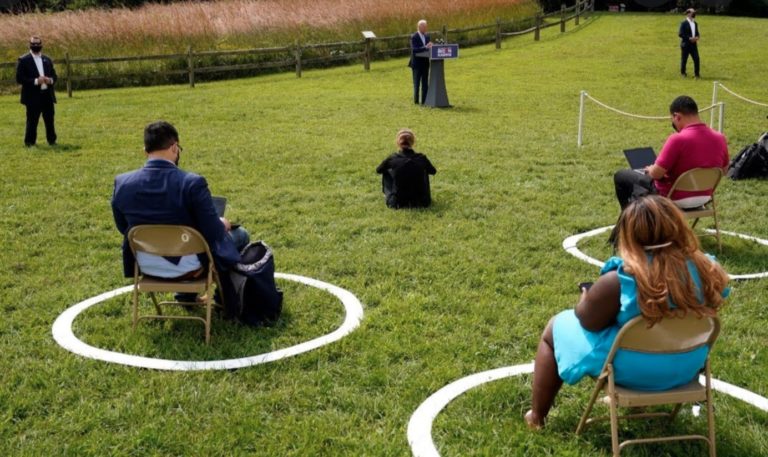
Dr. Fauci acknowledged the six-foot social distancing that caused all those little circles on the floor, restaurants seating people six feet apart, kids at band practice literally in little bubbles six feet apart, and schools being closed because of this requirement was just a wag.  

He stated, “It just sort of appeared.”  So much for “follow the science.”  

Back in 2020, Fauci made a statement at a news conference regarding six feet distancing. This became the guiding principle.

Many people were absolute fanatics if you stood just three feet away from them. You were accused of being willing to kill them. But the rule was pushed by government officials who seemed to think we were too stupid to use common sense.  

Thanks, Dr. Fauci, for telling us (like we didn’t know already) that the rule lacked any scientific basis. What is more heinous is they didn’t want to change course and admit they were wrong.  This was because they feared we wouldn’t believe the other “scientific facts” they were telling us to instill fear in the old and very young. 

And it gets better. Remember how he went out of his way to diss anyone who dared to say the virus was from the Wuhan lab? 

We do know that Fauci and the National Institutes of Health funded research at the Wuhan Institute of Virology. A $600,000 grant was channeled through the nonprofit EcoHealth Alliance to the Wuhan lab.Fauci has vigorously denounced the idea that the virus came from that lab, even though we were funding bat research on coronavirus.  

When Fauci made this denial, Peter Daszak, the head of EcoHealth Alliance, emailed Dr. Fauci in April 2020, thanking him for seeking to disprove the lab leak theory.

“Many thanks for your kind note,” Fauci replied.

At the subcommittee meeting this week, Fauci testified he signed off on every foreign and domestic NIAID grant without reviewing the proposals but “was unable to confirm if NIAID has ANY mechanisms to conduct oversight of the foreign laboratories they fund,” according to Children’s Health Defense. Yet other emails showed Fauci knew more than he would admit.  

You remember Peter Daszak. He was the person the U.S. selected to accompany the World Health Organization to review the Wuhan lab practices. Surprisingly, he and the team found nothing out of the ordinary. 

In fact, before the trip Daszak stated this trip was just the first step.  He said, “It can take years or even decades to find the cause of a new infectious disease”.  How convenient.

When the WHO did go to the Wuhan lab, they met with a well-known virologist named Shi Shengli who was one of the first people to isolate the virus. Any discussion on the lab leak and gain-of-function research was discounted.  

Shengli and many scientists stated the lab did not engineer the virus — but it could have been the virus was caught in the wild, used in lab experiences, and then escaped the lab by infecting a lab staff member.  

That’s certainly different than the virus came from a pangolin or bat in the wet market.  They had to give that “theory” up when it was discovered these animals weren’t even there.

In the recent congressional hearing, Dr. Fauci finally admitted “the lab leak hypothesis was not a conspiracy theory” as mainstream media pushed. And he continued to downplay the definition of a lab leak—parsing with the best of them.

He continued to deny any “gain-of-function” research being done at the Wuhan lab.  And once again, he parsed his words, as there was no way he wanted to concede the NIH may have funded research in China that proved deadly to more than one million Americans.

Rep. Michael Cloud (R, Texas) said that Fauci held an “amazing ability to either forget what happened or then to find ways to shirk any sort of responsibility for the influence that was had.” 

This social distancing wasn’t even a wild a– guess (wag).  It wasn’t even a scientific wild a– guess (SWAG)!

But it was an effective strategy to paralyze most of America and keep people in fear.  

Those decisions led to the “mask wearers” and the “mask deniers.” 

We had the, “I’ll take every jab” group and the “I’m not taking any of them” group.  

We had the “stay six feet away from me” and the “social distance deniers” group.  

The government caused a lot of division in our country with neighbor against neighbor and family members against family member.

But maybe this was the real objective—to divide people.  If so, the government was successful.

And we now have our government officials blowing it off and not taking any responsibility for anything.

Joseph Goebbels, chief propagandist for the Nazi Party, once stated, “A lie told once remains a lie, but a lie told a thousand times becomes the truth.”  That appears to be part of the strategy the government used during this pandemic.  

But wait!  Not only are lockdowns back in vogue but so are masks. In many places those little six feet apart signs are still in place. The CDC is warning about the tripledemic coming…the tripledemic is coming…

The government’s solution?  Get your shots—two of which are based on mRNA.  They are rolling out the same solutions they did previously that didn’t work.  And the ones they know didn’t work.  They are hoping the sheeples forgot.  

So, remind me again, Dr. Fauci … Why does it surprise you we aren’t  compliant and don’t trust our government to tell us the truth.

Linda Boyle, RN, MSN, DM, was formerly the chief nurse for the 3rd Medical Group, JBER, and was the interim director of the Alaska VA. Most recently, she served as Director for Central Alabama VA Healthcare System. She is the director of the Alaska Covid Alliance.