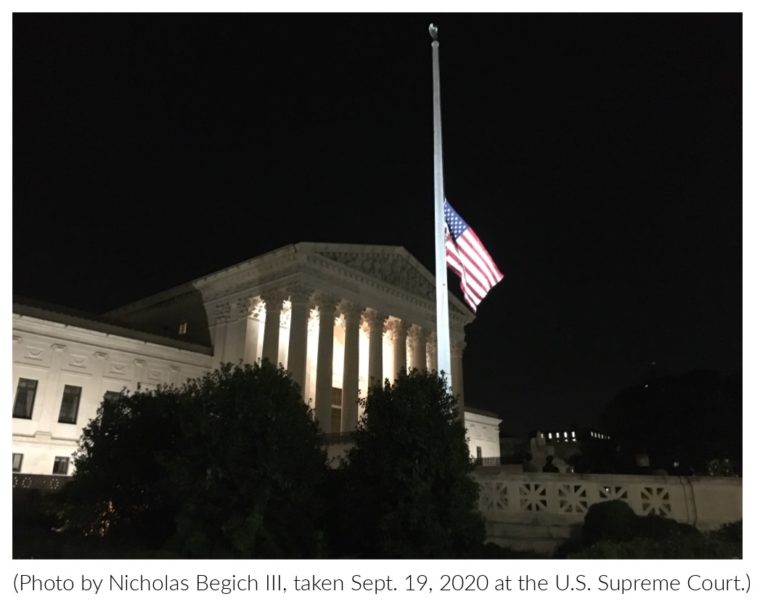
Monday’s Supreme Court calendar shows the court will hear the matter of Missouri vs. social media companies and the federal government. The case is currently known as Vivek H. Murthy, U.S. Surgeon General, et al. vs. Missouri, et al.
The case involves a Biden Administration appeal of a Fifth Circuit Court ruling that would put sideboards on the federal government’s ability to pressure or scare social media companies into cracking down on content and comment moderation on topics the federal government doesn’t like — such as Covid doctrine questioning.
There are several plaintiffs in the lawsuit. They include doctors, epidemiologists, academics, and social media users. They say that federal agencies and officials censored conservative-leaning speech during the 2020 presidential election, and when it came to topics such as the origins of the Covid-19 virus, whether masks and Covid vaccines are effective, and whether elections were held fairly.
The lawsuit was first filed in May 2022 in federal court in Louisiana by Republican attorneys general from Missouri and Louisiana. The plaintiffs say their social media posts on Facebook, YouTube, and X/Twitter were removed or hidden from view at the direction of the government, particularly when it came to posts related to Covid and the 2020 election.
Missouri and Louisiana attorneys general say residents of their states were harmed by the coordination of federal government and social media platforms in a censorship campaign.
The plaintiffs say the government threatened regulatory action, such as using the Section 230 of the Communications Decency Act, to pressure social media companies into suppressing speech the government did not agree with.
Last year, the U.S. District Court for the Western District of Louisiana granted a nationwide preliminary injunction that stops the federal government from meeting with social media companies or working in other ways to influence their content policies.
The U.S. Supreme Court granted the federal government’s motion for an emergency stay, and granted certiorari to review the case on the merits.
Twenty-two Democrat states have filed friend-of-the-court briefs in favor of federal censorship. They include New York, where Attorney General Letitia James leads the states that also include Arizona, California, Colorado, Connecticut, Delaware, Hawaii, Illinois, Maine, Maryland, Massachusetts, Michigan, Minnesota, Nevada, New Jersey, New Mexico, Oregon, Pennsylvania, Rhode Island, Vermont, Washington, Wisconsin, and the District of Columbia.
The Biden Administration argue that the appeals court has “imposed unprecedented limits on the ability of the President’s closest aides to speak about matters of public concern, on the FBI’s ability to address threats to the Nation’s security, and on CDC’s ability to relay public-health information.”
Missouri and Louisiana argue that the federal government “can speak freely on any topic it chooses, but it cannot pressure and coerce private companies to censor ordinary Americans.”
House Bill 183, which seeks to protect girl athletes from having their trophies and scholarships robbed by transgenders, was the subject of a hearing in House Education Committee on Friday.
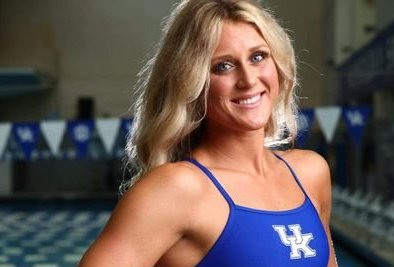
Appearing via teleconference to speak on behalf of the bill was Riley Gaines, once a champion swimmer at University of Kentucky who competed against transgender Lia Thomas of the University of Pennsylvania, and now a champion for girls and women in sports.
Lia (formerly Will) Thomas, who towers over all the female swimmers, won the women’s 500-freestyle trophy at the NCAA Swimming Championships in 2022.
HB 183‘s lead sponsor and champion is Eagle River Republican Rep. Jamie Allard, who herself was an athletic competitor in high school and who has daughters who competed in downhill skiing. It is a bill that is nearly identical to one filed in the Alaska Senate by Sen. Shelley Hughes in 2021.
“It is in our very recent history that women — and the men who champion them — have had to fight for women’s rights and equality in our society,” she said. “Can you believe it has barely been 100 years since women were granted the right to vote? Since then, we have come a long way, with legislation supporting and protecting women’s rights and protecting us from discrimination. Our culture has embraced and advanced the notion that women deserve the same opportunities as men. And we have made leaps and bounds in opportunities available to women and girls to participate in sports.”
Girls who participate in sports reap huge benefits for a lifetime. They gain confidence, good habits, strong bodies, and bones, and have a lower chance of osteoporosis, breast cancer, and depression, Allard said: “They have a more positive body image and higher levels of self- esteem. They grow into strong women who are leaders and role models in our communities. They carry the lessons learned far beyond the playing field. And thanks to Title IX, their right to equal opportunities in sports and education is federally protected.”
Title IX states, “No person in the United States shall, on the basis of sex, be excluded from participation in, be denied the benefits of, or be subjected to discrimination under any educational program or activity receiving Federal financial assistance.”
Allard said, “We can thank our very own Sen. Ted Stevens for this legislation which has protected and promoted women in sports since its passage in 1972. The impact of this legislation is profound. Before 1972, one in 27 girls participated in sports. That number is now two in five! Girls’ participation in high school sports has increased by roughly 1,000%.”
She explained how it has opened the door to more sports scholarship opportunities for women and for women to turn their sport into a career. “We could even say that the effects of more women in sports has rippled out across all sectors, breaking glass ceilings and elevating women as equals in our nation and even around the world.”
What happens when a biological male enters the ring of women’s sports?
“Being biologically bigger, stronger, faster, their physical advantage over women is anything but equal. It takes our nearly level playing field, which we fought so hard to achieve, and reduces it to women finishing second again. Women have worked hard to get where we are today. To set us back 100 years is unacceptable,” Allard said.
“When there were threatened changes to Title IX, Sen. Ted Stevens said: ‘Having lived this long with Title IX, I’m going to urge Congress not to support any changes that could have an adverse effect on the progress that has already been made under Title IX. We want more progress.’”
Stevens, Allard noted, “was the guardian angel of women in athletics. He would not stand by and allow culture wars to rob our girls and women of the progress we have fought so hard to gain. HB 183 acknowledges the biological differences and disparities between men and women and requires students to play according to their biological sex. Our girls deserve a fair playing field. They deserve the chance to win first place, scholarships, and gold medals.”
In addition to Riley Gaines testifying by teleconference, retired Anchorage teacher and coach Larry Whitmore, Idaho State Rep. Barbara D. Ehardt, and Matthew Sharp of Alliance Defending Freedom all testified in favor of the bill.
Whitmore has spent years involved in middle- and high-school sports. He works as an official for cross-country running and track and field. Fairness “is not possible when a biological male is allowed to compete with a biological female, he said.
“Biological males have greater bone density, bigger heart, lungs, and more muscle strength than biological females,” Whitmore said. When girls enter middle school around the age of 12, they begin to change physically, he continued, “as their bodies prepare for childbearing. As a teacher, coach, and father, I had to be aware of these changes that happen each month for biological females. Many had difficulties, not only physically, but emotionally.”
Whitmore said, “not all but in several girls, this would effect their performance and on the sports field.”
A number of girls that he coached in track and fields had their best performance during their freshman and sophomore years, and then for some girls, they developed hip issues during their junior year, “which was not good news for their performance level.”
Rep. Ehardt testified that in Idaho, transgender June Eastwood did what Lia Thomas did a University of Pennsylvania, winning track and field events in the women’s collegiate division.
In 2020, Idaho legislators passed House Bill 500, the Fairness in Women’s Sports Act. Idaho became the first state in the country to ban biological males from competing with or against women in Idaho’s public schools and universities.
Riley Gaines tied Lia Thomas in the 200-meter, but when it came time to hold the trophy, the NCAA said that he would hold the trophy, not her.
Gaines is among 16 female athletes who are now suing the National Collegiate Athletics Association for allowing Thomas, who still had his penis at the time she was in school with him, to disrobe in the women’s locker room in front of the college women.
Legislative Legal attorney Margaret Bergerud said she thinks the bill is subject to challenge on equal-protection grounds. In her testimony, she referred to males as “cisgender males” and females as “cisgender females.” The terminology is the transgender way of trying to normalize the unscientific concept that people are “assigned” a sex at birth, and they may adopt a different sex later if they feel like it.
Allard said, “Like U.S. Sen. Ted Stevens, I will be a champion for our girls and women. I have endured discrimination and have conquered obstacles, like my mom and grandmother and great-grandmother before me, so that my daughters don’t have to. I don’t do this for me, I do it for them. We fight for all our daughters. Expecting women to be physically equal to men is not equality. Equality is giving women the same opportunities as men. But if forced to physically compete against biological males, women will be disadvantaged once again. If men can compete as ‘better’ versions of women, all of our progress for equality is dead.”
Over 118 days later, the Federal Emergency Management Agency announced that President Joe Biden has approved the federal disaster declaration for Wrangell, following the Nov. 20, 2023 landslides and mudslides.
The declaration action makes federal funding available to affected individuals and groups in the Wrangell Cooperative Association. Assistance may include grants for temporary housing and home repairs, low-cost loans to cover uninsured property losses, and other programs to help individuals and business owners recover from the effects of the disaster.
Curiously, FEMA sent a Spanish version of the press release about the disaster declaration. The English version was posted on the agency’s website, however.
Federal funding is also available to the Wrangell Cooperative Association and some nonprofit organizations on a cost-sharing basis for emergency protective measures and hazard mitigation the agency said.
Brian F. Schiller has been named the federal coordinating officer for federal recovery operations in the affected areas. Additional designations may be made at a later date if warranted by the results of damage assessments, the agency said.
The Mount Marathon Race, which takes place in Seward every July 4, has tiptoed into protecting fairness in the women’s division for the toughest 5K on the planet: There will be a non-binary division this year. The category was announced March 15.
The race is among the oldest footraces in America and is considered the oldest mountain footrace in the country. It started as a bet between two miners as to whether someone could reach the top of the mountain and return within one hour. The race was officially organized in 1915.
The race starts in downtown Seward, where thousands gather to cheer on the racers, who scramble up and back from the slope of Mount Marathon, a rocky, slippery mountain of shale and loose rock. There’s a men’s and women’s division and a youth division; each division is capped at 375 competitors, some of whom have done the race for many years.
Now there’s a non-binary division, which applies to those who don’t think they are male or female.
“The term non-binary is a gender identity that cannot be defined by the binary terms of ‘man’ or ‘woman’; it refers to people who identify with a gender beyond the binary categories of male and female. Within non-binary are people who fluctuate between genders (genderfluid or bi-gender), people who have no gender (agender) and more,” the committee rule states. “This policy is an effort to make more space for people who live outside the confines of binary gender identities.”
The rule explanation continues:
Beginning in 2024, adults and juniors identifying as non-binary:
Can select non-binary as a category at priority or lottery registration.
Will be included in a new non-binary division that has its own results.
Will be recognized with the same awards (non-binary top 5 overall and non-binary age group top 5) as the binary divisions.
Non-binary adults will need to take part in the men’s or women’s waves and therefore must select participation in the men’s or women’s race (we acknowledge that non-binary runners having to participate in a binary division isn’t ideal, but currently see no better option). If preferred, they can be part of a separate non-binary wave within the men’s or women’s races. The race director will reach out to all non-binary runners to discuss this option.
Non-binary juniors will simply participate in the juniors’ race because boys and girls run together in a single wave.
If a lottery entrant, will be placed in the lottery corresponding to the race they selected.
Will requalify for priority registration following the existing rules of each race.
The non-binary division is expected to be selected in good faith and will be accepted at face value; it cannot be challenged by another party.
The race committee is evaluating also creating a transgender runner policy, but that matter was tabled “as it gathers more information and feedback,” the committee said.
Transgenders are those who have been chemically and surgically treated to appear to be the opposite gender. Across the country, transgender athletes, in the male-to-female format, have been robbing women of their athletic trophies and the issue has become a point of contention in swimming, biking, foot races and other sports. Female-to-male transgenders have not posed a medal threat in men’s divisions.
Without having addressed the transgender fairness issue, the race committee has delayed setting up protections for women runners, but has taken a step in the fairness challenge with the non-binary rule.
“According to the Non-Binary Racing Database, more than 300 events in the United States now allow non-binary registration, including some of the country’s biggest events such as the Chicago, New York and Boston Marathons,” the race said in an announcement. The decision was approved by both the Mount Marathon Race Committee and the Seward Chamber Board of Directors.
The race committee has made other changes. For the junior division, the minimum age to participate has been increased to 9 years old. Earlier, the age minimum was 7, but in 2023, no 7-year-olds participated and the 8-year-old racers are now 9.
The general race deferral option, where runners want to preserve their spot as a legacy racer but need to take a year off (often due to injury) has been eliminated starting in 2024. The only deferral now granted is for women due to pregnancy.
“Because so many spots were being held to the following year, fewer lottery opportunities were available for new racers. Injuries were the most common reason for deferral. The committee believes injuries are a part of training and racing, and no longer warrant a deferral,” the committee said. Those deferrals already approved from 2023 are still valid, but runners must still register and pay to be an entrant.
The committee also revised its skip-a-year rule, which allows priority racers — those who are veterans of the race — to skip one year, but one year only and still preserve priority status.
Registration for the race closes March 31.
To view the full non-binary policy, click here. To read the race’s press release on the MMR website, click here.
Growing up and playing athletics, there were two coach-speak terms that I absolutely hated. A “tough-luck loss” implied things out of my team’s control led to defeat, and a “hollow victory” meant that my team didn’t really deserve the win.
Let’s just say neither were satisfying at all.
One year ago this week, the Biden administration re-authorized Alaska’s Willow oil development. In doing so, the President and his leadership team considered the near-unanimous support of Alaska’s labor and business communities, Alaska Native corporations and local, borough, state and federal government bodies and leaders.
Willow’s re-authorization will lead to hundreds of full-time, permanent jobs. Thousands of construction paychecks and billions in investment from ConocoPhillips and its contractors are already flowing through Alaska. Ultimately, 160,000 barrels a day will as well, helping fill the Trans-Alaska Pipeline.
Yet, because of what has happened during and following the decision, Willow still feels like a “hollow victory” one year later.
To begin with, when Biden’s Interior Department announced the Willow decision, it made sure to celebrate that it had shrunk the original project scope by 40%, from five drill sites down to three. In addition, ConocoPhillips relinquished 68,000 acres in the surrounding areas of the National Petroleum Reserve-Alaska (NPR-A). Who knows how much oil and gas those lands may have held, or the jobs they may have led to?
Then, as part of the re-authorization, Team Biden ruled that over 50% – 13 million acres – in the NPR-A and 2.8 million acres offshore in the adjacent Beaufort Sea Planning Area were indefinitely declared off-limits to any or all oil and gas activities. Those orders reversed a 1923 decision designed to provide the U.S. Navy with domestic energy supplies for its military.
Had the trade-offs for Willow’s authorization stopped there, I may feel differently about the hollowness of the win. But, it hasn’t.
The re-authorization infuriated environmental warriors around the globe, who had used the power of social media to denigrate Willow as a ‘carbon bomb.’ Younger voters were especially vocal, declaring Biden ‘failed them’with his re-approval. Many even stated that they’d have a hard time voting for Biden’s re-election.
Biden and his campaign team reacted to the backlash, because since then, he’s only increased the frequency of actions laying waste to Alaska’s resource development opportunities.
The next day, Interior withdrew the land-exchange agreement for a life-saving road between King Cove and Cold Bay. In May 2023, Interior declared a third delay in its review of the Ambler Road, and ordered new, statewide, surface mining regulatory requirements.
The Bureau of Land Management joined the fray, giving notice in May it intended to lock up nearly 7.35 million acres from mining activities in the Birch Creek/Fortymile district of Alaska’s Interior, and followed it up with additional restrictions for the entire mining district in June.
September saw Interior cancel fully executed leases for tracts in the Coastal Plain of the Arctic National Wildlife Refuge (ANWR), which had been bid on at the conclusion of the 40-year fight to open the Plain to exploration. It also announced that the Congressionally required 2024 lease in the area was ‘under review’, with no firm dates available yet today.
To be clear, the re-authorization of Willow is historic and a welcome change from the near-continuous attack on Alaska’s resource industries since Joe Biden took office. Willow is a world-class field, and its impacts on jobs and energy security are welcome developments for Alaska and the U.S.
But the trade-offs and extensive anti-development decisions from this federal administration continue to stifle our state’s potential and future. Senator Dan Sullivan coined the set of actions as the “Last Frontier Lockup.” These decisions are historic because of how they are horrific and harmful. Should they continue the rest of this year – and, God forbid, for another four years – Alaska’s very economic future will be imperiled. If that happens, the “win” from Willow will be hollow indeed.
Rick Whitbeck is the Alaska State Director for Power The Future, a national nonprofit organization that advocates for American energy jobs and fights back against economy-killing and family-destroying environmental extremism. Contact him at [email protected] and follow him on X (formerly Twitter) @PTFAlaska. This column appeared first in Real Clear Energy.
I speak from experience, the experience of an Alaska public school graduate: The public schools in Alaska are not what they used to be.
Once, we were at the top of the heap. Our students scored among the best in the nation. OK, OK, that was the 1970s.
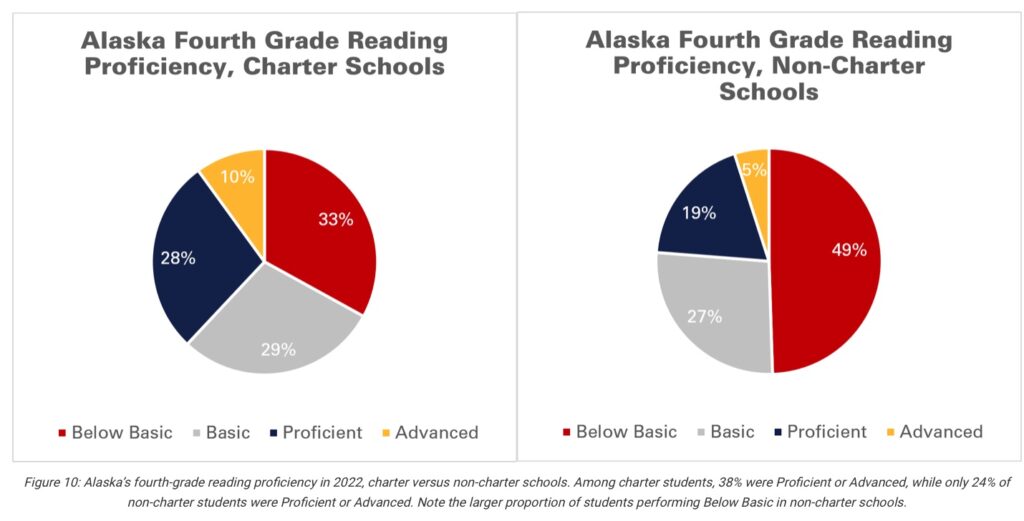
But since then, Alaskahas slipped, and now ranks 49th in fourth-grade reading on the National Assessment of Educational Progress.
If Alaska’s educational system was the private sector, the product line would be discontinued and the company would have filed for bankruptcy protection by now. Our state, once the envy of states across the nation, has failed our students miserably.
The CEO of the state is a former school teacher and superintendent. Gov. Mike Dunleavy knows Alaska students deserve better. That’s why he launched a major reading initiative that received bipartisan support in 2022, to focus on the basics, so students can at least read at grade level by the time they enter fourth grade.
He’s not up for reelection again, so what better time to deliver even more meaningful education reforms than now, when the National Education Association can’t easily foil him?
Or can they? It appears they can, if they go after those who are up for election, as the entire Alaska State House of Representatives is this year. The NEA has a chokehold on this state, which is perhaps one reason our students are failing.
In Alaska, school funding has been essentially flat for years, in spite of what the education industry says. Although the funding formula — the base student allocation — has not changed much in the past decade, each year the governor and Legislature make up for the flat BSA with one-time budget appropriations to keep school programs in the black, while the state looks for a way to pay for everything Alaskans have come to expect of their government during an era of Medicaid expansion and flat returns from oil revenues.
Meanwhile, our state’s public schools have lost over 3,000 students in eight years to private schools, home schools, outmigration, and low birth rates. School boards, never inclined to trim budgets, have refused to consolidate campuses, close schools, or get back to basics. They are caught up in the “old think,” from days when our state had more oil dollars than sense.
For example, the Anchorage School District spends $80 million a year on administration. The overall budget is $547.5 million. Anchorage has 2,424 teachers and over 2,900 “other” staff, including counselors, psychologists, and over 1,200 administrators — one administration employee for every two teachers. The administrators are paid handsomely.
Southeast Alaska has 17 school districts, some with student enrollment of barely 100. But the districts are protective and won’t allow any consolidation, even though it’s long past due.
Senate Bill 140, which started out as an unneeded rural internet bill, ended up as a union-powered vehicle to spend more on education without asking schools to make even a one-degree course correction.
Dunleavy’s proposed budget for FY 2025.
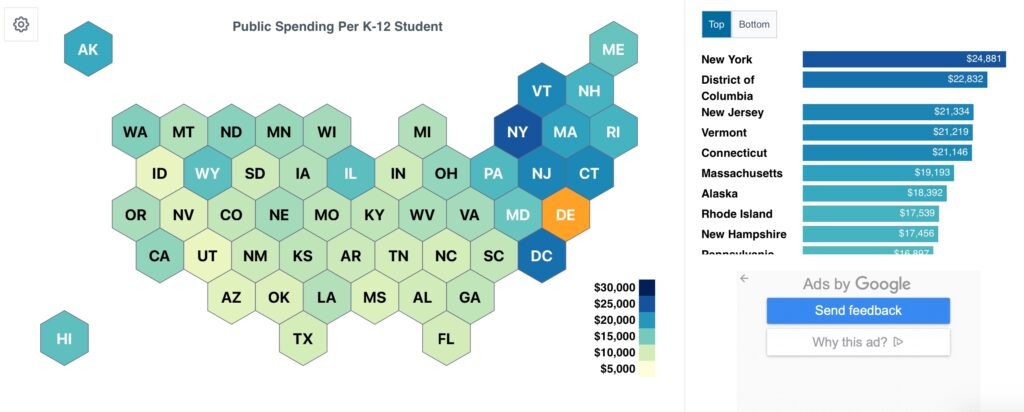
Throw money and you’ll get different results? Alaska already has a healthy state education budget; nearly $19,000 is spent per student per year. In addition to the base student allocation, Dunleavy proposed this year:
$8.3 million for school construction and major maintenance.
$5 million for the Alyeska Reading Academy and Institute.
$1.5 million for Teacher Recruitment, Retention, Certification and Apprenticeship Development.
$1.5 million for continued Career and Technical Education Initiative.
And yet the education industry wants another quarter billion dollars baked into the annual formula, without offering even a crumb to education reform. Next year, they’ll be back for another quarter billion.
Gov. Mike Dunleavy said he wanted a couple of things changed if Alaskans were going to be asked to throw their Permanent Fund dividends at education.
He wanted an alternative way for charter schools to be authorized, so that local districts, controlled by unions, couldn’t stop parents from organizing a high-performing school. He also wanted teacher retention bonus pay — money that would go straight to teachers who stick around, and not to administration or unions. In fact, unions would not get access to that bonus to skim money for dues.
It’s not as if the governor was asking for vouchers, which is a subject that always sends liberals into fits of rage. But the education industry threw a hissy over the boost to charter schools and the idea of bonus pay.
Some Republican legislators cowered from these simple requests that the governor had made, even though charter schools are the one bright shining star in Alaska’s educational gloom. They didn’t fight for the governor. Instead, they fought him, thinking that the Democrats would not run someone against them this year.
We now are at a possible showdown with a Republican governor and several Republican members of the Legislature who are at odds. Some legislators simply want to cheat Alaskans’ out of their Permanent Fund dividends in order to buy a perceived peace with the suboptimal performance of the National Education Association Alaska.
Some legislators, who ran and won on conservative principles, are fearful they might be unelected if they stick to conservative values and the conservative team.
The legislators in question know who they are. They’ve all been contacted by the governor to see if they will override his veto when they reconvene next week. He even gave the Legislature a respectable two-week period to come up with alternative legislation so he could get a few education reforms in return for his signature. They could not work together well enough to move the needle in two weeks.
It’s not exactly a Republican divorce, but there is a sense of betrayal and the sides are a little miffed at each other. Although not certain, it still can be healed.
For his part, Dunleavy is popular with the people. He won reelection without even having to go through a second round of vote counting in the ranked-choice process. He is, by Morning Consult pollsters, among the most popular governors in America, having survived a Democrat-fueled recall attempt in his first term. They rank him sixth from the top of all 50 governors. And he is, as the executive of the state, the highest-elected Republican and that makes him the honorary head of the Alaska Republican Party, in the same way that Joe Biden, highest elected leader on the Left, is the head of the Democratic Party.
That’s not what the “AKLibraryChick” caucus says on X/Twitter. She says he’s the most hated person in Alaska since statehood. This is the type of discourse found in NEA-Alaska, the same type of people who have delivered such abysmal results in our classrooms:
Social media leftists align with the NEA.
Good thing Dunleavy has tough skin because this is the kind of thing that libs lob at conservatives every day.
I’d like to think that Republicans who Dunleavy helped elect, who asked him to appear as the guest at their fundraisers, and who asked him for endorsements, would work with him and not join with the Democrats and AKLibraryChicksters in trying to prevent him from succeeding in actual education reforms — something that means everything to him as a former teacher, administrator, and school board member.
As for the Republican legislators who are thinking about overriding his veto, there are some new faces in Juneau and many of the legislators in the House are unseasoned in the negotiations that lead to outcomes. They are scared that the NEA nasties will put a target on them and pluck them from office that they just won in 2022. For now, being reelected may be more important to a few legislators than sticking together as an actual conservative team to create real reform in the one chance they may have in their entire lives to fix something as big as the education mafia.
Last week, we caught wind of a new independent expenditure group that is making it clear they will support pro-education candidates — and by that we don’t think they mean it’s just about pro-spending. We think it means they’ll support those who stick with a reform-minded governor and try to actually improve results, not just underwrite the embarrassing, suboptimal status quo.
Suzanne Downing is editor of Must Read Alaska and a graduate of Juneau-Douglas High School.
An external panel was found to be missing from a United Airlines Boeing 737-800 jet after it landed in southern Oregon on Friday morning.
United Flight 433 left San Francisco at 10:20 a.m., and landed at Rogue Valley International Medford Airport a few minutes before noon. After it was parked at the gate, the panel was discovered to be missing during a post-flight inspection and believed to have fallen off en route. It has not been found. The panel exposed mechanical components and was located near where one of the wings meets the body of the aircraft, which is reportedly about 25 years old.
The missing panel is one of a string of concerns about Boeing jets. In early January, a Boeing 737-9 MAX lost a door plug while climbing out of Portland International Airport in Oregon. That incident exposed passengers to life-threatening conditions, but the plane was safely landed back at PDX.
Last week, a tire fell off a United Airlines Boeing 777 that was leaving San Francisco International Airport en route to Osaka, Japan. The tire did major damage to cars in the parking lot nearby.
Also last week, an Alaska Airlines Boeing 373 arrived in Portland from Cabos San Lucas, Mexico with its cargo door ajar.
The National Association of REALTORS has settled a lawsuit with homeowners, and will end the standard 6% commission on home sales. The association will pay $418 million in damages, paid over four years, and the change is expected to result in more competition among realtors and reduced commissions that sellers pay. Homeowner lawsuits against the industry claim the rules make home sellers pay artificially inflated costs to sell their homes, without reasonable alternatives.
Commissions for both Realtors in a transaction are typically paid by the home seller, who pays both the buying agent’s and the selling agent’s fee; a 6% commission would be split between the two at 3% each in a cooperative compensation arrangement.
A $500,000 home with a 6% commission ends up costing $30,000 to sell. For a $1 million home, that commission is $60,000. If another set of realtors accept 3% commission, it would lead to a considerable savings to the home seller.
The settlement, which is subject to court approval, says NAR admits to no any wrongdoing in connection with the Multiple Listing Service cooperative compensation model rule, introduced in the 1990s.
“NAR has worked hard for years to resolve this litigation in a manner that benefits our members and American consumers. It has always been our goal to preserve consumer choice and protect our members to the greatest extent possible. This settlement achieves both of those goals,” said Nykia Wright, Interim CEO of NAR.
The settlement releases most NAR members and many industry stakeholders from liability in these matters.
In addition to the financial payment, NAR will enact a new MLS rule prohibiting offers of broker compensation on the MLS. While offers of broker compensation could not be communicated via the MLS, they will continue to be an option consumers can pursue off-MLS through negotiation and consultation with real estate professionals.
Further, NAR has agreed to enact a new rule that would require MLS participants working with buyers to enter into written agreements with their buyers. NAR continues, as it has done for years, to encourage its members to use buyer brokerage agreements that help consumers understand exactly what services and value will be provided, and for how much. These changes will go into effect in mid-July 2024.
The U.S. Supreme Court ruled on Friday that public officials who post work and policy messages on their personal social media accounts are using those accounts for official business, and thus may be held liable if they block critics on those accounts. But the decision is not final: Instead, there’s a new test that the high court wants lower courts to consider.
There were two decisions on the same basic issue, but having been appealed to the Supreme Court though two different appeals courts.
One was the California case of O’Connor-Ratclif v. Garnier, in which the Ninth Circuit Court of Appeals had ruled that school board members who blocked annoying parents from personal Facebook and Twitter accounts had violated the constituents’ First Amendment rights, because the elected officials were using their personal accounts to speak about the school board’s work.
In the other case, Lindke v. Freed, the Sixth Circuit Court of Appeals ruled that the Port Huron, Michigan’s city manager was not violating a citizen’s First Amendment rights when blocking someone from his personal page, even though he, too, used his personal page to comment on city business.
The high court agreed unanimously to send the Lindke v. Freed case back to the Sixth Circuit for reconsideration. Justice Amy Coney Barrett, penning the decision, said it was a difficult decision, “especially in a case involving a state or local official who routinely interacts with the public … Freed did not relinquish his First Amendment rights when he became city manager.”
The court likewise sent the O’Connor-Ratcliff v. Garnier back to the Ninth Circuit for another look.
Both courts will be using the new Supreme Court test when reviewing their similar cases: Did the officials engage in governmental action on their personal social media pages if they had “actual authority to speak on behalf of the state on a particular matter” and “purported to exercise that authority in the relevant posts” that were at the center of the lawsuit.
Barrett also said, “A public official who fails to keep personal posts in a clearly designated personal account therefore exposes himself to greater potential liability.”
This week in Anchorage, former Sen. Lora Reinbold was in court defending herself against an Alaskan who said she was blocked from her official Facebook page.
“Alaska State Senator Lora Reinbold is suppressing free speech,” said the lawsuit filed in 2021 by the Northern Justice Project on behalf of Bobbie McDow, who has criticized Reinbold, of Eagle River, for her stance against forced masking policies during the Covid pandemic. The nonjury trial was in the courtroom of Judge Thomas Matthews on Wednesday, Thursday, and Friday, with Reinbold acting as her own attorney in her defense.
In January, Matthews ruled in a similar case of Rep. Kevin McCabe of Big Lake, who had been sued by valley resident Mark Kelsey over being blocked from McCabe’s Facebook page.
On two of three counts, the judge ruled that McCabe was acting in his official capacity when he blocked Kelsey; he ruled that McCabe’s official page was a public forum. The third question — did McCabe discriminate against Kelsey’s point of view — will go to trial after the legislative session. Kelsey is also represented by the Northern Justice Project.