The National Association of REALTORS has settled a lawsuit with homeowners, and will end the standard 6% commission on home sales. The association will pay $418 million in damages, paid over four years, and the change is expected to result in more competition among realtors and reduced commissions that sellers pay. Homeowner lawsuits against the industry claim the rules make home sellers pay artificially inflated costs to sell their homes, without reasonable alternatives.
Commissions for both Realtors in a transaction are typically paid by the home seller, who pays both the buying agent’s and the selling agent’s fee; a 6% commission would be split between the two at 3% each in a cooperative compensation arrangement.
A $500,000 home with a 6% commission ends up costing $30,000 to sell. For a $1 million home, that commission is $60,000. If another set of realtors accept 3% commission, it would lead to a considerable savings to the home seller.
The settlement, which is subject to court approval, says NAR admits to no any wrongdoing in connection with the Multiple Listing Service cooperative compensation model rule, introduced in the 1990s.
“NAR has worked hard for years to resolve this litigation in a manner that benefits our members and American consumers. It has always been our goal to preserve consumer choice and protect our members to the greatest extent possible. This settlement achieves both of those goals,” said Nykia Wright, Interim CEO of NAR.
The settlement releases most NAR members and many industry stakeholders from liability in these matters.
In addition to the financial payment, NAR will enact a new MLS rule prohibiting offers of broker compensation on the MLS. While offers of broker compensation could not be communicated via the MLS, they will continue to be an option consumers can pursue off-MLS through negotiation and consultation with real estate professionals.
Further, NAR has agreed to enact a new rule that would require MLS participants working with buyers to enter into written agreements with their buyers. NAR continues, as it has done for years, to encourage its members to use buyer brokerage agreements that help consumers understand exactly what services and value will be provided, and for how much. These changes will go into effect in mid-July 2024.
The U.S. Supreme Court ruled on Friday that public officials who post work and policy messages on their personal social media accounts are using those accounts for official business, and thus may be held liable if they block critics on those accounts. But the decision is not final: Instead, there’s a new test that the high court wants lower courts to consider.
There were two decisions on the same basic issue, but having been appealed to the Supreme Court though two different appeals courts.
One was the California case of O’Connor-Ratclif v. Garnier, in which the Ninth Circuit Court of Appeals had ruled that school board members who blocked annoying parents from personal Facebook and Twitter accounts had violated the constituents’ First Amendment rights, because the elected officials were using their personal accounts to speak about the school board’s work.
In the other case, Lindke v. Freed, the Sixth Circuit Court of Appeals ruled that the Port Huron, Michigan’s city manager was not violating a citizen’s First Amendment rights when blocking someone from his personal page, even though he, too, used his personal page to comment on city business.
The high court agreed unanimously to send the Lindke v. Freed case back to the Sixth Circuit for reconsideration. Justice Amy Coney Barrett, penning the decision, said it was a difficult decision, “especially in a case involving a state or local official who routinely interacts with the public … Freed did not relinquish his First Amendment rights when he became city manager.”
The court likewise sent the O’Connor-Ratcliff v. Garnier back to the Ninth Circuit for another look.
Both courts will be using the new Supreme Court test when reviewing their similar cases: Did the officials engage in governmental action on their personal social media pages if they had “actual authority to speak on behalf of the state on a particular matter” and “purported to exercise that authority in the relevant posts” that were at the center of the lawsuit.
Barrett also said, “A public official who fails to keep personal posts in a clearly designated personal account therefore exposes himself to greater potential liability.”
This week in Anchorage, former Sen. Lora Reinbold was in court defending herself against an Alaskan who said she was blocked from her official Facebook page.
“Alaska State Senator Lora Reinbold is suppressing free speech,” said the lawsuit filed in 2021 by the Northern Justice Project on behalf of Bobbie McDow, who has criticized Reinbold, of Eagle River, for her stance against forced masking policies during the Covid pandemic. The nonjury trial was in the courtroom of Judge Thomas Matthews on Wednesday, Thursday, and Friday, with Reinbold acting as her own attorney in her defense.
In January, Matthews ruled in a similar case of Rep. Kevin McCabe of Big Lake, who had been sued by valley resident Mark Kelsey over being blocked from McCabe’s Facebook page.
On two of three counts, the judge ruled that McCabe was acting in his official capacity when he blocked Kelsey; he ruled that McCabe’s official page was a public forum. The third question — did McCabe discriminate against Kelsey’s point of view — will go to trial after the legislative session. Kelsey is also represented by the Northern Justice Project.
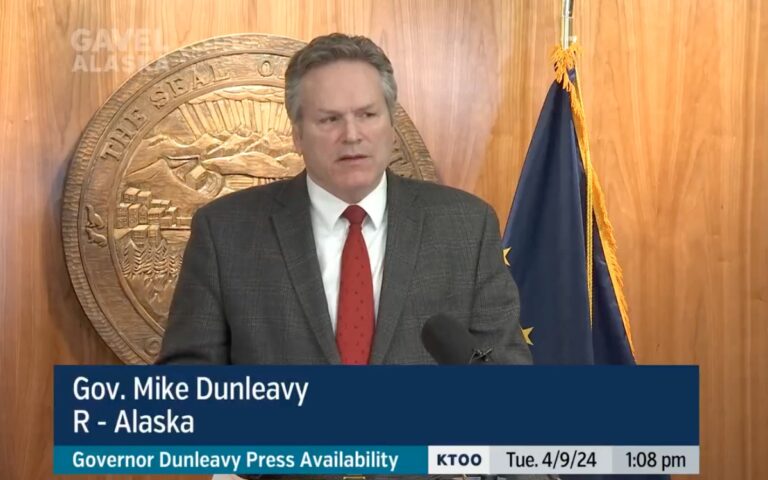
A political independent expenditure group is forming that is said to have substantial funds already committed to help Gov. Mike Dunleavy’s efforts to improve educational outcomes in Alaska, Must Read Alaska has learned.
The move for a political change comes at a time when Americans are up in arms about substandard education, radical curriculums, the pushing of gender ideology, and continued dropping educational outcomes in public schools, which are controlled by the National Education Association and the American Federation of Teachers.
In Texas, Gov. Greg Abbott recently raised $6.5 million overnight to support his educational initiatives in a similar effort, aimed at getting a supportive Legislature.
The independent expenditure group, which will launch next week, will assist candidates who share the same vision about what education should aim for in Alaska. The group will have the support of those who initially supported the campaign of Dunleavy, including major supporters from around the country. When he ran in 2022, Dunleavy had a national fundraiser thrown for him by former President Donald Trump. National groups are watching this debate and education reform is a hot topic in other states; major donors are starting to see that Alaska needs support to make change.
On Thursday, Dunleavy vetoed a massive spending bill that he rejected because his priority reform initiatives had been stripped out by the legislative majority. Word quickly spread that a number of Republicans who are worried about reelection have decided to vote to override his veto so they don’t lose in November. That vote could come as early as a joint session on Monday.
Judy Eledge, president of the Anchorage Republican Women’s Club, has put out the word to her membership to support the governor. She encouraged conservatives to phone the soft Republicans who are considering overriding the governor’s veto; the names she broadcasted as needing phone calls from conservatives included Representatives Julie Coulombe, Craig Johnson, Stanley Wright, Jesse Sumner, Dan Saddler, DeLena Johnson, David Eastman, Justin Ruffridge, Will Stapp, Thomas Baker, Mike Cronk, and Tom McKay. Also, Sen. James Kaufman, who is up for reelection this year.
“It is appalling Republicans would override a sitting Republican Governor, and vote with Democrats,” Eledge said. “It will be difficult [for her Republican club] to support any Republican who would override a veto of massive spending and listen to NEA, and not the people who elected them.”
Dunleavy wanted teacher retention bonuses and charter school support; these are opposed by the NTA and AFT. Deals were made by some legislators that stripped those items out. All they left in was the $680 per student that districts would get as part of the base student allocation formula.
The new independent expenditure group may also seek out Republicans to challenge those Republicans who do not support Dunleavy, who was reelected in 2022 with over 50.3% of the vote in a four-way race.
Studies have placed Alaska as the second most adequately funded K-12 education system in the country. In the last 20 years, the state increased per-student spending 91%, while inflation was 65%, and test scores went down significantly to the point where Alaska is the second-worst for education in the nation.
Along with the State of Alaska on Thursday suing the federal government over broken contracts relating to western Alaska mining prospects and land exchanges, the Pebble Partnership now is suing the Environmental Protection Agency and the federal government.
“We are filing litigation to fully contest the EPA’s unprecedented and unlawful actions against the Pebble Project,” the company said in a statement. “Since our objections to the politically motivated actions by the EPA have long fallen on deaf ears, we have sued the agency in federal court in Alaska to have our issues fairly and objectively heard,” the company said.
There are two separate litigation actions. In one, filed in the Federal District Court in Alaska, the company seeks to vacate the EPA veto of a development at Pebble.
“This is the main focus of our legal actions. We are confident that the court will vacate the EPA veto and allow permitting of the Pebble project to resume because, as we have previously stated, the veto violated the law and was arbitrary and capricious. The complaint in this action alleges, among many other points, the veto was issued in violation of various federal statutes regarding Alaska’s statehood rights and a land exchange approved by Congress; it was based on an overly broad legal interpretation of EPA’s jurisdiction which has since been over-ruled by the Supreme Court; its geographic scope exceeds that allowed by the statute; it was based on information previously developed by EPA in an illegal preemptive veto process that was designed to reach a predetermined result; and the factual basis stated to support the veto is directly contradicted by the July 2020 Environmental Impact Statement published by the United States Army Corps of Engineers (“USACE”), which is an important part of the administrative record,” said Northern Dynasty, the 100% owner of the Pebble Partnership.
“The EPA has not demonstrated that either the development of the Pebble deposit will have unacceptable adverse effects under Section 404(c), or that there are any impacts to Bristol Bay fisheries that would justify the extreme measures in the final determination (veto),” the company said.
“Whatever authority the EPA may have under section 404(c), the general provision in the Clean Water Act cannot authorize the EPA to take action to block the specific economic activity that was Congress’s express purpose for granting these lands to the State of Alaska under the Cook Inlet Land Exchange,” Ron Thiessen, Northern Dynasty President and CEO, stated. “It cannot authorize the EPA to override the State’s regulatory preferences for the lands, or the State’s preference to allow modest use of some streams and wetlands in the vicinity of the Deposit to facilitate the extraction of the valuable critical minerals. This is just another example of gross EPA overreach of the powers granted to it by Congress.”
“The EPA has long sought to prevent the Pebble Project from having a detailed plan reviewed through the normal permitting process. We have noted throughout that EPA staff have recklessly pursued this attack on fair and due process for the Pebble Project,” the statement said.
In the latest of the EPA’s actions against the Pebble Project, it issued its final decision before the permitting process had concluded. The agency ignored any potential benefits that would come from responsible development of the Pebble deposit. The EPA has also blocked activity on nearly 200,000 acres of Alaska land – land specifically identified for possible mineral development, the company said, echoing the complaint by the State of Alaska.
“The most appropriate place to determine whether the project should advance remains within the regulatory process and without political interference. The USACE initiated an Environmental Impact Statement process for evaluating the Pebble Project and the EPA fully participated in this process as a cooperating agency. The conclusions asserted by the EPA in their veto are in direct contrast with the final EIS for the Pebble Project which clearly indicated the project could be developed without harm to the Bristol Bay fishery.
“Not only were the EPA’s actions political and beyond their statutory authority, they fly in the face of the state’s ability to manage its land and resources- a right granted to it under the Alaska Statehood Act and one the state will also aggressively fight to protect,” the statement says.
The company also a “takings case” against the federal government to preserve our ability to seek compensation for a violation of our rights in line with the protections under the Fifth Amendment. There are procedural rules regarding takings cases that made it necessary to get this claim on file at this time.”
When the federal government exchanged with the State of Alaska, it didn’t really exchange it. It just took State of Alaska land and, in return, ratcheted down control of the land it supposedly gave the state.
That is the gist of a lawsuit in federal court in Washington, D.C. on Thursday against the federal government, asking for $700 billion in damages over broken contract that the state has with the feds regarding mining and resource development on state-owned land.
See related story on a separate set of lawsuits by the Pebble Partnership at this link:
Through the 1976 Cook Inlet Land Exchange, the State agreed and relinquished 700,000 acres of State land for 525,000 acres of federal land. With its newly acquired land, the U.S. was able to create Lake Clark National Park and Preserve. The state got land for mining.
The complaint, filed in the U.S. Court of Federal Claims, asks for damages for the confiscated lands, which the federal government will not allow the State to use. The EPA has tied up mining activity, which was the purpose for the land in the first place. The State estimates the value of the taken land at more than $700 billion, which will likely be among the highest sought in the Court of Federal Claims.
Last year, the state took the matter to the U.S. Supreme Court, askingthe court to order the the EPA to correct its breaking of a federal permitting process.
“The Court denied that request, necessitating the filing of this action. The State also anticipates filing a separate suit in the U.S. District Court challenging EPA’s unlawful action on substantive grounds. Either of these new cases may be appealed—ultimately to the Supreme Court if necessary,” the Alaska Department of Law said.
“No other State in the union relies on its mineral riches as intensely as Alaska does. At statehood, the United States conveyed to Alaska title to the minerals in over 100 million acres of the new state’s land, with the expectation that the State would develop these mineral resources to support its economy and the wellbeing of its citizens,” said Alaska Governor Mike Dunleavy.
“The Alaska Constitution requires that the State manage its resources for the maximum benefit of its people, and reliance on our natural resources is the cornerstone of Alaska’s statehood promise. Yet, the federal government would turn these State lands—these lands conveyed to us specifically because of their mineral value—into a de facto national park. It is wrong, and Alaska will challenge it,” Dunleavy said.
“We don’t think they have the authority to do this period—to shut down 309 square miles to any possible development and any possible mine? That’s counter to everything we know regarding State sovereignty and state authority under the U.S. Constitution,” said Alaska Attorney General Treg Taylor. “But if a court finds that they do have the authority then Alaska must be compensated for the inability to use and develop its own resources, which was the foundational basis for Alaska even becoming a state.”
The land exchange in question, which also included a land swap for CIRI, Inc., an Alaska Native corporation, was “the largest land exchange in American history.”
The land exchange contract was a congressional amendment to the Alaska Native Claims Settlement Act. The exchange contract and the federal legislation ensured that the State secured its mineral rights and codified the exchange guarantee that the new lands “shall include mineral deposits” and the “[m]ineral deposits in such lands shall be subject to lease by the State as the State legislature may direct.”
“Negotiations between the State of Alaska, the United States government, and regional Alaska Native Corporation CIRI in 1976 resulted in a propitious land exchange that balanced conservation with the opportunity for responsible natural resource development in Bristol Bay,” said DNR Commissioner John Boyle. “This administration is blatantly rescinding that agreement specifically granting the people of Alaska this land with incredible mineral potential. It is a glaring injustice for the federal government to restrict the State of Alaska from performing our constitutionally-mandated duty to responsibly develop our resources for Alaskans. DNR believes that every proposed natural resource development project deserves to be evaluated through a robust, fair and science-based permitting process.”
“This seems to be the latest in an ongoing agenda by the federal government to re-write its past agreements with Alaska. It’s time to put a stop to these actions or at least pay for what they’re taking,” said Department of Fish & Game Commissioner Doug Vincent-Lang. “The game, fish, and other resources belong to Alaskans by agreement, by compact, and by citizenship.”
Decades after the exchange, as the State complaint lays out, the largest undeveloped copper deposit in the world was discovered on the lands the State received in the land exchange. Known as the Pebble Deposit, the State’s lands contain more than 57 billionpounds of copper, in addition to enormous quantities of gold, silver, and rare earth elements necessary to power developing energy sectors.
In spite of the United States’ guarantee, the EPA in January 2023 issued an unprecedented order (the “Final Determination”) that effectively prohibits any mining from occurring on these State-owned lands.
In the filing of this complaint, the State is protecting its interests as the landowner from unlawful federal actions, including being dispossessed of its right to manage its own property. The State is not endorsing any specific mining project and has not completed State-required permitting decisions for the mining company’s proposal. The State believes that a development proposal should be allowed to complete the State and federal permitting process before being arbitrarily shut down before these regulatory processes perform their functions.
That permitting work was ongoing when the U.S. Army Corps denied the company’s Section 404 permit. Before the State could appeal that decision and just as the State was prepared to resume its regulatory review, EPA prematurely vetoed any mining in an area much larger than the footprint of the proposed mine.
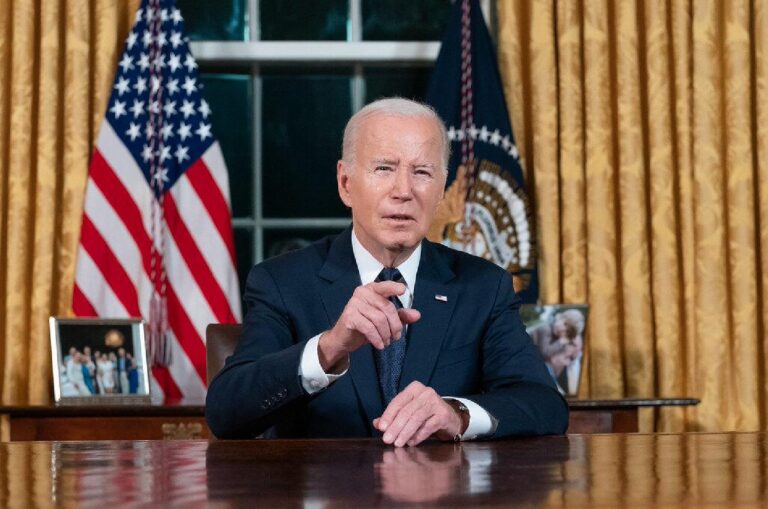
President Joe Biden’s recent foreign policy moves are baffling. By any rational standard, they are undermining Israel and helping Hamas.
When Biden was caught on an open microphone following his State of the Union Address telling Democrat Sen. Michael Bennet of Colorado that Biden and Israeli Prime Minister Benjamin Netanyahu were “going to have a come to Jesus meeting,” you have to wonder what he’s thinking.
It was a weird comment for two reasons. First, it is unlikely the leader of the Jewish state will have a “come to Jesus moment.” (Maybe a come to Moses or Abraham moment – but not a come to Jesus moment.) I have known Netanyahu since the 1980s. I am confident he was amused rather than intimidated by Biden’s comment.
Second, the American President cannot dictate to the Prime Minister of Israel. Israel is a sovereign country. Furthermore, its entire history has been a series of heroic victories in which it had to rely on its own courage and ingenuity to provide for its peoples’ security. The United States has historically been an ally of Israel (although in Suez Crisis of 1956, we intervened decisively against an Israeli victory). But the United States can only advise – it cannot dictate.
President Biden grandly announced that an Israeli occupation of the city of Rafah would cross a red line. Of course, we remember President Barack Obama’s famous red line about the Syrian use of chemical weapons, which disappeared the minute Syria used the chemical weapons.
Netanyahu responded clearly to Biden’s threat. He told Politico’s parent company, Axel Springer, “We’ll go there. We’re not going to leave… You know, I have a red line. You know what the red line is, that Oct. 7 doesn’t happen again.”
At that point, President Biden’s red line faded just like Obama’s. Biden said on MSNBC, “It is a red line, but I’m never going to leave Israel.”
Even Netanyahu’s political opponents in Israel know invading Rafah is a requirement of lasting peace. Israeli War Cabinet member Benny Gantz explained, “Finishing the war without demilitarizing Rafah is like sending in firefighters to put out 80% of a fire.”
The case for totally destroying Hamas is overwhelming. Hamas’ official founding document calls for the complete destruction of Israel. One of its most important leaders said publicly, “not a single Jew will remain.” Hamas has run a terrorist state which stole enough construction materials from the people of Gaza to build 300 miles of tunnels (the stolen material was reportedly meant to build hospitals and homes).
Hamas has proven its willingness to use the people of Gaza as human shields behind which it protects its key leaders and military assets. The number of dead and wounded in Gaza since Oct. 7 has been a function of Hamas’ willingness to sacrifice its own people to build a humanitarian outcry against Israel.
Tragically, the Biden administration and much of the American news media accept the case set up by Hamas’ ruthlessness and focus their attention on the Israelis. The fact is: This is an urban war that Hamas started. In urban warfare, civilian deaths are unavoidable. The news media’s anti-Israel, antisemitic bias leads it to accept the Hamas propaganda.
As Richard Goldberg wrote, “Biden should draw red lines for Hamas not for Israel.”
Biden’s proposal for Israel to stay out of Rafah would effectively create a sanctuary city for Hamas terrorists. It would be an irrational act which guaranteed the survival of those whose goal is the complete destruction of Israel. The conflict would remain endless.
When Ayatollah Ali Khamenei and the Iranian Parliament chant, “Death to America, Death to Israel.” They mean it. We know because the Ayatollah went on national television and pledged to the Iranian people that these words were not a slogan – but a policy.
The seriousness of Hamas’ desire to destroy Israel is captured in its map-making. As Louis Rene Beres wrote in jurist.org on Dec. 23, 2023:
“Unhidden, both the Arab world and Iran still have only a ‘One-State Solution’ for the ‘Israel Problem.’ It is a ‘solution’ that eliminates Israel altogether, a physical solution, a ‘Final Solution.’ Even today, official Arab maps of ‘Palestine’ (PNA and Hamas) show the prospective Arab State comprising all of the West Bank (Judea/Samaria), all of Gaza and all of Israel. They knowingly exclude any references to a Jewish population and list ‘holy sites’ of Christians and Muslims only.”
President Biden should be firmly on the side of Israel and civilization – and against Hamas’ barbarism, terrorism, and genocide.
Gov. Mike Dunleavy on Thursday evening vetoed Senate Bill 140, a bill that he might have supported had the Legislature kept in a couple of measures that he wanted, such as charter school authorizations.
Instead, it’s a bill that adds $680 per student to every school district, and asks nothing in return — not performance, not quality, just status quo.
The governor was left with approving a bill that turned into a spending bill, with no education reform or expectation. He said no.
“After a thorough analysis and careful consideration, I have decided to veto Senate Bill 140. SB 140 contains a record increase in the BSA. Although I SUPPORT an increase to the BSA – there were no new approaches, other than enhanced funding, to increase educational outcomes. SB 140 lacked sufficient changes in how charter schools are chartered in order to allow more students and families charter school possibilities,” he said in a statement.
“The lack of such reforms, given our success, with charter schools did not justify the passage of this bill that increases spending without needed reforms.
“There is still time in this session to address some of the issues such as increasing broadband speeds for our schools in Alaska. There is also still time in this session to enhance our charter school offerings and methods by which they are chartered.
“I will continue to work with legislators, as I have throughout my time as governor, to bring about educational reforms that put the needs of Alaskan families first – not the wants of special interest groups.
“Furthermore, I will review the appropriations bills following the legislative session to ensure schools are being adequately funded and the state’s limited resources are being spent appropriately,” the governor said.
Dunleavy will hold a brief press conference Friday morning at 11 a.m. in his Juneau cabinet room to further explain the veto.
It appears the Legislature has the votes to override his veto, with a handful of soft Republicans having told him they intend to override because they are running for reelection and believe this will help them get votes.
Dunleavy waited until the 11th hour on the final day when he’d either have to veto the bill or let it go into law. It was unclear what he planned to do, and during a press conference earlier in the day, House Speaker Cathy Tilton said she had no idea.
The Legislature is likely to meet on Monday in a joint session to vote on overriding the veto. That would need 40 legislators voting in favor of an override.
Political pollsters release data for a reason — usually because it influences public perception, builds momentum for a campaign, or helps persuade donors to give to a candidate whose race is close or political action committee.
Data for Progress, a polling company that conducts surveys to inform leftwing candidates and causes, released a poll that shows how Republican candidate Nick Begich is dead even with Rep. Mary Peltola, if a ranked-choice election were held in which Peltola, Begich, Nancy Dahlstrom, and Chris Bye were the candidates.
On the surface, that information indicates that Begich is the one to beat. But why would a left-leaning polling company release such strategically valuable information? And why would it first release the information to public broadcasting?
The reason, according to people who are in the campaign management business, is to show the liberal political donor class that Peltola’s race is actually important. Currently, it’s been getting no traction from some of the major political action committees.
Across the country, political action committees have written off the Peltola campaign in order to focus on campaigns more likely to win. For example, MoveOn.org has identified 24 seats to focus on for wining back the House in 2024. Rep. Peltola did not make the cut.
The Democrat Congressional Coordinating Committee also hasn’t prioritized Peltola onits list of target seats.
Thus, Data for Progress wants political action committees to notice that Peltola might actually lose in November, and the seat should not be taken for granted. The group surveyed 1,120 likely voters between Feb. 23 and March 2.
The Data for Progress poll also wanted to know what Alaskans thought about certain issues — these are the issues that Peltola and her surrogates would focus on to connect with voters. She is opposed to the Kroger-Albertsons merger and so are two thirds of Alaska likely voters, including 69% of the “independents” and 56% of Republicans. Voters can expect this to be one of her most dominant campaign themes.
The poll also shows strong support for banning trawling in general: Two-thirds of voters (67%) think the federal government should ban trawling in waters off the coast of Alaska.
Polling on the issues informs the candidates where the electorate is at.
But Data for Progress likely did not release everything it knows about the mood in Alaska. Data for Progress senior advisor Jason Katz-Brown moved to Anchorage recently and has been writing about Alaska attitudes on a range of issues, including legislative priorities. But it surely has information it is keeping within a small group of politicos.
As for favorability, 51% of Alaska voters said they have a favorable opinion of Peltola, compared with 41% unfavorable, for a +10 net favorability. This is higher net favorability than the other members of Alaska’s congressional delegation, Senators Dan Sullivan and Lisa Murkowski, with +3 and +2 net favorability, respectively, the company said.
Nick Begich’s favorability is 40% favorable, 40% unfavorable, and 20% haven’t heard enough to say. Nancy Dahlstrom, currently Alaska’s lieutenant governor, is even more unknown, coming in at 14% favorable, 21% unfavorable, and 65% haven’t heard enough to say, the pollster said.
The poll shows that Dahlstrom, who joined the race late, still has a long way to go to get name recognition in Alaska. The August 20 primary is less than 160 days away.
Senate Majority Leader Chuck Schumer threw around words like “international pariah” and “right-wing” in speaking about Israel’s government on the Senate floor on Thursday. He called for Israelis to hold an election and get rid of Prime Minister Prime Minister Benjamin Netanyahu.
“I believe that holding a new election once the war starts to wind down would give Israelis an opportunity to express their vision for the postwar future,” Schumer said.
“As a lifelong supporter of Israel, it has become clear to me, the Netanyahu coalition no longer fits the needs of Israel after October 7. The world has changed, radically, since then, and the Israeli people are being stifled right now by a governing vision that is stuck in the past,” Schumer said.
“Five months into this conflict, it is clear that Israelis need to take stock of the situation and ask: Must we change course? At this critical juncture, I believe a new election is the only way to allow for a healthy and open decision-making process about the future of Israel, at a time when so many Israelis have lost their confidence in the vision and direction of their government,” he said.
Schumer is the highest-ranking Jewish elected leader in Congress.
For his part, Netanyahu said he expects Schumer to respect Israel’s elected government and not try to undermine it.
“Israel is not a banana republic, but an independent and proud democracy that elected Prime Minister Netanyahu,” the prime minister said. “Contrary to Schumer’s words, the Israeli public supports a total victory over Hamas” and “opposes the return of the Palestinian Authority to Gaza.”
The Gaza war started Oct. 7, with a terrorist attack on Israel by the ruling government of Palestinian Gaza, an area that is not an actual state but is cordoned off from other countries and governed by terrorist Hamas. Israeli hostages were taken, raped, tortured, and killed. Israel responded with military force, but it is fighting not only Hamas, but terror-exporter Iran, which is supplying Hamas with weapons.
Sen. Mitch McConnell, Senate Republican minority leader, issued a scathing response to Schumer: “Israel is not a colony of America whose leaders serve at the pleasure of the party in power in Washington. Only Israel’s citizens should have a say in who runs their government. It is grotesque and hypocritical for Americans who hyperventilate about foreign interference in our own democracy to call for the removal of a democratically elected leader of Israel. This is unprecedented. We should not treat fellow democracies this way at all.”
House Speaker Mike Johnson, a Republican, said that Schumer’s remarks were inappropriate and “just plain wrong for an American leader to play such a divisive role in Israeli politics while our closest ally in the region is in an existential battle for its very survival. We need to be standing with Israel.”
Schumer’s remarks appear to be in coordination with President Joe Biden, who has taken a harsher stance against Israel, telling MSNBC last weekend that Netanyahu needs to “pay more attention to the innocent lives being lost” in the war.
Netanyahu responded that Biden is now hurting the interests of Israel and the “wish of the majority of Israelis.”