As the majority of the human population in Alaska’s Railbelt faces power brownouts and possible blackouts this winter and winters far into the future, U.S. District Court Judge Sharon Gleason has sided with the environmentalists to block natural gas leases that had already been awarded in Cook Inlet.
Gleason just overturned the 2022 lease sale held in federal waters of Cook Inlet, a lease that was conducted to fulfill requirements of the Outer Continental Shelf Lands Act of 1953, which was enacted to establish an offshore oil and gas leasing regime.
Groups like Cook Inletkeeper, which keeps its funding sources secret, persuaded Gleason that the Department of Interior didn’t properly analyze impacts of a lease sale and the harm it could cause beluga whales. There are 331 belugas in Cook Inlet, an increases from the 279 whales counted in 2018, but down from the 1,300 believed to have been in the inlet in 1979.
Gleason suspended the single lease acquired by Hilcorp, which was the only bidder in 2022. Her adverse ruling against Alaska’s economy is in line with most of her past rulings.
“Another case of an activist judge putting their ideology ahead of sound (Congressionally-mandated) policy strikes once again! November – and the ability for a new President to start replacing retiring judges with ones who want to follow the law – can’t come soon enough,” said Rick Whitbeck, Alaska director for Power the Future.
Gleason is the chief judge on the United States District Court for the District of Alaska, and the only judge, as the other two seats are vacant. An appointee of President Barack Obama, she joined the court on Jan. 4, 2012.
In 2021, Alaska Gleason overturned the approval of ConocoPhillips’ Willow project in the National Petroleum Reserve Alaska, a decision that was later reversed by higher courts.
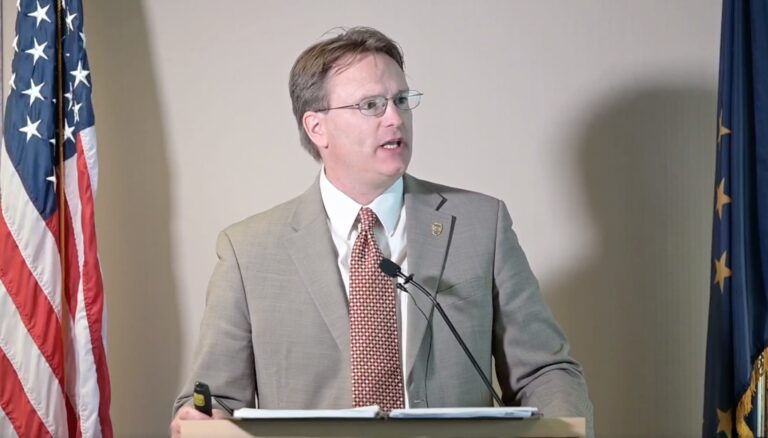
Alaska Deputy Attorney General John Skidmore said releasing footage from officers’ body-worn cameras after use-of-deadly-force situations is a matter involving both transparency and due process.
Skidmore’s press conference came as the Anchorage Assembly majority is ramping up demands for the release of video in recent officer-involved shooting incidences, particularly that of Kristopher Handy on May 13.
The Office of Special Prosecutions in the Alaska Law Department reviews all officer-involved shooting cases, Skidmore said. There have been nine officer-involved shootings in Alaska in 2024, five of them in Anchorage since May.
Three incidences since last October have been resolved with no charges filed against officers. They are:
Timothy Thomas; Oct. 30, 2023, Tok; no charges filed against AST Trooper.
Kaleb Bourdukofsky; June 1, 2024, Anchorage; no charges filed APD officers.
Victor Jack; February 28, 2024, Wasilla; no charges filed against AST Trooper.
The pending cases are:
Kristopher Handy; May 13, 2024, Anchorage; the autopsy report and the ballistics report received July 16.
Tyler May; June 3, 2024, Anchorage; Law enforcement reports provided to Special Prosecutions on July 5. Still awaiting the autopsy report.
Lisa Fordyce-Blair; June 19, 2024, Anchorage; A prosecutor has been in communication with investigators at APD and some law enforcement reports provided to Special Prosecutions July 16. Still awaiting the autopsy and ballistics report.
Damien Dollison; July 8, 2024, Anchorage; A prosecutor has been in communication with investigators at APD, awaiting police reports, autopsy and ballistics reports.
Steven Kissack; July 15, 2024, Juneau; A prosecutor has been in communication with investigators; awaiting reports from law enforcement, autopsy, and ballistics.
Kirk Medak; July 8, 2024, Soldotna; A prosecutor has been in communication with investigators; awaiting reports from law enforcement, autopsy, and ballistics.
Angela Polty; May 18, 2024, Marshall; awaiting ballistics.
Micheal Grimes; November 1, 2023, Healy; awaiting Ballistics.
Skidmore released a report detailing laws and procedures around these types of cases, including this state statute:
AS 11.81.370 – Use of Force by Police (a) … The officer may use deadly force only when and to the extent the officer reasonably believes the use of deadly force is necessary to make the arrest or terminate the escape or attempted escape from custody of a person the officer reasonably believes (1) has committed or attempted to commit a felony which involved the use of force against a person; (2) has escaped or is attempting to escape from custody while in possession of a firearm on or about the person; or (3) may otherwise endanger life or inflict serious physical injury unless arrested without delay.
Anchorage Assemblyman Felix Rivera said Anchorage Police have lost the public’s trust and he, Assemblyman Daniel Holland and Assemblywoman Meg Zaletel have introduced ordinances to hasten the release of the video from body-worn cameras.
“We broach this conversation at a time of mourning,” said Rivera. “We mourn the lives lost and feel for everyone involved in the recent officer-involved shootings. In the wake of loss and amid the pain, we call upon our fellow members, our partners in the Administration, and APD to change our approach and rebuild public trust.” (Italics by MRAK).
Anchorage AR 2024-210, demands that Anchorage Police offer the Handy family the opportunity to review footage of the Kris Handy police shooting at no cost in advance of its public release; it calls for the release of body-worn camera recordings of all recent officer-involved shootings and critical incidents, no later than 30 days after the resolution is approved; and, urges Mayor LaFrance Administration and Anchorage Police to use a different body-worn camera policy, such as one suggested by the American Civil Liberties Union (ACLU) and Los Angeles Police Department (LAPD).
Anchorage AO 2024-69proposes a definition of “body-worn cameras” in Anchorage Municipal Code under. The ordinance would give the existing policy governing body-worn cameras the force of law and establish that the failure to adhere the policy may be considered grounds for discipline. A public hearing is scheduled for July 30.
“Americans demand accountability and transparency about the Secret Service’s failures that led to the attempted assassination of President Trump, but they aren’t getting that from President Biden’s Department of Homeland Security. We have many questions for Director Cheatle about the Secret Service’s historic failure and she must appear before the House Oversight Committee next week.”
“The United States Secret Service has a no-fail mission, yet it failed on Saturday when a madman attempted to assassinate President Trump, killed an innocent victim, and harmed others. We are grateful to the brave Secret Service agents who acted quickly to protect President Trump after shots were fired and the American patriots who sought to help victims, but questions remain about how a rooftop within proximity to President Trump was left unsecure,” Comer said. “Americans demand answers from Director Kimberly Cheatle about these security lapses and how we can prevent this from happening again.”
House Speaker Mike Johnson also said Wednesday he is creating a special task force to investigate the assassination attempt.
Speaker Johnson said he’s spoken with Homeland Security Secretary Alejandro Mayorkas as well as the director of national intelligence, Avril Haines and leadership of the FBI, although not directly with FBI Director Christopher Wray.
“The answers that they are providing to us thus far are not satisfactory,” he told the Daily Signal. “So I announced this morning that we are gonna set up a special task force, a precision strike on this, it will be a bipartisan investigatory group and they will have subpoena authority. We’re going to get down to the bottom of this quickly.”
In the Senate, U.S. Democrat Sen. Gary Peters and Republican Sen. Rand Paul, chairman and ranking member of the Senate Homeland Security and Governmental Affairs Committee respectively, announced Tuesday the committee will conduct a bipartisan investigation and plan to hold a hearing to examine security failures that led to the attempted assassination of Trump.
Senators Peters and Paul are requesting an urgent briefing for the members of the committee on the shooting and additional information from U.S. Secret Service, the Department of Homeland Security, and the Federal Bureau of Investigation, to be followed by a public hearing. Additional investigative requests for documents and testimony will follow, the two said. So far, the committee, run by Democrats, has not made a forceful stance to require Cheatle, Mayorkas, Wray, or other security officials to appear. At this stage, the committee is making just a vague promise to look into it.
The Democratic Party is suffering from depression and malaise. Its latest email fundraising query bordered on the pathetic. It touted no accomplishments or goals. It simply begged.
Democrats —
We are writing to ask if there’s anything we can say to convince you to make a contribution to the Democratic National Committee today.
Please give us a chance to try:
What if we told you that Republicans’ National Convention is underway and they’re in the middle of spreading their message for four straight nights on national television?
And what if we told you that shortly after it ends, we are legally required to file an FEC fundraising report showing how much money we’ve raised during the month of July?
And what if we told you Republicans will be filing one as well and everyone in the media will be watching and using our filings to impact coverage of the presidential race and everything else down the ballot?
$7. That’s the ask. We know it may not seem like an election-winning amount, but when Democrats everywhere chip in, it adds up fast. What do you say?
The Democrats steered clear of saying words like “Hitler,” “fascist” or “dictator.” It didn’t even mention Joe Biden, Kamala Harris, or abortion, and seem to be resigned to the vague “our team is better than their team” argument in fundraising.
GOP pollster Frank Luntz said the attempted assassination of Donald Trump has taken the wind out of the sails of the Democrats.
Luntz said the shooting will guarantee that every Trump supporter will vote in November. The lackluster interest in Biden is bound to suppress turnout among Democrats, he said.
“Trump’s voters are energized, Biden’s voters are demoralized,” Luntz wrote on X/Twitter. “In recent months, President Trump has benefited from more passionate and engaged followers than the Biden campaign, but the shooting will turn that intensity gap into a chasm.”
That could be worth worth at least 1%-2%, Luntz said, which can add up, especially in swing states.
“It’s hard to imagine either Biden or any of the potential Democratic candidates delivering full-throated crowd-pleasing attacks on the former President now, taking away most of their ability to play the Trump card by labeling him a ‘threat to democracy’ when he just survived a real threat to democracy,” Luntz wrote. “The 2024 presidential election is now Trump’s to lose.”
The coup de grace was when the Board of Equalization board members testified that the role and authority of the board is not to decide if the assessor did something “wrong,” “fraudulent,” “prejudicial,’ or “whatever you want.”
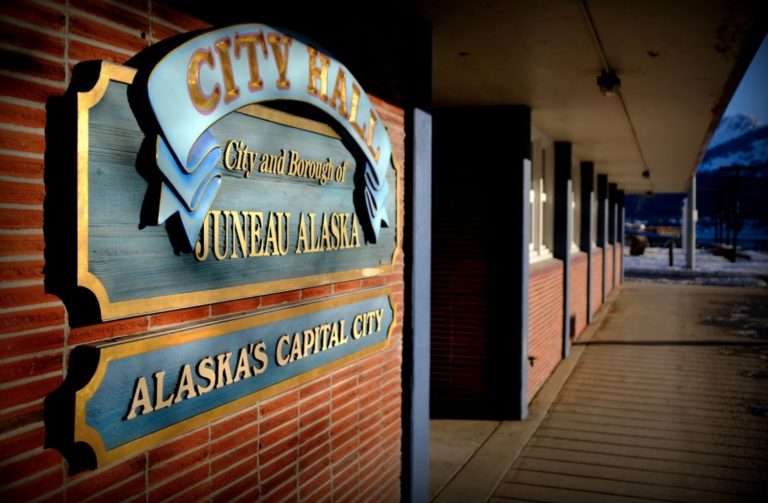
The bountiful assessor knows property owners do not have the resources to fight City Hall within strict administrative laws, which impose 15-minute time presentations, crushing filing periods, and limited evidentiary rules. The City and Borough of Juneau uses the power of its offices as a cudgel, not a plowshare.
I received a “notice of assessed value” postcard, which showed the Behrends Bank building, which the Goldstein Improvement Company bought one month earlier, assessed at more than double what we paid for it.
I called the assessor, thinking a phone call would clear up this mistake. I spoke with Michael Dahle, who gaslighted me. I spoke with then-Sen. Peter Micciche, president of the Alaska State Senate, who told me the City and Borough of Juneau was involved in a money grab.
If our testimony is erased in the videoconference tapes of the Board of Equalization hearings, that would violate our due process rights. What is there left to say about the assessor office?
Obstruction of Justice
In my first day of hearings, I had the following bathroom break testimony exchange during my presentation. It has been erased from the Board of Equalization’s videoconference tape and transcript. The exchange went, according to my recollection, as follows:
GREG ADLER: I need and request a bathroom break.
CHAIR: Bathroom breaks are not allowed.
GREG ADLER: I need a bathroom break.
CHAIR: You cannot go to the bathroom.
GREG ADLER: I really have to go.
CHAIR: If you take a bathroom break your 15-minute presentation time will continue to run.
GREG ADLER: I am not kidding I have to go to the bathroom.
CHAIR: You do not have to come back to the hearing.
GREG ADLER: What?
CHAIR: If you go the bathroom we will continue the hearing without you.
GREG ADLER: I have to go to the bathroom.
CHAIR: You do not have to come back. The board will render a decision without you.
GREG ADLER: You will what?
CHAIR: In fact, Mr. Adler, you do not have to be here for any hearings. We will render decisions without you.
GREG ADLER: I have to go to the bathroom.
The City and Borough of Juneau has erased the bathroom break testimony and I assert they edited the Zoom transcripts by taking out testimony to try and make the time stamps match my 15-minute presentation at the five-minute mark.
There is a gap of 28.488 seconds.
I allege the gap exists because the bathroom break exchange between myself and the chair is erased on the videoconference tape and the transcripts, and the Zoom transcript has been tampered with and easily edited to cover up tampering with my presentation time.
The cover up erased the testimony of the chair to “minutes” from “five minutes.”
The cover up erased the entire testimony of the Municipal Clerk Di Cathcart, who said, “Five minutes.”
The CBJ Zoom transcript five-minute warning is given at about 4 minutes, 31 seconds because my Bathroom Break Exchange Testimony has been erased. My time was cut short.
The dog barking section of the transcript has also been erased. In it, the chair says “OK” to my request for the 15 minute time to be extended on account of a Board of Equalization member’s dog barking. Some 11 seconds have been erased from the official Zoom transcript. Additional testimony is tampered with on the transcript.
The gap total: 39 seconds
On June 24, 2024, City Clerk Cathcart confirmed the bathroom-break exchange took place.
At the start of the second day of Board of Equalization hearings, my motion and affidavit for reconsideration of Notice of Decisions by the Board of Equalization and a motion and affidavit to set aside the Notice of Decisions were presented.
My motions were based on these offenses:
The 15-minute hearing lacks due process.
The hearings are prejudiced and biased against the appellant.
By not permitting the appellant to take a bathroom break and permitting the hearing to continue without pause.
At the start of the second day of hearings, Deputy City Clerk Cathcart, recalling the bathroom-break testimony, felt it necessary to warn the Board of Equalization to maintain decorum.
She testified, making note of appellant’s rights, as follows: Check to see if anyone needs bio breaks, just a moment, or a short recess.
The assessor and Board of Equalization have flipped the goodwill of City Hall and turned the grueling, time-constrained administrative law apparatus against the people of Juneau.
This happened under watchful eye of the Deputy City Attorney, who did not advise or protest against the actions of the Board of Equalization chair, although he is both a participant and witness to the board’s proceedings.
Who will be the first to come forward with the truth and break the City and Borough of Juneau’s cycle of tampering with government evidence?
Greg Adler is a principal at Goldstein Improvement Co. His family has owned property and conducted business in Juneau since the 1880s. Adler and his family own a home on Pioneer Avenue in West Juneau.
A mentally ill homeless man was shot and killed by police just outside the security perimeter of the Republican National Convention in Milwaukee on Tuesday.
In a scenario eerily similar to a police shooting in Juneau on Monday, the man, reported to be known by the neighborhood, was wielding two knives, swinging them at officers, when a police officer from Columbus, Ohio took him down.
On Monday in Juneau, a well-known vagrant who lived in doorways downtown lunged at police with a knife and was shot and killed.
The U.S. Secret Service is facing an array of tough questions, calls for accountability, firings and investigations this week as well as public feuding with local law enforcement.
House Oversight Republicans launched an investigation into the U.S. Secret Service after the assassination attempt on former President Donald Trump on Saturday. President Joe Biden has also asked for an independent review.
While there are a myriad of questions, and information is still coming in, most agree that the Secret Service should be held accountable.
“Whatever shortcomings there are, the Secret Service has to answer to that,” former head of the U.S. Secret Service and founding administrator of the Transportation Security Administration John Magaw told The Center Square. “After the Kennedy shooting, I never thought we’d make this mistake again.”
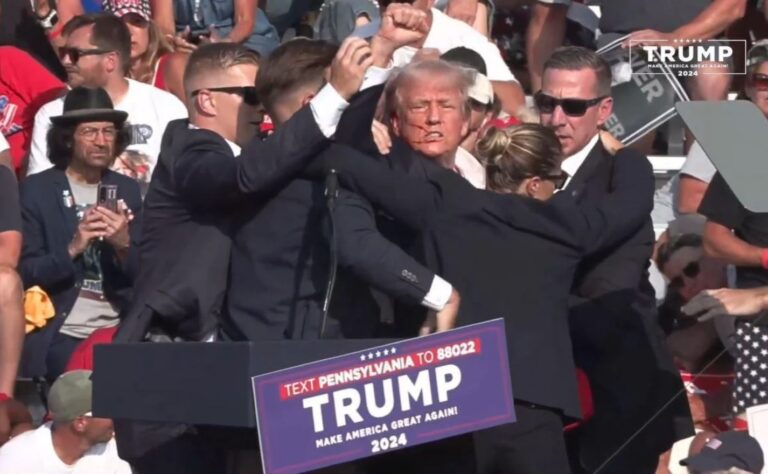
The inquiry comes in the aftermath of an attempted assassination attempt against Trump at a Pennsylvania campaign rally on Saturday that left the president injured and the shooter and a rally attendee dead.
Head of the Secret Service Kimberly Cheatle gave an interview to ABC News this week where she calledthe events of Saturday unacceptable and said “the buck stops” with her. She also appeared to attempt to shift blame to local law enforcement, who were reportedly responsible for the outer perimeter including a nearby building where the shooter fired from about 130 years away.
“In this particular instance, we did share support for that particular site and that the Secret Service was responsible for the inner perimeter,” Cheatle told ABC News. “And then we sought assistance from our local counterparts for the outer perimeter. There was local police in that building – there was local police in the area that were responsible for the outer perimeter of the building.”
Patrick Yoes, National President of the Fraternal Order of Police, released a statement taking issue with the Secret Service shifting blame to local police.
“Whatever happened in Butler, this was not a failure of the local, State, or Federal officers on the ground who responded to the shots fired at former President Trump, they acted heroically and put their lives on the line to protect everyone else at the event. We must recognize that,” Yoes said. “This is a failure at the management or command level who failed to secure an obvious weakness in the security of this event.The shooter should never have had access to the roof from which he made his attack. Whether the plan or the execution failed will come to light, but in the meantime law enforcement still has a job to do.”
Yoes defended the heroism of officers on the ground.
“While reports and information is still being gathered and developed, a man was able to obtain a shooting perch with line of sight to former President Trump, a protectee of the United States Secret Service (USSS),” Yoes said. “It is the primary function of the USSS to provide for the protection and security on sites like the one in Butler, Pennsylvania.”
The House investigation is one of multiple that aims to get to the bottom of what the Secret Service did wrong, what can be done better next time, and who is responsible for Trump’s near death experience.
In particular, experts, former agents and others have pressed the Secret Service on a few key questions:
How was the shooter able to get within about 130 yards of Trump, an easy shot for most trained shooters?
Why was no officer on that rooftop?
Why did law enforcement officials not react more quickly, especially after video appears to show that rally attendees saw the shooter minutes before Trump was shot?
Why did it take so long to get Trump off stage after the shooting?
Why were small women guarding Trump’s body since he is 6’3″?
Did the Secret Service’s recent focus on Diversity, Equity and Inclusion become a distraction or lower the standards for officers?
Critics have raised these questions and others after Saturday’s events.
Many have called for Cheatle to resign, but Department of Homeland Security head Alejandro Mayorkas vehemently defended her this week at the White House press briefing, as The Center Square previously reported.
Others have questioned whether local law enforcement should have a role in working with the Secret Service. Yoes pushed back on that concern.
“Suggestions made in the media that suggest local agencies should play no role in assisting the USSS at events like the one in Butler simply do not know what they are talking about,” Yoes said in a statement.
“Yet, in the wake of some of the anonymous comments from unknown officials, State and local agencies may wonder if they can rely on the Secret Service,” Yoes continued. “I am concerned that anonymous statements or media speculation could have a chilling effect on the ability of Federal, State, and local law enforcement to work together through what will certainly be a grueling campaign.”
Two Alaska Republican district organizations have endorsed congressional candidate Nick Begich. The votes on the endorsements took place over the past 10 days.
District 26 is Wasilla, which is represented in the Alaska House by House Speaker Cathy Tilton.
District 34 is Fairbanks, which is represented in the Alaska House by Rep. Frank Tomaszewski.
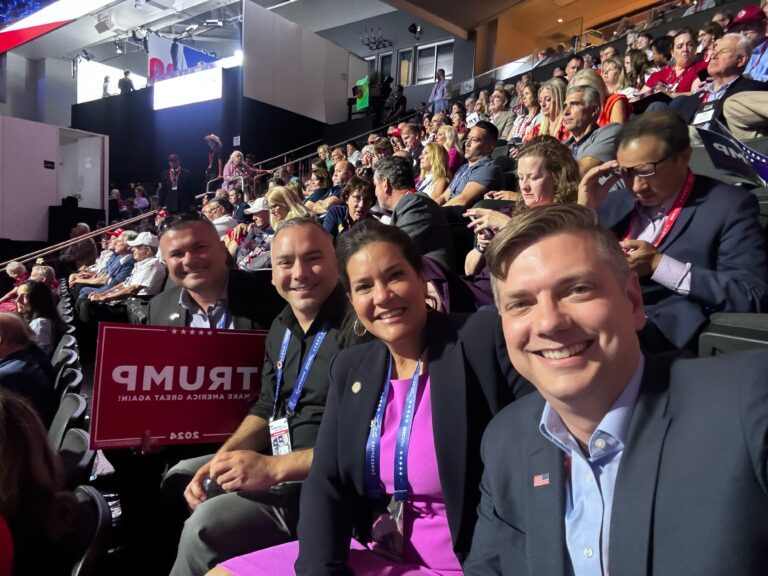
“Our districts represent the true grassroots of the conservative movement in our state. These are the volunteers who give their evenings and weekends to make calls, knock doors, put up signs, and do the heavy lifting. It’s an honor to have their support as we work together to restore Alaska’s representation in the House,” Begich said from inside the Republican National Convention in Milwaukee.
Begich also has endorsements from Alaska Young Republicans, six of the seven Alaska Republican Women’s Clubs, the U.S. House Freedom Caucus, Sen. Mike Lee, Rep. Scott Perry, and Rep. Byron Donalds, who is in Donald Trump’s inner circle. Trump, at the request of the National Republican Congressional Committee and Gov. Mike Dunleavy, has endorsed Nancy Dahlstrom, creating a split in the party leadership, although the grassroots seems to be “sticking with Nick.”
A year after repeated requests from independent presidential candidate Robert F. Kennedy Jr., he now has Secret Service protection. President Joe Biden relented after the attempted assassination Saturday of Donald Trump at a rally in Butler, Penn. and Trump calling for Kennedy’s protection.
Department of Homeland Security Secretary Alejandro Mayorkas announced on Monday that the order came directly from Biden, a clear indication that Biden has been responsible for withholding such protection from the son of an assassinated presidential candidate, Robert F. Kennedy, and the nephew of an assassinated president, John F. Kennedy.
“Thank you to President Biden for granting me Secret Service protection. And I am so grateful to Gavin deBecker & Associates for the last 15 months of my Presidential campaign,” Kennedy Jr. said in a post on X/Twitter. Kennedy has had to pay for his own protection, which may have been due to his perceived political threat to Biden’s presidency. Kennedy was a Democrat, but after being snubbed by the Democrat party, switched to independent.
Also, it was observed at the Republican National Convention, Trump had been given increased Secret Service protection when he entered the Fiserve Forum arena in Milwaukee, Wis. on the first day of the Republican National Convention. He survived the assassination attempt and critics have said that the security detail that was assigned to him was less than prepared, and that some of the officers were demonstrably incompetent.