Brett Rotermund, serving on the Fairbanks North Star Borough Assembly, has resigned his seat in protest of the Assembly censuring Assemblywoman Barbara Haney, a fellow conservative, over having expressed her opinion.
Haney wrote an opinion column in the Fairbanks New Miner, and the editors added to the end of it that she serves on the Assembly. The reference had not been included by Haney, but a radical in the Fairbanks community lodged an ethics complaint about the reference, and during Thursday’s meeting, the Assembly majority censured Haney and fined her $1.
Rotermund resigned because he believes the Assembly has violated the Constitution. The leftists on the Assembly were saying that Assembly members have no right to any public communication without a disclaimer — email, campaign literature, op-eds included, but not, apparently, verbal communication, only written. Borough code they cited her under says “all communication,” which implies op-eds have to have a “paid for” disclaimer on them.
The presiding officer of the Assembly, Savannah Fletcher, is running for state Senate. She is a specialist in using law fare to get her way and suppress the rights of others and is associated with the Northern Justice Project. As an attorney, she has gone after Rep. David Eastman, Rep. Kevin McCabe, Sen. Lora Reinbold, the Mat-Su School District, and others.
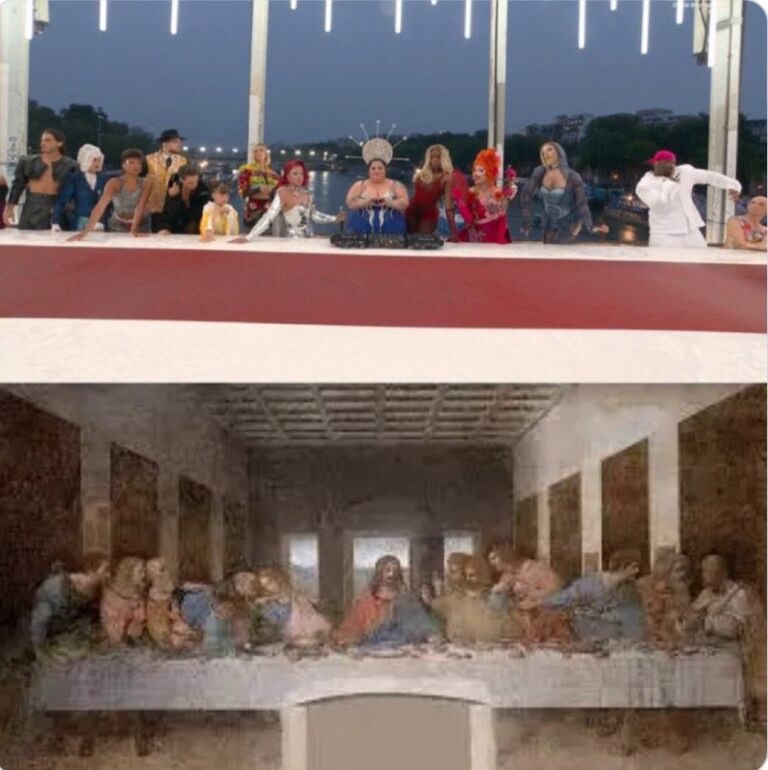
One of the featured acts for the opening ceremonies of the Olympic Games in Paris on Friday was a drag performance that recreated the Last Supper, the final time that Jesus broke bread with his disciples before he was arrested and hung on a cross.
The burlesque act that mocked one of Christianity’s most sacred moments shocked Christians around the world. The Last Supper marks the first-ever sacrament of Holy Communion, through which Christians are symbolically united with Christ and receive His grace and forgiveness.
— Billboard Chris ???? (@BillboardChris) July 26, 2024
The Last Supper living diorama was not the only drag event starting the Olympics. The Friday night show featured men in drag grotesquely parading, gyrating, and preening for the thousands of people from around the world who are attending the opening ceremony, which is scheduled to last three hours.
“Queens everywhere! We couldn’t be happier about this huge moment for drag performers breaking through the mainstream and showing their talents to the entire world,” wrote Out magazine, a publication for LGBTQ. Some 320,000 are expected to be in Paris for the international athletics competition.
The show this year is a far cry from the opening ceremony in 2008, when 2,008 drummers performed at the Beijing Olympics.
The sound of 2,008 people drumming together at the opening ceremony of the 2008 Beijing Olympics pic.twitter.com/836Lrcj9Jc
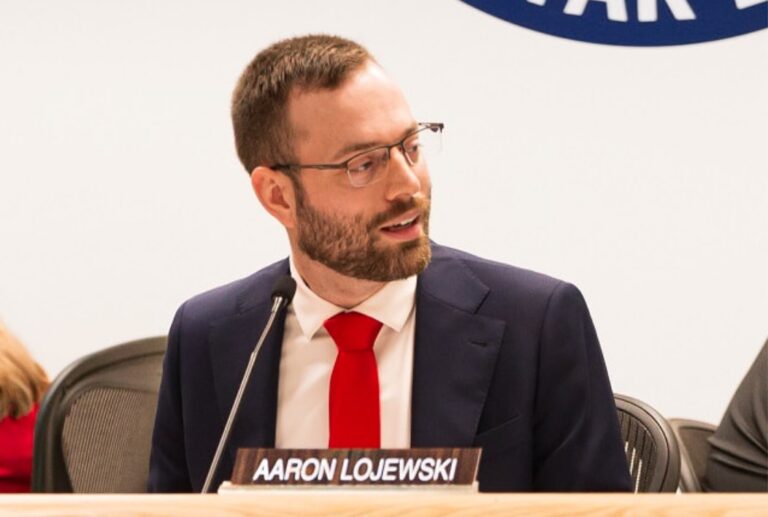
Former Fairbanks Assemblyman Aaron Lojewski, who has been a budget hawk and champion of preventing higher taxes in Fairbanks, has dropped his bid for mayor of the Fairbanks North Star Borough, which gives fellow conservative John Coghill a stronger shot at winning against leftist hardliner Grier Hopkins, son of former Mayor Luke Hopkins.
Lojewski has been a champion of the tax cap.
Coghill is the former state senator from Fairbanks, while Hopkins is a former representative.
Lojewki’s departure from the race means that Coghill still has to contend with Hopkins and Robert Shields, who is a member of the Green Party of Alaska. Shields may drain votes from Hopkins, however.
Mayor Bryce Ward has served three terms as borough mayor and has to sit this one out.
Also on the borough ballot are three Assembly seats: Assembly Seat A, with Miguel Ramirez and incumbent David Guttenberg as current candidates; Assembly Seat F, with Garrett Armstrong and Tammie Wilson the current candidates; Assembly Seat G, with no declared candidates (Kristan Kelly, incumbent); School Board seats A (no declared candidate yet) and B (declared candidates are April Smith and Morgan Dulian); and two seats on the Interior Natural Gas Utility Board.
Filing for elected office in Fairbanks closes on Monday, July 29 at 5 p.m., and candidates who wish to withdraw have until Aug. 5 to do so.
Voters participating in the election will be asked to consider Proposition 1, an ordinance relating to the renewal of the current tax cap, which the Assembly liberal majority wants to blow through. The tax cap must be renewed every two years or the politicians can increase the cap. The wording on the proposition is:
Shall Sections 8.04.290 And 8.04.300 Of The Fairbanks North Star Borough Code Of Ordinances Be Enacted As Follows? These Sections Will Provide For Limitations On The Maximum Allowable Tax Revenues For The Fairbanks North Star Borough. Under Section 8.04.290 The Borough Will Be Able To Levy Or Impose Only The Same Amount Of Taxes For One Fiscal Year As The Borough Levied Or Imposed For The Preceding Year, Except That The Borough Can Increase The Amount Of Taxes Levied Or Imposed (A) To Adjust For Inflation: (B) To Take Into Account New Buildings And Land Coming Onto The Tax Rolls; (C) Make New Payments On Bonds; (D) Pay For Services Approved By Voters; (E) Pay For New Legal Judgements Entered Against The Borough; And To Pay For Expenses In Emergencies. Section 8.04.300 Provides A Formula And Definitions For The Limitations Of Section 8.04.290. A “YES” vote means that the current “tax cap” will remain in effect. This “tax cap” will be enacted in borough code, and be unable to be modified or negated for a period of two years. A “NO” vote means that the current “tax cap” will be able to be modified or negated by action of the Borough Assembly.
The borough and City of Fairbanks elections end Oct. 1, with early voting starting Sept. 16.
During President Joe Biden’s address to the American public Wednesday night, he said his administration secured the border.
Without discussing border policies in his 10-minute address, he touted his efforts in two sentences, saying, “We are also securing our border. Border crossings are lower today than when the previous administration left office.”
Several news outlets made similar claims.
“July is on track to see the fifth consecutive monthly drop in migrant apprehensions along the U.S.-Mexico border and the lowest level in illegal immigration there since the fall of 2020,” CBS News reported. “Migrant crossings plunge 55%” Newsweek reported; they dropped “over 40% since Biden announced asylum restrictions,” CNN reported.
“Biden finally got border numbers down,” The New York Times reported. PolitiFact labeled Biden’s claim that “migrants coming to our … border unlawfully … dropped dramatically,” as “mostly true” in its so-called “Truth-O-Meter.”
Accounting for all the data, including new ways the Biden administration is allowing foreign nationals to enter the country, the claims are verifiably false.
As The Center Square has reported every month since early 2021, after Biden took office, the number of illegal border crossers has increased, not gone down.
Biden, Vice President Kamala Harris, and several corporate media outlets cite incomplete apprehension data, excluding at least 2 million gotaways, those who evaded capture and are in the country illegally. It is unknown how many gotaways are violent criminals or potential terrorists.
The data they cite also excludes millions of foreign nationals who were unlawfully released into the country instead of detaining and removing them, former border officials have explained, including through parole programs that Department of Homeland Security Secretary Alejandro Mayorkas created, which Republicans attorneys general and other elected officials maintain are illegal.
“Biden and Harris cannot hide the truth about our open border. To this day, they are still encountering on a daily basis, almost four times what the Trump administration did after Trump implemented his policies,” former director of Immigration and Customs Enforcement Tom Homan, who served under six presidents, told The Center Square.
Harris, who Biden tapped as his “border czar” in 2021, and the president “are simply playing a shell game by bringing thousands of illegal aliens into the country through the CBP One program and the CHNV program,” Homan said. “They claim they are ‘lawful pathways’ so they don’t have to count them as illegal between the ports of entry,” which are referred to as apprehensions.
Those entering through the parole programs, at the ports of entry and between ports of entry “are the same exact population,” Homan said, regardless if the administration labels them otherwise. The processes Harris and Mayorkas created are “an illegal abuse of the federal parole statute and they know it,” Homan said.
Homan also repeated a previous warning, saying, “The most important data point is this: how many illegal aliens has this administration released into the U.S. despite the legal requirement to detain them? At least 8 million.
“That is a horrendous data point that is far beyond many administrations combined. Historic.”
By apprehension data alone, Biden’s claims are verifiably false.
In June, for example, apprehensions totaled nearly 206,000, compared to nearly 212,000 in June 2023, nearly 248,000 in June 2022 and nearly 209,000 in June 2021, according to U.S. Customs and Border Protection data.
Monthly encounters at ports of entry of foreign nationals with no lawful basis to enter increased from nearly 20,000 in January 2021 to more than 117,000 in June 2024.
Last month, the greatest number of illegal foreign nationals were apprehended at the northern border for the month of June in U.S. history, more than 17,700.
Under Trump, there were nearly 527,000 apprehensions in fiscal 2017, 683,000 in fiscal 2018 and over 1.1 million in fiscal 2019, according to CBP data. Under Biden, there were over 1.95 million in fiscal 2021, over 2.7 million in fiscal 2022 and over 3.2 million in fiscal 2023, according to the data.
This fiscal year’s numbers so far total more than 2.5 million apprehensions, dwarfing any year under Trump.
The apprehension totals also exclude 680,500 foreign nationals brought into the U.S. using a CBP app, which Homan and attorneys general who sued to block the app’s use say is illegal.
The totals also exclude 104,130 Cubans, 194,027 Haitians, 86,101 Nicaraguans, and 110,541 Venezuelans released into the U.S. through (CHNV) parole programs contrary to federal law prohibiting their entry. The CHNV process is directly linked to violent crimes committed against Americans by the parolees, The Center Square reported.
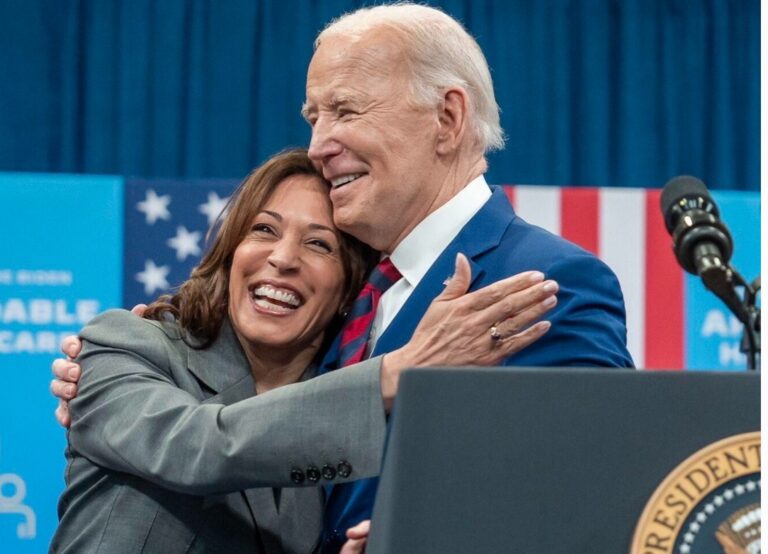
As soon as he became President Gerald Ford pardoned Richard Nixon for any crimes he may have committed as President. President Kamala Harris could pardon not only Joe, but the whole Biden crime family.
The resignation would be best done before the November election. If Biden resigned after losing the election, and was then pardoned, it would like a quid pro quo, a deal they cut. But if Biden resigned in the next few weeks, and President Harris pardoned him shortly before leaving office on January 20, 2025, it would look like clemency, and a path out of the tawdry business of prosecuting your predecessor in office, a terrible precedent set by Biden himself.
I think this would appeal to all the criminals in the family. Biden could go out gracefully and be responsible for the first woman to become president, if only for a few months. Hunter, especially, would like this.
Biden is an abandoned, broken man, a shell of his former self. He’s no more capable of being President than he was of running a campaign. All he has left is his pride. His party wounded that pride by muscling him out of the nomination. If necessary, they’ll force him out of office as well. He should just resign, soon, for health reasons, as gracefully as possible.
President Harris, campaigning from the White house, flying around on Air Force One, would be a more credible candidate than she is now. This process, including hearings on her selection of a new Vice President, would dominate the news for weeks. Attending to presidential duties would keep her off the campaign trail, limiting the chances of her reverting to her trademarked cackle.
This would best be done before the Democratic Convention, so Harris can deliver her acceptance speech as incumbent president of the United States.
Ain’t politics fun?
Fritz Pettyjohn’s first venture in politics was working for Goldwater for President in 1964. He served in the Alaska Legislature in the 1980s and writes the blog ReaganProject.com.
It’s another flip-flop for Alaska’s famously flipping representative in Congress.
Alaska Rep. Mary Peltola this week voted against an appropriations bill that would block the Biden-Harris Administration’s lockup of the Arctic National Wildlife Refuge’s areas — sections that were specifically set aside in law for oil leases. She voted to keep the National Petroleum Reserve-Alaska’s oil and gas in the ground, too, starving Alaska’s economy and American security.
The bill passed the House, 210-205, without Peltola’s support; all Democrats voted against it except for Rep. Vincente Gonzalez of Texas.
The legislation that Peltola didn’t support will, if passed by the Senate, force Interior Sec. Deb Haaland to restart the Biden-canceled oil and gas lease sales in Alaska. President Joe Biden has kowtowed to the environmental lobby and only granted the Willow project its leases. Almost other oil and gas leases in Alaska have been killed or delayed under false reasoning that they need more study.
Peltola’s vote is yet another flip flop in a series of positions she has changed. In April, she said, “Closing off NPR-A is a huge step back for Alaska, failing to strike a balance between the need for gap oil and natural gas and legitimate environmental concerns, and steamrolling the voices of many Alaska Natives in the decision-making process.”
Among the items in the appropriations package that relate to Alaska and energy security for America, the bill requires the Secretary of the Interior to:
Resume quarterly onshore oil and gas lease sales.
Issue 5-year offshore oil and gas leasing programs on time.
Conduct lease sales in the Alaska region.
The bill prohibits funds being used to cancel oil and gas leases in the Arctic National Wildlife Refuge and National Petroleum Reserve in Alaska.
It also:
Expands access to critical minerals by blocking certain Bureau of Land Management withdrawals.
Prohibits the EPA from imposing extra fee (taxes) on oil and gas producers created by the Inflation Reduction Act.
Ensures ancillary mining activities, including exploration operations and construction of a mine access road, are permitted with or without the discovery of a valuable mineral deposit, codifying the Rosemont decision.
Prioritizes funding for public safety programs by providing $2.81 billion (+14.5%) for the Bureau of Indian Affairs, including $746 million for Public Safety and Justice programs, which is 34% above the FY24 enacted level.
Provides $1.47 billion for the Bureau of Indian Education (+7.5%), including $271 million for education construction, which is 15% above the FY24 enacted level.
Provides $8.56 billion for the Indian Health Service (+23%) along with $5.98 billion in advance appropriations for FY26.
Attorney General Treg Taylor said the Department of Law will take no action in prosecuting Anchorage Police officers involved in the use of deadly force that ended the life of a gun-wielding man who reached for his weapon after being commanded to stop.
Taylor, in the summary of the June 3 incident, wrote, “the three officers’ actions, given the totality of the circumstances, were not objectively unreasonable, which is the quantum of proof that would be required to proceed with criminal charges against the officers. Filing criminal charges against Sergeant Frey, Officer Kimball, and Officer Flechsing is, therefore, inappropriate.”
A summary of the first couple of pages of Office of Special Prosecution’s review of the June 3 deadly force incident in Anchorage follows:
On June 3, at 9:29 p.m., Anchorage Police received a 911 call from a civilian reporting that “an albino kinda but more black” man had just fired a gun and was walking north on Karluk Street near East 19th Ave. with a taller Samoan male.
The caller told 911 dispatch that earlier the man pulled a gun on children in the neighborhood and tried to take a scooter from the children. The caller reporter the man with the gun had pouffy curly brown hair, was wearing brown pants and a gray shirt, a black hat and black shoes and was walking with a taller Samoan male wearing a black hoodie. The two men were heading toward a senior center parking lot on East 19th Ave.
Another caller at 9:31 p.m. told 911 dispatch there was a man screaming and yelling as he walked down East 19th Ave. toward the senior center with a gun. The caller described the man as wearing brown pants and a blue shirt and said he was near Orca Place. The caller said the man kept screaming and yelling as he waved the gun around.
A third 911 caller, at 9:33 p.m., said she heard one gunshot from inside her residence at East 19th Ave. and Karluk Street. She heard a man with the gun yelling and observed he was wearing brown pants with a gray or black top. She said he was with a taller Samoan man. She said ran back inside her house.
Sergeant Jesse Frey reported to dispatch that he was on-scene at East 19th Avenue and Orca Place at 9:32:39 p.m. Officer Isaac Kimball and Officer Nicholas Flechsing both advised dispatch at 9:35:2l p.m. that they were on-scene at the senior center. Officer Timothy Dorsey arrived as well and brought his dog, K-9 Ray, with him to the north side of the senior center, where Sergeant Frey, Officer Kimball, and Officer Flechsing were located; each officer was wearing a standard APD uniform.
The officers were standing behind a low wall near a dumpster and observed a tall Polynesian male walking on the other side. Officers identified themselves and commanded the Polynesian man, later identified as K.O. to show his hands.
K.O. raised his hands above his head and he was commanded to sit on the ground. While K.O. was following police commands to sit, another male wearing brown pants and a dark shirt, later identified as Tyler Jacob May, ran behind the low wall into the senior center’s north parking lot.
Officers observed a pistol in May’s right hand. Officers immediately commanded May to drop the gun and get on the ground. May put the pistol in his front waistband, raised his hands above his shoulders, and turned away from the officers.
May refused the officers’ commands to get on the ground and, instead, ran east through the parking lot. Officer Dorsey immediately released K-9 Ray to apprehend May. K-9 Ray caught up to May and bit May in the upper back, which knocked May to the ground. Sergeant Frey, Officer Kimball, and Officer Flechsing, all armed with rifles, moved towards May as Officer Dorsey remained behind them.
As the officers approached May, K-9 Ray continued to pull at May and May ended up with his back on the ground. At that point, the officers saw May with his right hand inside the front of his pants and saw as May removed the pistol from his waistband. May pulled the pistol out and pointed it in the direction of officers. At that time Sergeant Frey, Officer Kimball, and Officer Flechsing each fired their rifle, striking and killing May.
Sergeant Frey was equipped with an APD—issued body camera. The footage is 13 minutes and 16 seconds long, the audio begins at 60 seconds, and the timestamp is 9:29:37 p.m., the report said.
According to the report, Sergeant Frey activated his lights and sirens at 9:30:52 p.m. As Sergeant Frey drove to the scene, dispatch provided updates over the radio. At 9:33:32 p.m., as Sergeant Frey was driving slowly on East 19th Avenue, he rolled down his driver’s side window and a woman’s voice was heard telling him “he went into the senior center.”
Sergeant Frey relayed that information on his radio. At 9:34:14 p.m., Sergeant Frey arrived at the senior center, exited his patrol vehicle armed with his rifle, and confirmed with Officer Montgomery (who had just arrived) that they were at the senior center. He walked to the patrol vehicle’s rear passenger door and retrieved his ballistic helmet. Sergeant Frey was parked at the north entrance to the senior center, on East 19th Avenue.
At 9:35:12 Sergeant Frey started walking with Officer Montgomery towards the southeast from his patrol vehicle, in the direction of the northeast side of the senior center. The two officers reached the north side of the senior center at 9:35:48 pm. As they walked, they briefly discussed that the suspect may be on the east side of the building; that is, the side of the building they could not see. At 9:36:29 p.m., Officer Kimball approached and asked if the officers had eyes on the suspect. Sergeant Frey stated they did not but they could hear “mechanical clicking.”
Sergeant Frey’s camera was obscured by his arm at 9:36:36 p.m. and remained obscured, except for a brief moment, until 9:37:29 p.m. At this time, Sergeant Frey announced he was going to clear a corner and he walked east along the north side of the senior center approaching a low brick wall with a green dumpster next to it; he briefly looked around the corner and observed a closed door.
At 9:37:42 p.m., Sergeant Frey stepped on a wooden bench in an apparent move to look over the brick wall to the pathway behind it. Sergeant Frey stepped down from the bench and his camera was obscured from 9:37:49 p.m. until 9:38:19 p.m. Officer Dorsey announced “Hello, APD. Keep your hands where I can see them.”
Immediately after that announcement multiple officer voices were heard yelling “Stop! Drop the gun!”, “Get on the ground!”, and “You will get shot!” but no one was visible in this part of the body-camera video footage.
Sergeant Frey, who was to the right of Officer Kimball and Officer Flechsing, walked toward the low brick wall and at 9:38:36 p.m. Suspect K.O. was visible sitting on the ground underneath a tree behind the brick wall as Sergeant Frey told Officer Montgomery to cover K.O.
At 9:38:40 p.m., Sergeant Frey continued to move toward May who was on the ground with K-9 Ray biting him. An officer commanded May to “drop the gun!”
At 9:38:41 p.m. gunshots began and ended at 9:38:43 p.m. At 9:38:44 p.m. Sergeant Frey and Officer Kimball moved backwards as Officer Dorsey relayed on his radio “K4. Shots fired. Shots fired. Suspect down.”
Sergeant Frey turned around at 9:38:51 p.m. and K.O. remained seated on the ground with both of his arms held above his shoulders. Commands to K.O. were given and he was seen complying and ultimately was handcuffed. Sergeant Frey then confirmed with the officers that Officer Kimball and Officer Flechsing fired, and Officer Montgomery and Officer Dorsey did not.
Officer Kimball’s APD-issued body camera footage was 10 minutes and 54 seconds long, the audio began at 60 seconds, and the timestamp is 9:29:47 p.m.
The complete summary of Kimball’s camera and other details are in the 20-page report below:
The Fairbanks North Star Borough Assembly will take up a resolution on Thursday that would direct the borough clerk to explore and report back on a plan to move the borough to mail-in elections, as they are conducted in Anchorage and in Juneau for local elections.
In Anchorage and Juneau, mail-in elections have resulted in local elections being swung to the far left. Both Anchorage and Juneau assemblies are now effectively ruled by Marxists or soft-Marxist majorities.
The Fairbanks North Star Borough clerk would be directed to set up a task force in alignment with Get Out the Native Vote and League of Women Voters, the resolution says.
The resolution is being offered by the presiding officer of the borough, Assemblywoman Savannah Fletcher, who is also the leftist running for State Senate after abandoning her run for borough mayor. She is an attorney with the radical Northern Justice Project.
The assembly meetings begin at 6 p.m. in the Mona Lisa Drexler Assembly Chambers, located in the Juanita Helms Administration Center at 907 Terminal Street, Fairbanks. Those wishing to testify can submit comments in writing to [email protected] or can wait to testify in person at the meeting. To testify, sign up by calling the clerk at 907-459-1401.
Fletcher is also leading the charge to suppress the free speech rights of conservative Assemblywoman Barbara Haney. The ethics complaint against Haney for having authored an opinion column will be heard at the July 25 meeting, per the decision made by Fletcher.
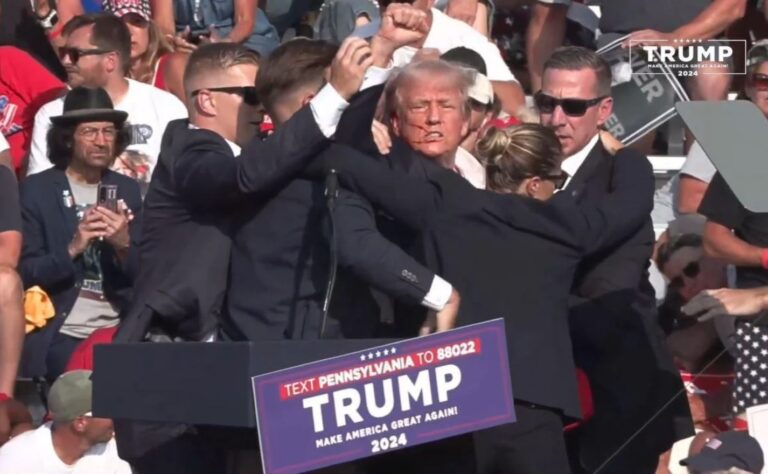
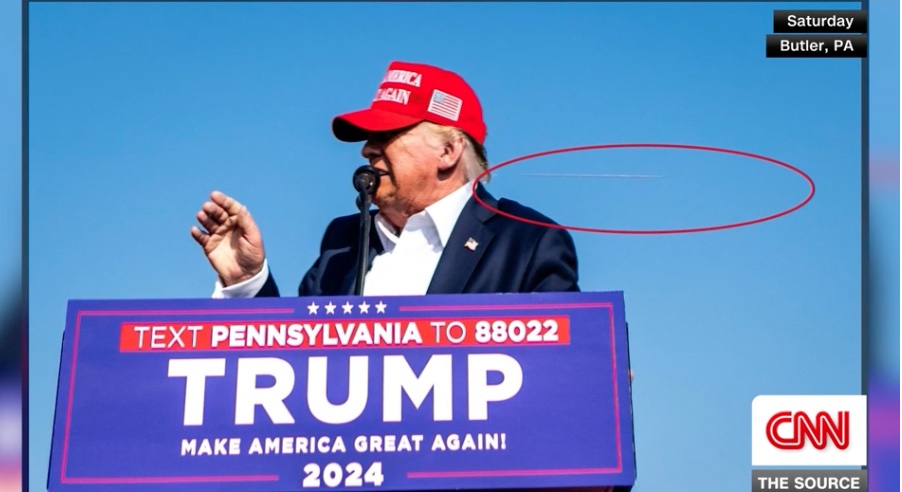
Although a widely circulated news photograph shows the astounding moment a bullet whizzed by Donald Trump’s head on July 13, while he spoke at a rally in Butler, Penn., the head of the Federal Bureau of Investigation cast a doubt on whether that bullet actually struck the edge of Trump’s ear. It could have been something else, said Christopher Wray to the House Judiciary Committee.
“With respect to former President Trump, there’s some question about whether or not it’s a bullet or shrapnel that hit his ear,” Wray said. “I don’t know right now whether that bullet, in addition to causing the grazing, could have landed somewhere else.”
He did not say what kind of shrapnel could have hit Trump’s ear, while some Trump opponents have speculated that it could have been glass from the teleprompter. That theory has been dismissed by the liberal fact-checking site Snopes.
A photo, taken by Pulitzer Prize winning photographer Doug Mills from his vantage point beneath the stage, shows a bullet passing by Trump’s ear.
A screenshot of the photo taken by Doug Mills, who was covering the July 13 Trump rally in Butler, Penn. for the New York Times.
Wray confirmed that the F.B.I. has recovered eight casings of bullets. On Tuesday, Pennsylvania State Police Commissioner Christopher Paris said that the assassin, now dead, had fired eight shots.
Wray said that the gunman may have had a firearm with a collapsible stock, which would make it easier for him to carry the weapon unnoticed. But Wray gave no reason for why he was not stating this definitively, since the weapon was found with the gunman, Thomas Crooks, on the roof.
On July 5, Crooks, 20, had visited the site of the upcoming July 13 rally in Butler, according to Wray, and that he had researched online information about the assassination of John F. Kennedy, including searching for the phrase “how far away was Oswald from Kennedy.” Lee Harvey Oswald is the man who is blamed for killing President Kennedy in 1963.
After researching those terms, Crooks then registered for the rally. On the morning of the rally, Crooks went to the site in Butler, and then left in the afternoon to buy 50 rounds of ammunition, Wray testified.
Wray, whose agency is in charge of the investigation, also said that Crooks had purchased a ladder, according to a blood-soaked receipt that was found on his dead body after snipers took him out. But Wray said no ladder was found at the scene and he doesn’t know how Crooks got up on the roof of the building that gave him a clear shot at Trump.
Crooks was documented back at the rally site just before 4 p.m. on July 13, when he flew a drone within 200 yards of the stage where Trump would be speaking at about 6 pm. The F.B.I. found the drone in Crooks’ car, along with a drone controller and two explosive devices that could have been remotely detonated. Crooks had a transmitter as well for the devices, Wray said.
Other testimony from the Pennsylvania State Police has shown that the Secret Service was alerted to Crooks’ presence on the ground with a rangefinder at 5:51 p.m.
At 5:52 p.m., the Secret Service shared the information about the suspicious person with the rangefinder.
At 6:03 p.m., Trump took the stage at Butler.
At 6:09 p.m., people in the area started shouting about the man on the roof with the gun. One officer tried to get up on the roof, but retreated when Crooks turned his gun on him.
One video, shot at 6:11:28 p.m. show people shouting and fleeing after they spot the gunman.
???#BREAKING: NEW footage shows the crowd spotting the shooter BEFORE secret service take action.
Wray was more forthcoming in his testimony than was Secret Service Director Kimberly Cheatle, who testified on Monday and then resigned her office after her testimony was widely criticized as disingenuous and evasive.