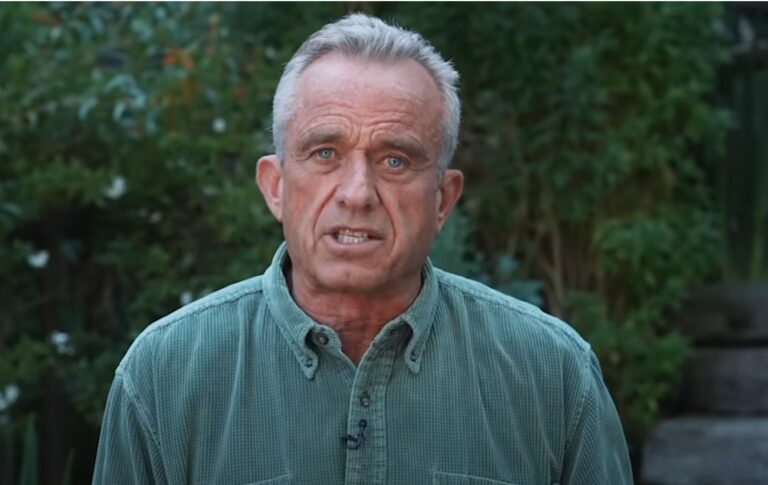
Robert F. Kennedy Jr. has enough signatures to appear on the Nov. 5 general election ballot in Alaska and is listed as a candidate.
RFK Jr. is an activist, author and environmental lawyer. He has questioned the wisdom of mass vaccination programs and that questioning has led to some calling him a conspiracy theorist. He is the founder of Children’s Health Defense, an anti-vaccine advocacy group that vaccine proponents say spreads misinformation.
Kennedy, age 70, is a son of the U.S. attorney general, U.S. senator, and presidential candidate Robert F. Kennedy, who was assassinated in 1968 in Los Angeles, while he campaigned for the presidency. He is a nephew of President John F. Kennedy, who was also assassinated, and he’s a member of a blue-blood Kennedy family, which is known to be staunchly Democrat.
During his campaign, President Joe Biden refused to assign Secret Service protection to RFK Jr. until after the assassination attempt on Donald Trump.
Because CNN caved to the Democrats and would not allow RFK Jr. on the debate stage in June, Elon Musk, the owner of X/Twitter, ran a simulcast on social media with RFK Jr. answering the questions during the debate.
With the Democratic Party not giving him any way to make his case to Democrats, he decided to run as an independent. For Alaska’s November ballot, he was required to have 3,614 signatures from registered voters in Alaska.
Kennedy’s name will appear with running mate Nicole Shanahan.
At a Kennedy campaign press briefing last week (watch recording here), Kennedy Jr. announced the campaign has collected more signatures than any presidential candidate in American history — more than 1 million signatures. He said he will be on the ballots of all 50 states.
“They forced us to bear this ballot access expense and organize a tremendous volunteer effort,” said Kennedy at the ballot access press briefing. “It’s turned out to be a huge advantage in the upcoming election, as we now have more than 100,000 volunteers ready to get the vote out and win this election.”
“More than 50% of Americans now identify as Independents,” said Shanahan. “There has never been a better opportunity for a third-party candidate to have success, especially with a unity ticket. We are here to unite the country.”
The Kennedy-Shanahan campaign has now collected the signatures needed for ballot access in 42 states, totaling 480 electoral votes, 89% of the 538 total electoral votes nationwide.
Also appearing on the Alaska ballot will the name of radical leftist Cornel West, running under the banner of the Aurora Party, with running mate Melina Abdullah.
Oliver Chase is the Libertarian candidate who has made the Alaska general election ballot with running mate Mike der Maat.
Alaskans will rank presidential candidates on the ballot for the first time in history due to the new ranked-choice voting general election that was put in place by 2020’s Ballot Measure 2. Kennedy is more likely to peel away votes from Democrat presumptive nominee Kamala Harris than he will the Republican nominee Donald Trump, but he has an appeal to some who are disenchanted with the choices of the two main parties.
Are the agencies of the U.S. government preparing the public for expected election mischief? The Federal Bureau of Investigation and the Cybersecurity and Infrastructure Security Agency issued a joint announcement on Wednesday, alerting Americans to the threat of cyberattacks targeting U.S. election infrastructure as the 2024 general election approaches.
While these cyberattacks could disrupt access to election-related information, the agencies emphasized that the security and integrity of the voting process would remain intact, but that reporting of results might be delayed or confused, and that results might have to come through traditional legacy media channels.
Distributed Denial of Service attacks involve overwhelming a server with traffic to make it inaccessible. It is a favored tactic among hacktivists and cybercriminals, the agencies said. The F.B.I. and C.I.S.A. warned that such attacks might hinder access to tools like voter look-up services and unofficial election night reporting. However, the agencies stressed that such attacks would not interfere with the actual casting or counting of ballots, simply the reporting of results.
“Threat actors may falsely claim that DDoS attacks are indicative of a compromise related to the election process as they seek to undermine confidence in U.S. elections,” the agencies stated in a press release, stating that no Distributed Denial of Service attack has ever prevented an eligible voter from casting a ballot or compromised the integrity of election results.
The warning comes amid heightened concerns over cybersecurity threats to the nation’s election processes. The agencies highlighted the importance of seeking out reliable information from official sources, especially if election-related websites become temporarily unavailable. They said election officials across the country have implemented multiple safeguards and backup processes to mitigate the impact of any potential disruptions.
In the event of a Distributed Denial of Service attack, election offices have alternative channels for disseminating information, including traditional news outlets and direct messaging to voters.
“CISA and the FBI coordinate closely with federal, state, and local election partners to safeguard U.S. voting processes and maintain the resilience of U.S. elections,” the announcement reads.
Hungary’s Anna Luca Hamori was beaten by male Algerian boxer Imane Khelif on Saturday in the welterweight division of women’s boxing at the Paris Olympics on Saturday. Hamori managed to last all three rounds but took powerful hits to the head and face, by Khelif, who has a more powerful upper body and longer arms than most women boxers.
Khelif, who is technically a man with X and Y chromosomes, had already won on Thursday against Italy’s Angela Carini, who conceded just 46 seconds into the bout after receiving heavy blows to her face.
XY Chromosome Boxer Imane Khelif Just Pummeled Another Woman to Score a Unanimous Victory at the Olympics
Anna Luca Hamori is incredibly fortunate she didn't get seriously injured.
The match was beyond disturbing to watch. It's a miracle that Hamori managed to survive all three… pic.twitter.com/I1d3MTloRF
Khelif had been disqualified by the International Boxing Association from the women’s World Championships for failing a gender eligibility test. He is has some female characteristics, internal testicles that produce testosterone, and is biologically a male. In prior years, this was considered to be akin to hermaphroditism.
Khelif told reporters after his win: “”I have been boxing for many years in the International Boxing Association, which has treated me unfairly. But I have Allah by my side. Allahu Akbar!”
Khelif will next fight Janjaem Suwannapheng of Thailand on Wednesday. Under the rules, the semifinalists are guaranteed a medal, as the third-place finishers in Olympic boxing receive bronze medals.
On Friday, Yu-Ting beat Sitora Turdibekova, a woman of Uzbekistan, with a unanimous decision, and will advance to his quarterfinal round in women’s boxing on Sunday.
The president of the International Olympics Committee said anyone criticizing the committee’s decision to let Khelif and Taiwan’s Lin Yu-Ting fight women is pat of a “politically motivated culture war” and was engaging in “hate speech.”
IOC President Thomas Bach: The criticisms of males boxing females are part of a “politically motivated culture war,” calls the the social media response “hate speech and aggression…and is totally unacceptable.”
For the first time in Alaska history, no men have applied to the Alaska Judicial Council for a position opening up in 2025 on the Alaska Supreme Court.
This all but guarantees that the Alaska Supreme Court will become a majority-woman body within a year. The filing deadline to replace Chief Justice Peter Maassen, who will reach the court’s mandatory retirement age of 70 next year, was last week.
Applicants for the position are first vetted by the Alaska Judicial Council, made up of the chief justice, three non-attorney members, and three attorneys from the Alaska Bar Association. After the council nominates two or more applicants, the governor has 45 days to make an appointment from the council’s short list. The council is scheduled to meet Nov. 4-8.
This will be the fourth justice to be appointed by two-term Gov. Mike Dunleavy, unless he joins a Trump Administration and the task falls to Lt. Gov. Nancy Dahlstrom, who would become governor. Whomever Dunleavy or Dahlstrom picks will make it a three-woman, two-man panel of justices.
The move to a woman-majority court may signal an even more left-leaning Alaska Supreme Court. Let’s take a look at the applicants:
Kate Demarest: Demarest has been an Alaska resident for 14 years and has practiced law for 16 years. She graduated from University of Minnesota Law School in 2008, and is a Senior Assistant Attorney General at the Alaska Department of Law in Anchorage. Demarest was a primary members of a pro bono legal team helped reach a settlement resulting of the dismissal of charges and release of four Fairbanks men who had been in prison since 1997 for a murder they said they did not commit. They became known as the “Fairbanks Four.” Demarest’s husband in 2015 flew his plane into the building where she worked in downtown Anchorage in 2015. He died but Kate was not in the building at the time and the incident was ruled a suicide.
Demarest applied for the open justice position in 2020 but was not chosen.
Josie Garton: Judge Garton has been an Alaska resident for 24 years and has practiced law for 42 years. She graduated from Lewis and Clark Law School ni 2000, and is currently a Superior Court Judge in Anchorage. She allowed a violent man to walk free when she judged him incompetent to stand trial; he then stabbed a woman in the back at the Loussac Library, severing her spine.
Aimee Anderson Oravec: Oravec has been an Alaska resident for 25-1/2 years and has practiced law the entire time. She graduated from Washington University in St. Louis School of Law in 1998, and is General Counsel for Doyon Utilities, LLC in Fairbanks. She applied for a vacant position on the Alaska Supreme Court in 2022, but Gov. Dunleavy chose Sitka Superior Court Judge Jude Pate.
Margaret O. Rogers: Rogers has been an Alaska resident for 23 years and has practiced law for 21 years. She graduated from Vermont Law School in 2001, and is currently in private practice in Fairbanks.
Kate Vogel: Vogel has been an Alaska resident for 12 years and has practiced law for 18 years. She graduated from Yale Law School in 2006, and is the First Assistant United States Attorney at the U.S. Attomey’s Office in Anchorage. Vogel would have been the lead attorney who received the whistleblower complaint about U.S. District Court Judge Josh Kindred in Nov 2022. (He was forced to resign and the whistleblower has filed a complaint saying she lost her job.)
Holly C. Wells: Wells has been an Alaska resident for 19 years and has practiced law for 20 years. She graduated from Northeastern University School of Law in 2004, and is in private practice in Anchorage. She is on the board of thread, which is a nonprofit advocacy group that tilts left.
Laura Wolff: Wolff has been an Alaska resident for 7-1/2 years and has practiced law for 11 years. She graduated from the University of Michigan Law School in 2013, and is an Assistant Attorney General at the Alaska Department of Law in Anchorage.
For a vacancy in the Bethel District Court, there are two applicants:
Colleen Baxter: Baxter has been an Alaska resident for over 54 years and has practiced law for over 26 years. She is a graduate of Temple University Beasley School of law and is a magistrate judge in Kotzebue.
Sam Cason: Cason has been an Alaska resident for over 64 years and practiced law for over 33 years. He graduated from University of Arkansas Leflar School of Law and is in private practice. Until recently, he was an elected member of the board of Chugach Electric Association.
Secretary of Defense Lloyd Austin signed a memo on Friday reserving for himself the authority to enter into pre-trial agreements with three terrorists behind the 9-11 attack on the World Trade Centers in New York and the Pentagon in Washington, D.C., as well as the third jet that was being used as a missile on Sept. 11, 2001.
Austin, in a sudden pivot, has withdrawn from the pre-trial agreements that were signed in those cases. The agreements spared the terrorists from having to face the death penalty.
Three of the terrorists behind the attack are being held at a U.S. military prison at Guantánamo Bay, on the coast of Cuba. They are Khalid Sheikh Mohammed, the accused principal mastermind of the al Qaeda attacks, along with two alleged co-conspirators: Walid Muhammad Salih Mubarak Bin Attash and Mustafa Ahmed Adam al Hawsawi.
The secretary said in his memo: “I have determined that, in light of the significance of the decision to enter into pre-trial agreements with the accused in the above-referenced case, responsibility for such a decision should rest with me as the superior convening authority under the Military Commissions Act of 2009. Effective immediately, I hereby withdraw your authority in the above-referenced case to enter into a pre-trial agreement and reserve such authority to myself.
“Effective immediately, in the exercise of my authority, I hereby withdraw from the three pre-trial agreements that you signed on July 31, 2024 in the above-referenced case.”
Chevron Corporation announced Friday it will take its headquarters out of San Ramon, California, where it has operated for the past 140 years, and move to Houston, Texas.
The announcement comes just days after Elon Musk said he is moving his operations to Texas from California. In addition from his personal residence, Musk is moving the headquarters of X/Twitter and SpaceX to the Austin area. He had already moved Tesla to Texas, and after Gov. Gavin Newsom signed a law that allows schools to keep gender-identity switching of children a secret from the children’s parents, Musk chose to move all his operations from California.
“This is the final straw,” said Musk, basing his decision on “this law and the many others that preceded it, attacking both families and companies.”
Chevron was sued by state regulators last year, claiming the company deceived the public about the connection between climate change and fossil fuels. The company decided it was going to face increased hostility from California liberal policies and overbearing regulations.
When our children were young and the Olympics were happening, my wife and I temporarily disbanded our draconian limits on television viewing. The new rule stated that the tube could stay on all day as long as it was tuned to Olympic coverage.
My wife integrated geography and art into the homeschool curriculum, working with the children to make paper flags of different countries and string them together to be hung in the family room. We set up mattresses in the family room so the kids could be comfortable and even fall asleep as needed during late night broadcasts. For the opening ceremonies, we put out a spread of as many different foods from around the world as we could prepare (or buy locally), all in an attempt to promote respect for other countries and cultures. A flag bearing the Olympic circles and red, white, and blue USA lettering hung on the front porch.
We screamed and cheered, especially during dramatic swim competitions between the Americans and Australians. We sometimes admitted to boredom during long-distance footraces or endless luge runs. We had to consult a dictionary to find out what dressage meant, then pondered whether the horses in equestrian events also received medals. But for a couple of weeks every four years our family had a blast immersing ourselves in internationals athletic competition.
The kids are now grown, but my wife and I still enjoy watching the Olympics. So, last week, while we were out of town on a business trip, we opted to sequester ourselves in the hotel room, order some food, and watch the opening ceremonies for the Paris 2024 Olympic games.
Blecch.
This commentary isn’t about the desecration of the Last Supper scene that has so many people outraged, to include Christian Parisians (it’s been encouraging to see they still exist) turning out to sing hymns in public squares. It isn’t about that because we were so confused and bored by the attempted spectacle that we missed the whole Last Supper debacle, reading or checking in with the kids and begging them for more photos.
We didn’t even hear about it until the next day when fellow believers expressed righteous indignation and apologists cited quickly conducted Google searches to defend the world renowned Feast of Dionysus and, of course, obese blue people.
The opening ceremonies were an utter mess, full of faceless Frenchmen running through sewers and across rooftops, dancers who couldn’t dance, singers pausing the whole show to sing, and androgynous threesomes sneaking off to apartments to do whatever androgynous threesomes do; none of which had anything to do with sports and everything to do with overdone attempts at artistry and pushing an in-your-face agenda to mandate that we all accept the latest in woke ideology.
The Paris Organizing Committee, it seems, chose to proudly display that the rumors of the decline of western civilization are, in fact, true.
Perhaps I’m old and stuck in my ways, but I would like to concentrate on the athletic part of the Olympic Games. I can accept a little cultural exposition from the host country, and the opportunity to bring together people from every corner of the world in peaceful gatherings should always be welcomed, but shouldn’t the focus be on sports?
Bringing the best athletes in the world together for vigorous but peaceful competition is intriguing, and it’s fun to watch their incredibly dedicated training methods and learn of their personal stories and hardships. The networks love to feature these emotional stories, and I confess to enjoying many of them.
The dedication of these athletes is quite remarkable. My own athletic prowess never came close to approaching even a remote shot at qualifying to compete at the Olympic level, so it adds to my appreciation of what these athletes can do.
My daughter’s experience so many years ago really brought this into focus. She was a rather good little gymnast and, like most parents, my wife and I dreamed of seeing her compete at the elite level. Little did we realize what that entails, until one day when her coach asked if she could speak with us after practice about our daughter’s attitude.
We were shocked because our daughter, a natural introvert, always did what the coach told her to do, and she never spoke back to her. Heck, she rarely even spoke at all during practice. She listened, nodded, and attempted the skills being taught. So, my wife and I were extremely perplexed by coach’s request to talk.
When we sat down after practice, coach asked us if our daughter was ready to get serious. “Is she mouthing off or not working hard?” I asked, because those are the two issues most of us who coached young athletes have to deal with when it comes to malingering and lollygagging athletes.
Coach laughed and then realized why we looked so concerned. “Oh no, no, nothing like that. We need to determine if she’s serious about becoming an elite level gymnast. She is a wonderful student, but I am not able to coach her at a higher level. If she wants to compete at the highest levels she will need to find a new coach and gym—…”
My wife and I looked at each other with confused looks on our faces before coach continued.
“… —in another state.”
More confused looks.
“Elite gymnasts train twice a day, six days a week, and your daughter is almost eleven years old, so it’s getting late. It may already be too late because most of those girls start when they’re five or six.”
The good news is that our daughter wasn’t in trouble, but now we had to ask her how serious she wanted to get with gymnastics, and as much as we dreamed of seeing her standing on podiums with medals around her neck, we weren’t ready to pack up the whole family and move to the Lower 48. She declined, content to flip, spin, and twirl in her local gym … and her parents were quietly relieved.
The moral of that jog down memory lane is that these are incredibly talented –- and more often than not, even more incredibly dedicated –- athletes. They are, quite literally, the best in the world at what they do, and it’s a beautiful thing to watch them do it.
If that’s not your thing, so be it, but a couple billion of us appreciate their talent and dedication, and we enjoy rooting for our country’s representatives while witnessing all the emotions and drama that come with intense human interaction.
Watching the debauchery unfold last Friday night, however, brought to mind all the negative aspects that made many of us rabid sports fans abandon the major American sports leagues; the catering to a vocal minority that turned the NBA, NFL, and MLB into platforms for the latest in wokeness.
Olympic officials had an opportunity to show the world a celebration of athleticism and the coming together of nations; instead, they chose to offend and propagandize. NBC could have edited the footage to take out the particularly offensive parts, but decided to further an agenda.
One then wonders how the Los Angeles Organizing Committee will respond in four years; whether they will try to outwoke Paris 2024 or focus on athletic competition and international harmony. I, for one, am not holding my breath. It’s getting uncomfortable for many of us to watch sports because we have to acknowledge that those running the show do not share our values.
We will continue to concentrate, instead, on the exceptional human performances.
Tim Barto is a regular contributor to Must Read Alaska, and is vice president of Alaska Family Council. As a teenager, he used to dream of being the world’s greatest athlete, just like Bruce Jenner, but that dream took a weird turn.
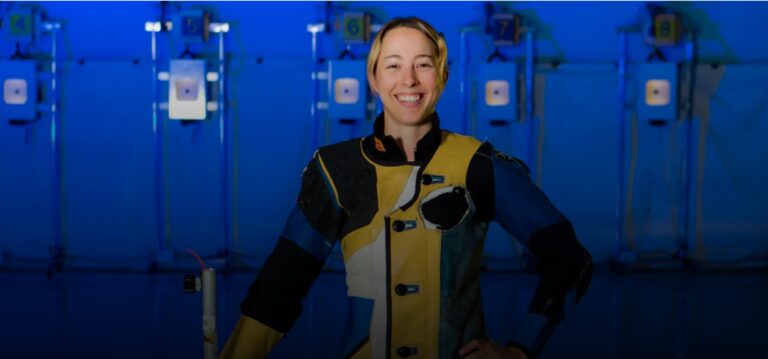
Former UAF rifle team member Sagen Maddalena has won a silver medal at the Paris Olympics. Maddalena defeated bronze medalist Qiongyue Zhang of China in the women’s 50m 3-position final.
Earlier this week, she had placed fourth in the air rifle event.
Maddalena, born in Woodland, Calif., started shooting competitively while growing up in the Golden State. She competed on the UAF Rifle Team from 2013-2018 and enlisted in the U.S. Army in 2019.
She’s a four-time National Rifle Association First Team All-American in Air Rifle — 2014-2015, 2015-2016, 2016-2017, and 2017-2018. She’s also a three-time NRA First Team All-American in Smallbore — 2015-16, 2016-17 and 2017-18, a three-time CRCA First Team Aggregate All-American — 2016, 2017 & 2018, and NRA Second Team All-American in Smallbore in 2015.
Maddalena is an Army sergeant who is a shooter/instructor with the Army Marksmanship Unit international team. She is a two-time Olympian, having placed fifth in the women’s 50-meter rifle 3 positions (smallbore) competition at in Tokyo in 2020. Monday’s fourth-place finish was her first Olympic air rifle final.
In the 50m rifle 3-positions event, she won a bronze medal in the 2023 world championships.
A male officer came to the rescue of a female officer in Anchorage on July 29, after an agitated man, lying in the roadway, started attacking and choking the female officer.
The incident took place at 4:45 p.m. near 5th Avenue and L Street. A male police officer on duty saw the agitated man lying in the road. At the same time, Anchorage Police Department Dispatch was getting a call about the man.
The male officer attempted to convince the man, 22-year-old James D. Lestenkof, that he needed to step out of the roadway, but to no avail. The officer reached for the man’s arm to detain him. About that time, the female officer had arrived to help. Lestenkof grabbed her and took her to the ground.
During the fight, which involved both officers, Lestenkof was recorded choking, repeatedly punching, and biting the female officer. The male officer was able to pry Lestenkof’s arm from the female officer’s neck, and then deployed his taser on the violent man, so the female officer could free herself and place Lestenkof in handcuffs.
The female officer was treated at a local hospital for her injuries.
The image above was sent to Must Read Alaska as a screenshot from a video of the fight, as posted on social media, user unknown.
Lestenkof was remanded at the Anchorage Correctional Complex on the charges of Assault in the Second Degree, Assault in the Third Degree, Assault in the Fourth Degree, Criminal Mischief in the Fourth Degree, and Resisting.
“Detectives are aware they have not spoken to all citizens who witnessed the assault. APD is asking anyone who either saw the crime being committed against the officer, or who have any type of electronic footage of it, to please contact Anchorage Police at 3-1-1 (option #1) or 907-786-8900 (press “0”) so their statement may be taken and/or the evidence may be collected,” the Anchorage Police Department said. If you are the owner of the video referenced above, consider helping police with their investigation by providing the video.