Friday, January 2, 2026
Home Blog Page 1110

Frank Dahl: Mike Robbins is the only viable choice for mayor of Anchorage

25

By FRANK DAHL

Word on the street is the Anchorage mayor’s race is competitive.

Mike Robbins and Dave Bronson are battling for the pole position from a large chunk of GOP-centric voters. Mayor Berkowitz’s municipal manager, Bill Falsey, is gaining ground on 37-year-old Peace Corp candidate Forrest Dunbar. Candidates Bill Evans, another attorney, and George Martinez, are pushing their narratives hard, too – but, if you’ve followed what their goals are, one would wonder if they match those of yours and your family.

I’m actually unsure who will be the top two vote-getters and move to the next round in the run-off election, but I suspect it will be Robbins – as it should be.

I’ve written previous opinions and it’s no secret I’m for Mike Robbins. Acumen and experience with business, negotiation, and playing hardball are three reasons I support him. And I know first-hand having negotiated and worked with him on hospitality industry events in the past. The other fellows simply don’t have Robbins’s skill sets; particularly the ones we need to speed up our economy and keep it growing for future generations.

An observation I’ve made about this particular campaign cycle, and others have informed me the same, is Dave Bronson’s absence at numerous forums. GCI is one of the largest private-sector employers in the city and when you have 250+ voters interested in your vision for the Municipality, and you’re absent again (I’m told he’s missed many candidate forums), one ponders what’s up his sleeve. 

Anchorage voters will get their ballots this week. You have until April 6th to mail them in and change the city’s direction for decades to come.  If you want to see our city back to what it used to be, then make sure to vote.

I’m guessing it’s down to Dunbar, Robbins, and Bronson.

If Dave Bronson gets to a run-off against Dunbar, and Dave’s kitchen cabinet of hard-right puppets him along with out-of-state consultants, my hunch is he’ll get defeated. The supporters of Falsey and Evans and Martinez likely won’t play craps and risk our future on a Dave Bronson in a run-off. I tend to agree.

It’s not personal. It’s reality. I can thank Dave for his service all day long. But Dave Bronson is too polarizing. His most fierce supporters castigate anyone who disagrees. Just ask Assembly freshman and blowhard Jamie Allard. I don’t know her, but I see her, and I hear her loud-and-clear. Toxicity won’t get our city out of the mess we’re in. 

And before you point at me and question my philosophy, take note I’m even more conservative than Dave Bronson.  I’m pro-life, pro-gun, and pro-military, and pro-business, having owned many for 50+ years… No one can pull rank on me carrying the torch high and proud for the likes of Ronald Reagan, Charlton Heston, and Donald Trump.

This mayor’s race will be close. It doesn’t have to be.

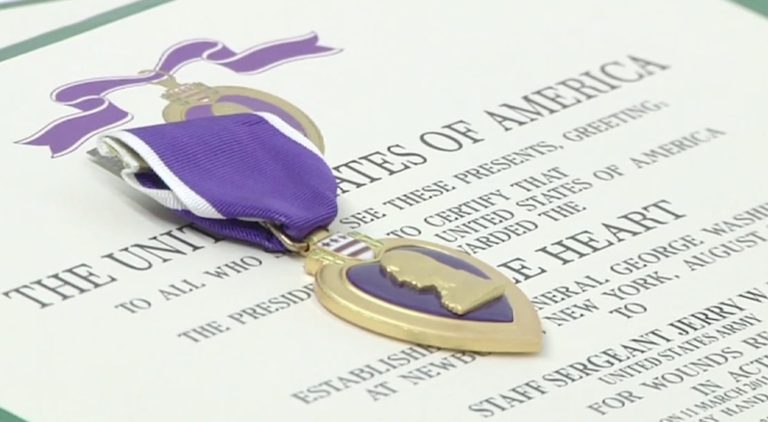
Take note of a retired F-22 Raptor Squadron Commander like Senator Mike Shower, and injured war veteran and hero Senator Josh Revak, and former Navy SEAL and patriot Representative Laddie Shaw, and intelligent, conservative Assembly members like Eagle River-Chugiak’s Crystal Kennedy who have endorsed and support Mike Robbins.

Push innuendo and favorites and gossip and slander aside, as you suffer through campaign ads and out-of-state talk show hosts’ nonsense and online rhetoric.

If you want to save our city, protect our businesses, and defeat Forrest Dunbar and the bullying, ill-equipped Left, vote for the candidate that will defeat them and bring us back to a community we can all be proud of!

Mike Robbins is the only viable choice for the Mayor of Anchorage.

God Bless America and Alaska.

Frank Dahl is an entrepreneur who has owned bars, restaurants, and lodges throughout Alaska and in the Lower 48 for over five decades including Blues Central at the Chef’s Inn. As the founder of Anchorage CHARR and a former Board Member of Alaska CHARR, he has been active in hospitality and tourism industry policy development for years. He is a member of Rotary and a recipient of an Alaska Legislative citation for public service.

###

Power the Future: China-US talks, and nary a word about ‘existential threat’ of climate change

6

POWER THE FUTURE

In the first meeting between top US and Chinese officials under the Biden administration, things started off a bit testy.  The mini-summit, held in Anchorage, began Thursday and wrapped up Friday.  They involved Secretary of State Antony Blinken and National Security Adviser Jake Sullivan on the US side, sitting across the table from China’s most senior foreign policy official, Yang Jiechi, and foreign minister Wang Yi.

BBC noted the “sharp rebukes” and “ill-tempered talks” between the two nations, going so far as to state: 

In a blunt opening statement before the talks in private, Mr. Blinken said the US would “discuss our deep concerns with actions by China, including in Xinjiang, Hong Kong, Taiwan, cyber attacks on the United States, economic coercion of our allies.”

A glaring subject was omitted from the list, especially as it relates to Biden’s stated policy priorities: climate change.

Power The Future’s Alaska State Director Rick Whitbeck heard from sources that climate change was to be a “front and center” issue, but then was taken off the table midday Thursday.  

Why?  If you listen to the eco-radicals who propped up the Biden campaign and will end up placing hundreds of “true believers” into key administration posts, getting China to act on climate has to be a US priority.

Here’s a hint: Because “climate change” is only a posturing priority when it comes to sucking in Americans who would rather see US national and economic security weakened, and make the American public more dependent on a larger, more wide-reaching federal government. 

“Climate change” is given its vast amount of media coverage because Americans allow it; they feed off the “existential threat” narrative, and encourage the story to be perpetuated by the mainstream media over and over again.

Because if the climate was such a critical issue, it would have been the topic of conversation between the countries, not one pushed aside at an initial meeting.

Read more at PowertheFuture.com

Governor Dunleavy has phone call with Secretary of State Blinken

9

Alaska Gov. Mike Dunleavy and U.S. Secretary of State Antony Blinken did not meet in person during Blinken’s visit to Anchorage this week, but did speak by phone about critical national and international issues impacting Alaska.

The conversation covered a range of topics from environmentally safe oil and gas development in Alaska’s Arctic region, to negotiating an agreement with Canada allowing Americans to resume travel on the highway corridor between Alaska, Canada, and the Lower 48 states, the governor’s press office said.

Dunleavy also stressed the importance of Alaska’s rare earth mineral deposits to the nation’s economy and overall security.  

“The goal of my discussion with Secretary Blinken was to encourage him and other members of the Biden administration to engage with Alaska officials on policy decisions impacting our state, before those decisions are made,” Dunleavy said. “My hope is that message leads to a more open dialogue, and we can stop the unilateral decision-making process that’s threatening Alaska’s economy and the ability to raise a family here.”

The phone conversation came after two days of difficult diplomatic talks between White House diplomats and Chinese diplomats, during which the Chinese made it clear they have no respect for the Biden Administration or the United States of America. The Biden Administration has been described by some insiders as having taken a chilly disposition toward Alaska since taking office Jan. 20, 2021.

Read the transcript of the opening remarks from the talks here.

CDC now says students can sit three feet apart, if masked

8

The Centers for Disease Control and Prevention relaxed its Covid-19 guidelines for schools Friday afternoon, saying students can now sit three feet apart in classrooms, rather than six feet apart.

The CDC says this reflects “the latest science on physical distance between students in classrooms. CDC now recommends that, with universal masking, students should maintain a distance of at least 3 feet in classroom settings.”

The new CDC guidelines say:

  • In elementary schools, CDC recommends all students remain at least 3 feet apart in classrooms where mask use is universal — regardless of whether community transmission is low, moderate, substantial, or high.
  • In middle and high schools, CDC also recommends students should be at least 3 feet apart in classrooms where mask use is universal and in communities where transmission is low, moderate, or substantial.
  • Middle school students and high school students should be at least 6 feet apart in communities where transmission is high, if cohorting is not possible. Cohorting is when groups of students are kept together with the same peers and staff throughout the school day to reduce the risk for spread throughout the school.  This recommendation is because Covid-19 transmission dynamics are different in older students – that is, they are more likely to be exposed to SARS-CoV-2 and spread it than younger children.

Across the country, schools have torn apart their campuses to meet the previous guidelines of desks six feet apart, which has made it difficult to accommodate students. Districts have staggered school times and cut down the number of hours that students are in school. That, after many students had been out of school altogether for nearly a year.

“We don’t really have the evidence that six feet is required in order to maintain low spread,” an official from the CDC said, who added that younger children are less likely to get seriously ill from Covid-19 and don’t seem to spread the illness as much as adults do.

The new guidance also removes recommendations for plastic shields or other barriers between desks, because there is no evidence that this is effective, the CDC said.

The CDC recommends that in common areas of the school, students should keep a six-foot distance from each other. Also, students should be spaced six feet apart in situations where there are a lot of people talking, cheering or singing, such as chorus practice, assemblies and other events.

As for teachers and other adults, the recommendation is that they stay six feet apart from each other and from students.

CDC Director Dr. Rochelle Walensky said these new guidelines are an “evidence-based roadmap to help schools reopen safely, and remain open, for in-person instruction.”

Rep. Kurka explains why he wore his muzzle mask on the House floor

25

Alaska House Rep. Chris Kurka explained in a statement Friday why he turned the House into a circus with his political message mask that reads, “Government Mandated Muzzle.”

He said the drama was included by the House Speaker, Rules chair, and Sergeant of Arms.

“This is a teachable moment,” said Kurka. “Leadership has perfectly illustrated what I said on Monday, that the mask mandate is manifestly not about public health, but about power. Despite the fact that my mask was in full compliance with COVID protocols, now the Speaker wishes to strip me of the ability to dissent.”

Rep. Kurka said he has worn the “Government Mandated Muzzle” mask since his floor speech on Monday, when he took off his mask and was told to leave the House Chambers. He said he has received no objection or complaint until the Friday floor session.

In his statement, Kurka said it’s his believe that “owing to the paucity of science to back up the mask mandate, that masking is itself a political statement. Blocking any alternative messages is an attack on free speech. 

“The Speaker’s power play in shutting down House Floor Session today was especially egregious because the public has already been banned from the building, and this protest is an important public sentiment that needs to be heard as representative of a large group of District 7 constituents, and an even larger group of Alaska voters,” Kurka said.

“Alaskans need to ask themselves why the Speaker of the House would hold the business of the whole State hostage because one Representative expressed dissent. Nothing is more fundamental than our ability to dissent. Shutting down free speech is unacceptable. This is a dangerous game. If the Jefferson Muzzle Awards were still being handed out, I would personally nominate the Speaker,” Kurka said.

Rep. Kurka, Speaker Stutes turn House into clown car over political face mask

31

If Rep. Chris Kurka (Wasilla District 7) wanted to make everyone in the Alaska House of Representatives uncomfortable, he did so on Friday.

Kurka, who opposes having to wear a mask in the Capitol, appeared on the House floor with one that had words on the front: “Government Mandated Muzzle.”

Speaker Louise Stutes decided that was inappropriate attire for the House, according to Uniform Rules, and she told him to either change masks or leave. Kurka refused, and after 45 minutes of House members wasting their time, Stutes adjourned, and said the House will meet on Saturday instead. And Sunday, if necessary, according to sources.

House members in the Republican Minority were deeply embarrassed by the Kurka antics, and said a certain decorum is required to be a legislator, and that Kurka was behaving like a child, demanding that there be a vote on whether or not he could remain in the House Chambers with his special message mask.

“He may not like the rules, and some of us don’t like the rules, but this is a rules-based government. We do things through rules,” said an aide. “He also can’t show up on the House floor dressed like a clown, or with a mask that says ‘F*ck this mask’ if the presiding officer says so.”

But now that horns have been locked between Kurka and the House Speaker, the standoff could proceed through the weekend and beyond, costing the State of Alaska hundreds of thousands of dollars a day.

Some legislators wear cloth face masks with a legislative seal printed on it, while others wear plain black, printed, or surgical masks.

Rep. Sara Rasmussen has begun wearing a clear shield that has cloth bunting around the bottom of it to provide a filter for Covid particles.

The fine set by Legislative Council for violation of the Legislature’s mask mandate is $250 a day. Second fine is $500, but to date no one has been fined.

Last year, Rep. David Eastman was the only House member to wear a face mask, and he chose an N95 mask, and goggles. Some in the building derided him for it. This year, Eastman is wearing a cloth mask that frequently slips out of place, and no goggles.

There is no exact rule on what the mask must look like, and on Ashley Johnson-Barr Day last week, some legislators wore purple masks to honor the memory of the Kotzebue girl who was brutally killed. But the Uniform Rules prohibit political messages on attire on the House floor.

Felix Rivera uses ballot as a campaign brochure to avoid his recall

6

While the Recall Rivera campaign was limited by the Anchorage Municipality to focus its ballot sponsor statement on the narrow substance of its legal recall complaint against Assemblyman Felix Rivera, the assemblyman himself was able to go “off topic” on the ballot statement. Way off topic.

Rivera used the ballot to boast of the many great things he has done while on the Assembly.

Rivera went so off topic, in fact, that he turned the ballot into the equivalent of a campaign brochure. The legality of his statement is now being questioned by critics.

On ballots that went out to voters in his district, Rivera used the ballot to talk about how he was rebuilding the police force, revitalizing the Anchorage economy, and to clean up encampments and house the homeless.

“I have been working hard for you every day and getting results,” Rivera said.

“The global pandemic has affected all our lives. I worked hard to effectively utilize millions of dollars in economic relief for neighbors affected by the pandemic and rental relief to keep families in their homes,” he was allowed to write to persuade voters to vote “no” on his recall.

The actual reason for the recall has nothing to do with police, homeless, or the economy. It has nothing to do with the CARES Act money, or how it was spent, a subject that is now part of a targeted federal audit.

The reason for the recall is that Rivera, as chair of the Assembly, invited chosen people to come into the Assembly Chambers in violation of the Emergency Order that prohibited gatherings of more than 15 people last summer. As protesters stood outside objecting to the closed meetings, Rivera invited selected people to gather inside to testify. After he was informed the meeting was in violation of the mayor’s emergency order, he shrugged and continued to have his select people in attendance.

Recall Rivera advocates say the ballot language allowed for Rivera to defend himself inappropriate, because he discusses aspects wholly unrelated to the recall.

But, in fact, using the ballot this way is allowed by Alaska Statute, which only says,

Sec. 29.26.330. Form of recall ballot.
A recall ballot must contain
     (1) the grounds for recall as stated in 200 words or less on the recall petition;

     (2) a statement by the official named on the recall petition of 200 words or less, if the statement is filed with the clerk for publication and public inspection at least 20 days before the election;

     (3) the following question: “Shall (name of person) be recalled from the office of (office)? Yes [ ] No [ ]”.

The Recall Rivera group gathered signatures and fought the municipality in court to get the question before the District 4 Anchorage voters. The court agreed that the voters must have a right to recall the second-term Assemblyman, who is a former aide to former Mayor Ethan Berkowitz.

Chinese diplomats diss Anchorage and U.S. as a world power during tense day of meetings at Captain Cook Hotel

45

The first day of diplomatic meetings between China and the Biden Administration were contentious, but China got its message across: It no longer considers America the pre-eminent world power that has the moral authority to criticize China for anything.

Secretary of State Antony Blinken and National Security Adviser Jake Sullivan met with the diplomats at the Captain Cook Hotel in the first high-level US-China talks for the Biden Administration.

Blinken and his Chinese counterpart were to give two-minute opening remarks. Blinken gave his two minutes, but the Chinese remarks went on for nearly 20 minutes, while Blinken sat and listened to complaints and insults about U.S. policies, and the faults of America’s seemingly fragile democratic system.

“We will … discuss our deep concerns with actions by China, including in Xinjiang, Hong Kong, Taiwan, cyber-attacks on the United States, economic coercion of our allies,” Blinken told the Chinese in his opening remarks. “Each of these actions threaten the rules-based order that maintains global stability.”

China has said it wants a fresh start with the US, after relations had become icy under President Donald Trump. That fresh start was embarrassing to the Biden Administration.

China’s top diplomat Yang Jiechi responded by shaking his head and giving an extended retort in Chinese, which was translated by one of his aides, in which he lashed out at the United States and blamed it for having a struggling democracy, bad treatment of minorities, and lousy foreign and trade policies.

“Well, you can’t blame this problem on somebody else,” Yang said.

“The United States uses its military force and financial hegemony to carry out long arm jurisdiction and suppress other countries,” Yang said. “It abuses so-called notions of national security to obstruct normal trade exchanges, and incite some countries to attack China.”

“I have to tell you what I’m hearing is very different from what you described,” Blinken said. “I’m hearing deep satisfaction that the United States is back, that we’re engaged with our allies and partners. I’m also hearing deep concerns about some of the actions your government is taking.”

Some of the tense exchange was recorded and broadcast by mainstream media:

The Chinese were not particularly happy to be in Alaska, reportedly complaining that it was cold. Anchorage temperatures dipped to -11 Fahrenheit overnight and are expected to reach 18 degrees on Friday, when the talks were said to continue.

“So far, the US’ aggressiveness and disregard for diplomatic protocol, and rapid and sharp counterattacks by the Chinese delegation, have made the world take notice,” the Times noted. It complained that Washington choosing Anchorage as a diplomatic host city was uncomfortable, as it is “one of the coldest places on US soil with a freezing temperature of minus 19 degrees Celsius [-2.2ºF],” the Global Times reported.

Chinese news outlets said the Chinese diplomats considered Alaska neither hospitable nor was the location good diplomatic etiquette.  

“We thought too well of the US; we thought the US would follow the necessary diplomatic protocol… In front of the Chinese side, the US side is not qualified to speak to China from a position of strength,” Yang said to Chinese news outlets.

“The old habit of the US hegemonic behavior of willfully interfering in China’s internal affairs must be changed,” Wang said.

The Global Times lauded Wang and Yang for their “vigorous counterblows to condescending U.S. representatives.” It assessed that the opening remarks of the talks, which will reportedly remain ongoing, were “beyond the expectations of observers” in their severity and bitter tone, blaming President Joe Biden’s diplomats for the acrimony.

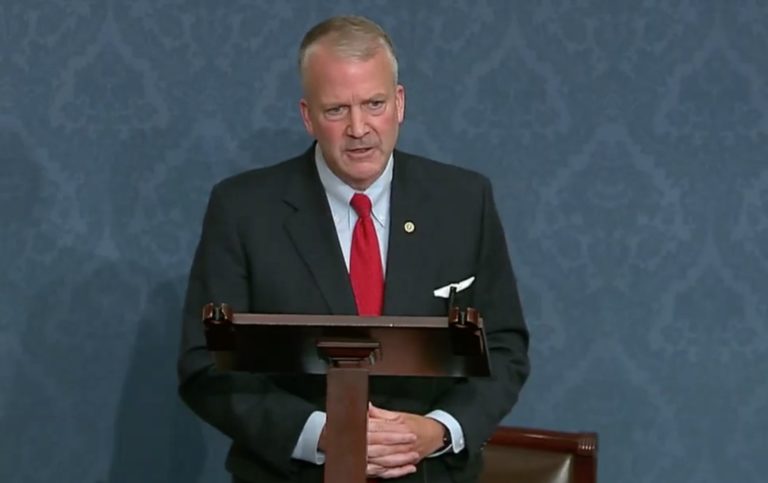
Senator Sullivan is on track for Alaska

28

By BOB BELL

I have read several letters to the editor in the Anchorage Democrat Daily News demonizing Sen. Dan Sullivan for being a Republican Party lapdog and other nefarious activities.

They chastise him for voting with the GOP over 90% of the time. Not sure what the other 10% was, but I intend to talk to him about that.

I would like to point out that Sen. Sullivan ran for office on the Republican ticket because he agreed with the Republican platform. It would seem to follow, at least for anyone with common sense, that he would vote to support that platform.

The people of Alaska elected him based on his beliefs in those political ideals and his pledge to vote accordingly. so far he is right on track and all indications are he will continue on that path. There are still some people in politics who represent the people who elected them. They are mostly called Republicans.

So, let us take a look at this party lapdog issue. First, we had the Brett Kavanaugh Supreme Court vote. All but one of the senate democrats voted no. It would seem that more of them would have had some misgivings about a 30-year-old accusation with no witnesses, no location and no timeline. I am sure many of them did but voted the party line. That would seem a bit lapdogish.

Then we have impeachment one and two. There is the video of then vice-president Biden bragging when he threatened to hold up one billion dollars in aid to Ukraine unless they fire a prosecutor who was investigating his son. So that was not an impeachable offense, but President Trump asking the new Ukraine president to investigate the situation was? All the democrats voted yes.

Now I am not a diplomat, and there are a large number of people in Alaska who will attest to that, but still seems to be a double standard. Again, could this be lapdogism?

Next, we have the second impeachment coming from the house with no investigation, no witnesses and no activation of brain cells. This farce went to the senate where the house prosecutors offered no facts as to President Trumps involvement, showed video of a bunch of brain-dead fools attacking the capitol and then spewed crocodile tears all over the sitting senators. Many of whom were asleep or playing video games on their cell phones. Also, there was the issue of it even being constitutional.

Chief Justice Roberts took a pass on overseeing this sham. Probably because judges tend to not want to be involved in political stunts. Somehow not one democrat was concerned about this, so they all voted yes. Not sure if this is a case of lapdog or just stupid, probably some of both.

I could go on with examples of Democrat party line votes such as Obamacare, but I think the point is made. Those accusing Senr Sullivan of being a lapdog need to look in the mirror and then try to deal with what they see. Living in a glass house has some downsides. The nattering nabobs of negativity can revel in the fact that they now have an incompetent machine democrat in the White House and a spendthrift congress. What more could they want?

I think it is time to dial back the hypocrisy. Sen. Sullivan is voting the way Alaskans want him to. That is why we sent him to the swamp. Also, because none of the rest of us wanted to put up with all the Washington D.C. BS. So, we talked him into doing it. I am sure he will keep up the good work.

Bob Bell is a civil engineer who ran for House in 2012 and is the author of Oh No! We’re Gonna Die Too: More Humorous Tales of Close Calls in Alaska’s Wilderness