In a bill reminiscent of events that occurred before World War II, Congressman Don Young is offering legislation that would have the United States seize all Russian boats in U.S. waters and have them sold off to help deliver more aid to the people of Ukraine and Eastern Europe.
In the days leading up to the U.S. entering World War II, the U.S. Coast Guard seized a small Norwegian-owned sealing vessel, the Busko, in East Greenland in September, 1941, which created an uproar in the U.S. media, as the Coast Guard towed the Busko into Boston Harbor, where it was heralded as the capture of an enemy vessel.
Young announced that he is drafting legislation to authorize the seizure of Russian yachts and commercial vessels currently within the waters of the United States.
He is calling his legislation, “Bringing Oligarch Accountability Through Seizure (BOATS) Act.” The bill would also authorize the seizure of Russian-owned vessels flying flags of convenience from other nations.
“This legislative effort comes as Russian President Vladimir Putin’s violent all-out war on Ukraine and its sovereignty continues,” Young said in his press release.
“America and the rest of the freedom-loving world continue to stand with the Ukrainian people in this time of needless violence and infringement on sovereignty. This is a very difficult moment for Europe, and our solidarity with Ukraine must be backed with urgent action against rich Russian oligarchs who continue living lavish lifestyles on mega-yachts, all while their thuggish friend Vladimir Putin reigns terror upon innocent, peaceful Ukrainians. Putin and his elite enablers must be driven from all areas of global commerce and public life. I continue supporting severe sanctions to devastate Putin’s ability to use Russia’s economy as a piggybank to commit global atrocities, but we must do more,” Young said.
“Over the last few days, I have begun drafting legislation to authorize the seizure of any Russian yachts and commercial vessels currently within U.S. waters. When the House of Representatives reconvenes, I intend to formally introduce the Bringing Oligarch Accountability Through Seizure (BOATS) Act. Given the vast humanitarian crisis created by Putin’s greed and aggression, my BOATS Act will permit the U.S. federal government to auction these vessels and all contents inside, with proceeds going toward humanitarian aid efforts offered by NATO member states. We must send a message of zero tolerance for Russian aggression, which requires us to make life as difficult as possible for Putin’s sycophants. Taking action against Putin and standing with Ukraine has united our country. There is broad bipartisan consensus that Putin’s violence must be met with action, therefore I call on my friends in both parties to join me in this vital effort.”
The U.S. House of Representatives takes up business again on Tuesday.
“The fight is here. I need ammunition, not a ride,” said Ukrainian President Volodymyr Zelensky, turning down an offer from the United States to be evacuated from the Ukrainian capital of Kyiv.
In an instant, Zelensky became the superstar symbol of courage around the world — the man who would face the tyrant rather than cut and run, like President Joe Biden was suggesting that he do.
Was it true? Was it war legend? Will it stand the test of time?
This writer was asked this week why coverage of Urkaine-Russia fighting was not front-and-center at Must Read Alaska. The question deserves an answer.
The invasion of Ukraine, a sovereign and struggling nation since the breakup of the Soviet Union, has been coming for decades. Thousands have died in skirmishes along the border over the past many years, and Russian President Vladimir Putin could see that now is the time to strike. He’s doing it while America has a weak and demented leader who spends his weekends recuperating from his short work weeks.
But Must Read Alaska doesn’t have a war correspondent, nor the expertise to wade into war reportage from Eastern Europe.
This author hosted a Ukrainian exchange student for a school year in Anchorage and learned a lot.
“America doesn’t care about Ukraine. The world doesn’t are about Ukraine and never has,” were her words that have stuck with me all these years. “We are on our own.”
But that year is hardly enough to paddle the raging river of current events in Ukraine, Russia, and now in Poland, Romania, the Black Sea, and Turkey. Our reporting would be just an assemblage of what others are seeing in the news and social media.
On social media, all kinds of things are being said by people who know, people who copy, and people who are inflicting bad information on the world for a reason. All of a sudden, everyone on social media is an angry expert on Ukraine-Russia geopolitics and history, and everyone loves Zelensky, a former actor and comedian who has been serving as president of Ukraine since 2019, and who is someone who few Americans could identify on the world stage the week prior.
That the same mainstream media that fed Americans bad information on the Covid pandemic is the media that is now crafting the narrative in Eastern Europe, and they are no more intellectually honest now than they were last year with their election reporting or their choice to not fairly report the truck convoys in Canada.
Our advice: Read widely but consume and discern news carefully. Those who have resources to send people to war zones are the same bad media actors who led America into voting in the Biden Administration. Some reporting on TikTok and Twitter is authentic, but some of it may be manufactured by CIA, Russia, Ukraine, or another group. Some Twitter handles may be Russian, even if they seem American. Be cautious about repeating news items that may not be true.
This author is also watching what’s going on with China and Taiwan, as the world’s attention is focused elsewhere. Alaskans should be very concerned about the signals that China is getting from the Biden response to Russia.
If you know of a good, fair, and hardworking reporter with experience in Eastern Europe, send them our way. But we at Must Read Alaska are not going to become the sudden experts — there are plenty of those out there — or pretend this writer has the time to do war reporting justice. Same goes for a reporter who is a specialist in China.
Thus, there is little chance this small-but-mighty little news agency will be able to, without additional resources, adequately report the war news of the day and still stay in our lane with Alaska news and national news that impacts Alaska.
Where we will weigh in, however, is where we see blatant media bias and when the media (and it is only a matter of time) willfully ignores the facts and reports a false White House narrative.
Keeping the mainstream media on their toes — that is definitely in our lane. Let us know how we’re doing, send us tips, and thank you for your support.
With the upcoming election on the horizon, it time to make some choices. Two Anchorage School Board seats are up for election.
Allow me share what I know about two conservative candidates, Mark Anthony Cox and Rachel Ries. You can vote for both of them regardless of where you live in Anchorage. If what follows sounds like an endorsement, that’s because it is.
Mark Anthony Cox is driven by a strong belief in God and a simple desire to do good while here on Earth. Mark was raised here in Anchorage and graduated from Eagle River High School. He is young but does not lack life experiences. Mark is a self-help author and motivational speaker, imparting wisdom to teenagers and young adults struggling in Title 1 schools (schools that receive federal funds to help educate low-income students).
Mark has worked in the banking industry, served honorably in the U.S. Army Medical Corps and this spring will graduate from UAA with a major in finance. As president of his homeowners association and a volunteer in the homeless community, he was inspired to launch the Family Charity of Alaska, providing food, clothing, and other short-term emergency relief to families in need in Alaska. Mark is genuinely concerned with the well-being of family’s and students. A strong family is a critical foundation and best thing for a good education.
Mark has experienced frustration with the Anchorage School Board, as many of us have. With a young child of his own, he and his wife recoil at the prospect of sending their kid to Anchorage schools while a socialist agenda is driving the district policy. Mark wants a higher quality education for our kids and his. That is not going to happen unless our school board members are focused on the foundational things that make education great. By adopting the Saxon Math curriculum for example, he intends to help our students claim a spot in the top 25 percent, at a minimum. Saxon Math has been used forever by the top scoring schools. It is not the new, language based, flavor-of-the-year math program.
Mark understands the struggle we all have with high and ever-increasing property taxes. The Anchorage School District is the biggest parasite draining what little is left in our depleted wallets. He is an advocate for a full budget audit of ASD. Having experience and a degree in finance will no doubt be an asset that he can deploy when sitting on the ASD board.
One of his biggest concerns is the disconnected nature of the current school board when it comes to parental choice. He believes in the empowerment of parents and that all child medical decisions should be in the hands of the child’s parents.
Mark Anthony Cox enjoys the endorsement of the Republican candidate he ran against last time and Mayor Dave Bronson, to name just a couple. He wants to do better than we have been doing and he wants to start now.
Rachael Ries is another solid conservative candidate running for the ASD School Board. Rachael believes that service on the board transcends political parties. Schools should not waste time and money on indoctrination and programs with “equity” as the intended outcome. Forced equity leads to the authoritarian mandates we have experienced, and much worse. Equality of opportunity should instead be the goal.
Rachael served honorably in the military after graduating from high school just shy of 16 years old. Her service included time as a paralegal, a soldier, and staff sergeant. She went on to flight school and piloted helicopters as platoon leader and company commander. Rachael will tell you that her time in the military did not build character so much as it helped her reveal and realize who she is as a leader. For Rachael, leadership is about ownership of her own decisions for and responsibilities to the people, mission, and the standards she is entrusted to uphold.
Classroom content should be available for review by parents and teachers should be relied on for the priorities they think their particular class needs most. We should not be teaching to the lowest common denominator and we need to keep all students challenged in school.
We need trainable citizens coming out of school with reading, writing, and math skills that meet the state standards. High school graduates need to be educated in history and civics in order to appreciate where we have been and where we can go.
College is not for everyone. Rachael would like to see trade skills brought back into the building at Anchorage middle schools and high schools. As a start, wood shop, metal shop, and auto shop classes should be brought back into our schools and offered as electives. This would not take away from the King Tech High School. Rather it would benefit KTHS and foster a renewed interest in the trades that currently suffer from a lack of skilled and trainable employees. Students could at least discover if they like the option if it was offered in their school.
Investing in our kids is an investment in our future. Contrary to popular belief on the left, more money is not the answer. That has been tried and it failed. Once elected, Rachael will help coordinate a full ASD policy review. By examining all policies and programs we can discover where all the money is going.
The “use it or lose it” budgetary policy is on the top of her list to be overhauled. It does nothing but promote waste. Rachael would prefer to see performance based funding and reward successful educational models. The current policy, where most of the money stays with the school is flawed. When a student leaves or transfers to another school the money should follow the student in Rachael’s opinion.
Rachael is endorsed by Mayor Dave Bronson and an extensive list of conservative-minded individuals.
A $40 million gap looms on the near horizon in just two short years and $70 million the year after. Anchorage student enrollment has gone from 50,000 to 42,000 students over the last several years. During that same time, the ASD budget has increased by millions and test scores have fallen to some of the lowest nationally. Still ASD wants more of your money with a budget of $850 million dollars. The ASD budget comprises fully 50% of your property tax bill!
Transparency, accountability and integrity are the guiding principles we need on the School Board. Mark Anthony Cox and Rachael Ries both possess those qualities.
The majority of the ASD board has failed us. If you are OK with the mental and physical abuse our children have suffered under the mandates of the current ASD board majority, then these are not your candidates.
Alternatively, if you believe parent choice is paramount when it comes to children’s health, Mark and Rachel will make sure that it never happens again.
Let’s get School Board conservative Dave Donley some help and elect these two highly qualified and dedicated problem solvers: Mark Anthony Cox and Rachael Ries.
Dan Smith is a lifelong Alaskan and Anchorage residentwho writes for Must Read Alaska.
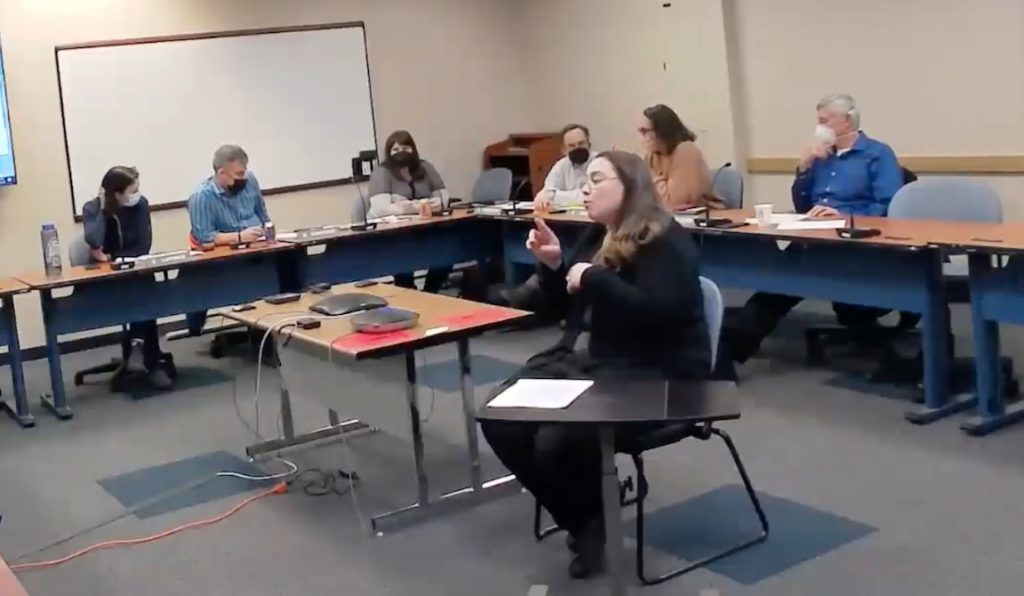
During a presentation by the Anchorage Human Resources Department, the Anchorage Assembly heard good news about how the municipality is doing when it comes to hiring a variety of people — minorities, women, disabled, and those with an ever-widening array of gender-identity-related issues.
Assemblyman Felix Rivera responded to the Affirmative Action presentation by saying the data isn’t really what anyone can rely on for good information. In his conversations in the community, he said that people have painted a different picture than the data shows. That picture is that there is great disparity in hiring in Anchorage.
The city, under direction of law, produces an Affirmative Action survey of its workforce and contracts annually. The report is to inform leaders about how inclusive they are in hiring.
“If you were to go and talk to people in the community especially BIPOC people and BIPOC leaders, and tell then that according to our Affirmative Action plan that ‘we’re all good to go with our hires, no need to worry,’ you know I can tell you myself based on the conversations I have and based on the experience I have experienced, I have in our community … that people would disagree with me entirely,” Rivera said at the end of the presentation.
“Just because the data says we’re good doesn’t really mean we’re good,” Rivera said, adding that bad data input leads to bad data output.
Rivera then reported that on public radio he heard a discussion about the problem of not having enough black lawyers in Alaska. “They spoke about the stagnation in the numbers of black lawyers in Alaska in the last decade, and how it’s pretty much not great,” Rivera said. He continued by saying the affirmative action plan “defends the status quo.”
Assemblyman Chris Constant agreed wholeheartedly that the plan defends the status quo.
Chief Anchorage Human Resources Officer Niki Tshibaka, who himself is a black lawyer, responded by saying that in order to get more black lawyers, there needs to be a wider approach, meaning focusing in on education and addressing other societal factors that lead to few black lawyers in Alaska. He also pointed out to the assemblymen that the percentages are not so awful as they were inferring, since there are not that many black people in Alaska overall, and since Anchorage is a majority white city.
According to data from the Alaska Bar Association, 2 percent of Alaska lawyers are Native and less than 1 percent are black. Blacks make up 3.28 percent of the Alaska population, while Natives comprise nearly 15 percent.
The Port of Alaska today serves three core functions: Commerce, national defense, and earthquake/disaster resiliency, response, and recovery. All three are at risk in the event of an earthquake or other natural disaster.
Commerce: This includes statewide cargo services and economic development a good percentage of which goes over bridges that tie the Glenn Highway to the Parks Highway, thus serving all interior Alaska. Without those bridges, the Port of Alaska is isolated from the rest of the state other than Seward and the Kenai, both of which have their own ports.
National defense: Once again, with the bridges over the Knik River down or unusable, the military bases in Interior Alaska — Fort Greely, Eielson, Clear, and Fort Wainright — are isolated regardless of the viability of the Port of Alaska. There are just too many national defense eggs to put in the single basket of the Port of Alaska.
Earthquake resiliency/ disaster response and disaster recovery: The Port of Alaska, due to its location, is proven to be susceptible to “sloughing” during an earthquake. The mere fact that the projected costs to protect it from the results of an earthquake are so huge should tell us that the engineers are very worried about its viability after an earthquake.
A regional port authority encompassing both Port of Alaska and Port MacKenzie is the only viable way to protect ourselves from a natural disaster. The current issues at the Port of Alaska are emblematic of what happens when we do not plan for the future. Any future plans that encompass the resiliency needed to feed and supply interior Alaska, after an earthquake, must include a second or alternate port. Port Mackenzie is that port, as both Seward and Homer would still have to truck or rail over Knik River bridges to provide for interior Alaska.
Any discussion of resiliency or “food security” for Interior Alaska, that discusses earthquake survivability, must also consider the rest of the transportation infrastructure “out” of Anchorage, including not only the Ship Creek bridge but the railroad bridge, the Old Glenn Highway bridge, and the Glenn Highway bridge over the Knik River. Think of Vine Road after the 7.0 magnitude earthquake in 2018..
The Port of Alaska is currently near capacity shoreside: The efficacy of any port, as well as its economics or ability to generate revenue, depend on the amount of land associated with the port. The Port of Alaska, in addition to its small 15.1-acre footprint, seems near capacity shoreside. Notwithstanding the need for storage area, the ability to trailer “doubles” out of the port is limited by the roads near Ship Creek in Anchorage. Transporting trailers and goods out of the port, other than by rail, is highly dependent on the bridge across ship creek, which is a choke point and must be considered during any discussion about an earthquake as its damage or loss would further restrict port truck traffic.
Conversely, Port MacKenzie has 14.5 square miles of land, is already on the rapidly growing Interior side of the bridges across the Knik River and could easily serve not only the North Slope needs but the needs of four of the six major military bases in Alaska before or after an earthquake. It could also effortlessly contribute to the food security of all of Alaska using barges to reach the Kenai Peninsula, Seward, and Anchorage. The rail line north could get goods into interior Alaska and to all points North of the Knik River served by trucking.
The possibilities for Port MacKenzie are limitless: The entire state needs Port MacKenzie. It does not need yearly dredging and can accept a panamax-size ship even during low tide. In addition to 90-foot depth waterside, it has the acreage available to operate not only the rail line, but to store the trailers and warehouses associated with a port shoreside.
There has been discussion in the MatSu centered around becoming partners with Anchorage to develop a regional port authority that could encompass the needs of all of Alaska, not just an Anchorage isolated by an earthquake. Alas, it seems that some are only focused on Anchorage, and not the entire state. This political argument needs to end. We must get out of our silos and work together.
One example of the narrow-minded gaslighting is the discussion of “food security.” This parochial argument is fear mongering to leverage Alaskans, the Legislature, and the federal government to invest all available money in the Port of Alaska. True food security comes from within the state. It comes from developing our own infrastructure and ability to grow food in Alaska. Part of that, in normal times, would entail giving farmers the ability to sell or export their goods. This could be cheaply and more efficiently done by having a deep-water port, which does not need constant dredging, connected by a rail line to the breadbasket of Alaska. That is real food security. When Port of Alaska supporters talk about food security, however, what they really mean is transportation security for food, which likely would only serve Anchorage, Eagle River, and Eklutna.
Can the rest of Alaska afford the lack of an alternate source of transportation security?
Finally, there should be a larger discussion about homeports for Coast Guard icebreakers and cruise ships. The Port of Alaska is incapable of handling either of these. One must wonder why leaders would not want to leverage Port MacKenzie and why people would not want to be on board with the MatSu to attract these types of ships, something that would be good for the entire state.
Rep. Kevin McCabe represents Big Lake in the Alaska Legislature.
The University of Alaska Board of Regents voted to appoint Pat Pitney as the UA System’s 17th president, removing “interim” from her title on Friday. The decision was unanimous and was expected.
“This is a time for forward momentum and to celebrate our successes, and I’ll note that President Pitney is the first woman to hold the position in the university’s 100-year history. Congratulations, Pat,” said Sheri Buretta, chair of the Board of Regents.
“Thank you for the confidence in me,” Pitney said. “I am truly honored and humbled to lead this great university system. I am dedicated to continuing to build a strong team with shared governance, with our staff, and with each of our universities. I’m excited about our future.”
Pitney has a financial management history, having worked as the head of the Office of Management and Budget under Gov. Bill Walker. She worked as the director of the state of Alaska’s Legislative Finance Division from January until August of 2020, when she was named interim president of the university.
Born in Billings, Montana, she competed and won a gold medal in the 1984 Summer Olympics in air rifle, the first Olympic champion in air rifle for women, when she was an 18-year-old student at Murray State University in Kentucky. She has a degree in engineering physics and a master of business administration from the University of Alaska Fairbanks.
Pitney volunteered for nearly 20 years as an assistant coach for the Alaska Nanooks at the University of Alaska Fairbanks, during which the team won nine NCAA Rifle Championships. The Pat Spurgin Rifle Range at Murray State University is named after her.
The board also passed its strategic goals for the UA System, including specific measures that will document progress on each goal. Pitney said the goals and measures will serve as the university system’s roadmap for several years.
The goals, developed with chancellors, leadership teams at each university, and governance include: contributing to Alaska’s economic development, skilled workforce and engaged citizenship; fostering academic excellence for student success; promoting diversity, equity and inclusion for students, faculty and staff; growing world-class research; and, operating cost effectively.
Dr. Pearl Brower, the system’s senior advisor for Alaska Native Success, Institutional Diversity and Student Engagement, provided the board an update on the ongoing Alaska Native Success Initiative. The initiative addresses how each university will work to implement concrete steps to improve the success of Alaska Native students and faculty.
“The scope of the program across the system is a continuum with a focus on students from the time they are in elementary school through their PhDs. The initiative also will allow us to hire faculty who will serve as role models and provide the assurance to our Native students that they belong,” Pitney said. “We are making huge strides. I’m very pleased that the board challenged us to address this important issue and I am heartened by the ownership and the buy-in across the entire system.”
The Centers for Disease Control and Prevention says most people don’t need to wear masks indoors any longer. That includes schools.
The CDC says that about 38 percent of Americans live in a county where indoor masks are advised. Previously, the agency said about 99 percent lived in high-risk areas of the U.S. This new guidance by the CDC reflects a complete change in the federal metrics used to determine risk. The new guidelines are based on number of cases per 100,000 people in the past seven days, new hospital admissions, and percent of hospital beds used by patients with Covid-19.
The CDC’s website shows list of US counties and their current Covid-19 levels, a chart that indicates that only southern Southeast Alaska is in the “high” zone for Covid — Prince of Wales, Wrangell, Petersburg, and Ketchikan.
The federal mask recommendation has been largely ignored by many Americans in recent weeks. In Anchorage, Friday was the last day for masks to be mandatory in the public schools.
The easing of the mask recommendations by the federal government doesn’t apply to airplanes or other modes of transportation. On March 18, the federal mandate for masks on public transportation is set to expire, but it’s uncertain if the Transportation Safety Administration will continue the policy that has led to an epidemic of unruly behavior among passengers over the past 18 months. And the president has continued the “health emergency” status for the country, which gives him broad powers.
In spite of the new recommendation, the leftists members of the Anchorage Assembly continued to wear masks at its meeting on Friday regarding redistricting.
The leftist members of the Anchorage Assembly continue to wear masks on Friday in spite of the CDC’s new recommendation that they are not needed.
The Alaska Republican challenging Sen. Lisa Murkowski took to the stage at the Conservative Political Action Conference on Thursday in Orlando, bringing a pointed message about Murkowski to a national audience that has no love for Alaska’s senior senator.
Outside of the presidential contenders, Kelly Tshibaka is clearly one of the biggest celebrities in conservative circles at CPAC; people flocked to meet her and get their photos take with her on Thursday, and even more so on Friday at the Rosen Shingle Creek Resort, where the conference is taking place.
Right after she finished speaking, reporters from the New York Times and CNN rushed up to talk to her. She spoke to the Times reporter but did not appear to give CNN an interview, because others were pulling her away for photos. Potential donors said she did well. One person commented that their son and daughter-in-law live in Alaska, and they took a selfie photo to send to them.
Tshibaka’s remarks were a shot over the bow of the Murkowski dynasty, and at the end of her five minutes, Tshibaka received a standing ovation — the only standing ovation of Day 1 of the CPAC event.
At CPAC, the talk on Friday among attendees was all about Murkowski and whether or not she will be a repeat performance with the Biden nominee for the U.S. Supreme Court, announced on Friday morning. Will Murkowski vote with the socialist crowd or vote with Republicans? During the confirmation of Brett Kavanaugh to the Supreme Court, Murkowski was the hold-out vote, and in the end simply voted “present” rather than vote with Republicans to confirm the justice who had been nominated by President Donald Trump. In 2020, Murkowski voted to confirm Justice Amy Coney Barrett to the Supreme Court.
Other speakers at the event include former President Donald Trump, Alaska Gov. Mike Dunleavy, and myriad other politicos from the conservative side of the spectrum.
The conference, on the theme of “Awake, Not Woke,” ends on Sunday with a closing speech by Donald Trump Jr.
It’s February, a time when pitchers and catchers should be reporting to sunny southern climes for spring training, a benchmark that signals the baseball season is not far off.
The simple phrase “pitchers and catchers have reported” usually gives baseball fans butterflies in their stomachs, much like a middle school crush but without all the hormonal imbalances.
Yet, the well-groomed ballparks in Florida and Arizona are vacant this year due to a lockout, a defensive move by the billionaire owners to prevent an inevitable strike by their millionaire ballplayers.
And not too many people in the general public seem to notice …. or care. And Major League Baseball should take notice.
The countless dozen or so of you who put up with my public whining and gnashing of teeth in 2021, are well aware that I have given up on Major League Baseball over their decision to inject politics and “wokeness” into what used to be our national pastime. I want desperately to have my game back but, in a perverted twist of Michael Corleone’s now-famous line in (the still disappointing and utterly unnecessary) “Godfather III,“just when I thought I was being pulled back in they push me away.
Major League Baseball lost viewers and followers in 2020 because it opted not to punish Houston Astros players who blatantly cheated, then thought it a good business decision to align with Black Lives Matter and their flag-kneeling minions.
In 2021, Commissioner Rob Manfred doubled down on his decision to alienate his fan base by pulling the All-Star Game from under Atlanta’s feet because the players’ union hierarchy and a few “woke” corporations considered the laws that the State of Georgia passed to keep their elections fair and honest to be blatant evidence of racism, and therefore unworthy to host the Midsummer Classic. (The Atlanta Braves, by the way, were still allowed to play their full season of home games and, in rare moment of justice, won the World Series over the Astros, for which Commissioner Manfred had to present the Braves the victor’s trophy.)
Baseball attendance is down. TV ratings are down. Merchandising is down. Sure, Covid was a factor in all that, but to put a halt to the season before it even begins, especially when fans are willing to forgive and return to the game, is not just stupid, it’s suicidal.
It’s like the commissioner, owners, and players had a Zoom call with Dr. Jack Kevorkian and asked him the best way to kill the goose who laid all those golden eggs that made the players millionaires and kept the owners in billionaire status.
This makes no sense. The economic arguments being made by both sides, center around their collective bargaining agreement. The CBA sets the rules for almost all financial aspects of the game, including minimum salaries, free agency, revenue sharing, and luxury taxes.
As a fan of the game – the game of baseball, that is – I would rather they concentrate on making the game more watchable. Three-and-a-quarter-hour games with an average of 17 strikeouts per game are boring. I can no longer argue with people who say the game is boring – because it is!
And now we have contrived rules: Designated hitters, extra innings starting with a runner on second base, defensive shifts that are completely ignored by hitters who refuse to try and hit a ball through the gaping hole on the other side of the diamond, video reviews that disrupt the flow of the game, and most recently the idea of using clocks to speed up the game – the game that for over a century and a half prided itself on being the only major sport without a clock.
The two sides seem to not care that Dr. Kevorkian is actually plunging that needle into the goose, as well as their collective arms.
Baseball should take a good, hard look at what just happened with the Winter Olympics. For various reasons, not the least of which was a totalitarian regime using the Games as a propaganda tool a’ la Nazi Germany in 1936, the 2022 Winter Olympics garnered the lowest TV ratings in history. It shows that American sports fans are willing to stay away from watching sports.
And it’s about time.
Tim Barto is Vice President of Alaska Policy Forum, and President of the Chugiak-Eagle River Chinooks Booster Club.