Thursday, June 18, 2026
Home Blog Page 957

Ronna McDaniel: Media willfully distorts RNC statement on Jan. 6, Cheney, Kinzinger

16

By RONNA MCDANIEL

If corporate news media wants to know why Americans don’t trust it anymore, they should look no further than the shameful, outrageous, and patently false coverage of the resolution adopted by the RNC to censure Reps. Liz Cheney and Adam Kinzinger.

Let me be abundantly clear: as Chairman of the RNC, I have repeatedly condemned the violence that occurred at the Capitol on January 6th and do so again today. On January 6, 2021 , the members of the RNC released a statement that read, “These violent scenes we have witnessed do not represent acts of patriotism, but an attack on our country and its founding principles.” I tweeted that the violence was “shameful” and condemned it in the strongest possible terms. 

The events of that day are deeply personal to me and our team as the FBI found a bomb outside of RNC headquarters that afternoon, and I will never forget what it felt like to know that my staff was in immediate danger. Violence has no place in our political discourse, period, and those who engaged in violence on January 6th and committed crimes should be held accountable with due process by the appropriate law enforcement authorities and prosecutors.

But the awful events of that day do not justify Cheney or Kinzinger enabling a partisan committee whose real purpose seems to be helping Democrats’ electoral prospects at the cost of potentially ruining innocent people’s lives. From the outset, the committee has lacked the legitimacy of past independent, bipartisan efforts investigating events of national importance. For starters, Republican leadership was not allowed to freely appoint a single Republican to the committee.  Instead, Cheney and Kinzinger were hand-picked by Nancy Pelosi. 

The January 6 Committee predictably has now vastly exceeded its original purpose and morphed into something else entirely, investigating Republicans who had nothing to do with January 6 for the apparent offense of being Republican. Under the Committee’s approach, almost anything related to the 2020 election is within the scope of its jurisdiction, to include harassing citizens who were not even in Washington, DC that day.

Nancy Pelosi’s committee – which the New York Times says “is employing techniques more common in criminal cases than in congressional inquiries” – has no authority to pursue criminal charges, is not respecting the rights of private citizens and has disregarded due process and checks and balances. Last month, reports showed that 90 percent of the committee’s subpoenas have been delivered to people who weren’t even at the Capitol on January 6th. That is political posturing, not pursuing justice. Even an individual on trial has the right to face a jury of his peers, but those being called in front of the committee are faced with a hostile kangaroo court that reached a conclusion long before even asking a question.

This includes individuals like one of the RNC’s members who was subpoenaed because, weeks before January 6th, she served as an alternate elector pending the outcome of ongoing lawsuits – an action with clear legal precedent which Democrats themselves have done in the past. Now she could face costly legal bills even though she was nowhere near the Capitol on January 6th and had nothing to do with the violence that occurred.

Liz Cheney and Adam Kinzinger are cheapening the events of January 6th by participating in Nancy Pelosi’s partisan committee. The Senate has already completed one investigation into January 6th, and there are multiple ongoing active law enforcement investigations into what happened that day. These are the correct avenues for investigation.

I firmly believe we are the big tent party, and that disagreement amongst Republicans is welcome and can make us stronger. But what Cheney and Kinzinger are engaged in goes much further than any policy disagreement.  These two have permitted their party affiliation to be weaponized to allow the Democrats gross overreach and abuse of power. In short, they never should have agreed to be part of a committee where Republicans were denied representation. 

As I have repeatedly stated, violence is not legitimate political discourse – whether in the U.S. Capitol or in Democrat-run cities across the country – and neither is abusing Congress’ investigatory powers for political gain. Media outlets pretending that the RNC believes otherwise are doing so in bad faith, and their lies should be called out for the cheap political stunts they are.

Ronna McDaniel is the chairwoman of the Republican National Committee. This column first appeared in Townhall.

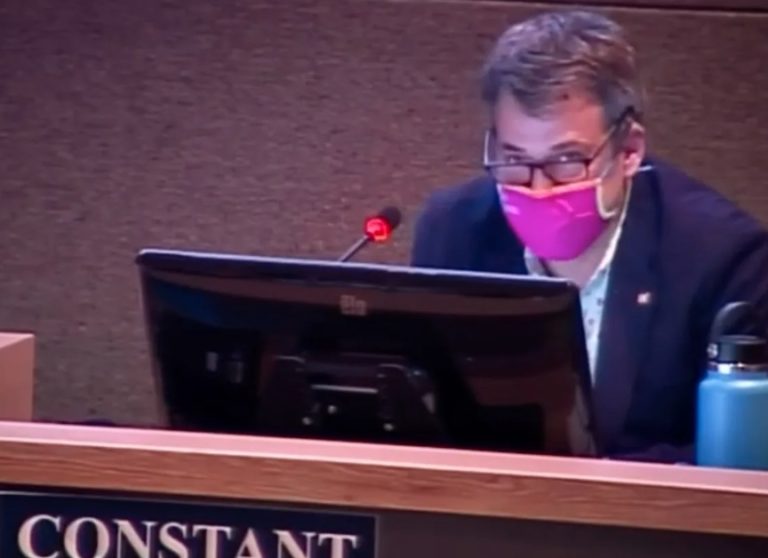
The Chris Constant tapes: Assemblyman calls mayor a ‘clown,’ and executive branch ‘fools’

Chris Constant, Anchorage Assembly vice chair, has put a target on the mayor — and the mayor’s staff, according to tapes recently acquired by Must Read Alaska. But it wasn’t like that in the beginning, when Mayor Dave Bronson announced his top administrator, Municipal Manager Amy Demboski.

In July, Anchorage Assemblyman Chris Constant wrote a letter to the editor heaping compliments on Demboski. She was a star in his eyes.

“If the mayoral election of 2021 tells us one thing, it is our job to lead through these divisions. We are grateful for the mayor’s choice of Amy Demboski to the second-highest position within the Municipality of Anchorage. Ms. Demboski served collaboratively with us from Day One, and we were impressed because we knew firsthand that she served for all the right reasons. Like us, she truly cares about our community and wants to make a difference. Our political differences are vast, but like us, her focus is the community,” Constant wrote.

“We were able to work through challenging issues and maintain respect for each other because we shared some core values. We can disagree passionately and still treat each other with respect,” he continued.

Constant closed by saying: “Ms. Demboski does her homework and values our opinions. She will be professional, thoughtful and effectively coordinate with the Assembly, mayor, and department directors to ensure the work of the people is done efficiently and professionally.  She will take a reasonable approach to critical issues. Our experience tells us that Anchorage residents can be confident she will serve the community as municipal manager with integrity, ethics, compassion, and respect for our employees. Her decisions will be based on community need with executive and legislative input. She will work fairly with the Assembly, recognizing the challenge the legislative branch has when making decisions. Like us, she will lead with dignity for the betterment of our entire community.” Constant signed the letter along with former Assemblywoman Elvi Gray-Jackson.

That was July 1, 2021 in the Anchorage Daily News.

Seven months later, Constant is a changed man. He no longer respects the mayor’s team. He said last week that the mayor’s office thinks the Assembly leftists are spying on the executive branch, that “we’ve bugged their offices because their bad ideas get out into the community. No, we don’t bug your office. We didn’t need to do that,” Constant said on a podcast. Then he admitted that he has a mole in the mayor’s office. Speaking as though to the mayor directly, he said, “You surround yourself with people who don’t trust you and you surround yourself with bad ideas. That’s what happens.”

Listen to the ‘Bugging their Offices’ tape here.

Constant said on the broadcast that Bronson is a “clown” and his staff are “a team of fools.” Constant went on to describe the Assembly majority’s strategy for dealing with such a confederacy of dunces:

“And this mayor is just ‘veto, veto, veto,’ and ‘override, override, override.’ And so I’ve been thinking about this quite a bit, there’s this ad by this ridiculous blog that must not be named, that said ‘Nothing to report, nothing to report,’ and it had zero impact on the election but it was a pretty scathing ad,” Constant said.

He was speaking of an 2018 Must Read Alaska YouTube video report about former Mayor Ethan Berkowitz, when Berkowitz never had anything to report about what he was doing as mayor:

Then Assemblyman Constant said the plan is to override everything Mayor Bronson proposes.

“I’m hopeful that an ad is developed that all these bombastic by this clown [referring to the mayor] who thinks he knows and demonstrates that he doesn’t day in and day out. ‘Veto. Override. Veto. Override.’ Because the true policymakers of the city have always been the Assembly, when it exercises that authority because that’s what the charter grants us. And so we are not going to be run roughshod over by a team of fools [mayor’s team]…” Constant said.

Listen to the ‘Team of Fools’ tape here.

Listen to the ‘Frankly not that smart’ tape here.

Constant, the same one who spoke glowingly of the mayor’s choice for Municipal Manager just seven months prior, spoke on a new podcast run by a radical leftist in East Anchorage. The majority of the time spent on the podcast was a discussion involving fellow Assemblyman Felix Rivera about their experiences as openly gay members of the Assembly.

Lisa gets support from State Sen. von Imhof; Tshibaka brings in Alaska Outdoor Council endorsement for Senate

Two Alaska Republican legislators are going against the Alaska Republican Party and are endorsing Sen. Lisa Murkowski’s re-election attempt. In making their endorsements, state Sen. Natasha von Imhof of Anchorage and Alaska House Speaker Louise Stutes of Kodiak emphasized Murkowski’s deep understanding of Alaska.

The Alaska Republican Party in 2021 formally censured Murkowski for her vote to convict President Donald Trump during his impeachment trial, which occurred after he was no longer president, and the party asked that Murkowski not run as a Republican. It was the final straw for Republicans. The censure vote by Republican officers went over 70 percent against Murkowski.

Also over the weekend, Murkowski’s opponent Kelly Tshibaka got the prize endorsement of the Alaska Outdoor Council. The group rarely endorses and has not supported anyone who has lost in recent memory.

Tshibaka announced she would challenge Murkowski last March and now has the full endorsement of the Alaska Republican Party and Donald Trump. Alaska Outdoor Council has a membership of over 10,000 Alaskans statewide.

“Our primary mission is to preserve outdoor spaces for public use and represent our member organizations in the pursuit of their outdoor interests. We are proud to endorse Kelly Tshibaka, as it is clear to us that she is the candidate who will best advocate for Alaskan control of our own lands and resources. The federal government has a relentless desire to declare more and more of our own land off-limits, and the encroachment has gotten even worse in the last year. Tshibaka has shown that she will be a champion for Alaska’s rights and the rights of people who want to take advantage of outdoor pursuits,” said Rod Arno, public policy director of the Alaska Outdoor Council.

“Lisa Murkowski rolls over for the Biden administration and the radical environmentalists who make policy and is doing nothing to stop the Leftist plan to turn Alaska into an untouchable national park for the rest of the country. Murkowski has voted to conform over 90 percent of Joe Biden’s radical nominees, including the extremists who want to shut down all activity on our lands. We must have a senator who will stand up for all Alaskans, including those who want to pursue outdoor activities. I am grateful for the support of the Alaska Outdoor Council, and I pledge to defend their ideals when I am Alaska’s next senator.”

As for Murkowski’s attributes, von Imhof said, “Being a lifelong Alaskan, Senator Murkowski has a true understanding of our people, culture, and values.”

Along with von Imhof and Stutes, Democrat legislators Neal Foster of Nome and Adam Wool of Fairbanks endorsed Murkowski. Democrat U.S. Sen. Joe Manchin endorsed Murkowski this weekend as well.

Rep. Wool was quoted saying, “I haven’t always agreed with Senator Murkowski, but I have always admired her courage to make difficult decisions, take tough stances, and vote her conscience. I know she’s guided by a love for Alaska and the desire to stand up for Alaskans – values I always agree with,” said Rep. Adam Wool (D-Fairbanks).

“Lisa has done a fabulous job representing the diverse and independent viewpoints of Alaskans. In a political landscape dominated by party-line politics and special interests, Senator Murkowski has proven that she puts her constituents first. We need Lisa on the job, working to move all of Alaska forward,” said Stutes.

In late January, State Sen. Gary Stevens, a Republican of Kodiak, also turned his back on the Republican Party and endorsed Murkowski, who also got the support of Reps. Bryce Edgmon (I-Dillingham), Zack Fields (D-Anchorage) and Dan Ortiz (I-Ketchikan).

Study in Contrasts: While Murkowski, Young criticize GOP, Sen. Sullivan connects with truckers on topic of vaccine mandates

Over the weekend, Sen. Lisa Murkowski and Congressman Don Young criticized the national Republican Party for a resolution that defended “legitimate political discourse” that occurred on Jan. 6, 2021 in the nation’s capital. The resolution was censuring Reps. Liz Cheney and Adam Kinzinger for their role in the inquisition and investigation of hundreds of Americans, most of whom did not storm the U.S. Capitol on that day.

“What happened on January 6, 2021 was an effort to overturn a lawful election resulting in violence and destruction at the Capitol. We must not legitimize those actions which resulted in loss of life and we must learn from that horrible event so history does not repeat itself,” Murkowski wrote on Twitter on Saturday.

The Hill interpreted the Murkowski statement as an attack on the RNC

Congressman Young concurred on Twitter: “I will reiterate what I said last year: I was appalled at the violence and destruction at the Capitol on January 6th. What transpired was criminal, un-American, and cannot be considered legitimate protest.”

Neither said whether they think Cheney and Kinzinger should be censured for their participation in the congressional investigation of the Jan. 6 protest that turned riotous, but instead they distanced themselves from the Republican Party and painted all Jan. 6 participants as criminals, when the vast majority were lawful. Young’s office clarified on Thursday that the Congressman’s condemnation was specifically for the violence and destruction in the Capitol, and was not a condemnation of any peaceful protestors.

RNC Chairwoman Ronna McDaniel said in response to criticism that of course the RNC is not defending unlawful activity. She said the way the resolution was characterized was propaganda, and called out the New York Times for its headlines.

Meanwhile, while Young and Murkowski were distancing themselves from Republicans, Sen. Dan Sullivan was in Alaska, where he attended the truckers’ Freedom Convoy 2022 in Eagle River, speaking to the workers of Alaska on the importance of constitutional freedoms and praising them for their peaceful protest in support of Canadian truckers.

“No American or Alaskan should ever have to choose between putting food on the table for their family, or getting a shot in the arm. I am honored to join with Alaska truckers and other essential workers—who kept us safe and our economy afloat throughout the pandemic—in standing up and speaking out against President Biden’s unconstitutional vaccine mandates,” Sullivan said, to a roar of applause. Sullivan kept his remarks brief, explaining he had to return to Washington, D.C. shortly, but thanked the truckers for working through the pandemic and providing for Alaskans.

Also this weekend, Murkowski was on CNN accepting an endorsement from Democrat Sen. Joe Manchin, and promising him one in return during his next campaign in 2024, should he choose to run again.

Murkowski was censured by the Alaska Republican Party and over the weekend this was an indication she is moving away from the Republican Party and toward a “non-party” stance. She has until June 1 to decide if she is running as a Republican, which the Alaska Republican Party has asked her not to do. She has represented Alaska in the U.S. Senate since being appointed by Gov. Frank Murkowski in 2002.

Sean Murphy: ‘Eagle River Exit’ is about popular sovereignty, republicanism, and federalism

By SEAN MURPHY

Two years ago this month, I joined Eaglexit after reading an article on how large our municipality had become. It explained how representation in other communities within the municipality were underrepresented. The article also explained how our school district in the Municipality of Anchorage was one of the largest in the country yet ranked at the bottom when it came to proficiency. The sheer size, school board members elected at large, and lack of accountability were listed as the main reason for its difficulties. Our school district and the current municipality has lost the ability to provide schools and services that reflect our communities’ values.

The solution in the article spoke directly to my heart. It talked of self-governance of my community. 

I was for Eaglexit before I even knew what it was. For years I have picked up friends and family at the airport in Anchorage, drove to my house in Eagle River, and as I drove, I would explain to them that communities from Girdwood to Eklutna were all under the control of the Municipality of Anchorage. They were all in shock. Where is the representation in those outlying communities?

As an early American history teacher for a period during my career in education, I went back to the basic principles of our Constitution. There are seven: Popular Sovereignty, Republicanism, Federalism, Separation of Powers, Checks and Balances, Limited Government, and Individual Rights. Most of us are familiar with the last four, but I would like to visit the first three. 

Popular Sovereignty is the doctrine that sovereign power is vested in the people and that those chosen by election to govern or to represent must conform to the will of the people. It has been a while since I felt our current assembly was conforming to the will of the people in our communities. We do have two assembly members from Chugiak, Peters Creek, Eklutna, and Eagle River, but they are not able to achieve maximal support to our residents as they are often overruled by the Anchorage majority on the Assembly. In essence, we have taxation without adequate representation.

Republicanism is a theory of government in which the supreme power rests in the body of citizens entitled to vote and exercised by representatives they elected either directly or indirectly. Republicanism also believes a republic is the best form of government. A republic is a form of government where the citizens conduct their governing affairs for their own benefit rather than for the benefit of a ruler or rulers. I do not believe this principle is being practiced to its’ full potential in our communities that are not being governed at the maximum local level. 

Federalism is a system of government in which the same territory is controlled by two levels of government. Generally, an overarching national government is responsible for broader governance of larger territorial areas, while the smaller subdivisions, states, and cities govern the issues of local concern. In Alaska we have our state government, boroughs, and municipalities. In the communities of Assembly district 2, we should have more than two representatives on a soon to be 12-person assembly. Our combined communities of over 50,000 people have the potential to govern ourselves in matters of local concern. 

I do not believe that these principles are being practiced in the governance of our communities to their full capacity in our current Municipality of Anchorage and Anchorage school District. These are nonpartisan principles of our U.S. Constitution and our Alaska Constitution. 

This can’t be a conservative or a liberal cause. This a community cause for maximum local self-governance.

Our Constitution had a nickname: a “bundle of compromises.” This was because the delegates to the Constitutional Convention had to compromise on numerous difficult key points to create a new Constitution that was acceptable to each of the diverse states.

Our community should practice that same sense of compromise as we move forward in exploring the detachment and incorporating of our hometowns. We need to listen to each other, not cancel someone’s opinion because we don’t agree with them. Let us concentrate on the process and will of our communities to be self-governing.

Eaglexit is dedicated to getting the petition drafted, finalized, and submitted to the Local Boundary Commission in the next six months. It will take money for media, polling, and perhaps most costly and important legal assistance. Please consider supporting the creation of the next new municipality in Alaska.  As anticipated by our Alaskan founders, when communities grow and are ready to become independent, it is right that they do so.  

It takes all of us:

Time – Help draft the petition and charter, get signatures

Effort – Share with friends and neighbors 

Analyze – Review the potentials and decide a course of action

Money – Donate at www.Eaglexit.com

Thank you for joining us in this effort,

Sean Murphy came to Alaska in the Army, met his wife and moved to Eagle River in 1999 with his family. He is a retired Anchorage School District educator and administrator. He is active with his community council and is the new chair of Eaglexit.  He can be reached at [email protected].

Assembly Chair LaFrance cusses out employee of municipality

At last Tuesday’s Anchorage Assembly meeting, the chair of the Assembly, Suzanne LaFrance, included the confirmation of Anchorage’s new police chief — the most understated confirmation of any police chief perhaps in Anchorage history. It was on the consent agenda.

After Chief Michael Kerle was confirmed, he rose, as if he expected to be able to speak briefly. But LaFrance thanked him for being there and continued with the meeting, without inviting him and his wife, who had traveled back to Anchorage from a trip Outside, to approach the podium and address the Assembly. The confirmation was, in a word, curt.

The Assembly had already allowed a 10-minute drumming and dancing ceremony for Black History Month, and another 10-minute retirement ceremony for Sharon Walsh of the Port of Alaska. The Assembly had listened to members of the public complain about the slow progress in implementing police body cameras for the force. It simply could not spare three minutes for the new chief to speak to his new role, after spending decades putting his life on the line as a police officer.

It was in stark contrast to how the Assembly had welcomed the previous police chief, Ken McCoy, who has since left the force to pursue a career in “equity” politics at Providence Alaska Medical Center. McCoy and his family had been welcomed to the podium in April for his confirmation, and community celebrations and ceremonies continued well into August, including a ceremonial swearing in at Bartlett High School, his alma mater.

Mayor Dave Bronson, who attended Chief Kerle’s swearing-in ceremony the on Wednesday, made note of the snub by LaFrance and the leftists on the Assembly.

That apparently enraged LaFrance, who came up to the mayor’s floor on the 8th floor of City Hall and cussed out the mayor’s chief of staff, Alexis Johnson. LaFrance is said to have dropped the “F” word on Johnson, who had only been on the job for a week.

It’s unusual for elected officials to berate employees of the executive branch, but Johnson took it in stride, and kept calm throughout the outburst, sources said.

Kerle took office on February 1, 2022. He began his law enforcement career in 1996 when he joined APD as a recruit in the Academy.

Is anyone paying attention to the Olympics?

Americans have no shining star athletes to follow during this month’s Winter Olympics in Beijing and its surrounding winter competition sites. Over 3,000 Olympic hopefuls from about 90 nations have arrived for the games, which started on Feb. 2 and will last until Feb. 20. But Americans don’t even seem to know the names of their own country’s top athletes.

Even in Alaska, the winter athletes are not household names — Scott Patterson, a cross-country racer who trained at Alaska Pacific University, is relatively unknown, as is fellow cross-country skier Gus Schumacher, who trains in Alaska. Neither of them placed in competition over the weekend. And Keegan Messing, the male figure skater raised in Alaska but skating for Canada, has been sidelined by Covid.

According to Morning Consult, Americans just are not well informed about who is competing. Or are they not paying attention? The share of U.S. adults who said they plan to watch all or some of the upcoming Beijing Winter Olympics is smaller than the share who said the same ahead of last summer’s Tokyo Olympics, which had the smallest average primetime audience for an Olympics since at least 1988. More from Morning Consult here.

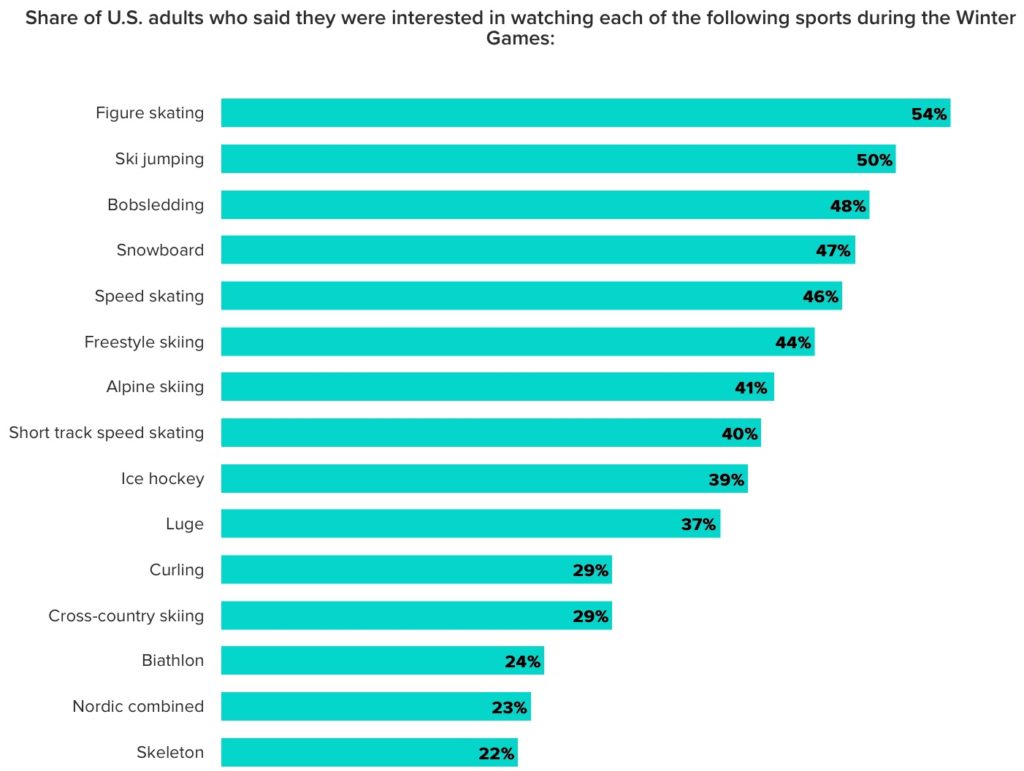
“Despite Team USA entering the Beijing Olympics without a standout women’s skating star, Morning Consult polling data indicates Americans are more interested in watching figure skating than any other sport at this year’s Winter Games. The U.S. delegation’s most well-known athletes, however, can be found on the halfpipe,” Morning Consult wrote.

According to the polling company, the most well-known Olympic name is Shaun White, the snowboarder whose name 54 percent of Americans recognize. After White, the most well-known American athlete is snowboarder Chloe Kim, whose name is recognized by just 32 percent of Americans.

And if Americans are eager for a figure-skating medal for the U.S.A., they might look to Nathan Chen. Yet only 27 percent of Americans know that name associated with U.S. Figure Skating Championships in January.

More from the poll:

  • “The American delegation for the Beijing Games is bereft of household names. White, a three-time Olympic gold medalist who made his Olympic snowboarding debut in 2006, was the only athlete whom at least half of U.S. adults (54 percent) recognized by name. One in three respondents said they had a favorable opinion of White. Kim, who in 2018 became the youngest woman to win a gold medal in snowboarding, was the next most-known American athlete, with 32 percent of respondents saying they had heard of her.”
  • “USA Bobsled left a fairly well-known candidate for its team, Lolo Jones, off its roster for the Beijing Games, likely bringing an end to the 39-year-old’s chances to win an Olympic medal. Thirty percent of U.S. adults indicated they had heard of Jones, the track star-turned-bobsledder who competed in two Summer (2008, 2012) and one Winter Games (2014). Her story would have presented rich material for NBC.”

The Anchorage Daily News has a reporter in China covering the Olympics. Reporter Nat Herz just moved back to the ADN after working as a public media reporter for several years, and is restarting his ADN career with a coveted beat — the Olympics; he is also writing on behalf of a national cross-country skiing publication.

A poll on Must Read Alaska’s Facebook page asks the question: Are you paying attention to the Olympics? Take the poll here.

Alexander Dolitsky: Language, education, schooling of the Russian Old Believers in Alaska

0

By ALEXANDER DOLITSKY

Russian Old Believer language and stories reflect their life in the North, the picturesque landscapes, and their economic contacts with non-Russian nationalities. 

Some elements of the Siberian way of life, however, and vocabulary persist only in the descriptions of material culture. Poetry, reflecting the spiritual life of the epic heroes, remains unchanged and is preserved as a precious relic, even when words and expressions have lost their relation to former life situations and have become outdated.

North American Old Believers speak Russian at home and in most work places. Although only a few Alaskan Old Believers were born in Russia or in Russian-speaking communities abroad (i.e., China, Japan, South America), the Russian language is very much alive. 

Given the size of Russian communities in Oregon and Alaska, there is ample opportunity for Russian speakers to form groups for contract work outside of their villages, reducing the need to learn English as a second language. Living in neighborhood clusters in rural Alaska, there is little need for members, especially women who mostly remain at home and have little interaction with the outside world, to speak English. Parents encourage their children to speak Russian at home and to have minimal inter­action with English-speaking outsiders, so there is limited opportunity to practice English at home.

During an interview, my assistant, Miriam Lancaster, observed and recorded two children learning Russian and English at home:

“As we were putting the puzzles together and coloring, I asked two children the colors of various things. The older child would always respond in perfect English. When I asked the younger child, he just smiled and the older would whisper the word in English into the younger child’s ear. The younger would smile bigger and say the color in English. I told the children’s mother that I was surprised that the older child could speak English so well since he wasn’t old enough to be in school. The mother said she only speaks Russian to him at home because she’s afraid he will forget their language. She said the only place he hears English is on TV from “Sesame Street” and “Mr. Rogers.” It also surprised me that the child knew to speak only English to me. The older child and I spoke quite a lot and he never mixed a Russian word with English. When speaking to everyone else in the room, he spoke Russian.”

Today, anyone over the age of 70 who has not attended public school and has had limited exposure to English-speaking people, predominantly speaks Russian. Their conversational Russian is quite fluent, with a relatively extensive vocabulary, similar to the language of Siberian peasants with South-European Russian dialect. Since the language of groups from Turkey and Romania includes many Ukrainian, Turkish and Polish words as well as East European dialectic variations, mixed with a common English vocabulary, it is sometimes difficult for researchers trained in contem­porary Russian language to understand or identify the Old Believer dialect. 

Church Slavonic is used for religious services and the young learn to read and chant from their parents and older siblings. It is considered prestigious for Old Believers to read books in Church Slavonic during worship and religious holi­days and parents always admire such an effort.

Despite heavy Americanization in North America, the Russian language, as a symbol representing an idea, national identity or quality of life, is the channel by which Old Believers communicate beliefs and attitudes to children, clarifying the place they are to take as adults in the community and the world. 

While the law of the dominant culture, whether in the United States, the former Soviet Union or in today’s Russia, has always required the young to attend public schools, parents have been somewhat apathetic about sending their children. In fact, many Old Believers still have an uneasy feeling of inferiority in matters of ecclesiastic learning. 

There are frequent religious holidays when children, as well as their parents, attend church in the early morning hours, conflicting with the school schedule. The school schedule in Nikolaevsk, Voznesenka and Berezovka villages in Alaska, however, is adjusted according to religious demands and practices of the community, since most students are Old Believers.

Twelve greatly significant Old Believer Religious Holy Days are included in the school calendar, in addition to the regular school holiday/vacation days. The Old Believers’ twelve Holy Days during the school year in Nikolaevsk, Alaska are:

  • 8/19Transfiguration of Christ
  • 8/28 -Assumption of the Mother of God
  • 9/11Beheading of St. John the Baptist
  • 10/9St. John the Theologian
  • 10/14Protection of Mother of God
  • 12/4Presentation of Mother of God
  • 12/19St. Nicholas of Wonderworker
  • 1/7Birth of Christ
  • 1/19 – Kreshchenskiy Sochelnik (The Eve of Epiphany)
  • 5/13Mid-Pentecost Wednesday
  • 5/21St. John the Theologian
  • 5/28Holy Ascension (The Holy Ascension Great Feast is movable every year).

The total enrollment at the Nikolaevsk state-operated K-12 school is about 140 students, between 110–120 are Russian Old Believers. There are two to four Old Believers teachers who teach Russian language, and the school board is formed primarily from Old Believers who control school curriculum, requirements and, to some degree, the school’s internal environment.

Older children are often kept at home to look after younger siblings, with large nuclear families commonly having 6–12 children. Many Old Believer parents are apprehensive about the exposure their children receive at school. There is outright objection to subjects they consider offensive, including some science curriculum, sex education, music, contemporary art, literature, and aerobics. They also often complain that the school environment tends to weaken the disci­plined behavior required of their children. Parents frequently urge teach­ers to be stricter with their children, encouraging them to use physical punishment when necessary.

Today, a shortage of job opportunities in the villages has resulted in many Old Believers leaving their traditional communities to move to urban areas of Alaska. Here they raise their families in predominately non-Russian speaking neighborhoods. It is common to see young Old Believer families at public recreation facilities, including swimming pools, skating rings, shopping malls and parks. Children of Old Believer families living in urban areas attend public schools as minorities, with non-Russian students, in contrast to public schools in Old Believer villages where most students are from Old Believer families. 

Parents of students attending school in urban areas provide school administrators with information about traditional practices, religious restrictions and a schedule of religious holidays that must be observed by their children during the academic year. School administrators accommodate these requests with sincere understanding and respect for Old Believer culture.

Over the past 25–30 years, some Old Believers, both male and female, have received a college education or vocational training and many young have left their traditional community. However, Old Believers generally retain a characteristic Russian peasant attitude toward public education, namely that the young should learn to read, write, and think so as not to be cheated by shopkeepers and hostile neighbors. Any more abstract learning is in God’s realm and should be left alone. Consequently, parents have regularly withdrawn their children from public schools after the sixth grade, at a time when the “offensive” subjects are offered and when children’s labor becomes essential to the family budget and livelihood.

Their formal education brought to a halt, children are given household responsibilities when very young, and they turn their attention to full-time adult work along with their parents. As a general rule, they achieve adulthood early and are encouraged to marry early as well. For boys, the marriage age is about 17–22, and for girls, the age is usually between 15–20. 

Early marriage and full-time work are thought to have advantages; they keep the young engaged with adult responsibilities. The newlyweds frequently become parents within the first year. Thus, they have an obligation to abide by the religious rules to keep themselves in the “union,” if for no other reason than to be eligible to baptize their children. It is believed that the young will be protected from the temptations of the host cultures by occupying themselves with church and family, and in remaining self-sufficient. All of this takes time, and both causes and necessitates interaction with “one’s own kind,” preserving the hierarchy of authority and conservative social orders within the community.

Alexander B. Dolitsky was born and raised in Kiev in the former Soviet Union. He received an M.A. in history from Kiev Pedagogical Institute, Ukraine, in 1976; an M.A. in anthropology and archaeology from Brown University in 1983; and was enroled in the Ph.D. program in Anthropology at Bryn Mawr College from 1983 to 1985, where he was also a lecturer in the Russian Center. In the U.S.S.R., he was a social studies teacher for three years, and an archaeologist for five years for the Ukranian Academy of Sciences. In 1978, he settled in the United States. Dolitsky visited Alaska for the first time in 1981, while conducting field research for graduate school at Brown. He lived first in Sitka in 1985 and then settled in Juneau in 1986. From 1985 to 1987, he was a U.S. Forest Service archaeologist and social scientist. He was an Adjunct Assistant Professor of Russian Studies at the University of Alaska Southeast from 1985 to 1999; Social Studies Instructor at the Alyeska Central School, Alaska Department of Education from 1988 to 2006; and has been the Director of the Alaska-Siberia Research Center (see www.aksrc.homestead.com) from 1990 to present. He has conducted about 30 field studies in various areas of the former Soviet Union (including Siberia), Central Asia, South America, Eastern Europe and the United States (including Alaska). Dolitsky has been a lecturer on the World Discoverer, Spirit of Oceanus, andClipper Odyssey vessels in the Arctic and sub-Arctic regions. He was the Project Manager for the WWII Alaska-Siberia Lend Lease Memorial, which was erected in Fairbanks in 2006. He has published extensively in the fields of anthropology, history, archaeology, and ethnography. His more recent publications include Fairy Tales and Myths of the Bering Strait Chukchi, Ancient Tales of Kamchatka; Tales and Legends of the Yupik Eskimos of Siberia; Old Russia in Modern America: Russian Old Believers in Alaska; Allies in Wartime: The Alaska-Siberia Airway During WWII; Spirit of the Siberian Tiger: Folktales of the Russian Far East; Living Wisdom of the Far North: Tales and Legends from Chukotka and Alaska; Pipeline to Russia; The Alaska-Siberia Air Route in WWII; and Old Russia in Modern America: Living Traditions of the Russian Old Believers; Ancient Tales of Chukotka, and Ancient Tales of Kamchatka.

A few of Dolitsky’s past MRAK columns:

Read: Neo-Marxism and utopian Socialism in America

Read: Old believers preserving faith in the New World

Read: Duke Ellington and the effects of Cold War in Soviet Union on intellectual curiosity

Read: United we stand, divided we fall with race, ethnicity in America

Read: For American schools to succeed, they need this ingredient

Read: Nationalism in America, Alaska, around the world

Read: The case of the ‘delicious salad’

Read: White privilege is a troubling perspective

Read: Beware of activists who manipulate history for their own agenda

Read: Alaska Day remembrance of Russian transfer

Read: American leftism is true picture of true hypocrisy

Read: History does not repeat itself

Read: The only Ford Mustang in Kiev

Read: What is greed? Depends on the generation

Read: Worldwide migration of Old Believes in Alaska

Read Traditions of Old Believers in Alaska

Shootout: Officer wounded, suspect dead in Aniak

A U.S. Marshals Fugitive Task Force was in Aniak along with Alaska State Troopers Friday to arrest 34-year-old resident Andrew John, wanted on a $2,500 felony arrest warrant for assault in the third degree due to an incident that occurred in the community on Jan. 29.

During the arrest attempt, John reportedly shot at the team inside the home, striking a deputy U.S. Marshal. The arrest task force evacuated the wounded deputy and created a perimeter around the house. A short time later, John emerged from his home wielding a loaded shotgun, according to Alaska State Troopers.

As the standoff came to a close, members of the task force shot and killed John.

The wounded unidentified deputy was taken to the Aniak Clinic and then medevaced to an Anchorage area hospital, where he was reported to be in fair condition.

The Alaska State Troopers Bureau of Investigation assumed the investigative responsibility for the incident. Once the investitation is complete, it will be independently reviewed by the Alaska Office of Special Prosecutions.

Aniak, along the Kuskokwim River, is 92 miles from Bethel, with a population of about 525.