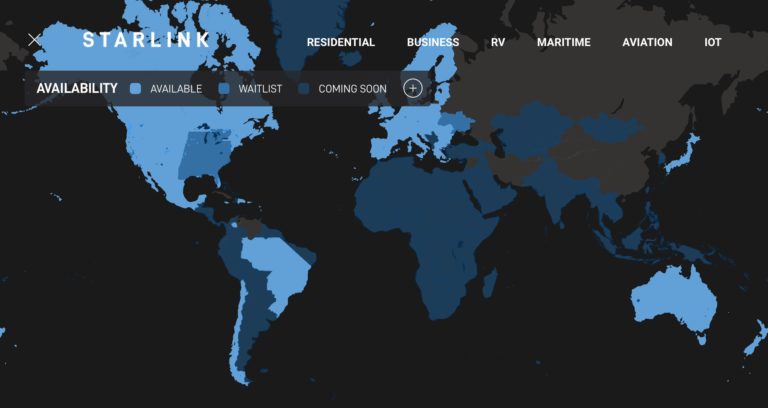
High-speed internet via Starlink, a low-orbit satellite constellation system that delivers broadband, is now available all across Alaska, said Elon Musk, the founder of SpaceX Exploration Technologies Corp, also known as SpaceX.
The coverage map for Alaska has been expanding this fall, and Musk announced Monday on Twitter that all northern latitude areas, including all of Alaska, can now get high-speed internet. The system is ideal for rural and geographically isolated areas where internet connectivity is either undependable or nonexistent, the company says. The Starlink map above was recently updated to include areas where service is active.
Starlink uses thousands of small satellites, rather than just a couple of large satellites. The satellites circle the planet 300 miles above the surface, and they can communicate with each other via laser, reducing their dependency on ground stations.
High-speed, low-latency broadband internet can be had for $110 per month, and requires a one-time hardware cost of $599. To request service, enter your addresson Starlink’s website to check for service availability in their area. If the service isn’t available in their area, Starlink will provide an approximate date of when it will arrive.
Dozens of communities in Alaska don’t have high-speed internet, even in places like Nikiski, on the Kenai Peninsula road system, where the internet is patchy. Starlink will allow people to watch movies and play video games. Businesses will have an easier time uploading and downloading data.
Starlink provides internet connectivity to over 500,000 customers in 40 countries.
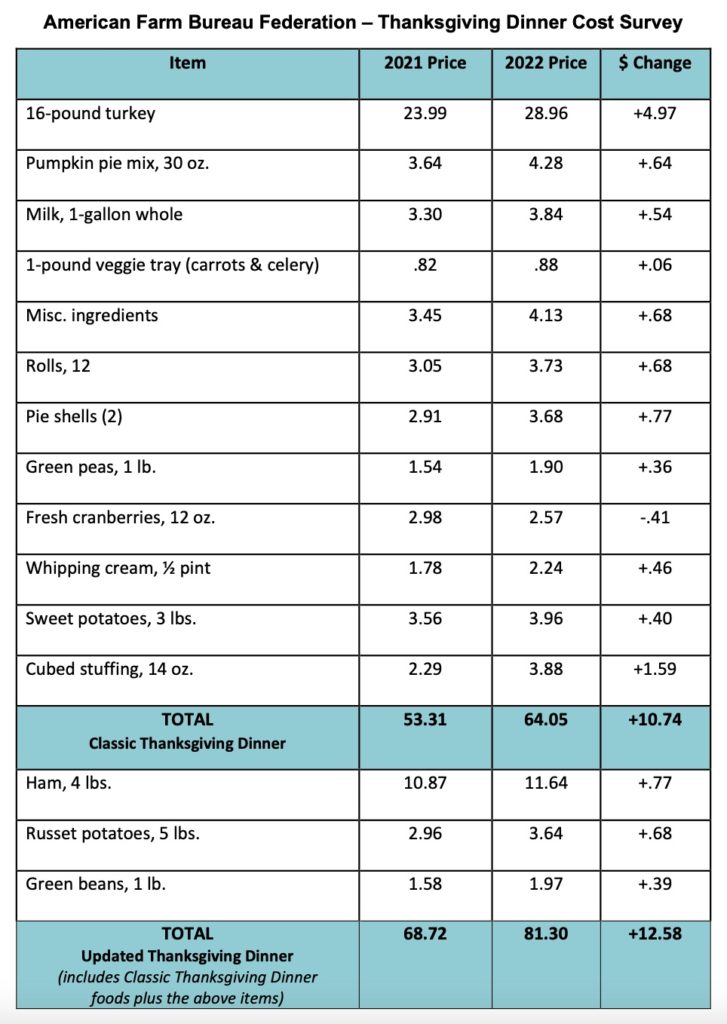
The Farm Bureau’s 37th annual survey is a snapshot of the average cost of this year’s classic Thanksgiving feast for 10, which is $64.05 or $6.40 per person. That is $10.74 more than last year’s average of $53.31, or about or 20% increase.
Alaskans will probably pay more than that, unless they harvest their own wild meat, pick their own cranberries and dig their own potatoes for the feast. Alaskans often have potlucks with neighbors, friends, and family, which helps spread out the costs. In far-flung areas, the feast can feature caribou, dall sheep, moose, walrus, salmon, king crab, goose or ptarmigan.
The protein on most Thanksgiving tables – the commercially raised turkey – costs about $28.96 for a 16-pound bird, the Farm Bureau noted. That’s about $1.81 per pound. Last week, turkeys at Woodland in Juneau were selling for $1.79 per pound.
Overall, the cost of the big meal will be up due to several factors, including inflation, the cost of diesel, and the supply chain problems, as well as the missing-in-action workforce.
What are you having for Thanksgiving? Pumpkin or pecan pie? Roast turkey or deep fried? Sweet potatoes or yams? Cranberries or salmonberries? Add your specialties in the comment section below.
The federal budget is in worse shape than the government is admitting, according to an analysis from a federal budget watchdog group that downgrades the nation’s economic outlook.
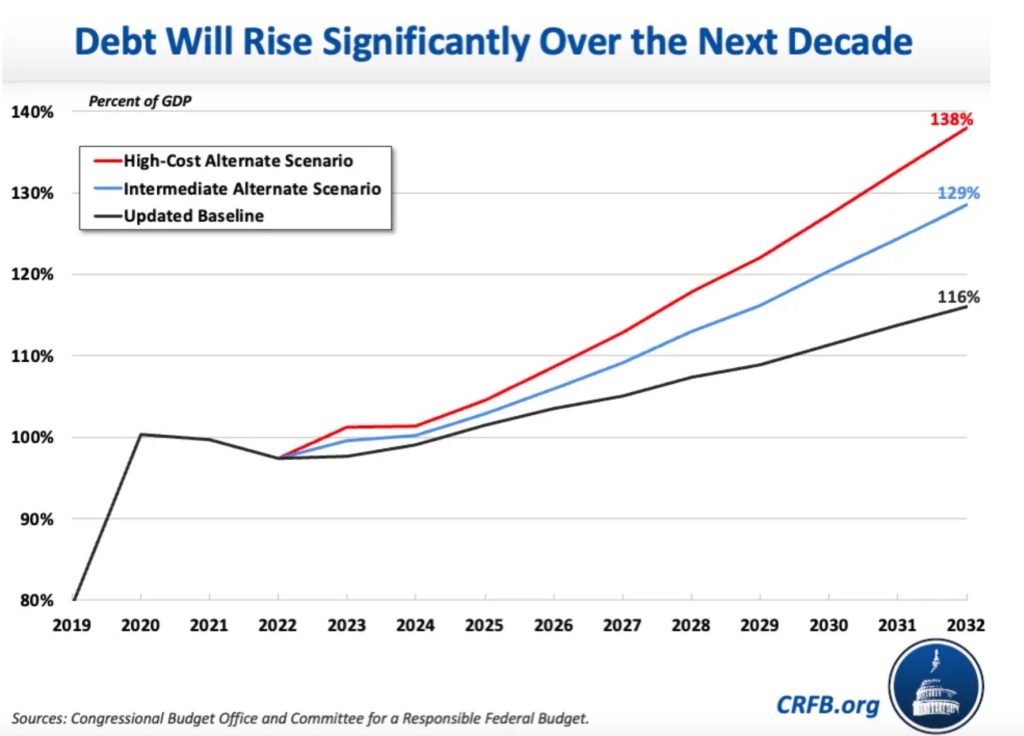
“The nation’s fiscal and economic outlook has deteriorated substantially since the last Congressional Budget Office (CBO) baseline in May, when CBO projected debt would reach a record 110 percent of Gross Domestic Product (GDP) by 2032. Under an updated current law baseline, we now project debt in 2032 will reach 116 percent of GDP, deficits will reach 6.6 percent of GDP, and interest will reach a record 3.4 percent of GDP. Under a more pessimistic (and in many ways realistic) scenario, debt in 2032 would reach 138 percent of GDP, deficits would reach 10.1 percent, and interest would total 4.4 percent of GDP. These projections suggest an unsustainable fiscal trajectory,” wrote the Committee for a Responsible Federal Budget.
“Under a more pessimistic (and in many ways realistic) scenario, debt in 2032 would reach 138 percent of GDP, deficits would reach 10.1 percent, and interest would total 4.4 percent of GDP,” the watchdog group said. “These projections suggest an unsustainable fiscal trajectory”
The U.S. national debt has exceeded $31 trillion this year and consumer prices are up 9.1 percent over the year ended June 2022, the largest increase in 40 years, according to the Bureau of Labor Statistics.
“At the same time as inflation is surging and interest rates are rising, our new projections show that the United States faces an unsustainable fiscal outlook. Policymakers should come together and act quickly to put forward a plan that would help the Federal Reserve fight inflation in the near term while putting deficits and debt on a more sustainable long-term path,” the policy group wrote. “The CRFB Fiscal Blueprint for Reducing Debt and Inflation provides a framework to tame inflation, reduce recession risk, address expiring policies, stabilize the national debt as a share of output, grow the economy, secure trust funds, and improve fairness and efficiency in the budget and tax code.”
View the report, recommendations, and more charts at this link.
Until this general election, only two congressional districts touching the Pacific Ocean remained represented by Republicans. Alaska and Southwest Washington.
That has changed in 2022.
Now, every district that has the Pacific Ocean as a border, including Hawaii, is represented by a Democrat, with the flipping of Alaska and the Third Congressional District of Washington, where Rep. Jaime Herrera Beutler lost in the primary. Democrat Marie Gluesenkamp Perez won in the general election over Trump-backed Joe Kent to represent southwest Washington, the last 38-mile Pacific Coast stretch in the continental USA that was represented by a Republican, albeit a liberal one who voted to impeach President Donald Trump.
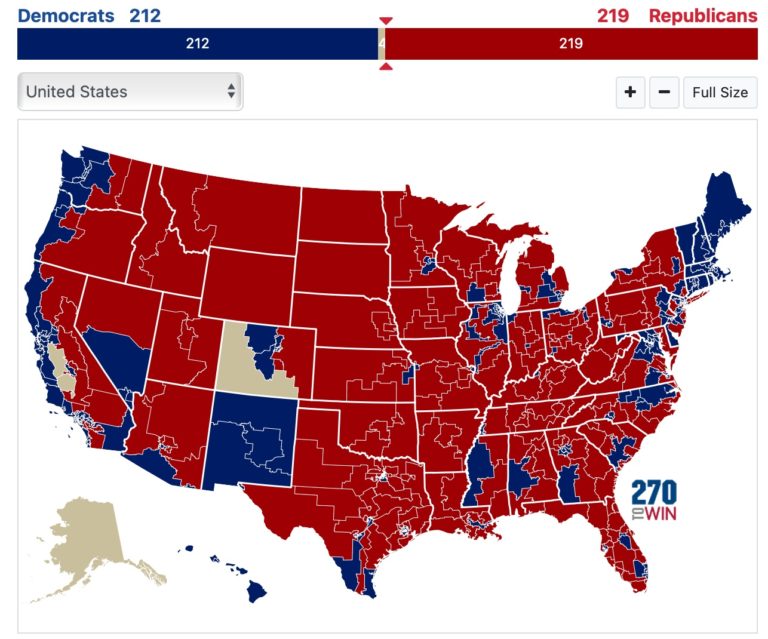
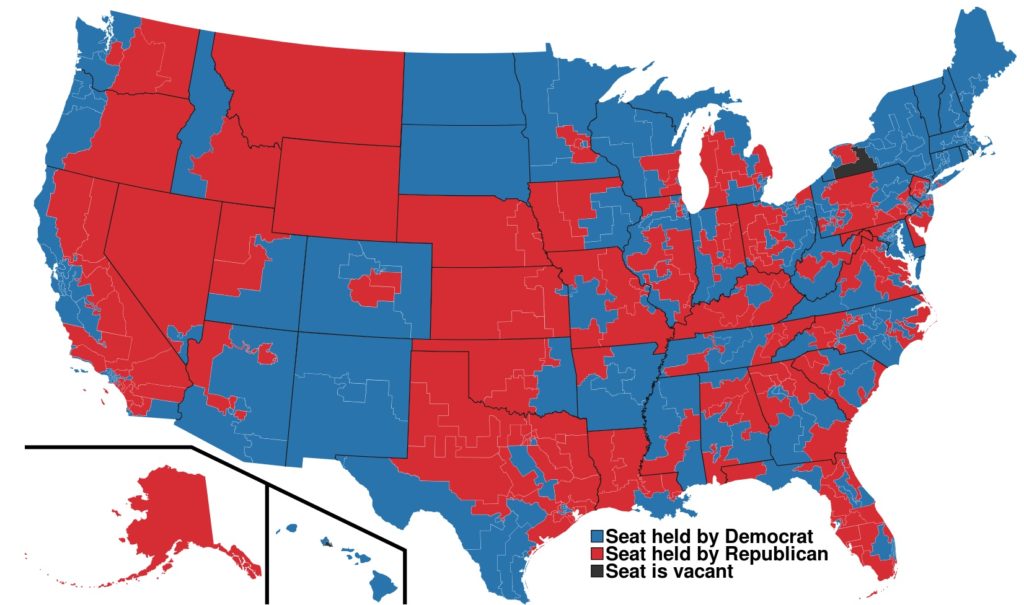
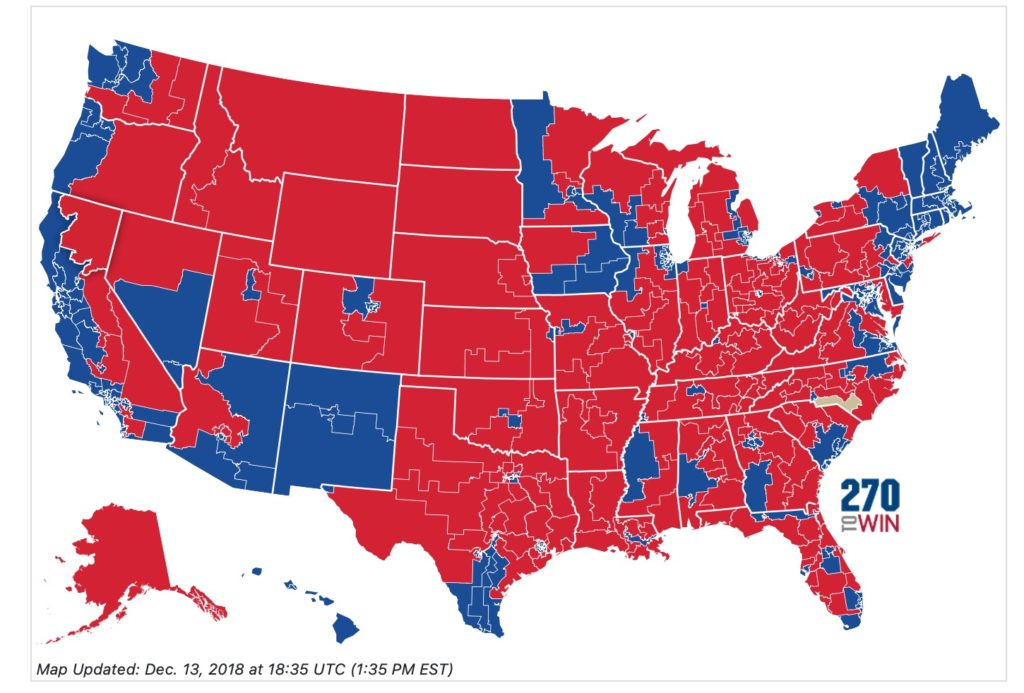
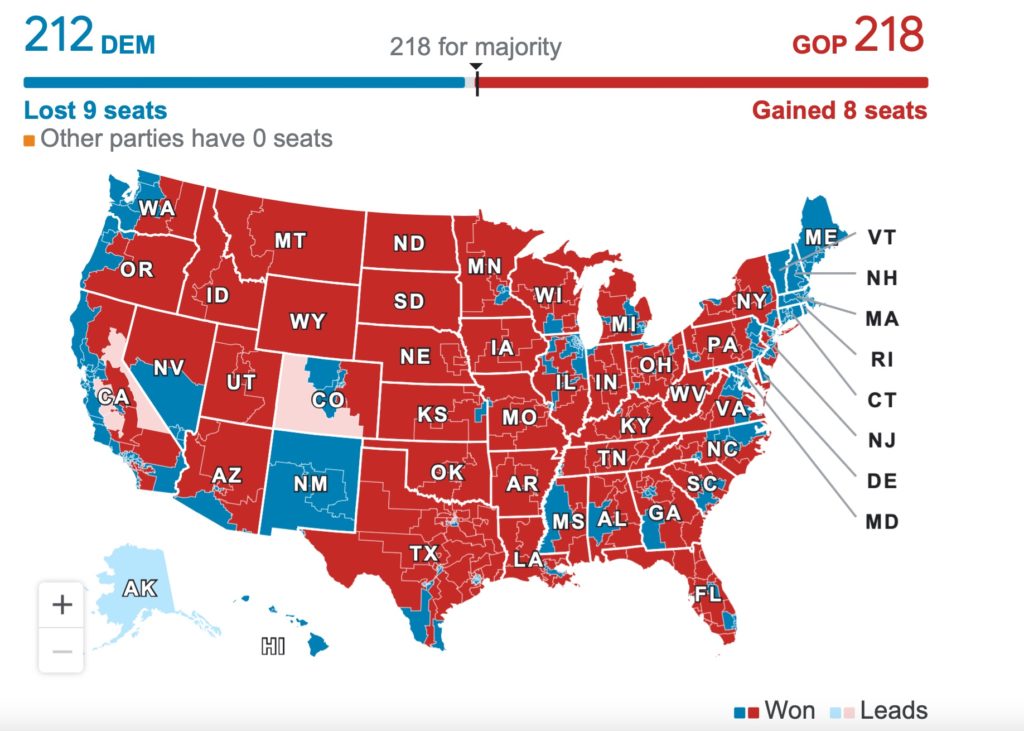
Now, there’s a stripe of blue down the entire coastline. In other states across the country, the trend has been red, according to congressional maps going back more than a decade.
Maps from 2009, 2018, and 2022 show Florida getting more red, while the far West Coast has become a blue line. While big cities are still voting for Democrats, most of Florida has now voted for Republicans, with 20 congressional seats going GOP and just 8 seats won by Democrats. In Texas, 25 congressional seats went to Republican, and 13 seats went to Democrats.
Alaska is an outlier. While Congresswoman Mary Peltola prevailed in ranked-choice voting over two Republicans and a Libertarian, she still is a member of a party that represents less than 13% of registered voters; only 77,137 Alaska voters are enrolled with the Alaska Democratic Party, while 144,000 are registered Republican (24%).
Although Alaska can no longer be considered a bright red state, without ranked choice voting, it’s clear Peltola would not have won election to the temporary seat to replace Congressman Don Young, or the two-year seat that begins in January, and the blue stripe on the West Coast may be stopped short by Republicans in 2024. Young died in March, while being run too hard by his campaign handlers and staff. He was 88 years old and had hoped to run one last time to see Speaker Nancy Pelosi, a Democrat, retired from the speakership, he told Must Read Alaska in January.
Alaska’s new election system, with its jungle primary and ranked-choice voting general election, is still waiting for election results, which haven’t been finalized, due to the ranked-choice runoff system.
On Nov. 23, the ballot tabulation will be applied to voters’ second and third-place choices — in some races — and it will all be over but the shouting.
For now, other than Georgia, which will go to a runoff on Dec. 6, what Alaskans know about the Senate seat is that a Republican will win it. It appears that Sen. Lisa Murkowski will be that person. Murkowski, confident in her win, taunted competitor Kelly Tshibaka on Twitter about the expected results:
Democrats kept control of the U.S. Senate, regardless of the expected Alaska result, winning at least 50 seats; Sen. Chuck Schumer of New York will remain Senate Majority leader. The Georgia Senate seat could make it 50-50, if Republican Hershel Walker beats Democrat Sen. Raphael Warnock, but that will still leave Vice President Kamala Harris, a Democrat, as the tie-breaking vote.
The House of Representatives has swung to Republican control. The Alaska House race is undecided, although it’s apparent to most that Democrat Congresswoman Mary Peltola will win, once Alaska’s ranked-choice formula is applied. She will be in the minority. Second-placer Sarah Palin has launched a drive to repeal ranked-choice voting.
Three seats, including Alaska’s, in the House remained uncalled Saturday night. The final districts in California, 13 and 22, could go either way.
Alaska is the only state that has nothing official yet in its governor’s race, although Gov. Mike Dunleavy appears to have maintained a lead of more than 50%, and could avoid the ranked-choice runoff. Barring unexpected votes appearing before Nov. 23, he’s got his unofficial second term in the bag.
Due to the new complicated voting methodology chosen by voters in 2020, Alaskans will wait. In Alaska, it’s a 16-day process for most races. Meanwhile, Florida was able to complete its election in one day.
Alaska’s election result shows a modest turnout this year of 264,994 ballots cast out of 601,795 registered voters, a 44% turnout. That compares to 2018, when 285,009 ballots were cast out of 571,851 registered voters, a 49.84% turnout. That was the lowest turnout in Alaska history, since records have been kept. It appears that this year, with the help of automatic voter registration with Permanent Fund dividend applications, the voter turnout will appear even lower.
With over 15 million Twitter accounts voting, the verdict is in: 51.8% of those who took the 24-hour poll posted by Twitter owner Elon Musk said former President Donald Trump should be reinstated in that social media universe.
Musk ordered it so, saying, “The people have spoken.”
Over 134 million Twitter account owners saw the poll, with 15,085,458 taking part in voting either “yes” or “no” to the statement: “Reinstate former President Trump,” according to Musk.
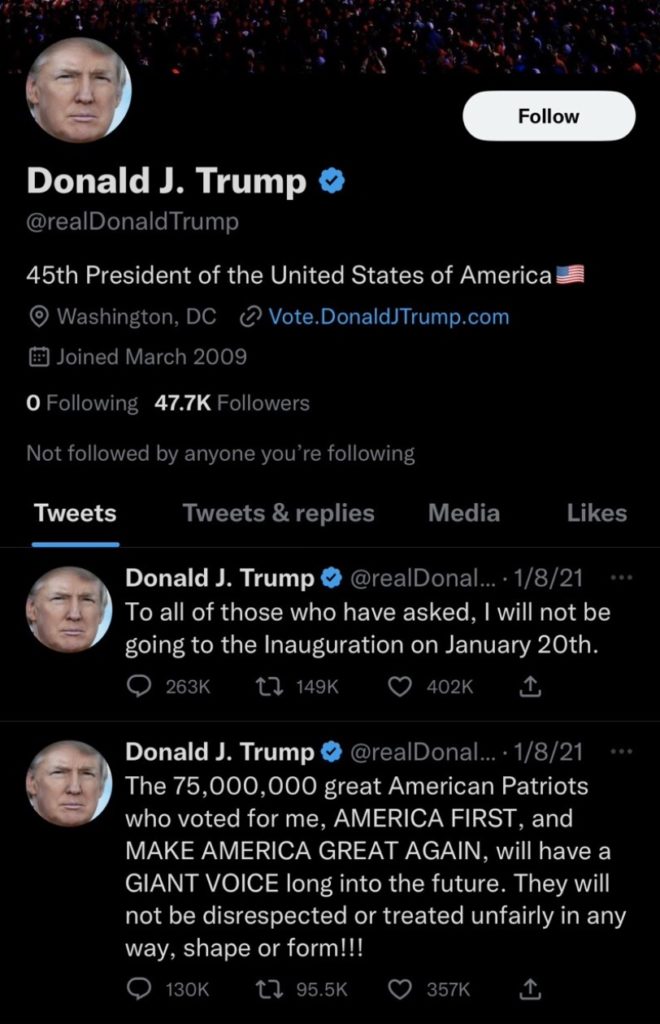
Trump’s last comment on Twitter before the former CEO banned him for life was on Jan. 8, 2021: “To all of those who have asked, I will not be going to the Inauguration on January 20th.” He was banned for glorifying violence in a pair of tweets:
Trump’s final messages on Twitter before he was banned.
Trump on Feb. 22, 2021 launched his own social media company, TruthSocial, which is populated by Trump-supporting conservatives and others. He remarked on Friday that he encouraged people to vote yes on the Twitter poll, but would continue to run the TruthSocial site.
“Vote now with positivity, but don’t worry, we aren’t going anywhere. Truth Social is special,” he wrote on TruthSocial. TruthSocial had about 1.9 unique users in September of 2022.
On Saturday, in an address to the Republican Jewish Coalition, Trump said, “I don’t see any reason for it,” responding to the question of whether he would return to Twitter, where he has an audience that reached 90 million people directly or through retweets.
Trump this week announced he will run for president in 2024. Three days later, the Biden Administration’s Attorney General appointed a special counsel to investigate Trump and his involvement in the events of Jan. 6, 2021, when protesters entered the U.S. Capitol and were unruly and posed a danger to lawmakers, as they tried to disrupt the finalization of the 2020 election that brought Joe Biden into the White House. That investigation is destined to hound Trump throughout the campaign and could widen to other scandals.
Musk and Trump have had a rocky relationship, mainly because the former president can be thin-skinned and Musk doesn’t care what Trump thinks. In July, Musk wrote that Trump should “sail away into the sunset.”
Musk also said, “I feel a bit stronger that he is not the right guy. He doesn’t seem to have the sort of character that reflects well on the United States.”
Trump, in turn, has called Musk a “bullshit artist.”
Early in Trump’s presidency, he appointed Musk to two economic advisory councils. Then, after Trump pulled the United States out of the Paris Agreement on climate change, Musk resigned from them.
“Climate change is real. Leaving Paris is not good for America or the world,” Musk said in a tweet on June 1, 2017.
A plane registered to Copper Mountain Aviation in Anchorage that was testing out a new cargo modification crashed and burned in Snohomish County, Washington on Friday morning. A wing appeared to have come off the plane and landed at a distance from the main fiery crash. The plane crash killed two four people onboard.
The crash occurred just before 10:30 a.m. Pacific time in a field near State Route 2 and Westwick Road. The aircraft was a 2021 Cessna 208B Caravan, tail number N2069B, that had left the Renton Municipal Airport and had been flying around eastern Snohomish County for about an hour. Observers said it was doing slow-speed maneuvers and accelerated stalls before the wings fell off. The plane was manufactured by Textron Aviation.
Investigators from the National Transportation and Safety Board will investigate.
Copper Mountain Aviation is owned by the same people who own Lake and Pen Airlines. An earlier version of this story mistakenly said the plane was registered to Lake and Penn Aviation.
According to the FAA, the plane is registered to Copper Mountain Aviation LLC of Anchorage and flies out of Merrill Field in Anchorage.
FTX was the third-largest cryptocurrency exchange in the world until it collapsed on Nov. 11. Various online claims have been made that Ukraine invested in the crypto-scam company FTX, whose CEO Sam Bankman-Fried has spent tens of millions of what appear to be skimmed funds to support Democrat candidates and their like-minded political action committees during the 2022 election cycle.
Some of Bankman-Fried’s money went to Sen. Lisa Murkowski’s campaign and the Alaska Democratic Party, and some was funneled to the effort to elect dozens of Democrat candidates around the country, including Congresswoman Mary Peltola through the House Majority PAC.
The biggest campaign spending by Bankman-Fried was $27 million to a Democratic political action committee called Protect Our Future.
Now, a group of House Republicans is asking Secretary of State Antony Blinken to come clean on whether that money was laundered through Ukraine and if U.S. taxpayer aid sent to Ukraine was then funneled into investments in the now-bankrupt FTX. If so, that could mean that taxpayer funds were shuffled around to ultimately support Democrats running for office this year. Bankman-Fried spent nearly $40 million on the 2022 midterms, money that was taken from his cryptocurrency subsidiaries before he declared FTX bankrupt.
The Associated Press and Time Magazine assure readers that no such proof exists that U.S. aid dollars were invested in FTX. But there have been significant investments through the cryptocurrency world in the war between Ukraine and Russia, and it’s provable that money has gone at least one way. What has not been proved is whether Ukraine then invested in FTX as a sort of quid pro quo.
The Associated Press wrote that the claim that U.S. aid to Ukraine was laundered back to the Democratic Party though FTX is false.
“The Ukrainian government has not invested nor stored money in FTX, according to the country’s Ministry of Digital Transformation. These claims misrepresent a short-term initiative in Ukraine that used FTX to convert cryptocurrency donations for the war effort into government-issued currency. While FTX’s former CEO Sam Bankman-Fried has donated large sums to Democrats, records show he and other FTX executives also have donated to conservative groups,” the Associated Press wrote on Thursday.
The amounts donated to conservative groups by Bankman-Fried is minor, and includes the campaigns of Sen. Lisa Murkowski, Susan Collins, and Mitt Romney — not senators that some would consider conservative.
Read the Associated Press‘ full report on the matter at this link.
But news agencies and fact-check websites are only disputing the allegations based on the word of Ukrainian government officials.
Transparency International’s 2021 Corruption Perceptions Indexhas Russia at the top of the list, as the most corrupt country in Europe, followed by Ukraine. Ukraine is ranked 122nd out of 180 countries for corruption. Its officials being the basis for a claim of “false” may not be good enough for many Americans.
There is an absolutely established link between FTX and the war in Ukraine. It involves a Ukrainian website called Aid For Ukraine.
In March of 2021, Aid For Ukraine was launched to raise money from the crypto community for the benefit of “Ukraine’s military and humanitarian needs.” The initiative is powered by the Ukrainian government’s Ministry of Digital Transformation of Ukraine, FTX, and Everstake, the largest decentralized staking provider in the blockchain industry. This is the first instance of a cryptocurrency exchange providing a conduit for crypto donations to a public financial institution, the announcement noted.
Must Read Alaska is not linking the related websites in this scandal due to the possibility of bad actors. The link here goes to PRNewswire’s announcement of the Aid for Ukraine project. The link to the actual Aid for Ukraine website goes to a Ukrainian government website:
The link to Aid for Ukraine (there are other sites with the same name but with a slightly different URL top level domain) goes to a Ukrainian government website. The project was launched with FTX, Digital Transformation of Ukraine, and Everstake, a digital ledger company.
Fox Business news outlet reported on Friday it had acquired the letter written by several Republican House Representatives to U.S. Secretary of State Blinken regarding their concerns that some of the $66 billion in U.S. aid sent to Ukraine has been redirected to the Democratic party through FTX.
The letter was signed by Reps. Troy Nehls and Louie Gohmert of Texas, Rep. Byron Donalds of Florida, and Rep. Mary Miller of Illinois, according to Fox. The letter is not posted online, but the Representatives stated “it has come to their attention that billions of taxpayer dollars sent to Ukraine to assist with their war efforts were potentially invested in a crypto exchange that then made massive donations to Democrats” during the past midterm elections, according to Fox.
FTX collapsed when investors discovered it was a Potemkin village that was completely fraudulent, and was exposed as not having enough assets to redeem client withdrawals, which created a three-day “run” on the cryptocurrency exchange, leading to FTX filing for Bankruptcy on Nov. 11.
FTX founder and the No. 2 donor to the Democratic Party Bankman-Fried now faces criminal investigations in the Bahamas, where the exchange was headquartered and where he is holed up.
Elon Musk, who purchased Twitter in October, posted a poll on Friday, asking the Twitter universe if former President Donald Trump should be allowed back on the social media platform. With less than seven hours left in the poll, as of this writing, over 12 million Twitter users have voted, and Trump is winning with these voters, 52.4% to 47.6%.
Twitter users have, in the past, leaned left, and it is the social media place where journalists and politicos have hung out and chatted nonstop.
“U.S. adult Twitter users are younger and more likely to be Democrats than the general public. Most users rarely tweet, but the most prolific 10% create 80% of tweets from adult U.S. users,” reported the Pew Research Centerin 2019. At least some of those journalists and leftist activists say they have left the social media site and taken up social media residency at Mastodon, a new social media company that some people find clunky and hard to use. Those leftists and journalists have predicted Twitter will fail without them, but the Musk poll shows vibrancy and diversity of opinion.
The former overseers of Twitter put a damper on conservative voices by shadow-banning them, which means the system down-ranked them so that few people would see their comments. The former owners blocked Trump’s account on Jan. 8, 2021, writing on the Twitter blog, “After close review of recent Tweets from the @realDonaldTrump account and the context around them — specifically how they are being received and interpreted on and off Twitter — we have permanently suspended the account due to the risk of further incitement of violence.”
The permanent ban of Trump came two days after a surge of protesters went into the U.S. Capitol, causing a delay of the certification of the Electoral College vote that completed the 2020 election of Joe Biden to the presidency.
On the Twitter blog on Jan. 8, 2021, the company justified the ban:
“In the context of horrific events this week, we made it clear on Wednesday that additional violations of the Twitter Rules would potentially result in this very course of action. Our public interest framework exists to enable the public to hear from elected officials and world leaders directly. It is built on a principle that the people have a right to hold power to account in the open,” Twitter wrote.
“However, we made it clear going back years that these accounts are not above our rules entirely and cannot use Twitter to incite violence, among other things. We will continue to be transparent around our policies and their enforcement,” Twitter wrote.
The tweets that were the final straw for Twitter were posted by Trump on Jan. 8, 2021:
“The 75,000,000 great American Patriots who voted for me, AMERICA FIRST, and MAKE AMERICA GREAT AGAIN, will have a GIANT VOICE long into the future. They will not be disrespected or treated unfairly in any way, shape or form!!!”
Shortly thereafter, Trump tweeted:
“To all of those who have asked, I will not be going to the Inauguration on January 20th.”
Twitter decided those comments had to be viewed as inciting violence: “Due to the ongoing tensions in the United States, and an uptick in the global conversation in regards to the people who violently stormed the Capitol on January 6, 2021, these two Tweets must be read in the context of broader events in the country and the ways in which the President’s statements can be mobilized by different audiences, including to incite violence, as well as in the context of the pattern of behavior from this account in recent weeks. After assessing the language in these Tweets against our Glorification of Violence policy, we have determined that these Tweets are in violation of the Glorification of Violence Policy and the user @realDonaldTrump should be immediately permanently suspended from the service.”
Twitter went on to say that under its glorification of violence policy, the comments “could inspire others to replicate violent acts and determined that they were highly likely to encourage and inspire people to replicate the criminal acts that took place at the U.S. Capitol on January 6, 2021.”