Thursday, May 14, 2026
Home Blog Page 818

Diversion tactics: Kenai Borough Assembly calls emergency meeting to discuss releasing HR report

16

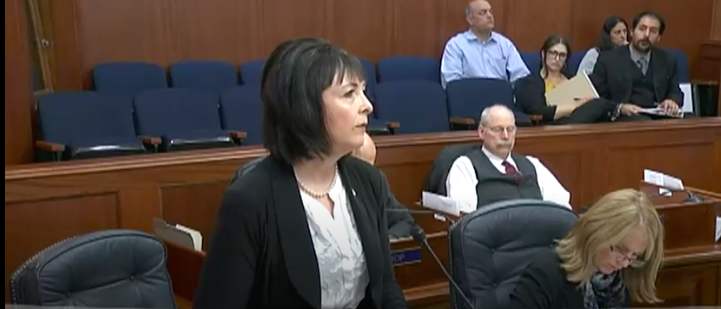
The Kenai Borough Assembly on Friday afternoon called an emergency meeting for Sunday at 1 pm to discuss whether it should release a Human Resources report regarding outgoing Borough Mayor Charlie Pierce.

The Assembly has no habit of calling for emergency sessions for wildfires, pandemics, or floods. But political emergencies are different.

The Assembly has been taking intense criticism from the public for arbitrarily installing former mayor Mike Navarre into office to fill out the term of Mayor Pierce, who leaves at the end of September to focus on his campaign for governor. The meeting on Sunday appears to be a way for the Assembly to do battle with the public, and it’s also a warning to the public that the Assembly may be willing to break the laws covering confidentiality of settlements in order to maintain control.

Two settlement agreements were made between the borough and former HR directors Kim Saner and Stormy Brown, who Pierce fired in 2019. Brown claimed she was fired because of her cancer diagnosis; she is currently undergoing chemotherapy out of state. The borough, at the time, paid $150,000 to settle the Stormy Brown claim of lost wages and emotional damage. Another $117,000 was paid to Kim Saner for a separate claim.

An audio recording summarizing the mediation on May 10 was released by the borough earlier this year.

The emergency that the Assembly actually has is that last week, the majority members appointed Navarre without public process and without allowing other people to apply for the temporary position. Leaders of that efforts, Assemblymen Tyson Cox and Jesse Bjorkman, have come under fire at the same time they are both up for reelection on Oct. 4. (Don Boston is challenging Cox, and Dil Uhlin is challenging Bjorkman. Bjorkman has dual campaigns under way because he is also running for Alaska Senate.)

Bjorkman’s radio appearance on the Bob Bird Show Friday afternoon was a public relations disaster, according to several sources. Assemblyman Richard Derkevorkian, who called into the show, told Bjorkman he was not telling the truth about the timeline of events that led to Navarre’s appointment. Derkevorkian and Assemblyman Bill Elam both voted against the surprise “lay down” motion to appoint Navarre.

Now, the Assembly majority appears to be in damage control to take the focus off of the Assembly majority’s recent behavior, which may include the violation of the Alaska Open Meetings Act.

On the agenda for the meeting:

  1. Discussion Regarding Release of Internal HR Investigation Report
  2. Discussion Regarding Disclosure of Items Discussed in Executive Session on August 23, 2022.

The borough clerk has noted that a special session may be convened, which would exclude public participation.

Remote participation will be available through Zoom. Meeting ID: 884 7373 9641 Passcode: 671108. https://zoom.us/j/88473739641. To attend the Zoom meeting by telephone call toll free 1-888-788-0099 or 1-877-853-5247 and enter the Meeting ID: 884 7373 9641 Passcode: 671108.

Detailed instructions on how to attend the meeting in person, the meeting agenda and agenda items are at this link.

The Assembly clerk says those who would would like to provide public testimony at the meeting should call the Clerk’s Office to have their names added to the public speakers list: 907-714-2160.

Mayor Bronson says Golden Lion Hotel will likely be claimed by State of Alaska DOT for highway improvements

39

While liberal Anchorage Assembly members are pressuring the Mayor’s Office to use the Golden Lion hotel property to house homeless people, the mayor says that the Alaska Department of Transportation is going to take the property via emminent domain, in all likelihood, to improve traffic patterns at 36th Avenue and New Seward Highway.

Former Mayor Ethan Berkowitz purchased the Golden Lion for $9 million in 2020, but it sat empty throughout the term of interim Mayor Austin Quinn-Davidson, and has remained unused since Mayor Dave Bronson took office.

Using that location for homeless or inebriates and drug addicts has been unpopular with midtown Anchorage residents, who cite many safety concerns, such as the likelihood that the nearby Helen McDowell Sanctuary will become a homeless hideout and encampment. The Anchorage Jewish community has said in the past that the proximity to its preschool is also a safety concern.

Mayor Bronson submitted a letter to the Assembly that was sent to him by Alaska DOT, saying that there is a “high likelihood” that DOT will need that property. He said the project and the property was scored by DOT staff in 2018 and was the highest scoring project on Alaska’s National Highway System due to safety concerns.

“The [COT] letter states that this is one of the busiest and highest crash rate intersections in the Municipality of Anchorage, bicyclists and pedestrians report that it is difficult to cross the highway, and users report a general lack of east-west connectivity in the area. The Anchorage Assembly has brought up these same issues in other parts of town in dealing with bicyclists and pedestrians with traffic. The letter from DOT&PF states that planned improvements include grade separations, highway ramps, non-motorized facilities, and new frontage roads connecting Tudor Road to 36th Avenue,” according to the Mayor’s Office.

“The DOT&PF letter goes on to state that all project alternatives being evaluated show an impact to the Golden Lion Hotel property, which means there is a “high likelihood” that the result will be a total take of the property. DOT&PF also stated that they have communicated to the Municipality of Anchorage’s previous administration (Acting Mayor Quinn-Davidson), that the parking area adjacent to the highway was permitted to the previous owner of the Golden Lion and that permit was non-transferrable and was in fact terminated when the property was acquired by the Municipality of Anchorage. DOT&PF says it will not be issuing any future permits for those parking spaces as that property will be required for the Seward Highway & 36th Avenue project,” the mayor said.

Members of the Assembly appear unmoved and said that if the State takes the property, that would be years away, and meanwhile they want it used for the purpose for which it was purchased by Berkowitz, who left office in a scandal shortly after purchasing the hotel.

DOT in 2020 sent interim Mayor Quinn-Davidson a similar letter to the one sent to Mayor Bronson in 2022, stating that the property’s parking lot would likely become part of the reconstruction of the intersection. Without the parking lot, the building would not be usable for any commercial purpose. The DOT said, in its letter to Quinn-Davidson, that it was discontinuing the building’s permit for encroachment on the DOT right of way.

But Bronson said it makes no sense to invest more into the building that will probably be torn down in a few years: “After consultation from the  Department of Law based off of this new information from the DOT&PF to eventually take the Golden Lion Hotel property, it does not make sense to set up a treatment facility in a location that will be taken away. As part of due diligence, my administration is supporting the opening of treatment centers with Providence and Salvation Army in the near future and evaluating other locations and possible options to address substance misuse treatment and current community needs.” 

The Berkowitz Administration signed a legal agreement during the sale of Municipal Light & Power to Chugach Electric Association that says Anchorage will need to spent $15 million on a treatment center by the year 2025. If the city doesn’t fulfill that promise, the Muni will need to pay Providence Hospital $15 million. The agreement happened because Providence intervened in the sale and made that demand, which the Regulatory Commission of Alaska approved.

Notes from the trail: Peltola to be sworn in on Tuesday

37

With 59 days to go until the general election, Congresswoman-elect Mary Peltola of Bethel is on a flight to Washington, D.C. this morning, where she will be sworn in on Tuesday as the first Alaska Native member of Congress and the first new congressional representative Alaska has had since 1973. She is filling out the term of Congressman Don Young and she will be working hard to flip the seat blue in November. She’ll have help from House Speaker Nancy Pelosi, while the Republican Party itself has pretty much given it up to her by staying on the sidelines:

Trivia Saturday: There are no living prior members of the U.S. House from Alaska.

A list of prior House members for Alaska since 1906:

  • – Don Young – March 6, 1973 – March 18, 2022
  • – Nicholas Begich – January 3, 1971 – December 29, 1972
  • – Howard Pollock – January 3, 1967 – January 3, 1971
  • – Ralph Rivers – January 3, 1959 – December 30, 1966
  • – Bob Bartlett – January 3, 1945 – January 3, 1959
  • – Anthony Dimond – March 4, 1933 – January 3, 1945
  • – James Wickersham – March 4, 1931 – March 3, 1933
  • – Daniel Sutherland – March 4, 1921 – March 3, 1931
  • – James Wickersham – March 1, 1921 – March 3, 1921
  • – George Grigsby – June 3, 1920 – March 1, 1921
  • – Charles Sulzer – March 4, 1919 – April 28, 1919
  • – James Wickersham – January 7, 1919 – March 3, 1919
  • – Charles Sulzer – March 4, 1917 – January 7, 1919
  • – James Wickersham – March 4, 1909 – March 3, 1917
  • – Thomas Cale – March 4, 1907 – March 3, 1909
  • – Frank Wacksey – August 14, 1906 – March 3, 1907

Media:

The Federalist: Alaska’s ranked-choice voting scheme was a plot to save Murkowski, but it also doomed Palin

Election officials called Alaska’s special election House race for Democrat Mary Peltola over 2008 GOP vice presidential nominee Sarah Palin last week. Peltola’s victory, despite nearly 60 percent of votes cast for a Republican on all first-choice ballots, will mark the first time since 1973 that a Democrat will represent the state in the lower chamber. 

Whether the August contest was Palin’s race or Republican Nick Begich’s race to lose is an open question. Whether the Republicans’ loss was a consequence of Alaska’s new ranked-choice voting system, however, is no doubt, and GOP Alaska Sen. Lisa Murkowski is the one to blame.

In 2010, Sen. Murkowski captured re-election through a triumphant write-in campaign after losing the Republican primary to a former federal magistrate who was backed by Palin. Murkowski comfortably won a third full term in 2016 but continued to antagonize the state’s Republican base with votes to oppose restrictions on abortion, preserve Obamacare, and convict President Donald Trump in his second impeachment. Murkowski also voted “present” in the confirmation of Supreme Court Justice Brett Kavanaugh, and she upset constituents when last year she served as the tie-breaker to move forward the nomination of Interior Secretary Deb Haaland, who has shut down state development projects. 

In other words, Murkowski did not strive to win over Republicans in a state that went for Trump by 10 points in 2020. To save her seat, Murkowski operatives devised a plan to avoid a primary by radically transforming the state’s election system. The answer became ranked-choice voting, a ballot system to rig elections in favor of the incumbent. Read the story at this link.

Washington Post says Palin lost the seat for the GOP

Sarah Palin has made no secret since her loss in the Alaska special congressional election last week that she doesn’t appreciate the state’s new ranked-choice voting system, which she and other prominent conservatives have blamed for her loss.

They should blame Sarah Palin.

Whatever you think about ranked-choice voting, one of its benefits is that it can show you just how good each candidate was at appealing to the broader electorate — the stated purpose of the system. And new data confirms something that seemed pretty evident last week: Palin cost her party a House seat it otherwise very likely would have won.

The state Division of Elections has put out new data on how the election went down. And the data suggest that the other Republican in the race, Nick Begich, would have defeated Rep.-elect Mary Peltola (D) if the race had boiled down to the two of them. Story is at this link.

Business Insider: Palin floats voter fraud concept

Sarah Palin, a former GOP vice-presidential candidate and the former Republican Governor of Alaska, has leaned into a popular Trumpworld tactic — baselessly alleging fraud after an election loss. 

In an appearance on Steve Bannon’s “War Room: Pandemic” podcast, Palin complained about ranked-choice voting in the state, claiming without substantiation that there could have been voter fraud.

Ranked-choice voting involves voters ranking candidates on the ballots by preference. The system was used in the state’s recent special House election in which Palin lost to Mary Peltola, a Democrat. Story is at this link.

Politico: How Mary Peltola beat Sarah Palin

Congresswoman-elect Mary Peltola did what many thought was the unthinkable.

She defeated a pair of Republican challengers – a former governor with near universal name recognition and another who is part of a political dynasty – to become the first Democrat in almost 50 years to become Alaska’s lone U.S. representative.

She also made history.

An Alaska Yupik, Peltola will be the first Indigenous person to represent the state when she’s sworn in later this month.

Her victory though is not without controversy.

Republicans, including those thought to have eyes on a White House run in 2024, railed against the election results, characterizing Alaska’s newly implemented ranked-choice voting as “a scam to rig elections” and a process that “disenfranchises voters.”

There is no evidence to back this up. Read the story here.

Endorsements: Kelly Tshibaka for Senate was endorsed by Edgar Blatchford, Alaska educator who was eliminated from the race during the primary. He is the Democrat whom the Democrats did not endorse, as they favored Pat Chesbro. Lisa Murkowski released a long list of endorsements from Native leaders. That list is here.

Jesse Booth of Metlakatla, and David Mead of Anchorage endorsed Nick Begich for Congress.

Events:

Gangland: Illinois cancels cash bail in January, makes kidnapping, robbery, and some murders non-detainable

29

The new Illinois SAFE-T Act eliminates cash bail and allows criminals a get-out-of-jail-free card. The criminal justice framework allows kidnappers, robbers, and arsonists to roam free until their court dates. Parts of the law went into effect in 2021, and the rest of it will be in effect in January, 2023.

Rep. Justin Slaughter, the Chicago Democrat who carried the bill, said the Republicans who opposed it have a “bad stench of racism.”

But many critics say that Illinois will become the crime capital of the nation and will soon be overrun by cartels. The Drug Enforcement Agency notes that Chicago already “has a long history of organized crime and is home to numerous street gangs that use the illegal drug trade to build their criminal enterprises.”

“Compounding Chicago’s crime problem is a steady supply of drugs from Mexican drug cartels, most notably the Sinaloa Cartel. Illicit drugs flow from Mexico to Chicago via a loosely associated network of profit-driven intermediaries, with Chicago street gangs serving as the primary distributors at the street level. The profits earned through drug trafficking increase the staying power of both street gangs and drug trafficking organizations (DTOs), thereby influencing levels of violent crime in both the United States and Mexico. Of particular concern is the trafficking and distribution of heroin, which has increased significantly in recent years and caused significant harm to communities in Chicago and around the United States,” the DEA reports.

The list of offenses for which Illinois law enforcement cannot detain criminals, include:

  • – Aggravated Battery
  • – Aggravated DUI
  • – Aggravated Fleeing
  • – Arson
  • – Burglary
  • – Drug-Induced Homicide
  • – Intimidation
  • – Kidnapping
  • – Robbery
  • – 2nd-Degree Murder
  • – Threatening a Public Official
  • The SAFE-T Act says defendants of these and lesser crimes, such as drug crimes, are presumed eligible for pretrial release unless prosecutors present “clear and convincing evidence” that shows the suspect poses a threat to a specific and identifiable person. Prosecutors will be required to actually request detention and the State of Illinois is required to hold a hearing within 48 hours of apprehension to determine if the suspect should be released. Investigators say they will not have the time they need to compile the evidence from surveillance and body cameras, crime labs and forensic analysis.

The SAFE-T Act gives criminals the right to make three phone calls within three hours of arriving at any place of custody. Critics say this allows them to call their victims and threaten them into not pressing charges. There are no restrictions on the phone calls, which means the perpetrators can intimidate or tamper with witnesses.

Former Alaska Gov. Bill Walker signed into law a similar measure known as SB 91, and Alaskans found that it led to a massive crime wave. As soon as Gov. Mike Dunleavy assumed office, the process of repealing SB 91 was underway and he signed HB 49 by July of 2019.

House Bill 49 gave discretion back to judges and the Alaska Parole Board, and made improvements to the “catch and release” bail system that was created by the notorious and widely hated SB 91.

SAFE-T Act: Policing Highlights

USE OF FORCE

In the area of use of force, the Act:

  • Offers new standards for when police use force.
  • Requires officers to provide aid after using force.
  • Requires officers to intervene if other officers use unauthorized or excessive force.
  • Prohibits police access to any military equipment surplus program or purchasing specific types of equipment.
  • Requires publishing of any purchase, request, or receipt of equipment through any military purchasing program.
  • Expands use of, and changes guidelines and requirements for, body worn cameras and who may access, review, or delete footage.
  • Expands officer training on topics including crisis intervention, de-escalation, use of force, high-risk traffic stops, implicit bias, racial and ethnic sensitivity training, and emergency response.
  • Mandates use of force reporting to FBI National Use of Force Database.
  • Requires reporting of deaths in police custody and due to use of force.

Complaints and Misconduct

In the areas of complaints and misconduct, the Act:

  • Creates a statewide decertification process for officers.
  • Allows the attorney general to investigate, initiate civil lawsuits, and enforce settlements against police agencies that have a pattern of depriving individuals of their rights.
  • Creates stricter body camera regulations and a Class 3 felony for clear and willful attempts to obstruct justice.
  • Allows for investigation of anonymous complaints against officers.
  • Bans the destruction of police misconduct records.
  • Allows complaint filings against police officers without sworn affidavits or other legal documentation.
  • Removes the requirements that officers under investigation must be informed of complainants’ names or of the officer in charge of the investigation.
  • Prohibits local governments from retaliating against employees who report improper government actions.
  • Expands notification of police misconduct to the Illinois State Training and Standards Board.
  • Makes data on misconduct more accessible.
  • Requires a publicly available database for any police misconduct that results in decertification.

Officer decertification

In the certification and decertification process area, the Act:

  • Changes Illinois State Police Merit Board composition and reporting to the board.
  • Creates a Illinois Law Enforcement Certification Review Panel.
  • Enhances automatic and discretionary termination of officers.
  • Changes procedures for automatic and discretionary decertification of officers.
  • Includes provisions for immediate suspensions.
  • Requires verification of training and employment information.
  • Requires additional sheriff qualifications.

In other police provisions, the Act:

  • Adds reporting of officer dispatch to mental health crises or incidents.
  • Makes residency requirements a subject of collective bargaining for cities with populations over 100,000.
  • Requires officers to issue a citation rather than arrest for certain low level offenses.
  • Provides for confidential mental health screening and counseling for officers.
  • Expands crime statistics reporting to monthly.
  • Provides people in custody with up to three phone calls within three hours.
  • Allows for medical treatment for people in custody without unreasonable delay.
  • Amends police pre-arrest diversion/deflection programs to allow for collaboration with other first responders and community partners.

Pretrial

In the pretrial area, the ACT:

  • Abolishes cash bail.
  • Prevents the results of a risk assessment from being the sole basis for a detention decision and informs the accused person of the tool.
  • Establishes a Pretrial Practices Data Oversight Board to oversee data collection and analysis.
  • Establishes the Domestic Violence Pretrial Practices Working Group.
  • Adds notification of pretrial hearing to crime victims.
  • Changes the offense class for violations of conditions of pretrial release.
  • Changes pretrial release procedures, including release on own recognizance, warrant alternatives, and conditions of release, including electric monitoring and home confinement revocation, modification, and sanctions.
  • May revoke pretrial release under certain circumstances.
  • Complete details about the massive crime bill are at this link.

Dunleavy: Acting Revenue commissioner is Deven Mitchell

2

Gov. Mike Dunleavy named Deven Mitchell acting commissioner of the Alaska Department of Revenue today. Mitchell replaces outgoing Commissioner Lucinda Mahoney, who is leaving to refocus on her health and family. 

Mitchell has been employed at the Alaska Department of Revenue since 1992. He has served most recently as Alaska’s debt manager as well as executive director and treasurer of the Alaska Municipal Bond Bank Authority, a public corporation of the State. Mitchell has also worked at several Alaskan financial institutions. Mitchell will become acting commissioner starting Monday and will serve on the board of the Alaska Industrial Development and Export Authority.

Mitchell holds a Bachelor of Science in Business Administration from Northern Arizona University.

Top Democrat lawmakers tell credit card companies they should collect gun purchase details for government

A group of Democratic lawmakers from the U.S. House and Senate have written to the chief executives of American Express, Mastercard, and Visa, advising the credit card companies to begin monitoring Americans’ gun purchases.

Led by Sens. Elizabeth Warren and Dianne Feinstein, the Democrats’ letter applies pressure to the companies for creation of special categories for guns and ammunition, rather than having them in the “miscellaneous retail stores” category. The credit card companies could then help police “preempt some mass shootings.”

“Banks and credit card companies could help law enforcement preempt some mass shootings by identifying suspicious gun purchases through the implementation of a new MCC,” the lawmakers wrote. “MCCs are four-digit codes maintained by the International Organization for Standardization (ISO) that classify merchants by their purpose of business.”

The creation of a new category for gun and ammunition retail stores would then aide law enforcement in compiling financial data and monitoring “suspicious activities,” such as surrogates buying guns for others, or “straw purchases.”

“The creation of a new MCC for gun and ammunition retail stores would be the first step towards facilitating the collection of valuable financial data that could help law enforcement in countering the financing of terrorism efforts,” the lawmakers said. “A new MCC code could make it easier for financial institutions to monitor certain types of suspicious activities including straw purchases and unlawful bulk purchases that could be used in the commission of domestic terrorist acts or gun trafficking schemes. Such coordination between financial institutions and law enforcement has been instrumental in efforts across the federal government to identify and prevent illicit activity.”

The purchase of guns is constitutionally protected, but the Democrats in the House and Senate seek to erode that right. Critics note that actual criminals will quickly learn that they can’t use credit cards for these types of purchases. The people who would be caught up in flagged transactions will be law-abiding citizens.

Matt Barth: Rank the Red or we lose our seat in Congress

By MATT BARTH

Let me start by saying I am no fan of ranked-choice voting, and I believe we should work to repeal it. In the meantime, it is the system we have. We must choose to win, regardless of liking the system or not.

As conservatives, we are hesitant to change, mainly because so much of the change we see around us is terrible, so we fight against it, as we should. Where we fail is refusing to adjust after we have lost the fight. We must shift quickly, adapt to the change, and commit to being successful until we implement a better system.

Thousands of us sit back upset, complain, and wallow in self-pity instead of figuring out how to win with the new rules. We put our emotions ahead of our core values. We already lost our U.S. House seat to a Democrat because of this refusal to adapt, but fortunately, there is still a chance to fix it.

We need to learn from this failure and thank God some of the pain from this misstep will be short. Conservatives will quickly retake the seat if we rank Republican candidates #1 and #2. That is all it takes, and we send a Republican to Congress.

No conservative can honestly say Congresswoman-elect Mary Peltola better aligns with their values and positions more than Nick Begich or Sarah Palin, so rank them #1 and #2, and we will win!

I do not care if you like them; they are the ones we have, and we must come together to secure a victory. Since the candidates have not come together on this issue, we must take it upon ourselves to be the leaders of our movement and rank them both. If we refuse to adjust, we simply hand our opponent, who will likely vote in lockstep with the Biden agenda, a victory, and we will have no one to blame but ourselves.

All it takes is #rankthered and we stand a chance to defeat Biden’s anti-Alaskan and anti-American agenda. 

Incoming Kenai Borough mayor Navarre admits the process to appoint him could have looked better

On the KSRM Sound Off Show, hosted by Duane Bannock, former Kenai Borough Mayor, (and incoming mayor) Mike Navarre acknowledged Thursday that the process for appointing a temporary mayor for the borough was less than perfect.

The Kenai Borough Assembly this week surprised the public by appointing Navarre as the interim mayor without so much as any advance notification.

Navarre, a Democrat and co-chair of the Bill Walker for Governor campaign, received the appointment without public process and without the Assembly allowing others to apply for the position. Mayor Charlie Pierce is resigning to work on his gubernatorial campaign. Pierce gave the Assembly a five-week notice.

At least two others had expressed interested in serving: Outgoing Sen. Peter Micciche, and former Borough Chief of Staff James Baisden. Baisden offered to do it for free as a public service.

Bannock, on the air, said he had written a letter to Assemblyman Tyson Cox, who was the one who proposed to the Assembly that Navarre be appointed in the role of temporary mayor. Bannock’s letter asked Cox questions:

“1. Was there a behind the scenes agreement prior to Tuesday’s meeting?”

“2. How many assembly members did you speak with in advance of the meeting?”

“3. While the vote was public, were you involved in private consensus-building conversations?”

Bannock did not get answers to his questions.

“From the outside this smacks of a violation of the Open Meetings Act,” he said.

On the Thursday afternoon show, Bannock recommended the Assembly have a “do over” even if the result is the same, just for the sake of transparency, so it didn’t look like the fix was in.

Navarre, who was in the studio at Bannock’s invitation for the show, said Bannock was wrongly accusing the Assembly of violating the Open Meetings Act, which would be a violation of law.

“You are assailing the institution and the members of this,” Navarre said. “Because somehow some sort of a fix is in? And none of that happened, Duane. Why can’t it just be? I was contacted by a number of people who work at the borough. And they said ‘Would you be willing to do this for a short period of time?’ and I said ‘Yeah for a short period of time.’ I felt when I looked at it I was uniquely qualified.”

But in a memo obtained by Must Read Alaska from Assembly President Brent Johnson, it was Navarre who called to ask if he could be temporary mayor.

“Former Mayor and former House Representartive [sic] Mike Navarre also called me in London. He offered to serve as a temporary mayor,” Johnson wrote. Later, Assemblyman Cox reached out to Navarre to get a firm commitment.

Navarre continued on the radio, “Nobody was really expecting the resignation that came when it did. I know there was some talk about it but it didn’t happen until it happened. That’s what put the assembly under the gun in order to make a determination about a special election and about an appointment process.”

Pierce said “They had five weeks.”

But Navarre also admitted it could have been done better. “If they had asked, ‘Would you mind if we postpone’ this I would have said ‘just fine, postpone it if you like.’ That would probably look better. But I wasn’t engaged in the debate before the Assembly. That is the prerogative of the Assembly.”

He said that the Assembly should have allowed others to submit their resumes for the job.

Navarre said he sees it as a short-term management job. But that may not be how Assemblyman Cox sees it. In a Facebook post, Cox wrote that the Assembly needs to now pause the special election process. Mayor Pierce’s term is not over until next October, meaning that Cox intends for an unelected mayor to fill in for an entire year.

Navarre could serve essentially until April. The special doesn’t need to be called until then. Similar actions were taken by the Anchorage Assembly in installing an unelected mayor for eight months, after former Mayor Ethan Berkowitz suddenly resigned in October of 2020. Austin Quinn-Davidson was appointed and then the Anchorage Assembly majority refused to hold a special election, allowing her to execute numerous far-left policies over her eight-month reign.

Fat and dumb: Army says less than one in four young Americans are physically or mentally fit to serve

22

Maybe the U.S. Army doesn’t want to hurt anyone’s feelings, so it’s carefully tiptoeing around the military’s biggie-sized problem: America has a young generation of fatties who are not smart enough to join the Army.

And that’s a concern as the Army faces declining enlistments and increasing early separations.

With a shortfall of more than 15,000 recruits in fiscal year 2023, the U.S. Army is challenged by a major set of recruitment and retention issues, including that recruits are not doing well on aptitude tests and a lack of physical fitness, according to an Army memo. Now, as the American job market is increasingly competitive, some recruits don’t want to serve in states that ban or limit abortions. They want to pick the state they are assigned to.

Some of the problem stems back to the Covid policies that kept young people at home for so long, the Army said, describing the government policies as “pandemic-driven constraints.”

In a July memo, the Army said: “America’s military faces the most challenging recruiting environment since the All-Volunteer Force was established in 1973, driven in part by the post-COVID labor market, intense competition with the private sector, and a declining number of young Americans interested in uniformed service. Currently, only 23 percent of 17- to 24-year-old Americans are fully qualified to serve. Pandemic-driven constraints like virtual learning have further limited access to the recruiting population in high schools and exacerbated a decline in academic and physical fitness levels. Preliminary data suggests remote schooling may have lowered overall Armed Services Vocational Aptitude Battery (ASVAB) scores by as much as 9 percent. These conditions have negatively affected the Army’s ability to meet its recruiting targets.”

The Army identified broad “gaps” identified by market research as hindering young people from considering Army service:

  • – Knowledge Gap. The Army’s story is not reaching enough Americans, most of whom have limited exposure to currently serving Soldiers or veterans.
  • – ldentity Gap. Potential recruits cannot see themselves in the Army, often due to assumptions about Army life and culture.
  • – Trust Gap. Younger Americans are losing trust and confidence in many American institutions, including the military.

The memo says the service expects to have 466,000 soldiers at the end of this fiscal year, which ends this month, and that it will lose 11,000 soldiers by next year, bringing the force total to 445,000. The Army has set a goal to retain a force of 460,000.

As part of a short-term strategy, the Army will work on several policy changes, including revising the tattoo policy. The milestones include:

  • – Establish the Future Soldier Preparatory Course (FSPC) pilot program with the objective of better preparing recruits physically and academically to meet accessions standards, investing in those with a desire to serve so they can enlist in the Army without lowering quality. Expand and scale the preparatory course based on the pilot program results.
  • – Extend over 420 of the Army’s best military recruiters across nationwide markets to help increase the number of potential recruits.
  • – lncrease funding for targeted enlistment bonuses (up to $50,000), to include incentives for critical military occupational skill career fields.
  • – Provide quick-ship bonuses ($35,000 for recruits willing to ship within 45 days)
  • – Expand Station of Choice options for new recruits to provide additional opportunities to serve across the nation.
  • – lmplement the former Department of the Army Selected Recruiter Mentorship Program.
  • – Provide additional funding for national, regional, and local marketing in key priority population centers, including funding for recruiting events to engage with youth.
  • – Establish six regional marketing offices to better support regional and local recruiting efforts.
  • – Continue implementation of Know your Army and Passions marketing campaigns while focusing efforts to improve the conversion of leads to appointments and appointments to contracts.
  • -lmplement the revised tattoo policy, in line with other military services, that enables more youth population to serve.

One thing new recruits won’t be able to do is to avoid serving in states where abortions are banned. The mission comes first, Chief of Staff Gen. James McConville told Defense One in an interview.

“The U.S. Army will try to accommodate soldiers and recruits who want to avoid serving in states that have banned abortion, but the service’s needs come first, its top general said. In other words, you cannot enlist and refuse to serve in Oklahoma. But you can ask,” Defense One wrote.