The Senate Democrats’ press secretary says the new Senate majority will hold a press availability to announce its organization for the coming legislative season. It’s a signal that a bipartisan majority has formed.
The timing of the news announced by Noah Hanson, the Democrats’ press secretary, is what’s called a “Friday night news dump,” which is when controversial news is released in the hopes that few will notice.
Democrats are controlling the message for the new Senate majority in the Alaska Legislature.
The press conference will be held at the Anchorage Legislative Information Office, 1500 W. Benson Blvd, Anchorage at 5:30 pm. Access to the public is limited.
The new Senate Majority will be comprised of Sen. Gary Stevens as president, Sen. Bert Stedman and Sen. Lyman Hoffman as Finance co-chairs, and possibly Sen. Bill Wielechowski as Rules chair, Must Read Alaska has learned.
Republicans have more seats in the Senate but the notification coming from the Senate Democrats’ press office is a signal that the Democrats are in charge and will be running the news conference.
Kenai Senator-elect Jesse Bjorkman is part of the organization, as is Republican James Kaufman of Anchorage, and David Wilson of Wasilla.
Republicans Sens. Shelley Hughes, Rob Myers, and Mike Shower have been isolated and not invited to the majority. But it’s clear most Democrats will be part of it, while Hughes, who has served as Senate Majority Leader, is not part of the majority.
In the 2022 state legislative races, Democrats and small-Permanent Fund dividend Republicans were winners for the Alaska State Senate. Republicans lost two seats and Democrats gained two, giving them nine seats to the 11 seats held by Republicans. Republican senators are actively forming a bipartisan coalition majority, similar to the bipartisan caucus that ruled during the days of the Bipartisan Working Group of the 27th Legislature, which had six Republicans and 10 Democrats. They are cutting out the most conservative senators, Sens. Shelley Hughes, Mike Shower, and Rob Myers, all Republicans. They are, at this writing, considering giving Sen. Bill Wielechowski, a Democrat, chairmanship of the Rules Committee, where he can kill or move legislation. Former Sen. Cathy Giessel, a Republican who opposed Gov. Mike Dunleavy while she was Senate president, and who supported abortion-promoter Bill Walker for governor, returns to the Senate as part of this bipartisan caucus.
In the House, Republicans won 21 seats, which makes for a strained majority, with some legislators not wanting to include the most compromising and the least compromising legislators in the caucus. Announcements about the majority are expected soon and may include no-party members.
The winners who won by the biggest margin were those with no opponents or opponents who didn’t campaign. Here’s the list of landslide victories (over 69%):
Senate– Candidates who won with over 60% of the vote
Jesse Kiehl, Senate Seat B: 95.82%, (no opponent)
Shelley Hughes, Seat M: 75.82%
Bert Stedman, Senate Seat A: 68.79%
Loki Tobin, Seat I 66.41%
Rob Myers, Seat Q: 62.59%
Lyman Hoffman, Seat S: 64.74%
House District– Candidates who won with over 60% of the vote
Josiah Patkotak, House District 40: 97.92%, (no opponent)
Mike Prax, House District 33: 97.51%, (no opponent)
Bryce Edgmon, House District 37: 96.52%, (no opponent)
Ben Carpenter, District 8: 96.60%, (no opponent)
Andi Story, House District 3: 95.45%, (no opponent)
C.J. McCormick, House District 38: 85.09%, (no opponent)
The announcement last August by Norwegian Cruise Lines that it would donate the waterfront land it owned in downtown Juneau to Huna Totem Corporation took many by surprise.
The 2.9-acre parcel, located in the “subport” area adjacent to Juneau’s Coast Guard facilities, was purchased by Norwegian for $20 million in 2019 for development as a new cruise ship dock and terminal. During the planning process, Norwegian executives realized it was more sensible for local Alaskans to steer the project and “that Huna Totem, owned entirely by Native Alaskans, was the right stakeholder to lead this effort.” In return, Norwegian will secure preferential use of the pier after construction, estimated to be completed by the 2025 tourism season.
This unexpected change promises to benefit Juneau in a variety of ways, turning the development, named Aak’w Landing, into a locally-owned and managed enterprise with cultural ties to Juneau and Southeast Alaska.
Towards that end, Huna Totem is partnering with Goldbelt Corporation, Juneau’s Alaska Native urban corporation. Huna Totem has promised that Aak’w Landing would be open year-round, would not require any zoning variances and would offer facilities and amenities that locals as well as visitors could enjoy.
Contrary to some naysayers, an additional cruise ship dock wouldn’t increase visitors or congestion. In fact, the project, coupled with proposed adoption of recommendations to prohibit “hot berthing” of large cruise vessels and limit capacity in Juneau’s harbor to five large cruise ships, would cap large ships at existing levels and disperse cruise passengers more evenly.
Since August, conceptual plans have been developed and shared in recent public meetings. These are a starting point and, in addition to steps required by permitting agencies, community outreach is planned to give Juneau residents additional opportunities to provide suggestions.
The initial phase of the project to be permitted and constructed over the next two years is a cruise ship berth connected to an elevated, curved trestle leading up to a 10,000 sqft welcome center. The surrounding area would include local shops, restaurants and one-acre park with a performing stage. Underground parking for buses and cars would be provided. Curated traffic flows would separate visitors disembarking from the ship with those using the integrated seawalk. Infrastructure for future shore power installation would be incorporated into the construction.
In a future phase, land is available for another 35,000 sqft of what Huna Totem terms “flex space”, the use of which will be determined by community input. It could house conference accommodations, a science or ocean center, cultural facility or, perhaps a combination of these. Apartments and a hotel have also been mentioned.
Aak’w Landing will not only tell the story of Alaska Natives and their historic ties to Juneau’s lands and waters, but do it in a way that respects the values and culture of the community, preserves existing viewsheds, and provides additional facilities and open space for downtown Juneau.
Juneau can be thankful that Huna Totem has the experience, leadership, and willingness to invest in a project of this magnitude. Icy Strait Point, a major cruise destination built by Huna Totem in the neighboring village of Hoonah accommodates 510,000 cruise visitors annually. It hosts two cruise ship docks, two gondolas, and the world’s largest zipline experience along with restaurants, retail stores and associated tours and is used by the community year-round. Huna Totem is also partnering on a new cruise ship dock in Whittier as well as a small cruise dock and terminal in Klawock.
Huna Totem’s partner, Goldbelt Corporation, has extensive experience in Juneau’s visitor industry having built and operated the Mount Roberts Tramway for over 25 years.
The partners’ expertise, combined with trusted relationships forged with cruise lines, bodes well for a successful venture and will gift the Capital City with a world-class facility.
The temptation, however, for city staff and the Juneau Assembly to micromanage the project will be intense. The Assembly’s role should be primarily limited to approving the tidelands lease and, as long as the project complies with existing zoning regulations and municipal ordinances, we should expect permits to be granted.
Now, more than ever, Juneau needs the jobs, tax revenue, and stability for working families this private investment would provide.
After retiring as the senior vice president in charge of business banking for Key Bank in Alaska, Win Gruening became a regular opinion page columnist for the Juneau Empire. He was born and raised in Juneau and graduated from the U.S. Air Force Academy in 1970. He is involved in various local and statewide organizations.
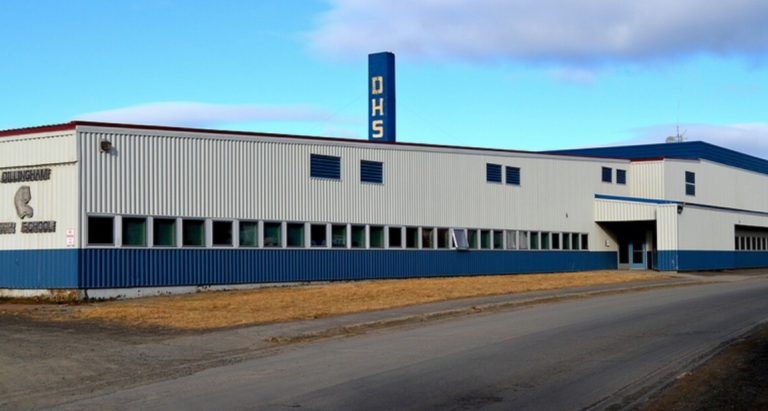
Changes in administration roles at the Dillingham Middle/High School and Dillingham Elementary School are intended to smooth out bumps experienced in the beginning of the school year. It’s unclear what those bumps are, but they appear to be mismatches of administrators to job titles.
The principal of the middle/high school has become the director of school climate and culture at the elementary school, and the person who was in that position is now the interim principal of the middle/high school.
“As you know, we started this school year with many new staff members, including several new administrators. While the school year did not start as smoothly as we had hoped, the district appreciates the hard work and dedication of all our staff,” Superintendent Amy Brower wrote to parents and the community on Nov. 15.
“In analyzing the district’s needs, staff strengths, and what is best for students, we believe that some adjustments in leadership assignments will best serve the community and our students. The district believes that Ms. McCambly’s prior experience at the middle school/high school level will better serve Dillingham Middle/High School students and staff. The district also believes that Ms. Dillman’s administrative experience at the elementary school level would better fit at Dillingham Elementary School. We are pleased to announce that as of November 21, 2022, Ms. McCambly will be the Interim Principal at the middle/high school, and Ms. Dillman will take over the Director of School Climate and Culture duties at the elementary school.”
Megan McCambly, the recent director of climate and culture, was raised in Dillingham and has been with the Anchorage School District before returning home to Dillingham this year. She is the interim principal of the high school. Beth Dillman is director of climate and culture.
The Dillingham Schools are not exactly known as high performing schools and it’s unclear why an elementary school would need a director of school climate and culture. In other school districts around the country, that is code language for diversity and the director is in charge of setting and driving “a vision for productive and equitable school culture including systems, structures, routines, and traditions,” according to Indeed.com.
Another job board described the job as being “responsible building and maintaining systems that ensure a joyous and achievement-oriented school culture.”
Just 14% of Dillingham elementary school students tested advanced or proficient in English on the latest statewide test, Alaska System of Academic Readiness (AK STAR). Just 13.33% of those students tested advanced or proficient in math. 84.91% of the students needed support to get to a proficient level in English, and 86.67% of the students needed more help getting to a proficient level in math.
The elementary school has a teacher-student ratio of 10-1, and about 197 students.
The middle/high school scores are better. Some 19.67% of students are advanced or proficient in English, and 8.80% are advanced or proficient in math. 80.33% of students need support in approaching proficiency in English, and 91.20% need more support to approach proficiency in math. The graduation rate is about 70%
The school district’s mission statement is, “As part of the community, the Dillingham City School District will promote and lead a safe, supportive and equitable learning environment.” The district’s vision is to, “Inspire students to be culturally connected, active community members and motivated to fulfill their goals and dreams.”
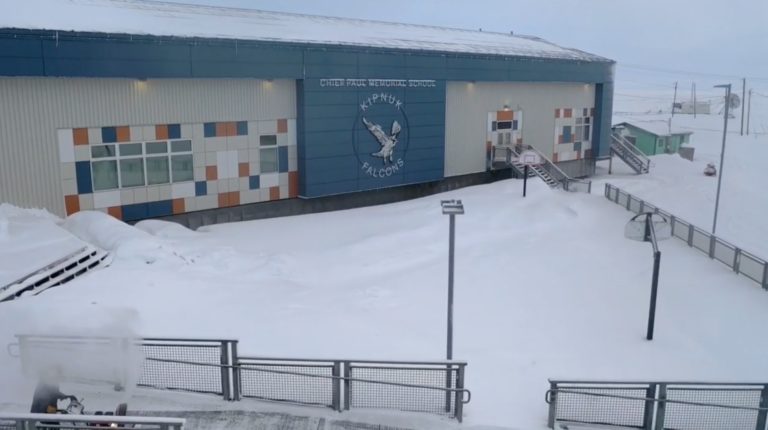
For 16 days in November, students at Chief Paul Memorial School in Kipnuk stayed home from school and studied remotely. But on Nov. 18, in-person learning resumed as teachers returned to Kipnuk.
The village traditional tribal council formally banished the school’s longtime principal at the end of October. Principal LaDorothy Lightfoot and several teachers left with her on planes chartered by the Lower Kuskokwim School District. It’s unclear how many of those teachers have returned. There appear to be about 200 enrolled students in the school, where Lightfoot had been for several years.
Chief Paul Memorial School is not a high-performing school. The building, however, is newly constructed in 2014, as one of the rural schools that were part of the Kasayulie v. Alaska settlement that provided new schools across rural Alaska, where many schools were substandard and in places with no tax base to pay for school construction.
Among all grades at the Chief Paul, a K-12 school, fewer than 5% of the students scored “advanced or proficient” in English Language Arts, and fewer than 5% scored “advanced or proficient” in Math. 95% of the students scored “approaching proficiency/needs support” in these core areas on the Alaska System of Academic Readiness (AKSTAR) tests, which are given to students statewide. The graduation rate, however, is 100%.
Lightfoot is still listed as the site administrator for the Chief Paul Memorial School, which is part of the Lower Kuskokwim School District, but she is no longer in the village and the district is not disclosing if she is still on payroll. After being open just four days for in-person classes this month, the school is closed for the long Thanksgiving holiday weekend, but classes are expected to resume on Monday.
Happy Thanksgiving, Must Read Alaska readers from Ketchikan to Kaktovik! I’m so grateful for you and that you care so deeply about Alaska, her economy, cultures, and future. Thank you for returning to this conservative news and commentary site day after day and, for those who comment on stories, thank you for keeping it civil and interesting. Thanks to those who help keep the lights on here!
I have spent most of my career as a political analyst and writer. From my days at the Juneau Empire, then down to the Augusta Chronicle, a short stint in Florida, and back to my home in Alaska, it’s a lot to be thankful for. Must Read Alaska has been the best endeavor of them all, and I’m grateful to all who make it happen.
However, we could all use a breather from politics. Maybe some football and pumpkin pie, and no discussion of who won, lost, or the voting system wrought by Ballot Measure 2.
One of my favorite memories of Thanksgiving is the 1984 Juneau Thanksgiving Day storm, and how we had to move the cooking of the feast to the wood stove, which had a wood-fired oven, in our cabin on the shore of Auke Bay. That cooking adventure for everyone in Juneau was one for the ages, but it didn’t hold a candle to the hardships endured by the settlers who came to the Americas and set up a rustic and fragile community. The first Thanksgiving celebrants in 1621 never had an expectation that the electricity would ever come on, while in Juneau, Alaska Light & Power and road crews were on the job that day. Juneau friends will never forget that day.
Other fun memories of growing up in Juneau include having community potluck Thanksgiving dinners at the Methodist Camp, a tradition that continues today out at the Eagle River United Methodist Camp. If you’re in Juneau and your plans fall through, the lodge will open at 10 am and the Thanksgiving dinner is served at 1:30 pm, out at Mile 28 Glacier Highway.
What are your fond memories of an Alaska Thanksgiving? What Thanksgiving adventures stay with you all these years? Share them with all of us in the comments below, and enjoy your day, however you celebrate it. (Extra credit if outboard motors, skiffs, snow machines or dog sleds are involved.)
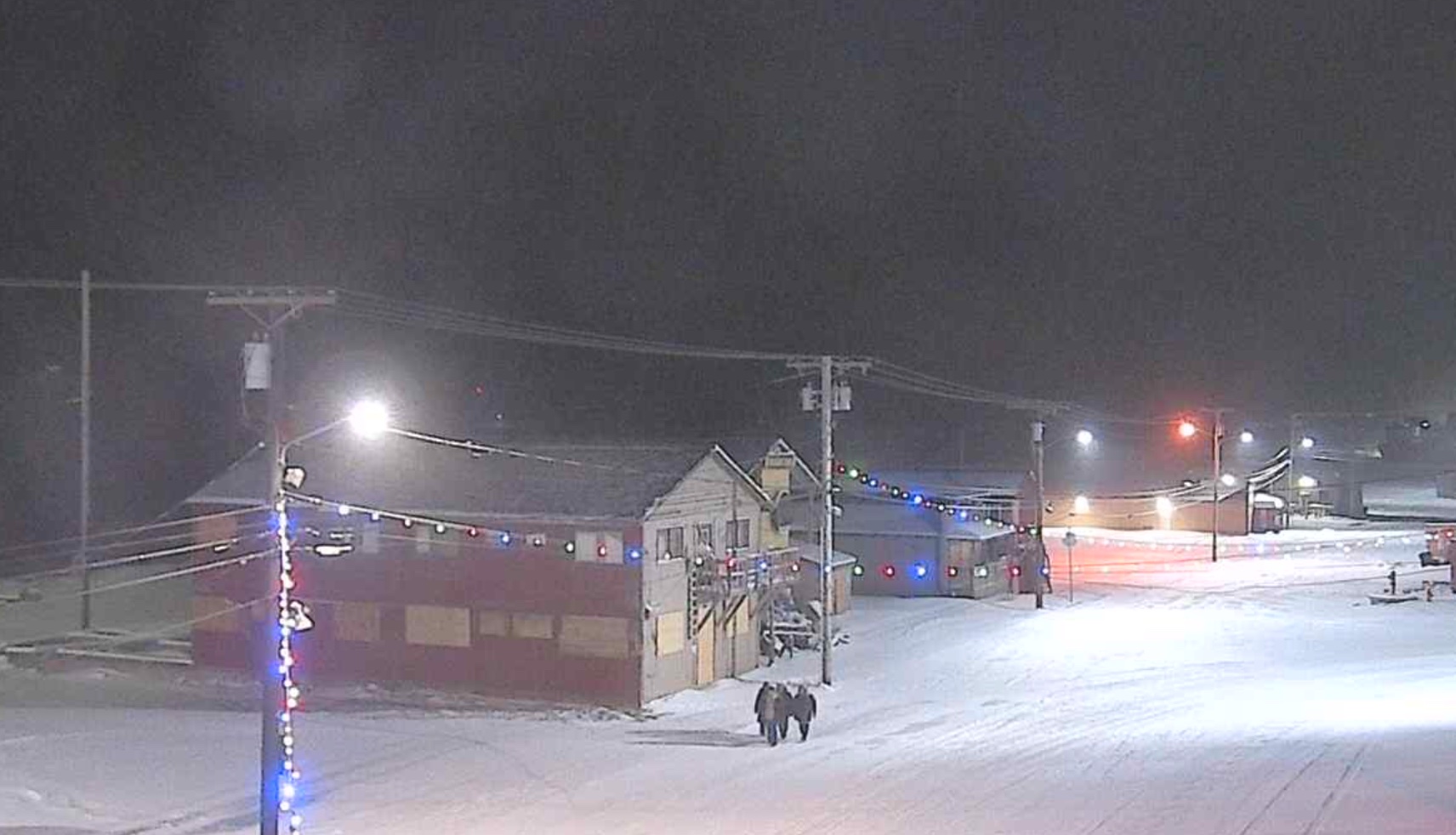
(Photo above is a snapshot from this morning on the Nome web cam, one of my favorite web cameras in Alaska.)
Nick Begich, the congressional candidate who came in third in the Nov. 8 general election in Alaska, posted his concession statement this afternoon:
“Today I’d like to thank my wife, Dharna; my son, Nicholas; and the thousands of Alaskans who supported us, volunteered their time and gave so much energy to our campaign. From traveling across this great state, listening to the challenges and hopes of Alaskans from every walk of life, and engaging in lively policy discussions with a host of other candidates and citizens with a wide variety of perspectives, it’s been an honor and a privilege to run for this office.
“Tonight, I want to offer my congratulations to Alaska’s next congressional representative — Mary Peltola. Our nation faces a number of challenges in the coming years, and our representatives will need wisdom and discernment as they work to put America on a more sound path. My message to Alaskans is to continue to be involved and engaged. We have a government that is of the people, by the people, and for the people; and as such it requires the active participation of citizens, not simply to vote, but to debate, to discuss, to be informed and to work to create the future we would all like to see.
May God Bless the people of the Great State of Alaska,” Begich concluded.
Peltola, who won over Sarah Palin with 136, 893 votes to Palin’s 112,255 votes, ended up with 54.9 % of the vote after the ranked-choice voting process.
Nick Begich has 64,392 votes after the first person, Chris Bye, was eliminated, and stood at 24.48% Palin had 69,242 votes, or 26.32%, and Peltola had 129,433 votes, or 49.20%. She needed 50%+1, so the bottom vote getter was eliminated.
Of Begich’s 69,242 first-choice ballots, 43,013 voters picked Palin second. Some 7,460 of Begich’s supporters picked Peltola second, and 13,864 voters did not pick anyone second.
That means over 62% of Begich’s voters chose Palin after Begich on the ballot. About 11.5% of Begich’s voters chose Peltola second, and over 21.5% simply didn’t pick anyone second. Palin would have needed 24,639 votes more in order to beat Peltola.
Peltola told reporters, “This is a two-year contract. And I will be happy to work for Alaskans again, as long as they’ll have me.”
There was no statement from the Palin camp as of publication time.
With the vote totals now final in Alaska, it becomes clear that Sen. Lisa Murkowski was able to win due to 20,543 of Democrat Pat Chesbro’s ballots awarded to her in the ranked-choice voting election. That means people who votes for the Democrat first, picked Murkowski over Kelly Tshibaka 10 to 1. Only 2,209 of Chesbro voters picked Tshibaka second on their ballots.
Murkowski had but 43.37% of first-round votes, but with Chesbro votes was able to get to 53.69% in the final tabulation. She has never won with more than 48.6% of votes in the past.
Murkowski won with 48.6% of the vote in 2004, 39.5% in 2010, and 44.4% in 2016. This election, with the open primary and ranked-choice system designed by her allies to aid her, she reached her highest number yet.
Even with that, Congresswoman Mary Peltola got more votes in her final tally in the congressional race than Murkowski got in her Senate race, with Peltola receiving 136,893 votes, and Murkowski’s final number hovering at 135,972 votes.
Murkowski wrote, “Thank you, Alaska. I am honored that Alaskans – of all regions, backgrounds and party affiliations – have once again granted me their confidence to continue working with them and on their behalf in the U.S. Senate. I look forward to continuing the important work ahead of us.”
Senate candidate Kelly Tshibaka, who got 117,299 (46.31%) in the final tally, conceded to Murkowski and wished her well with the following statement:
“I’m proud of the race we ran and proud to have united Alaskans in our fight against the disastrous Biden administration, which has targeted our economy every single day they have been in office. I entered the race to be a voice for the voiceless, and to stand up for the Alaskans who stood up for me and my family when we needed opportunities. I love this state with all my heart because of its endless potential and because of the resilient, compassionate, and fiercely loyal people who call it home. I will continue to fight for Alaska and for we, the people, but will take some time to reflect upon what that may look like.
“It’s clear from the ranked choice tabulations that Sen. Lisa Murkowski has been re-elected, and I congratulate her on that. The new election system has been frustrating to many Alaskans, because it was indisputably designed as an incumbent-protection program, and it clearly worked as intended. Additionally, it is regrettable that Sen. Mitch McConnell spent millions of dollars in this race on deceptive ads to secure what he wanted – a Senate minority that he can control, as opposed to a majority that he could not. Donors’ money would have been better spent in other states to elect more Republicans that would have secured a majority in the Senate. In the end, however, our Alaska U.S. Senate election turned out to be another victory for the Washington, D.C. insiders who rarely have our best interests at heart.
“No matter how dark things may seem to some right now, the light of hope can never be extinguished in the Land of the Midnight Sun. I saw that light shining bright and strong in the eyes of the thousands of Alaskans I met along the way, and the thousands more who supported our campaign by volunteering, by donating, and by voting. I felt the warmth of that light in the open arms with which they welcomed me into their communities, villages, and homes. I am deeply grateful for their kindness, generosity, and support.
“I also thank my wonderful husband, Niki, and five incredible children for enduring the long hours and never-ending travel. I am grateful to President Trump for his support and encouragement. Above all, I thank God, who makes everything possible, for guiding me on this journey.
“Stay tuned. The best is yet to come!” Tshibaka said.
The Division of Elections ran the tabulation on the ranked-choice ballots cast by voters on Nov. 8. The “instant runoff” method of choosing winners yielded these results in the contested races: