Home Blog Page 809

Sheldon Fisher: LDS views Respect for Marriage Act represents as a balanced approach

55

By SHELDON FISHER

The Church of Jesus Christ of Latter-day Saints teaches that each of us is a literal spirit son or daughter of God, created in His image. We call God our “Heavenly Father” because he is the father of our spirits. Before this life we lived with Him; He knew us and loved us… and we knew and loved Him.  

Because God is the Father of all humankind, we recognize each other as spiritual brothers and sisters. In our faith, the family is central to God’s plan for the eternal destiny of His children, and marriage between a man and a woman is ordained of God.

Understanding those fundamental theological tenets, many have expressed surprise that the LDS Church has supported the approach of the Respect for Marriage Act, as amended by the Senate, which ensures federal government recognition for lawful same-sex marriages.

As a member and communication director of the Church of Jesus Christ of Latter-day Saints here in Alaska, I write to thank Sen. Lisa Murkowski and Sen. Dan Sullivan for their votes on final passage to ensure the balanced approach represented in the Respect for Marriage Act. 

For some time now, the Church of Jesus Christ of Latter-day saints has supported a “fairness for all” approach that seeks to both preserve the rights of our LGBTQ brothers and sisters while including religious freedom protections. For us, the foundation of fairness for all comes from the two great commandments taught by Jesus Christ: to love God and to love our neighbor. 

We recognize that people in the LGBTQ community and people and institutions in the faith community — including many who are in both — have significant interests at stake in the treatment of same-sex marriage. The Respect for Marriage Act represents a balanced approach to addressing these interests.  I am grateful for Sen. Sullivan’s efforts to meet with faith leaders and work relentlessly to advocate for our concerns. Similarly, I thank Sen. Murkowski who has been a stalwart supporter of a balanced approach for some time.  

At its core, the Respect for Marriage Act both recognizes same-sex marriage and protects religious rights.  Of specific interest to us, the Respect for Marriage Act:

  • Affirms explicit congressional support for traditional marriage supporters;
  • Directs courts that recognition of same-sex marriage does not diminish current statutory religious liberties;
  • Protects the rights of religious and social services organizations from being required to host, participate in, or accommodate same-sex wedding ceremonies;
  • Protects such organizations from being sued for not accommodating or participating in same-sex wedding ceremonies; and
  • Prevents the federal government from discriminating or retaliating against religious organizations that hold a traditional view of marriage.

While I suppose that neither side got everything it may have wanted, the Respect for Marriage Act balances religious liberties and LGBTQ rights without either side having to compromise core values. We believe in freedom for all, and we believe in fairness for all. In the effort to balance competing demands, we will work to resolve issues in a way that doesn’t extinguish another’s rights and invite others to do the same.

As we hold to our teachings in these important and often very personal issues, we support others in doing the same. We seek to heal rather than injure and to unify rather than divide. We hope to work together to preserve the principles and practices of religious freedom together with the rights of others, and to foster greater understanding along the way.  

I thank Sen. Sullivan and Sen. Murkowski for their thoughtful and courageous leadership in addressing what could otherwise remain a divisive issue.

Sheldon Fisher has held various assignments in the Church of Jesus Christ of Latter-day Saints, which functions through a volunteer or “lay” ministry of its members. He currently serves as a communication director for the Church here in Alaska. Fisher also served as the commissioner of Administration and commissioner of Revenue for Gov. Bill Walker.

On Thursday, Rep. Eastman will ask judge to throw out lawsuit claiming he violated Alaska Constitution clause

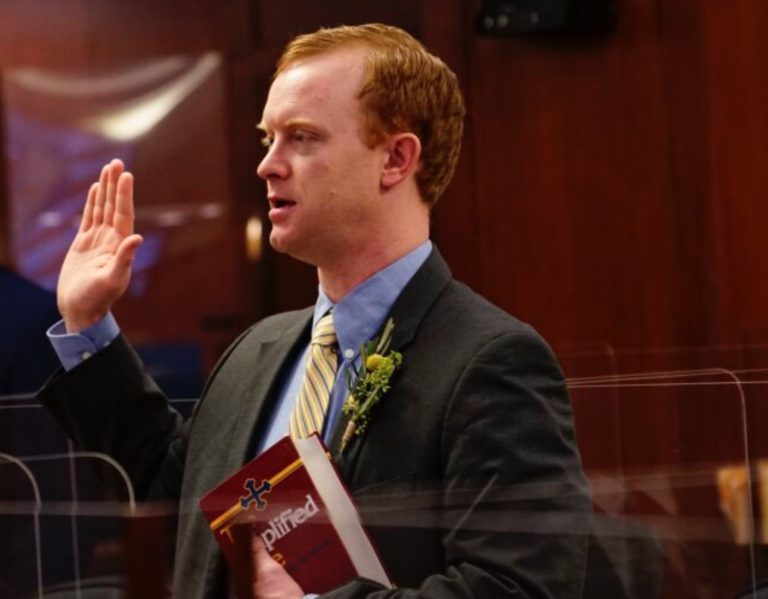
On Thursday, Rep. David Eastman will ask a judge to toss the lawsuit against his ability to serve as a legislator.

Mat-Su Valley resident Randall Kowalke and the Northern Justice Project filed a “lawfare” complaint with Superior Court, saying that because Eastman has a lifetime membership with Oath Keepers, he is in violation of the Alaska Constitution’s “disloyalty clause.”

Eastman’s trial date has been set for Dec. 12, and the Dec. 8 hearing is procedural and will be conducted via Zoom teleconference at 9 am.

It’s unlikely that Judge Jack McKenna will throw out the case, even though the State of Alaska, representing the Division of Elections, has also requested the case be tossed. Eastman is represented by attorney Joe Miller.

What the Kowalke-Northern Justice Project is alleging is that mere association with a group whose leaders have been convicted of crimes makes one also guilty of those crimes.

Taking that argument a step further, if the head of a Rotary Club was convicted for running a child trafficking ring, then any member of that Rotary Club would be guilty of the same.

But Judge McKenna allowed the case to go forward, which means he also is unlikely to suddenly rule to toss it.

The Oath Keepers is a loose-knit group that is comprised mainly of people who have served in law enforcement or the military. It’s leaeer, Stewart Rhodes and another leader of the organization were found guilty of seditious conspiracy for a plot to foment political violence at the U.S. Capitol and prevent the certification of the 2020 presidential election of President Joe Biden.

The case is 3AN-22-07404CI at this link.

Judge McKenna has ordered the Division of Elections to delay certification of House District 27 election results pending the result of the trial that he has already granted. But he also decided that Eastman could remain on the November ballot. Eastman won with over 50% of the vote, and did not even have to go through the ranked-choice voting process, due to his outright victory.

In high school, Eastman was named was State Eagle Scout of the Year. At West Point, he was a member of the Cadet Honor Committee. He has served as a military police office, firefighter, and EMT. Read more about his case at his legal defense fund website.

Four lawyers nominated for Alaska Supreme Court

The Alaska Judicial Council has forwarded to Gov. Mike Dunleavy its four nominees for the vacancy coming up on the Alaska Supreme Court with the retirement of Chief Justice Daniel Winfree.

The lawyers selected by the council after an application and interview the previous day were Anchorage Superior Court Judge Dani Crosby, Department of Law attorney Kate Demarest, Fairbanks attorney Aimee Oravec, or Sitka Superior Court Judge Jude Pate.

Gov. Dunleavy has 45 days to choose one of them. By Alaska Constitution, he has no authority other than to choose one of the names the council advances.

The council did not advance Kotzebue Superior Court Judge Paul Roetman, Department of Law Assistant Attorney General Margaret Paton-Walsh, or Holly Wells, an Anchorage attorney in private practice.

Conservative Roetman would have been the only Hispanic and Arctic rural member of the Supreme Court, and for the second time he has been denied the Supreme Court position.

Paton-Walsh, who often must argue cases in front of the Supreme Court on behalf of the State, has also applied previously for a Supreme Court vacancy.

The council voted for:

Dani Crosby: An Alaska resident for more than 36 years who has practiced law for more than 26 years, she graduated from Gonzaga University School of Law in 1996 and is a Superior Court judge in Anchorage.

Kate Demarest: An Alaska resident for over 12 years who has practiced law for 14 years, she graduated from the University of Minnesota Law School in 2008 and is a senior assistant attorney general in the Opinions, Appeals, and Ethics section at the Department of Law in Anchorage.

Aimee A. Oravec: An Alaska resident for over 23 years who has practiced law for 24 years, she graduated from Washington University in St. Louis School of Law in 1998 and is currently general counsel for Doyon Utilities, LLC.

Jude Pate: An Alaska resident for over 29 years, he has practiced law for more than 28 years. Pate graduated from Lewis and Clark Northwestern School of Law in 1993 and is a superior court judge in Sitka.

The council voted unanimously for Oravec and Crosby. Pate and Demarest were advanced with a 5-1 vote, with member Kristie Babcock voting no on Demarest and member Geraldine Simon voting no on Pate.

The Alaska Judicial Council is a commission created by the Alaska Constitution composed of three Alaska Bar Association attorneys, three non-attomeys, and the Chief Justice of the Alaska Supreme Court.

The council completes an investigation and evaluation of judicial applicants, reviewing each applicant’s education, experience, bar discipline, and credit records, participation in community activities, and other records.

It asks members of the Alaska Bar Association cartel to evaluate the applicants, and encourages the public to submit comments, and interviews the applicants.

Director of Elections set to retire this week

Gail Fenumiai, who heads up Alaska’s Division of Elections will be retiring at the end of this week, giving Lt. Gov. Nancy Dahlstrom the opportunity to choose a new director.

Fenumiai, who served as the division director during the Parnell Administration, was brought back in by former Lt. Gov. Kevin Meyer to lead the division as it adjusted to the new reality of Ballot Measure 2’s open primaries and ranked-choice voting general elections.

Fenumiai has two recounts to perform before her final day. Those are for the District 15 House race and for Senate Seat E.

In District 15, seven votes separate Rep. Tom McKay from second-place finisher Denny Wells. In Senate Seat E, third-place finisher Roselynn Cacy, a Democrat, asked for a recount after Republican Cathy Giessel won that race. That race has a 31-vote difference.

Fenumiai has been in the role since 2019, when she was appointed by former Lt. Gov. Kevin Meyer. She previously served as the state’s elections director between 2008 and 2015, and is a 20-year veteran of administering Alaska’s elections.

Warnock wins in Georgia runoff, Senate has 51 Democrats

Sen. Raphael Warnock of Georgia has won over Trump-endorsed Herschel Walker for Senate in the runoff election that ended Tuesday. This gives Democrats an outright majority in the Senate, ensuring that Sen. Chuck Schumer can maintain his position as majority leader. It means Republicans have lost one seat in the Senate, and Democrats no longer need Vice President Kamala Harris to break a tie.

Warnock was leading Walker 50.4% to 49.6% when the race was called by the Associated Press, which determined not enough votes remained uncounted to change the outcome. This victory gives Warnock a full six-year term, after he won a two-year term when he beat Republican Sen. Kelly Loeffler. Loffler had been appointed to the seat by Gov. Brian Kemp after Sen. Johnny Isakson resigned in 2019 for health reasons.

The Warnock-Walker race was the most expensive in 2022 across the country, according to OpenSecrets.org, with spending by general election candidates and outside groups exceeding to $380.7 million as of Nov. 29. Warnock raised more money than any other federal candidate this election cycle, according to OpenSecrets data. He raised twice as much money as Walker raised.

Follow the money here.

This win by Democrats not only gives the party more power, it also hobbles Republicans who hope to take back control of the Senate in 2024.

Russia has grown fleet of ‘dark tankers’ to smuggle oil

An unusually large number of tankers changed ownership in recent months, according to international reports, leading to speculation that Russian oil is being smuggled by untracked aging oil tankers.

Oil analysts say Russia has joined Iran and Venezuela in using shadow oil tankers to ship large volumes of crude oil.

Russia has acquired about 100 of these old tankers in recent months leading up to Monday’s oil sanctions from the U.S. and European Union. Many of the “dark” oil tankers are old, and they turn off their GPS tracking systems while on the high seas so they can transfer oil onto tankers that have no links to Russia, thus laundering the source of the oil. This prevents the oil exports as being flagged by countries taking part in the sanctions against Russia over its invasion of Ukraine.

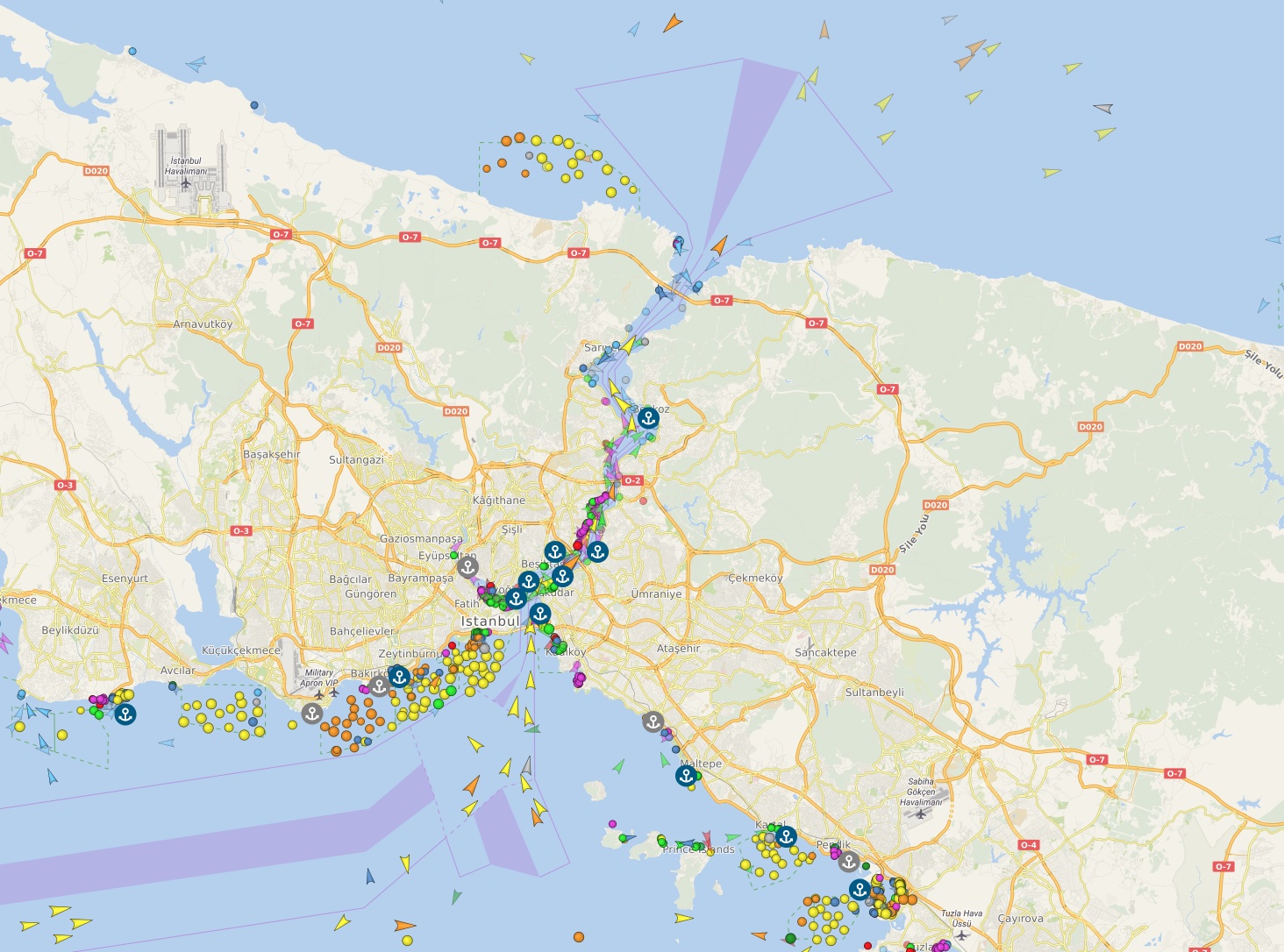
International vessel traffic can be seen at this vesselfinder.com website. Dark tankers will not necessarily show up on the vessel tracking system, which is satellite assisted.

Ahead of Monday’s European Union embargo on imports of Russian crude oil, which had been announced months in advance, hundreds of tankers that were aging out of service changed ownership to companies not part of the European Union or G7 countries.

Many of those old tankers, which have no insurance from Western companies such as Lloyds, have already shown up at Russian ports to load crude, according to the Houston Chronicle. It is an environmental disaster waiting to happen, OilPrice.com reports.

In March, news reports revealed that Russian oil tankers had averaged 12 “dark activities” per week since the country invaded Ukraine. That activity has now spiked again.

On Monday, European Union’s cap went into effect, limiting Russian oil to $60 a barrel, meaning companies in the EU, as well and United States, Canada, and Australia, are not buying from any entity that breaches the cap for oil originated in Russia.

“The cap on the price of Russian oil transported by sea is designed to affect the country’s exports worldwide, in addition to the EU-wide embargo on Russian crude oil, which comes into force on 5 December and which the UK is also adopting. Countries not party to the deal will only be able to access services such as insurance, shipping and brokerage if they trade Russian oil at or below the $60 cap. As the countries involved in the deal, such as the UK, are the world’s largest service providers, the belief is that most countries and businesses will be forced to comply,” The Guardian wrote last week.

The G7 nations – Canada, France, Germany, Italy, Japan, the UK and US – provide insurance services for 90% of the world’s cargo while Greece, an EU member state, is a major player in the shipping industry, the newspaper explained.

“The cap is aimed at maintaining the flow of oil to countries such as China, India, Turkey and the United Arab Emirates, which have not banned Russian oil imports, while maintaining economic pressure on the Kremlin,” according to the Guardian.

“The monthly average of both so-called dark activities and ship-to-ship operations in the south Atlantic doubled in the September to November period compared with the previous three months, according to an analysis of movements by the maritime intelligence company Windward. There were around 35 incidents of ‘dark activity’ in September, nearly 50 in October and numbers dipped to just over 40 in November,” Guardian reported.

Windward tracked one tanker that went dark and was sailing under a Cameroon flag, then changed its registration and call sign to a Seychelles-based company, and then was spotted in Cape Verde. From there, it moved to the north mid-Atlantic, where it stayed for three days before heading to the coast of Namibia. It was sending out false signals about its location the entire time. After that, it moved to the coast of Angola and stayed put for six days, which is unusual behavior for a tanker at sea. Windward was able to detect a change in the draft of the vessel on Nov. 20, suggesting that the tanker took on oil at that point, from an unknown source.

A traffic jam of oil tankers is reported to have built up in Turkish waters near the Bosporus Strait as Turkey’s government demands proof of insurance cover before allowing ships to pass.

Read more about how Russia is evading the oil embargo at qz.com.

Alex Gimarc: Voter suppression and missed opportunities

By ALEX GIMARC

The biggest question out of the Nov. 8, 2022 election here in Alaska concerns the drop in voters this time around compared with 2018.  As election seasons go, this one was massive and should have attracted more interest from voters than recent non-presidential years.

Look at what we had on the ballot.  We had a very expensive race for US Senate, a Democrat in the US House for the first time in 50 years, a gubernatorial race, nearly 60 legislators up for election following redistricting, a constitutional convention, and as always, 20 or so judges up for retention.

Yet Alaskans didn’t turn out to vote this time around.  Why?  

Before delving into the why, a review of basic numbers is in order. 

At its most basic, 267,047 out of 601,745 registered voters turned out in Nov 2022, a 44.38% turnout. In contrast, the last gubernatorial race in 2018 had 285,009 out of 571,851 turnout, a 49.84 turnout. That race only had a governor’s race, U.S. House for Don Young, 25 legislators, the protect the Salmon ballot initiative, and 20 or so judges.  

Compare the numbers and roughly 18,000 fewer Alaskans voted this year out of a pool 30,000 larger than 2018.  

Who stayed home?

  • Republican turnout was down 3,200 voters, 2.2%, though they had the best turnout of all registered groups in November, at 55.2%.
  • Democrats were next, down 3,200, 4.1%. Their turnout was not bad, at 52.5% of their registered voters.
  • Non-Partisans were down 4,500 voters, 5.4%. Their turnout was 48.3%
  • Worst were the Undeclareds, down 6,900 voters, 2.6%, with a miserable 34% turnout.  

Based on analysis of this year, it was missed opportunity, a big one. Had Republicans turned out in larger numbers, we could have elected Kelly Tshibaka, defeated Congresswoman Mary Peltola, picked up at least two seats in the state Senate (Sen. Mia Costello, who lost by 597; and Jim Matherly, who lost by 692), and at least three in the state House (David Nelson, who lost by 77; Forrest Wolfe, who lost by 150; and Jeremy Bynum, who lost by 343). 

The low turnout protected Sen. Lisa Murkowski, and Rep. Peltola, and gave us coalitions in the Senate (maybe also the House) rather than majorities.  

While a 55% turnout for Republicans was the best this year, it is far smaller than other historic elections. For example, the 2020 presidential year Republican turnout was 73%. A 63% Republican turnout this year was quite possible and would have run the table, bringing another 10,000 Republicans to the ballot box. 

A great question to Alaska Republican Party Chair Ann Brown and National Committeeman Craig Campbell would be why did they fail to prioritize turning out Republicans to vote this year? A follow-up would be:  Did they even try?

Why else would Republicans stay home?

One problem is that those purportedly on “our side” have for years railed against absentee voting, by mail voting, and early voting as vectors all but ensuring corruption in elections at the state and local levels.  And when conservative / Republican voters believe their voting or participation is no longer relevant, they stay home. When we stay home, we don’t win. And we shouldn’t.  

One of the worst offenders pushing this narrative has been Dan Fagan on his morning KENI radio show. He incessantly complains about how Alaskan elections are rife with fraud.  

I suggested last April that this was a form of (perhaps) unintentional voter suppression following endless complaints about the Muni elections.  Six months later, we have better proof based on turnout last month.  Having learned absolutely nothing about what happened, Fagan was back at it again Monday Nov 28, blasting away at fraudulent, corrupt elections in Alaska as the explanation for lack of Republican wins.  

When our side believes this stuff some of them stay home, the very definition of voting suppression. Nice work, Dan. Congratulations.

I do take exception with the charge of dirty elections in Alaska. We have three voting systems in Alaska. First is the absentee voting system.  These ballots require some effort to obtain. Most importantly, they are closely tracked, and have been for 30 years. The other two are by-mail voting (Muni only) and election day voting.  

The biggest problem that I can see for both by-mail and election day voting is that Alaskan Republicans have chosen not to strongly play in early voting. Nationally, this approach cost Republicans at least three Senate seats in Nov (Arizona, Pennsylvania, and Nevada).  It probably cost us Assembly and School Board seats here in Anchorage, contributing to Democrat majorities in both bodies.  On the other hand, Republicans used it to sweep elections in FL. Regardless of what any of us think about the new rules, we must play by them in order to win.  And we will never change those new rules unless we win elections, which once again means simply showing up.

Observations on Nov 8

It is beyond ironic that the ranked-choice voting system specifically designed to reduce the importance of political parties in Alaska was an abject failure, as the political parties did the very best job of all groups turning their people out to vote.

The people in the middle, the undeclared and non-partisans, who make this system work, simply didn’t turn out, yet nobody, especially the Scott Kendalls of the world who pushed the election reform initiative two years ago, are publicly asking why. Perhaps because their preferred candidate won, and collateral damage down ballot due to the new system simply doesn’t matter to them.  

Turnout for all identified groups was down in the first complete year of ranked-choice voting, meaning it worked just as poorly increasing participation as it did controlling dark money into elections in Alaska — it worked not at all, yet another reason to repeal it.

Conclusions

Words have meaning. When we have a significant part of the electorate on our side that is under the impression that elections in this state are corrupt, and some on our side are doing their level best to confirm that impression every single day, our voters won’t turn out.  And we will never win an election unless our side turns out.  

If and when we get actual election fraud, get on it like white on rice. Identify what happened, who did it, where it was done, and how it was done.  

Finally, and most importantly, come up with a solution to make sure it doesn’t happen again. These days, I hear a lot of complaining and precious few solutions.  

My solution? Go vote. Do it early. Do it often. Get your friends, neighbors and family to vote. But vote, even if we have to embrace early voting completely. Never, ever stay home.  

Alex Gimarc lives in Anchorage since retiring from the military in 1997. His interests include science and technology, environment, energy, economics, military affairs, fishing and disabilities policies. His weekly column “Interesting Items” is a summary of news stories with substantive Alaska-themed topics. He was a small business owner and Information Technology professional.

Manhattan jury finds Trump’s company guilty of tax fraud

A Manhattan jury on Tuesday found former President Donald Trump’s real estate and development business, Trump Organization, guilty of all 17 counts of tax fraud and related financial crimes the state Attorney General had brought against the company.

The verdicts were read just one day after the jury deliberated in New York Supreme Court in Manhattan. The jury said that the Trump Organization had a business practice of paying people under the table, thus avoiding taxes, by giving them luxury incentives such as apartments, cars, and private school tuition for their children.

Trump Organization was founded in 1927 by Donald Trump’s grandmother, Elizabeth Christ Trump, and his father, Fred Trump. It was originally known as E. Trump & Sons. Today it is a group of close to 500 businesses of which Donald J. Trump is either the sole owner or principal of companies that have multiple investments in hotels, golf resorts, and other real estate across the world. The company’s website gives visitors a peek into the luxury world of the Trump Organization.

Attorney General Letitia James of New York wrote, “Today’s guilty verdict against the Trump Organization shows that we will hold individuals and organizations accountable when they violate our laws to line their pockets. I commend @ManhattanDA for this big victory, and I am proud of the role that my office played in securing it.” James filed the lawsuit against the company in September.

In exchange for his testimony, former chief financial officer for the organization Allen Weisselberg made a deal that means he will serve only about five months in jail. He did not implicate Donald Trump or Trump’s adult children in his testimony, although prosecutors made the argument that Trump knew what was going on in the tax fraud scheme.

Weisselberg said the whole scheme was his fault and was due to his own greed. He pleaded guilty earlier this year to taking in $1.7 million in benefits that he did not report to state and federal taxing authorities.

The company could be liable for a $1.6 million fine and will be sentenced in January.

Governor’s Christmas Open House is Dec. 13

The traditional open house at the Alaska Governor’s Mansion will take place from 2-6 pm on Dec. 13 in Juneau. On hand to greet visitors in the fully decorated house will be Gov. Mike and First Lady Rose Dunleavy and Lt. Gov. Nancy Dahlstrom.

The first open house was held by Territorial Governor Walter Eli Clark and his family on New Year’s Day of 1913. The annual tradition has been held every year since, except for two years during World War II and in 2020 due to the Covid-19 pandemic. The event features cookies from local bakers, and often has musical performances from Juneau youth ensembles. The line to get into the mansion will often stretch down Calhoun Ave., which will be closed to automobile traffic throughout the event for safety.

Those lining the sidewalk to enter the historic house are often served cookies and hot cider by commissioners and deputy commissioners while they wait to pass through the mansion.