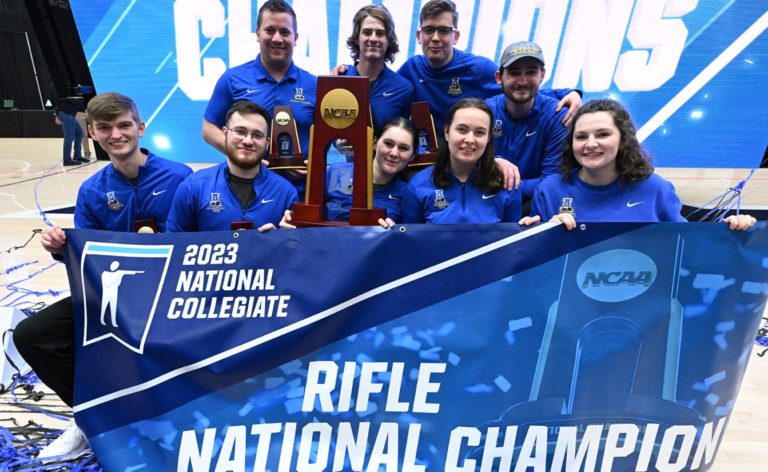
The University of Alaska-Fairbanks rifle team has won its 11th NCAA rifle title at the NCA rifle championship at Ohio’s University of Akron Rhodes Arena on Saturday.
Sophomore Rylan Kissell fired a perfect 600 in air rifle. The UAF rifle team ended up with a 4729 aggregate score — 2380 for air rifle and 2349 in small bore.
The last time the Nanooks placed first was in 2008.
According to the NCAA, the UAF team entered the 2023 NCAA rifle championship as the third-ranked team, behind No. 1 Texas Christian University and No. 2 West Virginia University.
Taking second place in the overall championship was Texas Christian University with a 4717 team aggregate, NCAA reported. Finishing third place was the 2021 and 2022 back-to-back champion Kentucky Wildcats, who posted a 4713 team aggregate score—2373 in air rifle and 2340 for smallbore.
Will Anti is the Alaska-Fairbanks rifle team head coach. Anti was a member of the National Junior Team and was a Junior Olympic champion with Team USA.
See the 2023 NCAA rifle championship scorecard is available at this link.
Team Fairbanks members who competed included Peter Fiori, Rachael Charles, Tobias Bernhoft-Osa, Kellen McAferty, Rylan Kissell, Marina Gonzalez Mazo, and Gavin Barnick.
The spring of 2020 came in like a monster in Alaska. And it wasn’t the snow or cold — there had only been about 22 inches of snow that winter. What happened after March 12 that year could encompass an entire book on pandemics, policy, and public panic.
Three years ago today, the first case of Covid in Alaska was announced — a pilot of a cargo jet had tested positive. Anchorage is the nation’s leading cargo airport, with flights coming from China and South Korea on an hourly basis, stopping for fuel in Anchorage before heading to distribution facilities in places like Memphis, Tenn. and Louisville, Ken.
The pilot was treated at a hospital and was quarantining in a hotel. But officials knew that Covid had arrived and was probably elsewhere in the population, undiagnosed and spreading.
One day earlier, President Donald Trump, already in Covid battle mode, had announced a travel ban from Europe. In January, he had banned travel from China for non-American travelers.
By the time the pandemic was under control, Alaska had been seen as a model for balancing the need for a stabilizing health policy and the constitutionally set personal freedoms:
Second lowest death numbers of any state
Highest survivability of any state
First state to vote to get rid of emergency
Economy was opened in early May of 2020
No statewide mask mandate
No statewide vaccine mandate
Led with other states with court actions to stop federal vaccine mandates under Biden.
But on March 12, 2020, panic was already setting in in Alaska, where medical facilities were not equipped for the expected pandemic, where not enough personal protective gear was available for medical workers, or enough ventilators for the seriously ill. The epicenter of the virus was in Seattle, Alaska’s hub city for travel.
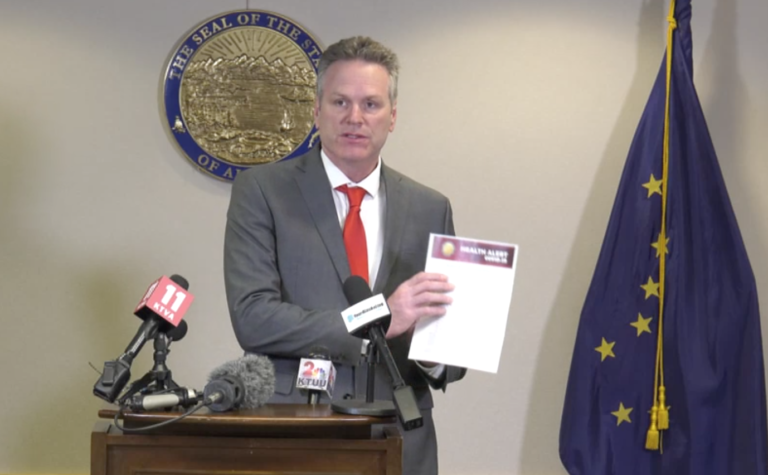
Two days before Alaska’s first case, Gov. Mike Dunleavy had declared a state emergency in anticipation of Covid’s arrival, so that resources could be mobilized for the unknown needs that would soon arise.
Gov. Dunleavy, Chief Medical Officer Dr. Anne Zink, and Alaska Department of Health and Social Service Commissioner Adam Crum had just announced sets of recommendations to help prevent or slow the spread of cases of the illness, the origins of which are still debated today, but which many believe began in a bioweapons project at a laboratory in China.
The Alaska state recommendations were for people to mask up if they were in public. While the governor never mandated masks, most municipal leaders eventually did, including then-Mayor Ethan Berkowitz, who issued a mask mandate in June of 2020.
The first Alaska resident to have died from Covid was a resident of Petersburg, who passed on March 16 at a health care facility in King County, Washington, where he had been admitted for care for a different, but serious medical condition.
On March 27, the first in-state death from Covid was announced. It was a 63-year-old person who was in an Anchorage hospital for treatment for another illness, and who had tested positive for Covid on March 25.
By March 29, the Legislature had given the governor the authority to do what needed to be done to keep the state from going into a Covid crisis, by addressing public health and economic problems that would arise, and to move funds from one area of the budget to others, in order ensure the government was nimble in its response.
The recommendations for Alaskans on this day in 2020 were:
Wash your hands often or use hand sanitizer if soap or water are not available, before going and out of rooms or buildings, using restrooms, and before eating. Avoid touching eyes, nose, and face, cover coughs or sneezes, stop shaking hands, and regularly clean and disinfect frequently touched surfaces and items.
Recommendations for higher risk Alaskans
On this day in 2020, the advice for people who are over 60, and anyone who has serious chronic health conditions was to stay home as much as possible, ask family or friends to bring in supplies and food, avoid crowds and mass gatherings where exposure risk is greater, stay at least six feet away from others who are sick, limit close contact and wash your hands often and telecommute for work.
Leftists and Democrats began clambering for the governor to do more — to enact a statewide mask mandate and order business to close. The Legislature, which was run by progressives, still had a mask mandate in the Alaska Capitol during the 2022 legislative session, and required testing to enter the building. Accusations that the governor was not doing enough came from Democrats in the Legislature and Democrat activists around the state.
By later that year, the Democrats were hammering Dunleavy for not enacting more mandates.
“Public health officials have repeatedly urged statewide policies to slow the spread of the disease, most recently during a House Health and Social Services Committee on October 21,” the Democrat-controlled Alaska House Majority stated in a news release later that fall.“The Dunleavy Administration, however, has failed to enact basic statewide protective measures that we know are effective, like a temporary mask mandate in places where social distancing is difficult, implementing capacity limits in public places, and issuing workplace safety standards.”
The critiquing of the governor was largely from partisan Democrats, showing the ideological differences between their authoritarian style and Dunleavy’s attention to the imperative of civil rights. They said he was killing Alaskans.
Dunleavy said all along he would avoid infringing on the rights of Alaskans.
“I certainly don’t want to infringe on the rights of folks,” he said on July 13, 2020. “We don’t need to take draconian actions here in Alaska.”
Some also criticized him from the right side of the spectrum, saying that he was too quickly led into liberty-infringing policies by his Chief Medical Officer, Dr. Zink.
The governor did order a temporary “shelter in place” mandate in at a news conference, where he required Alaskans to “remain at their place of residence and practice social distancing.” People could go outside and get exercise but were to remain six feet from anyone who was not inter household.
That spring was the first time Alaskans had heard of such a thing called “social distancing.” By that time, many city leaders had already ordered their own “hunker down” mandates.
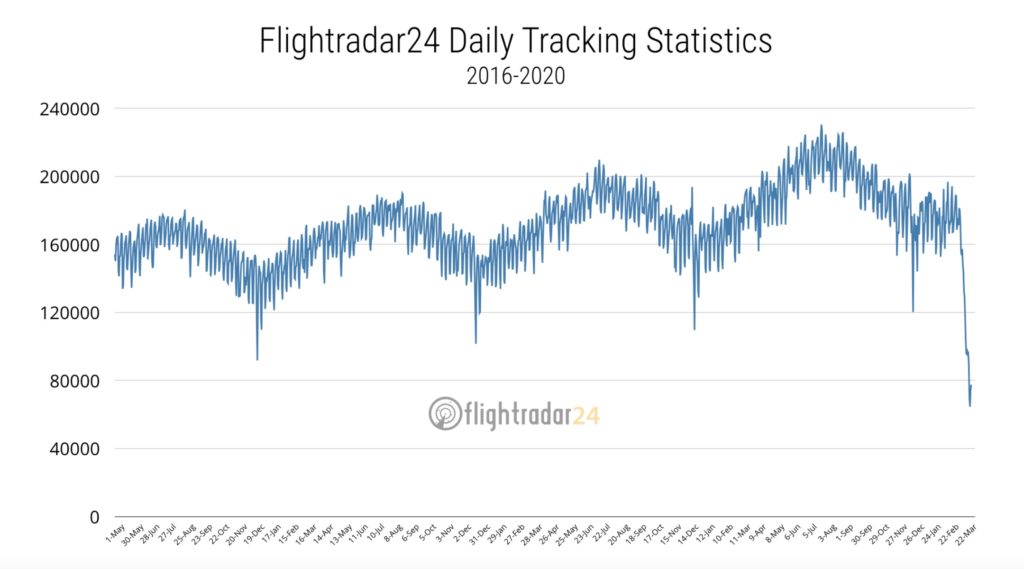
Three years ago this month, the skies became suddenly quiet as most Americans stopped flying. FlightRadar24.com tracked a 21% drop in air traffic. Airports were empty, reflecting the general panic that had taken hold of the country as the still little-understood virus was spreading and killing its way across the nation.
Although Dunleavy used a relatively light touch, only shutting the economy down for a few weeks, draconian shutdowns ordered by Mayor Berkowitz extended even after he quickly left office in October of that year, under scandalous circumstances. His unelected successor, Austin Quinn-Davidson, continued his policies with mask mandates and bans on gatherings.
By May of 2020, nine Alaskans had died either from or with Covid, and the economy began to suffer from the effects of not only the pandemic, but the reactions to the pandemic.
By June, the state had enacted a traveler testing program. Incoming persons to the state needed to test within 24 hours of arrival or could quarantine for 14 days without testing.
Testing on arrival in Alaska airports identified 951 Covid infections, or one per 406 arriving travelers, according to a report from the CDC from last year “and might have contributed to Alaska’s low incidence during the summer by reducing opportunities for community transmission at travelers’ destination locations.”
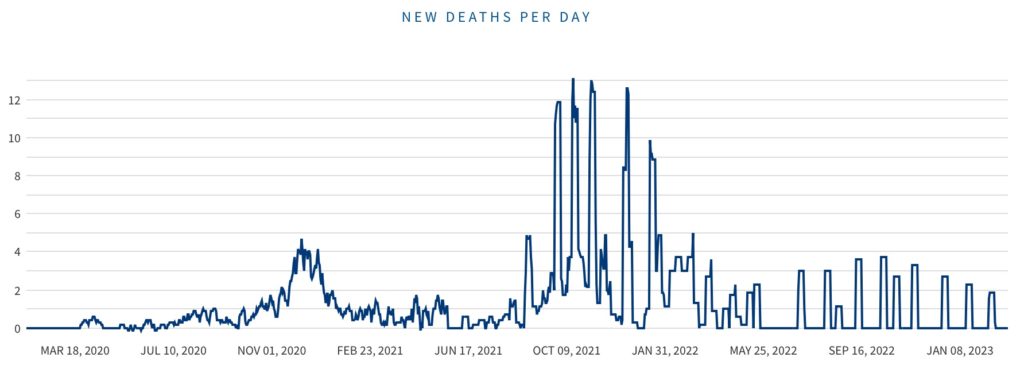
Today, three years after the first case of Covid, there have been 282,000 cases of Covid reported in Alaska, with many other cases unreported. The number of Alaskans who have died from or with the disease stands at 1,422 as of March 5. About 64% of Alaskans are vaccinated.
Chart of Alaska Covid deaths since beginning of pandemic. Source: USA Facts.org.
The coronavirus pandemic was a test for the nation and its leaders. Some leaders, such as Alaska Gov. Mike Dunleavy and Florida Gov. Ron DeSantis, survived politically, and were reelected two years after the pandemic hit. So did some of the draconian governors such as Gov. Gavin Newsom of California, who also won reelection even after a major recall attempt in 2021, which failed. The president at the time, Donald Trump, did not survive politically, as Covid became politicized and the government responses became part of the election debate that year, and after some states went to an all-mail-in election to stem the spread of the virus.
Have an opinion on this topic? Have memories of that year? Share in the comment section below.
Rep. Mary Peltola last week voted against a resolution that would bar federal employees from using their official power or influence to promote censorship or to advocate for a third party, such as Twitter or Facebook, to censor Americans or suppress their points of view. Federal employees found to violate the prohibition would be subject to civil penalties. Peltola was on the wrong side of the bill, which passed without Democrat support
The Protecting Speech from Government Interference Act was sponsored by Rep. James Comer of Kentucky. It was supported by the Republican majority in the House, and opposed by Democrats. Peltola and the Democrats also voted on a motion to recommit the bill back to the committee it came from, the House Oversight Committee, but the motion was opposed by the majority.
“Today the House of Representatives took action to protect our constitutional right to free speech from government censorship. The Biden Administration has eroded Americans’ First Amendment rights by bullying social media companies to censor certain views and news on their platforms. Biden Administration officials are quick to label inconvenient facts as disinformation and then pressure social media companies to suppress content on their platforms. To protect the First Amendment, the Protect Speech from Government Interference Act stops federal employees from pressuring social media companies to silence Americans expressing views online. The Senate must take up this legislation to get this bill to the finish line,” Comer said.
However, if the Democrat-controlled Senate does pass the bill, the president must sign the bill in order for it to become law.
The Act expands on the Hatch Act, the law banning federal employees from engaging in political activities in their official capacity. The bill expressly prohibits federal employees from trying to censor free speech.
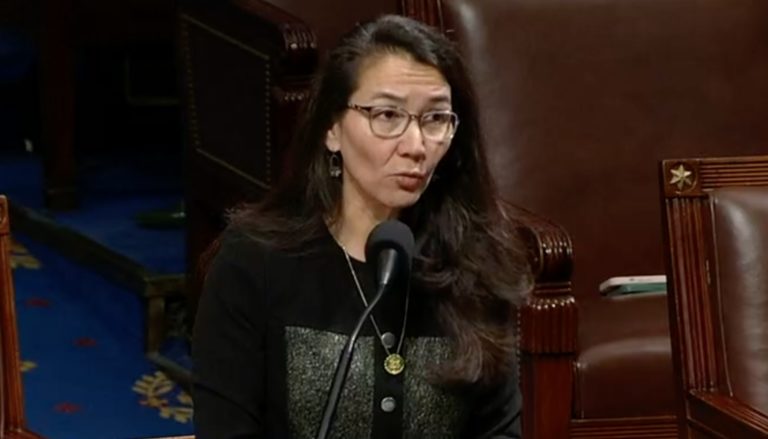
Rather than defending the Americans so they do not have their First Amendment rights interfered with by the government, Peltola gave a three-minute floor speech on the need to expand Social Security.
The bill prohibits federal workers from using official positions, resources, or powers to coerce a private platform into removing, suppressing, restricting, censoring, or adding disclaimers or disparaging alerts to speech. It provides an exception for legitimate law enforcement activities involving specific crimes.
Heritage Action said it is a good first step: “From the censorship of the NYPost and the Hunter Biden laptop story days before an election to the quelling of COVID-19 evidence contrary to the elite’s established viewpoint, social media firms have been censoring American’s viewpoints and their right to associate – apparently at the direction of government agents. Heritage Action commends House Republicans for advancing H.R. 140, the Protecting Speech from Government Interference Act, and looks forward to further action against Big Tech’s corrosive impact on society.”
Chad Wolf of America First Policy Institute said, “Our First Amendment rights are at stake. Time and time again, we’ve seen the current Administration betray the trust of the American people by pressuring, encouraging, and colluding with Big Tech giants to censor ideology they disagree with. This simply cannot go unchallenged, and we applaud Chairman Comer and the House Oversight Committee for proactively fighting this blatant violation of our most cherished and fundamental right.”
The American Consumer Institute also applauded the passage of HB 140:“The Protecting Speech from Government Interference Act is a step in the right direction when it comes to consumers’ freedom of speech on the platforms they use to express themselves. By preventing the government from unduly restraining protected speech, this bill would ensure that consumers’ taxpayer dollars don’t go toward the suppression of speech. Unlike other legislation that would regulate the moderation decisions of private entities, H.R. 140 focuses on the key issue of keeping the government from tipping the scale in public discourse. It’s encouraging to see offices like Chairman Comer’s working to defend a free and open speech environment.”
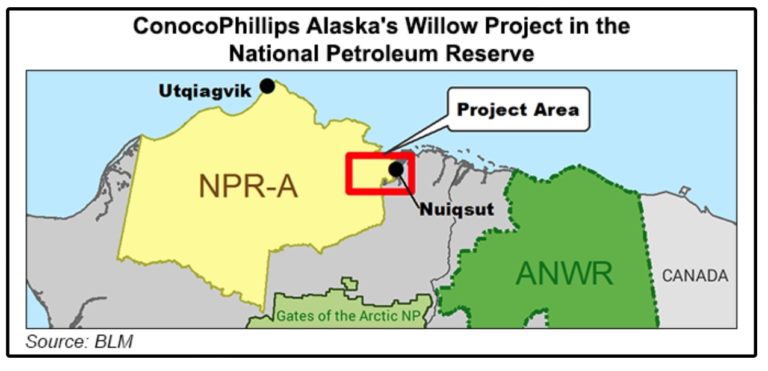
This weekend Alaskans wait to learn if the Biden Administration will allow two or three drill pads at the Willow Project in the National Petroleum Reserve-Alaska. But it was this weekend 54 years ago that oil was discovered at on the North Slope at Prudhoe Bay.
Just four years after the Great Alaska Earthquake, which occurred on March 27, 1964, Alaska was still in a rebuilding mode, with construction and reconstruction underway in Southcentral, which took the brunt of the magnitude 9.2 quake.
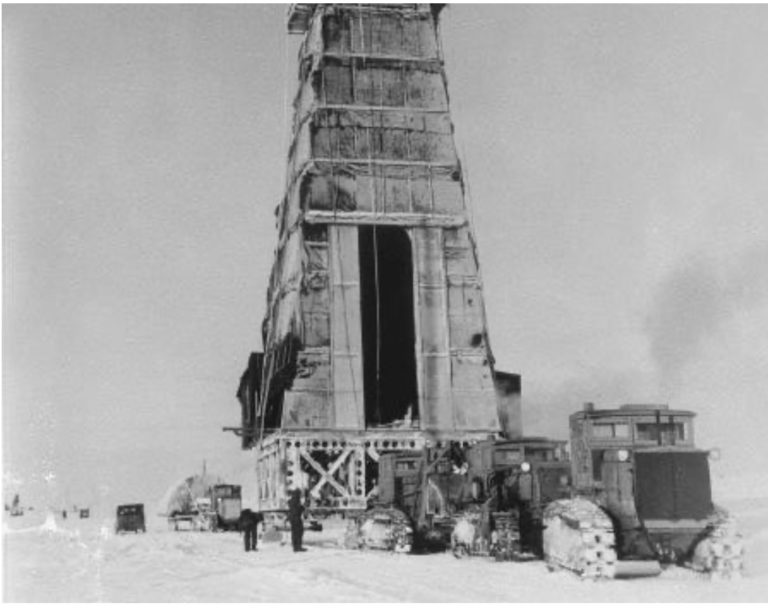
Up on the North Slope, the largest oil field ever discovered in North America was being drilled at Well #1. The well, drilled by Atlantic Richfield Company and Humble Oil and Refining Company, was confirmed the following year by BP Exploration. A frenzy of growth and development in Alaska ensued as other companies with leases on the North Slope raced to get ready for production. The Prudhoe Bay field became the 18th largest field discovered worldwide. At that time, Alaska’s population was only 285,000.
Prudhoe oil had to wait, however, until the Trans Alaska Pipeline was built to Valdez, which took another nine years. Oil finally flowed in 1977, and by 1979, about 1.5 million barrels were making their way down the Trans Alaska Pipeline System. That rate remained steady until about 1989, when the fields started to slow down.
By 2004, only about 475,000 barrels per day were being produced, and by 2020, the amount was down to 448,000 barrels per day, the lowest level of production since 1976.
25 billion barrels have come through the TAPS system from Prudhoe Bay to Valdez, and the world market beyond. While in 1988 it took 4.5 days for oil to travel the 800-mile pipe, it now takes 18 days.
Fifty-four years after oil was discovered, Alaskans are waiting to see if the president will allow them to continue to send oil down the pipeline, or if he intends to shut it down by starving it of product.
On Friday, the White House leaked the news that President Biden would approve the ConocoPhillips project called Willow, which is on the edge of the National Petroleum Reserve-Alaska. His press secretary, Karine Jean-Pierre, walked it back later that day and said no decision has been made, but that when an announcement comes, it will be from the Interior Department, not the White House.
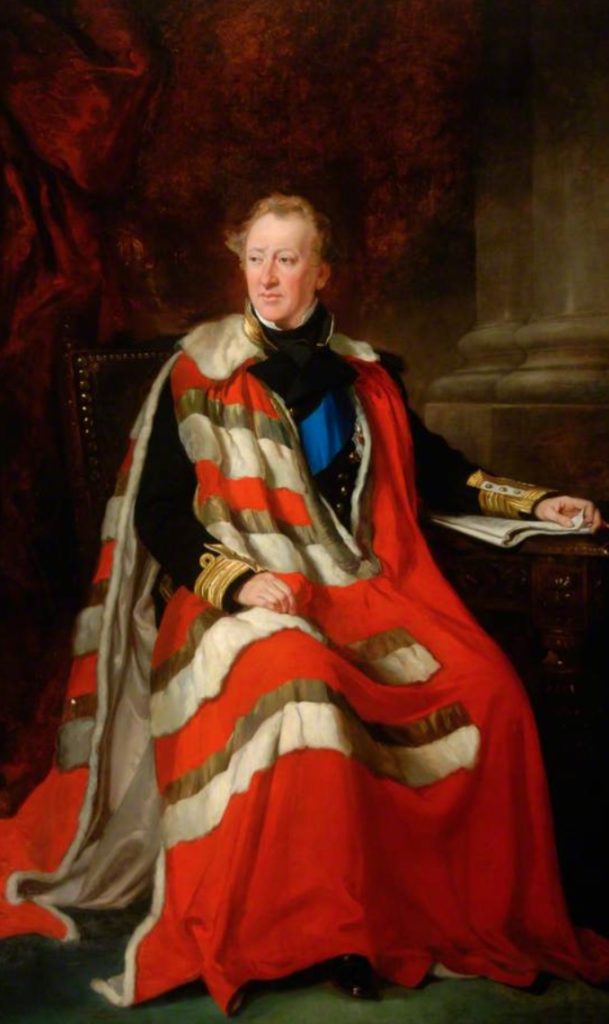
Fun fact: Prudhoe Bay was named by British explorer Sir John Franklin after his classmate and friend Captain Algernon Percy, Baron Prudhoe.
Baron Prudhoe
Franklin traveled along the north coast in 1826 from the mouth of the Mackenzie River in Canada almost to Point Barrow in search of the Northwest Passage. There is no indication that Baron Prudhoe, 4th Duke of Northumberland, ever made the trip.
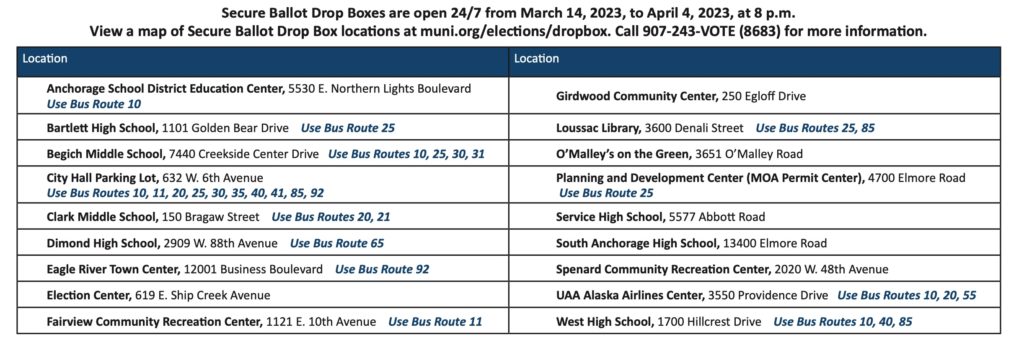
The municipal elections start Tuesday, when ballots are mailed out to all eligible voters. Tuesday is also the day when the drop boxes for those ballots are open. Ballots are due back in by 8 pm on April 4.
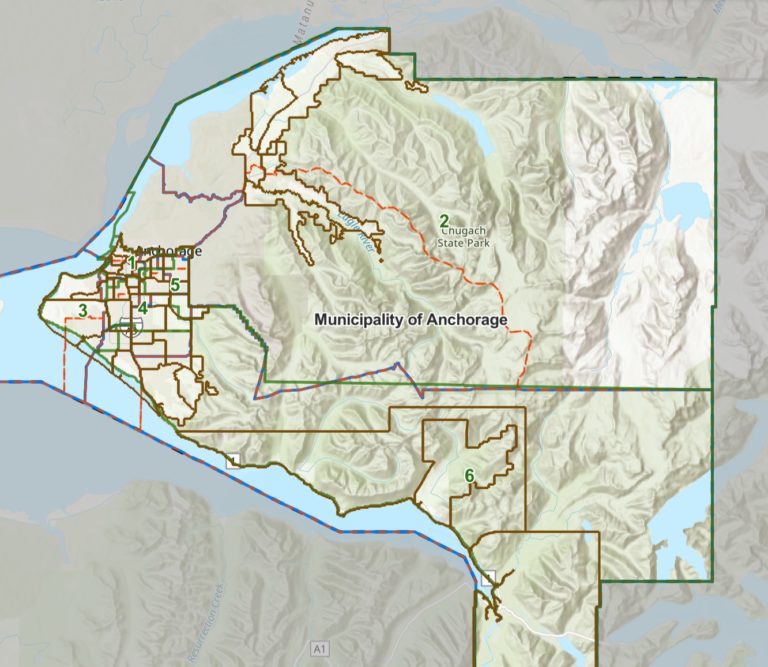
On the ballot, voters will decide among several Assembly seats, two School Board seats, and mind-numbing 15 ballot propositions, some of which will create more debt for the taxpayers:
+ Proposition 1: Capital Improvements for the Anchorage School District Bonds
+ Proposition 2: Areawide Public Safety and Transit Capital Improvement Bonds
+ Proposition 3: Anchorage Roads and Drainage Service Area Road and Storm Drainage Bonds
+ Proposition 4: Anchorage Fire Service Area Fire Protection Bonds
+ Proposition 5: Chugiak Fire Service Area Fire Protection Bonds
+ Proposition 6: Creation of the Chugach State Park Access Service Area
+ Proposition 7: Girdwood Valley Service Area Local Housing and Economic Stability Power
+ Proposition 8: Approving Annexation of Grandeur Subdivision Lot 1, Lot 2, Lot 3, Lot 4, and Lot 5, to the Rabbit Creek View and Rabbit Creek Heights Limited Road Service Area (LRSA) and Amending the Rabbit Creek View and Rabbit Creek Heights LRSA Boundaries in Anchorage Municipal Code Section 27.30.700, Effective Retroactive to January 1, 2023
+ Proposition 9: Approving Annexation of Spruce Terraces Subdivision to the South Goldenview Rural Road Service Area (RRSA) and Amending the South Goldenview RRSA Boundaries in Anchorage Municipal Code Section 27.30.700, Effective Retroactive to January 1, 2023
+ Proposition 10: Approving De-Annexation of Cromwell Heights Block 1, Lots 1 and 2 from the Lakehill Limited Road Service Area (LRSA) and Amending the Lakehill LRSA Boundaries in Anchorage Municipal Code Section 27.30.700, Effective Retroactive to January 1, 2023
+ Proposition 11: Amending Anchorage Charter Section 13.11 to Change Management Authority for the Municipality of Anchorage (MOA) Trust Fund from the Treasurer to a Fiduciary Board and Establishing Primary Fiduciary Duties and Responsibilities Associated with Board Management of the MOA Trust Fund
+ Proposition 12: Residential Real Propery Tax Exemption Increase
+ Proposition 13: Amending the Anchorage Municipal Charter Regarding Filling Vacancies on the Assembly and in the Office of the Mayor, and to Exclude the Costs for Special Elections for These Offices From the Tax Increase Limitation (“Tax Cap”)
+ Proposition 14: Amending the Anchorage Municipal Charter Regarding the Marijuana Retail Tax and Dedicating Tax Proceeds to Child Care and Early Education
+ Special Election Proposition No. A: Anchorage Parks and Recreation Service Area Capital Improvement Bonds
Method of voting
Anchorage is a vote-by-mail jurisdiction since the Assembly passed an ordinance to enact the method 2016. Vote by mail, drop boxes, and limited in-person voting started in 2017.
In-person centers for voting will open on Seward’s Day, March 27.
You may also mail in your ballot. Every return ballot envelope must be signed by the voter, and each signature is validated based on official signatures already on file with the State of Alaska, such as the voter’s registration document, prior election ballot envelopes, motor vehicle transactions, PFD application, etc. Election officials who adjudicate signatures are trained with techniques used to identify matches and forgeries, according to the Municipal Clerk.
If for any reason your ballot is rejected, you have a limited opportunity to “cure” your ballot, between 10-17 days after Election Day. If you go on vacation or travel after Election Day and do not know your ballot has been rejected, you’re outta luck.
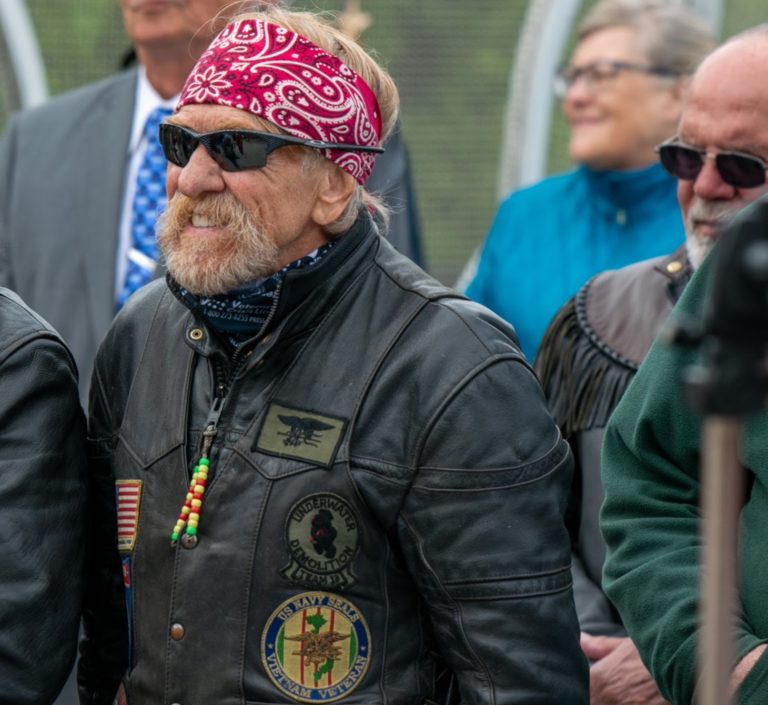
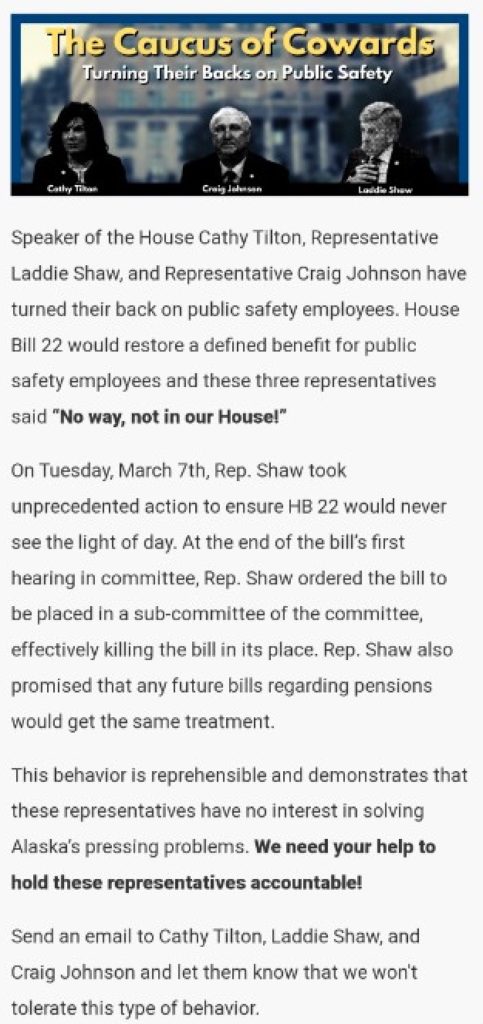
The AFL-CIO put out a statement today that called war veteran Rep. Laddie Shaw a coward. His offense? Putting House Bill 22, a return to defined benefits for some state workers, into a subcommittee for a full vetting.
Shaw, a retired Navy SEAL, was assigned to Vietnam, not once, but twice, during the Vietnam War, as a member of the Underwater Demolition Team 13 and SEAL Team 1.
He served in the Naval Reserve and the Alaska Army National Guard, and was an emergency response specialist for the Alaska State Troopers. He also served as the Alaska director of veterans affairs from 1999 to 2003. He has been an advocate for military members and veterans.
Why would the AFL-CIO call such a hero a coward? The union bosses are unhappy that the bill they want will be delayed. Of concern for many in the House majority is that the bill was raced through its first committee of referral and was voted out of committee without so much as the required fiscal note.
In the same statement, the union called House Speaker Cathy Tilton and Rules Chair Craig Johnson cowards. In fact, the AFL-CIO called the entire House Majority cowards.
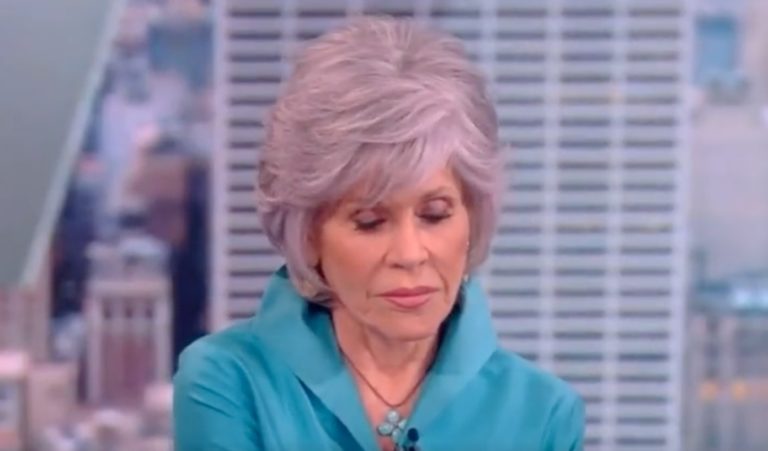
On The View, actress/activist Jane Fonda said that one more step in the fight for abortion rights is plain old “murder.”
The hosts of the show quickly tried to walk that suggestion back by saying that Fonda must have been joking, but Fonda just stared, giving them no indication that she was, in fact, trying to be funny.
Her comment came after she had talked about the importance of women being able to control their own bodies, and “able to determine when and how many children they will have.” She said women will not go back to the era when abortions were limited.
“We’re not going back. I don’t care what the laws are,” Fonda said, and the audience applauded.
She was asked what else women could do besides protest.
“Well, there’s murder,” Fonda replied.
“What did you say?” said Lilly Tomlin.
“Murder,” Fonda repeated.
“She’s kidding,” said Joy Behar, trying to walk back the statement. But Fonda sat stony-faced, while the others around the table tried to brush it off and then say that surely that statement would be taken and run with by the conservatives.
Watch the entire exchange here:
Jane Fonda just went on The View and said Pro-Life politicians need to be "murdered"
If you want to kill a proposal in advance in Washington’s Beltway these days, you leak it to the media. It was done before the Supreme Court decision overturning the 1973 abortion ruling called Roe v. Wade last May, and it was done again on Friday, March 10, when unnamed sources leaked to Bloomberg News that a decision has been reached on Alaska’s Willow Project, which environmentalists have made into the new boogeyman.
In the case leaked on Roe v. Wade, the leak did not change the actual outcome of the ruling by the Supreme Court, however. It appears environmentalists may be hoping for a different outcome than the one Bloomberg is reporting.
Bloomberg writes, “The Biden administration has decided to authorize a mammoth ConocoPhillips oil project in northwest Alaska, rejecting arguments from environmental activists who insist it will push the world closer to climate catastrophe, according two people familiar with the matter.”
“After weeks of deliberations, senior advisers have signed off on the move, which represents one of the most momentous climate decisions yet for President Joe Biden.
“The approval is set to be released next week by the Interior Department, said the people, who asked not to be named because an announcement has not been made. Under the draft plan, ConocoPhillips would be permitted to drill from three locations across its Willow site in the National Petroleum Reserve-Alaska, unlocking an estimated 600 million barrels of oil as well as some 280 million tons of carbon dioxide emissions tied to burning it.”
It appears to be partially correct, in that the announcement is not being made this week, as many had hoped for. It would be economically life-changing for Alaska if the three drilling pads were approved, although other rumors say the Biden Administration will reduce the approval to two pads.
The news came out late in the afternoon on a Friday in Washington, D.C.
The project, while substantial for Alaska, is not massive, but could provide 188,000 barrels of oil a day into the Trans Alaska Pipeline System. ConocoPhillips would like to begin work this winter, but the days to actually do work in the Arctic are fewer now, as spring thaw will eventually take out the ice roads.
Sen. Dan Sullivan’s office declined to comment on the news report.
At the end of December, in a holiday news dump, the Biden Administration suddenly announced it would return to the old Obama-era interpretation of “Waters of the United States” — which drops of water can be regulated by the federal government.
The ruling, published in the Federal Register in January, means the government will have oversight not only of waters on federal lands, but waters that might someday flow into any waters. In other words, if it’s any significant amount of water, the federal government can choose to regulate it under the Clean Water Act.
The ruling means that the less-than 1 percent of privately held land in Alaska, in addition to that private land held by Native corporations, will be subject to EPA permits for something as minor as building a 10×10 hunting cabin or even a fish-drying shack.
Alaskans are mystified that Democrat Rep. Mary Peltola, their only member in the U.S. House, voted to return to colonialism. The EPA rule takes away the rights of Native corporations to use their lands for the betterment of their shareholders – the Natives of Alaska who were deeded these lands under the Alaska Native Claims Settlement Act of 1971, which awarded Alaska Native corporations 45.5 million acres of land to create better economic conditions for Alaska’s indigenous people.
That’s not all the EPA rule does. A small neighborhood containment pond that occasionally slops over into a stormwater drain will come under EPA control, even if it’s on private land. Water that drains from rooftops and makes its way to that pond will be subject to at-whim permit requirements by the EPA. Golf course water hazards, already significantly regulated, would find themselves even further under the command of the Clean Water Act. A farm or ranch pond that occasionally overfills and spills over its swale will be subject to the Obama-era WOTUS interpretation.
It’s not theoretical. At the U.S. Supreme Court, a pending case from Idaho, Sackett vs. EPA, shows how just one American can be prevented from building a home if the federal government decides, as it did in 2008, that the property owner’s half-acre land was once upon a time a wetlands, until a road nearby changed the hydrology of the area. The case was the first to be heard by the court this session and a decision is expected within weeks.
Alaska’s Gov. Mike Dunleavy is not happy about the return to the Obama-era rule, and neither are two members of the Alaska delegation – Senators Dan Sullivan and Lisa Murkowski.
That is because Alaska, with its unique geographic and geologic characteristics, is disproportionately affected by the Obama-era EPA rule.
Alaska has a diverse climate, with some places getting less than five inches of rain per year, and other places getting 200 inches. Some land is permanently frozen, and other land, which drains into waterways, is suitable for farming. Alaska has more water – liquid and frozen – than all other states combined. It’s crisscrossed by 900,000 miles of navigable rivers and streams. The state has 22,000 square miles of lakes, 27,000 miles of coastline, and about 43% of the state is considered wetlands, compared to other states, which average 5%.
For Alaskans, this is a taking of the state’s land and the economy by the federal government. If it looks like colonialism, and walks like colonialism, it’s not going to be popular in the 49th state.
For these reasons, if the Biden Administration goes through with its expansion of federal authority over all ponds, streams, wetlands, and more – whether on federal, state, or private land – it will effectively finish off Alaska’s economy.
Alaska has struggled under the thumb of President Biden, who has made at least 45 executive orders shutting down various parts of the Alaska economy. The state is now near the bottom of the list for economic recovery from the Covid pandemic policies. The new WOTUS rule is the death blow.
Alaskans are disappointed that Rep. Mary Peltola, their only House member, voted to return to colonialism.
Peltola betrayed her state last week, putting partisan allegiance to Biden over the well-being of her fellow Alaskans.