Tuesday, August 11, 2026
Home Blog Page 752

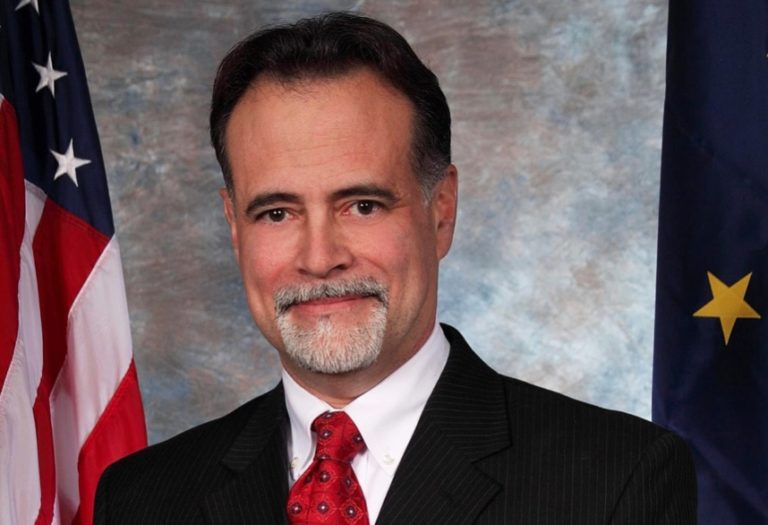
Derkevorkian: Vote for Peter Micciche for Kenai mayor

By RICHARD DERKEVORKIAN

As residents of the Kenai Peninsula Borough, we face many challenges, but with Peter Micciche at the helm, I am confident that we can overcome them. Peter has a proven track record of putting the needs of the community first and working tirelessly to deliver results. With his extensive knowledge of the borough and his commitment to responsible governance, Peter is the clear choice to lead us forward.

As a conservative leader, Peter understands the importance of fiscal responsibility and limited government. As the mayor of Soldotna he cut taxes three times. He will work to ensure that your tax dollars are being used effectively and efficiently, while also protecting your personal liberties. His conservative principles and strong leadership skills will help to promote a business-friendly environment and encourage economic growth, ensuring that the Kenai Borough continues to thrive.

While it may be tempting to write in a candidate that you may view as more conservative than Peter, it is important to remember that this could actually help his opponents. In elections, a split in the vote can lead to the election of a candidate who is not representative of the majority of the voters. Writing in a candidate takes away from the strength of the conservative vote, and could lead to unintended consequences. 

By voting for Peter, we can ensure that our voice is heard and that the borough continues to move forward under strong conservative leadership. So if you want a borough that is moving forward, thriving, and true to its conservative roots, join me in voting for Peter A. Micciche on election day.

Richard Derkevorkian serves on the Kenai Borough Assembly and writes as a private citizen.

Does it add up? Senate majority wants to add $1,000 to current base student allocation, no accountability

The Alaska Senate Majority, which took a preliminary stance against issuing a full Permanent Fund dividend to Alaskans this year, is proposing the addition of $1,000 to the current base student allocation for schools. That baseline funding would bring the state’s share to about $6,960 per student. It would cost the state at least $257 million.

Senate Bill 52 is a 20% increase to the current basic formula for schools. The Alaska Association of School Boards asked for an increase of $860, but that organization and other education industry representatives are more than willing to accept a larger amount.

The extra funds would come from the Permanent Fund dividend, said Sen. Bert Stedman, who co-chairs the Senate Finance Committee.

“If we had a $1,300 dividend, we could pay for the education increase. We could pay for the deficit and we could pay off all the municipal debt for the entire state for municipalities dealing with the Alaska Bond Bank, about $900 million, with this year’s cash flow. That’s the magnitude of what we have to give and take when we decide what we’re actually going to fund,” Stedman said last week, explaining that it is a choice between greater funding of education and a bigger dividend.

Stedman then said, “We’re going to have to make a choice. Do we want to teach our kids to cash checks? Or do we want to teach them to read and write and do arithmetic?”

Critics of funding increases say there is little accountability in schools, which have turned away from the basics of reading, writing, and mathematics, in favor of gender studies and critical race theory. Students in Alaska have performed at the bottom of the nation for the past few years. Reading scores among Alaska students are a year behind the national average and more than two years behind Florida. Just 28% of fourth graders in Alaska can understand mathematics at grade level, and just 24% were reading at grade level last year.

Gov. Mike Dunleavy’s 2024 budget has education funding remaining static. But the Alaska Policy Forum has pointed out that per-student funding has grown 32% in the past 20 years, now providing $20,000 per student, which includes federal, state, and local funding. It’s greater than the national average by 23%.

“In Alaska, total revenue grew 32% per pupil, from $15,000 to $20,000 [between 2002 and 2020]. Sixteen states and D.C. increased their education revenues by 30% or more between 2002 and 2020 after adjusting for inflation. State revenues contributed the most to Alaska’s increase, growing 50% between 2002 and 2020 ($8,000 to $13,000 per pupil). Federal revenue grew only 7% ($2,700 to $2,900 per pupil), while local revenue grew 12% ($3,900 to $4,300 per pupil). In 2002, revenues from the State of Alaska comprised 56% of revenues per pupil, while in 2020, the state contributed 63% of revenues per pupil,” AFP wrote in December.

Conservative Ketchikan Mayor Rodney Dial testified to the Senate Education Committee in favor of increasing the base student allocation. He cited a shortfall of $3 million in the upcoming Ketchikan school budget, with 50 or more employees set to be cut in the next budget cycle. The funding for the organized area of Alaska, such as Ketchikan, Dial said, are not getting the same amounts as the unorganized boroughs in the state. Dial asked that organized boroughs be treated equitably with unorganized boroughs, which contribute nothing to their children’s education because they have no local property or sales taxes.

Republican Louise Stutes become whip for minority Democrats, as caucus puts Rep. Zack Fields in his place

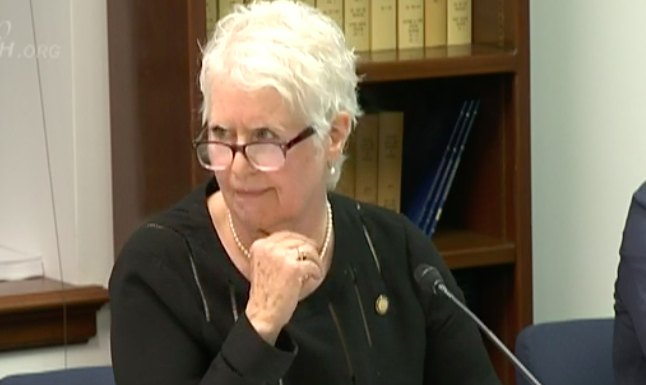
Republican Rep. Louise Stutes was not invited to be part of the Republican-led caucus in the House of Representatives in Juneau. Her years of aligning with Democrats was just a bridge too far and she and Rep. David Eastman were considered the extremes that needed time in the time-out corner.

Unsurprisingly, Stutes, of Kodiak, joined the Democrat minority last week. After leading the Democrat-led majority for years as one of the original Musk Ox Caucus members in 2015-2016, she was not able to establish trust with the Republicans. This is the first time she has been in the minority since 2016.

As she joined the Democrats, they kicked Rep. Zack Fields, an Anchorage Democrat, to the curb as caucus whip, and installed Republican Stutes in the role of rounding up the votes.

Stutes is one of the original Must Ox Caucus of 2016, which were made up of Republicans who caucused with Democrats. While Republican reprobates Paul Seaton, Jim Colver, and Gabrielle LeDoux were booted out of office by voters, and Gary Knopp died in a plane crash, only Stutes, Democrat Neal Foster, and fence-sitting undeclared Bryce Edgmon remain of that group that kept Democrats effectively in control for six years. Foster and Edgmon are now part of the Republican-led majority, but Stutes has officially made her bed with the Democrats, after having been House Speaker for the past two years.

Tensions over pensions: H.B. 22 is fast-tracked through House committee, but trips on its own schtick

Normally, Alaska’s legislative committees start out the session with general fiscal presentations from agency heads. Legislators hear from the Office of Management and Budget and oil economists, so that before they make big fiscal commitments, they know what the state’s economic outlook is.

But not this year’s House Community and Regional Affairs Committee. They’re fast-tracking spending bills.

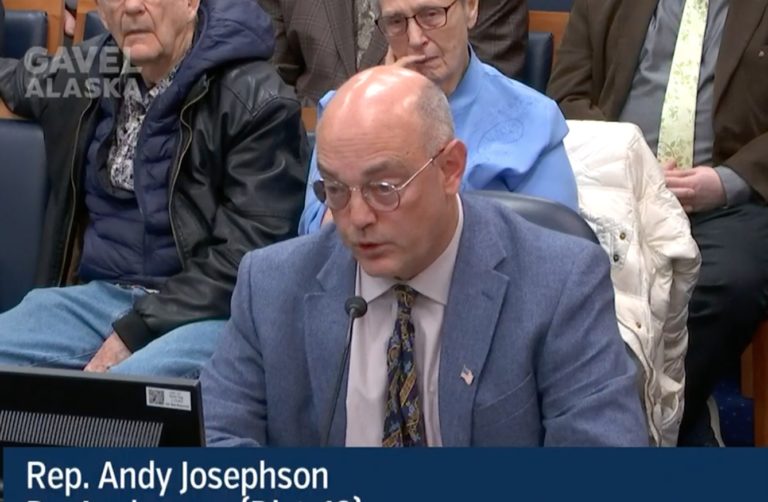
In Juneau, the CR&A committee went roaring out of the gate with the most controversial bill of the season: House Bill 22, sponsored and pushed hard for the past two week by Democrat Rep. Andy Josephson, who has been taking advantage of freshmen in the House by wielding his superior knowledge gained in years and years of legislative service.

HB 22, to punch up the pensions for firefighters and public safety workers, was rushed through the House CR&A Committee, its first committee of referral, and managed to get approved within two weeks — without so much as a fiscal note.

Therein lies the problem: No one has any idea how much it would cost to return firefighters, paramedics, and state troopers to a pension plan such as existed in the early days of Alaska statehood, when it was hard to attract workers to the new state. The best guesses range between hundreds of millions of dollars to over $1.2 billion.

The members of the committee voted four to two in favor of the bill, with Committee Chair C.J. McCormick, Democrat; Justin Ruffridge, Republican; Donna Mears, Democrat, and Rebecca Himschoot, Independent-Democrat voting in favor.

Republicans Kevin McCabe and Tom McKay voted against moving the bill so quickly, because there’s no real understanding of the costs.

But regardless of the final vote, HB 22 is technically still in CR&A. The committee is going to need to do an do-over because it cannot go to its next committee, State Affairs, without a fiscal note.

Meanwhile, the CR&A committee made yet another blunder: It did not publicly advertise meetings for next week, and so there can be no do-over by this committee on HB 22 for several more days.

In addition, subcommittees for Finance have started meeting in earnest, and members of CR&A have to peel off to attend those numerous meetings, to which they’ve been assigned, crowding the calendar for the coming few weeks as department budgets go through rigorous subcommittee review.

HB 22 was being rushed through, said Rep. Kevin McCabe, who is the committee’s vice chair.

McCabe said even the letter from the Anchorage Assembly encouraged the Alaska Legislature “to diligently vet House Bill 22 and Senate Bill 35, in committee and in collaboration with the municipalities to produce a final bill for passage.” He was pointing out that the key words were “diligently” and “vet.”

McCabe pointed out the committee hasn’t been given the opportunity to talk to municipalities “to find out what it’s going to take, to find out what it’s going to cost.” He said the rough estimate shows it could cost up to $400,000 for one fire department he heard about in the Mat-Su Borough.

According to the Division of Retirement and Benefits, there are 31 communities or employers that are arrears in paying for the still-on-the-books defined benefits. “So are we going to drive them into further delinquency?” McCabe asked his fellow committee members.

“This is a huge bill, and to see it jammed into our committee in the first week was surprising to many of us,” said McCabe, who opposed the bill.

The bill goes to the State Affairs Committee next, but since it cannot go without a fiscal note, it’s in limbo, and may remain in limbo for another week or more, while the committee Chair, CJ McCormick shakes off the trick that Rep. Josephson pulled on him by advising him to push it through quickly.

Meanwhile, one of two Senate bills may end up being the final vehicle for the increase in benefits. Sen. Scott Kawasaki has a similar bill to HB 22, and Sen. Jesse Kiehl has a bill that would add teachers into the new, improved defined benefit program they are proposing. Both sponsors are Democrats, like Rep. Josephson in the House.

Any one of these bills, however, will not likely pass muster with Gov. Mike Dunleavy, who may exercise his veto pen, if tempted.

Watch: Chinese spy balloon shot down over Atlantic after FAA marks Myrtle Beach as temporary flight restricted

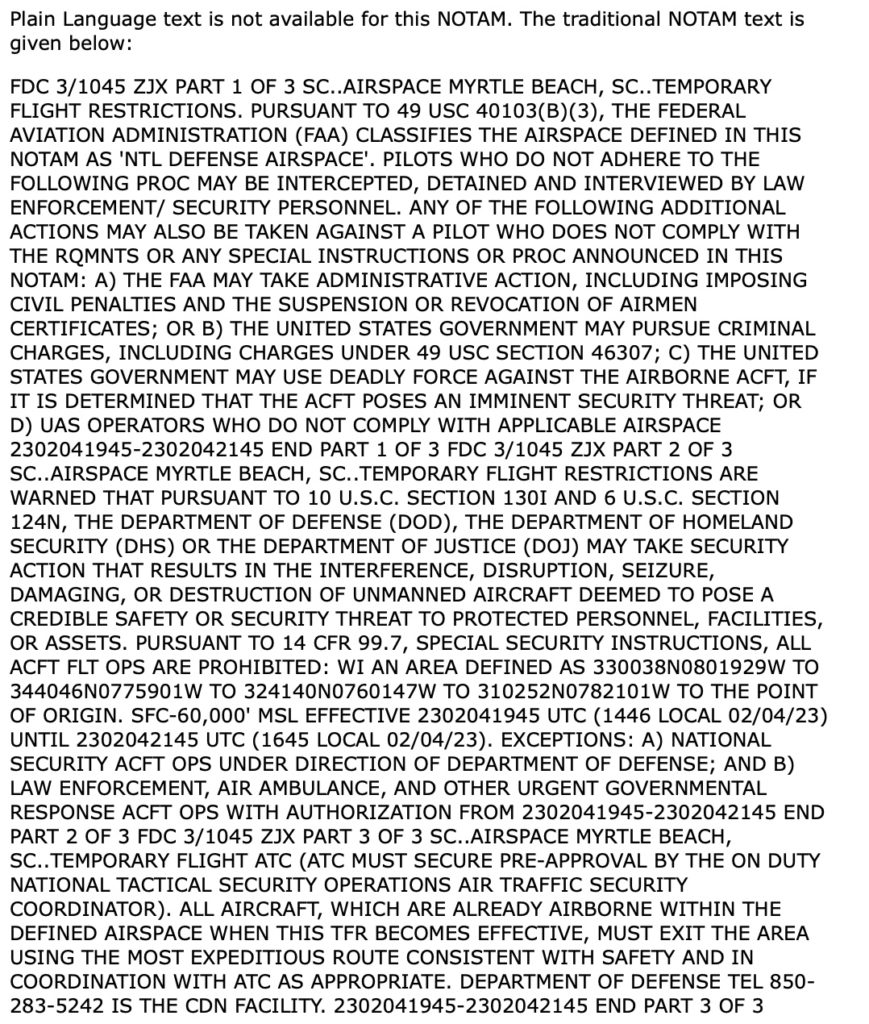
On Saturday, the Federal Aviation Administration placed a temporary flight restriction (TFR) on the area around Myrtle Beach, South Carolina, for security purposes. The Chinese spy balloon that has transited from the Aleutians to the East Coast was spotted above Myrtle Beach earlier in the day, and fighter jets had been seen in the area. (Top photo from Fox News.)

Shortly afterward, the balloon, which entered the United States in the Aleutian Islands and crossed nearly the entire country, was shot down and was seen by beachgoers falling from the sky. The balloon is said to be the size of three school buses. The payload was cut loose at about 60,000 and fell into the ocean. Whatever was in that aircraft is now under water.

The temporary flight restriction was unusually wordy and descriptive in what would happen if any aircraft was in the Myrtle Beach air space:

The official account by the Department of Defense:

A U.S. Air Force fighter safely shot down a Chinese high-altitude surveillance balloon today, Secretary of Defense Lloyd J. Austin III said in a written statement.

President Joe Biden ordered the action on Wednesday, but it was delayed until the balloon was over water off the coast of South Carolina to ensure no Americans on the ground were harmed. 

“The balloon, which was being used by the PRC in an attempt to surveil strategic sites in the continental United States, was brought down above U.S. territorial waters,” Austin said.  

The action was taken in coordination and support of the Canadian government. “We thank Canada for its contribution to tracking and analysis of the balloon through [North American Aerospace Defense Command] as it transited North America,” Austin said. “Today’s deliberate and lawful action demonstrates that President Biden and his national security team will always put the safety and security of the American people first while responding effectively to the PRC’s unacceptable violation of our sovereignty,” Austin said referring to the Peoples Republic of China. 

U.S. officials first detected the balloon and its payload on January 28 when it entered U.S. airspace near the Aleutian Islands. The balloon traversed Alaska, Canada and re-entered U.S. airspace over Idaho. “President Biden asked the military to present options and on Wednesday President Biden gave his authorization to take down the Chinese surveillance balloon as soon as the mission could be accomplished without undue risk to us civilians under the balloon’s path,” said a senior defense official speaking on background. “Military commanders determined that there was undue risk of debris causing harm to civilians while the balloon was overland.” 

An F-22 Raptor fighter from the 1st Fighter Wing at Langley Air Force Base, Virginia, fired one AIM-9X Sidewinder missile at the balloon.  

The balloon fell approximately six miles off the coast in about 47 feet of water. No one was hurt. 

Long before the shoot down, U.S. officials took steps to protect against the balloon’s collection of sensitive information, mitigating its intelligence value to the Chinese. The senior defense official said the recovery of the balloon will enable U.S. analysts to examine sensitive Chinese equipment. “I would also note that while we took all necessary steps to protect against the PRC surveillance balloon’s collection of sensitive information, the surveillance balloon’s overflight of U.S. territory was of intelligence value to us,” the official said. “I can’t go into more detail, but we were able to study and scrutinize the balloon and its equipment, which has been valuable.” 

The balloon did not pose a military or physical threat. Still its intrusion into American airspace over several days was an unacceptable violation of U.S. sovereignty. The official said Chinese balloons briefly transited the continental United States at least three times during the prior administration. 

While Chinese officials admitted that the balloon was theirs, they said it was a runaway weather balloon. “The PRC has claimed publicly that the high-altitude balloon operating above the United States is a weather balloon that was blown off course. This is false,” the official said. “This was a PRC surveillance balloon. This surveillance balloon purposely traversed the United States and Canada, and we are confident it was seeking to monitor sensitive military sites.” 

The mission now transitions to one of recovery. There are a number of U.S. Navy and Coast Guard vessels establishing a security perimeter around the area where the balloon came to Earth. They are searching for debris, said a senior military official also speaking on background.  

There is no estimate for how long the recovery mission will take, the military official said, but the fact that it came down in such a shallow area should make recovery “fairly easy”. 

The military official gave some detail of the engagement. The F-22 fired the Sidewinder at the balloon from an altitude of 58,000 feet. The balloon at the time was between 60,000 and 65,000 feet.  

F-15 Eagles flying from Barnes Air National Guard Base, Massachusetts, supported the F-22, as did tankers from multiple states including Oregon, Montana, South Carolina and North Carolina. Canadian forces also helped track the overflight of the balloon. 

The Navy has deployed the destroyer USS Oscar Austin, the cruiser USS Philippine Sea and the USS Carter Hall, an amphibious landing ship in support of the effort. 

Di Grappa pulls out of District 4 Assembly race, leaving Rivera vs. Szanto for midtown

Jenny Di Grappa, a liberal who filed to run against Felix Rivera in District 4 for the Anchorage Assembly, pulled out of the race this week. Although she missed the withdrawal deadline, the Anchorage Municipal Clerk has crossed her name off the list, and she won’t appear on the April 4 ballot, and won’t take votes away from Rivera.

Remaining in the race is liberal standard-bearer Rivera, who drives for DoorDash and is trying for his third and final term on the Assembly, and conservative Travis Szanto, a builder and principle of Skyworks LLC, who is known for his innovative treehouses.

Di Grappa withdrew on Feb. 1. By leaving the race, she strengthens Rivera, who has served on the Assembly since 2017, after having been a member of the staff of former Mayor Ethan Berkowitz.

Conservatives running for Assembly include:

Find out more about candidates running for the Anchorage Assembly at this link.

Complete list of candidates for Assembly and School Board:

District 1 – Seat ​B – North Anchorage

Danger, Nick​

Trueblood, John

Constant, Christopher

District 2 – Seat C – Chugiak, Eagle River, JBER

Arlington, Jim

Myers, Scott

District 3 – Seat E – West Anchorage

​​​Darden, Dustin Thomas House

Brawley, Anna

Flynn, Brian

District 4 – Seat G – Midtown Anchorage

Szanto, Travis

Rivera, Felix

District 5 – Seat H – East Anchorage (2-Year Term)

Sloan, Leigh

​​Bronga, Karen

District 5 – S​eat I – East Anchorage

Martinez, George

Moore, Spencer

District 6 – Seat K – South Anchorage, Girdwood, Turnagain Arm​

Ries, Rachel

Insalaco, Mikel

Johnson, Zac

School Board – Seat C

​​Donley, Dave

Boll, Irene

School Board – Seat D​​

Cox, Mark Anthony

Holleman, Andy​​

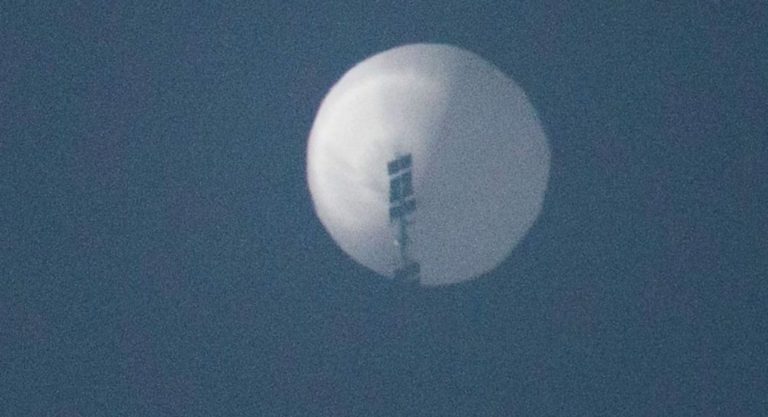
Defense says Chinese spy balloon is over center of country

As of noon Friday, the maneuverable Chinese surveillance balloon that was over Montana yesterday, was at an altitude of about 60,000 feet and floating over the center of the continental United States in an easterly direction, the Department of Defense said. It poses no risk to commercial aviation, military assets or people on the ground, said the Pentagon.

The balloon is the size of about three school buses. It crossed Alaska over the Aleutian Chain and entered airspace over the mainland of Alaska between Nome and Kotzebue, and then traveled through Canada to Montana. Officials say it has been over Kansas City, Missouri and continues heading east, which would take it close to the nation’s capital and main population centers.

The North American Aerospace Defense Command is continuing to monitor and leaders are reviewing options, said Air Force Brig. Gen. Pat Ryder, who held a media briefing on Friday. 

“The balloon has violated U.S. airspace and international law, which is unacceptable,” he said, adding that the U.S. has communicated that to Chinese leaders at multiple levels. 

The balloon is carrying surveillance gear as well as a payload, Ryder said. He didn’t reveal what the payload is.

A reason not to shoot it down at this point, he said, is that besides not posing a threat to people or aircraft, the resulting debris from a strike of this large balloon could be harmful to people on the ground and result in property damage. 

The balloon most likely will continue floating over the U.S. for the next few days and updates will be provided as needed, he said. 

“Once the balloon was detected, we acted immediately to protect against the collection of sensitive information,” he added, a statement that has been challenged by critics who said the Defense Department didn’t reveal the whereabouts of the balloon until it reached Montana. Bloomberg News reported that the White House kept spy balloon’s presence secret for fear of derailing the trip to China by Sec. of State Antony Blinken. But then, local media in Billings, Montana published a picture of it.

An apparent explosion over Billings, Montana, seen in a video posted by a private citizen and widely circulated on the internet, may be a fake. There is no indication that the Department of Defense has shot down the balloon.

Montana Gov. Greg Gianforte, who was not informed about the balloon over Montana buy the Pentagon until it was already in Montana airspace, issued a statement:

“I received an informational briefing yesterday on the situation involving a suspected Chinese spy balloon flying over Montana. From the spy balloon to the Chinese Communist Party spying on Americans through TikTok to CCP-linked companies buying American farmland, I’m deeply troubled by the constant stream of alarming developments for our national security.”

Gianforte said, “If it was up to Montanans, this thing would have been taken out of the sky the moment it entered our sovereign airspace.”

Al Jazeera’s Kimberly Halkett, reporting from D.C., said that the balloon was first spotted by bystanders in the state of Montana.

“It was spotted by people on the ground who were wondering what was in the sky. That is how the US government first learned about this, incredibly,” Halkett said. “It was then that the US government started tracking it.”

Secretary of State Antony Blinken called it “a clear violation of U.S. sovereignty and international law…An irresponsible act.” He canceled his trip to China after the photo and news leaked out about the spy balloon.

The Chinese government says it is just a research airship that deviated from its course.

“The airship is from China. It is a civilian airship used for research, mainly meteorological, purposes. Affected by the Westerlies and with limited self-steering capability, the airship deviated far from its planned course. The Chinese side regrets the unintended entry of the airship into US airspace due to force majeure. The Chinese side will continue communicating with the US side and properly handle this unexpected situation caused by force majeure,” the People’s Republic of China said in a press release on its website.

On Friday evening, the Pentagon confirmed that a second Chinese spy balloon was “transiting Latin America.”

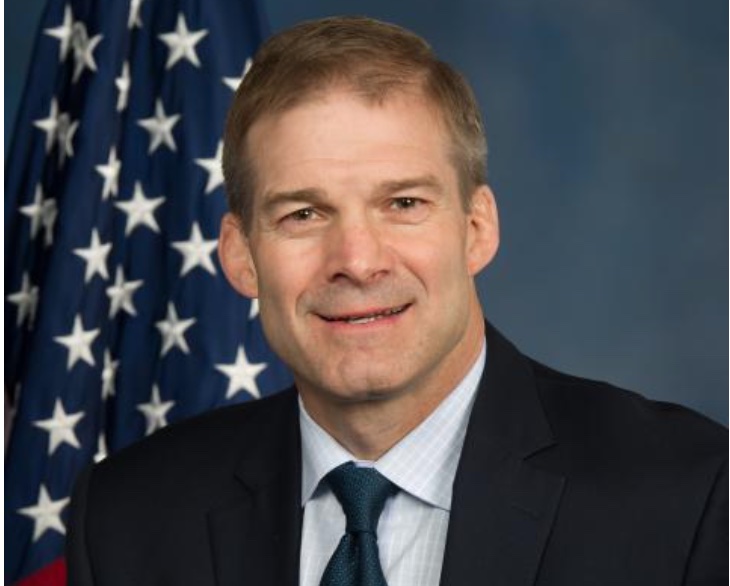
Rep. Jordan, chair of Judiciary, subpoenas Education, FBI, Homeland Security over investigation of parents who protest critical race theory, gender ideology

House Judiciary Committee Chairman Rep. Jim Jordan, representing Ohio’s 4th District, sent a warning shot over the bow of the Biden Administration on Friday, subpoenaing top officials to hand over documents to the committee relating to investigations of Americans who merely protest their local school board policies.

Subpoenas were sent to Attorney General Merrick Garland, FBI Director Christopher Wray, Education Secretary Miguel Cardona, and others.

According to the subpoenas, the officials are “commanded” to produce documents to the Judiciary Committee by March 1. The subpoena comes as Jordan sent four letters to various officials Friday, calling for information and interviews the committee has been requesting, in a final warning shot before he sent the subpoena their way.

The subpoenas relate to a memo sent by Attorney General Garland, describing a “spike in harassment, intimidation and threats of violence” against school boards.

It’s a mission that Jordan has been on for months, after it was discovered that the National School Board Association was directing the actions of the White House, in order to criminalize parents who become school activists. In November, Jordan wrote to FBI Director Wray, saying that if the documents didn’t get turned over, there would likely be a subpoena during the 118th Congress, as control changed over to the Republicans.

“Over the past twenty-one months, we have made several requests for information and documents concerning the Biden Administration’s misuse of federal criminal and counterterrorism resources to target concerned parents at school board meetings. We reiterated and itemized these requests in our recent letter of October 17, 2022, which is enclosed for your convenience. To date, you have ignored these requests. Please be aware that if our requests remain outstanding at the beginning of the 118th Congress, the Committee may be forced to resort to compulsory process to obtain the material we require,” Jordan wrote in November.

In January, the Biden Administration told Jordan he would have to resubmit all of his requests for documents, now that he was going to be in the Republican majority in January. The Feb. 3 subpoena is the answer to the White House’s digging in of its heels.

In 2021, citing an increase in what it called harassment, intimidation, and threats of violence against school board members, teachers and workers in public schools, Attorney General Garland directed the FBI and U.S. Attorneys’ Offices to begin meeting with federal, state, Tribal, territorial and local law enforcement leaders to discuss strategies for addressing what it saw as a trend that may require the heavy hand of federal authorities.

“Threats against public servants are not only illegal, they run counter to our nation’s core values,” wrote Garland. “Those who dedicate their time and energy to ensuring that our children receive a proper education in a safe environment deserve to be able to do their work without fear for their safety.”

The White House and the National School Board Association were, that year, coordinating with federal officials to criminalize parents who have started to pay attention to what their local school boards are promulgating with critical race theory and gender ideology.

A report to the House Judiciary committee last year said that the FBI was artificially inflating statistics about domestic violent extremism in the nation. 

“Whistleblowers have described how FBI leadership is pressuring line agents to reclassify cases as domestic violent extremism even if the matter does not meet the criteria. They also explained how the FBI is misrepresenting the scale of domestic violent extremism nationwide by categorizing January 6th-related investigations as organic cases stemming from local field offices, instead of all related to one single incident. In both ways, the FBI is fueling the Biden Administration’s narrative that domestic violent extremism is the biggest threat to our nation,” the report said.

“The FBI is abusing its counterterrorism authorities to investigate parents who spoke at school board meetings. Whistleblowers disclosed how, shortly after the National School Boards Association urged President Biden to use the Patriot Act against American parents, the FBI Counterterrorism Division set up a special “threat tag” to track school board-related cases. Whistleblowers provided evidence of how the FBI opened investigations into one mom for allegedly telling a local school board ‘we are coming for you’ and a dad simply because he ‘rails against the government’ and ‘has a lot of guns,'” the report said.

Read the Department of Justice memo on its investigations into threats against school officials.

Read the House Judiciary report on the politicization of the FBI’s investigation.

https://mustreadalaska.substack.com

‘When you’re flying an aircraft, you need 3 things: Altitude, air speed, and ideas.’ The pilots were running out of all of them.

By ALASKALINE NEWSLETTER

Editor’s note: Must Read Alaska is noting here a unique weather event that almost took down a commercial flight leaving Juneau 30 years ago on Jan. 29, 1993. But for the quick thinking of the pilot, dozens of lives would have been lost in a horizontal tornado that occurred upon takeoff and nearly flipped the aircraft. This story first appeared in the Alaska Airlines employee newsletter in 1994. The incident and the solution arrived at ‘on the fly’ became instrumental to training pilots about what to do in such a circumstance).

In 20 years as a pilot, Captain James “Jake” Jacobsen had racked up more than 15,000 hours of flight time, but when he looked back over his career, his most vivid memory was of 15 seconds over Juneau on the night of January 29, 1993.

He and First Officer Kevin Nelsen were later honored with the Air Line Pilots Association Superior Airmanship Award for their flying skills that night.

The incident began about 6:30 pm. The sky was dark. A light rain was falling. Winds were from 120 degrees at 30 knots — not the best flyng conditions by any means, but not unusual for Southeast Alaska either.

Two previous jet departures reported moderate turbulence on the climb out.

Jacobsen and Nelson took off toward the east on a flight to Seattle with two pallets of freight and 31 passengers. Flight attendants Kim Wien (Merrill Wien’s daughter) and Barb Cooley were securely strapped in their jumpseats.

Low mountains around the airport required the B737-200 to make a 180-degree right turn shortly after takeoff. About halfway through the turn the right wing of the jet suddenly dipped down toward the ground.

“We rolled over in excess of 60 degrees and I could not get the left wing back down,” recalled Jacobsen. The aircraft started losing altitude and air speed. It was in danger of stalling.

The aircraft had been hit by a dangerous “rotor shear,” a type of wind shear often described as a horizontal tornado. It is caused by one air mass moving over the top of another, sometimes at speeds of 100 knots or more.

“When you are flying an aircraft you need three things — altitude, air speed, and ideas,” said Jacobsen. “We were rapidly running out of the first two and didn’t have a lot of time to come up with the third.”

As the aircraft hung almost motionless in the air, luggage became weightless. Coats, purses, and books tumbled out from under the passenger seats and flew around the cabin.

“It looked like the inside of a popcorn machine,” said Wien.

A pocket radio in the first row rocketed the entire length of the cabin and hit the aft bulkhead.

“It had been windy in Southeast Alaska that day, so we were extra careful about stowing hand-carried items before takeoff,” said Wien. “Everything was really buttoned up, but there is no way to keep everything tied down in a situation like that.”

Jacobsen credited his experience as a light plane pilot, the superior flight characteristics of the B737-200, and luck with saving him and his passengers that night.

ALPA Executive Vice President and Alaska Airlines Captain Joe Salz believed Jacobsen’s many years of flying out of Juneau was also a factor.

“Jake is one pilot who really knows Juneau,” said Salz. “He has spent years flying in and out of Juneau in all kinds of aircraft.”

In fact, Jacobsen and his family owned Wings of Alaska, a small charter and scheduled airline based in Juneau.

Nelsen also had an extensive background in Alaska flying. Born and raised in Seward, he had more than 12,000 hours of flight time, including 5,000 hours flying floatplanes throughout the state.

Before the aircraft rolled over, Jacobsen jammed the throttles to full power and then kicked in full right rudder and dove the aircraft toward the ground to gain air speed.

At what he estimates was less than 200 feet above the ground, Jacobsen was able to pull out of the dive. His first attempt to climb failed. The second try was successful, but as the aircraft struggled to gain altitude it was again hit by the same wind shear.

“We were able to keep the wings level this time because we weren’t turning,” said Jacobsen. Eventually, the aircraft was able to gain altitude, bringing the emergency to an end.

Through it all, Nelsen called the instrument readings off out loud for Jacobsen, who was busy trying to gain control of the aircraft. Extreme turbulence cause the needles to bounce around so much that Nelsen had difficulty accurately reading the airspeed and altitude indication.

The passengers were remarkably quiet throughout the emergency. Wien remembered no screaming, crying, or hysterics. Later, a passenger commented, “I knew we were in trouble when I saw the lights of the Fred Meyer store out of the top of the window.”

Wien said, “There was no sugar coating it. Everyone knew how close we came.”

Despite their brush with disaster, Jacobsen and Nelsen decided to go on to Seattle. They had no choice. “The engines were not damaged. Sitka was closed because of high wings, it was blowing about 75 knots at Ketchikan, and we didn’t want to go back to Juneau for obvious reasons, ” said Jacobsen. In fact, Nelsen flew the departure while Jacobsen called the tower to recommend that the Juneau airport be closed — and it was.

Looking back on it, Jacobsen said, there was no way he and Nelsen could have predicted the wind shear.

“The winds on the surface weren’t that bad. I’ve taken off from Juneau with it blowing much harder,” Jacobsen said.

As soon as the aircraft was safely out of danger, Jacobsen made a PA announcement, then he went back into the cabin to talk to the flight attendants and reassure the passengers.

“That was excellent on Jake’s part, to go back and talk face-to-face with the passengers,” said Nelsen.

Though shaken, Cooley and Wien pulled themselves together and started the meal service.

“Maybe I was in shock, but my first thought was, ‘OK, that was a wild ride, but I’ve got to get these meals out,” said Wien. “Our knees were shaking but we went through our routine. That helped because it gave us something to focus on. We offered everyone complimentary drinks, but surprisingly, only one or two people took us up on it. I think it was a very sobering experience for everybody.”

Jacobsen lauded the performance of the two flight attendants. Holding back their own emotions, “Barb and Kim did an excellent job serving the passengers,” he said. “They were very professional. They performed a very exemplary service.”

In recognition of their performance that night, Jacobsen and Nelsen receive the 1993 Superior Airmanship Award from ALPA. The award is described as ALPA’s equivalent of the military’s Distinguished Flying Cross.

The plaque they received read, “For demonstrating great skill and professionalism on January 29, 1993, when you successfully maneuvered your B737 aircraft through severe meteorological conditions after departure from Juneau, Alaska Airport.”

The award was presented in Washington, D.C. by ALPA President Randy Babbitt. FAA Administrator David Hinson was the event keynote speaker. In the audience were members of the crew’s families and more than a dozen Alaska Airlines pilots, including the entire ALPA Safety Committee and several ICE instructors. Jacobsen’s mother flew from Juneau to see her son receive the award.

Cooley and Wien stood on the stage with Jacobsen and Nelsen as they received their award.

“We stuck together as a crew through it all,” said Jacobsen.

First published by Alaska Airlines’ AlaskaLine newsletter, Oct. 7, 1994.