The Anchorage Assembly will consider on Tuesday a resolution that would ask the Federal Trade Commission to block a merger between Kroger, which is part of the Fred Meyer empire, and Albertsons, which owns Safeway.
Assembly Chair Chris Constant says that food insecurity and market competition are factors in the food landscape in Anchorage and the state of Alaska that lead him to want to block the merger.
Earlier this month, Kroger and Albertsons announced they would sell off 413 grocery stores across 17 states as part of the proposed merger, in order to ensure that there is enough competition and to avoid a confrontation with the FTC and the unions that oppose the merger.
Some 14 Alaska Albertsons stores would be sold, representing 3 percent of the total number of stores jettisoned in the merger. No Fred Meyer would be sold off in the merger. That compares with 104 Albertsons and Kroger stores that would be sold off in Washington state.
If the FTC approves the merger, the deal “ensures no stores will close as a result of the merger and that all frontline associates will remain employed,” according to a statement by Kroger and Albertsons this month.
The list of stores to be sold to ensure the merger can go through includes:
Kroger released a list of how many stores per state would be part of the divesture:
Alaska: 14 Albertsons stores
Arizona: 24 Albertsons stores
California: 66 Albertsons and Kroger stores
Colorado: 52 Albertsons stores
District of Columbia/Maryland/Virginia: 10 Harris Teeter stores
Idaho: 13 Albertsons stores
Illinois: 14 Kroger stores
Montana/Utah/Wyoming: 12 Albertsons stores
Nevada: 15 Albertsons stores
New Mexico: 12 Albertsons stores
Oregon: 49 Albertsons and Kroger stores
Texas/Louisiana: 28 Albertsons stores
Washington: 104 Albertsons and Kroger stores
The item is early on the agenda for the Anchorage Assembly, which meets on the ground floor of the Loussac Library on Tuesday, beginning at 5 pm.
In a step back from his record of supporting child transgender legislation, California Democrat Gov. Gavin Newsom vetoed a bill Friday night that would have required parents to affirm their child’s gender identity in custody court battles, or risk losing custody. For Newsom,
California Bill AB957, passed on party lines, would require judges to consider whether parents affirmed a child’s gender or gender expression, as part of the decision determining the “health, safety, and welfare of the child.”
Newsom issued a statement late Friday night, which said, “This legislation would require a court, when determining the best interests of a child in a child custody or visitation proceeding, to consider, among other comprehensive factors, a parent’s affirmation of the child’s gender identity or gender expression.
“I appreciate the passion and values that led the author to introduce this bill. I share a deep commitment to advancing the rights of transgender Californians, an effort that has guided my decisions through many decades in public office.
“That said, I urge caution when the Executive and Legislative branches of state government attempt to dictate – in prescriptive terms that single out one characteristic – legal standards for the Judicial branch to apply. Other-minded elected officials, in California and other states, could very well use this strategy to diminish the civil rights of vulnerable communities.”
Gavin is considered a likely Democrat replacement for President Joe Biden, who has waning poll numbers in his reelection bid for 2024.
Opinions are flying back and forth in Juneau, with differing sides of a contentious spending proposal being debated in the local newspaper and on talk radio.
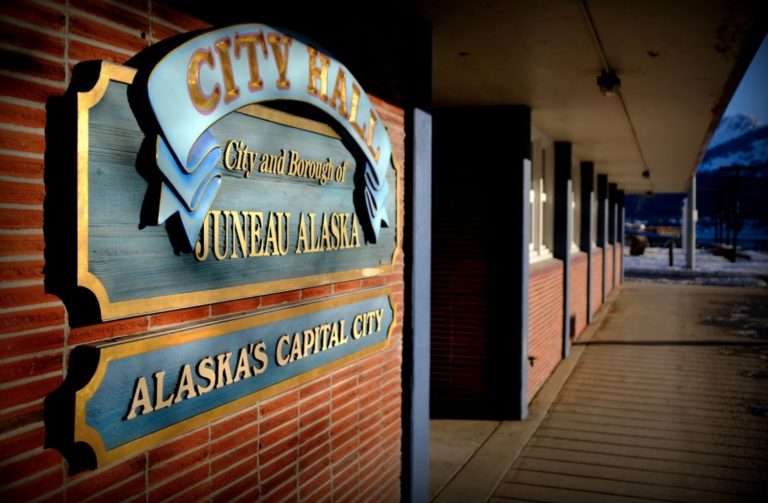
Juneau voters will decide — once again — if they want to pay for a new City Hall.
The current City Hall has been allowed to deteriorate and become unsightly, and some say that has been part of the master plan to convince taxpayers to pay for a spendy new building for city offices.
There’s a lot of anger at city government in Juneau right now, even more so than when the city removed the senior sales tax exemption in 2015. The discontent is widespread and deep this time.
The City and Borough of Juneau asked voters last year to approve spending on a new city hall. Voters declined the offer.
In June of this year, the Juneau Assembly voted unanimously to spend $50,000 to convince voters again to approve a $27 million bond issue, which would only partially fund the new city hall.
This, after the Assembly just approved the largest municipal operating budget in the history of Juneau.
The sides have lined up, with mostly city officials pushing hard in favor of the new building and saying it’s better to own a building than to rent. But the city leaders have offended more than a few voters by using taxpayer money to convince those same taxpayers to cough up even more money.
The new city hall is identical to the one that voters turned down just a year ago, but costs are probably not the same. Like everything else, project costs are subject to inflation, and the interest rate has doubled since last year, when voters last voted on this project.
But the city is using the same numbers, as if cost of borrowing hasn’t increased and the cost of materials and labor are static.
The Assembly already appropriated $16.3 million so that it could lower the bond amount requested of voters to $27 million.
Making it worse, Juneau’s population is flat, and school enrollment is down, which is why some voters don’t want to take the risk of bonding.
Some of the best financial analysis done on the new city hall was offered by Bruce Abel, who wrote, “City management has been clear; the existing City Hall needs $14 million of upgrades. Period. And, no matter what the electorate decides, that fact won’t change. However, there’s a missing piece to the CBJ’s argument. If funding the new City Hall ballot measure gains voter approval, the existing building will still need to be repaired. Where’s the funding proposal for that and why isn’t the manager’s office and Assembly including that information as part of their educating the public campaign?”
Abel continued, “What we have is a City Hall building that’s been so poorly maintained it is unsellable in its current condition and unaffordable if improved. That is, unless the CBJ sells the building at a considerable loss. I doubt this critical point has been missed by city management. So will the existing City Hall become the next Mt. Jumbo Gym? Or is there another plan for the building we don’t know?”
Across the street from the existing City Hall is the Sealaska building which is much larger and has been impeccably maintained, Abel wrote. It is assessed at $6.9 million.
“Our city leaders tell us our new assessments are now accurate and unimpeachable. Therefore, if you wanted to buy the existing City Hall building, which we’re told is worth $4 million, and the building needs $14 million in repairs and upgrades, then the actual cost to an investor, before the existing City Hall building can be occupied, is $18 million. What investor would do that? The numbers don’t add up. Juneau taxpayers are either going to spend $14 million, or $55 million, which is the combined cost of repairs and cost to build new. In the future, will Juneau voters be asked to float a bond to repair the existing building for some unspecified CBJ use?”
On the other hand, if voters turn down the new city hall for a second time, the Assembly will have $16 million they can use to repair the existing city hall, with no additional taxes or mill rate increases, he said.
“The Goldbelt building has 24,000 square feet of vacant space available which can be used to house displaced city staff while repairs and upgrades are under way. And thanks to the Assembly, we even have an extra $2 million to cover temporary relocation costs as the existing City Hall is repaired, modernized and refitted. That math actually works,” Abel wrote.
The Juneau election is by mail and ends on Oct. 3. Between now and then, the voters in Juneau appear to be up in arms and voting like their pocketbooks depend on it.
Editor’s note: This story has been updated with comments from Project Veritas saying they intend to continue.
Project Veritas ended fundraising operations this week after 23 years, apparently lacking the funds to continue after it ousted its founder James O’Keefe in February. But it says it is going to try to stay open for business.
On Wednesday, Human Resources Director Jennifer Kiyak informed the staffers of layoffs.
“In the interest of preserving the possible future existence of Project Veritas we need to put operations on pause and, as communicated since the Spring, another Reduction in Force (‘RIF’) is necessary,” Kiyak wrote.
O’Keefe has gone on to start a new media group, O’Keefe Media Group, with the acronym OMG.
“Since James quit,” a source told Post Millennial, “the donations dried up…the donations never resumed. The board were desperate to bring Hannah on board because they thought it would be cute but the problem is she’s a charlatan and a fraud. Everything she’s ever done has been a failure and she lied to everyone claiming she had all these donors she could bring in.”
During 2022, Project Veritas conducted an undercover operation that exposed the ties between Sen. Lisa Murkowski’s campaign staff and the push to create open primaries and ranked choice voting in Alaska. It was a classic Project Veritas endeavor, getting people to tell the truth while they are being secretly filmed.
Project Veritas was known for such journalistic sting operations, starting out with secretly recording executives at Planned Parenthood, and going on to take down ACORN, a group that was providing election advice on how to commit fraud. It has also gone after NPR, CNN, and The Washington Post.
The group says on its website that it will soldier on:
“Due to various events and circumstances, we are making changes in the operations of our organization including laying off additional employees. Our hearts go out to our colleagues and their families as this difficult transition occurs, and we thank them for their dedication and hard work and hope for the best new opportunities for them,” wrote Hannah Giles, the current CEO.
“Project Veritas is continuing to operate, but we are pausing our fundraising efforts and proactively taking steps to honor our donors’ expectations and to preserve the trust the American people have placed in us.
“We are sincerely grateful for everyone who supports us in fulfilling our mission. It is our sincere hope that Project Veritas can continue many more years of delivering truth for the American people,” she wrote.
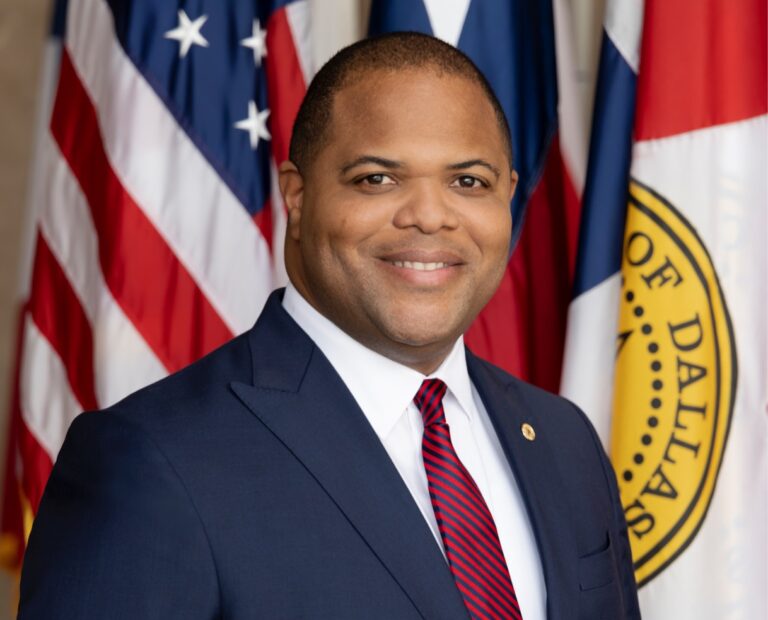
Two days after failing to convince the Dallas City Council to cut spending and taxes in its new budget, the Democratic mayor of Dallas switched parties to become a Republican.
On Wednesday, the Dallas City Council approved its FY 2023-24 city budget, and Democratic Dallas Mayor Eric Johnson voted against it. He sought to ensure the budget kept a no-new-revenue property tax rate of roughly 68.13 cents per $100 valuation. The city council passed a $4.6 billion budget, including a property tax rate of 73.93 cents per $100 valuation.
“In an environment of such economic uncertainty for our residents and businesses, with inflation and interest rates being where they are, I simply could not vote for a budget that is the largest in the history of the city and that is paid for by raising taxes on our residents and businesses,” Johnson said on Wednesday, explaining his decisions to go against fellow Democrats.
“It is simply not the case that we could not have significantly reduced the size of this budget and cut taxes without drastically cutting essential services,” contradicting the claims made by proponents to increase taxes. He also said, “it is preposterous to suggest that our city government could not, by being more efficient, deliver essential services next year using the same amount of tax revenue collected from Dallas residents and businesses just a year ago.”
Before becoming the 60th mayor of Dallas, Johnson served in the Texas House of Representatives as a Democrat from 2010 to 2019. During his four years as mayor, he’s sought to lower taxes and create a “friendlier business climate.” One major accomplishment he’s championed is the city has reduced its property tax rate every year since he took office.
On Friday, he announced in a Wall Street Journal column that he had joined the Republican Party.
He said he has “no intention of changing my approach to my job” but is changing his party affiliation. “Next spring, I will be voting in the Republican primary. When my career in elected office ends in 2027 on the inauguration of my successor as mayor, I will leave office as a Republican.”
He said of his time in the state legislature that he took pride in “finding common-sense solutions and worked closely with my conservative colleagues to improve policing, public education and water infrastructure. I was never a favorite of the Democratic caucus, and the feeling was mutual. By the time I was elected mayor—a nonpartisan office—in 2019, I was relieved to be free from hyper partisanship and ready to focus on solving problems.”
Planned Parenthood has made its pick for Juneau and Fairbanks candidates. The organization is deeply involved in gender transition services, as well as abortion on demand through the ninth month of an unborn baby’s life. Gender transition services, however, is a new profit center for the pro-abortion group.
Local elections in Juneau and Fairbanks will end Oct. 3. Juneau votes exclusively by mail and ballots were mailed earlier this month to voters in the Capital City. Fairbanks has a blended voting system, both by mail and in person.
An email note from the Alaska State Director for the leftist organization, Rose O’Hara-Jolley, says this election is going to be all about LGBTQ+ education and “fighting extremists,” and they/them Jolley wants you to “feast your eyes” on the group’s chosen candidates:
“We need leadership in key positions in Juneau and Fairbanks. Leadership that supports sex education and consent education in schools. Leadership that will support the LGBTQ+ community in the face of unrelenting attacks from extremists in our state. Leadership that isn’t afraid to say that abortion is legal and constitutionally protected – shouldn’t be hard since those are just the facts, but you would be surprised. So feast your eyes and prepare your ballots for our endorsed candidates in these 2023 elections,” she writes.
One room at the former Golden Lion Hotel caught fire on Thursday, and multiple units of the Anchorage Fire Department responded. The fire was contained to one room on the third floor, which was unoccupied. The fire was started in an electrical heating unit, Must Read Alaska has learned.
The former hotel has been converted into low income housing at the insistence of the leftist Anchorage Assembly. It was purchased by former Mayor Ethan Berkowitz for use as a drug rehabilitation center and has been at the center of controversy ever since, as the neighbors in the area of 36th Ave., Geneva Woods, and Rogers Park were not welcoming the addition of a possible criminal element to the family neighborhoods adjacent to the hotel.
The fire was reported at about 3:13 pm and declared under control by 3:41 pm. The sprinkler system in the building was effective in containing the fire, and smoke detectors warned residents to evacuate.
Daniel Alex Rocero, a member of the Norteños gang, was sentenced for second-degree murder in the killing of Libertarian activist Keenan Wegener, 27, whose body Rocero stuffed into a tote on Kalgin Street on March 20, 2022.
The evidence at trial showed Wegener sustained serious physical injuries and that Rocero had placed his foot across Wegener’s chest and neck, strangling him to death before hiding his body, the Department of Law said.
Wegener, an Alaskan from the Kenai Peninsula, was a member of a Libertarian civic group called Students For Liberty.
“Keenan was the friendliest person you’d ever have known. I don’t truly know what the last couple of years were like for him, but he deserved a long full life, and I’m heartbroken for his family and friends,” the group wrote in March of 2022, upon learning of his death.
“He was there with us at our regional conferences, top leadership retreats, ISFLCs, and LibertyCons. We remember when he first came to ISFLC in Washington D.C., totally new to SFL, and a group of us were preparing to go outside monument hopping. We saw him there and, being the very outgoing guy we’d soon come to know, he approached us and started a friendly chat asking about how he could become a part of Students For Liberty. We were excited to have an eager recruit. He joined a few months later in the summer of 2016,” the group wrote in its memorial. “Keenan was a big personality that we will forever miss.”
Anchorage Superior Court Judge Peter Ramgren said it was among the most serious of second-degree murders and that Rocero cannot be rehabilitated. Rocero was sentenced to 50 years for the murder and two years for tampering with evidence. Another man allegedly involved with the murder, Adam D. Pringle, 39, was also arrested in connection with the case and indicted by a jury.
The Norteños gang’s membership is made up of primarily Mexican-Americans, and its base is in central California, as well as in prisons. It has a long-standing war with another Mexican-American gang, the Sureños, of Southern California.
The Norteños are known for their extreme brutality. On Feb. 3, 2023, two alleged Norteño gang members were arrested for the Jan. 16 murders of six people in Goshen, Calif. The victims included a 16-year-old mother, and her 10-month old baby, both who were shot in the head after the mother ran to escape the gang members and tried to protect her baby by dropping him over a fence and then jumping over the fence herself, only to be executed with her baby.
Alaska must disclose data from the voter-roll maintenance group known as the Electronic Registration Information Center, or ERIC, according to a judge’s order issued on Wednesday. The news was first reported by The Federalist.
Update: Lt. Gov. Nancy issued a statement: ““Our agreement with the public interest, legal foundation (PILF) avoids costly litigation and complies with state and federal law and our obligation to ERIC. I am a strong advocate for following the law and protecting the information of Alaskans. It is important to understand that the information on individuals, such as their voter identification number, and dates of birth, were not, and will not be released as a result of this order. Alaskans can remain confident that their personal information was protected.”
Federal District Judge Sharon Gleason penned the agreement that determined Lt. Gov. Nancy Dahlstrom must turn over ERIC data reports concerning potentially dead individuals on Alaska’s voter registration lists to the Public Interest Legal Foundation, a law firm that works to uphold election integrity throughout the country. The records are considered part of the public record, the judge determined, subject to Alaska’s open records laws.
ERIC was founded by a leftist activist and serves several states, but increasingly, Republican-led states are pulling out of the consortium.