Home Blog Page 454

Appeals court rules against student wearing ‘There are only two genders’ shirt to school

By BRENDAN CLAREY | CHALKBOARD NEWS

A federal appeals court has affirmed the decision of a lower court ruling on a Massachusetts school which told a student he could not wear a shirt saying “There are only two genders” and a similar one that censored the phrase to protest the school’s decision. 

The First Circuit Court of Appeals affirmed the decision of a lower court this week that administrators at John T. Nichols Middle School in Middleborough, Massachusetts were able to tell student Liam Morrison to take his shirt off because it was offensive to gender-expansive youth.

At issue in the case, which was previously covered by Chalkboard, was the tension between Morrison’s free speech rights and those of other students at Middleborough Public School to be exposed to messages they would find hateful or harmful because of their gender identity.

The opinion explained that some LGBTQ+ Nichols Middle School (NMS) students said they had attempted to commit suicide and that about 10-20 students attended the school’s Gay Straight Alliance Club. 

Despite this, seventh-grade student Liam Morrison wore a shirt to school in March of 2023 that said, “There Are Only Two Genders.” 

“[Morrison] wore the Shirt both to express his own views, which he understood to be contrary to those NMS espouses on the subject, and to convey his belief that his views are not ‘inherently hateful,’” the opinion reads. 

School administrators told him to take off the shirt and said in subsequent emails that it targeted “students of a protected class; namely in the area of gender identity.” 

After Morrison’s family filed a lawsuit on his behalf, a district court ruled that school staff were “well within their discretion to conclude” that the shirt’s message would invalidate or erase students who identified as neither male nor female and that students “have a right to attend school without being confronted by messages attacking their identities.”

The appellate court agreed. The opinion filed Sunday said the shirt was demeaning to transgender and gender nonconforming students at NMS and that part of the issue was the age of the students to whom the shirt’s message was directed. The court ruled administrators reasonably predicted the effect the shirt would have on students. 

“We agree with the District Court and so cannot say the message, on its face, shows Middleborough acted unreasonably in concluding that the Shirt would be understood — in this middle school setting in which the children range from ten-to-fourteen years old — to demean the identity of transgender and gender nonconforming NMS students,” the court ruled. 

The 70-page opinion examined the legal precedence of free speech in school settings, often relying on the 1969 case Tinker v. Des Moines Independent Community School District, which found that students could wear armbands to protest the Vietnam War.

Part of the appellate court’s consideration were the “special characteristics of the school environment” raised in Tinker. Case law after Tinker also considers how to weigh the free speech rights of students against the rights of other students who are targeted by that speech. 

The court said that, ultimately, educators are charged with deciding whether a message on a T-shirt would disrupt class and hurt the learning environment.

“We conclude the record supports as reasonable an assessment that the message in this school context would so negatively affect the psychology of young students with the demeaned gender identities that it would ‘poison the educational atmosphere’ and so result in declines in those students’ academic performance and increases in their absences from school,” the opinion reads. 

The question of who determines when something crosses the line is one Chief Judge David J. Barron asked during oral arguments in February.

“The question here is not whether the T-shirts should have been barred. The question is who should decide whether to bar them — educators or federal judges,” the court’s opinion reads. “Based on Tinker, the cases applying it, and the specific record here, we cannot say that in this instance the Constitution assigns the sensitive (and potentially consequential) judgment about what would make ‘an environment conducive to learning’ at NMS to us rather than to the educators closest to the scene.”

Women in charge: Anchorage mayor-elect names top staff

Anchorage Mayor-elect Suzanne LaFrance has chosen her campaign manager, Katie Scovic, as chief of staff for her administration, which begins July 1.

Scovic, originally from Chicago, lives in downtown Anchorage and is a registered Democrat. Scovic previously worked for Agnew Beck, an Anchorage consulting firm that gets many city contracts. She was briefly communication director for interim Mayor Austin Quinn-Davidson, and worked at Cook Inlet Housing Authority as well as for organizations in Chicago.

As municipal manager, LaFrance has chosen Rebecca Windt-Pearson, who is senior vice president and general counsel, and chief administrative officer at GCI General Communication, Inc. She was appointed Anchorage municipal attorney by Mayor Ethan Berkowitz and was law clerk to Alaska Supreme Court Justice Morgan Christen, who was appointed by President Barack Obama to the Ninth Circuit Court of Appeals.

Windt-Pearson has said in a GCI blog post that the highlight of her career was  the sale of Municipal Light and Power to Chugach Electric, a project that she led at the municipality. She believes the sale has had a positive effect on the city.

Both Scovic and Windt-Pearson signed the petition to recall Gov. Mike Dunleavy in 2019 — but so did Mayor-elect LaFrance, who is technically a nonpartisan. Windt-Pearson should have no trouble being confirmed by the Anchorage Assembly, while Scovic does not need confirmation.

Cruise ship foes in Juneau come up short on signatures to get Saturday ship ban on ballot

A signature-gathering drive to ban cruise ships from Alaska’s capital city on Saturdays has fallen short of the needed signatures to get the question on the Oct. 1 Juneau municipal ballot.

Karla Hart, a well-known cruise ship critic, is leading the effort to get the issue before Juneau voters. She and her group are proposing “ship free Saturdays,” with no cruise ships that have more than 250 passengers allowed to stop in Juneau on Saturdays or on July 4.

The petition needed 2,359 signatures to be validated by the city clerk. Only 2,069 were certified as valid, with 290 more needed to get the question in front of voters. The group pushing the petition have 10 days to remediate the shortage by gathering the 290 signatures.

“Out of the 60 books we received from the petitioners committee, the only complete book that was rejected outright was book #60 due to lack of notarization,” City Clerk Elizabeth “Beth” McEwen wrote to the petitioners.

Read McEwen’s letter at this link.

The Juneau city government has already crafted an agreement with cruise ship companies to cap the number of cruise visitors starting in 2026. The agreement has the cruise lines agreeing to coordinate their schedules to limit passengers arriving in Juneau at 16,000 per day Sunday through Friday and 12,000 on Saturdays. But the petitioners want to go further and stop all large cruise ship activity on Saturdays during the 22-week cruise season.

A second petition is circulating in Juneau that would place a recall question on the ballot to boot School Board President Deedie Sorensen and Vice President Emil Mackey. Petitioners are upset that the school board is preparing to consolidate campuses to meet the needs of a shrinking student population.

That group was authorized on April 10 to begin collecting signatures and had 60 days in which to obtain the signatures of 2,359 qualified Juneau voters.

National debt closes in on $35 trillion

The federal government has spent $855 billion more than it has collected in fiscal year 2024, which began Oct. 1, resulting in a national deficit. The government has collected $2.96 trillion in revenue, according to the U.S. Department of Treasury.

In fiscal year 2023, the federal government collected $4.44 trillion in revenue, with primary source of revenue being individual income taxes.

In 2023 the federal government spent $6.13 trillion in government programs, with the majority spent on Social Security.

In this fiscal year, however, the majority of expenditures is on Medicaid/Medicare (socialized medicine), at over $1.7 trillion; Social Security at over $1.4 trillion; Defense at $900 billion; and interest on national debt at over $865 billion a year.

As far as what the U.S. government owes its lenders, it’s now more than $34.8 trillion. Four months ago, it was $34.2 trillion.

View the U.S. Debt Clock at this link.

The national debt obligation for each citizen — taxpaying and non-taxpaying alike — is now over $78,000 per citizen. Debt-to-GDP ratio, a measurement of fiscal soundness, exceeds 121%. Back in 1960, the debt-to-GDP ratio was less than 53%.

The debt-to-GDP ratio indicates the country’s ability to pay back its debts.

“A country with a high debt-to-GDP ratio typically has trouble paying off external debts (also called public debts), which are any balances owed to outside lenders. In such scenarios, creditors are apt to seek higher interest rates when lending,” Investopedia explains. “A study by the World Bank found that countries whose debt-to-GDP ratios exceed 77% for prolonged periods experience significant slowdowns in economic growth.” Every percentage point of debt above 77% costs countries 0.017 percentage points in economic growth.

The U.S. debt-to-GDP for Q4 2023 was almost double 2008 levels, the investor information website says.

The U.S. government finances deficit spending by issuing U.S. Treasuries, which are historically considered to be the safest bonds with the least amount of risk in the world.

The 10 largest holders of U.S. Treasuries (as of March 2024) are:

  1. Japan: $1.2 trillion
  2. China, Mainland: $767.4 billion
  3. United Kingdom: $728.1 billion
  4. Luxembourg: $399.3 billion
  5. Canada: $359.1 billion
  6. Ireland: $317.8 billion
  7. Belgium: $317.1 billion
  8. Cayman Islands: $302.9 billion
  9. France $283.1 billion
  10. Switzerland $262.9 billion

Trump says he will announce running mate at GOP convention, four days after scheduled sentencing

Former President Donald Trump, the Republican nominee for president, said he will reveal his choice for his vice president running mate during the Republican National Convention, which is set for July 15-18 in Milwaukee, Wisconsin.

Trump, in an interview with Dr. Phil McGraw, disclosed his plan, saying, “I can’t yet, but we have some very good people,” he said in response to Dr. Phil’s question about whether he would tell him the name of his running mate. “I’m going to do it in the convention,” which occurs four days after a New York judge is planning to sentence him for his guilty verdicts regrind 34 felony counts. A New York law, passed specifically to ensnare Trump retroactively, makes falsifying business records in the first degree (with intent) a Class E felony with a maximum sentence of four years in prison for each count. Although unlikely, the judge could sentence him to prison immediately, and by doing so, force him to miss convention.

Small business, big anxiety this year

By CASEY HARPER

Small businesses are citing the highest levels of uncertainty since the Covid-19 pandemic, a concerning economic indicator.

The National Federation of Independent Businesses released the survey of small businesses, which found that small business uncertainty spiked in May.

NFIB keeps an “Uncertainty Index” which spiked 9 percentage points last month, hitting the highest level since November of 2020, when the Covid-19 pandemic was raging and businesses were shutting down across the country.

“The small business sector is responsible for the production of over 40% of GDP and employment, a crucial portion of the economy,” NFIB Chief Economist Bill Dunkelberg said in a statement. “But for 29 consecutive months, small business owners have expressed historically low optimism and their views about future business conditions are at the worst levels seen in 50 years. Small business owners need relief as inflation has not eased much on Main Street.”

Meanwhile, 22% of small businesses cited inflation as the biggest concern operating their business. Inflation has remained stubbornly elevated this year, although lower than the record pace earlier in President Joe Biden’s term.

“Price hikes were the most frequent in the retail (55% higher, 6% lower), finance (50% higher, 3% lower), construction (42% higher, 9% lower), manufacturing (42% higher, 12% lower), and services (37% higher, 6% lower) sectors,” NFIB said in its report. “Seasonally adjusted, a net 28% plan price hikes in May.”

Wayne Heimer: National Park Service functionaries impose ‘park values’ they make up as they go along

By WAYNE HEIMER

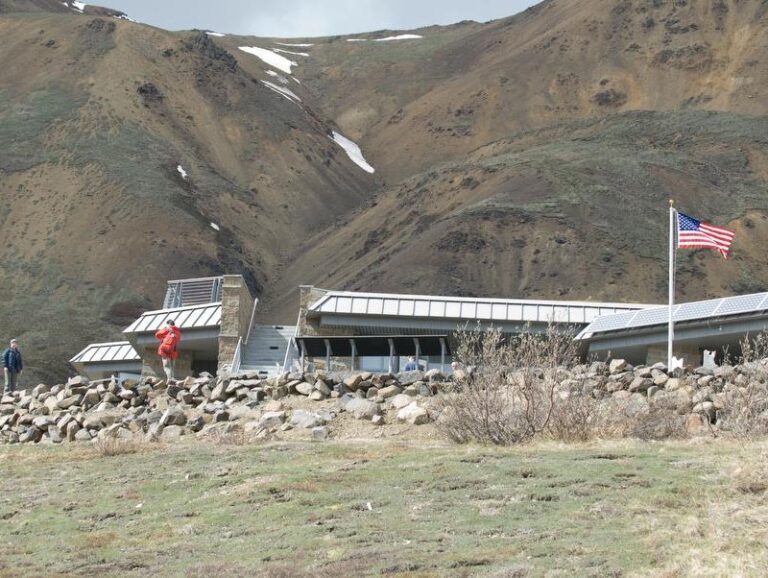
I haven’t made the kerfuffle about the U.S. flag flapping in Denali National Park the focus of my life. I know what’s been reported, what I’ve heard on the street, and what folks “in the know” have told me. 

Not surprisingly, the story changed over time. The issue of how and where the flag is flown is less important than what it means in terms of Alaskan and American freedom under law, and tolerance of tradition. 

Regardless of “what the park superintendent knew and when she knew it,” the issue speaks more to zealousness, and perhaps impractical loyalty to some arbitrarily inferred “park values,” as differentiated from common sense. 

This is not the first time “park values” have arbitrarily trumped practicality or expanded beyond legal mandates. “Park values” are typically cited when federal land managers want to push the limits of congressionally authorized regulatory power. Citing “park” or “wilderness” values was a less common occurrence in the past.

“Park values” are an emerging justification for arbitrary rules and actions these government functionaries create and then cite as justification for administrative restrictions. They drift into the personal side of policy, popping up whenever righteous protectors personally perceive their “stewardship mandate” as greater than what is codified law when it comes to what they feel is ideal.

In my “tribe” we’ve long-referred to this arbitrary personal (or agency) interpretation of legal guidelines as federal overreach.  Federal overreach began the moment President Jimmy Carter’s signature hit the Senate version of the Alaska National Interest Lands Act (ANILCA) in 1980. Here’s why:

ANILCA was the product of that era’s environmental hysteria. The findings and policy sections in Title VIII are an example. The dire predictions from 1979 have not materialized in the last 45 years. Nevertheless, federal overreach has proliferated.

Formerly, federal overreach was held in relative check by politely organized resistance from the State of Alaska. Back then, Alaska had a hedge against expansion of arbitrary federal values inferred from ANILCAs antecedent, House Resolution (HR 39).  HR 39 was extreme, but eventually went on to become ANILCA when the Senate passed a highly modified, more reasoned version in 1979. That meant the federal protection/agency lobby didn’t get everything it wanted in the final ANILCA law.   

Consequently, the zealous protectionists in the Department of Interior began to implement the Senate-nullified intent of HR 39 via administrative fiat justified as “park values” etc.  

Alaska’s check on this administrative overreach was the Citizen’s Advisory Commission on Federal Areas. CACFA reviewed all sorts of federal proposals and overreaches (which went beyond those specified in ANILCA as federal law).

CACFA’s polite “AHEM!” put  the feds notice when they were overreaching. Sometimes it helped the feds respect the actual scope of ANILCA, and sometimes “Alaska’s AHEM!” was ignored. CACFA members were unfailingly professional, and politically polite to the point that I often chided my commissioner friends for being too respectful, given the myriad of federal encroachments on Alaska’s traditional freedom.  

I didn’t rate CACFA as particularly effective in limiting overreach, but it did provide a moderating influence when the feds were headed over the line with agency-inferred values. CACFA reached its effective zenith with publication of “ANILCA PROMISES MADE AND BROKEN” (circa 2015). This document is an easy, but infuriating reading at this link.

For reasons that were alleged to be financial, the Alaska Legislature stopped funding CACFA, thus stifling “Alaska’s AHEM!” about the same time as extra-administrative actions by the federal land management agencies increased. Overreaching by the National Park Service was legally certified in the Jim Wilde case, and John Sturgeon cases. 

Other examples include the Noatak airstrip delay, in which today’s Denali National Park superintendent was a major player. Superintendent Brooke Merrill was the environmental compliance officer for NPS who forbade overland transport of equipment necessary to build a better airstrip for Noatak. She blocked crossing Cape Kruzenstern National Monument, suggesting a 150 mile detour, rather than allow crossing of the monument on an established, traditional trail, between Noatak and Kotzebue. The Noatak airstrip project is still on the drawing board.

Overreach was shown in the banning of traditional Native subsistence harvests of wolves in the Arctic. That overreach was subsequently overturned through Congressional Review. 

Today there’s nobody officially watching the small day-to-day overreaches, like banning American flags because they are apparently inconsistent with a lesser Denali official’s understanding of “park values.”

The real question here is: “Who defines extra-legal values?” Is building a road, which requires heavy machinery, consistent with “park values?” If so, what harm is there in an American flag flown flappingly during the process?  The American flag has flown in other places where “values” were in conflict — D-Day Normandy, and Iwo Jima come to mind.

We’ve heard calls for tolerance on the part of the banned “flag flying fanatics,” but no calls for tolerance on the part of the “park values” people.  Why?

Wayne E. Heimer began comparing state and federal management and ADF&G conflicts before ANILCA.  He has concluded that management is intervening in any established system to reach a pre-defined benefit. He wonders where the mandate and the benefit lie here.

Nolan Willis: A single right step at a time to secure our natural gas supply

By NOLAN WILLIS

I have lived in Alaska most of my life and have observed over many years that most of our problems are readily solvable, but we cannot seem to get out of our own way. A classic example of this is the impending Cook Inlet gas supply constraint. 

According to a United States Geological Survey report on undiscovered oil and gas resources dated July 12, 2011, Cook Inlet contains an estimated 19 trillion cubic feet of undiscovered (untapped) natural gas — enough to last about 270 years at the present rate of consumption (70 billion cubic feet per year).

When only proven reserves are considered, a 2022 Department of Natural Resources Cook Inlet Gas Forecast indicates that there is an estimated 820 billion cubic feet within relatively easy reach—enough for about a decade. We just need to drill holes in the right places to get it. Some producers, like Furie Alaska, are sitting on top of enough gas to supply our needs for the next several years but lack the capital funding to get to it. 

Why can’t we tap more gas? For one thing, our royalty policies have not been consistent over the past decades. In one particularly egregious case, the State initially gave tax credits to incentivize Cook Inlet development and subsequently revoked them once developments were well underway because the State needed (or wanted) more revenue.

This bait-and-switch in conjunction with some land, lease, and resource boundary disputes created a bankruptcy (Buccaneer) and serious financial strains on producers, stymied drilling efforts, and signaled to all prospective producers that Alaska is not good for business. Additionally, misguided environmental goals and ESG (environmental, social, governance) influences have restricted bank lending to oil and gas developments out of concern for the environment.

Moreover, the State of Alaska has its own plans to build a multi-billion-dollar pipeline from the North Slope to Southcentral Alaska, and that project, if executed, would make most Cook Inlet investments nearly worthless in the long-term. 

All the aforementioned issues and many others have contributed to a climate of business uncertainty and excessive risk where nobody wants to provide the necessary capital to get more drilling operations underway. For producers, the safest course of action is to do nothing until things get really bad because that means they can charge more for producing less gas at minimal risk to their own interests.

If we are going to have secure access to Cook Inlet gas resources, our State needs to fully and consistently support gas development and not jerk our industries around to the tune of whatever is convenient or popular. The need for reliable support is even greater when the supplies are constrained and investment capital is constrained by ESG policies. Without consistent support, the local supply will fail and that is not good for Alaskans. The producers will move elsewhere, and consumers will be stuck with the situation that we created with nobody to blame but everyone else.

I know that many today are opposed to oil and gas development out of principle or because of concern for climate change. However, if reducing emissions is the primary goal for some, neglecting Cook Inlet so that its production dries up is going to do more harm than good. In the foreseeable future, every urban Alaskan’s carbon footprint will increase along with their heating and electric bills as foreign gas is about to be tanked in from Mexico or Canada to make up the supply deficit.

Importing LNG from elsewhere is more energy and carbon consumptive, and more costly, than locally produced gas. Alaska is embarking on this path because we are not acting strategically. Not only will we consumers be paying more for our energy supply to line the pockets of people out-of-state instead of supporting local employment, but we will also be emitting more carbon dioxide and methane to the atmosphere in the process.

In other words, there are no environmental benefits to be gained by the upcoming supply constraint and associated economic hardship, despite how some people feel about oil and gas development. This is like going on a strict diet that leaves you hangry and grouchy combined with an intense, exhausting exercise program that only results in increased weight gain—a miserable and pointless proposition.

Here is a suggested path forward—an idea for consideration. We ought to bypass the ESG-bound banking cartel and designate about $5B from the Permanent Fund or from some other State monetary resource toward a Cook Inlet Resource Development Fund. We then solicit development proposals from private companies to compete on the basis of how to extract gas out of Cook Inlet. Then, we provide the money as capital to get the gas development operations underway. Instead of demanding loan payback in fixed terms with interest, treat this as an investment where the citizens of Alaska are permanent stakeholders. Have each MCF of produced natural gas from Cook Inlet contribute a dollar value (for instance, $3/MCF adjusted for inflation yearly) back toward the development fund and nix all the other royalties that gas producers would normally be required to pay when extracting gas out of Cook Inlet. 

The existing statutory royalties and taxes are worthless to Alaskans if the gas cannot be extracted at all, and we need to be forward-thinking enough to understand this, as well as the fact that energy insecurity and high costs threaten the economic well-being and prospects of all Alaskans—even those living outside the Railbelt. If a successful gas development effort cost $2B from the proposed fund, the payback period would be on the order of a decade, and there would be a fund full of money after that to do future development when those gas wells start running low or when significant investments need to be made to prevent bad things from happening. Under the present circumstances, revenue will dry up with production, and there will be nothing left afterward except pain and suffering.

Obviously, I am presenting a simplified and potentially controversial idea here, and there are many details to work out. The point is that there are solutions to our problems if we simply take some ownership. None of us want our suffering economy to shrivel up and die, but that is the most likely outcome, given our present trajectory that results from being passive and making shortsighted decisions.

Long-term, we need to give serious consideration to nuclear power to diminish our emissions and provide long-term energy security. Europe and the rest of the developed world relies extensively on nuclear energy, so I am a big proponent of this. However, reality demands that we solve the problem in front of us first because that is the solvable problem that is within our grasp. 

As a wise person once told me, when unsure of what to do, just take the next single right step. This is what I tell my kids when they are overwhelmed with decision-making. We need to take the next right incremental step, and for us Alaskans this means securing our gas supply to keep our existing heat and power infrastructure operational while we develop a long-term plan for a cleaner energy supply.

We can accomplish this alternative energy supply next, but we will not get the chance if we are struggling to fuel our businesses, our homes, and families while a bunch of people and businesses leave this great State.

Nolan Willis is a lifelong Alaskan, a Bristol Bay Commercial Fisherman, a licensed Professional Electrical Engineer, and the current Chair of the Institute of Electrical and Electronics Engineers Alaska Section. His work experience spans the worlds of utilities, energy, communications, and naval nuclear propulsion. 

Israelis say Palestinian Al Jazeera journalist who was killed was holding three of the four rescued hostages in Gaza

The Palestinian media and human rights groups call him a well-known journalist killed by Israel commandos.

But Israelis named him as Abdallah Aljamal, a writer for Al Jazeera news organization, who was holding three hostages in his home when the raid occurred, during which Israeli special forces rescued three hostages: Almog Meir Jan, 21, Andri Kozlov, 27, and Shlomi Ziv, 41. Aljamal and members of his family were killed in the rescue mission. A fourth hostage was also rescued in the central Gaza raid.

The rescue was a joint rescue operation by the IDF, the Shin Bet, and the Israel Police.

It was a “daring daytime operation, during which they raided two different buildings in the heart of the Gaza Strip and rescued under fire the four hostages who were held by Hamas terrorists,” said IDF Rear Admiral Daniel Hagari.

“We will continue to do everything in our power to bring back the 120 hostages still held in Gaza. Know that we are determined to reach you as well, and the mission will not be complete until you return home,” he said.

As many as 200 Palestinians, some who were being used as human shields by Hamas, died in the rescue operation.

According to the Palestinian Chronicle, a nonprofit group based in Seattle, said that Aljamal had been a contributor to its media site.

“The Palestine Chronicle is saddened to learn that Abdallah Aljamal, one of its contributors in the Gaza Strip, has been killed in the latest Israeli massacre in the Nuseirat refugee camp,” the group wrote on its website. “Israeli media is linking Aljamal’s family to the Israeli captives, claiming that Abdallah’s father, Dr. Ahmed, and other members of the family, were executed in the process of the bloody rescue mission. Those claims have been refuted by respected commentators and journalists online, who pointed in the inconsistencies in the official Israeli narrative.”