Sunday, August 9, 2026
Home Blog Page 444

Cage liner report: Bill to remove public notices from newspapers dies at end of session

Newspapers may be zombies, but in Alaska they’ll be undead for another year at least, standing up for the liberal narrative in the 49th state. A Senate bill that would have changed requirements for legal public notice by allowing an option for state bureaucrats to use the Alaska Online Public Notice System rather than a newspaper ultimately died as the House of Representatives ran out of time at the end of the 33rd legislative session Thursday morning.

Senate Bill 68, sponsored by Senators Click Bishop and Cathy Giessel provided another means to the current requirement that notices be posted in a newspaper of general circulation in an affected area for certain actions involving land and water usage notices. The bill would have updated, but not substantively changed, other requirements for notice by the appropriate commissioner to determine the rights of persons regarding related issues.

“The changes would utilize the state’s online public notice system, which is available to most Alaskans to view at no cost. Public notices posted on this system are permanently retained for future reference, whereas newspaper notices are difficult to retrieve. Utilizing the online public notice system ensures that Alaskans have equal access to public notices rather than just newspaper subscribers or residents of certain areas. Finally, online public notice would eliminate coordinating issues with newspaper publications and reduces permit processing timeframes,” the sponsors noted.

I was a cost-saving measure, but also would have provided consistent access, considering the rapid decline of newspaper circulation in Alaska and the perilous financial state of newspapers in an era of digital information. The Anchorage Daily News is down to printing 6,400 copies on Sundays, and is expected to only be printing two editions a week soon. Already other newspapers, such as the Juneau Empire, have reduced their print run to two days per week.

The issue has come up before and will no doubt be brought up again, but newspaper owners in the state oppose it because it is one of their last remaining streams of revenue. They have a lease on life for at least one year, likely two, because any similar bill will need to be introduced anew in 2025 and may take two years to pass.

Biden declares IDAHOBIT Day; it’s part of the LGBTQ+ constellation of days

There are lots of days on the calendar that are “days of observance” or celebration for gays, lesbians, bisexuals, transgenders and the rest of the LGBTQ+ population. May 17 is another one of those days.

According to presidential proclamation, it’s IDAHOBIT Day, and it has nothing to do with Tater Tots.

It’s International Day Against Homophobia, Transphobia and Biphobia.

President Joe Biden has issued a message, that begins with: “On the International Day Against Homophobia, Transphobia and Biphobia, my Administration stands in support and solidarity with lesbian, gay, bisexual, transgender, queer, and intersex (LGBTQI+) people around the world as they seek to live full lives, free from violence and discrimination. This is a matter of human rights, plain and simple. The United States applauds those individuals and groups worldwide working to defend the rights of LGBTQI+ people wherever they are under threat. And we are grateful for the contributions that LGBTQI+ people make every day across our nation.”

Read his entire 504-word statement here.

It was the first of several proclamations issued by the White House on Friday, including Hepatitis Testing Day, Armed Forces Day, and National Boating Safety Week.

But don’t blow your entire budget on this one observance. Next week you’ll have another shot: – May 24 is Pansexual Day, and then the entire month of June is set aside for Pride Month.

Can’t keep up? Here’s a partial list of LGBTQ+ days of observances, beginning with Aromantic Spectrum Awareness Week, which is the antidote to Valentines Day.

Aromantic Spectrum Awareness Week – Week after February 14

A week to promote information and awareness about aromantic spectrum identities and the issues they face.

Trans Day of Visibility – March 31

A day to celebrate the trans community in a positive light, celebrating their lives and cultural achievements. This observance date was founded in 2009 by transgender activist Rachel Crandall-Crocker, the head of Transgender Michigan.

International Asexuality Day – April 6

Includes demisexual, grey-asexual and other identities.

Lesbian Visibility Day – April 26

Annual day to celebrate, recognize, and bring visibility to lesbians.

International Day Against Homophobia, Transphobia and Biphobia – May 17

To raise awareness of violence, discrimination, abuse, and repression of LGBT communities worldwide.

Agender Pride Day – May 19

A day celebrated internationally to promote awareness of agender individuals.

Pansexual & Panromantic Awareness Day – May 24

An annual day to promote awareness of, and celebrate, pansexual and panromantic identities.

LGBT Pride Month – All of June

June is celebrated as Pride in honor of the Stonewall Riots, though Pride events occur all year round. It also marks the month that same-sex marriage was legalized in the United States.

Pulse Night of Remembrance – June 12

Annual day of US remembrance for the loss of 49 LGBT people in the Pulse Nightclub shooting by a Muslim terrorist in Orlando, Fla.

Stonewall Riots Anniversary – June 28

A day to remember the Stonewall Riots, a reaction to the NYPD raid of the Stonewall Inn. This initial event was a galvanizing force for LGBT political activism, and argued by some to be the birth of the gay rights movement, in the United States and around the world.

Non-Binary Awareness Week The week of July 14

A week dedicated to non-binary people.

Non-Binary People’s Day – July 14

An annual day to celebrate and bring visibility to people who are non-binary in the LGBT+ community. The date is the precise midpoint between International Men’s Day and International Women’s Day.

Bisexual Awareness Week – September 16-22

Also referred to as BiWeek and Bisexual+ Awareness Week, a week to celebrate bisexual identity.

Celebrate Bisexuality Day – September 23

Also referred to as Bisexual Pride Day, CBD, Bisexual Pride, and Bi Visibility Day.

LGBT History Month – All of October

Declared a national history month by President Barack Obama in 2009, the month was created with the intent to encourage openness and education about LGBT history and rights.

Lesbian Day – Oct. 8

An annual day celebrating lesbian culture that originated in New Zealand and Australia, but is now celebrated internationally.

National Coming Out Day – Oct. 11

A day to celebrate the act of coming out, founded in the United States by gay rights activists Robert Eichberg and Jean O’ Leary on 1988 in Washington, DC, United States.

Pronouns Day – Third Wednesday in October

An annual event that seeks to make sharing, respecting and educating about personal pronouns commonplace.

Spirit Day – Third Thursday in October

Day of support for LGBTQ+ youth who are the victims of bullying, as well as to honor LGBTQ+ victims of bullying-related suicide.

Asexual Awareness Week – Last week of October

Week to promote awareness of those on the asexual spectrum.

Intersex Awareness Day – Oct. 26

Celebrated in October to commemorate the first intersex protest, which took place in Boston, Massachusetts.

Trans Awareness Month – All of November

A month to celebrate transgender and gender nonconforming communities and to raise awareness for this community through education and advocacy activities.

Trans Parent Day – First Sunday in November

A day that celebrates life and the love between transgender parents and their children, and between parents and their transgender children.

Intersex Day of Remembrance – Nov. 8

A day designed to raise awareness of the issues faced by intersex people. It marks the birthday of Herculine Barbin, a French intersex person.

Trans Awareness Week – Nov. 13-19

A week to educate about transgender and gender non-conforming people, and the issues associated with their transition and/or identity.

Transgender Day of Remembrance – Nov. 20

A day to memorialize those who have been murdered as a result of transphobia.

World AIDS Day – Dec. 1

An international day dedicated to raising awareness of the AIDS pandemic caused by the spread of HIV infection and mourning those who have died of the disease.

(Editor’s note: With help from Wikipedia and University of Michigan.)

Rick Whitbeck: If Biden wants to thwart Chinese EVs, he should should look to domestic mining

By RICK WHITBECK | REAL CLEAR ENERGY

The Biden administration’s decision to raise tariffs on Chinese-manufactured electric vehicles, steel, computer chips and other technological products is the epitome of a penny wise and a pound foolish.

To much of the nation, the news was a re-election flip-flop, or an attempt to prop up the electric vehicle industry Biden has prioritized since he took office, as part of his green agenda. The international supply chain for electric vehicles isn’t going to magically stop running through the Chinese Communist Party anytime soon.

If Biden really wanted to curb Chinese geopolitical power, he would make fundamental changes to his administration’s history of attacking domestic mining opportunities. Allowing development of copper, graphite, nickel, cobalt and other critical and strategic minerals right here at home would go much further than imposing tariffs.

Biden has demonstrated affinity for promoting “net zero” policies and forcing transitions away from traditional energy supplies of oil, gas and coal. In a nutshell, the attacks on domestic mining projects seem completely counterproductive.

According to the International Energy Agency, staggering quantities of subsurface elements will need to be mined by at least five times their current worldwide production by 2040 to meet the Biden administration’s green energy goals. Graphite, cobalt and lithium all will be needed in quantities exceeding 25 times (or more) their current supplies. In the next quarter century, we will need twice as much copper than has been produced in the last three thousand years.  All of which is impossible when Joe Biden won’t let us dig.

The U.S. has tremendous opportunities to have our own mineral resources. Yet, the Biden Administration has thwarted their development at nearly every turn. For example, massive copper and nickel deposits could be developed in Minnesota at the Twin Metals and Duluth Complex projects, but Biden has ordered each of them off-limits for development. The Resolution copper prospect in Arizona met a similar fate, with the Department of Interior placing on “indefinite hold” on its approval.

The western hemisphere’s largest copper prospect is Alaska’s Pebble Mine. Kowtowing to environmental extremists – and ignoring a clean U.S. Army Corps of Engineers’ Final Environmental Impact Statement (FEIS) – the EPA continues to stymie progress on a deposit worth more than $500 billion. All the while shutting down the possibility of 700 full-time jobs in an area of rural Alaska that has seasonal unemployment exceeding 20%.

Alaska has been the target of more than 60 administrative and executive orders targeting its resource-based economy since Biden assumed office.  One of the most recent took place on Earth Day, when a congressionally-authorized road to the Ambler Mining District – an area rich in copper, zinc and other strategic and critical minerals – was stopped by the Department of Interior. 

Just like with the Resolution mine in Arizona, Interior used “Indigenous opposition” as its deciding factor, even though many villages and tribes closest to the mining district publicly support the project and its future employment opportunities. In Alaska, the Biden administration literally blocks the road to the minerals his tariffs claim to protect.

Alaska’s Gov. Michael Dunleavy, along with its entire congressional delegation, has been openly critical of the continued hypocrisy of the Biden administration when it comes to talking “net zero” and acting with vigor to oppose domestic mining projects.

The same response has come from many within the Minnesota and Arizona congressional community. They’ve been unable to break through to the administration, as Team Biden chooses to listen to eco-activists and career bureaucrats with an anti-development agenda.

What would hurt China, empower America, and begin to chip away at the global imbalance would be mining and processing our crucial minerals and elements domestically. Let’s see if the Biden Administration wises up to that fact, or if America tires of being subservient to the CCP and makes fundamental changes to federal leadership in November.

Rick Whitbeck is the Alaska State Director for Power The Future, a national nonprofit organization that advocates for American energy jobs and fights back against economy-killing and family-destroying environmental extremism. Contact him at [email protected] and follow him on X (formerly Twitter) @PTFAlaska

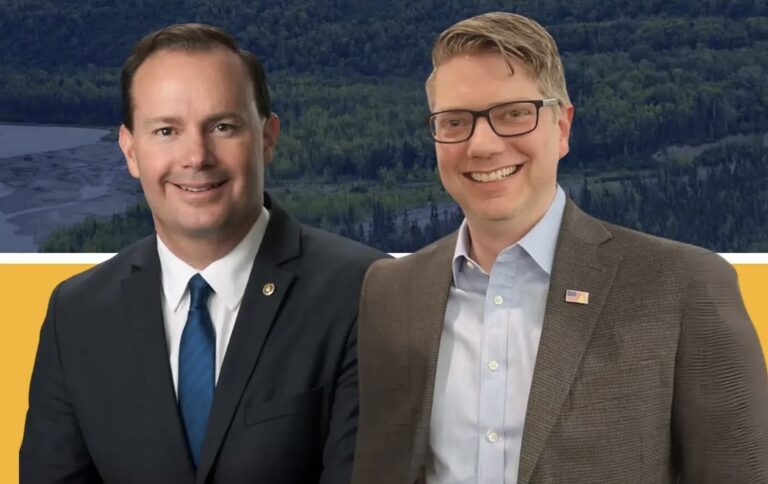
Utah Senator Mike Lee endorses Nick Begich for Congress

In an announcement made Thursday, Nick Begich, Republican candidate for U.S. Congress from Alaska said he is endorsed by U.S. Senator Mike Lee, a Utah Republican.

Senator Lee’s support underscores Nick’s commitment to conservative principles and effective government, the Begich campaign wrote. The endorsement comes on the heels of the Freedom Caucus endorsement that Begich announced last week.

Sen. Lee said in his endorsement: “Congress needs real conservatives with the energy and grit to push back on the radical left, return to constitutional governance, and unleash true American innovation. I’m endorsing Nick Begich for Congress because it’s time for a true Alaskan voice to join the fight and unlock the potential of America’s last frontier.”

“Senator Lee’s endorsement means a great deal to our campaign,” Begich said in response. “He has been a steadfast advocate for limited government, fiscal responsibility, and individual liberty. His support underlines our shared vision for a stronger, more prosperous America, and Alaska’s place in that prosperous future. I am honored to have his confidence and look forward to working with him to champion the values that matter most to Alaskans.”

Lee has been at the forefront of the senators who have fought against warrantless searches by the FBI, against the Green New Deal, and against an unsecured southern border.

Nick Begich is the leading Republican candidate for Alaska’s at-large seat in the U.S. Congress. Also running for Congress against Democrat Mary Peltola is Republican Nancy Dahlstrom, Alaska’s lieutenant governor, who has won the endorsement of the National Republican Congressional Committee.

Pork play: Peltola’s posts her earmark requests for 2025

Rep. Mary Sattler Peltola has submitted Fiscal Year 2025 “Community Project Funding” requests for Alaska, with a list totaling $60.2 million in projects.

Most of the spending she wants would be for coastal communities, and most of the funding proposed is for rural Alaska.

The Senate refers to the funding as “Congressionally Directed Spending.” Others call them “earmarks.” Others know this spending as “pork.”

Earmarks were widely used when Congressman Don Young was in office, but were ended in 2011. In 2021, Democrats ended the decade-long earmark moratorium, against the wishes of many House Republicans.

These pork projects are still just appropriation requests and Peltola, still a newcomer in Congress, does not sit on the House Appropriations Committee and has little power in the House.

Sen. Lisa Murkowski is on the Senate Appropriations Committee as its third most senior Republican. She is the one who will have the most say on these projects, and she is a strong ally of Peltola, endorsing her in 2022. Sen. Dan Sullivan does not do earmarks.

The federal 2025 fiscal year begins Oct. 1.

Here’s the list of projects Peltola will be fighting for in the Republican-controlled House of Representatives:

TitleRegionDescriptionRequested $
In-season Genetic Analysis of Chum Salmon BycatchUnalaskaTo operate a high-throughput, state-of-the-art genetics laboratory in Unalaska/Dutch Harbor, Alaska, to characterize the stock of origin of chum salmon captured in the inshore B-season pollock fishery. The information it provides will be used by industry to better avoid salmon bound for Alaska rivers while still achieving large benefits from the pollock fishery.$5,000,000
Gary Paxton Industrial Park Marine Haul Out FacilitySitkaTo construct a marine haul-out facility at the Gary Paxton Industrial Park (GPIP) located in Sitka, Alaska. This project is necessary to (1) continue to allow for local vessel haul-out options that have been historically provided in the community, (2) reduce safety risks, costs, and emissions for vessels having to travel to other severely backlogged regional shipyards, and (3) retain and grow local marine service sector jobs.$5,777,493
Seward Marine Industrial Center WaterfrontSewardFunding for a 20-acre land expansion for future leases by companies performing marine work; shipyard fill and regrade; energy utility lines; public restroom construction and security fencing and cameras.$3,700,000
Acquisition of Facilities, Including Housing, Necessary to Establish Alaska State Trooper Posts in Rural AlaskaStatewideNew housing for the Alaska Department of Public Safety (DPS) in new and established remote post locations for troopers and Village Public Safety Officers (VPSOs) is being developed due to the increased need for a public safety presence in rural areas to serve high-poverty communities in Alaska. This will decrease response time that currently involves utilizing aircraft, all-terrain vehicles, snowmobiles, and small boats.$3,300,000
Port MacKenzie Port Infrastructure Development ProgramMat-SuPurchase of equipment and infrastructure to increase Port MacKenzie’s tonnage and vessel throughput by more than 200%, with a goal of reaching an increase over the current baseline of 300%. This will make the port capable of supporting the establishment of a central critical mineral processing facility that will create the demand signal needed to increase critical mineral production from across Alaska.$5,000,000
Multipurpose Emergency Shelter Building and Command CenterKotzebueTo construct an emergency shelter for local community members and neighboring communities when natural disasters require evacuations. The school is currently used as the emergency shelter, which disrupts education$12,000,000
Cyril George Indigenous Knowledge CenterJuneauRenovating a portion of the Egan Library at the Cyril George Indigenous Knowledge Center to bring together materials about Alaska Native culture, technology, literature, and art while also supporting Alaska Native language preservation and revitalization.$1,592,000
One Alaska: Removing and Sustainably Converting Ocean Plastics and Community Waste Plastics to Concrete AggregateGulf of AlaskaTo collect and remove toxic coastal plastic debris, coastal village, and urban community plastic debris, and convert it to concrete aggregate, better rehabilitating coastal habitat, removing toxic debris from Native villages, protecting critical subsistence resources, and relieving Alaska landfill facilities all while producing a product needed in the Alaska construction industry.$7,236,498
Homer Harbor Critical Float ReplacementHomerCompletes design and permitting to bring the Homer Harbor Float System 1 & 4 Replacement Project to construction-ready status.$1,543,500
Establishing a Network of Alaska Seafood Distribution HubsWestern AKTo purchase mobile shipping containers where salmon can be frozen whole for distribution or custom-processed for regional markets. Custom processing will support operating costs, creating a sustainable system to uphold culture, address needs, and increase food security.$565,400
Deploying Imaging Flow Cytobots for the Detection of Harmful Algal Blooms in Coastal AlaskaStatewideTo purchase equipment that automatically and continuously monitors phytoplankton (microscopic marine algae) and detects any harmful algal bloom (HAB) species, which create toxins that are taken up into the marine food web, putting shellfish, fish, birds, marine mammals, and humans at risk.$310,000
Districtwide HVAC Controls Replacement ProjectNorthwest Arctic Borough School DistrictTo replace malfunctioning automatic building controls in eight of 12 schools in the Northwest Arctic Borough School District. Current HVAC systems are manually operated due to control failures, resulting in inconsistent temperatures, inadequate ventilation, and increased energy costs. These issues affect 65% of the district’s students, mainly Alaskan Natives.$9,800,000
Bering Straits Workforce Development & Training FacilityNomeTo construct a 7,000-square-foot combination equipment maintenance and workforce development and training facility in Nome, providing a hands-on training space for jobs in construction, Commercial Driver License, mechanic, and heavy equipment operator fields, building a workforce to fulfill job opportunities created by the Port of Nome Expansion and the Graphite One Project.$1,750,000
Minto Teacher Housing Duplex Renovation & AdditionYukon Koyukuk School DistrictTo construct teacher housing in Minto and to renovate and expand an existing duplex on campus, which has been unusable due to mold and age-related decline. Currently, some educators cannot accept positions due to the lack of housing.$2,075,000
Whittier, AK Community Housing Asbestos Abatement & RemovalWhittierFor urgent ventilation and plumbing updates needed for Begich Towers, which houses a majority of Whittier residents.$550,000
Total:$60,199,891

Governor Dunleavy comments on 33rd Alaska Legislature’s accomplishments on carbon, crime, energy, food, hunting, and housing

Alaska Gov. Mike Dunleavy noted the legislation that passed this legislative session that addresses the needs of Alaska’s present and future, including energy, carbon capture economy, food security, and public safety.

The bills he highlighted, indicating these are bills he will be signing, are:

HB 66 – Omnibus crime legislation containing Dunleavy’s plan to crack down on fentanyl dealers passed. Prosecutors will be able to charge a person with second degree murder who sells or manufactures fentanyl or methamphetamine if a person dies as a direct result of taking those or other controlled substances. The legislation also strengthens the crime of stalking in the first degree and has new sex offender registration requirements. It allows multidisciplinary child protection teams to investigate instances of sexual contact between young children. It also amends Criminal Rule 6 to allow witnesses to summarize testimony of other witnesses at grand jury, a section opposed by Sen. Matt Claman.

House Bill 66 is the most comprehensive victim-centric legislation the state has passed in many years, the governor noted: “It appropriately balances holding offenders accountable while focusing on victims.”

HB 50 – The governor’s carbon sequestration bill creates an opportunity for the state to earn revenue by storing carbon dioxide in depleted underground oil and gas basins. It also has provisions for the RCA regulated gas storage in Cook Inlet, AIDEA reserve-based lending for gas producers, and geothermal leasing.

HB 307 – House Bill 307 is a game changer for the Railbelt power grid, power utilities, and its business and residential customers, Dunleavy said. It streamlines the taxation and tariff policies to make new and existing electrical generation projects more affordable. “That in turn incentivizes independent power producers to move forward on renewable power projects like solar and wind farms along the Railbelt,” he noted.

HB 272 – Disabled Alaskans will have a new opportunity to go big game hunting under this bill, which authorizes the Alaska Board of Game to establish annual big game hunting seasons in areas specifically for Alaskans with physical disabilities.

HB 273 – This bill grants the Alaska Housing Finance Corporation (AHFC) board of directors the opportunity to adjust its loan-to-value ratios so homebuyers need to come up with less cash for a down payment on their home purchase. It also establishes a subsidiary to function as a Green Bank to leverage federal funds and other opportunities to advance sustainable energy development projects in the state.

HB 295 – Individuals or organizations will now be allowed to purchase salmon from a state hatchery for stocking a lake in Alaska. The Alaska Department of Fish and Game will issue the required permit after evaluating the proposed salmon stocking plan to verify land ownership, and any possible impacts on wild fish populations.

HB 344 – Authorizes the Alaska Department of Health to apply for a section 1115 Medicaid waiver to explore demonstration projects focused on addressing health-related needs and support services for Alaska Medicaid recipients. Pursuing a waiver will enable the department to employ evidence-based, Alaska-specific strategies to improve health outcomes and lower the cost of Medicaid to the state treasury.HB 251 – The Food Freedom Act sponsored by Rep. George Rauscher included elements of Dunleavy’s CROP Act that make needed reforms to Alaska’s growing agriculture industry. It incorporates reforms to the Alaska Division of Agriculture’s Agriculture Revolving Loan Fund by updating loan limits, increasing categories of loans to include food manufacturing and shipping, and allowing refinancing of loans. This year the Board of Agriculture approved eight loans that reflect strong interest in the state’s agricultural sector.

HB 251 – The Food Freedom Act sponsored by Rep. Rauscher included elements of Dunleavy’s CROP Act that make needed reforms to Alaska’s growing agriculture industry. It incorporates reforms to the Alaska Division of Agriculture’s Agriculture Revolving Loan Fund by updating loan limits, increasing categories of loans to include food manufacturing and shipping, and allowing refinancing of loans. This year the Board of Agriculture approved eight loans that reflect strong interest in the state’s agricultural sector.

Tim Murtaugh, who went from jail to Air Force One with Trump, makes his ’24 prediction on the Must Read Alaska Show

By JOHN QUICK

In this episode of the Must Read Alaska Show, host John Quick sits down with Tim Murtaugh, the former communications director for the 2020 Trump reelection campaign.

Tim shares his incredible journey from waking up in a jail cell in Fairfax County, Virg., to flying on Air Force One with President Donald J. Trump.

His story of overcoming desperate alcoholism and reviving his career to reach the top of the political world is detailed in his new book, “Swing Hard in Case You Hit It: My Escape from Addiction and Shot at Redemption on the Trump Campaign.”

Tim’s candid recounting of his personal battles and professional triumphs offers a unique perspective on resilience and redemption.

Beyond the campaign trail, Tim delves into his career after the 2020 election, including his role as a visiting fellow at The Heritage Foundation and his contributions to The Daily Signal, where he writes about current events, public policy, and the news media.

As a lifelong conservative, Tim has dedicated over two decades to advancing and promoting conservative causes, candidates, and principles. He has held senior roles at the Republican National Committee, Republican Governors Association, and numerous political campaigns, making a significant impact on the political landscape. His experience also includes serving as director of communications for Rep. Lou Barletta, R-Pa., and the Republican Party of Virginia during former Gov. Bob McDonnell’s successful race for governor in 2009.

Tune in for a compelling conversation as Tim shares his favorite stories from the 2020 campaign trail, his prediction for the 2024 presidential election, and his enduring commitment to conservative principles.

As the founder of Line Drive Public Affairs, Tim continues to influence political strategy and communications. This episode is filled with behind-the-scenes revelations from one of the most-watched political campaigns in history, offering listeners an inside look at the highs and lows of political life, as well as the personal journey of a man who has seen it all and come out stronger.

Don’t miss this inspiring and insightful discussion and check out Tim’s new book at Amazon:

Voting experiments continue: Eugene to decide on STAR voting, and ranked-choice proponents are opposed

The liberal stronghold of Eugene is voting during Oregon’s May 21 primary on a new method of voting in its local elections.

No, it’s not purely ranked-choice voting, which was implemented in Alaska’s general elections in 2022, along with open primaries. But it’s close, because there is ranking involved and an automatic runoff. Think of it as a hybrid.

Here’s how STAR voting works:

  • – Voters score each candidate on a scale of zero to five.
  • – The candidate you like the most is the one you score highest.
  • – The two candidates who receive the most of the highest scores become finalists and enter an automatic runoff.
  • – During the automatic runoff, a ballot counts as one vote for the finalists that the voter scored higher.

This new method was invented by a software engineers, including Mark Frohnmayer, who earned his electrical engineering degree and computer science degree from University of California Berkeley. STAR voting stands for Score Then Automatic Runoff. It was developed in 2014 after a conference at the University of Oregon organized by the Equal Vote Coalition, a nonprofit that remains the driving force behind the new system.

If STAR passes in Eugene, it will have been 10 years in the making in that city, which will be the first in the world to use it for municipal elections.

As the May 21 election nears, early voting has already begun.

But in making the case to voters, the pro-STAR group is finding that ranked-choice voting advocacy groups are not being helpful.

“The fact is, Colin Cole is an out-of-state lobbyist for a multi-million dollar conglomerate notorious for coordinated mud-slinging campaigns and the intentional spread of misinformation on voting reform,” STAR claims on its website.

Cole is a founder of Fair Vote Washington and the Seattle-based Sightline Institute, which partners with Earthjustice and has been involved in Alaska elections. Cole also used to work for the Washington State Democratic Party.

“Both he and Brian Smith are directly funded by Ranked Choice Voting (RCV) lobby organizations that see STAR as competition, as are almost all of the other organizations and individuals who submitted coordinated opposition statements for the Voters Pamphlet,” according to the STAR website.

Brian Smith is the co-founder of a group called the Tribal Democracy Project.

“STAR Voting is not something that makes the current system better,” Smith told public broadcasting. “It is a regression. It takes us backwards.”

“Publicly, the Ranked Choice Voting leadership is fairly supportive of STAR Voting. FairVote, (Colin Cole’s longtime employer and the leader of the RCV lobby,) states “we do not oppose efforts to win enactment of other “alternative” methods.” and “[STAR Voting] is superior to both vote-for-one plurality and to two-round runoff elections,” STAR says on its website.

“Given the opposition statements in the Voters Pamphlet this is Orwellian double-speak a la 1984 at its finest. No wonder FairVote is known as the “Ministry of FairVote” in Election Science circles,” the article continues, attacking the proponents of ranked-choice voting.

According to the Eugene Register-Guard, directors of a group known as “Communities of Color for Inclusive Democracy,” also make up some of the formal STAR opposition. The group has four points of contention with STAR:

  • – The potential for STAR to not reflect voters’ preferences
  • – The system is counterintuitive and gameable
  • – It may disenfranchise voters of color
  • – It’s untested

The League of Women Voters of Oregon says STAR does not meet a “majority criterion” because the majority’s first choice may lose if that candidate doesn’t reach the runoff phase. Also, if a voter gives everyone on the ballot the same score, their ballot will not count.

Job boost: AIDEA approves financing package for methanol plant on North Slope

The Alaska Industrial Development and Export Authority Board of Directors an investment through financing construction and long-term operation of a pioneering chemical and fuels plant on the North Slope.

The Alyeschem facility will establish local production of chemicals (methanol) and fuels like ultra-low-sulfur diesel (ULSD), considered an important step to get more value from Alaska’s raw resources within the state, AIDEA said.

Methanol is used on the North Slope to help avoid pipeline corrosion, preserve the functionality of gas compression equipment, and prevent freezing in temporarily shut-in wells and pipelines. Ultra-low-sulphur diesel is also used in several ways as a fuel on the North Slope. The new plantwill use Alaska’s natural gas as a feedstock resource, creating an important internal market for North Slope stranded natural gas resources.

Local production from a new plant on the North Slope using Alaska gas could eventually eliminate the need to import methanol into Alaska using overseas shipping and trucking on the Dalton Highway. Local methanol production may even benefit the State of Alaska with cost savings to the TAPS tariff, creation of jobs, and generation of corporate and other tax revenues, including property taxes for the North Slope Borough, said AIDEA in a press release, adding that the project will also create new jobs.

Alyeschem estimates the plant’s operations will reduce carbon dioxide emissions by 93%, or 45,000 tons annually, by transforming a blend of natural gas and waste CO2 into methanol-reducing emissions associated with current supply methods on the North Slope.

The “up to” $70 million maximum loan financing will support construction by matching a similar investment from private equity investors, AIDEA said. After construction, the financing structure will provide AIDEA with loan payments of principal and interest while also providing AIDEA with a permanent royalty-based on a per-gallon output basis. This is expected to generate a minimum of $2.39 million annually in income and would increase as output increases.

AIDEA is Alaska’s economic development engine, working with private sector, lenders, and other entities to create a private-sector economy in Alaska.