On Tuesday, the sun set for the last time in 2024 in Utqiagvik (Barrow), Alaska, as the Arctic plunges into a season of darkness.
Utqiagvik is America’s northernmost town, home to about 5,000 people. On the Arctic Ocean, it is situated at Latitude 71.17, about 330 miles north of the Arctic Circle. In comparison, Ketchikan is located at Latitude 55.43. The southernmost point in Alaska is the tip of uninhabited Amatignak Island in the Aleutian Chain, at Latitude 51.15.
The next sunrise in the town of Utqiagvik will be in two months — on Jan. 22, 2025.
KTVF Channel 11 and KXDF Chanel 13 in Fairbanks signed off on Saturday for the last time. Gray Communications of Altanta, the parent company of the stations, has canceled the local news broadcast.
KTVF and webcenterfairbanks.com now is folded into the Alaska’s News Source in Anchorage, and visitors to that website are redirected.
Gray Television acquired KTVF (NBC), KXDD (CBS) and KFXF (FOX) from Tanana Valley Television Company and Chena Broadcasting, LLC in 2016 for $8 million.
Watch as the Fairbanks newsroom staff each say goodbye for the last time at this YouTube link or below:
The interference of the government in the private sector is playing out this week in two sectors: Aviation and grocery.
In January, a judge blocked JetBlue’s acquisition of ultra-low-cost Spirit Airlines for $3.8 billion. On Monday, Spirit filed filed for Chapter 11 bankruptcy protection, unable to recover from the onerous, federally mandated Covid travel restrictions, and not allowed by the court to sell to JetBlue, the nation’s sixth-largest airline. Spirit is the seventh-largest.
Judge William Young said at the time, “A post-merger, combined firm of JetBlue and Spirit would likely place stronger competitive pressure on the larger airlines in the country” and that “the consumers that rely on Spirit’s unique, low-price model would likely be harmed.”
Attorney General Merrick Garland in Januarycalled the ruling “a victory for tens of millions of travelers who would have faced higher fares and fewer choices had the proposed merger between JetBlue and Spirit been allowed to move forward.”
But now, Spirit Airlines is in trouble and cannot pay its bills. It’s unclear if this bankruptcy reorganization will end in a Chapter 7 bankruptcy and closure of the business altogether.
The parallels with the attempted merger of Albertsons and Kroger grocery retailers are ripe for comparison this week.
Rep. Mary Peltola vociferously opposed the merger of the two major grocers, saying it would harm Alaska consumers, even though the companies said they would spin off their Alaska properties as part of the merger. Alaska would not be impacted. Peltola has taken credit for stopping the merging of the two companies.
On Tuesday, not learning its lesson from the Spirit bankruptcy filing, the Federal Trade Commission moved to block the proposed merger between Kroger and Albertsons.
It’s one of the biggest interferences ever committed by the federal government in private-sector matters.
Albertsons has said that without the merger, it will have to rethink its entire business model to survive, including store closures and layoffs.
Albertsons, which owns Safeway, has struggled to compete in today’s rapidly evolving industry landscape, where its market share has declined significantly to Costco and Walmart.
Alaskans may see Safeway stores — Carrs-Safeway in Alaska — closed as a result. The FTC decision is also a gift to companies like Walmart and Sam’s Club, Costco, Amazon, and other behemoth companies that compete in the grocery and goods sector.
The FTC decision comes at a time when the Anchorage Assembly has increased the freight tariffs for food and other goods coming through the Port of Alaska. Alaska consumers are feeling the pressure as freight charges will increase by 7.5% in December, after the Assembly decided to get around the voter-imposed tax cap by creating a tariff that impacts Anchorage consumers and those across the state whose goods come through the port.
President Joe Biden on Sunday authorized Ukraine to use long-range, made-in-USA missiles deep into Russian territory.
With just two months left in Biden’s presidency, many are concerned that this drastic policy change will widen the war, which has thus far been limited to the border regions.
“This is a very big step towards the start of World War III,” said Vladimir Dzhabarov, first deputy head of Russia’s Senate international affairs committee, as reported by Russia’s government-run Tass news agency.
Russia President Vladimir Putin then lowered the threshold for the use of nuclear weapons. The new Russian nuclear doctrine says a conventional attack on Russia by any nation supported by a nuclear power will be considered a joint attack on his country.
“Russia will also engage in nuclear deterrence against those countries that offer their territory, maritime zones, airspace, and resources for aggression against it,” Tass reported. “Additionally, a nuclear response is deemed possible if there is a critical threat to Russia’s sovereignty, even from conventional weapons, including an attack on Belarus as part of the Union State, or a massive launch of warplanes, cruise missiles, drones, or other aircraft crossing the Russian border.”
In other words, if Ukraine attacks Russia, even with drones as it has done in the past year, Putin is now authorized to use nuclear weapons on Ukraine.
The move was intended to send a signal to the White House that the Kremlin will meet force with overwhelming force.
On Tuesday, just two days after Biden’s authorization, Ukraine used the U.S.-made weapons to attack Russia.
The destabilization of the U.S.-Russia relationship may mean that Biden is leaving Donald Trump a quickly widening conflict, complicated by Russia’s willingness to use nuclear weapons on the United States.
The United States has already sent more than $56.5 billion in security assistance to Ukraine, through both presidential drawdown authority and the Ukraine Security Assistance Initiative. The Department of Defense announced in October the 68th tranche of security assistance for Ukraine since August, 2021. Biden directed Defense to allocate all remaining security assistance funding appropriated for Ukraine before Trump takes office.
While munitions sent previouslyto Ukraine were along the lines of air-to-ground munitions, ammunition for the High Mobility Artillery Rocket System, 155 mm and 105 mm artillery ammunition, Javelin and AT4 anti-armor systems, spare parts, and armored security vehicles, the Lockheed Martin-made MGM-140 Army Tactical Missile System (ATACMS) are supersonic tactical ballistic missiles, harder to shoot down.
They are designed and intended to allow Ukraine to strike Russian missile launch sites before missiles are launched, with a range of nearly 200 miles.
Thus far, Ukraine’s strikes deep into Russian territory have been by drones and non-U.S.A.-made weapons.
“As part of this effort, the Department of Defense will allocate the remaining Ukraine Security Assistance Initiative funds by the end of this year,” President Biden said in September. “I also have authorized $5.5 billion in presidential drawdown authority to ensure this authority does not expire so that my administration can fully utilize the funding appropriated by Congress to support the drawdown of U.S. equipment for Ukraine and then replenish U.S. stockpiles.”
Also this week, the president was on a stroll of the rainforest in Brazil, where he touted his efforts to preserve the planet’s environment and said he would “leave my successor and my country in a strong foundation to build on if they choose to do so.”
But Biden took no questions from the media on his decision to expand the war between Russia and Ukraine.
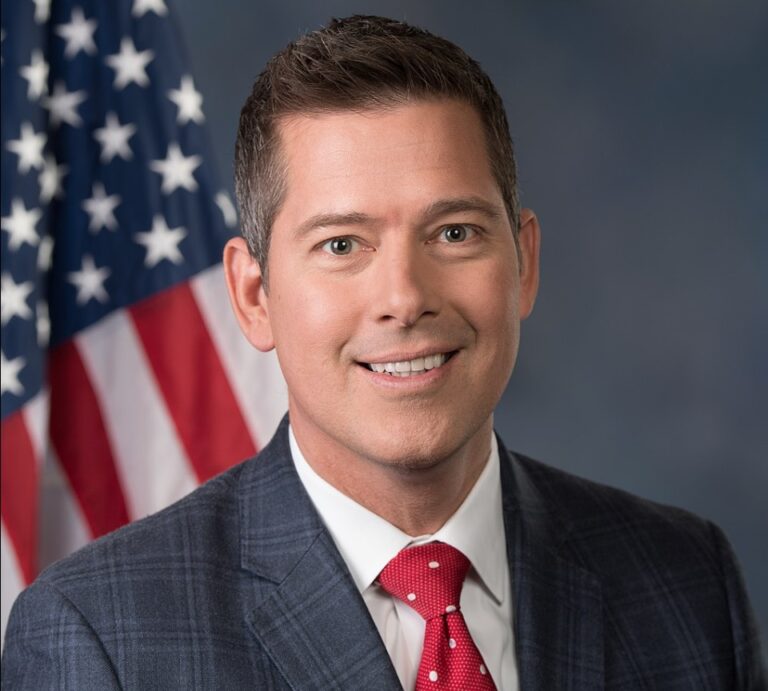
Former Congressman Sean Duffy has been picked by Donald Trump to be the next Secretary of Transportation.
Duffy is a former prosecutor in Wisconsin and former member of Congress who also has been a sports commentator and was a reality TV personality. He is not the same Sean Duffy who played football and basketball at West Anchorage High School.
Duffy is currently a co-host of The Bottom Line on Fox Business, as well as a contributor on Fox News, which followed his congressional service that spanned from 2011 to 2019, when he resigned. He has been a strong defender of Trump.
He was on the cast of Road Rules: All Stars and Real World/Road Rules Challenge: Battle of the Seasons.
The Alaska Division of Elections released a new batch of ballot results Monday. These were straggler absentee ballots from the Nov. 5 election, and the result shows that suddenly the repeal of ranked-choice voting with Ballot Measure 2 is losing. Earlier reports showed it winning.
The No to repealing the ranked-choice voting is now at 157,124, or just over 50%, while those who want to repeal RCV are at 156,932, 49.97%.
The difference is 192 votes. All the 3,928 ballots counted and reported today were absentee ballots from House Districts 9-24 in Anchorage.
There may be up to 6,000 left to count on Tuesday and Wednesday, but it’s not clear from the information being released by the Division of Elections just how many it has. The Valley absentee votes have yet to be counted, it appears, and Fairbanks is also in play for its absentee votes. They have yet to finish counting Districts 25 through 36 absentee.
According to Phil Izon, one of the people who pushed for a repeal, the timeline of how the votes have gone on Ballot Measure 2 over the past 14 days is as follows:
11/05 – (Election Day) Yes to Repeal – 113,708 – 51.30% No to Repeal – 107,946 – 48.70%
11/06 – Yes to Repeal – 125,230 – 50.87% No to Repeal – 120,941 – 49.13%
11/07 – Yes to Repeal – 125,489 – 50.83% No to Repeal – 121,367 – 49.17%
11/08- Yes to Repeal – 125,610 – 50.84% No to Repeal – 121,473 – 49.16%
11/09 – No Results Updated
11/10 – No Results Updated
11/11 – No Results Updated
11/12 – No Results Updated
11/13- Yes to Repeal – 146,182 – 50.4% No to Repeal – 143,770 – 49.6%
11/14 – Yes to Repeal – 146,202 – 50.4% No to Repeal – 143,777 – 49.6%
11/15 – Yes to Repeal – 152,915 – 50.3% No to Repeal – 151,239 – 49.7%
11/16 – Yes to Repeal – 155,592- 50.1% No to Repeal – 154,697 – 49.9%
11/17 – No Results Updated
11/18 – Yes to Repeal – 156,932 – 49.97% No to Repeal – 157,124 – 50.03%
Also, in this latest tranche of ballots, Democrat Rep. Mary Peltola has gained more votes, but is still losing.
Rep. Cliff Groh, the Democrat who represents District 18, north Anchorage. Groh gained 15 votes and now has a lead of 25 over challenger David Nelson, the Republican.
The total number of ballots counted now is 332,386 out of the 611,078 registered voters in Alaska. Not all voters voted in every race on the ballot.
The Anchorage Police Department has launched a 15-year retrospective Officer-involved Shooting (OIS) Review (2009-2023) and Use of Force Dashboard. The online study analyzed circumstances, officers, and subjects involved in 45 incidents where officers discharged a weapon under the color of authority while on-duty or off-duty from Jan. 1, 2009, through Dec. 31, 2023.
The Use of Force Dashboard provides the public with access to current data on incidents involving force by APD officers and is updated quarterly.
“By utilizing data, we aim to enhance our understanding not only of the statistics related to use of force incidents but also the broader context in which they occur,” said APD Chief Sean Case. “Our officers face dangerous, high-risk situations daily and, at times, must resort to using force to protect the public, their fellow officers or themselves. By studying and monitoring these incidents, we can better inform future training, policies and community engagement initiatives, ensuring that our practices exceed the highest policing standards.”
The 15-year retrospective OIS Review marks a milestone in the department’s commitment to transparency and accountability, the department said. Key findings include insights into department, officer, subject and incident characteristics, call for service type, and weapons used by subjects and officers during encounters.
APD’s new Use of Force Dashboard provides the public with data (updated quarterly) on incidents where officers used force during police contact. The dashboard compares force utilization against other statistics to help provide context. It also provides a view into reasons for force, the most common recent use of force techniques and complaint data. Community members can use the interactive platform to explore various metrics.
“By making information readily accessible, we aim to foster a more informed dialogue about policing practices within Anchorage and increase trust between our officers and the community we love and serve,” said Case. “APD operates under a community-oriented policing philosophy, and these new community-focused tools are a crucial step forward as we optimize policing practices based on empirical data and in-field experiences while improving communication.”
Most voters support measures that would ensure elections are honest and that results are reported quickly, according to the latest Rasmussen Reports poll.
The national telephone and online survey found that 63% of Likely U.S. Voters want a federal law requiring all votes be counted and the final results be reported within 12 hours of polls closing on Election Day.
Just 23% disagree with the need for a federal law, while another 14% are not sure. (To see survey question wording, click here.)
In Alaska, the Division of Elections is on Day 14 of ballot counting for the election that ended Nov. 5. The division has until Nov. 20 to finish its work.
According to Rasmussen, 65% of respondents said that investigations of election disputes should include forensic ballot audits and 59% said federal election laws should require paper ballots.
Help Must Read Alaska fight the good fight in 2025. We are a conservative news and views website that gives voice to Alaskans who have been marginalized by the legacy media. Donate here.
Now is the time for the US Department of Justice under the leadership of Attorney General-nominee Matt Gaetz to overturn NLRB v Jones & Laughlin Steel (1937).
The ruling in NLRB marked a pivotal expansion of federal authority under the Commerce Clause, which has led to overreach into areas traditionally managed by states. This case paved the way for expansive federal control, sidelining state sovereignty and eroding the 10th Amendment’s principles of limited federal power.
By broadly interpreting “interstate commerce” to justify federal oversight in local matters, NLRB set a precedent that enabled extensive bureaucratic regulation across sectors, from labor and environment to healthcare and education.
Federal agencies now exert sweeping influence over every facet of American life. This centralized authority stifles private sector growth, deters innovation, and imposes uniform regulations ill-suited for diverse regional needs. Labor relations, once a state responsibility, have become subject to rigid federal mandates, complicating economic adaptation and reducing market competitiveness. Likewise, federal environmental regulations hinder state autonomy over resource management, imposing top-down policies that may not align with local priorities.
The NLRB decision led to further cases that compounded federal power under the Commerce Clause, including Wickard v. Filburn and Gonzales v. Raich, effectively sanctioning limitless government intervention. Overturning NLRB could restore balance by reducing federal overreach and reviving the role of states as primary arbiters of local matters. Repealing this precedent would realign the Commerce Clause with its intended scope, preserving both state sovereignty and market freedom from federal overregulation.
This deliberate centralization of federal power and control culminated with the Supreme Court’s reimagining of the US Constitution’s commerce clause.
Keep in mind the states created and adopted the US Constitution, not the federal government.
In The Federalist Papers, both Alexander Hamilton and James Madison argued for a unified approach to commerce regulation to prevent economic discord among states and ensure national cohesion. In Federalist No. 11, Hamilton highlighted the need for centralized trade oversight to enable the young nation to present a united front in global commerce, which was essential for stability and growth. At that time, Congress lacked power over both interstate and foreign trade, leaving each state to set its own policies, which often led to conflicting regulations that hindered trade and strained interstate relations.
Madison expanded on this in Federalist No. 42, explaining that if states could regulate commerce independently, they might impose burdensome tariffs on goods merely passing through. This would increase costs for producers and consumers alike and harm national unity by favoring individual state interests over collective welfare. The Commerce Clause in the U.S. Constitution addressed these issues by granting Congress authority over commerce “with foreign Nations, and among the several States, and with the Indian Tribes.”
This gave the federal government a unifying role in interstate commerce while limiting state powers to regulate only intrastate commerce, those economic activities confined within their borders. This division was intended to support both national economic unity and state sovereignty over local matters.
The overwhelming mandate of American voters for President-elect Donald Trump presents a historic opportunity to restore a constitutional balance between state and federal authority. The appointment of Gaetz as Attorney General now opens the door for such restoration.
The federal expansion, which began with NLRB v. Jones & Laughlin Steel Corp., fundamentally altered this balance, dismantling states’ rights by stretching the scope of the Commerce Clause beyond its intended purpose. This decision allowed the federal government to regulate not only genuine interstate commerce, but also local activities tangentially related to it, leading to nearly unchecked federal oversight across a vast range of sectors, from labor to healthcare, education, and the environment.
This ruling, and the legal precedents that followed, sanctioned an era of overreach that subordinated state sovereignty and suppressed the role of states in regulating local economic and social issues. The NLRB decision nullified the 10th Amendment’s intent to limit federal powers, setting the stage for a rise in bureaucratic agencies that impose sweeping regulations without regard for regional diversity and the distinct needs of each state.
Labor laws, previously a state matter, became bound by rigid federal mandates, reducing economic adaptability and competitiveness. Similar federal environmental laws diminished states’ rights to control their resources, often enforcing policies poorly suited to local contexts. The resulting overregulation stifles innovation and economic growth, as local economies and individual freedoms are restrained by federal mandates rather than guided by market dynamics or regional governance.
The Framers argued for national unity in trade regulation to prevent conflict among states, not to establish centralized control over every aspect of economic life. In Federalist No. 11, Hamilton argued that centralized trade oversight was necessary to present a unified front in foreign affairs. Madison, in Federalist No. 42, warned that allowing states to impose tariffs on goods in transit would burden producers and consumers, hindering economic unity. Thus, the Commerce Clause was meant to unify trade among states while preserving each state’s right to govern its local commerce.
NLRB distorted this intent, empowering the federal government to wield the Commerce Clause as a justification for expansive control over intrastate matters.
By overturning NLRB v. Jones & Laughlin Steel Corp., the Trump Administration, through new Attorney General Matt Gaetz and the Department of Justice, has the chance to recalibrate federal power to its rightful bounds.
A re-examination of this case would preserve states’ sovereignty, revive market freedoms, and dismantle overregulation, reestablishing the Constitution’s original promise of a government that serves, rather than controls, its people.
Michael Tavoliero is a senior writer at Must Read Alaska.