Part of Power The Future’s mission is to expose the outright lunacy of the eco-left. As early voting gets underway across Alaska, it is important to note that energy is on the ballot in 2024, and that candidates’ endorsements matter to the future of the state.
While Power The Future – as a 501(c)4 – doesn’t endorse candidates, we certainly take note of which other organizations do. What those organizations’ missions and priorities say about their endorsed candidates drives their ongoing mission to move Alaska away from reliable, affordable energy and into risky, higher-cost options.
In the case of the Alaska Center, their slate of statewide endorsed candidates must accept and drive policy (if elected) around very specific goals set by the organization. In order to even be considered for endorsement, they must acknowledge a number of items, including:
Admitting a climate crisis exists, and that the candidate working to end it;
Committing to moving Alaska to a 100% clean energy economy by 2050;
Promoting “equity” for rural communities most affected by the climate crisis.
Previously, Alaska Center-endorsed candidates have led the way on legislation involving Renewable Portfolio Standards, increasing oil and gas taxes on producers, forcing wind and solar “solutions” into the grid and more. All of those would damage Alaska’s employment, hurt families across the state, raise rates, threaten future investment, gut the revenues and royalties that fund state and local government, and – most importantly – add risk into the grid, which is currently led by a combination of firm (always-on) energy sources.
As Alaskans go to the polls between now and Nov. 5, look at the endorsements of candidates you are choosing from. If you see ones that have eco-left-driven support, it might be good to pass them by.
Rick Whitbeck is the Alaska state director for Power The Future and a regular writer at Must Read Alaska.
It’s considered the closest congressional race in the nation, but it may not be as close as people think. According to the National Republican Congressional Committee, Republican congressional candidate Nick Begich is poised to unseat Rep. Mary Peltola in November.
Begich surged ahead of Peltola on the first round, with 49.1% of votes compared to 44.5%. On the elimination round, he would win with 52.1% to her 47.9%.
“Nick Begich’s momentum is undeniable. Alaskans are fed up with Mary Peltola enabling Joe Biden, Kamala Harris and extreme Democrats’ failed agenda,” said NRCC spokesman Ben Petersen.
The momentum is continuing as the topic of natural resources comes to the forefront this week. Chairman of House Natural Resources Committee Rep. Bruce Westerman is flying to Anchorage this week for several events with Nick Begich, including a Thursday evening campaign fundraiser.
Peltola was caught saying last week that she would gladly give up her seat on the House Natural Resources Committee if she could get on the Appropriations Committee, an unlikely seat for someone who is not in the majority and who has only served in office for two years. She spoke those words during the ConocoPhillips candidate forum, even though she has told the public that her biggest concern is fish.
Although she sits on Natural Resources, her own committee chairman is now campaigning against her — and coming to Alaska to do so.
The latest poll was conducted by Cygnal on Oct. 14-16 among 400 likely general election voters, and has a 4.86% margin of error.
Early voting started Monday, Oct. 21, at polling locations around Alaska for the election that ends on Nov. 5 at 8 p.m.Details below:
In just two weeks we have the opportunity to repeal Ranked Choice Voting, known as RCV.
In 2020, RCV proponents employed a magician’s “sleight of hand” trick; campaigning on eliminating dark money from Alaska and rarely mentioning RCV in order to push Ballot Measure 2.
That year, Ballot Measure 2 barely passed with just 50.55% in favor, and 49.45% opposed, ushering RCV into Alaska with the slimmest of majorities.
This year we have the chance to repeal RCV and return our state to its former traditional election process. However, voters are facing an unprecedented push by No on 2 to defeat this grassroots initiative, and the No on 2 campaign has over $12.3 million to flood the airways with deceptive advertising.
Take, for example, the advertisement where No on 2,which is funded by out-of-state organizations, claims that if RCV is repealed military personnel would be forced to join a political party to participate in the election process.
Balderdash! Military members never had to join a political party to vote in Alaska’s primary or general elections, and would not after RCV is repealed either.
While the Republican Party of Alaska had a partially closed primary process prior to 2020, those who did not affiliate themselves with a different political party had the ability to vote in the Republican primary. Alternatively, they had the option to vote using the non-Republican ballot. Claiming military members had to choose a party to be able to vote is frankly dishonest, and disingenuous to service members and veterans. The real issue is whether RCV should be repealed.
So why is the No on 2 campaign only focused on the open primary process, when RCV is the real issue? The fact is they know most Alaskans do not support RCV because it convolutes the election process and does not ensure the winner represents who the majority favors.
Their ads claim that under the current system people can vote for the person they believe is the best candidate in the primary process. Left unsaid is the fact that during the general election, under RCV, voters rank four candidates, not one. That results in a complicated process, which in 2022 elected Democrat Mary Peltola to Congress when the primary had the two Republicans collectively garner more votes than she did. So much for “One Person, One Vote.”
An open primary is not the main objective of No on 2. Their goal is to preserve their holy grail: RCV. In a democratic society, we should be allowed to separately vote on different issues. Combining two disrelated topics creates a “Hobson’s Choice” for voters. A person may like one issue but not the other, but to get the issue they favor passed, they must approve the issue they do not support. That’s election manipulation at its finest and No on 2 is a master at this fraudulent deceptive maneuver.
There is a simple solution to this problem: Vote Yes on Ballot Measure 2 and repeal RCV. Bring back election integrity to Alaska and get rid of the RCV election scheme. Then, either the Legislature or a citizen’s initiative can address the open primary issue as a single topic.
Remember, RCV resulted in a convicted felon in a New York prison to be on our ballot for congress next month. The absurdity of this is outrageous. It’s time to terminate this failed RCV experiment. Vote Yes on Ballot Measure 2 to repeal RCV.
Craig E. Campbell served on the Anchorage Assembly between 1986 and 1995 and later as Alaska’s Tenth Lieutenant Governor. He was the previous Chief Executive Officer and President for Alaska Aerospace Corporation. He retired from the Alaska National Guard as Lieutenant General (AKNG) and holds the concurrent retired Federal rank of Major General (USAF).
In the realm of political campaigns, particularly those in Alaska, the concept of nonpartisanship is often scrutinized. Candidates who claim to be nonpartisan are expected to maintain a clear distance from partisan activities and support, ensuring an unbiased stance that appeals to a broad spectrum of voters. However, this definition is called into question when a candidate’s financial and political affiliations suggest otherwise.
Case in Point: Donations and allegiances
In House District 1 there are 3 candidates, Jeremy Bynum, Republican, and Agnes Moran and Grant Echohawk, both running as “nonpartisan.” But are they really nonpartisan?
Agnes Moranhas donated to the Democrat Party, and its fundraising mechanisms, more than 98 times since February 2019, which raises significant questions about her nonpartisan claim.
Specific instances include contributions to Democrat Congresswoman Mary Peltola, the Progressive Era PAC (described as a Democrat liberal organization), and seven donations to Democrat presidential campaigns, including the Biden-Harris ticket.
Grant Echohawk, who identifies as a lifelong Democrat, supports Democrat movements, and has publicly backed the Harris campaign further blurs the line between nonpartisan and partisan politics.
According to both these candidate’s statements, these affiliations and actions suggest an active involvement in promoting Democrat agendas, which conflicts with the principle of being nonpartisan.
Additionally, their campaigns are being funded and directly supported by the Democrat Party, further indicating their partisan alignment. These candidates have also received strong financial support from dedicated Democrats as well as being listed on the Alaska Democrat websites.
Nonpartisanship vs. Partisanship: The Voter’s Perspective
For constituents, understanding the true nature of a candidate’s political stance is crucial. Transparency about a candidate’s support and financial contributions can significantly influence voter trust and decision-making. When a candidate with a history of supporting Democrat causes runs as a nonpartisan, it can be perceived as an attempt to mask their partisan leanings to appeal to a wider audience or avoid the potential stigma associated with party politics.
This strategy might allow candidates to garner support from undecided or moderate voters who might otherwise be hesitant to support a clearly defined partisan candidate, or even conservative voters who remember the candidate’s past beliefs but are unaware of their current beliefs and ideology.
The Importance of Transparency
District 1 voters have the right to be fully informed about where a candidate’s allegiances lie. Financial and political support are strong indicators of a candidate’s values and policy priorities. Thus, it is imperative for candidates to be transparent about their political affiliations and past support for partisan causes. This honesty allows voters to make informed decisions based on a clear understanding of a candidate’s true stance.
Conclusion
A candidate who consistently supports Democrat causes through financial contributions and public endorsements can hardly be considered nonpartisan. Such actions demonstrate a clear alignment with Democrat Party values and policies, which should be transparently communicated to the electorate. For the integrity of the political process and voter trust, it is essential that candidates clearly define their political positions, ensuring that their campaigns are a true reflection of their values and commitments.
Laura Antonsen is Chairwoman of District 1 Republicans in Ketchikan.
The FBI Anchorage Field Office seeks information regarding the identity and whereabouts of a man with alleged involvement in three separate bank robberies that took place in Anchorage one the past three weeks: In each robbery, the man presented a note demanding money from a bank employee and stated he had a wea[on. The robberies occurred on Sept. 23, Oct. 7, and Oct. 16.
The individual is believed to have robbed the following banks:
On Sept. 23 at approximately 11:45 a.m., the subject allegedly robbed the Credit Union 1, Midtown Branch, located at 3525 Eureka Street in Anchorage. After the robbery, the subject fled the area on a dark-colored bicycle.
On Oct. 7 at approximately 10:15 a.m., the subject allegedly robbed the Global Credit Union located at 8475 Hartzell Road in Anchorage. After the robbery, the subject entered a stolen vehicle and drove away.
On Oct. 16, at approximately 12:30 p.m., the subject allegedly robbed the Global Credit Union located at 2300 Abbott Road in Anchorage. After the robbery, he departed the area on foot and headed north toward Abbott Road.
The man approximately 5’5” tall, with black hair and brown eyes, weighing approximately 155 lbs.
Anyone with information concerning the identity and whereabouts of this individual should contact the FBI Anchorage Field Office at 907-276-4441 or submit a tip online at tips.fbi.gov.
The voters in the conservative Kenai Peninsula will have a clear choice for the state senate, and it is Ben Carpenter, currently a 2-term representative.
Voters in this district know me well, and they also know the role I played in giving a radio platform to the current holder of this senate seat, Jesse Bjorkman.
Bjorkman came into Nikiski High School and Alaska just as I was in the gradual stage of retirement, stretched out between 2012 to 2015. I was impressed with his attitude, conservative politics and his religious faith. After I retired, I invited him to speak on an afternoon radio show, regarding his excellent outdoor learning class, teaching kids how to properly gut and salvage a moose. He had the right disposition for limited government, as it appeared at the time, and I was green-lighted by the station management to ask him on as a permanent side-kick and very capable substitute on my days off.
Ben Carpenter was a student of mine in 1992-93, years into the “Great Books Method” I was using to teach students American government. Instead of using a textbook, long about 1986 I decided to use the actual documents of the Declaration and state and federal constitutions, go through them word-for-word, and explain it all to the students, the political philosophies behind limited government, and the context of American history. It also included the “original intent” and “strict construction” interpretation, whose finger prints are all over the document.
Ben was the star student in a class that was taught at the collegiate level: we had all of Nikiski’s seniors in one class, and the daily 55 minute lectures were given in Nikiski’s auditorium. The class was lively, with two very intelligent yet unapologetic Marxist students, who complimented me on allowing them to have their say, even as I refuted Marxist dogma. Ben was unquestionably impatient with them, and he got his licks in, too. It rated as one of the best classes in a line-up of 50 years of teaching. Upon graduation, I wrote a letter of recommendation for Ben to go into OCS training.
Bjorkman began to puzzle and worry me when certain issues came across our desk in the Monday-Friday two-hour radio program:
He made every excuse for the late Rep. Gary Knopp’s holdout and refusal to caucus with his own Republican Party. The essence of Bjorkman’s excuses for Knopp was the need to grease the skids for his constituents, over political principles. Bjorkman has proven that he was as good as his word, when he caucused with the Democrats.
He looked upon the Permanent Fund dividend as rightfully belonging to the state, not the citizens. He brought in a former Democratic lawmaker, who denied that part of the reasoning for the public support of the PFD, was that it was viewed as a compensation for the federal government’s refusal to grant Alaska being on “equal footing” with the lower 48 states. This continues to be a major complaint since statehood.
He vigorously defended ranked-choice voting, kept saying how simple it was to understand, and wrote a column in the local newspaper describing its alleged virtues. He invited Scott Kendall on the program, but nothing Kendall said clarified RCV in my mind, but certainly did for Jesse.
Bjorkman has now, thankfully, retracted his love for ranked-choice voting, initiated by his own constituents calling him out. However, all this bespeaks reams about his naïve judgment and trusting nature, and how he will glom onto controversial liberal opinions if they match his own.
In our school district, teachers have long been forced to contribute to the NEA, which I left way back in 1984 because of its radical pro-homosexual, pro-abortion policies. The NEA now includes every bizarre social issue imaginable and refuses to defend women’s sports.
I always have given Bjorkman’s NEA membership a pass, for if you have to pay the dues, why not get inside the NEA and change it? He was warned by a fellow teacher who once tried the same thing, that it would not work, but youthful inexperience rarely takes advice.
I never saw Bjorkman fighting to change NEA’s social-issues policies, either as a teacher within the NEA who made numerous trips to Juneau, or as a borough assemblyman or state legislator. If he did try, it obviously went nowhere. The NEA leads the charge in the cultural madhouse that America has become. Jesse Bjorkman is their man.
I maintain that it is immoral for a Christian, pro-life and pro-gun teacher to belong to the NEA. Bjorkman needs to be asked if he used the “Hudson packet” protocols that conscientious objectors were required to fill out annually, in order to keep their dues out of NEA political activism. It was a tiresome annual chore for me personally, and I grew disgusted with it.
It was Covid that finally drove Bjorkman and I apart. He was not influenced by the numerous programs where I got alternative opinions on the air, warning about the vax’s dangers and the lies that were being spread by Big Pharma regarding ivermectin and hydroxychloroquine. Naturally, my efforts were a mere pop-gun voice against the mainstream media carpet bombings. Then, Jesse publicly announced that he took the vaccines in order to “Get Covid behind us.”
As a personal decision, that’s OK. But using the platform as an elective officer of the borough shows that he was setting an example.
Then, he even defended masking, even after its absurdities were flushed out.
It appears that the same “trusted” federal and state medical bureaucrats are where Bjorkman has decided to hang his hat and political future on. If their advice is wrong, as it usually is, he can cover himself by saying, “Well, that is what the experts were saying at the time.”
Uh-huh.
Then he suggested, on the air, that Anne Zink ought to sue me for writing a column, calling Zink out when she waxed eloquent over her famous grandfather’s policies. That was the last straw for me.
Her maternal grandfather, Al Bartlett, was a University of Colorado Boulder physics professor and a nationally recognized speaker on exponential growth and humans’ inability to comprehend it — a lesson not lost on Zink as she navigates the COVID-19 pandemic.
“I think about him all the time,” she said, “particularly in this world of trying to understand exponential growth, and trying to keep our state from getting into a place of exponential growth.”
What is “exponential growth”? Simply put, it disdains human progress in food production and medicine, as its disciples believe that it will lead to an eventual global population catastrophe.
Using Anne Zink’s own words were apparently libelous for Bjorkman. I waited two weeks for my temperature to go down, then told him that we were no longer a good fit as co-broadcasters. I knew that simple justice to Bjorkman required that I split the program equitably with him. This we did, until as a candidate for office he was soon to no longer host a program.
What is right with Jesse Bjorkman? He will be a reliable prolife and progun vote, although I have never seen him carry water on the prolife side. Like most “prolife” Republicans, he gave in to the Democratic binding caucus about abortion funding in the budget.
No amount of constitutional explanations, especially on the state level, registered with him. But mind you, he has a lot of company, starting with Gov. Dunleavy and most of the other elected officials on both sides of the aisle.
He also does his homework thoroughly in regards to parsing through the tissues of legislation. However, that does not mean that he discerns its implications properly, as was shown with RCV.
If you want to see this miserable status quo in our beloved state change, Bjorkman will not be the one to fix it. He will take the shopworn path of safety and go with the flow. This was obvious when he caucused with Democrats and fake “independents”. That party has turned into an engine of evil at worst, or utterly bereft of common sense, at best. The left has done its work well: no Republican wants to be “Eastmanized”, suffering endless lawfare from the likes of Scott Kawasaki, who himself cheerfully ignores the ethics laws, while he controls the Ethics Committee.
Ben Carpenter understands constitutional principles. He demonstrated integrity during the losing fight for the con-con. If he cannot implement constitutional principles right away, he will do so when the puzzle fits more perfectly.
Almost every conservative agrees that impeachment of Alaska’s judiciary is long overdue. Tote up the issues: 1) Abortion — which over the years the judiciary has used to overthrow the power of the purse from the legislature and the governor’s line-item veto; 2) The courts green-lighted RCV’s obvious illegality in 2020, which used multiple topics, instead of the required single-issue; 3) Grand juries, where the courts have stolen it from the people; 4) Massive mail-in ballots.
It goes on and on.
In our state, impeachment begins in the Senate. Let’s see what Ben Carpenter can do.
Bob Bird is former chair of the Alaskan Independence Party and the host of a talk show on KSRM radio, Kenai.
The U.S. Supreme Court set the date for Dec. 4 to hear a case from the ACLU and other groups that are challenging a law passed by the Tennessee legislature that bans surgeries and treatments for minors that alter their external sexual characteristics.
Senate Bill 1 was signed into law by Gov. Bill Lee in 2023, but the ACLU The American Civil Liberties Union, Lambda Legal, and a law firm filed a suit to stop the law, claiming it violates the 14th Amendment of the U.S. Constitution.
Whether the 14th Amendment applies to children will be of interest to Americans for multiple other reasons. The amendment says, “No State shall make or enforce any law which shall abridge the privileges or immunities of citizens of the United States; nor shall any State deprive any person of life, liberty, or property, without due process of law; nor deny to any person within its jurisdiction the equal protection of the laws.” But the amendment does not make it clear that children are different. Under the ACLU interpretation, anything goes for kids.
The proposed Tennessee law bans health-care providers from performing gender-affirming surgeries on minors or prescribing hormones or puberty blockers to minors because children cannot make informed consent for such procedures.
The challenge to the law, United States v. Skrmetti, was brought by three sexually confused Tennessee teens. The Biden-Harris Administration took the side of the teens against the state of Tennessee. A federal judge agreed with the challengers, but that was overturned by a federal appeals court. The Biden-Harris Administration then took the case to the Supreme Court, which this past summer agreed to hear the case during this court term.
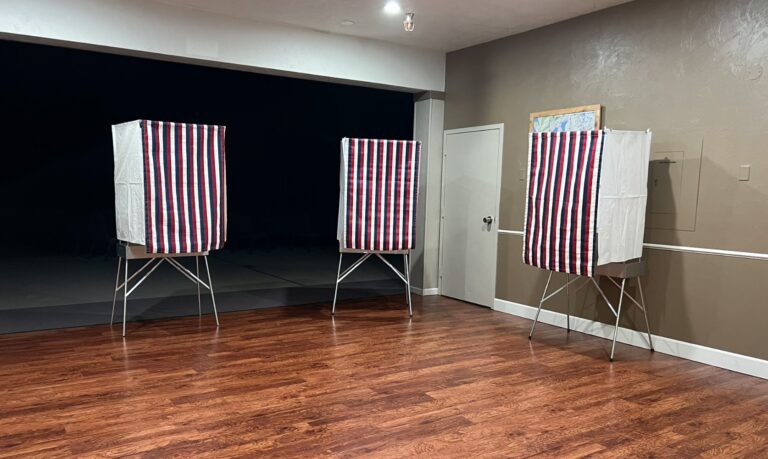
After casting our ballots, my wife and I always made sure our “I Voted” stickers were on full display as we left the polling station. This was a moment brimming with civic pride, a time we celebrated being Alaskan and American.
That was then. This is now. Now we are early voters. Still filled with the same pride and patriotism, but always early.
Why?
Simply put, races are no longer won on Tuesday. In fact, they are often decided well before election day – by early voters. Time and again we see conservative candidates build healthy leads on election night only to have hopes dashed as the early-voter ballots are counted.
The latest example is the Fairbanks North Star Borough election held earlier this month.
The Borough ballot had six seats in play. Remarkably, final vote counts in five of the six races were split almost dead even 50/50 between two candidates – one liberal, the other conservative. Regrettably, conservatives were on the losing end of three of the five races.
A closer look at all three losses reveals the conservative held a sizeable lead on election night, but ultimately fell short as a result of insufficient votes garnered pre-election. In other words, the deficit accumulated via early-voting was too large to overcome on election day.
Of course, professional rabblerousers would have us believe nefarious activity is the root cause of such adverse outcomes. Their objective is to manufacture doubt and sow distrust in our election systems thereby discouraging Republicans from voting. Let’s not be distracted.
As noted, final margins were extraordinarily close. Five of the six seats were very winnable. But conservatives tend to be traditionalists – we vote on election day. Consequently, we lost three of five races. Electoral success will require a change in our approach. We need to vote early.
So, why is early-voting effective in winning elections? Why is it strategically necessary?
Successful campaigns are obviously a function of voter turnout. For a candidate to win, supporters need to vote. Just commonsense, of course. But life is full of diversions. Sometimes we need to be reminded to cast our ballot. This is where GOTV comes into play.
Get-Out-The-Vote programs are critical to campaign success. They are also spendy. But since early-voters no longer present a drain on scarce campaign resources (time and money), all efforts can be fully concentrated on turning out those supporters who have not yet voted.
In a nutshell, meaningful GOTV efforts cannot be performed at the last minute – such as on election day. The more folks who vote early, the fewer ballots the campaign has to chase at relatively high cost. Monetary capital is critical. But volunteer time is of the essence.
So, the best way to help conservative candidates win is to scratch yourself off the campaign’s GOTV list as soon as possible by voting as soon as possible. Let the campaign move on to others who have not yet voted. Give campaign volunteers the precious gift of time. Vote now.
In our home, absentee ballots for the November election have already been cast. We still feel pride in doing our part. But we also enjoy a calm sense of relief in knowing our part is done.
Make a pledge to vote early. Mark yourself off the GOTV list. Ask your family, friends and neighbors to do the same. This is how contemporary elections are won.
Whether we call it “Bank Your Vote” or “Swamp The Vote” or whatever, let’s just call it done!
Two Common Ways to Vote Early:
Go to your local Division of Elections early-voting location. There are dozens throughout Alaska. DOE will launch in-person early-voting beginning Monday October 21st. Find your nearest location at: https://www.elections.alaska.gov/avo/
An absentee ballot is voting material requestedby the voter. In other words, these ballots are not shotgunned out to everybody. They only get sent to those who ask for them.
Also, you do not have to be literally absent on election day to vote “absentee”. No excuse is required to use this ballot. So, the term “absentee” may be somewhat of a misnomer.
Most importantly, once you receive your absentee ballot from the Division of Elections, please complete the voting process as instructed and send the ballot back immediately. The DOE includes an envelope for this purpose. A couple first-class stamps will assure it gets to DOE.
Thank you for voting early. Conservative candidates up and down the ticket will appreciate it!
Brian Hove is a UAF business graduate and a 44-year resident of Alaska. Much of his working life was spent in the banking industry. He also staffed a state senator back in the day. He has been a member of the Alaska Republican Party since 1980 serving in multiple roles over many years. He currently volunteers as the party’s National Committeeman. Opinions expressed in this forum are his own.
I received the latest Denny Wells mailer midweek. This one was a big, glossy, 8.5 x 11” color mailer on card stock. The front was adorned with photos of outdoors Alaska while the back was divided in half with all the wonderful things Denny Wells will do for us and all the awful things he says Mia Costello will do if elected to represent House District 15 in the Legislature.
Most infuriatingly, the front exhorts the reader to “… vote for leaders who will protect them.”
What do these clowns think we are? Two-year-olds?
These days, I mostly want leaders who will leave me alone and get out of the way of what should be a resource-development, free-market economy up here. From the looks of it, Denny Wells isn’t one of those leaders.
The mailer was done by an outfit calling itself the American Leadership Committee – Alaska, based out of Washington DC. Its top contributor is the Democrat Legislative Campaign Committee.
This is dark Outside money being spent by an outside political PAC mucking around in a local election. I thought ranked-choice voting was supposed to stop all that. Apparently not.
And what does list as his top priority as he “will always protect our families?” Once again, protecting us, unasked and uninvited. Wells claims “protecting access to reproductive care, including abortion, birth control and IVF.” While his opponent Mia Costello is lambasted for “banning abortion and restricting our bodily autonomy.”
Here is the problem with one size fits all campaigns funded out of Washington DC by democrat PACs. They are completely clueless about the state of play for abortion here in Alaska.
Due to the actions of the Alaska Supremes, elevating the right of privacy above all other rights in the Alaska constitution, the Legislature has no play in abortion at all. The judicial victory for the pro-abort side is so complete that Democrats don’t even bother to propose constitutional amendments to ensconce it in the state constitution. It’s a done deal already.
What are these Outside Democrats and their carefully selected lap dog Denny Wells talking about? Nothing useful, as they completely misread the legal landscape here in Alaska.
Other issues of interest to Wells per the flyer are “lowering costs for families and creating new, good-paying jobs.” He then goes on to blast away at Costello for “opposing job-creating initiatives and threatening our livelihoods.”
Once again, a lot of political Strum und Drang without any supporting information. How so?
Follow the money with Wells. As I pointed out in an earlier column, his single largest contributor is anti-oil mouthpiece Robin Brena. When you take money from the anti-oilies, you will quickly become a reliable anti-oil vote, and in turn, an anti-resource development advocate.
It’s tough to create jobs in a resource development state without developing resources, such as mining, drilling, fracking, cutting trees, farming fish, etc.
No resources = no jobs and the economic death of the state. This is of little interest to either Wells or his dark money backers. It should be of great interest to the rest of us.
Alex Gimarc lives in Anchorage since retiring from the military in 1997. His interests include science and technology, environment, energy, economics, military affairs, fishing and disabilities policies. His weekly column “Interesting Items” is a summary of news stories with substantive Alaska-themed topics. He was a small business owner and Information Technology professional.