Sunday, December 28, 2025
Home Blog Page 1175

California’s latest mask mandate — inside, outside, and while dining

14

California issued a new mask mandate this week: Whenever California’s are outside their own homes, they must wear face masks any time when they are within six feet of someone else. The new order also requires restaurant diners to wear masks when their servers approach their tables, even if they are chewing their food.

Exceptions include:

  • Persons in a car alone or with members of their own household, no non-household members in car.
  • Persons who are working in an office or in a room alone.
  • Persons who are actively eating or drinking provided that they are able to maintain a distance of at least six feet away from persons who are not members of the same household or residence.
  • Persons who are outdoors and maintaining at least 6 feet of social distancing from others not in their household.  Such persons must have a face covering with them at all times and must put it on if they are within 6 feet of others who are not in their household.
  • Persons who are obtaining a service involving the nose or face for which temporary removal of the face covering is necessary to perform the service.
  • Workers who are required to wear respiratory protection.
  • Persons who are specifically exempted from wearing face coverings by other CDPH guidance.

The expanded order is here.

 California’s number of of COVID-19 cases has doubled in the last two weeks, with 13,609 new cases reported on Nov. 16.

Gov. Gavin Newsom has ordered 41 of California’s 58 counties to close down indoor dining, distilleries, and breweries, as well as bars that don’t serve food.

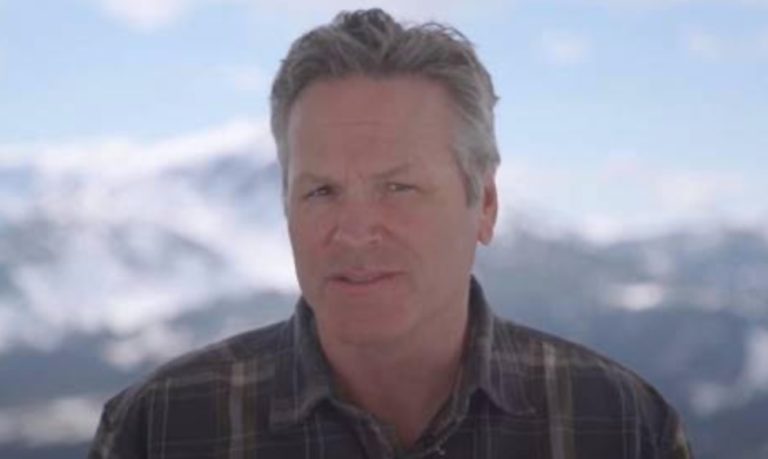
Alaska Gov. Mike Dunleavy has not ordered masks on Alaskans, but has strongly suggested people wear them when around others, within six to 10 feet. The mayor of Anchorage has mandated masks on everyone, including schoolchildren.

Anchorage Assembly passes resolution asking Dunleavy for universal mask mandate

39

The Anchorage Assembly on Tuesday passed a resolution asking Gov. Mike Dunleavy to order a statewide mask mandate.

The only Assembly member who voted against it was Jamie Allard.

The resolution, without evidence, said that “the economy won’t rebound until the virus is under control and wearing masks will help businesses stay open, protect health care workers and will help enable schools to safety reopen.”

The resolution says, “Anchorage’s economy is suffering and won’t recover until people feel safe patronizing businesses…”

Gov. Dunleavy has not issued a statewide mask mandate, although a number of governors have done so.

Iowa Gov. Kim Reynolds, a Republican, was the latest to implement a statewide mask mandate, which began Monday. Republican governors in the remaining 13 states without statewide mask mandates are under increasing pressure to implement similar orders.

The 13 states that still don’t require face masks, according to Axios, are: Alaska, Idaho, Wyoming, South Dakota, Nebraska, Oklahoma, Missouri, Tennessee, Mississippi, South Carolina, Georgia, Florida and New Hampshire. 

Sen. Jay Kerttula dies in Juneau, age 92

4

Former Sen. Jalmar Kerttula, who was a legislator for 32 years representing Palmer, died Friday, Nov. 13, 2020, in Juneau. He was 92.

Kerttula, a Democrat, began his political career in the State House in 1961. While he did not serve in between 1963-64, after that he was in office until losing reelection in 1994.

Up until 2019, Kerttula had the distinction of having the longest service in the Legislature. Sen. Lyman Hoffman overtook him last year.

Born in Milwaukee, Wisconsin, on April 6, 1928, to Finnish immigrants. In 1935, the family were part of the original “colonists” who were relocated to the Matanuska Valley under the New Deal agricultural resettlement program after the Great Depression.

Kerttula graduated from Palmer High School and went on to study at the University of Alaska and the University of Washington. He returned to Palmer and became the manager of a dairy cooperative, and worked as a real estate developer in the Mat-Su. In 1955, he married Helen Joyce Campbell, who preceded him in death in 2015.

In the Legislature, Kerttula served as both speaker of the House and president of the Senate.

“Rose and I extend our condolences to Jay’s daughter Beth and the entire Kerttula family during this time of grief,” said Gov. Mike Dunleavy. “As a farmer, businessman and Palmer legislator for 34 years that included being the Speaker of the House and Senate President, Jay was a leader and advocate for the Mat-Su Valley and served the entire state with honor.”

Dunleavy has ordered that Alaska state flags fly at half-staff sunrise to sunset on Friday, Nov. 20, in honor of Sen. Kerttula.

Survivors include former State Rep. Beth Kerttula and her husband, Jim Powell, of Juneau, Alaska; Anna Kerttula de Echave and her husband John Echave, grandsons Mathew Echave, Chris Echave and his wife Emily Cohn Echave, great-grandson Joey and great-granddaughter Megan, all of Washington D.C.

He is also survived by Joyce’s sister, Lois Pillifant, who has always been like a sister to him and who worked tirelessly on his behalf, as well as her children, Robert, Marilyn, Frankie, Laura and Tom Pillifant, their spouses and children.

Fagan: Outsiders manipulate Alaska elections, benefit Democrats

17

By DAN FAGAN

Lower-48 purveyors of dark money dumped close to $50 million into Alaska this election cycle hoping to accomplish three things: Buy a seat in the U.S. Senate, another in the U.S. House and upend our election process making it easier for Lisa Murkowski to keep her place in the D.C. Swamp two years from now.

These big money fat cats are swamp creatures. They’re all about keeping the swamp viable, strong, and healthy. 

Swampy dark money peddlers spent $35 million to buy a Senate seat for Al Gross. They ended up spending $250 per vote in a losing effort. Outside interests also spent millions trying to unseat long-time incumbent Don Young.

Those wanting Sen. Lisa Murkowski, a swamp creature if there ever was one, to return to the Senate spent $7 million promoting Ballot Measure Two.

Of the close to $50 million spent, the Outside donors were only able to get Ballot Measure Two passed.

But the infusion of swamp cash wasn’t a complete waste. Several Alaska ad agencies got a big cut of the dough. Radio, television, newspapers, and websites made a killing in advertising revenue. 

And the dark-money kingpins hired a bunch of people to ballot harvest. One Anchorage Craigslist ad read: “Canvas a neighborhood for Al Gross, pays $25 per hour.” 

House District H candidate Madeleine Gaiser reports she confronted one of the ballot harvesters as they were canvassing her district. The ballot harvester told Gaiser he was brought in from out of state. 

Republican Party activist Judy Eledge told me the small group of volunteers working with her to get the vote out was no match for the army of people all the outside money pouring into the state hired from left-wing outside big donors. 

Alaska Democrat legislators were also big winners from the $50 million in pallets of cash shipped in from out of state. Had the outside Leftists not targeted Alaska with their millions, Republicans would have likely had firm control of the state legislature.

Now it appears Gov. Mike Dunleavy could once again have a Democrat-controlled House to deal with.  

Republicans dominated in legislative races on Nov. 3. But once the ballot harvesting votes funded by Outside money were tallied, many Democrats overcame their considerable deficits and ended up on top. I doubt the Lower-48 big donors are very happy with that as a consolation prize. Alaska state lawmakers can do little for the D.C. swamp. 

Big-name Democrats like State Sen. Bill Wielechowski, Rep. Matt Claman, and Rep. Chris Tuck should write thank you notes to those Lower-48 donors for spending so much money on ballot harvesting.

It brought those into the process who would have otherwise sat things out — mostly easily manipulated low information voters. More people voted in this year’s election in Alaska than any other in the state’s history. 

Wielechowski, Claman, and Tuck all trailed election day. But once those harvested ballots began to be slowly tallied, their opponent’s leads vanished. 

How one-sided were the harvested ballots for Democrats? Matt Claman was down to his challenger, Lynette Largent by 2% the day of the election. After the harvested ballots came in, Claman was up 23%. 

The ballot harvesting funded by outsiders didn’t just benefit incumbent Democrats. Republican Mel Gillis had an 18% lead on election day against his Democrat opponent, Calvin Schrage. After the harvested ballots came in, the race made a dramatic 22.5% swing, giving Schrage an 18% lead. 

Whatever happened to the idea of showing up at a polling place on election day, showing an id, an election official matches your id with the voter roll, and into the booth you go. 

Democrats have worked tirelessly to weaken rules guarding against fraud during elections. Why? They cheat. That’s why. 

Many a man and woman in uniform laid down their lives to preserve our right to vote. We should hold the act sacred and do everything we can to uphold the integrity of the election process. 

In Texas, ballot harvesting is illegal. The absentee ballot must be submitted by the voter. 

In Montana, a ballot harvester is limited to six. In Colorado, the most ballots you can harvest is ten. 

Arizona banned ballot harvesting in 2016, other than by family members or caregivers. The U.S. Supreme Court is scheduled to hear a challenge to the ban. If the High Court upholds the ban, Alaska’s legislature should move quickly and outlaw ballot harvesting.  

Outside money donors determined the makeup of the Alaska legislature by invading our state with millions. Alaskans are known for their independence.

You would think allowing Lower-48 swamp creatures to play such a major role in our election process might be something we’re not too happy about. You would think. 

Dan Fagan hosts the number one rated morning drive radio show on Newsradio 650 KENI. Dan splits his time between Anchorage and New Orleans. 

Pennsylvania orders people to wear masks inside homes

43

Pennsylvania has mandated that people wear face masks even in their own homes, if people are visiting their homes.

This should make Thanksgiving interesting in the state that is the home of the first first nationally celebrated Thanksgiving, which occurred in 1777.

The Pennsylvania Department of Health issued the following guidance on the order:

Do I need to wear a mask when around my family members or at a friend’s house?


Yes. A face covering is required when indoors and around persons who are not part of the same household. For example, if you are a part of a family of four who is hosting a dinner with extended family, friends or neighbors, all attendees must wear face coverings. If having dinner with just the persons who reside in the same home as you, you do not need to wear face coverings. If outdoors and able to maintain sustained physical distance, face coverings are recommended, but not required.

The entire Universal Masking Order is at this link.

Assembly extends mayor’s emergency powers, but did it really have enough votes?

37

CHARTER SAYS THEY NEED 8 VOTES; THEY HAD 7

For the sixth time this year, the Anchorage Assembly has extended the current emergency declaration, this time until Jan. 15, 2021. The vote came after two hours of testimony from the public, which went heavily against the plan to extend.

The vote was 7-3, with Assembly members Jamie Allard, Crystal Kennedy and John Weddleton voting against it.

According to the Municipal Charter, which is the city’s governing document, the Assembly needs 8 votes to approve an emergency powers declaration. With Austin Quinn-Davidson now serving as acting mayor and unable to vote, the majority came up short — at least according to the charter.

Article II of the Charter subsection (12) says  citizens are immune from emergency orders unless affirmed by all votes of the members attending or three fourths of total membership. 

Under normal circumstances that would be nine of the 11 members. Previous emergency declarations this year in Anchorage have passed with nine votes. Now, the needed number is 8.

Also according to the charter, there should be a special election to seat an acting mayor, but the same leftwing controlling majority on the Assembly also dismissed the Charter and voted against that on Nov. 4, leaving the voting members of the Assembly at 10 for the next eight months.

Acting Mayor Austin Quinn-Davidson, during her report to the Assembly, said the health care systems in Anchorage are quickly reaching capacity and that “help is not on the way.” She promised she would only use her emergency powers to the extent needed to manage the emergency, such as shutting down businesses, enforcing mask mandates, and reallocating resources to meet the shifting needs.

Quinn-Davidson said that the number of intensive care unit beds in Anchorage had dropped to just 11. Hospital staffing is now a concern.

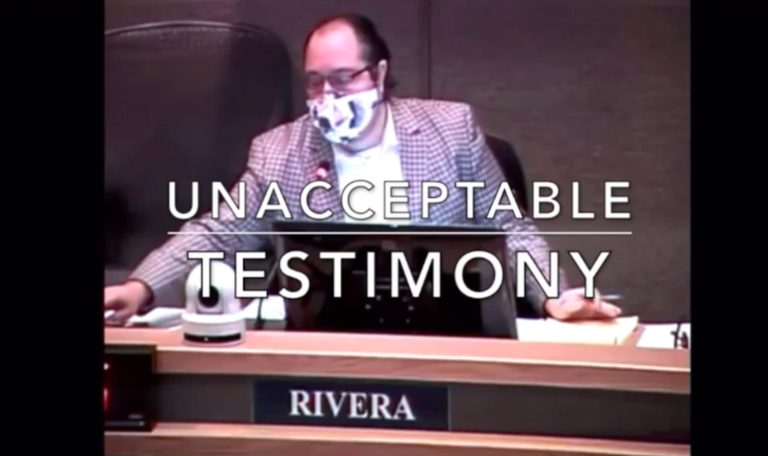
During the middle of the special meeting to consider extending the emergency powers, Assembly Chair Felix Rivera called for a short break, and then approached a member of the audience and told him to put on his mask. Two people were ultimately escorted out after not wearing masks.

Document drop: State says legislator’s probe into contracts is flawed

3

Commissioner of Administration Kelly Tshibaka has responded to a legislative probe directed by Rep. Zack Fields into contracts signed by her department.

In her letter, Tshibaka takes apart the testimony of Field’s chosen expert, Barry Jackson.

Tshibaka says that her department has been peppered with records requests from Jackson, who is an affiliate of liberal blogger Dermot Cole. Cole is an unabashed foe of the Dunleavy Administration who writes frequently about contracts and has accused the Department of Administration repeatedly.

“The DOA, and other State agencies, have received a number of public records requests from Mr. Jackson as an affiliate of blogger Dermot Cole, and various news organizations, focusing on the State’s use of alternative procurement methods provided for in AS 36.30.300-320. Certain high-profile procurements have attracted media attention, but it is worth noting that alternate procurement methods such as small procurements, single source procurements, and emergency procurements are expressly authorized under the Procurement Code,” Tshibaka wrote, before detailing all the ways in which Jackson was misunderstanding current procurement law.

After responding to several of Jackson’s accusations, Tshibaka concludes her letter by defending the contract professionals in her department:

“While I appreciate Mr. Jackson’s right to express his opinion to the Committee based on his experience as a procurement officer for the State 21 years ago, as the Commissioner of DOA, I must apply the facts of this procurement against the Procurement Code. The foregoing clearly demonstrates that the DOA did comply in all material respects with the requirements of the Procurement Code in conducting this procurement. DOA competed this contract in such a way that multiple firms qualified for and could have bid on it,” Tshibaka wrote.

“In closing, the hardworking professionals who conducted this procurement are committed to protecting the public’s interests and maintaining the highest level of integrity. They dedicate themselves to conducting procurements in accordance with the law and are daily responding to the COVID-19 pandemic,” she wrote.

The complete response is at this link:

2020 was highest voter turnout in Alaska history

22

Alaskans turned out to vote in the General Election, and while the percentage doesn’t seem high, the actual number of voters eclipsed all other general elections.

As of Tuesday morning, 355,125 ballots had been counted, with an estimated 5,000 remaining. That puts the voter turnout at just under 60 percent.

The highest percentage turnout was in 2008, when Sarah Palin was on the ticket with John McCain, up against Barack Obama and Joe Biden. That year, 327,341 voters turned out, or 66 percent.

In 2016, Alaska voters approved Ballot Measure 1, a law that requires automatic registration of eligible applicants to vote and updates voter registration information of voters who are currently registered to vote using the information applicants provide when applying for a Permanent Fund Dividend.

Once the automatic voter registration went into effect in 2017, the number of automatically registered voters exploded. Registered voters went from 528,671 in 2016 to 595,647 in 2020. Those who are automatically registered to vote when they apply for their Permanent Fund dividend are put into the “undeclared” category.

However, if those 67,000 extra PFDregistered voters are removed from the calculation, this year’s turnout would top that of 2008, reaching about 67 percent this year.

Paid ballot harvesters from out of state working for the campaigns of Al Gross and Alyse Galvin can rightfully take credit for much of the turnout in the 2020 General Election. They targeted the undeclared, nonpartisan, Democrat, and Green Party registered voters by scouring apartment buildings and condominiums for unreturned absentee ballots.

Republican powerhouse Aaron Downing passes, 87

6

Aaron Downing, politically active in Alaska Republican Party politics, died of natural causes on Sunday, Nov. 15. He was 87, spending his final days at Mat-Su Regional Hospital, where his family was with him during his last hours.

He was born in Montana and as a young boy came to Fairbanks with his father, who was a cook at a mining camp. He grew up in Fairbanks, graduating from Fairbanks High School, many years before statehood.

Aaron attended the University of Alaska (Fairbanks) and was the school’s first electrical engineering graduate.

He eventually became a contractor, starting Alaska Utility Construction, and putting power lines along the Glenn Highway and across the road system in Alaska in the 1960s and 1970s. He brought power to thousands of Alaskans and businesses over the course of his long career.

He and his wife Donna remained married for 68 years and he was father to Phil, Laurie, and Lisa Downing.

While running his own electrical contracting company, he refused the IBEW’s pressure to be unionized, fighting the union for many years, eventually prevailing in court. During that time, he had to fortify security around his home to prevent violence and vandalism from the union. His electrical knowledge was put to good use in this era in his life.

Aaron loved sourdough pancakes, hunting and fishing, and had a wicked sense of humor. He was an avid pilot, a devoted family man, and was very active in Mat-Su politics. He was regional chairman for the Alaska Republican Party and held many other roles in the GOP, and worked on countless campaigns.

In 2019, Downing was part of the lawsuit in which he, David Thompson, and Jim Crawford initiated a challenge over the $500 annual cap on individual donations to candidates. Their case went to the Supreme Court and last year the court ordered the Ninth Circuit Court of Appeals to reconsider the case.

“Last night we lost someone very special, my grandfather, Aaron Downing. My best friend, my confidant, my mentor. Every day on my morning commute I would call, and he would answer. Nearly every single day, for years…. We had many adventures, too many to count. He always had time for me and that was true of all his grandkids. He loved his family, he loved Alaska, always involved in helping make his world a better place. He may no longer answer my calls, but I know he will still be listening,” wrote Lyle Downing, one of his grandsons, on Facebook.

Plans for a celebration of life will be announced later, Lyle Downing said.