Sunday, October 18, 2026
Home Blog Page 1680

Alaska projects, priorities in omnibus spending bill

9

NEW JAY HAMMOND WILDERNESS AREA

From the office of Sen. Lisa Murkowski comes this summary of Alaska-specific items in the Interior Department portion of the omnibus spending bill that passed and was signed by President Donald Trump today:

Alaska Provisions in the Interior Bill Contained in the FY2018 Omnibus Appropriations Act 

PRIORITIZING OUR LAND 

  • Legacy Wells: Provides an additional $10 million for the BLM to clean up exploration wells drilled at the direction of the federal government in NPR-A between 1944 and 1982. While Senator Murkowski secured significant funding to clean up these abandoned wells through the Helium Stewardship Act of 2013, 26 wells still require remediation. Murkowski’s bill provides enough funding to complete remediation of 9 of the remaining wells, and compels BLM to craft a long-term strategy to finally complete this effort.
  • ANCSA Contaminated Lands: Directs BLM to coordinate with all responsible federal agencies to implement a long-term solution to clean up contaminated Alaska Native lands as quickly as possible.
  • Tribal General Assistance Program: Maintains funding for the Tribal General Assistance program.  In FY 2016, Senator Murkowski included language to authorize the backhaul program to operate though FY 2020.  This year’s bill includes language to make the backhaul program permanent.
  • Transboundary Water Quality: Allocates $120 thousand for transboundary river stream gages, including for Unuk River, and directs the USGS to enter into a formal partnership with local tribes and other agencies to help develop a water quality strategy for transboundary rivers.
  • National Park Service: Includes a historic $180 million increase for National Park Service construction and deferred maintenance, the largest percentage increase ever in an annual appropriations bill.

HONORING AND CARING FOR VETERANS

  • Healing Arts Program:  Supports the efforts of the National Endowment for the Arts (NEA) to expand the Healing Arts Program, developed by the NEA and the Department of Defense (DoD) to help our nation’s wounded and injured service members and their families in their transition into civilian life.
  • Jay S. Hammond Wilderness: The bill designates 2.6 million acres of National Wilderness Preservation land located within the Lake Clark National Park and Preserve as the “Jay S. Hammond Wilderness.” The land will be named after former Governor Jay Hammond, a decorated World War II Marine Corps fighter pilot.

INVESTING IN COMMUNITIES

  • Payment in Lieu of Taxes: Fully funds the Payment in Lieu of Taxes (PILT) program at $530 million, to provide monetary compensation to local governments throughout Alaska that contain federal lands that are not subject to state or local taxation. The revenue helps local governments provide vital services, such as firefighting and police protection, construction of public schools and roads, and search-and-rescue operations.
  • Secure Rural Schools:  Reauthorizes the Secure Rural Schools program for two years to help provide funds for school and local budgets across Alaska.
  • EPA Targeted Airshed Grants: Provides increased funding at $40 million to ensure that cities like Fairbanks are eligible for grants to support wood stove change-outs in order to help reduce air pollution.
  • Tongass National Forest Management: Directs the Forest Service to gather sufficient data about the timing and availability of young-growth timber before developing a plan revision or new amendment to the Tongass Land Use Plan.

SAFE DRINKING WATER AND SANITATION

  • State Water Revolving Funds: Provides $2.86 billion, increased funding to help facilitate clean, safe drinking water in local communities. Funds can be used to address drinking water and wastewater infrastructure challenges, including addressing problems posed by lead.
  • Alaska Native Villages Water Program: Provides $20 million for the construction of new drinking water and wastewater systems, or the improvement of existing systems in rural Alaskan communities.
  • Assistance to Small and Disadvantaged Communities Water Program: Includes $20 million for a new grant program to help bring basic water and sewer to communities in need.
  • Lead in Drinking Water:  Funds two new programs by providing $20 million to help reduce lead in schools and child care facilities and $10 million to help communities reduce lead in other water systems.

BOOSTING ECONOMIC OPPORTUNITIES

  • Arctic Priorities: Supports the Arctic Council and directs federal agencies to focus on economic opportunities in the region, as well as science and subsistence issues.
  • Energy and Minerals: Provides $4.7 million for USGS to conduct studies that would significantly expand the public’s knowledge of the minerals resource potential in Alaska and provide state-of-the-art data for current and future use.
  • Forest Service Recreation: Provides $257.8 million for the Forest Service’s recreation programs to issue additional special use permits, helping to expand recreation-based businesses in the Chugach and Tongass National Forests in Alaska. Also funds Forest Service recreation assets like cabins, trails, and campgrounds.
  • Alaska Red Cedar and Economic Timber Sales: Continues current law that requires that timber sales in Alaska be economic, and requires that Alaska and West Coast sawmills be given the first right to process the timber, in order to keep these jobs in the U.S.
  • Forest Inventory Analysis: Increases funding to $77 million to partner with states to inventory forests across the nation. Includes significant expansion for interior Alaska.

FIGHTING FEDERAL OVERREACH 

  • Lead Bullets and Fishing Tackle: Continues to prohibit the EPA from regulating lead content of ammunition and fishing tackle.
  • Kagalaska and Chirikof: Prohibits the Fish and Wildlife Service (FWS) from using funds to conduct a costly caribou hunt on Kagalaska Island in the Aleutian Chain. The legislation also prohibits costly and impractical efforts to remove cattle from the remote Chirikof Island.
  • Small, Remote Incinerators:  Provides an exemption for small, remote incinerators in Alaska to help manage waste in remote areas of Alaska.

HEALTH AND WELLNESS

  • Village Built Clinics: Maintains $11 million for Village-Built Clinics, a program unique to Alaska that supports 150 healthcare clinics in rural areas which often serve as the only health facility in the respective region.
  • Contract Support Costs: Funds contract support costs at $959.57 million for operational and overhead costs in the Bureau of Indian Affairs and the Indian Health Service, to ensure tribes have the necessary resources they need to deliver programs and services. This is especially important to Alaska because all healthcare for Alaska Natives is directly provided by tribal organizations.  The account is continued as an indefinite appropriation so that if estimates made by the respective agencies are too low, funds are available to pay these costs without taking funds from other programs which reduce their capacity.
  • Zero Suicide Initiative: Provides $3.6 million for an IHS program aimed at preventing suicide by providing tools and support for organizations with patients receiving care. The initiative’s premise is that suicide deaths for people receiving care are entirely preventable.
  • Domestic Violence Prevention Initiative: Includes $4 million for an IHS initiative that promotes culturally appropriate prevention and treatment approaches to domestic and sexual violence from a community-driven context. This includes funding projects that provide victim advocacy, intervention, case coordination, policy development, community response teams, sexual assault examiner programs, and community and school education programs. The Alaska Native Tribal Health Consortium, Aleutian Pribilof Islands Association, Bristol Bay Area Health Corporation, Chugachmiut, Copper River Native Association, Kodiak Area Native Association, Maniilaq Association, Norton Sound Health Corporation, Southcentral Foundation, and Southeast Alaska Regional Health Consortium all receive funds through this initiative to continue efforts in addressing domestic violence and sexual assault in their communities.
  • Alcohol and Substance Abuse: Increases funding to $227.7 million for IHS alcohol and substance abuse prevention programs to focus on tribal youth and the incorporation of more holistic healthcare models. Programs within tribal communities to combat alcohol and substance abuse include inpatient and outpatient treatment, and rehabilitation services in both urban and rural settings.
  • Behavioral Health Integration: Provides $21.4 million to support IHS programs to address issues such as mental health disorders, substance use disorders, and behavior-related diseases among American Indians and Alaska Natives, ensuring a comprehensive system of preventative care to encourage community support and strong collaborative relationships with other agencies.
  • Small Ambulatory Clinics: Increases funding to $15 million to provide additional resources to make infrastructure improvements across the nation for providing healthcare delivery to American Indians and Alaska Natives.

SAFETY

  • Tribal Court Funding (PL280): Increases Tribal Court funding to Public Law 280 states to $13 million, such as Alaska, in order to help develop tribal court systems for communities.
  • Violence Against Women Act (VAWA): New this year, provides an additional $2 million for training and specific VAWA tribal court needs.
  • Tiwahe Initiative: Provides $15 million for this program to help communities design a comprehensive approach for the delivery of social services and justice programs. The Association of Village Council Presidents (AVCP) is a Tiwahe Initiative pilot site. The bill also sets aside $200 thousand under the initiative for women’s and children’s shelters.
  • 3D Alaska Mapping: Maintains $7.7 million for Alaska mapping initiatives that will help gather data to improve maps, enhancing safety for activities such as aviation. Currently much of the terrain data in Alaska is more than 50 years old and hand-sketched from photos shot from World War II reconnaissance craft.
  • USGS Earthquake and Volcano Hazards: Includes $45 million to bring Alaska volcano equipment into compliance and provides funds for the purchase of earthquake sensors to incorporate for use in Alaska.
Amendments continue; state rights nixed by liberal majority

3

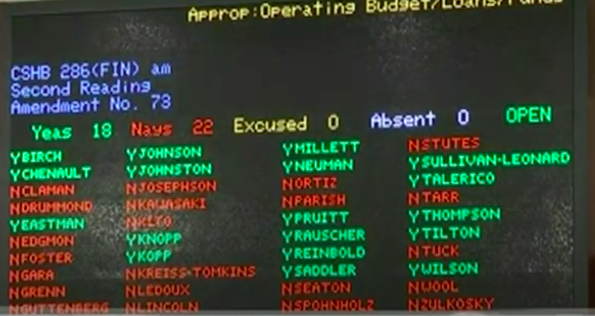
AMENDMENT #73 DIES ON CAUCUS LINES

The Alaska House of Representatives heard and rejected dozens of amendments over the past three days, adding some $211,000 for rural emergency response, but rejecting $28 million in cuts that the conservative minority offered.

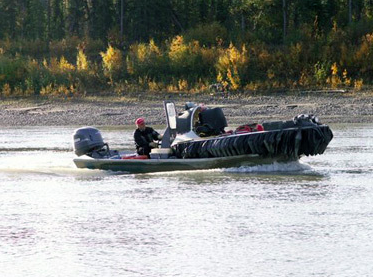
Amendment 73 went down, like so many offered by conservatives. It related to a well-known public lands access case brought by John Sturgeon against the National Park Service for denying him access to a navigable waterway so he could get to his moose hunting grounds.

[Read: John Sturgeon, hunger, likely heading back to Supreme Court]

Rep. George Rauscher, a member of the conservative minority from District 9, offered an amendment that would have had the State cover up to $500,000 of legal costs for Alaskan John Sturgeon, if he decides to take his case back to the U.S. Supreme Court.

Rauscher’s amendment didn’t increase the budget, but would have moved funds from a contingency fund to the Department  of Commerce. As Sturgeon’s legal fees came in, he could apply to the State for reimbursement.

The state has an interest in this case because it affects all Alaskans’ right to access public lands.

Rauscher noted that Attorney General Jahna Lindemuth wrote in her amicus brief filed in this case, “Alaska has a direct and profound interest in maintaining its authority to keep its waterways open as Congress intended … If left uncorrected this decision has broad ramification that extend well beyond its blow to Alaska’s sovereignty.

“It (the Ninth Circuit decision) ignores the needs and realities of rural Alaskans who face unparalleled changes in accessing the transportation thoroughfares they rely upon to provide for their families. Alaska has compelling in interest in preserving its sovereign right to responsibly manage its lands and waters and protecting its citizens ability to use the states’s waterways.

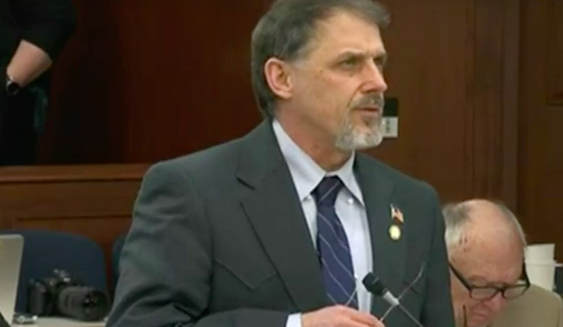
Rep. Paul Seaton, a Homer Republican who joined the liberal majority, rose to argue against it. He said that Rauscher was asking the State to pay private lawyers for something that was a “private benefit” to one Alaskan. Rep. Les Gara, an Anchorage Democrat, said it was like giving money to one person.

But Reps. Mark Neuman, Tammie Wilson, Dan Saddler and David Eastman said that this is a state sovereignty case.

“The battle is not for him,” said Rep. Wilson. “It’s for all Alaskans.”

A day earlier Seaton had gotten his amendment passed for the same amount, adding $500,000 to a strained state budget to pay for a study of the importance of Vitamin D in the diets of Alaskans.

[Read: House minority challenges paying for Vitamin D study]


In October, Gov. Bill Walker said he would do everything in the state’s power “to protect Alaska State rights.”


‘Fair Anchorage’ weaponized top cop in bathroom fight

AND CHIEF JUSTIN DOLL ISN’T HAPPY ABOUT IT

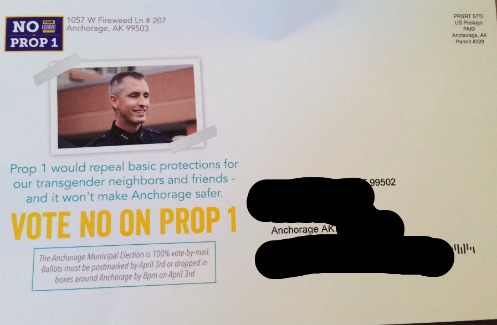
The group advocating a no vote on Proposition 1 used the image of Anchorage’s top police officer in a campaign to sway voters this month to vote against the safe bathrooms ballot question during the municipal mail-in election, which began about March 15.

On the Mike Porcaro Show yesterday on KENI (650 AM), Police Chief Justin Doll said he had not given permission for the group to use his name, image, or endorsement in its position on Prop. 1, and he was none too happy about being blindsided by them.

Fair Anchorage is an independent expenditure group founded primarily by the Alaska branch of the ACLU. Ship Creek Group, the campaign company founded by the governor’s campaign manager John Henry Heckendorn, is doing much of its campaign work. It has acquired hundreds of thousands of dollars from Outside to push voters into opposing a measure that would keep public bathrooms separated by gender.

The ACLU is fighting for open bathrooms, locker rooms, and changing rooms so that people who are uncomfortable using one gender’s bathroom can use the other.

The chief said the group had apologized to him and agreed to pull back any of its social media and other propaganda, but the postcards have already been received by all Anchorage voters.

Police Chief Justin Doll was featured on both sides of the mailer sent to all Anchorage voters. He did not give his permission to Fair Anchorage for this message, he told Mike Porcaro on Wednesday.

Porcaro asked Doll if he felt the police force had been weaponized by the “vote no” side. Yes, Doll said, adding that police stay out of weighing in on political questions.

Jim Minnery, whose group Alaska Family Council is heading up the “Yes on One” campaign, issued a statement saying that Fair Anchorage was not playing fair with their campaign to sway voters toward the open-bathroom policy in Anchorage

“Bottom line – how many voters who have already turned in their ballots were misled by this completely inaccurate representation?” the group asked on Facebook.

The Mike Porcaro Show podcast can be found at this link.

Porcaro said that an apology from the group is owed to the entire public, but in mail-in elections, most ballots that will be voted are likely already in the mail. If voters felt swayed by Doll’s apparent endorsement, it’s too late. The election ends on April 3.


Sturgeon case now tangled in state’s rights and Native rights

1
WALKER WADES IN TO CHANGE ANILCA
The Walker Administration has joined the Alaska Federation of Natives to advocate for amendments to historic Alaska land claims laws that would weaken state sovereignty, according to the Alaska Outdoor Council, which is opposing the move.
On Monday, AOC Executive Director Rod Arno urged Sen. Lisa Murkowski to reject that effort.
In a letter to Alaska’s senior senator, the outdoors group said that Alaska Attorney General Jahna Lindemuth is seeking to usurp the State of Alaska’s authority over fish and game management and allocation.
Arno advised Murkowski not to insert the governor’s requested amendments into the omnibus spending bill now being considered by the Senate.
The proposed changes by the Walker Administration through his attorney are facing a Friday deadline.
The case is complex, and a recent Ninth Circuit Court of Appeals decision makes it more so. To resolve it, Murkowski has been asked by Lindemuth, as well as AFN President Julie Kitka, and the attorney for hunter John Sturgeon, to amend the Alaska National Interest Land Conservation Act, known as ANILCA.
Sturgeon and the Alaska Outdoor Council have been on the same side of Sturgeon’s case for years, since he was stopped by the National Park Service from navigating the Nation’s River to reach his hunting spot.
Sturgeon has been fighting since then against federal overreach in a case that has gone to the U.S. Supreme Court, only to be partially bounced back to the Ninth Circuit Court, where he was again denied the right to use an hovercraft on the river system. The argument is over whether the state or federal government controls activity on the water inside the National Park Service’s boundaries.
According to the Outdoor Council, the proposed amendment (attached) if passed into statute would:
  • Satisfy Sturgeon’s claim against the federal government by clarifying state management of navigable waters regardless of whether those waters were inside the National Park Service exterior boundary.
  •  Allow Alaska native regional and village corporations more control over development on 18 million acres of lands acquired in the Alaska Native Claims Settlement (ANCSA) that are within the boundaries of federal Conservation System Units (CSU) created by ANILCA.
  • Give the State of Alaska nothing, but strip away state management and allocation of fish and game on around 63 percent of the state, not counting all waters. By proposing that subsistence management regulations created by the U.S. Departments of the Interior and Agriculture be written into federal statute, the State of Alaska capitulates to federal management on over half of the state’s land and the majority of it waters. The FSB allocates fish and game only to rural residents of Alaska, not to all of Alaska’s population as our state constitution requires.
“Getting standing to challenge these regulations in federal court has been exceedingly difficult,” Arno said. “Challenging statute law adopted by the U.S. Congress, confirming that the Dept. of the Interior will remain the managers of fish and game, would be virtually impossible. Seems an issue of such great importance should have some public debate prior to being submitted as a rider on an appropriations bill.”
Evidently that is not how the governor sees it, because in October he said he would do everything in his power to protect state’s rights.
WORDING OF THE PROPOSED AMENDMENT TO ANILCA

The cause for AOC’s concern comes from a Feb. 26 letter that the governor sent to Murkowski, asking for changes in the Alaska National Interest Lands Conservation Act, ANILCA.

The attached wording that would change ANILCA is copied below:

ANILCA 103(c)

Existing Law

(c) Only those lands within the boundaries of any conservation system unit which are public lands (as such term is defined in this Act) shall be deemed to be included as a portion of such unit. No lands which, before, on, or after the date of enactment of this Act, are conveyed to the State, to any Native Corporation, or to any private party shall be subject to the regulations applicable solely to public lands within such units. If the State, a Native Corporation, or other owner desires to convey any such lands, the Secretary may acquire such lands in accordance with applicable law (including this Act), and any such lands shall become part of the unit, and be administered accordingly.

Amendment

(c) Only those lands within the boundaries of any conservation system unit which are public lands (as such term is defined in this Act) shall be deemed to be included as a portion of such unit.  Except as provided in this section, the Secretary’s regulations adopted to administer public lands shall not apply to lands, including submerged lands, owned by the State, any Native Corporation, or any private party, or to navigable waters flowing over such lands.  No lands which, before, on, or after the date of enactment of this Act, are conveyed to the State, to any Native Corporation, or to any private party shall be subject to the regulations applicable solely to public lands within such units.  If the State, a Native Corporation, or other owner desires to convey any such lands, the Secretary may acquire such lands in accordance with applicable law (including this Act), and any such lands shall become part of the unit, and be administered accordingly.  Nothing in this section shall be interpreted to limit the Secretary’s authority under Title VIII to protect and provide the opportunity for continued subsistence uses, and to implement the subsistence priority, in the waters identified in 50 C.F.R. § 100.3 (2018), which authority is hereby reconfirmed.

[Read another report on this at CraigMedred.news]

Vitamin D: House minority challenges $500K study

14

LIBERAL MAJORITY WINS ANOTHER ROUND

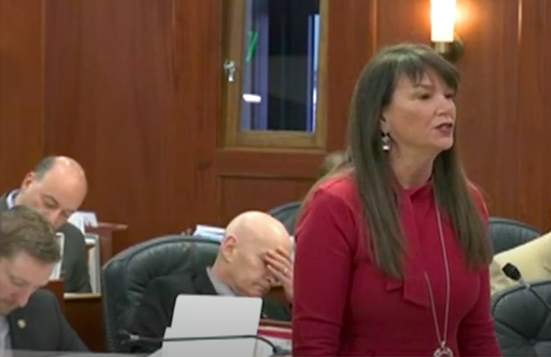
During the House floor discussion and debate over the operating budget on Wednesday, House Minority Leader Charisse Millett of Anchorage rose to challenge Finance Co-Chair Rep. Paul Seaton’s $500,000 item in the budget to fund a study on the benefits of Vitamin D.

Vitamin D is a pet concern for the Homer representative, who is a commercial fisherman. He addresses it often in his newsletters to constituents, has produced booklets for both senior citizens and children on the topic, and has a page devoted to it on his official web site. 

Seaton was one of three Republicans who broke with the Republican-led majority to stage a coup in 2017 with Democrats, and in exchange became the co-chair of Finance, in charge of producing the operating budget. Now is his chance to get that Vitamin D project he has long desired.

But Millett wasn’t going to let it go in without a fight.

“While I know that the maker of this section of the bill is a very big fan of Vitamin D, as we all are on the floor, since we’ve been taking it … since he’s been giving of us bottles of it…” Millett began.

She argued the money could be better spent battling the opioid crisis in Alaska, or reducing domestic violence, especially at a time when the State has little money to spare and while Democrats and the governor are talking about an income tax.

“A quick look through the internet, I think my staff came up with over 50 studies that have been done in other circumpolar countries on the value of Vitamin D,” she said. “This rises to the level of ‘I don’t think so,’ for me personally.”

Millett added that it was something that the private sector could fund. Others in the conservative minority rose to say that the federal government has not only the resources but the responsibility for public health studies of this type.

The New York Times has written about the Vitamin D craze. It seems that people are popping the pills in the belief that Vitamin D will “cure what ails you.”

According to the Times:

Millions of people are popping supplements in the belief that vitamin D can help turn back depression, fatigue, muscle weakness, even heart disease or cancer. In fact, there has never been widely accepted evidence that vitamin D is helpful in preventing or treating any of those conditions.

But so firm is this belief that vitamin D has become popular even among people with no particular medical complaints or disease risks. And they are being tested for vitamin D “deficiency” in ever greater numbers.

The number of blood tests for vitamin D levels among Medicarebeneficiaries, mostly people 65 and older, increased 83-fold from 2000 to 2010, according to the Centers for Disease Control and Prevention. Among patients with commercial insurance, testing rates rose 2.5-fold from 2009 to 2014.

Labs performing these tests are reporting perfectly normal levels of vitamin D — 20 to 30 nanograms per milliliter of blood — as “insufficient.” As a consequence, millions of healthy people think they have a deficiency, and some are taking supplemental doses so high they can be dangerous, causing poor appetite, nausea and vomiting.

Vitamin D overdoses also can lead to weakness, frequent urination and kidney problems.

“A lot of clinicians are acting like there is a pandemic” of vitamin D deficiency, said Dr. JoAnn E. Manson, a preventive medicine researcher at Brigham and Women’s Hospital in Boston who helped write an Institute of Medicine report on vitamin D. – New York Times.

“That gives them justification to screen everyone and get everyone well above what the Institute of Medicine recommends.”

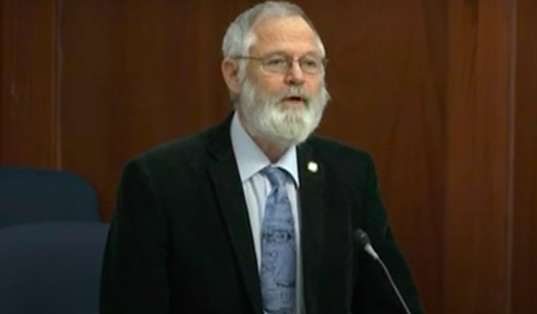
Rep. Paul Seaton holds forth on his $500,000 Vitamin D study, which Republicans sought to remove from the operating budget.

REP. SADDLER GIVES SEATON A D IN SCIENCE

But Rep. Seaton is a fan of D and defended his line item, citing studies that show how Alaskans don’t get enough Vitamin D, and that there has been a rise in diseases, the cost of health care, and that he believes that to be a result of the lack of Vitamin D in the diets of Alaskans.

For 10 minutes he speculated that the increase in autism was possibly linked to the lack of the vitamin, and that Alaska’s high cost of health care may be linked to the lack of Vitamin D.

His remarks defending the $500,000 project included anecdotal stories about children with rickets, autism, and the benefits of a traditional subsistence diet.

Rep. Dan Saddler took the bait: In remarks informed by his personal experience of being a parent with a child with autism, he said, “We’re being offered what I believe is the cruel fiction that more Vitamin D might prevent autism.”

Debating the science of Vitamin D on the House floor is inappropriate, Saddler added, and before throwing a rhetorical elbow at Finance Chair Seaton, saying that while he had many duties, being chief science researcher was not one of them.

Saddler’s remarks drew a gentle rebuke from House Speaker Bryce Edgmon, who implied he was getting too personal.

Rep. Chris Birch also spoke to strip the D study from the budget: “We don’t need a $500,000 science project to tell us we live in a northern latitude, and that Vitamin D is not aplenty when there’s no sun exposure. I think that’s common knowledge. It’s certainly one of the reasons why I take a multi-vitamin every morning.”

In the end, after 45 minutes of debate,  a $500,000 item to study Vitamin D was left in the budget in a vote that was nearly along party lines, with only Reps. Jason Grenn and Sam Kito splitting from the Democrat-led majority and siding with Republicans to trim the sails of Seaton’s obsession with cholecalciferol, Vitamin D.

Groups forming to back candidates, causes

A host of new campaign influence groups have formed in recent weeks to push the candidates and causes they care about. Those organized and funded efforts attempting to sway voters must register with the Alaska Public Offices Commission, and their communications are highly regulated by APOC, (a cause of concern to strict constitutionalists who believe in First Amendment protections of political speech.)

Two of the recent groups are focused on supporting law and order: Stop Alaska Crime and Repeal SB 91.

Group registrations since March 1 add to several others already formed since the first of the year. They’re listed with their name and the wording of how they describe their intent and activities:

ABC Alaska PAC – ABC believes that companies should reward employees based on performance and encourage them to reach their highest level of achievement, and that contracts be awarded based on safety, quality and cost effectiveness – regardless of labor affiliation.

Alaska Federation of Republican Women – Engaged in Anchorage Municipal races and state General Election.

Alaska Free Market Coalition – To promote candidates who are fiscally conservative, pro-business, and supportive of free market economic principles.

Alaska Ironworkers Political Action Committee – Increase employment of Union Ironworkers in the state of Alaska.

Alaska Libertarian Party – The ALP is a political party dedicated to legal and peaceful reduction in the size and power of government.

Alaskans for Kevin Meyer – Assist in providing the State of Alaska with a qualified Lt. Governor.

Alaskans for Scott Hawkins – To independently support the candidacy of Scott Hawkins in the 2018 Republican Primary for Governor of Alaska. (Started by a group based in Ketchikan.)

Alaska’s Southcentral Federated Republican Women – Educate, inform and support the electorate.

Anchorage Education Association Public Affairs Committee on Education – To promote public education.

Alaska Women for Political Action – Electing progressive women candidates to political office and educating women on issues important to them.

Fair Anchorage No on Prop 1 – To oppose any effort to repeal or weaken Anchorage’s nondiscrimination ordinance. We know Anchorage is a welcoming place to live, work, and play, and that discrimination isn’t an Anchorage value: that’s why we need to keep Anchorage fair.

House District 24 Democrats – Southwest Anchorage – Subdivision of AK Democratic Party for HD 24, promoting Democratic ideas and principles in southwest Anchorage.

Kodiak Democratic Party – Elect Democrats / Independents.

Mat Su Democrats – A unified group of Democrats of the Matanuska-Susitna Borough and those who reside in precincts of any district which has any portion of its boundaries within the Borough. A subdivision of the Alaska Democratic Party and listed as such in its Party Plan of Organization.

Midnight Sun Republican Women’s Club – To support the Republican Party’s ideas and to encourage women in politics.

Patriots Party of Alaska – Political group whose purpose is to field, and run/endorse candidates for public office in elections at all levels of government as allowed by law.

Public Employees Local 71 Supporting League – Union candidate and supporting fund.

Repeal SB 91 – To oppose political candidates who do not support the repeal of SB 91 crime bill. (Formed by Deb Brollini.)

Stand for Alaska – Protecting salmon, jobs, and communities. (Formed earlier, needed to change the type of group it is due to the ballot proposition that has since been approved that it will be opposing.)

Stop Alaska Crime – Bring people together to fight for stricter penalties for crime. Work together to improve safety in communities.(Formed by Vicki Wallner, who runs a popular Facebook Page, Stop Valley Thieves, and a new associated Facebook page Stop Alaska Crime.)

Tongass Democrats – Precinct level branch of Alaska Democratic Party. Fundraise locally for Democratic candidates and causes.

Yes for Salmon – To promote the passage of a ballot measure to update salmon habitat regulations. (Was earlier formed as “Stand for Salmon,” changed the group name and the type of group it is due to the ballot proposition that has been approved that it will be supporting.)

DUNLEAVY FOR ALASKANS CLOSES IN ON $400,000

In February, a group of Alaskans formed a Dunleavy for Alaska committee, headed by Terre Gales, a former candidate for Anchorage Assembly. The APOC reports show it has more than $400,000 in contributions.

The group, independent and prohibited from coordinating with the Alaskans for Dunleavy campaign, has additional pledges and the cash in the door already includes a $5,000 check from a Wasilla individual to a $100,000 contribution from Mike Dunleavy’s brother.

WHERE’S WALKER’S POLITICAL ACTION COMMITTEE?

An outside group is said to be forming to support the candidacy of Gov. Bill Walker, with a hefty serving of public employee labor union support. But although the rumors of its imminent creation surfaced weeks ago, it has still not shown up on the APOC reports, leading some political wags to wonder if there’s trouble in the kingdom.

Donors may be hesitant until they see more polling results, as the ones completed to date show Walker in deep trouble with the electorate over key issues involving spending, the Permanent Fund, and quality of life.

There are several Democrat-affiliated groups that will support his candidacy in one way or another if Democrat Mark Begich does not jump in to knock Walker out of the running.

A recent survey by the Alaska Chamber of 809 likely voters statewide showed that the public still favors spending cuts rather than instituting an income tax — 72 percent supporting cuts to 26 percent opposing cuts.

The poll result confirms earlier polls and no doubt this is the same headwinds the Walker camp is encountering — if it is polling. Walker has proposed nearly a dozen new taxes and has said he cannot reduce state government further because it’s now cut to the bone.

An example of the public opinion that may be holding off the creation of the political action committee for Gov. Walker:


Kito to call it quits

5

APPOINTED BY PARNELL in 2014, HE WAS A RELIABLE DEMOCRAT VOTE

Rep. Sam Kito III, who represents the most liberal district in Alaska — House District 33 — will not run for reelection, he told the Juneau Empire today.

District 33 calculates as a hard left neighborhood. In 2014’s primary election, it voted to repeal SB 21 by 78 percent of voters. SB 21 which was an oil tax reform measure that passed the House and Senate. Later in November of 2014, Mark Begich won 66 percent of the vote over challenger Dan Sullivan, who beat Begich statewide for his Senate seat.

And for governor that year, House District 33 went heavily for Bill Walker, enough to pull him over the finish line statewide, with 5,837 votes for Walker/Mallott to 2,857 for Parnell/Sullivan.

Kito was appointed by Parnell in February of 2014 after the departure of Rep. Beth Kerttula, who left for a fellowship and later to work in the Obama Administration on oceans issues. Assemblyman Jessie Kiehl and Catherine Reardon had also been recommended by local Tongass Democrats for the job.

Later that year, Kito won handily for reelection over Republican Peter Dukowitz.

The district breaks down into precincts covering other parts of northern Southeast Alaska:

33-500 Douglas
33-505 Gustavus
33-510 Juneau No. 1
33-515 Juneau No. 2
33-520 Juneau No. 3
33-525 Lemon Creek
33-530 North Douglas
33-540 Skagway
33-545 Haines No. 1
33-550 Haines No. 2
33-555 Klukwan

Kito has been publicly signaling that he doesn’t plan to run again, making it clear that a reduction in per diem for Juneau lawmakers would cause him to go in the hole financially. He makes $50,400 as a legislator and last year was paid $32,400 in per diem.

The State Officers Compensation Commission recommended eliminating per diem payments to lawmakers who live within 50 miles of the Legislature’s meeting location.

Legislators allowed the 60 days to pass during the current session when they would have had to reject that recommendation. During that time, Kito spoke during committee meetings and on radio shows about how that would impact him, as a single father trying to put a student through college. He has grown increasingly irascible and is sporting a long beard, unlike his previous clean-shaven appearance.

[Read: Kito says if per diem cut, he’ll likely not run]

Already Sara Hannan, a Democrat and retired school teacher, and Chris Dimond, an unaffiliated resident of Douglas Island who runs the local carpenters union, have filed to run for Kito’s seat, and there will likely be others who will file for the seat.

This year, Juneau will also lose its senator, Dennis Egan, who has said he is not running for reelection.

Juneau’s Rep. Justin Parish, who represents District 34 (Mendenhall Valley north) faces a serious campaign season against longtime police officer Jerry Nankervis, who has filed for that seat.

In short, Juneau and communities to the north could have a brand new team representing them next January, at the same time they are welcoming the next resident of the Governor’s House on Calhoun Avenue.

Services set for April Hackney

A celebration of life for April Hackney will take place Saturday, March 24, from 4-6 pm at the home of Gov. Bill Sheffield, 3125 Susitna View Ct, Anchorage, Alaska.

April was born April Lynn Newlun in Sitka, on Feb. 23, 1964, to Bruce and Lydia Newlun (Panamarkoff). She was of Tlingit, Russian, and Anglo heritage.

The well-known political consultant was half of the Hackney & Hackney agency. She died unexpectedly (and uncharacteristically) quietly on March 14, 2018. Her husband Art held her hand at Providence Hospital as she passed from this world.

April graduated from Sitka High School in 1982, and worked for the Forest Service before driving to Anchorage in 1985 in her Mustang, with only $100 in her pocket. She landed work with the Holden Hackney & Holmstrom advertising agency, where she rose from receptionist to administrative assistant to production manager to wife and business partner of company President Arthur Hackney. They married and formed the partnership Hackney & Hackney.

April was a shining light who had a powerful impact on every person she met – and she met people all over this planet. Whether it was a president, a senator or a person cleaning the streets in New Orleans, April wanted to know what made them tick. April had a way of coaxing stories from people that even their family members had never heard. April and Art remained business partners and best friends from the time they met until her death.

Her memory lives on in the countless community projects she supported, including Anchorage Town Square, Three Virtuoso’s concerts, Cyrano’s Eccentric Theatre, the Alaska Basketball Development Program and the Mayor’s Charity Ball. She served on George W. Bush’s National Finance Committee and was selected as a Whip for the 2000 Republican National Convention in Philadelphia, Pa. As a major donor to the George W. Bush Presidential Center, April’s name is on a plaque in the Center’s courtyard in Dallas, Texas, at Southern Methodist University.

Her clients included Senators Ted Stevens and Frank Murkowski, Congressman Don Young, Mayor George Wuerch, many State Representatives and Senators and Assembly members, as well as some of Alaska’s largest businesses.

She dearly loved Art’s daughters Heather and Alexis.

April traveled widely. She petted a rhinoceros, helped remove a spear from the side of an elephant on the Laikipia Plateau of Kenya, swam with sharks and dolphins, rode camels, fished, zip-lined, hang-glided, kayaked, snorkeled, climbed tall trees and enjoyed life – a life that ended far too soon.

[Read: April Hackney, creative political force, has passed]

Chapter 7: Rogoff now says Dispatch owes her up to $23 million

The owner of the Alaska Dispatch News — now defunct — has filed yet another bankruptcy claim against the entity of which she was the sole owner, and which she ran into the ground in three short years.

Alice Rogoff’s latest claim is for $7 million, and it adds to her first claim of $16 million that she says the dead newspaper owes her personally.

Rogoff wants to be paid before any of the other 28 creditors are made whole, but in reality there are no assets left to pay any of them, and the wealthy heiress has done something uncharacteristic of the other creditors: Rogoff and her lawyers have fought from having her personally responsible for paying the debt to her numerous creditors, of which she is the largest by far.

A reader could be forgiven for not understanding the difference between her and her failed entity. She mixed her personal finances and business dealings so much that it may leave her personally liable to pay the business’ debts. But that’s another story. Creditors had until midnight on Monday to file their claims against the Alaska Dispatch News in Alaska Bankruptcy Court.

Must Read Alaska looked into the list of creditor claims in the Chapter 7 liquidation proceedings filed since September and through the March 19 midnight deadline.

Many of the creditors in the Chapter 11 proceedings did not proceed with claims once the case was converted to Chapter 7, which is when the entity is seen as a total loss:

Municipality of Anchorage, Department of Law: $28,258.14

Air Land Transport Inc, Anchorage:  $12,788.41, for transportation services

Opti Staffing Group, Anchorage: $4,541.00, for services

United States Trustee, Seattle: $6,500.00, proof of claim

Monster Worldwide Inc., Wisc: $13,280.45, for services

Thomson Reuters (Markets) LLC: $8,725.40, for services

Alice Rogoff: $16,619,095.90, for money she loaned to the newspaper that she owned.

AdPerfect Dynamic Advertising Solutions Ltd, BC, Canada: $16,051.00, for services

Reed Brennan Media Associates, Inc, N.C.: $6,460.86, for goods and services

Catalyst Paper (USA) Inc., Irvine, Ca: $51,307.56, for goods sold

Arctic Office Machines, Arctic Office Products, Anchorage: $1,658.68, for goods sold

Frontline Construction LLC, Anchorage: $109,354.98, for construction services

Boot Country, Anchorage: $118.96, for worker boots

3150 C, LLC, c/o Robert Hume, Landye Bennett Blumstein: $715,490.63, for breach of lease

Legacy.com: $907.48 for services relating to obituary service subscription

Internal Revenue Service, Centralized Insolvency Operations: $24,461.94

TSI North America LLC, Bellevue, Wa: $12,500.00, for services

Arctic Partners, LLC, Tacoma, Wa: $2,446,425.82, for back rent

J. Birkett, Inc, Lebanon, Tenn: $265,376.00 for contract services

M&M Wiring Service Inc, Anchorage: $1,529,808.19, for improvements to the Arctic Partners building

Alice Rogoff, Anchorage: $7,000,000.00. This one is complicated. It’s a claim that is contingent and it’s in addition to a prior claim she has made for money she loaned to the dead newspaper.

This claim was filed by Birch Horton Bittner & Cherot c/o James Lister, Esq. Rogoff estimates the final range is between $900,000 and $7,000,000. The claim is brought in the event that Rogoff’s various shell entities lose in the lawsuit filed by her former business partner Tony Hopfinger, as well as other lawsuits and legal actions pending.

If she loses, she’ll be suing her dead newspaper for the amount owed. “The dollar amount of Rogoff’s claims for contribution and indemnification is not yet known because it depends on resolution of claims against Rogoff giving rise to contribution and indemnification claims on her part.”


“Mr. Hopfinger filed suit against ADP for the payment of severance, and has likewise sought to pierce the corporate veil of ADP in an effort to hold Ms. Rogoff personally liable. Case No. 3AN-16-07173 CI, Superior Court for the State of Alaska, 3rd Judicial District at Anchorage. Because the Employment Contract specifically states that if Mr. Hopfinger is terminated without cause he is entitled to six months of his “regular compensation,” which would have been his “regular salary” paid by Debtor Alaska Dispatch News, LLC, the Debtor would be the responsible party and obligor. A further factor is that ADP was at one point slated to become the direct owner of the Debtor, but then assigned the stock purchase agreement to AK Publishing, LLC, which became the direct owner. A copy of the Employment Agreement is attached as Schedule 4.

“Alleged contract between Tony Hopfinger and Ms. Rogoff, entered into in April 2014, whereby Ms. Rogoff agreed to pay Mr. Hopfinger $100,000 a year, over and above the salary paid by Debtor Alaska Dispatch News, LLC (ADN), with the understanding that Mr. Hopfinger would continue his employment with ADN and dedicate all of his time and resourced into making ADN a success. Mr. Hopfinger has filed suit against Ms. Rogoff for all payments allegedly due. Case No. 3AN-16-07173 CI, Superior Court for the State of Alaska, 3rd Judicial District at Anchorage. Because the contact was designed to benefit ADN, Ms. Rogoff has an equitable indemnity claim against ADN for any amounts that she is required to pay.

“Other contracts, leases, corporate documents, and instruments relevant to such other claims as may be asserted against Ms. Rogoff.

“If the contribution and indemnification rights discussed above are properly asserted by Ms. Rogoff’s entities Moon and the Stars, LLC or AK Publishing, LLC, rather than Ms. Rogoff, this claim is filed on behalf of those entities. Rogoff owns Moon and the Stars, which in turn owns AK Publishing, which in turn owns the Debtor Alaska Dispatch News, LLC.”

GCI Communication Corp: $174,768.37

GCI NADC LLC: $3,399,415.03

Northrim Bank: $731,100.00, for loans

John McKay: $81,501.65, for legal services

Law Offices of Cabot Christianson, P.C: $83,385.31, for legal services unpaid

Law Offices of Birch Horton Bittner & Cherot: $54,718.80, for legal services unpaid. Note that BHBC also is filing a claim on behalf of Rogoff for up to $7 million she is owed if she loses various lawsuits.

Law Offices of Michael R. Mills, Dorsey & Whitney LLP: $13,634.50, for legal services unpaid.

Tony Hopfinger, former business partner of Alaska Dispatch News: $950,000. This claim results from a personal guarantee that Alice Rogoff wrote on a bar napkin to Hopfinger as the two were getting a business divorce. The napkin is Exhibit A in his lawsuit against her, which has been delayed until November:

A contract on a bar napkin, signed by Alice Rogoff.

THE GRAND TOTALS

The claims total over $34.3 million, and of that, $23 million is what Alice Rogoff claims is owed to her by her bankrupted newspaper operation.

[Read:Alice Rogoff: Fraud, deception, reckless disregard]

[Read: The summer of Alice Rogoff’s discontent]