Saturday, October 17, 2026
Home Blog Page 1135

Alexander Dolitsky: Richard Nixon, a fur coat, and an escape from the Soviet Union

4

By ALEXANDER DOLITSKY

When the Soviet Union allowed a number of Soviet Jews to emigrate after the 1967 Six-Day War in the Middle East, expectations of freer Jewish emigration to Israel became a real possibility.

But they were soon shattered as the 1972 Soviet emigration head tax made emigration very expensive and cumbersome. In order to emigrate from the Soviet Union, Soviet Jews had to pay a large sum of money for their schooling, including college education, that constitutionally was free in the Soviet Union to all citizens.

In May of 1972, President Richard Nixon and National Security Advisor Henry Kissinger negotiated with the Soviet authorities for the abolishment of the head tax just before the introduction of the Jackson–Vanik amendment to the Trade Act in the U.S. Congress.

The amendment intended to improve U.S. trade relations with non-market economy countries (mostly Socialist countries with a planned and command economy) that restricted the freedom of Jewish emigration. The amendment was contained in the Trade Act of 1974 which passed the U.S. Congress, and signed by President Gerald Ford into law on January 3, 1975. I exited the Soviet Union on March 16, 1977—a day to remember!

Indeed, because of Richard Nixon and Henry Kissinger’s diplomacy, legal emigration from the Soviet Union became a reality for the first time since the eruption of the Socialist October Revolution of 1917. 

Nevertheless, opportunities for Soviet Jews to emigrate was still restricted by the Soviet authorities and troublesome for many Jews, especially for those who had access to military and intelligence information at their work place. Most applicants for emigration would be fired from their jobs or expelled from universities, then wait in uncertainty for several months until permission to leave the country was granted by Soviet authorities—a nerve-wracking experience.

The Soviet government also mandated a restriction on the amount of assets that could be taken from the country by emigrants. Each emigrant could exchange only 90 rubbles for 120.00 dollars (Russian currency was not convertible until 1991), and was allowed to take 200 grams of silver, one golden ring, one golden chain, one camera, one fur coat and hat, and almost everything else in limited number. All these personal possessions, however, had to be stuffed and carried in two pieces of luggage and one personal bag—similar to today’s airplane travel limits. 

Actually, some Russian families had accumulated substantial personal property over their lifetime. So, they were converting their possessions into liquid assets (mostly diamonds and antiques), hoping to smuggle those treasures out of the country. Subsequently, many were caught by the customs’ agents at the border’s check point, with a confiscation of the smuggled items and harsh penalties. But a few had a better luck. For them, the risk was worth taking.

Leonid Reff, eventually my roommate and friend during the immigration vetting process in Italy prior to entering immigration-seeking countries, had a brilliant idea—to construct a sable fur coat of the enormous size 64. “If I am permitted to take one fur coat, then it will be a huge one,” he kept repeating with a pride of his creative solution to the problem.

Leonid was in his late 30s, with well-proportioned complexion, 5′ 10″ tall, and emotionally balanced individual. He was from Kharkov, an industrial city in northeast Ukraine. In Kharkov, he was a photographer—a lucrative and money-making profession in the former Soviet Union. So, Leonid had total assets of about 50,000 rubbles, a large amount of money for the average Soviet at that time; and he had to find a creative way to convert his assets into valuable goods, to be sold later somewhere in the West in order to get his assets back in this unusual financial transaction. 

Leonid managed to purchase premium-quality sable pelts, hired a skillful tailor and instructed him to construct a fur coat of the gigantic size with all required features—pockets, sleeves, color, etc. Fashion was not under consideration. The tailor was generously rewarded for his services and the coat was completed prior to Leonid’s departure from the Soviet Union. The coat was huge, so Leonid also had to construct a large duffel bag to fit the coat in it.

Both, Leonid and his coat, successfully left the country in Spring of 1977 and several weeks later arrived in Ostia di Lido, Italy, where he shared an apartment with me at Via di la Sirena 23, apt. 7. Most Jewish immigrants (except for those who petitioned to immigrate to Israel) first arrived and were lodged in Vienna, Austria for several weeks. From there, they were transported by train to Rome and Ostia di Lido, Italy. In Italy, emigrants were vetted by the authorities and then waited for permission to pursue their next and final destination to immigrant-seeking countries—mostly the USA, Canada, Australia, New Zealand, and West Germany. 

Chicago was Leonid’s ultimate dream. “I will sell my sable fur pelts in Chicago and with its proceeds open a photography business,” Leonid proudly planned. 

About three months from our arrival to Italy, Leonid’s appointments were scheduled with the U.S. Embassy counselor and with the representative from the Hebrew Immigrant Aid Society—a nonprofit organization for sponsoring political refugees to immigrant-seeking countries. Leonid was full of excitement and hope. “What possibly can go wrong?” he speculated. But it did. 

That day, Leonid came from the appointments with American authorities painfully silent, with a pale face and in distress. “They denied me an entrance to the United States,” he revealed to me with shaking voice. “They don’t allow communist party members a residency in America!” he cried out.

I was surprised and shocked by this revelation. “What? Leo, are you a communist?“ I questioned him with my eyes wide open. “Leo, why? You are a photographer!” I demanded a definitive answer. “Yes, I am,” he confirmed. “But photography was a shady business in Kharkov. I used my Communist Party ID as a cover, so I would not be suspected in my wrongdoing,” he explained.

“Alright, but so what that you are a former member of the Communist Party?” I questioned him calmly. “Well, evidently, there is a law in the United States that forbids communists from other countries a permanent residency in America. They told me it goes back to 1953, some kind of Senator McCarthy’s law,“ Leo explained, shaking his head in disbelief. 

“Leo, but what is going to happen to you now?” I asked him empathically. “You know, we are in limbo here. We are nobody in Italy!” I gave Leo a look of pained concern for his situation.

“Well, they reassigned me for immigration to Perth, Australia,” Leo answered. “I was told that Australia does not accept immigrants with a history of tuberculosis, mental illness, and some other things. Apparently, they don’t care much about communists,” continued Leo. “But now I have to get rid of the fur coat before my departure from Italy to Australia. There is no need for a sable coat in the Australian desert,” contemplated Leo with a smirk smile.

The next day we were at the tailor’s sewing shop located around the corner from our apartment on Via di la Sirena. Residents of Ostia di Lido were aware of the Russian immigrants need to liquidate their possessions at any cost prior to departure from Italy, and they would take advantage of the immigrants’ desperation. 

The tailor was a small, stocky, middle-aged Sicilian-looking man with quick gestures. He smelled a deal when he saw us entering the shop with a huge duffel bag. Leo unwrapped the coat and in broken Italian questioned, “Quanto pagherai? (How much will you pay?)“ The tailor carefully examined the coat, looked straight at the Leo’s eyes, mumbled something in Italian, simultaneously waving his arms in all directions of the compass, and then scribbled on the piece of paper—$500.00. 

Leo stared blankly at the tailor, then his eyes opened wide and his mouth became an O shape. He slightly leaned toward the tailor and yelled in Russian, “I will burn this bloody coat in your shop before I sell it to you. I paid 40,000 rubbles for it and you are offering me $500.00. You slimy spaghetti!” The tailor did not speak Russian language, but he understood that Leo’s yelling meant—“No deal!”

Several months later, Leo was granted permission to immigrate to Perth, Australia. He was my roommate in Ostia di Lido for nearly nine months and, ultimately, we became trusted friends, sharing with each other our plans, hopes, dreams, worries and aspirations. 

About two months after Leo’s departure to Australia, I received a permission to immigrate to the United States. In America, unfortunately, I lost contact with Leo. Today, I only hope that his immigration to Australia was a great success and the sable fur coat found its home with deserved owners. 

Leo, wherever you are now. Give me a call. Let’s chat!

Alexander B. Dolitsky was born and raised in Kiev in the former Soviet Union. He received an M.A. in history from Kiev Pedagogical Institute, Ukraine, in 1977; an M.A. in anthropology and archaeology from Brown University in 1983; and was enroled in the Ph.D. program in Anthropology at Bryn Mawr College from 1983 to 1985, where he was also a lecturer in the Russian Center. In the U.S.S.R., he was a social studies teacher for three years, and an archaeologist for five years for the Ukranian Academy of Sciences. In 1978, he settled in the United States. Dolitsky visited Alaska for the first time in 1981, while conducting field research for graduate school at Brown. He lived first in Sitka in 1985 and then settled in Juneau in 1986. From 1985 to 1987, he was a U.S. Forest Service archaeologist and social scientist. He was an Adjunct Assistant Professor of Russian Studies at the University of Alaska Southeast from 1985 to 1999; Social Studies Instructor at the Alyeska Central School, Alaska Department of Education from 1988 to 2006; and has been the Director of the Alaska-Siberia Research Center (see www.aksrc.homestead.com) from 1990 to present. He has conducted about 30 field studies in various areas of the former Soviet Union (including Siberia), Central Asia, South America, Eastern Europe and the United States (including Alaska). Dolitsky has been a lecturer on the World Discoverer, Spirit of Oceanus, andClipper Odyssey vessels in the Arctic and sub-Arctic regions. He was the Project Manager for the WWII Alaska-Siberia Lend Lease Memorial, which was erected in Fairbanks in 2006. He has published extensively in the fields of anthropology, history, archaeology, and ethnography. His more recent publications include Fairy Tales and Myths of the Bering Strait Chukchi, Ancient Tales of Kamchatka; Tales and Legends of the Yupik Eskimos of Siberia; Old Russia in Modern America: Russian Old Believers in Alaska; Allies in Wartime: The Alaska-Siberia Airway During WWII; Spirit of the Siberian Tiger: Folktales of the Russian Far East; Living Wisdom of the Far North: Tales and Legends from Chukotka and Alaska; Pipeline to Russia; The Alaska-Siberia Air Route in WWII; and Old Russia in Modern America: Living Traditions of the Russian Old Believers; Ancient Tales of Chukotka, and Ancient Tales of Kamchatka.

Read You’ll find narrow-minded people anwhere, but America is not anti-semitic
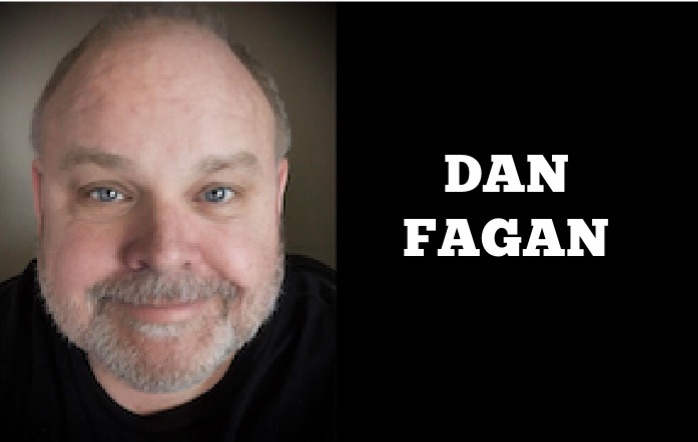
Dan Fagan: As each day passes, state leaders move further away from reality

By DAN FAGAN

It’s easy to drift away from believing what’s real, with all the lies, half-truths, and propaganda swirling around us. 

Without even realizing it, it’s common to fall for the constant deception, a little at a time. Before we know it, we’ve accepted so many things as true that are not. 

On Saturday, Ron Gillham, Republican state representative from Kenai, posted something on Facebook revealing how far from truth we’ve drifted, thanks to the fake news media, and liberal bloggers redefining reality.

Reading Gillham’s post felt like having cold water splashed on your face when first waking.

Media elites, Democrats, and Republicans-in-name-only insist Alaska is in the middle of a fiscal crisis and about to fall off a financial cliff.

They claim the only way out is to either raid the Earnings Reserve Account of the Permanent Fund, obliterate Big Oil’s bottom line with new investment-killing taxes, or go to war with the state’s private sector economy and workers, with new taxes on personal income. 

They also swear government has been cut to the bone after legislators slashed 40 percent from the state budget in recent years.  

But according to the think tank the Alaska Policy Forum, that 40 percent figure is nothing more than a myth.

“While legislators float the idea of creating personal taxes, research from the Alaska Policy Forum finds there have been no substantial cuts to Alaska State spending totals in nearly a decade,” APF reports. 

APF found state “expenses have simply been redistributed and paid from different state funds.” APF describes state leader’s actions as “fancy accounting instead of meaningful decreases.”  

But facts mean little in the world of liberal bloggers and media types serving the Juneau Swamp. Keep repeating the lie and soon enough people will assume it’s true.  

What’s actually true and rarely reported is Alaska spends more per capita on state government than any other state. Alaska also has the second highest per enrollee Medicaid spending in the nation. And only four other states spend more per pupil on education than Alaska and yet the state has some of the lowest testing scores in the nation.  

Alaska has an out-of-control spending problem and not enough state leaders have the courage to stand up to the power brokers that be and do something about it. 

Gillham gets it and with his Saturday Facebook post offered up a dose of reality and brought us back to a starting point. His ideas show how far we’ve allowed the media, Democrats, and Republicans-in-name-only to cause us to drift away from truth and reality.  

“The (House) majority keeps asking what it is you want?” posted Gillham. “Well, here is my list.” 

Gillham first called for “A full statutory dividend and the back pay of what was taken out of past dividends, all paid out of the earnings reserve account, where it remains a pass-through dividend and does not become an appropriation. “ 

Gillham’s call for following the statutory formula is clearly a reflection of what most Alaskans want. The promise to do so is what got Gov. Michael Dunleavy elected governor in the first place. 

How quickly so many were willing to abandon their starting point and cave to special interests and big-government elites. 

Gillham also called for any proposed changes to the dividend, or any new taxes must first be approved by voters. 

He wants a 15 percent cut across the board from all departments. 

Gillham wrote there should be no state funds for abortions and leaders should pass a constitutional spending cap. 

For dessert, Gillham threw in the idea of moving the legislative session to the road system and out of Juneau. 

The capital city’s eco system gives a decided home field advantage to lobbyists, labor union bosses, nonprofit cabal types, and the connected. 

What’s startling and eye-opening about Gillham’s post is it illustrates how far freedom-loving conservatives have drifted from their original starting point. 

It’s typical for conservatives to cave once organizations like The Anchorage Daily News, KTUU, and Alaska Public Media redefine reality. 

But most Alaskans support Gillham’s proposals. One day, they might just get their way. 

Dan Fagan hosts the number one rated morning drive talk show in Alaska on Newsradio 650 KENI. 

Neo-segregation: A Juneau teen club has ‘BIPOC only’ events as it divides students

28

Across the country, universities are adopting “safe spaces” for people of various gender and racial identities, and dorms for people of different ethnic backgrounds.

In Juneau, the historic Zach Gordon Teen Club now has a segregated event for teens who are black, indigenous, or persons of color — BIPOC, as it’s called. It appears to be based on the “safe space” model.

According to BestSchools.org, “Safe spaces are places reserved for marginalized individuals to come together and discuss their experiences. Marginalized groups may include women, people of color, survivors of abuse, and/or members of the LGBTQIA+ community. … Through safe spaces, colleges promote inclusion, diversity, and sensitivity among students.”

Apparently, the Zach Gordon Teen Club is taking it to heart. “BIPOC Teen Talk,” as the event is called, is just for some teens. Although not stated, it’s clear that white teens are not welcome, as it’s to be “A social gathering space for Black, Indigenous, and People (Teens) of Color (BIPOC).”

The event is sponsored by the Juneau Suicide Prevention Coalition and the Aware Shelter.

Read University of Alaska Fairbanks’ ‘Lavender Graduation’ is the only traditional ceremony this year

Alaska oil prices edge over $75

14

Alaska North Slope crude popped up over $75 a barrel last week, a price not seen since October, 2014, when prices were coming down from more than $100 a barrel that year. The most recent reported price is $75.88.

$75.88 is more than a 42 percent increase over what the State’s Department of Revenue had predicted in its spring forecast, which said the average price would be about $53.05 per barrel for the fiscal year ending on June 30. It’s also more bullish than what was predicted by Goldman Sachs in February, when it said Brent crude would rise to $75 a barrel in the third quarter. That prediction was well above what other analysts were saying over the winter.

Brent crude also closed above $75 and West Texas Intermediate closed at $73.08 on Friday.

Inventories of oil are down in the Lower 48, at the same time demand is surging. U.S. commercial crude oil inventories (excluding those in the Strategic Petroleum Reserve) decreased by 7.6 million barrels from the previous week, the Energy Information Administration reported for the week of June 18.

Futures traders are banking on prices surging soon, with dropping inventories and Americans traveling again.

Rare is the summer day when the State of Alaska reports as much as 500,000 barrels of Alaska North Slope crude flowing through the Trans Alaska Pipeline. Oil flow has averaged 477,426 barrels per day this month, while last June it averaged 393,387 barrels per day, and in June of 2019, it averaged 480,225 barrels per day.

Alaska Life Hack: Alaska Airlines will boost flights to NYC, but won’t fly there from LAX

3

Alaska Airlines is reorganizing its routes to better compete. The company will be offering 25 daily nonstop flights from West Coast cities to New York’s JFK, (12 flights) and Newark (13 fights.)

But those flights will not leave from Los Angeles International Airport. Instead, Alaska Airlines will exit the Los Angeles-JFK market and move those flights to other West Coast hubs. Starting Oct. 6, it will have 12 peak daily nonstops to JFK, using all of its allocated arrival and departure slots:

  • Seattle-JFK, 4 daily nonstops
  • San Francisco—JFK, 4 daily nonstops
  • Portland-JFK, 2 daily nonstops
  • San Diego-JFK, 2 daily nonstops
  • Seattle—Newark, 4 daily nonstops
  • Los Angeles-Newark, 4 daily nonstops
  • San Francisco-Newark, 3 daily nonstops
  • Portland-Newark, 1 daily nonstop
  • San Diego-Newark, 1 daily nonstop

The route between LAX and JFK is one of the most competitive in the country, with American, Delta, JetBlue, and United all serving that itinerary with flat beds. It’s a market that Alaska wasn’t competing in as well as it had hoped.

For those passengers with tickets for after that Oct. 6, the airline will be contacting them to help with new arrangements.

Former Alaska U.S. Sen. Mike Gravel passes

8

Former Alaska U.S. Sen. Mike Gravel died on Saturday at the age of 91, in Seaside, Calif. The cause of his death was myeloma.

A Democrat most of his life, he was Alaska’s senator from 1969 to 1981. He ran for president twice, in 2008 and 2020.

He was best known on the national scene for opposing the Vietnam War, trying to end the military draft, and reading the Pentagon Papers into the Congressional Record in 1971. Officially known as the Report of the Office of the Secretary of Defense Vietnam Task Force, the Pentagon Papers were stolen from the Defense Department by Daniel Ellsberg, who worked on the project for the Rand Corporation. The papers showed that the Johnson Administration had systematically lied to the public and Congress about the Vietnam War. The papers, once read into the Congressional Record, became fair game for newspapers to report.

Gravel was born and raised in Springfield, Mass. and moved to Alaska before statehood in the 1950s. He was looking for a “far-away place” where he could get a political start without having to have social or political connections, as he would have had to have in Massachusetts. He worked on the Alaska Railroad as a brakeman. He rose through the ranks of the Alaska Democratic Party, which was the dominant party in Alaska at the time. By 1957 he was a division chairman for Anchorage for the Democratic Central Committee and the next year he was president of the Alaska Young Democrats.

Soon after arriving in Alaska, he sold real estate and became a real estate developer, ran for the Alaska House of Representatives in 1962, and served in the House from 1963 until 1967. He served as Speaker of the House.

Gravel, whose full name was Maurice Robert Gravel, challenged Sen. Ernest Gruening in 1968 and beat him in the primary, and then went on to beat Elmer Rasmuson, banker and former mayor of Anchorage, in the general election. He played an important role in getting Congress to approve the Trans-Alaska Pipeline System in 1973.

He unsuccessfully ran for vice president in 1972, was reelected for his final term in the Senate in 1974, and then was defeated in the primary by Clark Gruening, who was defeated in the general election by U.S. Sen. Frank Murkowski, a Republican, in 1980.

After his unsuccessful bid for the presidency as a Democrat in 2008, Gravel registered as a Libertarian, but failed to get the nomination.

In 2019, he briefly launched a bid for president again. He gained the following of youthful Democratic Party radicals and idealists, who employed novel social media tactics to gain attention for the aging candidate. Some of his close associates founded the Gravel Institute to continue his work in pushing the concept of direct democracy, as an alternative to representative democracy.

He also was an advocate for legalization of marijuana and was for a time president of a marijuana startup called KUSH, which made cannabis-infused products.

Read: Mike Gravel, former Alaska senator, exploring run for president at 88

An exhaustive biography of his life can be found at Wikipedia.

Dimitri Lanahan, pointed paintball gun at police, was on the lam from halfway house

The 23-year-old man shot dead by Alaska State Troopers on Friday was on the lam from the Cordova Center in Anchorage and a warrant had been issued for his arrest in April. He had a short but troubled life, much of it spent incarcerated.

Troopers saw a silver Jeep weaving recklessly through Gold Rush Estates Trailer Park in Fairbanks at about 2:40 am. The Jeep nearly hit a marked Trooper vehicle, forcing the Trooper to take evasive action. A chase ensued and the Jeep driver led the Trooper to a wooded area between the Fairbanks Airport and the Tanana River flood dike, where Dimitri Lanahan exited the Jeep and pointed what appeared to be an assault rifle at the Trooper.

A Trooper shot Lanahan, who was declared dead at the scene.

The rifle used by Lanahan turned out to be a replica, a paintball gun designed to look like a real rifle. The Jeep and the license plates turned out to have been stolen in Anchorage.

Lanahan is from Kodiak, where he attended junior high school; he spent time as an inmate at the McLaughlin Youth Center in Anchorage. He had most recently been convicted of Assault III, Criminal Mischief, Violating Conditions of Release, and False Information. 

The Alaska Bureau of Investigation is conducting an investigation into the incident; once complete, their investigation will then be reviewed by the Alaska Office of Special Prosecutions. The name of the trooper who shot Lanahan will be released after 72 hours per department policy.

Alaska Lemonade Day — it’s a thing in the 49th State

5

Who knew? Alaska has an Alaska Lemonade Day, as demonstrated by Macie Miller, one busy entrepreneur today in Wasilla. Miller is selling the favorite summertime refreshment at Wasilla Lake and keeping alive a long tradition of young entrepreneurs.

As part of a program of the Alaska Small Business Development Center, and in partnership with the UAA Business Enterprise Institute, Lemonade Day Alaska is an annual Alaskan experiential event that teaches K-12 children how to plan and launch their own business through a tried and true method: A lemonade stand.

Since 2011, more than 18,000 kids in over 70 Alaska communities have sold over $5 million worth of lemonade, the program reports. National Lemonade Day comes later in August in hotter parts of the country, but for Alaska, mid-summer is a winning time.

For more information about lemonade stands across the state today, visit lemonadeday.org/alaska.

Support young business leaders by patronizing their lemonade stands, wherever fine lemonade is sold.

Ted Cruz, Susan Collins, and other senators file bill to end mask mandates on airlines

21

U.S. Sens. Ted Cruz (R-Texas), Susan Collins (R-Maine), Jerry Moran (R-Kan.), Roger Wicker (R-Miss.), Cynthia Lummis (R-Wyo.), and Marsha Blackburn (R-Tenn.) introduced a Senate resolution this week calling on the Biden Administration’s Centers for Disease Control and Prevention to end its mask mandate for fully vaccinated individuals on public transportation throughout the United States-including at airports, on commercial airplanes, on buses, and rail systems.

“Over 150 million people in the United States are fully vaccinated and mask mandates have been lifted across the country. But the CDC inexplicably still hasn’t lifted the mask mandate for public transportation. It’s long past time for President Biden and the CDC to follow the science and end this mask mandate for fully vaccinated individuals. Americans should be able to travel to celebrate Independence Day with their friends and loved ones without having to follow an outdated and unnecessary mandate,” Cruz said.

“The CDC recently released recommendations significantly curtailing mask requirements both in indoor and outdoor settings. It makes no sense that someone can go to a restaurant without wearing a mask, but they cannot fly on an airplane without one even though it has a far better ventilation system,” Collins said.

Transportation Safety Administration mask mandates have led to numerous incidents on flights, where cabin crews have had to deal with passengers who won’t comply. Flight attendants have even experienced violence, and now the TSA is starting a its self-defense training course for flight crews. 

Sen. Collins said that she had recently spoken with two flight attendants about the mask mandate for air travel and said one of them was frightened about what would happen if she tries to enforce the mandate.

Sen. Moran said: “Vaccination rates in the U.S. have helped end this pandemic and return our lives to normal. Requiring vaccinated passengers on trains and airplanes to continue wearing masks doesn’t follow the science, and the CDC and TSA should update their guidance to reflect their own findings and help us safely return travel to normal.”

Last Monday, a frequent flier filed a lawsuit against seven airlines: Southwest, Alaska, Allegiant, Delta, Frontier, JetBlue, and Spirit. Lucas Wall accused the airlines of discriminating against travelers who can’t wear masks because of medical conditions, including his own anxiety disorder. Wall was prevented from boarding a Southwest Airlines flight leaving Orlando. Wall is also suing President Joe Biden, the Centers for Disease Control and Prevention, TSA, and the Department of Homeland Security.

Sen. Blackburn said that President Joe Biden has lectured people to “follow the science.” She said, “It’s clear that this rhetoric was just another way for the radical left and big government to control Americans. Experts have been clear for months – if you are vaccinated you do not need to wear a mask. It’s time we end these absurd political charades and start following the science.”

Sen. Lummis said that Americans are going back to normal. “Wyoming and most other states lifted their mask mandate months ago. Vaccination rates are increasing and COVID cases are decreasing. The only place most Americans are wearing masks now is in airports and on airplanes. Secretary Buttigieg even said that the mandate is not actually about the science, but instead about ‘respect.’ If there’s no science backing it up, it’s time for the mandate to go.”

Read the full text of the resolution here.

Read Unfriendly skies: Airlines’ poor hospitality is reaching the breaking point