A large portion of Alaska’s Operating Budget is the Mental Health Budget, which is passed separately and sailed without controversy through Conference Committee this month during Special Session 1.
Gov. Mike Dunleavy is now pleading with the House Majority to free the Mental Health Budget, which has not yet not transmitted to him for his signature.
A letter sent to Sen. Peter Micciche and House Speaker Louise Stutes from Dunleavy says that time is of the essence.
“CCS HB 71 passed the legislature on June 16 with the requisite votes necessary for an immediate effective date. I understand the bill has been enrolled and is ready for transmittal. While the legislature continues its negotiations on the State’s FY 2022 operating and capital budget, there is no need to delay funding for the state’s integrated comprehensive mental health programs. It is my intent to sign the legislation once I’ve received the bill,” he said.
The governor’s proposed Mental Health Budget had $153 million in unrestricted general funds, $63.4 million in designated general funds, and $16.7 million in Mental Health Trust Authority funds.
HB 71, as it came out of Conference Committee, totals $247 million, and was approved by the Senate unanimously, while in the House the vote was 37-2, nearly unanimous, with Rep. Sara Rasmussen absent.
The Mental Health Budget pays for numerous programs that could continue even in the event of a shutdown by the Legislature, due to the defective Operating Budget that needs an effective date clause. The Mental Health programs are required by a court settlement from long ago so that Alaska’s mentally ill or mentally disabled residents would have the care they need.
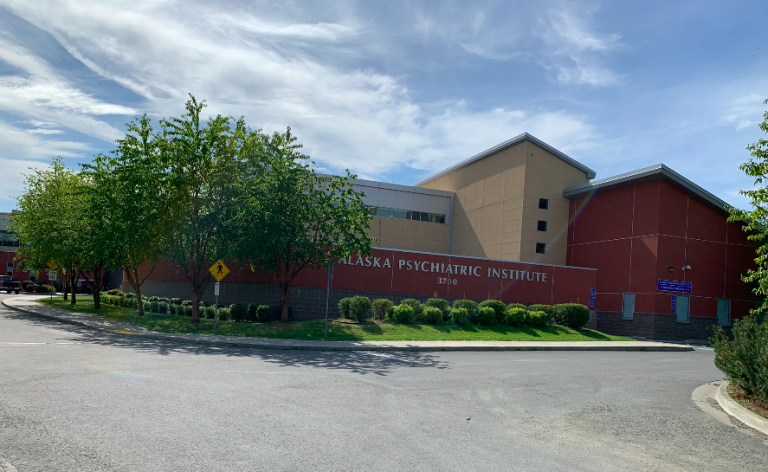
“The budget contains funding for Medicaid, senior and disability services, community residential centers, rehabilitation services, recidivism grants, therapeutic courts, juvenile justice programs, Alaska Psychiatric Institute, the Council on Domestic Violence and Sexual Assault, and other vital programs,” the governor wrote.
Trustees of the Alaska Mental Health Trust Authority approve operating and capital budgets in two-year cycles, with annual recommendations to the governor and Legislature.
And although the trustees are authorized to spend the Trust’s income without legislative appropriation, they are required by statute to recommend to the governor and Legislature operating and capital budgets for state general funds to support the Comprehensive Integrated Mental Health Program. The funds are disbursed throughout many agencies in the government and nonprofit sector.
The governor must then propose and the Legislature must pass a separate bill, known as the Mental Health Budget, which includes budgets for Trust funds and state general funds.
But for some reason, the bill has not been transmitted to the Governor’s Office for his signature.
(Editor’s note: This is the ninth in a series by Mark Hamilton about the history of the Pebble Project in Alaska.)
I could probably tell how old you are by asking you to remember which of the hysteria you best recall.
Was it the killer bee invasion? (No, not the murder hornets).
How about the coming ice age? (Careful, remembering that one makes you pretty old).
A younger person might remember the ozone depletion, acid rain, and a flooding world. (Climate change has been unsuccessfully predicted for at least 20 years with every doomsday forecasted now history).
Remember that the Earth would run out of oil in 10 years? (That one has been predicted about every 10 years since 1960.)
Spreading hysteria from dubious investigations has been around a long time but lacked the global reach and mind-boggling speed with which these narratives of fear move today. In the earlier cases, with which I began this discussion, they were sufficiently slow that they were overcome with newer and opposing research and investigation. Facts mattered, and very importantly, no one (or at least very few) had gone on record passionately endorsing the hysteria. No tweets to haunt your jumping the gun, no video of you with a sign promising the end of life as we know it. Whether or not you believed the hysteria, it was not part of you.
Today’s doomsday predictions are problematic. Typically, they involve virtually no data; they are narratives inviting people with legitimate concerns about important issues to join the movement to halt development or operation or planning of a particular project or event.
The formula is a simple one: “This [project/operation/event] will [destroy/abuse/disenfranchise] unless you send us money.”
This is a seductive and lucrative approach. Many of us care about the environment, the animals, the ocean, human dignity and so forth, through a list of truly important issues of our time. Unfortunately, our caring makes us suckers for the emotional snake oil salesmen of fear and doom.
The cyber echo confronts us at every turn, proclaiming the victimization of the land, the water, the animal, the culture, the gender, and so forth. The combination of emotion and repetitive viewings tempts us to agree or comply with absolutely no assessment of the data upon which the fear was formulated.
There is no data, nothing to examine, nothing to refute. We respond to the cry of “Wolf!” without the ability to visit the flock to see for ourselves. This version of the shepherd boy is not held accountable despite decades of data refuting the position, or decades of the absence of the predictions coming to pass.
Sadly, the approach will not change; there is simply too much money and too much virtue signaling associated with the emotional appeal.
Recalling my critique of the villagers’ ultimate reaction, the issues are important. We cannot fail to show up. We can and must demand some accountability. Don’t assert to me, demonstrate. Show me why this particular issue needs my support. You may not have my money, my “like,” or my self-loathing. And, no I won’t sign your petition—by the way, do you even live here?
A quick note on petitions: Don’t wait to oppose the effort when it gets on the ballot. Set up your own table outside the mall with a simple sign that reads, “Before You Sign,” with a pamphlet outlining the argument against the petition. People are cajoled into signing with the come-on: Do you care about the environment? However reluctant to sign up, many will do so just to avoid seeming that they are not interested in the environment, or whatever else is the issue at hand. Having an alternative “to learn more” gets them off the hook.
A quick check to see if you should be frightened is very easy. Ask yourself, “If 10% of the narrative of fear were accurate, could this project ever be permitted?” There is nothing to fear. The permitting process is solid. It’s called the National Environmental Policy Act (NEPA).
I’ll discuss this process in upcoming columns because NEPA will always be followed and is your insurance against being Pebbled.
The “Pebbled” series at Must Read Alaska is authored by Mark Hamilton. After 31 years of service to this nation, Hamilton retired as a Major General with the U. S. Army in July of 1998. He served for 12 years as President of University of Alaska, and is now President Emeritus.He worked for the Pebble Partnership for three years before retiring.The series continues next week.
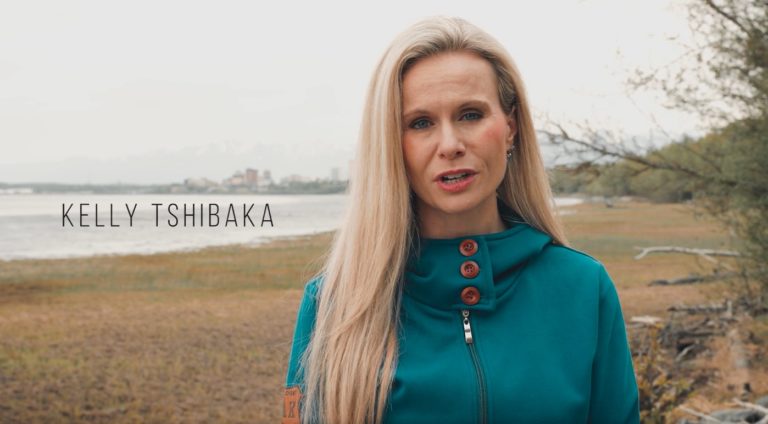
The board of the Kenai Peninsula Republican Women’s Club has voted unanimously on Thursday to endorse Kelly Tshibaka for U.S. Senate and to request the State Central Committee of the Alaska Republican Party do the same.
The announcement was made on the heels of news that District 21 Republicans on Wednesday had overwhelmingly voted to endorse Tshibaka during the district meeting in Anchorage.
The KPRW endorsement makes four women’s clubs associated with the Republican Party to have announced endorsements for Tshibaka — the Republican Women of the Kenai, Anchorage Republican Women’s Club, and Valley Republican Women of Alaska are the other three.
Tshibaka is running as a Republican against Murkowski, who has held the prestigious office since 2002, when former Sen. Frank Murkowski appointed her to the seat, as he won the governor’s race.
The state central committee meets on July 10 in Fairbanks and there appears to be a push by Republican women’s clubs to have the party endorse Tshibaka. Both Kenai clubs have passed a resolution asking the State Central Committee to endorse her.
At its last meeting , the Alaska Republican Party passed a resolution by an overwhelming majority(77 percent), censuring Murkowski, asking her to not run as a Republican, and withdrawing all party resources from her. That means no party club, affiliate group, or state party officer can aid Murkowski’s reelection campaign. The party also, at the same March meeting, resolved to find someone to run against Murkowski.
Tshibaka won former President Donald Trump’s endorsement last week.
President Joe Biden and the “Gang of 10” U.S. senators announced they had come to an agreement on an infrastructure spending package.
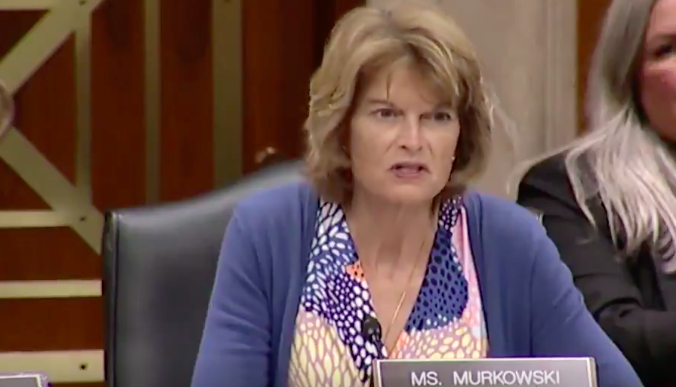
With the support of senators including Sen. Lisa Murkowski of Alaska, Joe Manchin of West Virginia, Susan Collins of Maine, and Mitt Romney of Utah, Biden stood in the driveway of the White House and told reporters, “We have a deal. I clearly didn’t get all I wanted. They gave more than I think maybe they were inclined to give in the first place.”
The details of the deal are not clear, except that it looks to spent $1.2 trillion over eight years, with nearly $1 trillion to be spent within the first five years.
An estimated $579 billion would be for roads, bridges, and tunnels, and it’s unclear how much of the day-care spending was preserved as infrastructure, as requested by hardline Democrats trying to shove social programs through as a new definition of “infrastructure.”
One document shows some of the spending commitments to be voted on by the full Senate:
Repurpose unused relief funds from 2020 emergency relief legislation
State and local investment in broadband infrastructure
Allow states to sell or purchase unused toll credits for infrastrucrue
Extend expiring customs user fees
Reinstate Superfund fees for chemicals
5G spectrum auction proceeds
Extend mandatory sequester
Strategic petroleum reserve sale
Public-private partnerships, private activity bonds, direct pay bonds and asset recycling for infrastructure investment
Macroeconomic impact of infrastructure investment
President Donald Trump presented an infrastructure plan to Congress in February 2018. It had $200 billion in federal funding and $1.5 trillion from the private sector. Democrats opposed the plan because of its reliance on state and local funding and private investments.
In 2020, the Trump Administration offered a $1 trillion infrastructure plan. The mainstream media then reported it as a campaign gimmick during a presidential election year.
Anchorage District 21 Republicans endorsed Kelly Tshibaka for U.S. Senate at its meeting on Wednesday. It was the first in-person meeting of the year.
Tshibaka is running against Sen. Lisa Murkowski. She has earned the endorsement of three Republican women’s clubs in the state and District 21 is the first district to also endorse Tshibaka.
District 21 is the old Anchorage establishment district, with longtime party members. It is considered a very moderate district, whose state representative is Democrat Matt Claman. The chair of the district is Win Faulkner. The vote was not unanimous but was overwhelmingly in support of Tshibaka.
Tshibaka last week announced that she had won the endorsement of former President Donald Trump.
Rep. Geran Tarr took to social media on Wednesday to describe to her friends and constituents the bullying tactics used by members of her own caucus and the Alaska Democratic Party. Her post shows just how involved the party is in trying to make legislators vote certain ways. It’s a 180-degree difference from the Alaska Republican Party, which works to elect lawmakers and then hopes for the best.
Tarr described at length how she had been bullied by Rep. Zack Fields and leftist blogger Jeff Landfield. The two men were part of a leg-wrestling, pingpong and beer party in the Capitol complex this winter while the Capitol was closed to the public.
Tarr on Wednesday said that she would not, in fact, be accepting per diem for special session, just as she did not in 2019. She has issues with the way the Legislative Council has interpreted statute, which says no per diem can be awarded if the budget has not passed. The council has decided that after the budget is passed, all the back-pay per diem can then be paid, and Tarr believes this is flouting the law.
But more to the point, she explained how Democrats have bullied her, including The Alaska Center for the Environment, a political group that she had formerly considered a friend; Tarr is a hard-left environmentalist with values in line with the Alaska Center for the Environment, a surrogate group for the Alaska Democratic Party.
“When I wouldn’t join a caucus this year because the very dysfunctionality you’re seeing right now and the unwillingness of some of my colleagues to compromise, my colleague Rep. Zach Fields, made up a story that I was upset about a committee chair position. This is a position I had previously suggested a Republican for in an effort to get the legislature organized,” Tarr explained.
“First, he tried to get at least two colleagues to call people who had supported me in an effort to put pressure on me. I’m grateful that those two colleagues said no to that kind of nonsense.
“Then, since that wasn’t low enough, he called the Alaska Democratic Party, a union leader, and a prominent Democratic leader to put pressure on me. This was pretty disappointing as I felt they did put pressure on me and didn’t even ask me what the real story was.
“Then, since that wasn’t low enough, he tried to make it about race, and called the NAACP, the Alaska Black Caucus, and some neighbors. This was a mixed bag as some believed his made up story, but neighbors knew immediately it was nonsense,” Tarr wrote.
The Alaska Black Caucus was just awarded $1.1 million by the Anchorage Assembly to do this kind of work.
“Then, since that wasn’t low enough, he got The Alaska Center to start a phone bank into our district and continue to spread the made up story. This was extremely disappointing as this is an organization where I’ve known the executive director for over 20 years and have worked with closely in my legislative work. I didn’t even get a courtesy call to see if the story he was circulating was true, they just started making calls,” Tarr continued.
“The outcome here was something that lifted my spirits in a way I can hardly describe. Every conversation I had with neighbors included things like we trust you, we know you’re working hard for our area, we know you’re doing the right thing, and you go girl. My relationships with you are important to me and are ones where I’ve worked hard to build trust and the trust you placed in me was an incredible feeling.
“Then, Jeff Landfield, never to be outdone in the category of misogynistic behavior, wrote a blog post spreading the lie and calling me racist. This was very upsetting, not because he said things about me, he always does that, but because my brand new colleague and the Chair of the Committee being referenced was now involved in this nonsense. Instead of just being able to celebrate his accomplishment as a new legislator, now he was swept up in something that wasn’t even true. This was really upsetting to me and I shared that with Speaker Stutes. Her idea was to call Jeff into her office so I could tell the truth and she thought he would issue a retraction or an apology. I never believed he would do that, but the fact that she was willing to stand up for me was something that had never happened before so I took her up on the opportunity. The three of us sat in the Speaker’s office where both she and I explained this had nothing to do with a committee chair and everything to do with me trying to create a more functioning legislature. I wasn’t surprised at all when his response was that he wouldn’t be issuing a retraction or an apology because he said he had tried to call my office the day it happened and since he didn’t hear back for me he felt comfortable with what he wrote. I was so grateful my colleague accepted my apology for this nonsense and even more grateful later when he let me write him a letter of recommendation for a training opportunity. I would suggest this is one of the reasons that reading the blogs is not a good use of your time.”
The State Division of Personnel released a list on Wednesday afternoon of numerous state functions that will not stop even during a government shutdown created by the dysfunction in the Legislature. Many of the functions to remain active are related to public safety, but other workers, who are paid through various secondary means, will also stay on duty.
As the second special session opened in Wednesday, it appears more likely that Speaker Louise Stutes would not be able to lead her body to an agreement before the July 1 shutdown date.
The House is in disarray over the budget’s effective date clause and the Constitutional Budget Reserve, and Stutes has just six days to repair the situation. This is her first year as Speaker. The Republican House members, who are in the minority, appear resolute in their stance that the Constitutional Budget Reserve should not be used to bludgeon certain districts in order to get certain legislators to vote on a Permanent Fund dividend that is less than one third of the legally set “statutory dividend.”
Many Alaskans will not really notice much difference during a shutdown, at least for a while, if their interactions with government are few and far between. They may see more people at their favorite fishing spot, but unless they interact with state services, things may appear normal.
Unlike the dire predictions of Sen. Natasha Von Imhof a week ago, people will not bleed along the side of the road after an accident because Troopers and medics won’t arrive, and bridges will not collapse on July 1.
Von Imhof warned last week:
“I hope the folks at home fully understand the consequences of today, the action. A no vote means the budget doesn’t pass. Twenty-two thousand people, state workers, will be out of work July 1. That does not include the tens of thousands of teachers and university employees in the state of Alaska. Everyone at a job will not be paid … Hey, you drive over a bridge, I suggest you hold your breath and pray, ’cause it could fall on ya, because no one’s going to be around to fix it. If you want a permit to mine? Nope, not gonna happen. If you’re on food stamps and you call up and ask someone to process your application, no one will answer the phone. If you’re on Medicaid and you need emergency surgery, no one will authorize it because no one will answer the phone. Medicaid will be shut down. You call a state Trooper, I’m sorry, you’ll be sitting by the side of the road bleeding.”
None of that is true. It is legislative theater. The entire clip can be seen here:
This week, Von Imhof blamed the governor for not signing the budget that passed (without an appropriate effective date) by saying, “Gov. Dunleavy not doing everything in his power to keep his own government operational is like having an atheistic Pope.”
But apparently, Dunleavy is doing much to keep government operational. In the list released Wednesday, all emergency functions will continue, and so will justice, corrections, and even the investment managers for the Alaska Permanent Fund Corporation. Things like the Office of Archaeology will be closed, to be certain.
In the Department of Administration, for example, the Public Defender Agency will remain open, along with Office of Public Advocacy and the satellite service running the Emergency Broadcast System.
There will be reduced staffing for Retirement and Benefits, the Division of Motor Vehicles, which will have workers to support law enforcement and courts, and reduced statewide and department support services necessary to fulfill critical functions, such as IT support, Personnel, HR, Finance.
The only hearings that will be scheduled in the Office of Administrative Hearings will be for child support, Medicaid and public assistance, and substantiation of child abuse and neglect.
Most functions of the Division of Motor Vehicles, and the Alaska Public Offices Commission will be closed.
In the Department of Commerce, only these services are scheduled to go dark: Power Cost Equalization Payments, Alaska Energy Authority – Project Development, Alternative Energy and Efficiency Alaska Energy Authority Rural Energy Assistance, the Alaska Seafood Marketing Institute, Investments, Tourism Marketing, Economic Development, Pass Through Payments (Fisheries Taxes, Payment in Lieu of Taxes, National Forest Receipts), Serve Alaska/AmeriCorps, Corporations, Business and Professional Licensing – new licenses and other functions not related to life, health, safety, Alcohol and Marijuana Control Office, excluding enforcement, revocations, and suspensions.
In the Department of Corrections, just a few services are being stopped July 1, including: Recidivism Reduction Grants, Domestic Violence Program, Education Programs, Vocational Education Programs, and Chaplaincy Services.
In the Department of Fish and Game, a small number of services will close: EVOS Trustee Council, Habitat, Advisory Committees, Hunter Education, and Public Shooting Ranges. Most other functions of Fish and Game come from fees, so they pay for themselves outside of the Operating Budget.
As for Health and Social Services, most functions are open including Medicaid (Federal Mandate), General Relief/Temporary Assisted Living. Emergency Programs. Essential Newborn Health Screening, Juvenile Justice, Child Protective Services – foster care; front line case workers (Federal Mandate) Alaska, Psychiatric Institute (federal component through Medicaid), Pioneer Homes (federal component through Medicaid).
Health and Social Services offices that will not operate during the shutdown are: Community Initiative Matching Grants, Human Services Community Matching Grant, Assessment and Planning, Quality Assurance and Audit, Children’s Services Training, Senior Residential Services, Senior Benefits Payment Program, Community Health Grants, Emergency Medical Services Grants Tribal Assistance Programs, Residential Licensing – new licenses, Permanent Fund Dividend Hold Harmless, Early Intervention / Learning Programs.
In the Department of Labor, the offices to remain open include Unemployment Insurance (Federal Mandate), Disability Determination (for Social Security benefits).
Labor Department closures are things like Alaska Vocational Technical Center (AVTEC) except existing family housing, Labor Market Information, Vocational Rehabilitation, Wage and Hour Administration, Workers’ Compensation Appeals Commission Workforce Services (Alaska Job Centers)
The Department of Law criminal prosecutionsand child protection divisions will be fully operational during a shutdown. Other functions may be reduced partially.
In the Department of Natural Resources, the only offices to be shut down are: Office of History and Archaeology, Agriculture Revolving Loan Program, North Latitude Plant Material Center, EVOS Trustee Council Projects, Public Information Center, Recorder’s Office, Office of Project Management & Permitting Agriculture.
In the Department of Public Safety, just a few areas will be closed during the shutdown: Alaska Wing Civil Air Patrol, Alaska Police Standards Council, Alaska Fire Standards Council.
In the Department of Transportation, safety and commerce functions continue. All international airports remain open, and airport police and firefighters will be on duty. Also functioning will be State of Alaska Part 139 and Rural Airport Operations (Federal Mandate), Alaska Marine Highway System, Emergency/Critical Road Maintenance, Traffic Signal Control Contracts, State Equipment Fleet Operations Support, Police/Fire/Other critical services, and the Whittier Tunnel (Normal Operations, Limited Maintenance Activities)
The Anchorage Assembly on Tuesday passed a resolution thanking former Police Chief Justin Doll. They passed another one thanking former Fire Chief Jodie Hettrick. They thanked Robin Ward, the manager of the Heritage Land Bank. All were retiring with the changing of the guard in Anchorage, as incoming Mayor Dave Bronson takes the reins. All of those resolutions were in the Assembly meeting packet.
But then there was the unnumbered resolution, slipped in at the last minute.
The Anchorage Assembly didn’t put it on the agenda for Tuesday’s meeting. And neither the members nor the Municipal Clerk included the flowery resolution in the meeting packet available online. It was a secret.
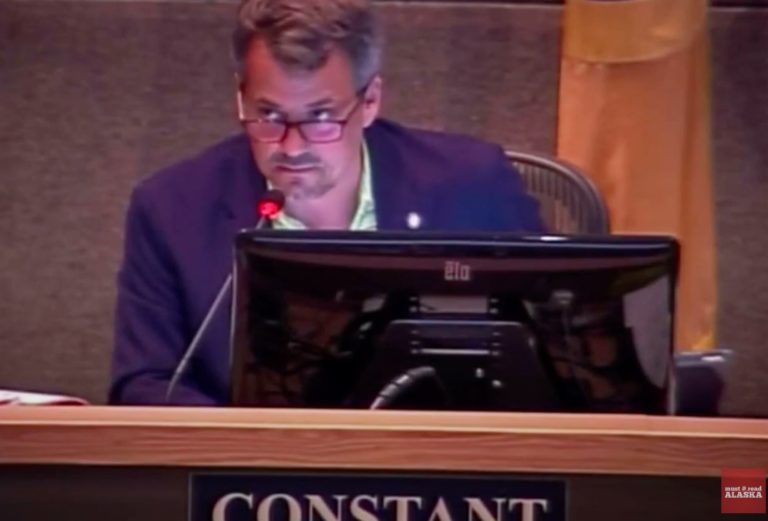
The public sitting in the audience never saw it coming, wasn’t prepared to give public testimony about whether it was appropriate, or even put up more than a rather solitary “boo.” The public cannot even see a copy of this particular resolution because it’s still invisible. You can hear it read aloud by Assemblyman Chris Constant below.
The unannounced, but carefully planned glowing endorsement of former disgraced Mayor Ethan Berkowitz and Acting Mayor Austin Quinn-Davidson was read into the record and approved as a resolution.
Berkowitz resigned in October after a scandal involving a former news anchor and some nude selfies. Quinn-Davidson, who was Assembly chair, took over as mayor and served for eight months. During their combined reign, Anchorage slipped into an economic spiral that is still impacting the community today. The Assembly’s Leftist majority, led by then Acting Chair Felix Rivera, blocked election for a new mayor and instead, Anchorage lived under an acting mayor, an acting Assembly chair, and a vacant Assembly seat for eight months.
The Assembly, in its recognition of the Berkowitz-Quinn-Davidson era didn’t give each of them their own recognition, but combined the resolution into one laudatory summation of all the good things that Berkowitz and Quinn-Davidson had done for Anchorage, as though they were one administration.
Quinn-Davidson stepped to the podium to accept. For the first time in over 10 months, the plexiglas sneeze barrier that the Assembly had put in front of the podium was gone, and Quinn Davidson was there to receive the thanks of her colleagues on the Assembly, where she will return to her unfilled seat.
Assemblyman Constant had to remind the audience that it was inappropriate to boo as he read the long list of accomplishments ascribed to the two mayors. At the end of the presentation, there was polite applause from mainly the staff in attendance.
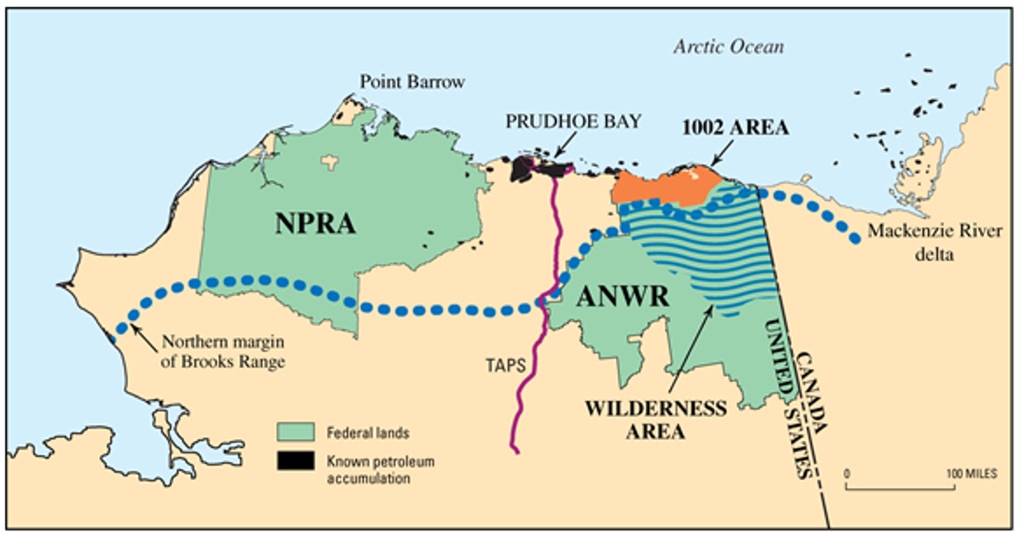
Although drilling and exploring in the 1002 area of the Arctic National Wildlife Refuge still seems like a far-off prospect, the Alaska Industrial Development and Export Authority, which owns many of the leases that were sold by the federal government last year, is going ahead with seismic studies, with the thought that someday it may be able to sell those leases.
There were some members of the public who were less than pleased. Rick Steiner, a consultant with Oasis Earth Environmental Sustainability and long a foe of oil, said the leases are not valid because AIDEA isn’t the kind of agency mentioned as appropriate to bid on the leases. He said only publicly traded agencies and municipalities were mentioned in the ANWR legislation, not a public-private corporation like AIDEA. He was wrong, of course, many types of corporations or agencies that have public oversight may participate.
But Rick Whitbeck, of Power the Future, gave an epic statement during his public testimony, saying that oil and gas will be with us for a long time.
“To my eco-extremist friends on the line, let me be clear,” Whitbeck said. “AIDEA’s leases are binding, regardless of how you feel. Feelings don’t override facts. Feelings shouldn’t change good policy, nor should feelings affect what AIDEA’s board does today.”
He then asked the board to pass the resolution, numbered G21-18, and “continue to fight for Alaska’s jobs and energy future, and continue to make prudent decisions in the best interests of our state. “
Before he was done, he reminded the Left that he knew they were listening on the line:
“And to my friends who are members of the radical environmental movement in this state, oil and gas isn’t going away anytime soon. And when you receive your next Permanent Fund Dividend, make sure to thank an energy worker. They’re bound to tell you, You’re Fracking Welcome!! Have a great day, everyone.”
The resolution passed unanimously. AIDEA will spend $1.5 million on seismic studies.