By the Senate Republican Caucus
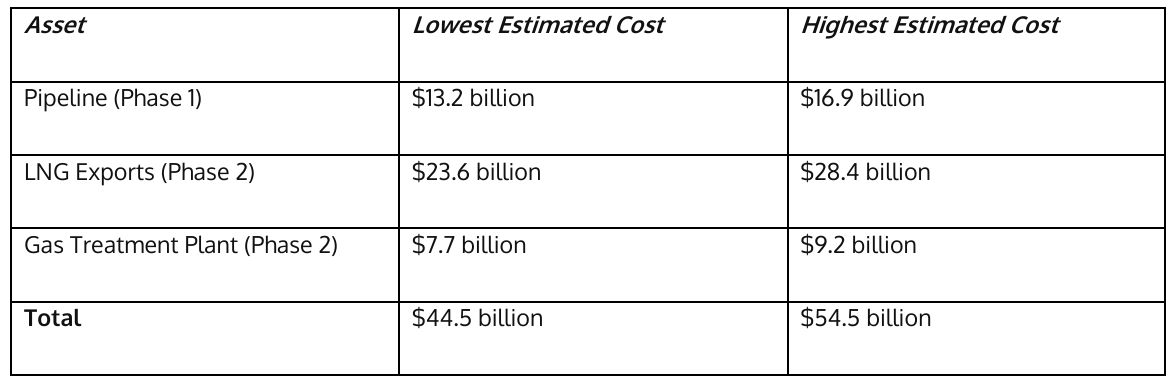
On June 3, 2026, Glenfarne (the company spearheading the development and construction of the Alaska LNG Project, provided detailed financial information in the Senate Finance Committee meeting regarding the cost and potential tax structure of the megaproject.
Glenfarne has emphasized their commitment to ensuring Alaskans receive the lowest possible cost of gas while simultaneously maximizing the flow of natural gas through the pipeline.
There is no cost overrun risk to Alaskan ratepayers. Glenfarne is entirely financially responsible for the project, with no risk to the state or local communities, and has publicly stated on the record in the Senate Finance Committee that they support language within the current bill, SB 2001, protecting Alaskan consumers.
According to Glenfarne, “the collective goal is to reach the lowest cost of gas for the rate payers of Alaska.”
Phase One will provide a stable supply of energy to Southcentral, offsetting the decreasing supply from Cook Inlet and providing an alternative to LNG imports. The gas would be provided in cooperation with Enstar Natural Gas Company at a daily contract price of $16 per million cubic feet of gas. This benefits communities across the state, because as Railbelt prices decline, the Power Cost Equalization program will reduce rural energy prices as well.

Phase Two will develop the Alaska LNG export facility, which would lower costs for Alaskans by allowing entities to purchase Alaska gas domestically and abroad, spreading project costs across multiple consumers. This has the potential to reduce the Daily Contract price to $5 per MMcf for Alaskan families and businesses.
Throughout the project development, in-state Alaskans consumers will receive priority right for gas production.
The AK LNG Project requires tax certainty in order for development to proceed. The Alternative Value Tax (AVT) proposed in SB 2001 outlines revenue streams and enhances certainty by eliminating the costly and time-consuming property valuation process, therefore reducing the risk of valuation lawsuits as currently seen with the Trans Alaska Pipeline.
SB 2001 bases state and local revenue on the volume of gas pumped through the pipeline. The breakdown is simple: the more gas produced and sold, the more benefits to Alaskans.
According to the Alaska Department of Revenue, the tax structure outlined in SB 2001 would unlock:
- More than $10 billion in energy savings to Alaska families and businesses, up to $1,450 in annual energy savings
per residence. - 12,000 construction jobs
- $1.4 billion in statewide rural energy investment
- $22.5 billion in state revenue
- $4.0 billion in local revenue to boroughs and municipalities
Without tax reform, the project will not be possible.
If the State of Alaska does not coordinate with Glenfarne in the development of the Alaska LNG Project, we will remain trapped in the current status quo and Alaskans will see zero benefits.
The Alaska LNG Project is a once in a generation opportunity that, if successful, brings increased prosperity and opportunity for our children and grandchildren.
It is an opportunity the Senate Republican Caucus refuses to waste.
We encourage our colleagues in both the legislative and executive branches to advance legislation creating a stable tax and business environment allowing the AK LNG Project to move forward unlocking the promise of the Great Land.