Wednesday, May 6, 2026
Home Blog Page 978

Breakthrough cases rise dramatically in Alaska

84

In October, the vaccine breakthrough cases of Covid-19 comprised nearly 39 percent of all known cases, according to a State of Alaska report.

As the number of vaccinated people continues to rise in Alaska, the virus is breaking through the vaccine at an accelerating rate. In October, 6,984 of the 18,083 0- more than a third — of documented cases of Covid were among those who were fully vaccinated.

In September, the state reported, “The incidence of COVID-19 among vaccinated persons has remained consistently lower than among persons who were not unvaccinated.”

But the percentage of cases that are breakthroughs was already rising and rose even more, from 23 percent in June to nearly 39 percent in October.

Is it due to Delta?

In July, the CDC said that vaccine effectiveness dropped nearly 30 percentage points when the Delta variant became the dominant variant. The CDC said in December of 2020 that the Pfizer-BioNTech and Moderna mRNA COVID-19 vaccines were “approximately 90% effective in preventing symptomatic and asymptomatic infection with SARS-CoV-2, the virus that causes COVID-19, in real-world conditions.” Study details here.

Delta is the dominate strain in Alaska.

The CDC now reports that:

  • “Vaccine breakthrough infections are expected. COVID-19 vaccines are effective at preventing most infections. However, like other vaccines, they are not 100% effective.
  • “Fully vaccinated people with a vaccine breakthrough infection are less likely to develop serious illness than those who are unvaccinated and get COVID-19.
  • “Even when fully vaccinated people develop symptoms, they tend to be less severe symptoms than in unvaccinated people. This means they are much less likely to be hospitalized or die than people who are not vaccinated.
  • “People who get vaccine breakthrough infections can be contagious.”

269 hospitalizations among fully vaccinated Alaskans were documented through Oct. 31, 2021 and another 82 hospitalizations were documented among partially vaccinated Alaska residents.

Fully vaccinated persons were much less likely to be hospitalized due to Covid-19 than persons who were unvaccinated, the State reported.

The median age among those hospitalized who were fully vaccinated was 72.4 years, and the median age of those who were not fully vaccinated was 62.0 years, or 10.5 years younger.

In the December Epidemiology Bulletin published by the Department of Health and Social Services, Alaska’s Covid-19 death rate increased substantially following arrival of the Delta variant.

Alaska’s death rates remain highest in males, older adults, and those with underlying medical conditions. Chronic cardio-respiratory diseases and diabetes mellitus were the most common underlying medical conditions identified among those whose deaths were attributed to Covid.

Approximately 67 percent of Alaskan adults are estimated to have underlying health conditions that put them at increased risk of severe Covid-19 illness, including obesity, diabetes, chronic obstructive lung disease, heart disease, chronic kidney disease and current or past smoking, the State reports.

Lawmakers, former lawmakers form to oppose constitutional convention

An unlikely alliance for hard-core Democrats and moderate Republicans has formed a political action group to oppose a constitutional convention. The question about whether there should be a convention will be on the November, 2022 ballot, as it appears every 10 years.

The group, called Defend our Constitution, has many supporters of Bill Walker for governor, including Democrat mastermind Bruce Botelho, Republican former Sen. Cathy Giessel, AFL-CIO President Joelle Hall. Other officers include Gail Schubert, Bill Corbus, Rep. Bryce Edgmon, Luke Hopkins, and former Sen. John Coghill.

In a news release sent to mainstream media and leftist bloggers, the group said that the Alaska Constitution is a model constitution and should not be opened up for discussion.

“In short, our Alaska Constitution isn’t broken and remains a stabilizing guide through these politically turbulent times. A constitutional convention would be chaotic, expensive, and create the opportunity for outside special interest groups and dark money to change Alaska’s laws to promote their agenda over the interest of Alaskans,” the group wrote.

Some conservatives, including Gov. Mike Dunleavy, are interested in seeing the formula for the Permanent Fund dividend added to the Alaska Constitution, since the lawmakers in the Legislature keep breaking the law that defines the formula for how the dividend should be paid. But opening up the constitution for debate would undoubtably include discussions on abortion and other hotly contested topics.

There are other groups forming up to oppose a constitutional convention. Notable is the Justice Not Politics Alaska Civics Education Fund, a new 501(c)(3) non-profit “established to provide education on the state’s merit-based process for selecting and retaining judges and other aspects of the constitution, including governmental separation of powers and checks and balances.” That group has already started lobbying against a constitutional convention and has hired a lawyer as its executive director.

Alexander Dolitsky: The only Ford Mustang in Kiev, Ukraine

20

By ALEXANDER DOLITSKY

In the late 1960s through 1970s, in Kiev, Ukraine, one of the unique attractions was a green and shiny 1968 Ford Mustang Fastback.

Then, it was the only Ford in the capitol of Ukraine, a city with a population of nearly 2 million residents. Occasionally, people would witness this car passing by on the streets of Kiev, resembling a shooting star on a clear summer night.

The owner of this car was a young aspirant (Ph.D. candidate) of the Kiev Polytechnic Institute (institute of technology and engineering). The rumors were that he was writing a Ph.D. thesis on the Ford Mustang model, and in order to enhance his research had sent a letter to the Ford company in Detroit, requesting some essential information on this model. 

Two-three months later, he received a notice from the Ukrainian Board of Customs to report at a certain location with a payment of 200 rubbles (a reasonable monthly salary in the former Soviet Union in the 1960s—equal to about US$50.00 on the black market for foreign currency exchange) in order to claim a large crate from the United States. The graduate student was furious, “I asked these bloody capitalists to send me some research material, and instead now I have to pay nearly equal amount of my father’s monthly wages,” he complaint to the authorities.

So, he refused to accept the crate; but notices from the Board of Customs kept coming to his attention, alerting him with high fines for storing this large crate. Finally, he reported to the customs and was unexpectedly surprised that Ford Company sent him a brand-new 1968 Ford Mustang Fastback, accompanied with some essential spare parts and a load of research material on this product. I only envision that the aspirant yelled in an excitement, “Spasibo (thank you) Ford! America, what a country!”

Indeed, it was a generous gift. Rumors of the young man’s fortune spread quickly around town, motivating some “clever students,” or those who pretended to be a “student,” to emulate similar requests to the American automobile companies, but, apparently, with no success. True, only “the early bird gets the worm.”

In fact, products made in the United States and in other Western countries were in a great demand in the Soviet Union and could be obtained/purchased mostly on the black market at a very high price. Ownership of American–made clothes (e.g., blue jeans, shirts, coats, neck ties and almost anything else) was a sign of social prestige, high class and wealth. American–made products were especially in great demand and of interest to the Soviet youth in the 1960s and 1970s, including American entertainment (i.e., Hollywood  films, popular music and dance, Walt Disney cartoons, etc.).

Soviet authorities, however, prohibited “Voice of America” and “BBC” radio broadcasting in the country. Nevertheless, these broadcasts were listened to by many bold Soviets privately and secretly at a great personal risk.

Igor Tsepenyuk was my old and close friend since elementary school. His parents worked at the U.S.S.R. Embassy in Washington D.C. To my recollection, his father was a trade representative and mother a cultural attaché at the Embassy in the United States. So, they could bring some small items from the United States, including various beverages that were unavailable at that time in the Soviet Union (e.g., whiskey, Coca Cola, Pepsi Cola, etc.). 

On one occasion, a small group of my close friends gathered in the Leipzig Restaurant—a popular German–cousin establishment in town. We all were excited that our friend, Igor,  managed to sneak into his parents private bar/safe and smuggle two small cans of Coca Cola. None of us, except Igor, had ever experienced this American drink; and we all were anxious to taste it—to taste a tiny piece of America. 

So, in the restaurant a waiter brought crystal shots and served everyone, including himself, this mysterious Yankees drink. We cheered “Na Zdorovye” (for good health), “Pey do dna” (bottom up)—and everyone emptied the shots of Coca Cola at once. It was just a plain non-alcoholic beverage, but how exciting it was to catch a glimpse of America for few seconds! “America, what a country!” I whispered to Igor.

In the summer of 1990, I conducted an archeological investigation of the Denisov Cave in Altay Mountains in Russia, north of Mongolia. By then, I had already lived in America for 12 years and had become a naturalized U.S. citizen. In my way to Novosibirsk, I stopped in Moscow for few days, visiting my colleagues at the Institute of Archaeology of the U.S.S.R. Academy of Sciences and my dear cousin, Vladimir Lundin, a well–known violinist, and his family. 

One day, in browsing on the streets of Moscow, I noticed a long zigzag–shaped line on Pushkinskaya Square in the center of Moscow. Long lines for various commercial products and food items were common in the former Soviet Union, but not that long. 

So, I asked a stranger in the line, “What is this line for?” The stranger replied, “There is an American McDonald’s Restaurant around the corner, the first one in the country; just opened up not long ago.”

I smiled friendly and suggested to a stranger, “You know, it is just a fast food restaurant, serving mostly burgers and fries similar to the Russian cutlets wrapped in bread and fried potatoes.” “Yes, I know,” responded a stranger, “but I have never been in America, and here it is.” “Indeed, America, what a country!” I confirmed.

Looking back to the U.S.S.R. from the 1960s through 1970s, I believe that it was American economic, cultural and ideological influence around the world that shook the Soviet totalitarian regime and paved the road for opening the “Iron Curtain” and, therefore, allowing millions of Soviet citizens to escape a brutal socialist socio–economic system and immigrate to the free world—United States of America.

Alexander B. Dolitsky was born and raised in Kiev in the former Soviet Union. He received an M.A. in history from Kiev Pedagogical Institute, Ukraine, in 1976; an M.A. in anthropology and archaeology from Brown University in 1983; and was enroled in the Ph.D. program in Anthropology at Bryn Mawr College from 1983 to 1985, where he was also a lecturer in the Russian Center. In the U.S.S.R., he was a social studies teacher for three years, and an archaeologist for five years for the Ukranian Academy of Sciences. In 1978, he settled in the United States. Dolitsky visited Alaska for the first time in 1981, while conducting field research for graduate school at Brown. He lived first in Sitka in 1985 and then settled in Juneau in 1986. From 1985 to 1987, he was a U.S. Forest Service archaeologist and social scientist. He was an Adjunct Assistant Professor of Russian Studies at the University of Alaska Southeast from 1985 to 1999; Social Studies Instructor at the Alyeska Central School, Alaska Department of Education from 1988 to 2006; and has been the Director of the Alaska-Siberia Research Center (see www.aksrc.homestead.com) from 1990 to present. He has conducted about 30 field studies in various areas of the former Soviet Union (including Siberia), Central Asia, South America, Eastern Europe and the United States (including Alaska). Dolitsky has been a lecturer on the World Discoverer, Spirit of Oceanus, andClipper Odyssey vessels in the Arctic and sub-Arctic regions. He was the Project Manager for the WWII Alaska-Siberia Lend Lease Memorial, which was erected in Fairbanks in 2006. He has published extensively in the fields of anthropology, history, archaeology, and ethnography. His more recent publications include Fairy Tales and Myths of the Bering Strait Chukchi, Ancient Tales of Kamchatka; Tales and Legends of the Yupik Eskimos of Siberia; Old Russia in Modern America: Russian Old Believers in Alaska; Allies in Wartime: The Alaska-Siberia Airway During WWII; Spirit of the Siberian Tiger: Folktales of the Russian Far East; Living Wisdom of the Far North: Tales and Legends from Chukotka and Alaska; Pipeline to Russia; The Alaska-Siberia Air Route in WWII; and Old Russia in Modern America: Living Traditions of the Russian Old Believers; Ancient Tales of Chukotka, and Ancient Tales of Kamchatka.

A few of Dolitsky’s past MRAK columns:

Read: Neo-Marxism and utopian Socialism in America

Read: Old believers preserving faith in the New World

Read: Duke Ellington and the effects of Cold War in Soviet Union on intellectual curiosity

Read: United we stand, divided we fall with race, ethnicity in America

Read: For American schools to succeed, they need this ingredient

Read: Nationalism in America, Alaska, around the world

Read: The case of the ‘delicious salad’

Read: White privilege is a troubling perspective

Read: Beware of activists who manipulate history for their own agenda

Read: Alaska Day remembrance of Russian transfer

Read: American leftism is true picture of true hypocrisy

Read: History does not repeat itself

Push for Trooper recruitment is on, with at least 30 new recruits for Spring academy, the most in many years

5

The State of Alaska is actively recruiting for the Spring Trooper academy, and as of last week has six new recruits who have competed all testing, and 18 who have completed all testing and passed the polygraph testing. Those 18 still need to pass the psychological and medical exams.

For the “B cycle” for the Spring academy, which included the $20,000 hiring bonus offer, the Alaska Department of Public Safety now has 28 recruits who have qualified for testing in January, with over 50 that are still working through the background investigation process and if passed will be invited to test in January. 

“Our recruitment team is confident that we will have at least 30 Alaska State Trooper recruits in the Spring academy in February, the most significant number of trooper recruits entering the academy in many years,” a source in the department said today.

The department’s recruitment team is also recruiting for the Fall 2022 academy. The $20,000 hiring bonus that the governor authorized in August 2021 is drawing in more potential applicants. 

The recruitment team has especially focused on areas of the Northwest where anti-police attitudes have driven away officers. The team had a two-day recruitment event in Seattle-Tacoma in early November, and the governor sent a letter to potential applicants to let them know that he supports law enforcement professionals. Some from Seattle and Portland are now taking a look north, as those states are mandating vaccines. The Washington State Patrol lost 127 professionals due to the Gov. Inslee’s vaccine mandate.

“Our recruiters are constantly asked by potential lateral recruits about the attitude towards law enforcement in Alaska, and they are able to report that our governor, many legislators and other state leaders, and the public in general, proudly support law enforcement in the state,” the DPS source told Must Read Alaska.

Gov. Mike Dunleavy has been working to rebuild the public safety workforce, which has seen many retirements in the past few years. There were about 60 unfilled positions for Troopers around the state earlier this year, but in November, 25 men and women graduated from academy in Sitka.

Art Chance: Election year ahead, and labor agreements expire in June, 2022

By ART CHANCE

The State’s Labor Relations Section’s website only goes back to the mid-2000s with archived labor agreements. Few, if any, of those exist as bound and printed copies. 

Since the beginning of bargaining, agreements had been laboriously hand-typed, rigorously edited, and once approved by both parties, signed and sent to Central Duplication for off-set printing and binding. Most were published as 4-by-5-inch booklets that would fit in the back pocket of a pair of jeans. The wear marks in that pocket were as much a mark of status and social position for a union hand, particularly stewards, as was the Skoal ring on a construction worker’s pocket.   It didn’t quite say as much as the “Little Red Book” in the back pocket of a Sixties radical’s jeans, but it said a lot.

One of the last contracts printed and distributed in that form was the 1984 – 1986 agreements between the State and the Alaska Public Employees Association, which represented both the 8,000-odd members of the General Government Unit and the 1,300 or so members of the Supervisory Unit of State employees.    

Beginning in early 1987, copies were becoming hard to find because so many had been entered into evidence in arbitrations, labor board hearings, and court cases in the aftermath of the mid-Eighties oil price crash and the Legislature’s refusal to fund the negotiated 3.6 percent increase for Fiscal Year 1986. There ensued a decade-long war between the State and its unions and by the end of that decade nothing much remained of the old ways.

In retrospect, the 3.6 percent that the Sheffield Administration offered the unions was not particularly out of line, though it was more than the CPI had increased since the last negotiated increase. Through most of the 1970s, Alaska experienced double digit inflation. Generally, Alaska dealt with the inflation by causing more inflation and increasing wages to try to keep up with the inflation. State employees got some of those inflationary increases but not all employees and not all of the cost-of-living increases. They did get all sorts of perks and operational benefits.  

One perk that stuck in the Legislature’s craw was giving employees their birthday as a paid day off. The Legislature’s power to reject a contract was not yet well understood, and still isn’t, but they did understand how to pass an amendment to the Public Employment Relations Act and they defined monetary terms of an agreement subject to Legislative approval to include any provision that changed an employee’s productive work hours; that was just the prelude.

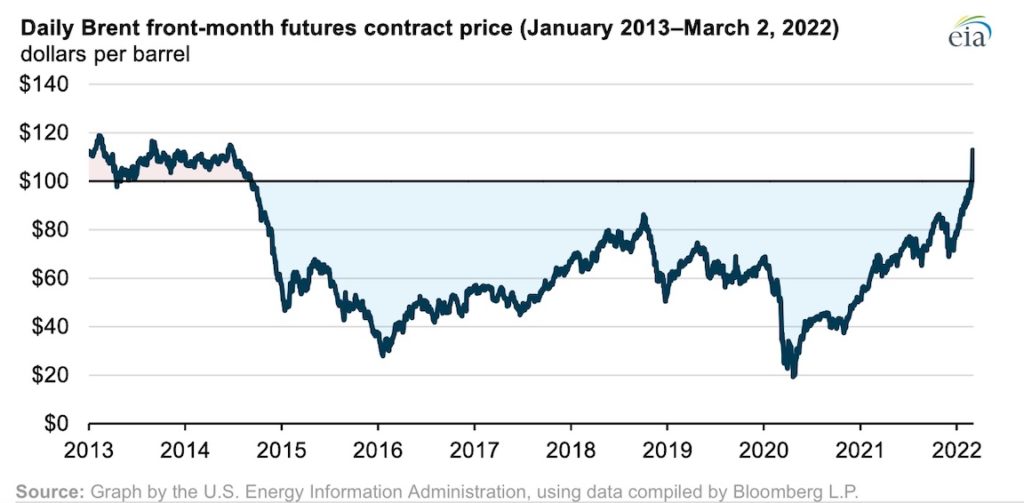
Oil prices verged on the mid-$30s in the early to mid-1980s. In today’s dollars that is close to $100/bbl. oil.   Alaska’s dreams of domed capital cities and Soviet-scale hydroelectric projects crashed with the price of oil resting at near $10/bbl. by 1985 or so. The Legislature reacted by refusing to fund the wage increase and we spent a decade with unions suing, grieving, complaining, and singing songs and carrying signs in the street. 

The one thing they never did was strike, and we never laid off any significant number of them. The Cowper and then Hickel Administrations both resolved that we would not give them any general increases but would not seek concessions to the point of provoking a strike, though we were tempted at times. Basically, we had enough foreclosed houses and repossessed cars in Alaska and the State didn’t want to create more. Most State employees are on a step pay system that gives them a 3 percent or so increase every year for their first five years.   

In those days the average seniority for the General Government Unit was barely five years, so most got some wage adjustment every year even if they didn’t get general increases. That was enough to keep them sullen but not mutinous, and those became our watchwords; keep them sullen but not mutinous.

If I had to choose the capstone of my career it would be the fact that the State General Fund Operating Budget was essentially flat during my tenure from 1987 to 2006. It ticked up a bit with oil prices during the Gulf War and with the cash infusion of the Exxon Valdez cleanup. 

We succumbed to the pressure of Tony Knowles and Sarah Palin’s promises leading up to the 2006 election, but through four governors, one of whom really didn’t want to do it, we held the line on the operating budget for over a decade. I’ll pat my and my co-workers’ backs for doing that, but I’ll temper that with an admission: We never had to deal with inflation. Republican presidents and a Republican Congress during most of the Clinton Administration kept a rein on inflation.

We’re going somewhere nobody has been before. I sorta’ knew some of the people who dealt with the spiraling inflation of the 1970s. I don’t think any of them are still in Alaska; if they are, they aren’t active, and I know quite a few of them are no longer among us. Thirty years later I was trying to bargain stuff out of the agreements that they gave away to try to keep peace, but they were doing an all new thing and nobody knew how. 

The people who represented the State during the oil crash years and its aftermath went on to represent the State as the directors of labor relations and of personnel, two as human resources managers for the Court System, one as head of labor relations and later president of the University, one as a high level manager at the City and Borough of Juneau, one as a high level manager in Nevada, and one as the head of labor relations for Chugach Electric.   

As far as I know only two or three of us are still in Alaska. I don’t know about the other two, but I’m not looking for a State job, especially in these times.

It’s a gubernatorial election year coming up. The government is on the auction block. I always figured that if I had the supervisors and the labor, trades, and crafts guys under contract, I could keep the State running no matter who else wanted to strike or sing songs and carry signs.  The General Government Agreement expires June 30, 2022, and all 8,000 and change of them are available to be whipped up to a screaming fury to elect Bill Walker or Les Gara governor so he can give them money and set them free.   

George Soros and all sorts of Communist front groups will make sure they have the money to play.  I played this game with them during Hickel’s era; there was nothing we could give them that would make them accept an agreement. We came to taunt them with offers forcing them to explain to their single-mommy members why she couldn’t have a raise because it was more important to them to play politics. We put some fancy money on the table because we knew they wouldn’t take it, and we wanted to rub their noses in it. They wanted to wait for their “made-man,” Tony Knowles.  It didn’t work out very well for them.

There is no peaceful way that the Dunleavy Administration can get an agreement with them. The only way to get an agreement with them, and more importantly to remove them as a significant factor in the gubernatorial election, is to pose an existential threat to them.   The State’s initial proposal should not have a union security clause at all; union and agency shops have been illegal in the public sector since the Janus decision in 2018.  It is between the union and the employee whether the employee would like to be a member; it is none of the employer’s business.  

The Dunleavy Administration has done about everything possible wrong in implementing, or failing to implement Janus, but if he’d like to get re-elected, he might try to get it right.   

Additionally, under Janus, as well as under some state constitutional arguments, the dues check-off provisions of the Public Employment Relations Act, are unconstitutional as well. In my experience, if you have a union by the dues sack, their heart and mind follows.   

There’s their “paint by numbers” instructions, but I’m prepared to be disappointed in them.

Art Chance is a retired Director of Labor Relations for the State of Alaska, formerly of Juneau and now living in Anchorage. He is the author of the book, “Red on Blue, Establishing a Republican Governance,” available at Amazon. 

Lawsuit: The case of the Anchorage equity officer who ‘can’t be fired’ will go to court

Mayor Dave Bronson on Friday filed a lawsuit against the Anchorage Assembly, asking for a court judgment about an Anchorage Municipal Code that prohibits the mayor from firing someone on his staff — the chief equity officer.

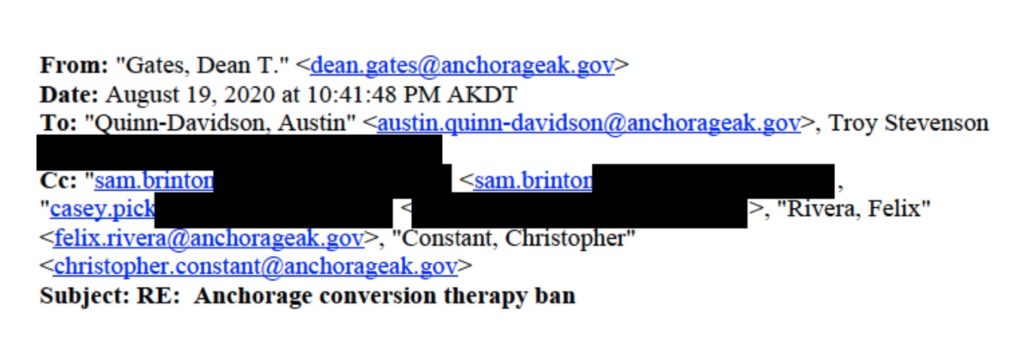
Mayor Bronson did fire Clifford Armstrong. Armstrong was hired by former unelected acting mayor Austin Quinn-Davidson, after the adding of the position of chief equity officer was approved by the Assembly on the request of former Mayor Ethan Berkowitz in the summer of 2020. The code says the Assembly must agree with the decision to fire the person who holds this position, and the Assembly majority does not agree with Armstrong’s dismissal.

Bronson’s team maintains the municipal code is invalid and not binding and that its passage was a breach of the principles of separation of powers, which is a fundamental doctrine of the Alaska Constitution nd the Anchorage Municipal Charter. Bronson says the Mayor’s Office has authority over people in the Executive Branch, while the Assembly says it has carved out this position to be different from others.

“Despite repeated attempts to resolve this matter without the need for litigation, recently Assembly Member actions show that judicial intervention is the only option. Like other executive mayoral appointees, the Chief Equity Officer can be dismissed at will for any reason or no reason at all. Attempts by the Assembly to insulate previous administration’s mayoral executive appointees with ‘for cause’ limitations and durational term limits clearly violate the Charter and Constitutional separation of powers doctrine. This Assembly has exceeded their authority, and are attempting to take power from the Executive Branch and control personnel matters, which are clearly an administrative function. I will not cede the authority of the executive branch to the legislative branch; the Assembly does not control both branches of government,” Bronson said.

The lawsuit was not unexpected. Armstrong stopped showing up for work shortly after Bronson became mayor. The chief equity officer position is one of the many new expenditures of the Anchorage Assembly that has put the city on the downgrade list from bond-rating agencies. Hired out of Tacoma, Washington, Armstrong made more than $115,000 a year and was supposed to develop and implement a Critical Race Theory policy to redistribute power in the city workforce to those seen as not seen as holding enough power in municipal jobs. His job deliverables were somewhat undefined and subjective, but he reported directly to the mayor, who was given no authority to replace him by the leftist Assembly.

Bronson replaced Armstrong with Uluao “Junior” Aurnavae in October. The Assembly does not recognize the Samoan-American as the legitimate chief equity officer and Assemblyman Chris Constant said on the record that his hiring was intended by Bronson to sow discord among racial groups in Anchorage.

Shortly after being fired, Armstrong published a cartoon of himself being fired by the Ku Klux Klan. Armstrong has since sued the Municipality for what he says is an illegal termination of his employment.

The Assembly liberal majority is on Armstrong’s side: “We do not recognize Mr. Armstrong’ s dismissal as complete nor valid and are advised by Assembly Counsel that it is not legally complete,” wrote Assembly Chair Suzanne LaFrance and Vice Chair Chris Constant in October.

Fritz Pettyjohn: The indestructible Don Young

By FRITZ PETTYJOHN

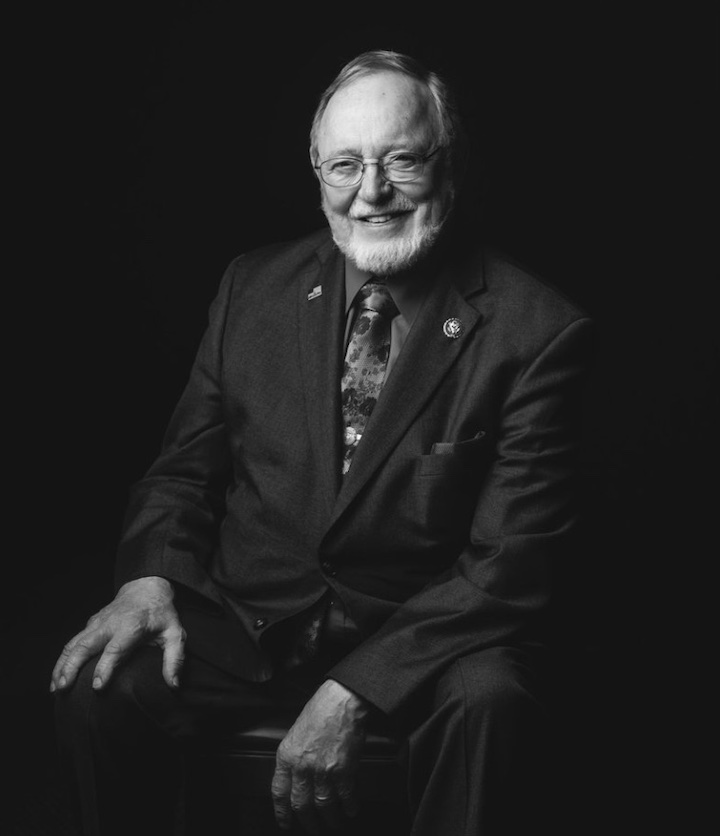
Don Young has run for Congress 25 times, and lost once, in 1972, to incumbent Nick Begich, who was killed in a plane crash three weeks before the election. He beat Emil Notti in 1973, and then, successively, State Senators Willie Hensley, Eben Hopson and Pat Rodey. After defeating Pat Parnell and Dave Carlson, he faced Begich’s widow, Peggy, in 1984 and 1986. Then he crushed Peter Gruenstein in 1988, but had a serious challenge from Valdez Mayor John Devens in 1990 and 1992, winning with less than a majority the second time.

Young then breezed through reelection until 2008, when he faced Lt. Gov. Sean Parnell (son of 1980 opponent Pat Parnell) in the Republican primary, and won by only 304 votes. In the general election he defeated Ethan Berkowitz 50-45. He hasn’t been seriously challenged since.

Now he’s in Donald Trump’s crosshairs, and of all the targets of the former President he seems the least concerned. His sin is bucking Trump and voting for the infrastructure bill, giving President Biden a much needed win. But if given the opportunity, Young will always vote for any bill that brings federal money to Alaska. He’s the king of pork, and the proud sponsor of the infamous “bridge to nowhere”, which was so outrageous it helped bring an end to congressional earmarks. He’s never paid a political price for bringing the bacon home to Alaska, and he never will.

Working as a team with former Senator Ted Stevens, the Alaska Congressional delegation routinely brought home a billion dollars a year in federal largess, providing both needed projects and economic stimulus. As Chairman of the Senate Appropriations Committee, Stevens had a reliable partner in the House in Don Young, crediting him with never failing to secure House passage of projects that came over from the Senate.

Don is now 88, and unable to get around as he once did. Some speculate that he isn’t serious about running for his 25th term, and may pull out of the race at some point.

But now that he’s the target of Donald Trump’s ire, that is far less likely. Don relishes a good fight, and bowing out under pressure from the Trump brigade would be an ignominious end to a brilliant political career. I suspect the attacks from Trump will only energize him, and make him more determined than ever to go out a winner.

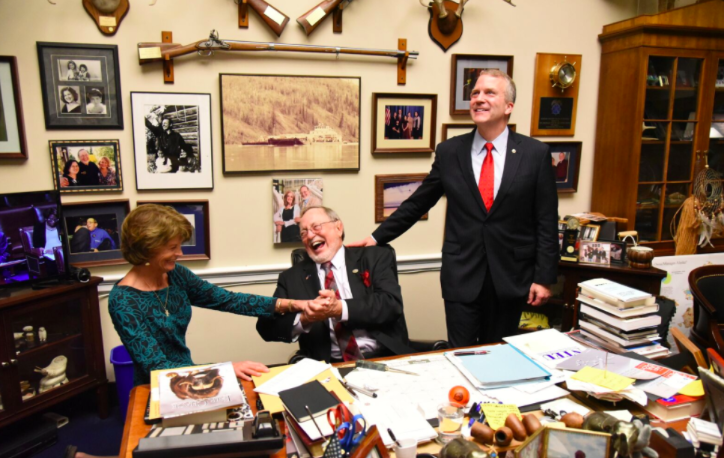
He sure didn’t seem concerned at the infrastructure signing ceremony outside the White House, joking around with President Biden, and complaining to him that his speech was too long, and Don was getting cold. Is Don Young afraid of Donald Trump? I don’t think so.

In fact, 2022 may spell the effective end of Trump’s influence in the Republican Party. He is so humiliated by his loss to Biden that he won’t let go of his claim that the election was stolen, even though no court in the land has given him any reason to think this can be proven. Every day of Biden’s miserable, disastrous Presidency is a rebuke to Trump, personally. He’s responsible for this. He lost to this guy?

A month before the 2016 election he was revealed as a sexist pig by the Access Hollywood tape, and he was written off. But then eleven days before the election James Comey of the FBI reopened the probe into Hillary Clinton’s emails. As he subsequently admitted, this decision was influenced by Comey’s confidence in Trump’s defeat. Even though the probe was concluded before the election, the damage had been done. Trump the Improbable was elected President.

Trump beat, by a whisker, one of the most disliked and mistrusted presidential nominees in history (Clinton). Then in 2020 he lost to a man who clearly had no business running for president, as his brief tenure in the White House has amply demonstrated. 

Donald Trump is a lousy politician. He’s one of the most divisive men in American political history, roundly despised by half the country. He’s unelectable, and only manages to stay in the spotlight by encouraging speculation that he’ll run again.

You think Don Young is worried about Donald Trump? With ranked choice voting, he’s in a stronger position than ever. In addition to his longstanding ties with, and service to, the Alaska Native community, he’s always been a reliable vote for organized labor. Against a Republican backed by Trump, he’ll prevail in a runoff with virtually the entire Democrat vote.

So get ready for two more years of one of the last true characters in American politics — the Indestructible Don Young of Alaska. When he finally does exit the stage, we’ll all miss him.

Former Alaska state legislator Fritz Pettyjohn once briefly thought about running against Don Young himself. Very briefly. 

More lawsuits filed against new districting map

6

Three Anchorage residents filed a lawsuit on Friday challenging the new political district known as Senate Seat L, as drawn by the Alaska Redistricting Board. Their lawsuit objects to having part of East Anchorage lumped in with part of Eagle River, which the plaintiffs call “arbitrary and egregiously irrational senate districts … despite the starkly different and even contradictory legislative needs of those communities. Critically, the pairings inexplicably ignored the demographic, economic and geographic characteristics of these communities and the lack of meaningful contiguity…”

Eagle River is largely white, they say, while East Anchorage is very racially diverse.

Friday was the deadline for lawsuits challenging the new district boundaries to be filed.

The plaintiffs are all part of the new Senate Seat L: Felisa Wilson is a Democrat party activist who lives at an address on JBER. George Martinez is registered nonpartisan who has run for mayor of Anchorage in the past and is described in media as a “prominent Occupy Wall Street activist” from New York. Yarrow Silvers is a nonpartisan voter who is cofounder of a political action group called Anchorage Action, which is a counter to the Save Anchorage grassroots group. The three say that the new map gives Eagle River disproportionate power and lessens the political clout of East Anchorage, when it comes to representation in the Senate.

Another lawsuit was filed by the City of Skagway, which disputes the boundary that puts it in with the north Juneau House district. Skagway maintains that the final version of the map, Version 4, was never made available for public review or comment, in violation of the Open Meetings Act, prior to the last meeting fore presentation of draft plans to the redistricting board.

The plaintiffs in this lawsuit say that Skagway prefers to be aligned with downtown Juneau and Douglas, not the Mendenhall Valley and north, which is physically closer to Skagway. The lawsuit says Skagway wants the map the way it was during the court-approved 2013 redistricting plan.

The City of Valdez filed a lawsuit because its House district was moved in order to align with the Mat-Su, while it says it is economically more aligned with the Richardson Highway pipeline corridor.

Earlier, a lawsuit was filed by the Mat-Su Borough, which said the new map diminished and diluted its growing population. On Friday, a group of Native Corporations joined the suit on the side of the Redistricting Board, saying the map, as now drawn, better keeps Native shareholders in the same district.

The Alaska Redistricting Board has scheduled a meeting on Wednesday, when it will have an executive session to review the lawsuits with the board’s attorney.

Naked politics: Legislators pen letter to Permanent Fund chairman, inserting their politics into protected personnel decision

Alaska legislators on Friday wrote to Craig Richards, chairman of the Board of Trustees for the Alaska Permanent Fund, expressing their “grave concern over the sudden and inexplicable termination of Angela Rodell as Executive Director of the Alaska Permanent Fund Corporation (APFC).” Rodell was fired on Thursday.

“In her six-year tenure as Executive Director, the Permanent Fund grew a record-setting $30 billion in value. Ms. Rodell’s track record is nothing short of exemplary, she has always been a steadfast professional, and did everything within her power to shield the Fund from outside political interference,” the two politicians wrote, inserting their own political preferences into the personnel decision by the board to remove Rodell, which was an overwhelming decision by the board in a 5-1 vote.

The naked politics is evident in the letter, because if the two had a valid concern, they would have handled it through back channels. Instead, they widely disseminated their letter to the media as a political weapon.

“We strongly believe that the public and legislature deserve an explanation for the action the board took yesterday,” wrote House Rules Chair Bryce Edgmon and Senate Rules Chair Gary Stevens.

In addition, Senate Finance Chair Bert Stedman weighed in. As quoted by the Anchorage Daily News, he said the circumstances around Rodell’s firing are suspicious. Possible gubernatorial candidate Sen. Natasha von Imhof also indicated she may hold hearings in her Legislative Budget and Audit Committee; Von Imhof is a close personal friend of Rodell’s and is a known adversary to the governor on matters of budget and Permanent Fund dividends.

Thus, a kangaroo court scenario may be ready to play out in the Legislature, just as Gov. Mike Dunleavy prepares to unveil his 2023 budgets, which he must provide to the Legislature by Dec. 15.

In that budget, many expect the governor to once again propose the 50-50 dividend formula, which is his compromise position to get Alaskans more of what they are entitled to by law from the Permanent Fund, and to settle the dividend formula law once and for all.

His effort is likely to try to restore the dividend as something that has a relationship to the fund itself. During the last legislative disbursement of the Permanent Fund dividend, not a single penny of Alaskans’ dividend actually came from the Permanent Fund. Instead, the Legislature used all of the fund disbursement to fund government, and then made an appropriation to pay dividends out of the Statutory Budget Reserve and the General Fund.

Even former Gov. Bill Walker, who is now returning to the scene as a retread candidate for governor, took the stage on Twitter to say he was concerned about Rodell’s sudden exit.

“Alaskans rightfully have questions about her abrupt dismissal. I hope for some clarity on that question in the coming days and will look for answers on what comes next for the Fund,” Walker said on his campaign Twitter feed.

The irony of Walker second-guessing the decision is that Board Chair Richards was once Walker’s attorney general, and in fact, Walker appointed Richards to the board of the Permanent Fund. Now, with Richards having moved into the position of Board Chair, Walker is questioning the decision-making capacity of his former law partner and attorney general, as well as the judgment of the four other board members who voted to remove Rodell. Only Bill Moran voted to retain Rodell after her performance review was completed this week.

Walker owns the dubious distinction of being the father of the demise of the Permanent Fund, as he is the governor who vetoed Alaskans’ lawful and statutorily set dividend in 2016, and set in place the calculation of the dividend as a purely political calculation, rather than formula-driven decision that had worked well for decades.

Politicians complaining about politics is nothing new. Candidates like Edgmon, Stevens, Stedman, Von Imhof, and Walker asking for details of a confidential personnel decision that they know cannot be publicly discussed is political theater and a calculated distraction from the governor’s budget rollout on Wednesday.