Just as the omicron variant of Covid-19 is appearing to peak, a new variant, dubbed BA.2, or “stealth omicron,” has made its way around the globe, according to the World Health Organization. It’s now on four continents, including North America, where it has been detected in California, New Mexico, Texas, and Washington states, among others.
It’s also found in countries as far flung as Denmark and South Africa.
The BA.2 variant is expected to be relatively mild, compared to Alpha, Delta, and the first omicron versions of Covid. But it’s harder to follow the variant. According to British health authorities, the new stealth omicron cannot be detected by PCR tests.
According to the Alaska Variant Dashboard maintained by the State of Alaska, Omicron BA.1 is the dominant variant being detected in Alaska.
The Anchorage School District should officially rescind its mandatory vaccine-or-test policy for volunteers and coaches.
In the fall, the school district required volunteer chaperones to show proof of Covid-19 vaccination.
As of Dec. 1, ASD has only expressed their preference to require chaperones be vaccinated. In its revised policy, the district says it will accept a negative test for the virus 48 hours prior to performing the duties of a chaperone.
Chaperones are not ASD employees. Rather they are members of the general public volunteering specifically to drive students to and from a field trip and monitor the students while on the trip.
The only way a member of the general public might learn of the Covid-specific policy is if he or she has volunteered to be a chaperone for a field trip or are a coach whose team travels. If a volunteer chaperone is to be accepted, s/he must present the required information to the coordinating teacher who must follow the ASD rules and policy.
A typical chaperone document request from last fall reads as follows:
“If you plan on chaperoning for the field trip, have all appropriate paperwork to hand into the office for approval. Please provide a copy of your insurance, driver’s license, registration and vaccination card.”
There was no mention of a testing option. There was no mention of natural immunity as an alternate form of compliance.
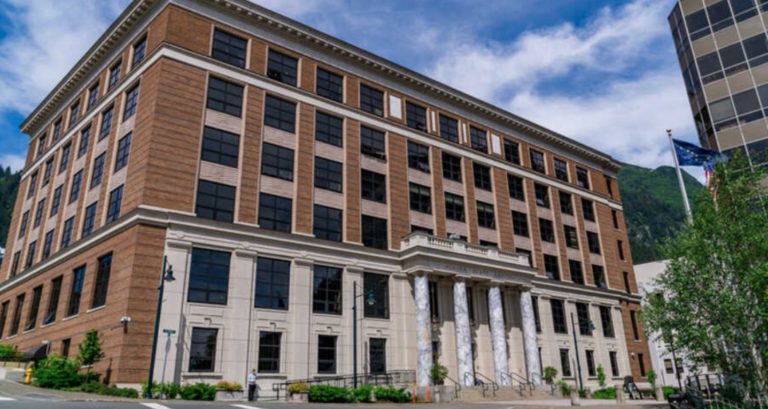
From a public records request in November for the official ASD Volunteer Policy, a copy was obtained weeks later. The version of the ASD policy that was released to this writer indicated it was revised Dec. 1, 2021. A copy is pictured below.
A follow-up request was made on Dec. 7 for a copy of the volunteer policy that predated the Dec. 1 version, but so far nothing has been received from the school district. We are left to wonder what was changed.
This policy is not publicly available but exists squirreled away in the district’s internal Healthcare Services Department. Who is responsible for this mandate policy and when will they be fired?
Interestingly, an ASD chaperone could have any other contagious disease and meet the qualifications for being a chaperone as long as they possess and show a vaccine passport. Do you have meningitis, HIV, leprosy or tuberculosis? What about influenza? These are not questions of the district’s inquisition. As long as you present your Covid vaccine passport or negative test result for the district to copy and place in their files, you are good to go.
What is the purpose of a vaccine passport? Regardless of purpose, the end result is the same: It is medical discrimination for a segment of the population.
It is uncertain where ASD found the inspiration for singling out the chaperone volunteers and imposing the mandate. What is certain is that many forms of tyranny and encroachment of one’s privileged medical information come in the form of “health and safety” arguments and for the alleged well-being of the children.
Another certainty is that tyrants and abusers push and harm until they find resistance from those they oppress. It’s kind of a test to see how much they can get away with. So what better arena to test than the volunteer chaperones who are unrepresented, unorganized and just want to go on a field trip with their children?
ASD coaches and sponsors are also subject to a Covid vaccine mandate. The policy that was updated Aug. 20, 2021 and still current as of October states that for domestic U.S. travel, out of the district and out of state, coaches and sponsors must be fully vaccinated. A decision as to whether or not approval of international travel will be allowed is expected this month.
Recent decisions by Denmark, the UK, and Germany to drop their Covid vaccine passport requirements should influence this decision. The Associated Press reported on Jan. 19 that British Prime Minister Boris Johnson announced masks will no longer be required in public places and Covid-19 passports will be dropped.
The British government is no longer advising people to work from home, and compulsory face masks will be scrapped in secondary school classrooms starting Thursday. Mandatory Covid-19 passes will not be needed to gain entry to large-scale events beginning Jan. 27. Face masks will no longer be legally required anywhere in England as of that day.
“We will trust the judgment of the British people and no longer criminalize anyone who chooses not to wear one,” Prime Minister Johnson said.
Since many nations are now allowing their citizens to freely associate, maybe the Anchorage School District should give it a try.
In the U.S. it has been necessary for the people to pursue legal action against the oppressive tendencies of the current government. On Jan. 13, the United States Supreme Court stayed the vaccination and testing requirement brought on by the Occupational Safety and Health Administration and the Biden Administration. Following that decision, OSHA withdrew the Vaccination and Testing Emergency Temporary Standard.
If ASD was clinging to hope that misguided OSHA workplace vaccine mandates would reinforce their position, it will need to let that weak grasp on those flimsy bits of straw completely loose now.
According to the Centers for Disease Control and Prevention Director Rochelle Walensky, “What COVID vaccines can’t do anymore is prevent the transmission of the virus.” This statement was made back in early August on CNN. This begs the question, why are we still calling this injection a vaccine in the ASD Health Services Department? The follow-up question would be, where does natural immunity factor into ASD policy? Specifically, why is there absolutely no consideration given to natural immunity, when the CDC itself has finally acknowledged the superiority of natural immunity over so called Covid vaccinations?
A study by the Centers for Disease Control and Prevention released on Jan. 20 shows that those who have recovered from Covid-19 have more protection against infection than those who have only been vaccinated.
The indirect but accurate answer to some of the questions above might be that ASD has no business whatsoever intruding into the health information of teachers, students, staff, coaches, volunteers or anyone for that matter.
What gives us hope? Unwinding the Covid communist tourniquet which has been placed over our mouths and noses has begun. People are no longer gulping the Covid KoolAid. Unfortunately some within our government agencies and our elected officials still sip from the Covid cup they have poured for themselves. It will take a long time to undo the damage but it is happening. We may not fully accomplish the job in my life time. The battle appears to be constant and unrelenting. With eradication of one bad policy at a time and sometimes with many mandates all at once like the UK, the liberties known by an older generation will be restored for the younger generation to enjoy and then defend for themselves.
For the older among us, communism was always something that seemed remote and distant. It was somewhere in Cuba or the Soviet Union and would never really be more than a few whacko nut jobs here, we thought. We let our guard down.
But there is hope and the thing that offers the most hope is the younger generation who are now in their late teens and mid-twenties. These are the ones that have had their last years of high school and first years out in the work world, the military and college disassembled the most. They have lived under the lies and suffered the consequences of undisguised communist tyranny. They are old enough to remember how it was before the communists took control. They are wise enough to see the destruction that communism creates. They really didn’t like it, and still don’t, not one bit of it.
Every little victory in the fight to reclaim our stolen liberties matters. ASD needs to publicly rescind all of its Covid vaccine mandates right now.
Dan Smith is a lifelong Alaskan and Anchorage residentwho writes for Must Read Alaska.
Gov. Mike Dunleavy gave a measured but optimistic State of the State Address on Tuesday night. In about 50 minutes of speaking to a combined roomful of House and Senate members, he talked about how Alaskans are safer as a result of the repeal of Senate Bill 91, and how Alaska’s fiscal situation has improved this year, thanks to the price of oil and increased production. He talked about the need for a full Permanent Fund dividend, and the importance of medical freedom.
He also introduced new topics, such as food security and the long-dreamed-of gasline, which he said could be closer than ever to being realized.
In response to the annual speech, Senate Majority leaders gave mixed reviews. Senate President Peter Micciche, Senate Majority Leader Shelley Hughes and Majority Whip Sen. Mia Costello praised the speech for being optimistic and “envisioning,” while Sen. Gary Stevens, Sen. Bert Stedman, and Sen. Click Bishop channeled a grumpy-old-men sub-caucus, with complaints about the shortcomings of the governor’s message. Stevens’ statements dripped with sarcasm, while Stedman forgot to mention it was his own budgets that drained the Constitutional Budget Reserve.
Dunleavy said he will introduce legislation to incentivize more Alaska-grown food and the creation of a food security task force:
“At the onset of the pandemic, and more recently, we’ve seen some empty shelves in Alaska. The key component of a modern state is the ability to produce what it needs to ensure its survival, and that means we must build our own supply chain. That is where our Alaska-grown businesses have a huge part to play. Because, make no mistake, at some future date, there will be another disruption to our supply chain. We must be prepared for that inevitability. We must be self-sufficient … Soon, we will be introducing legislation and an Administrative Order creating a Food Security Task Force to support this effort,” he said.
There were no memorable lines, and the speech was met with polite applause. Rep. Chris Kurka, who has filed for office against the governor, did not applaud but folded his hands across his body.
Former Gov. Bill Walker took to Twitter to criticize the speech in a series of tweets that said the governor cut the budget in previous years, only to rebuild it during an election year. Walker’s message was echoed by the Alaska AFL-CIO President Joelle Hall, who also had nothing good to say about it.
Other themes from Dunleavy’s speech:
Despite Obstacles, Open for Business
“The state of our fiscal situation has vastly improved from the budget deficit of $1.6 billion I inherited upon taking office. Thanks in part to our fiscal restraint over the past three years, we’re on track for a budget surplus in the current fiscal year for the first time in a decade.
Based on current trends, we could see revenue in the current year increase by more than $281 million over the fall forecast and by $466 million in the upcoming fiscal year. This can generate a surplus even without one-time federal funds.”
Alaskans Are Safer Today
“When I first stood before this chamber three years ago, I declared war on criminals and asked for the Legislature to repeal and replace the catch-and-release policies in SB 91. With the help of many of you, we got it done. Policies do matter. We’ve seen our overall crime rate decline by 10 percent in 2019 and another 18.5 percent in 2020! According to the FBI, reported property crimes are at the lowest level since 1974. The murder rate has declined by a whopping 31 percent from 2019 to 2020. We all remember the huge spike in car thefts after SB 91 was signed in 2016. Following the repeal of SB 91, vehicle thefts were down 54 percent in 2020 compared to 2017. Burglary and larceny theft dropped by 22 percent from 2019 to 2020; robberies dropped by almost 15 percent in the same time. These figures from the FBI are indisputable. Never again can we put criminals ahead of victims, or social engineering ahead of public safety.”
Tourism Recovering
“In the near future, our $4.5 billion tourism industry is poised to welcome millions of travelers back to Alaska. Together with our industry partners, we’ve invested millions of dollars in marketing efforts that saved many businesses in 2021 and will revitalize this pillar of our economy in 2022, and for many years to come.”
Alaska Firsts in the Fight Against COVID-19
“While we battled the delta variant surge this past fall, our staffing shortfalls for medical professionals was of grave concern to all of us. My administration acted last August before the surge fully hit when we took decisive action after receiving a notification that health care workers were available. We consulted with the state hospital association to identify their needs and secured nearly 500 contract professionals covering specialties from nurses to respiratory therapists. After finalizing the contract in September, it took less than a month for us to deploy these workers around the state to our hospitals, nursing homes, and the Department of Corrections just in time to deal with the surge. … Every state, every nation, has been confronted with this pandemic, and its periodic surges as new variants emerge. But make no mistake about it, we’ve been different from many others in how we’ve responded, and our outcomes prove it!
We’ve led on testing.
We’ve led on vaccine distribution.
We’ve led on the distribution of therapeutics such as monoclonal antibodies as the first state to establish a community site to receive treatment.
We recognized early on that specific populations were more vulnerable to this virus than others, particularly our elders, those with underlying health issues, and residents of our remote communities with limited health care infrastructure. From the beginning, I was determined that there would be no repeat of 1918 on my watch here in Alaska.”
Protecting Alaskans’ Medical Freedoms
“My administration will continue to defend Alaskans’ rights to make their own medical decisions about vaccines and therapeutics for themselves and their families in consultation with their doctors and pharmacists. It’s not the State’s job to make those decisions for you. My administration’s job is to make sure our health care system is strong and you have the tools available to take care of yourself. What we’ve learned about this virus is that it impacts certain groups more than others, that inevitably it will continue to mutate into new variants, and that it will most likely be with us a very long time, if not forever. … Fear is not a substitute for knowledge, and what we’ve learned about this virus allows us to move forward and get on with our lives.”
Rebuilding the Bed Capacity for Mental Health
“We remember the dire situation my administration was handed at the Alaska Psychiatric Institute at the beginning of my term. API was in such disarray that it was in danger of losing its certification and its ability to receive federal funds, but, most importantly, its ability to serve Alaskans. One of the promises I made when I ran for this office was to ensure that government works for the people.
Thanks to our Health Department, we turned that situation around. From a low of 20 staffed beds soon after I took office, we now have more than 55 staffed beds. The crisis was so bad at API in the winter of 2018 that it led to a halt in admissions for the unit that serves adolescents in crisis. I’m glad to report today that we have reopened the unit, we now have seven staffed beds, and are continuing to build up its capacity.”
Fiscal Restraint and Funding Core Services
“I also pledged that we would live within our means, that we would make government more efficient, and we would find reductions before we ever ask Alaskans to be taxed. We’ve done this. My proposed budget for state spending in the next fiscal year is 7 percent less than the 2019 budget in place when I took office. Because of our insistence on being as efficient as possible, and with an improved revenue situation compared to when I first took office, we’re funding the core services that Alaskans expect.”
Pledging to Fight for Alaskans’ Share of Resource Wealth through the PFD
“Fighting for Alaskans’ share of our resource wealth will always be a top priority of mine. I’ve asked the Legislature to follow the statutory formula, and if these bodies will no longer follow that law, they should change the law with the approval of Alaskans. Year after year, I’ve offered the Legislature solutions that I believed would honor Alaskans and solve this issue for the long-term. Isn’t that why we’re here? To honor the people who sent us here and work on their behalf? Our purpose is to be servants of the people. I agree with former Governor Jay Hammond that the government should never take more from the Permanent Fund than is distributed to the people of Alaska. To break through the gridlock that has paralyzed the Legislature since the PFD was first vetoed in 2016, I’ve offered a plan that would protect the PFD in the constitution for generations to come, and would give the people a say in how their PFD is determined. The Permanent Fund was created by the people, for the people, and the people must have a voice in the future of their PFD.”
Statehood Defense Initiative Against Federal Overreach
“Because no president should beg for more oil from the Middle East or Russia’s Arctic when we can produce it here better and safer than anywhere else on the planet! … This is why my administration’s Statehood Defense Initiative is vital to protect Alaska from these crazy policies. I will not stand idly by and allow Washington to throttle Alaska’s future without a fight, and I thank the Legislature for standing with my administration and the people of Alaska by funding this effort. We must be allowed to fulfill the promises made in the Statehood Act to support ourselves with resource development!”
Single Largest Investment in Public Safety
“When I took office, the Department of Public Safety, our brave State Troopers and Village Public Safety Officers had been weakened through years of budget cuts. In 2016, the State Troopers had lost 38 positions in just two years, posts were being closed around the state, and our services to rural Alaskans were being shortchanged as well. While restraining state spending elsewhere, my administration has proposed four years of increased resources for the Department of Public Safety, and I thank the Legislature for supporting these efforts. We now have 20 more funded Trooper positions than when I took office. We’re on track for two full Public Safety academies in 2022 that could add as many as 60 Troopers to our ranks. We’ve added dedicated major crimes investigators to Western Alaska for the first time. These new resources will be a game-changer. Four of those investigators are now based in Bethel, where we are also adding a deputy fire marshal and a crime scene technician as well.”
People First Initiative to Break Cycles of Abuse
“As we announced last month, the People First initiative is the umbrella for five distinct initiatives addressing our most critical problems that impact our most vulnerable:
domestic violence and sexual assault
human trafficking
missing and murdered Indigenous persons
the foster care system
homelessness
These are not top-down proposals. They’ve been crafted from the ground up based upon the input of multiple stakeholders in a process that started in November 2020. The People First Initiative is a mix of statutory changes, additional personnel, administrative orders, technology, and increased resources to tackle these longstanding, serious problems. These issues are not necessarily new. Many of them have been with us for so long that they’ve almost been normalized in Alaska, as almost unsolvable. My administration cannot – it will not – accept these tragic outcomes as beyond our control. We owe Alaskans, especially our most vulnerable, to do nothing less than to do everything in our power to break these vicious cycles of violence, of abuse, of despair.”
Funding Education and School Construction Bonds
“I worked in education in rural Alaska for nearly 20 years, and I know firsthand the challenges for students both on and off the road system. My proposed budget fully funds education, school bond debt reimbursement, and University scholarships, but I have long said that we must be focused on outputs more than inputs. I will continue to work with our Department of Education, Commissioner Johnson, and the Legislature to improve our education system. We must ensure that our children are attaining the benchmark skills in reading and math that will set them on a course for success no matter what career they choose. I have always envisioned an Alaska where parents are the most crucial component in the educational success of their children. This is why I’ve supported public schools, home schools, charter schools, and schools of choice. Years ago, when I was a Senator, I and other legislators passed a Parental Rights bill that recognizes parents as the most essential part of their children’s education. I envision an Alaska where parents and children are and remain at the forefront of every educational decision we make and I will continue to protect the rights of parents in the education of their children.”
Alaska is Opportunity
“I also envision an Alaska that is energy independent and a leader in renewable energy whether that is hydro, tidal, geothermal, wind, solar, or other. I envision an Alaska where we finally get our stranded natural gas off the North Slope and into our homes and businesses, and around the world. With key permits in hand, a federal loan guarantee in place, we are closer now than ever to making this gasline a reality. I envision an Alaska where our cost of energy is no longer the second highest in the nation, but one of the lowest. That’s my vision. I hope it is yours as well. Since the 2019 fiscal year, the Alaska Energy Authority has completed projects that have replaced more than 7.6 million gallons of diesel fuel per year. We have abundant renewable resource potential, and we can turn that potential into a reality that will lower costs for all Alaskans, and invite industries to invest in our Great State as well. The Trans-Alaska Pipeline System has operated for nearly 45 years as the backbone of our economy. It has transformed Alaska into the modern state that it is. The pipeline provides energy, revenue, and jobs for our state, and it provides national security for the United States as well. I envision an Alaska that remains an oil and gas giant with a pipeline that operates for at least another 45 years to underwrite the cost of government, our renewable potential, and secure our energy independence. I envision an Alaska that is connected to the digital world through high-speed broadband that unlocks the opportunity for us to live anywhere and work from anywhere in this Great State. I envision an Alaska that is a worldwide leader in technology, in unmanned aircraft systems, and in the critical minerals needed to power the technology of today and tomorrow.”
Permanent Fund’s $82 Billion Value
“Our Permanent Fund is now worth $82 billion, and our multi-billion-dollar pension gap is virtually closed. The performance of the Permanent Fund solidifies our state government’s fiscal situation by smoothing out the highs and lows in oil prices. The outstanding returns of our pension funds are freeing up revenue that can be devoted to core government responsibilities like Public Safety and Infrastructure without imposing taxes. This just didn’t happen on its own. It’s not an accident. It’s the result of great investment decisions, policies, vision, and direction.”
The Juneau Assembly will hear from the public on Wednesday about whether a new City Hall should be built, or if the current one should be renovated.
Several plans have been advanced, including converting the old Walmart building in Lemon Creek into a new municipal center. A survey of local residents showed many people favoring the conversion of the Walmart building, which has plenty of parking and is more conveniently located for people who are not in the downtown core. One of the downsides is the smell of the landfill nearby is at times overwhelming. On the other hand, if city workers were subjected to the smell, solutions to the problem may be hastened.
Other ideas include simply renovating the crowded 70-year-old City Hall on Seward Street, building a new City Hall on top of the parking garage next to the Downtown Transit Center, which is a block away from the existing City Hall, and constructing a new building on a city-owned parcel on Whittier Street downtown.
The meetings of the Assembly are conducted via Zoom. Participants can call into the public portion between 6-7:30 pm on Jan. 26.
Information on how to take part in the forum is at this link.
Last year, the Public Works Department polled the public and found 74 percent of respondents supported a new facility with parking for public and staff. 1,326 residents responded to the survey.
Following Wednesday’s meeting, the Assembly will be given a narrowed list of options by the city’s Public Works Department, and the Assembly may then advance a bond package to the fall election to ask Juneau taxpayers to pay for the chosen option through their property taxes.
Juneau’s Capital Transit, which premiered the first electric bus in the 49th state less than a year ago, has found the bus can’t run an entire route during cold weather. And Juneau has had a lot of cold weather this year.
Capital Transit operates a fleet of 18 buses, including 17 diesel Gillig buses and one Proterra electric bus. It also has six support vehicles, three of which are electric, said Katie Koester, Juneau’s Public Works and Engineering director.
Capital Transit purchased and put one electric bus into service in April 2021. The bus has had a number of mechanical problems requiring it to be removed from service several times.
Most recently it was out for an approximately 6-week period from around Thanksgiving to after New Year’s Day due to powertrain problems and wiring that was breaking.
“After three visits from the out of town Proterra field service tech, they figured out the problem was a powertrain wiring harness that had rubbed on the body of the bus causing some wires to break. Proterra could not supply a replacement wiring harness so the damaged harness had to be repaired to return the bus to service,” Koester wrote in a memo to the CBJ Public Works Committee.
In addition, there are several other issues that, while they don’t prevent the bus from operating, need to be resolved, including problems with windshield wiper motors, and water spray impairing visibility. But it’s the battery life that is the real problem, both summer and winter.
“The bus was expected to have a battery range of 210 miles which is roughly 10 hours on a bus route. In practice, the bus has only exhibited a range of 170 miles or 8 hours on a route during ideal summer weather conditions. During cooler fall weather the range was reduced to 150 miles or 6 hours on route and approximately 120 miles (or 5 hours) in January,” she wrote.
That means the electric bus has to be plugged in before it can complete a full 8-hour shift. It also has a wider turning radius, so cannot work all of the routes in Juneau.
“We will be watching closely to see how much mileage the bus gets during the rest of the winter. Lastly, the rest of the Capital Transit bus fleet is comprised of 35 foot diesel buses manufactured by Gillig. The 40 foot Proterra bus cannot run all of the existing routes due to both limited range as well as a wider turn radius. Therefore, the electric bus mostly runs the Commuter Routes between the Valley and Downtown and is unable to service Douglas,” she wrote. Douglas is the island to the south of Juneau, where many people live who take the bus to work.
Capital Transit’s fleet drives 54,725 miles per month. In the last 10 years, Capital Transit has provided over 11. million rides. Ridership decreased due to Covid‐19, lack of seasonal workers, and fewer capital city visitors, but the use of public transportation is on the rise again, Koester noted.
The Proterra bus was purchased using funding from the a federal grant for low-emissions upgrades in public transportation, along with matching funds from the Volkswagen Settlement Fund.
According to a study by the nonprofit Center for Transportation and the Environment and its university partners, a change of ambient temperature from 50-60°F to 22-32°F might result in a 38 percent decrease in the range of all-electric buses. A summary of the study is at this link.
Anchorage Assemblyman Chris Constant has a surprise item for Tuesday’s 5 pm Anchorage Assembly meeting: An ordinance that would allow an unelected mayor — such as former unelected Mayor Austin Quinn-Davidson — to serve for about 300 days before an elected mayor could take office.
Usual observers of Anchorage Assembly meetings might not have seen this particular ordinance, as it was submitted for the agenda at the last minute as a “laid on the table” item.
Under Roberts Rules of Order, a “laid on the table” item is something that is “less about the business being discussed than about the assembly needing to handle something else immediately.”
In reality, the leftist members of the Anchorage Assembly use the “laid on the table” procedure to sneak things onto the agenda that they do not want the public to know about in advance.
The 270 days would be the outside limit for when an election would have to be held in the event that a mayor ascended through appointment rather than an election.
The background on this involves the leftists on the Assembly. In October of 2020, former Democrat Mayor Ethan Berkowitz resigned in the midst of a salacious scandal. At the time, Democrat Austin Quinn-Davidson was chair of the Assembly and she rose to power, and held onto the mayor’s seat for eight months. She and other leftists on the Assembly refused to hold a special election for mayor.
The 270-day limit on an election would not include a runoff, or waiting for all ballots to arrive by mail, and would not include the 30 day training period, all of which could stretch an unelected mayor’s term for more than 300 days.
During Quinn-Davidson’s term, she hired a chief equity officer for the city, who was then fired by the elected mayor, and has cost the city over $120,000 in settlement fees.
Assemblywoman Crystal Kennedy and Assemblyman John Weddleton had already placed a proposal on the agenda that made the election deadline no more than six months, or 182 days. This was a proposal that was discussed in work sessions last week and would allow an unelected acting mayor to serve for up to eight months before an elected mayor could take over, once all the factors are considered, such as ballot deadlines and training periods.
Constant has mentioned the possibility of recalling Mayor Dave Bronson, and has told constituents that it is his mission to show the mayor’s administration as a “lawless gang.” If he proceeded with a recall and was successful, Democrat Assembly Chair Suzanne LaFrance could be the unelected mayor for more than 300 days.
The “laid on the table” ordinance from Constant is at this link:
Gov. Mike Dunleavy will deliver his fourth State of the State Address on Tuesday at 7 pm, to the combined House and Senate, and to the people of Alaska. It can be watched online at this link and on the governor’s Facebook page.
The address will be in person once again, rather than given remotely, as it was in 2021, when the Legislature was grappling with Covid.
His address will highlight the state’s accomplishments on budget discipline, crime, and steering Alaska through a tumultuous period that included the 2018 earthquake, the 2019 wildfire season, and the ongoing Covid-19 pandemic.
He will share with Alaskans his goals for the legislative session, including resolving the PFD and a fiscal plan, among others. He will stress the importance of remaining optimistic and call on everyone to set aside their differences to focus on achieving outcomes that benefit all Alaskans. His goal is to deliver a positive vision for the future with initiatives focused on long-term solutions that realize state motto of “North to Alaska.”
In his address, Dunleavy has chosen five Alaskans to highlight for their endurance, resilience, and achievements:
“Each of our five guests is an exemplary Alaskan,” said Governor Dunleavy. “My fellow Alaskans constantly impress me with their determination and diversity – through nationwide competition, overcoming addiction, helping out their neighbors, and displaying resilience in their field. These five guests symbolize the spirit of Alaska and I am honored to have them attend the State of the State this year.”
Emma Broyles broke ground as the first Miss Alaska to win the title of Miss America in the 100-year history of the competition. She used her platform during the competition to openly discuss her experience with Attention Deficit Hyperactivity Disorder (ADHD) in hopes that viewers could relate to her experience.
Carley Rose Kelley is a survivor who is breaking addiction cycles. Today, at age 27, she is three years sober, after surviving domestic violence and drug addiction. She is a client navigator and peer support specialist for at-risk and homeless youth at My House in Wasilla. She is also one of Governor Dunleavy’s People First Initiative advocates. The People First Initiative addresses several public safety issues facing Alaska today, including domestic violence, sexual assault, missing and murdered Indigenous persons, human and sex trafficking, foster care, and homelessness.
Captain Andrew Viray is a lifelong Alaskan who was commissioned into the Army National Guard as an infantry officer after graduating and is serving as a plans and projects officer until he takes command of an Infantry Rifle Company in the coming months. Capt. Viray has been a leader in our COVID response since we first stood up our Joint Task Force in March 2020. He has also served as a staff planner in the Joint Task Force emergency responses in Fairbanks, the Mat-Su, and Yakutat.
Sergeant Ken Noland, Staff Sgt. of Operations, is one of the most senior Corrections officers. Sgt. Noland is a diligent and generous officer who has mentored and trained his peers in those values for more than 25 years.
Sergeant Elondre Johnson is an 18-year veteran of the Alaska State Troopers, assigned to the Bethel Post. In recognition of his outstanding service and his model example to fellow Troopers, Sgt. Johnson was named the 2020 Alaska State Trooper of the Year.
The State of the State Address fulfills a section of the Alaska Constitution that requires the governor to provide the Legislature with an annual update: “The governor shall, at the beginning of each session, and may at other times, give the legislature information concerning the affairs of the State and recommend the measures he considers necessary.”
Candidate for Alaska governor Charlie Pierce, now serving his second term as the mayor of the Kenai Peninsula Borough, has hired Jake Thompson as his campaign manager. Thompson was a member of the Pierce campaign for borough mayor, and has a career in broadcasting at KSRM Radio in Kenai, where he hosted the “Tall, Dark, and Handsome” Show and “Sound Off With Jake Thompson.”
“Jake is a welcome addition to Team Pierce and will be overseeing campaign operations. I look forward to his leadership as we move forward. Please join me in welcoming Jake to Team Pierce,” Pierce said in a statement on Tuesday.
Pierce, a Republican, is the third GOP member to challenge sitting Republican Gov. Mike Dunleavy. From the Wasilla area, Rep. Chris Kurka has also filed a letter of intent to run for governor, although he cannot actively fund-raise during the legislative session, which is usually at least 120 days. Pierce has no such restriction on campaigning.
Bruce “Roger” Walden, also a Republican, has filed as a gubernatorial candidate. For the Democrats and undeclared candidates, Former Gov. Bill Walker and former Rep. Leslie Gara are in the running. Billy Toien is a Libertarian Party candidate on file with the Division of Elections as a candidate.
Only Walker and Toien have announced running mates so far. Under the new scheme of voting, candidates for governor must have running mates for the primary election. The last day to file as a candidate for the primary election is on or before 5 pm, June 1, 2022. The top four vote getters in the primary election will be placed on the general election ballot, where voters will rank them in the order of their preference. It’s a voting method used in Maine and places like San Francisco, and it was approved by Alaska voters via a ballot initiative pushed by Outside dark money in 2020.
The Polynesian community in Alaska is rallying to support the people of Tonga with a fundraising effort underway to help the Pacific islanders recover from the tsunami caused by a volcanic eruption on an uninhabited island in the Tongan archipelago on Jan. 14-15.
Gov. Mike Dunleavy and Anchorage Mayor Dave Bronson announced their support of the relief efforts, including asking those who are able to donate specific items, including flour, granulated sugar, batteries (AA or larger), flashlights, portable camping tents to Manai Fou Assembly of God Church, 2600 16th Ave., Anchorage.
Donations will be received this Tuesday and Wednesday from noon until 8 pm. Those items will be shipped to Tonga from the West Coast, said Junior Aumavae, chief equity officer for the Municipality of Anchorage. Shipping logistics are still being worked on, he said.
People can also make an online donation at Polynesian Association of Alaska, which will forward the funds to Samaritan’s Purse, a relief organization that will be moving needed supplies by cargo plane to Tonga.
Financial assistance will also be used locally to purchase satellite phones so that Tongans in Alaska can communicate with their relatives in Tonga, who are cut off from the world in every other form of communication. Each satellite phone costs $1,778.
The Polynesian Association of Alaska is spearheading efforts, along with the Governor’s Office and the Municipality of Anchorage’s Portia Erickson, Terrance Shanigan, and Junior Aumavae to coordinate shipment of donations with Samaritan’s Purse and others.
Donation can also be made to the following organizations: