Saturday, May 9, 2026
Home Blog Page 923

New Adam Wool tax on person-to-person car sharing passes House, but vote will be reconsidered

23

A tax bill by House Rep. Adam Wool that would kill the business of person-to-person vehicle rentals in Alaska passed the House on Wednesday, but its transfer to the Senate was delayed for a move to reconsider. The tax proposal comes at time when lawmakers are also considering a tax holiday for motor fuels, and giving Alaskans $1,300 or more to help them with their bills during a time of high gas prices and out-of-control inflation.

With the proposed Wool car rental tax, Turo and other companies that provide digital platforms allowing people to rent out their personal vehicles would get taxed. If an Alaskan wanted to rent a pickup truck from a friend to haul firewood or hay, the state would take between 8-10 percent on the transaction.

Wool says his new tax will help the state capture millions of dollars in what he calls lost revenue.

House Bill 90 mandates that private vehicle rental networks are treated as traditional car rental companies.

“As technology rapidly changes to meet consumer needs, the state has to be equally as nimble to catch up with an evolving industry,” said Rep. Adam Wool, a Fairbanks Democrat. “There are millions in lost revenue being left on the table, and by updating our statutes, we can ensure these new businesses pay their fair share, instead of the hardworking Alaskans looking to rent out their spare vehicles.” 

But saying it is not a new tax does not make it a not a new tax. The people who rent the vehicles are the ones who will end up paying the tax, and the vast majority of person-to-person rentals in Alaska are to Alaskans, rather than visitors.

The assumption also is that the State Department of Revenue will try to collect back taxes from 2009 forward from everyone who has ever rented cars through a car-sharing app in Alaska.

Enterprise Rent a Car is pushing for this legislation.

Wool, whose aide is former Revenue Commissioner Ken Alper, didn’t have the votes at first glance on Wednesday, and the bill was headed back to Rules. At the last minute, Wool and his tax-promoting aide Alper were able to make some deals to get the votes. However, after the bill passed, Rep. Kevin McCabe called for reconsideration, delaying the matter.

Federal violation? Anchorage school district keeps student gender pronouns a secret from parents

Parents logging into the Q/ParentConnection database in the Anchorage School District’s web pages can find up-to-date information about their students, including items such as grades, contact information, and class news. Some parents know this website as Zangle.

What they don’t see is what the school district officials can see — the student’s preferred pronoun. That information only shows up on the district’s side of the database — hidden from parents’ view.

One Anchorage parent, who is also a teacher, happened to notice the difference between the information shown to teachers and administrators, and information that she as a parent can see from the parent portal. It’s the only part of the database that is different between the two portals. Thus, if a student has decided to go by a different gender pronoun at school than is familiar to his or her family, parents won’t know.

In the school district view of the student information in the bottom screen, pronouns are listed, but not in the parent version, as seen on the top.

According to the Heritage Foundation, this is a trend across the country. In Montgomery County, Maryland, parents sued the school district for actively keeping information about a student’s gender identity preference hidden from parents — an action in direct contravention of legally guaranteed parental rights, and in violation of the Family Educational Rights and Privacy Act.

FERPA gives parents certain rights with respect to their children’s education records. These rights transfer to the student when he or she reaches the age of 18 or attends a school beyond the high school level. Students to whom the rights have transferred are “eligible students.”

Under FERPA, parents have the right to inspect and review the student’s education records maintained by the school. Parents or eligible students have the right to request that a school correct records which they believe to be inaccurate or misleading. If the school decides not to amend the record, the parent or eligible student then has the right to a formal hearing. After the hearing, if the school still decides not to amend the record, the parent or eligible student has the right to place a statement with the record setting forth his or her view about the contested information.

But when parents are seeing a different school record than one the school maintains for teachers and staff, parents’ rights under FERPA are being violated. Read more about FERPA at this link.

According to some gender language leaders, there are 78 gender pronouns that may be used, including these, which are considered more common:

SubjectObjectPossessivePossessive pronounsReflexive
(f)ae(f)aer(f)aer(f)aers(f)aerself
e/eyEmEirEirsEirself
HeHimHisHisHimself
PerPerPersPersPerself
SheHerHerHersHerself
theyThemTheirTheirsThemselves
VeVerVisVisVerself
XeXemXyrXyrsXermself
Ze/ziehirhirhirshirself

Win Gruening: Thinking outside the box on Juneau’s economy

By WIN GRUENING

“If everyone is thinking alike, then somebody isn’t thinking.” – George S. Patton.

This recent news item caught my attention. 

“The Department of Transportation said Tuesday that four parties have expressed interest in the Malaspina, a mainline ferry that’s been a mainstay of the fleet since the 1960s. It’s the latest twist in the process initiated by the Dunleavy administration to unload an iconic state ferry that’s been idle for more than two years.”

Two of the interested buyers are private enterprises located in Ketchikan and Cordova. Reportedly, some of the ideas being considered would use the ship as a floating hotel/restaurant, a tourist venue or alternate housing for seasonal workers.  The ferry has observation lounges, a heated solarium, a cafeteria-style restaurant, a movie lounge, showers, lounges, and a child’s play area in addition to 72 cabins with over 200 berths (plus crew quarters).

Sounds like some communities are thinking outside the box.  Is Juneau?

In August, Juneau will host the first ever Alaska Ironman triathlon which attracts up to 1,500 athletes, families and friends.  Housing issues are forcing participants to cancel and officials are actively soliciting residents to rent their homes during that time.

Looking at the CBJ Assembly’s adopted goals, housing has been the #1 priority for years. In fact, in December 2006, the Assembly held an Affordable Housing Summit.  Ten years later in March 2016, the CBJ hired a “Chief Housing Coordinator” and in December 2016, adopted a Housing Action Plan that listed 66 strategies.  What happened?  

Apparently, Juneau has been less than successful at brain-storming new solutions to this complicated and persistent problem. It affects Juneau residents, legislators and staff, as well as those visiting for summer vacation or work. 

Juneau’s housing challenge ties directly into its high cost of living and negatively impacts its recovering economy.  Of immediate concern is the visitor industry.

The cruise industry is poised to return to Southeast Alaska in a big way in just a few weeks.  Independent visitors are feeling free to travel again and the region should be an attractive destination.  Initially, the overall numbers will be smaller than pre-pandemic visitation but they will continue to build over time.

Are we ready?  Some very troubling signs indicate that we are not.

Anecdotally, the number of tourism businesses and the employees that staffed them are significantly reduced. Empty storefronts still line downtown streets and affordable accommodations are few and far between.  Hiring new employees has reportedly been extremely difficult as the local pool has been severely depleted.  Bringing new employees in from out-of-state requires an investment in recruiting, moving expenses, and housing.  Hotel rooms are expensive and limited.

Seasonal workers like pilots, boat captains, bus drivers, tour guides, and grill cooks are needed to staff the visitor industry and they will not be easy to find.  Housing availability, specifically, combined with some of the state’s highest urban cost of living components will make Juneau less attractive to potential employees.

Some longtime visitor venues may not be available or will have reduced operations.  Without this critical infrastructure in place, visitors may find that capacity constraints will leave them few sightseeing options other than souvenir/gift shops. That situation will only serve to exacerbate downtown crowding and diminish the visitor experience.

On the positive side, the CBJ Assembly has taken a huge step (outside the box) in preliminarily approving an expansion of summer and winter operations for Eaglecrest Ski Area with the purchase of a gondola.  This would come online in the summer of 2023 and will help disperse visitors, potentially eliminate the ski area subsidy, and provide a logical alternative for existing Eaglecrest employees to work year-round.

But the overall increased need for affordable housing (especially seasonal) has taken a back seat to splashy mega-projects like the Capital Civic Center and a new City Hall which, if built, are many years away and will divert funding that could be used to reduce taxes, stabilize our economic transition, and mitigate the housing crunch now.

These issues don’t go away by doing things the way we’ve always done them.  

Innovation, not stagnation, is the key.  Ketchikan and Cordova may be on to something.

After retiring as the senior vice president in charge of business banking for Key Bank in Alaska, Win Gruening became a regular opinion page columnist for the Juneau Empire. He was born and raised in Juneau and graduated from the U.S. Air Force Academy in 1970. He is involved in various local and statewide organizations.

Interior Sec. Haaland wants to be known as ‘Auntie Deb’

Secretary of the Interior Deb Haaland told people at the South by Southwest conference in Austin, Texas on Wednesday that she is to be known to them as “Auntie Deb.”

South by Southwest, also known as SXSW or “South By,” is an annual gathering of film, music festival, Ted-style talks, and technology that takes place every March.

On Wednesday, Haaland unveiled “Auntie Deb’s Guide to Equity & Inclusion.”

Haaland’s “remarks highlighted her philosophy about why representation matters, how to take it to the next level, and what can be possible when we recognize America’s full history and provide space for all voices to have a seat at the table. Putting her words into action, Secretary Haaland invited writer, transgender activist and military veteran Charlotte Clymer to share the stage for a Q&A session following her speech,” said a news release from the Department of Interior. Clymer has advocated for inclusion of transgender men-to-women in women’s athletic competition.

“Ok, so in Indigenous communities, pretty much everyone’s an Auntie. Calling someone Auntie is a sign of respect and an acknowledgement that Aunties are there to teach us. We are all part of not only our own Pueblos, Nations, Tribes, or villages, but we are also part of our broader Indigenous family,” Haaland said during her remarks.

“So, today — you are all my family. And I’m here as Auntie Deb. I’m here to share that knowledge. To go beyond what we know about equity and inclusion and representation. To empower each of you to be your own change-maker,” Haaland said.

Instead of speaking to the devastating impact of the Biden Administration on the national security of the country, through the shutdown of oil, gas, and mineral resource development, Haaland focused her speech on overcoming her humble origins, and how she survived in spite of a country that wanted to “exterminate people like me.”

Haaland said, “I serve as the 54th Secretary of the Interior. I’m a proud member of the Pueblo of Laguna in New Mexico. I was raised a military kid. I raised an amazing child as a single mom. I’m a wife, a sister, an auntie, and a public servant.

“And… I’m not supposed to be here. What I mean by that is this country was built on principles and systems that were meant to either assimilate or exterminate people like me – to either make me blend into the background of America or get rid of me altogether.

“But, against all odds, I am still here.

“The reality — that I am standing here as a figure of success in spite of my history of tragedy and loss – is shared by many people in our country. We cannot deny that laws and policies in our not-too-distant past here in the United States were built on doctrines of enslavement, land grabbing, and discrimination.

“In fact, in many states today including right here in Texas, there are still efforts to strip people of their dignity, discriminate against them because of their identities, and marginalize them. Quite frankly, it’s disgusting,” she said at the heart of her speech.

Other speakers at the conference include Twitter bully and model Chrissy Teigen, Dallas Mavericks owner Mark Cuban, actor/screenwriter Ethan Hawke, TODAY show’s Al Roker and Tom Llamas, MSNBC President Rashida Jones and Bob Odenkirk, of the TV show “Better Call Saul.”

March 15 marked the first anniversary of the swearing in of Haaland, who had the support of the entire Alaska delegation in D.C.

Counterfeit $20 bills show up in Wasilla, police say

Fake $20 bills are showing up in the Matanuska-Susitna Borough; Wasilla Police Department reported an uptick in reports about the bills being used at businesses in town. They are all identical, with the same serial numbers and defects. One telltale note is that the bottom corner on the back is white, police reported.

The above photo is of one of the counterfeits that has been passed at a business.

“If you recieve a fake bill please try to identify the person giving you the fakes. Don’t give them any change (or merchandise) for the funny money. If someone gives you a counterfeit bill, please contact law enforcement. Always use counterfeit detector pens. Train staff (and yourself!) to recognize counterfeit currency. The best indication is often feel. If it feels “off” it’s probably fake,” Wasilla police said.

People can find more training tips on spotting counterfeit currency at https://www.uscurrency.gov/.

Reports: Russian ships head from Eastern Russia port loaded with what appears to be combat equipment

Four Russian warships were spotted sailing through a narrow strait in northeastern Japan Wednesday, and photos of the ship show it is transporting combat vehicles and personnel, possibly heading to the conflict in Ukraine, the Japanese Defense Ministry said, as reported by Kyoto News today.

Four Russian military supply craft passed through the 25-mile-wide Tsugaru Strait between Japan’s main island of Honshu and its northernmost main island of Hokkaido the news service said. The strait is a key passage between the Sea of Japan and the Pacific Ocean. Under the United Nations Convention on the Law of the Sea, warships are permitted passage through territorial waters under certain conditions.

The genesis of the transport convoy would be coastal city of Vladivostok, the largest Russian port on the Pacific Ocean, and the economic heartbeat of Russia’s Far East.

“Japanese Maritime Self-Defense Force first spotted two Russian tank landing ships about 70 kilometers east-northeast of Shiriyazaki, Aomori Prefecture, at around 8 p.m. Tuesday, and two others about 220 km east-northeast of Shiriyazaki, at around 7 a.m. Wednesday,” the news agency said. The Japanese Maritime Self-Defense Force is the Japanese Navy.

A sign of the war’s widening global involvement was seen on Wednesday when A C-17 transport jet flew from the United States to Yokota Air Base near Tokyo to pick up a shipment of helmets and other nonlethal military gear donated by Japan to Ukraine. It was the first time an American aircraft has transported military gear from Japan to another country, as reported by Japan Times.

Japan renounced the right to take part in war after surrendering to the United States in World War II. It has strict guidelines that ban it from exporting weapons to conflict zones.

Senate passes Reinbold’s Covid-19 ‘Vaccination Bill of Rights’

The Alaska Senate passed SB 156 on Wednesday, an effort to reinforce individual liberty, the right to privacy, and to end discrimination based on vaccination status.

Sponsored by Sen. Lora Reinbold of Eagle River, with co-sponsors Sen. Shelley Hughes and Sen. Mia Costello, SB 156 would prevent state government or its agencies from requiring proof of Covid-19 vaccination status or an immunity passport to travel to or within the state. It also has legal protection to individuals and parents/guardians of minor children who choose not to receive the Covid-19 vaccine based on religious, medical, or other grounds.

Voting for the bill were 13 senators: Tom Begich, D-Anchorage, Mia Costello, R-Anchorage; Elvi Gray-Jackson, D-Anchorage; Roger Holland, R-Anchorage; Shelley Hughes, R-Anchorage; Scott Kawasaki, D-Fairbanks; Peter Micciche, R-Kenai; Rob Myers, R-Fairbanks; Lora Reinbold, R-Eagle River; Josh Revak, R-Anchorage; Gary Stevens, R-Kodiak; Bill Wielechowski, D-Anchorage; David Wilson, R-Wasilla. Senator Mike Shower, R-Wasilla, was excused from the floor.

Voting against the bill were six senators: Click Bishop, R-Fairbanks; Lyman Hoffman, D-Bethel; Jesse Kiehl, D-Juneau; Donny Olson, D-Golvina; Bert Stedman, R-Sitka; and Natasha von Imhof, R-Anchorage.

“SB 156 was a strong bipartisan effort,” Reinbold said. “Please thank those who supported SB156 who upheld their oath to the Constitution protecting individual rights. Employers should not dictate your personal healthcare decisions, which was recently reinforced by the recent U.S. Supreme Court decision, National Federation of Independent Business v. Occupational Safety and Health Administration. SB 156 is a major victory in the Senate.”

“This legislation protects the Constitutional rights of all Alaskans in the workplace and beyond.” Reinbold said. “During listening sessions held online and in person in Southcentral and Juneau, hundreds of Alaskans have shared their stories of suffering from discrimination and segregation, because they did not meet mandated Covid-19 vaccination requirements. SB156 protects Alaskans with religious, health, or other reasons who could not or will not be vaccinated and prevents administrative overreach.”

The bill will be read across the floor in the Alaska House of Representatives, where it will likely be referred to committees chaired by Democrats hostile to the bill. The Health and Social Services Committee is chaired by far-left Anchorage Democrat Rep. Ivy Spohnholz, who is not likely to schedule the bill for a hearing. 

House passes new campaign contribution cap, but will Senate go along?

House Bill 234 passed the House on Wednesday evening during a late session, with 22 voting for it, 18 against it, largely on caucus lines.

Republicans were concerned that the bill setting new campaign donation limits at $2,000 per campaign cycle, out of state contribution limits at no more than 25 percent of all donations, while donations to political parties would be capped at $5,000.

Rep. Cal Schrage, the bill sponsor, argued that although the bill is not perfect, it is better than allowing campaign contributions to be unlimited, as they are ever since the courts struck down Alaska’s $500 campaign contribution limit. The bill could be improved in the Senate, he said.

Schrage is in a strong position to fight for contribution limits on other candidates, as he had $66,000 in his campaign account last month, most from his Democrat donors and union organizations, which can be found in his APOC report at this link. His Republican challenger, Jay MacDonald has a fraction of that in his campaign account.

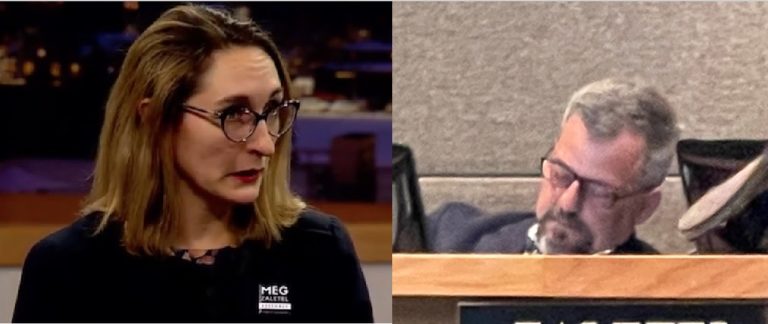
Schrage spent considerable energy on the floor arguing about corruption and how pervasive it is in politics in Alaska, while Rep. Zack Fields rocked back and forth in his chair and stared at him. Fields is employed by a union, Laborers Local 341, for which he makes up to $100,000 a year, in addition to drawing a more than $50,400 annual salary as a lawmaker. He was caught in 2020 for failing to disclose his finances to the Alaska Public Offices Commission.

The bill has been sent to the Senate for consideration. It will likely be referred to at least one committee there, State Affairs, chaired by Sen. Mike Shower of Wasilla.

Listen to a breathless Rep. Schrage argue for his bill at this link:

Breaking: Ninth Circuit rules in favor of King Cove Road

The Ninth Circuit Court of Appeals on Wednesday reversed a decision by a federal judge who had rejected a deal made during the Trump Administration that would allow a road to King Cove from the Cold Bay Airport.

The road would need to traverse a small portion of the Izembek National Wildlife Refuge, and is designed as a one-lane gravel road to allow King Cove residents limited access to an airport that would allow life-saving medical transportation. Several environmental groups have sued to stop the road from being built.

The Ninth Circuit held that the former Secretary of Interior’s interpretation of the Alaska National Interest Lands Conservation Act’s purposes was correct. Congress gave the Secretary discretion balance the needs of humans and the environment.

The court held that Secretary David Bernhardt, who has since been replaced by Secretary Deb Haaland, exercised that discretion appropriately when he found that, without a road, the human health needs of the people of King Cove were disadvantaged.

The court also noted that Sedwick’s reading of ANILCA was contrary to the Supreme Court’s ruling in Sturgeon v. Frost, and concluded that the Bernhardt had properly considered economic and social needs of Alaskans against the other statutory purposes in weighing the land-exchange agreement. In the Sturgeon ruling, the Supreme Court sided with hunter John Sturgeon in his claim that navigable waters of Alaska are state-controlled, not federally controlled.

The Biden Administration joined with Native corporations and the State of Alaska in seeking the reversal of the district court’s ruling.