Wednesday, October 21, 2026
Home Blog Page 905

Ben Carpenter: Alaska’s grand jury system has been compromised by the judicial system that controls it

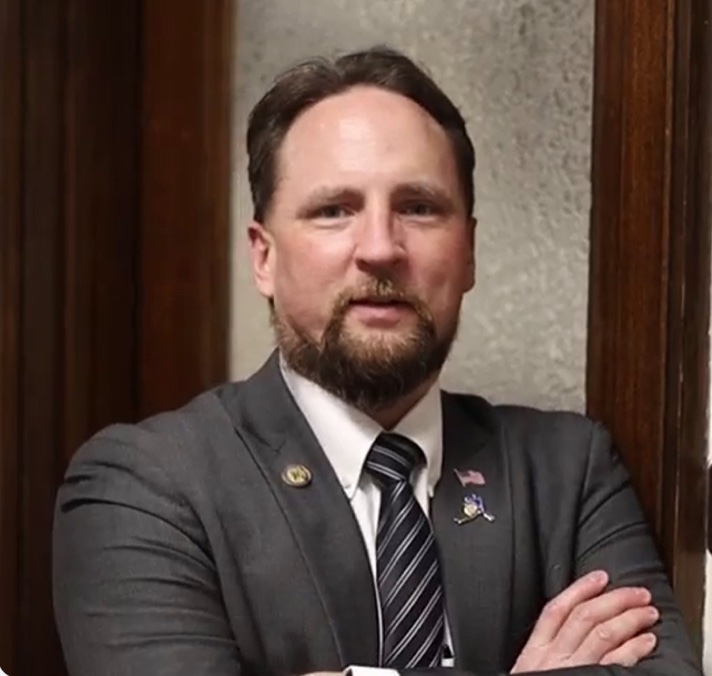
By REP. BEN CARPENTER

On this day, 246 years ago, the American colonies took the first steps toward self-governance and independence from the British Empire with the signing of the Declaration of Independence.

The justification for upending order in the New World is preserved in the declaration’s identification of the British crown’s usurpation of natural rights and other grievances, and the British failure to heed past colonial warnings. The declaration boldly concludes by asserting the intention for self-determination as united states as preferrable to enduring the continued tyranny of the British monarchy. Acknowledging the need for divine protection, and pledging each other their livelihoods and personal honor, the colonists began a new nation:

“We, therefore, the Representatives of the united States of America, in General Congress, Assembled, appealing to the Supreme Judge of the world for the rectitude of our intentions, do, in the Name, and by Authority of the good People of these Colonies, solemnly publish and declare, That these united Colonies are, and of Right ought to be Free and Independent States; that they are Absolved from all Allegiance to the British Crown, and that all political connection between them and the State of Great Britain, is and ought to be totally dissolved; and that as Free and Independent States, they have full Power to levy War, conclude Peace, contract Alliances, establish Commerce, and to do all other Acts and Things which Independent States may of right do. And for the support of this Declaration, with a firm reliance on the protection of divine Providence, we mutually pledge to each other our Lives, our Fortunes and our sacred Honor.” 

Almost two and a half centuries later, Alaskans are facing off against another King George. State judicial officers, acting as kings and queens of their own court, on numerous occasions have unilaterally disregarded the constitution that enables our self-determination.

Further complicating the matter, officers of the court employed by the executive branch have, until recently, enabled the court to control the grand jury to the extent that its authority to investigate matters concerning public welfare and safety have been effectively suspended – I suspect for nearly 30 years.

Article 1, Section 8 of the Alaska State Constitution reads (emphasis mine):  

“No person shall be held to answer for a capital, or otherwise infamous crime, unless on a presentment or indictment of a grand jury, except in cases arising in the armed forces in time of war or public danger. Indictment may be waived by the accused. In that case the prosecution shall be by information. The grand jury shall consist of at least twelve citizens, a majority of whom concurring may return an indictment. The power of grand juries to investigate and make recommendations concerning the public welfare or safety shall never be suspended.”

On several occasions since I was first elected, judicial officers and officers of the court have prevented individual members of the grand jury from speaking to the other members of the grand jury about crimes that they would like the grand jury to consider investigating. This accusation was brought to my attention several years ago and my own investigation suggests that this behavior has been happening for many, many years. Current bureaucratic processes in our state’s criminal justice system treat the grand jury as a tool of the district attorney’s office, without a process to investigate any matter not brought to the grand jury by the prosecuting attorney.

Previous attorneys general were either not in office long enough to work with or were unwilling to address this issue. Attorney General Treg Taylor has demonstrated a willingness to follow the Constitution and state statutes and our discussions resulted in a change of policy from the Department of Law. No longer are prosecuting attorneys to behave as gatekeepers for what grand juries may investigate.

This is a major shift from “business as usual” and bureaucratic processes will take some time to catch up. Not much time though. Events last week demonstrated that the new process within the department of law was followed. But the judiciary is its own branch of government and not responsible for adherence to executive branch policy changes.

We now have a constitutional crisis. On June 29, the majority members of the Kenai Grand Jury voted to initiate an investigation into a matter concerning the public welfare and safety upon request by one of the members of the grand jury.

As the grand jury proceedings are secret, I have no firsthand knowledge of what was discussed. I am told that one of the topics of investigation was to be public corruption within the judiciary. Witnesses, members of the public, were present within the courthouse but separated from the grand jury by locked doors controlled by judiciary staff.

Judge Jennifer Wells of Kenai permanently dismissed the grand jury, thereby preventing members from beginning their investigation. This outcome is a matter of record and is indisputable. 

Judge Wells needs to immediately recall the members of the dismissed grand jury and afford them the opportunity to conduct their investigation as they are constitutionally and statutorily empowered to do. Anything less is an injury to justice for Alaskans.

Other Alaskans have been working their own agenda to bring about change. My advice to these Alaskans has remained consistent: Be professional, be patient, and work within our systems to affect change. My response to one constituent’s request included my correspondence with the director of the Criminal Division within the Department of Law.

Because my discussions with members of the administration are ongoing regarding improving our grand jury processes, I asked that my private communication not be used for other’s agendas. But since parts of my private communication have been published by at least one online media source, I am providing the full email communication for context. 

Ms. Kemp,

Thank you for your swift reply. I believe we may have miscommunicated or my question was not clear. I have conducted my own assessment of the statutes and criminal rules and am providing a fairly lengthy response to your answer. I am very committed to finding a resolution to this issue that puts Alaskans first.

I wanted to know if a private citizen can present information about a suspected crime to a grand jury?

Criminal rule 6 describes the grand jury process and rule 6(k) should be interpreted as part of that process. I believe you have taken criminal rule 6(k) out of context with your response to my question. Criminal rule 6(k) provides procedural guidance on who is allowed to be in the room once the grand jury proceedings begin. Criminal rule 6(k) doesn’t address the circumstances by which the proceedings are initiated nor who presents information to a grand jury. Furthermore, state statute provides authority for grand jury investigations (AS 12.40.030-040) and for grand juries to act upon indictments presented to the grand jury by the prosecuting attorney (AS 12.40.070(1)). The authority for grand juries to investigate crime is a separate statute than that of the statutory requirement to act upon indictments presented to the grand jury by the prosecuting attorney. State statute doesn’t place the grand jury under the authority or jurisdiction of the district attorney. Likewise, neither criminal rule 6 nor 6.1 place the grand jury under the authority or jurisdiction of the prosecuting attorney.

Criminal rule 6 lays out in a general sense, and in logical sequence, how grand jury proceedings are to be conducted. Rule 6(a) directs that the presiding superior court judge shall convene the grand jury. The authority to cause members of the public to come together for the purpose of engaging in grand jury proceedings rests with the presiding superior court judge and logically, that judge must have some cause for convening a grand jury. Criminal rule 6(d) directs that at least once a year the presiding superior court judge (in each district) shall order one or more grand juries to be convened “at such times as the public interest requires” and those jurors may serve no longer than 4 months (unless extended for good cause). The inclusion of a time limit indicates an acknowledgment that a single grand jury investigation could last a long time (and potentially need to be extended), or possibly, the number of expected proceedings are best addressed with a continuity of individual grand juror members. In any event, it is clear that grand jury proceeding occurrences may range from once a year to continuously occurring and that the presiding judge makes a determination of necessity.

Criminal rule 6(d) directs the convening of a grand jury at least once a year – without regard for whether or not a prosecuting attorney has information to present to a grand jury. As criminal rule 6(e)(1) directs jurors to diligently inquire about information that “shall otherwise come to your knowledge,” as opposed to matters “given to you for consideration,” criminal rule 6(d) allows for the possibility that the public interest is served by convening a grand jury for reasons other than at the request of the prosecuting attorney.  

Criminal rule 6(d) indicates that the presiding superior court judge retains the discretion for determining when the public interest requires a grand jury proceedings. The presiding superior court judge is likely to determine a grand jury proceeding is in the public interest when the prosecuting attorney indicates there is a public need. The presiding superior court judge could also determine a grand jury proceeding is in the public interest when a member of the public raises allegations of criminal wrongdoing of a nature that would best be addressed by a grand jury, such as public corruption. The very next section of criminal rule 6 identifies the behavior expectations of grand jurors that speaks to whether or not prosecutorial necessity is the only reason a grand jury proceeding may be in the public’s best interest.

Criminal rule 6(e)(1) directs a specific oath to be administered to grand jurors. That oath requires: jurors to “diligently inquire” and make true presentments of all matters “given to you for consideration” or, “shall otherwise come to your knowledge in connection with your present service” as a grand juror. The oath is written to indicate that matters that require “diligent inquiry” may be presented to the juror (presumably by the presiding judge, prosecuting attorney, or some other person), or may arrive to the juror in some other manner. The end of the oath also has a requirement that jurors act appropriately, however the information is obtained. The oath requires the juror to “present all things truly and impartially” without allowing envy, hatred, or malice to color their deliberation, nor fear (of intimidation? of reprisal?), affection, gain, or reward, or hope thereof as information “shall come to your knowledge…”. The juror’s oath is clear evidence that matters presented from the usual manner and course of prosecutorial criminal proceedings is not the only matters jurors must be prepared to diligently inquire about.

Criminal rule 6(e)(2) directs the court to “charge the jury” with written instructions regarding their powers and duties. Presumably, these powers and duties support and reinforce the oath that each juror just took. Perhaps the jurors may learn about the matter to be considered at this time? Perhaps the matter will be presented at a later date?

Criminal rule 6(f) informs about procedures for alternate jurors and how to deal with objections to the grand jury or grand jurors.

The substantial authority for the grand jury to investigate “matters given to them” or “matters that come to your knowledge” and generate indictments from those investigations is further defined in Rule 6(g). Even if some members of the grand jury are found to lack “legal qualification”, as long as the majority of the jurors do not, an indictment shall not be dismissed nor a report expunged upon the ground that one or more of the jurors were not legally qualified. This rule indicates a high level of importance on the deliberations of the majority members of the grand jury, even when the array of jurors is imperfect. When considering the original question above, there is no higher investigatory body with more authority to which individual citizens can present their evidence of criminal activity. When the usual manner and course of prosecutorial criminal proceedings is not trusted, the grand jury is the only investigatory body to which evidence of public corruption can be presented with confidence.

Rule 6(h) directs the appointment of the foreperson and imbues the individual juror with the power to administer oaths. The power to administer an oath to someone the grand jury demands information from is not at the discretion of the presiding judge nor prosecuting attorney. The power to administer an oath to compel the truth of the matter from any source during an investigation is an indicator that there is no gate keeper to grand jury authority to investigate.

Rule 6(i) directs the prosecuting attorney to prepare all indictments and presentments that the grand jury determines is necessary. The prosecuting attorney shall attend meetings and advise grand jury members and examine witnesses in the presence of the grand jury. AS 12.40.070(1) directs the prosecuting attorney to submit an indictment to the grand jury but rule 6(i) directs the prosecuting attorney to prepare indictments that the grand jury intends to submit to the court. Thus far in Rule 6, no authority has been granted to the prosecuting attorney to determine what matters may come before the grand jury. Rule 6(i) directs the prosecuting attorney to assume a supportive role to the authority of the grand jury. AS 12.40.070(1) authority should not be confused with rule 6(i) authority.

Rule 6(j) directs that all proceedings must be electronically recorded.

Rule 6(k) directs who may be present during the electronically recorded proceedings and restricts who may be present during deliberations and voting. The individuals allowed to be present during proceedings are limited to the prosecuting attorney, a witness (who is likely under oath), a court clerk who is recording the proceedings, an interpreter or person transcribing for the deaf, and any law enforcement officer necessary to maintain custody of the witness. During deliberations and voting, only the jurors and an interpreter are allowed to be present. Rule 6(k) only relates to who can be present in a grand jury proceedings and only in the context of defining meeting procedures. Rule 6(k) is taken out of context if it is used to deny the general public the ability to present information to the grand jury because the rule doesn’t allow for a member of the public to attend a grand jury proceeding. Should a member of the public present themselves to the grand jury with information of a crime, the grand jury has a duty to investigate. See AS 12.40.30-40 and Rule 6(e)(1). Should the grand jury decide to investigate, the public member becomes the witness referenced within Rule 6(k).

I believe that it is possible that our grand jury process has become bureaucratically focused on the AS 12.40.70(1) grand jury process as this is the usual manner and course of prosecutorial criminal proceedings, to the exclusion of the AS 12.40.30-40 investigatory grand jury process. It is vitally important to the rule of law in Alaska that the Department of Law acknowledge the statutory authority for grand juries to investigate crime and sever any perceived supervisory relationships that may exist between prosecuting attorneys and the investigatory grand jury.

I believe I have answered my question with the only answer that exists within statute or criminal rule: The grand jury must be afforded the opportunity by our bureaucratic processes to receive complaints of criminal wrongdoing by individual citizens. If prosecuting attorneys or presiding judges believe they can be the gate keepers of the grand jury, then “the power of grand juries to investigate and make recommendations concerning the public welfare or safety is being [SHALL NEVER BE] suspended.” -Art. 1, Sec. 8 Alaska State Constitution.

Thank you again for your quick response and I hope that once you’ve had a chance to digest this lengthy email we can talk through next steps.

Sincerely,

Our form of self-government is messy and frustrating at times. It’s also prone to make mistakes because it is made up of fallible humans. It is completely understandable when people walk away in disgust or wash their hands of the burden. But we must never forget that our form of government is better than all other alternatives.

It is of the utmost importance that “we the people” continue to pledge our lives, our fortunes, and our sacred honor. In other words, our attention and resources (time and money) are necessary to maintain this experiment in self-government in good working order. We are currently experiencing dysfunction within our government, and it is a direct result of lack of attention by “we the people.” Not everyone, but enough. Voter turnout speaks volumes.

The fact that most Alaskans, myself included, didn’t realize that the investigatory grand jury hasn’t been conducting investigations for decades is louder still. 

The power of the investigatory grand jury is specifically designed to combat public corruption. Judges and lawyers must not control grand jury investigations for obvious reasons. Judges must follow the constitution, the statutes, and their own rules as they pertain to grand jury investigations. The old saying “if you have nothing to hide, you have nothing to fear from an investigation” still holds true. It will take effort by the people to ensure that they do. Call your legislative representative and raise their awareness to this issue. We may need to compel the Judiciary with legislation. Call your local courthouse and ask what their procedure is for public communication with the grand jury? If they don’t have a policy, request that they institute one. Be polite, be professional, be patient!

Please take time today to celebrate our nation’s independence. It is a gift unlike any other! Tomorrow, nurture your desire for maintaining it.

Ben Carpenter is a state representative for District 29, Nikiski, Seward, Moose Pass, Cooper Landing, Sterling, Funny River, and Salamatof.
Alaska Highway re-opens with one-way detour around Contact Creek, south of Watson Lake

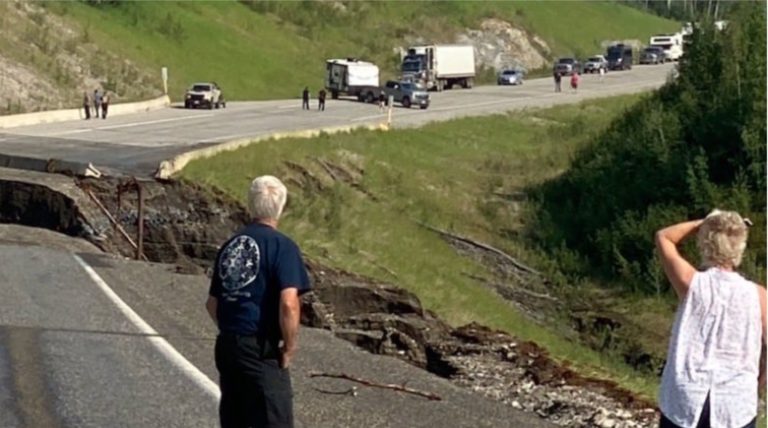
The Alaska Highway is again open at Contact Creek as a one-lane detour has been created, according to the British Columbia government. The detour is at km 900 for southbound traffic leaving Watson Lake and km 897 for northbound traffic leaving Fort Nelson. There is a pilot car guiding groups of vehicles through the detour.

The highway washed out on Friday, leaving a gaping hole in the main road to Alaska from the Lower 48. The Cassiar Highway has been advised as an alternative, but the Alcan is now passable, although likely to be slow.

Anchorage parade official prohibited campaign entries in downtown Fourth of July parade

The Anchorage Fourth of July parade hadn’t yet begun on Monday morning, and it was already controversial. Kelly Tshibaka, running for U.S. Senate, was abruptly told by the nonprofit that runs the parade that campaigns like hers would not be allowed to be in the Fourth of July Parade, even though her entry form had been approved and her entry fee accepted weeks prior. She is running against Sen. Lisa Murkowski.

The Kelly Tshibaka for Senate entry had a decked-out truck and float, and campaign volunteers walking alongside. (The one pictured above is from the 2021 Bear Paw Festival in Eagle River.) The truck had her campaign logo on it. The group had filled out the entry paperwork by the deadline and spoken to the organizer on several occasions before today’s parade to nail down the requirements. The group understood they were not to pass out campaign literature along the downtown parade route. But they were wearing campaign shirts, and that may have been the ultimate offense.

Anchorage Fairs and Festivals, which used to put on the main Independence Day parade in the city, dissolved last year and another group took over. The parade in Anchorage remains a private event and the municipality has no say in the matter.

A man from the parade organizing group, who identified himself as Bill Ross with the Veterans Fourth of July Parade Council, was adamant. The Tshibaka group finally headed their parade entry to Wasilla, where they planned to be in another parade.

Because the Anchorage parade is being run by a private organization, infringement on First Amendment free-speech rights is unlikely to apply. Private organizations can get permits to use government-owned streets for parades, just as the LGBTQ community has in the past held parades during June, which they designate as Pride Month. An LGBTQ group could just as easily prohibit an entry in their parade that referred to Bible verses. And the Veterans Fourth of July Council can prohibit whatever form of speech they like. Evidently, the vets don’t like political campaigns in the parade.

In other communities, where the cities are actually in charge of the annual parade, the ACLU has gotten involved.

In 2011, American Civil Liberties Union of Ohio called on three cities to remove free speech restrictions during their Independence Day parades. Each of the cities prohibited candidates running for office from participating in the community parade and distributing campaign literature. The cities included Cleveland-area suburbs of Bedford and Shaker Heights and Dublin, a Columbus suburb.

“Independence Day is supposed to be a celebration of freedom and democracy, yet these policies restrict our most basic First Amendment rights,” said ACLU of Ohio Legal Director James L. Hardiman at the time. “Free speech is the foundation of our political system, and political speech must be strongly protected. Candidates and the public rely on a free exchange of ideas so voters are informed when they cast their ballot.”

The Anchorage Veterans 4th of July Parade entry form spells out the details, which include absolutely no throwing of candy, no items of a social or political nature, and no performing in front of the grandstand:

We’re taking the Fourth!

Happy Independence Day to all Must Read Alaska readers! Today is kind of a big deal around here, so we’re taking the day off and hope that you can, too.

Thank you to all of our first responders — nurses, doctors, police and fire, and those who stand guard to keep the peace — for your work today that makes it possible for us to celebrate all that is good about our unique nation — the most exceptional, most promising nation in the history of the world.

May we all work to live into the promise of America — Land of the Free, Home of the Brave!

Whitehorse superstore limits supplies due to road closure

A washout on a section of the Alaska Highway has led to the Whitehorse Real Canadian Superstore limiting the number of essential products for sale, including toilet paper, paper towels, milk, eggs, water, flour, and sugar, according to the store’s Facebook page. Limits are two per customer, as the store tries to discourage hoarding.

Travel between Yukon Territory and British Columbia has been detoured to the Cassiar Highway after the Alcan highway washed out at Contact Creek. The highway was damaged British Columbia side of the border, 77.6 miles north of Liard Hot Springs. 

Whitehorse, a town of 25,000, is the major commercial hub and is the largest city in northern Canada. The city and the highway serve a large territory dotted with small towns and villages. People in Alaska cities of Skagway and Haines/Klukwan also use Whitehorse as a commercial hub.

On this day in 2009, Sarah Palin quit

On July 3, 2009, then-Gov. Sarah Palin announced she was resigning as governor of Alaska. She had 17 months left in her term, and had been savaged by the media, both local and national. It was just too much for her to continue.

At a press conference outside her home in Wasilla that day, Palin said she had decided to not run for reelection and that being a “lame-duck” governor was not her style.

“Once I decided not to run for re-election, I also felt that to embrace the conventional ‘lame-duck’ status in this particular climate would just be another dose of ‘politics as usual,’ something I campaigned against and will always oppose,” she said.

“As I thought about this announcement that I would not seek re-election, I thought about how much fun other governors have as lame ducks. They maybe travel around their state, travel to other states, maybe take their overseas international trade missions.” 

She heralded her successes passing the ACES tax regime, which jacked up taxes on oil producers, and she included in her successes progress made on a gas line from the North Slope.

“I look forward to helping others — to fight for our state and our country and campaign for those who believe in smaller government, free enterprise, strong national security, support for our troops and energy independence,” she said.

Nick Begich III, who is running against Palin for Congress, wants people to remember what else Palin said at the time. His campaign launched a scathing ad over the Independence Day weekend, calling out Palin for being a quitter:

In 2020, after a career in news media, book deals, and social media domination, Palin posted on Instagram an unusual teasing video that indicated she might run against Sen. Lisa Murkowski:

Palin announced her candidacy for Congress on April 1, 2022 after the death of Congressman Don Young. Begich had announced his candidacy in late October, a year after he had helped Congressman Young to his final victory as Alaska’s only congressional representative. After Young’s death, 47 others had joined the primary election. Only Begich, Palin, and Mary Peltola now remain for the final ranked choice voting general election, to be held on Aug. 16, at the same time as the regular primary.

Palin’s July 3, 2009 resignation speech in full:

I appreciate you all being here and I just want to say hi to Alaska, I appreciate speaking directly to the people that I serve, as governor. And I thank you all for coming here today on the shores of Lake Lucille. This is a source of inspiration for my family and for me. And I’m thankful that Todd flew in last night from commercial fishing grounds in Bristol Bay to stand by my side as always.

It’s the eve of our celebration of independence as a nation. It’s a time to remember our nation’s dear souls who sacrificed so selflessly so that we all may live in freedom. From the shores of Maine to Texas and California to the tip of Barrow, we live in peace because centuries ago so many fought for something far greater than themselves. And so many continue to fight for us today and so I say, God bless our military on this eve of Independence Day.

Well, people who know me know that besides faith and family, nothing is more important to me than our beloved Alaska. Serving her people is the greatest honor that I could imagine.

I want Alaskans to really be able to grasp what can be in store for our state. We were purchased as a territory because a member of President Abraham Lincoln’s cabinet, William Seward, he providentially saw in this great land vast riches and beauty and strategic placement on the globe and opportunity. He boldly looked north to the future. But he endured such ridicule and mocking for his vision for Alaska, remember the adversaries, they scoffed and they called this “Seward’s Folly.” Seward withstood such disdain as he chose the uncomfortable, unconventional but right path to secure Alaska, so that Alaska could help secure the United States.

Alaska’ mission: to contribute to America. We’re strategic in the world as the air crossroads of the world, as a gatekeeper of the continent. And bold visionaries, they knew this. And they knew that Alaska would be part of America’s great destiny. Our destiny to be reached by responsibly developing our natural resources. This land blessed with clean air and water and wildlife and minerals and oil and gas. It’s energy. God gave us energy. So to serve the state, it is such a humbling responsibility because I know in my soul that Alaska is of such import for America’s security in such a volatile world today.

And I know that, you know me by now, I promised four years ago that I would be showing my independence and there would be no more conventional politics as usual.

We’re doing so well, my administration. My administration’s accomplishments, they speak for themselves. We work tirelessly for Alaskans.

We aggressively and responsibly develop our resources because they were created to be used to better our world, to help people. And we protect the environment and Alaskans, the resource owners, foremost with our policies. Here’s some of the things that we have done:

We created a petroleum integrity office to oversee safe development. We held the line for Alaskans on Point Thomson — and finally for the first time in decades — you’re seeing drilling up there for oil and gas.

We have AGIA, the gasline project — a massive bipartisan victory; the vote was 58 to 1 — also succeeding as intended, protecting Alaskans as our clean natural gas will flow to energize Alaska and America. It’s through very different than what had happened before. This time it’s through a very competitive, pro-private sector project. This is the largest private-sector energy project ever. this is energy independence.

And ACES — another bipartisan effort — it’s working as intended and industry is publicly acknowledging its success. Our new oil and gas clear and equitable formula, it’s so Alaskans will no longer ever be taken advantage of. ACES incentivizes new exploration and development and jobs that were previously not going to happen, not with a monopolized North Slope oil basin.

We cleaned up previously accepted unethical actions, and we ushered in bipartisan ethics reform.

We also slowed the rate of government growth. We worked with the Legislature to save billions of dollars for our future. And I made no lobbyist friends with my hundreds of millions of dollars in budget vetoes, but living beyond our means today is irresponsible for tomorrow.

We took government out of the dairy business. We put it back into the private-sector’s hands — where it should be.

We provided unprecedented support for education initiatives, and with the right leadership, we finally filled long-vacant public safety positions. We built a sub-cabinet for climate change and took heat from outside special interests for our biologically sound wildlife management for abundance practices — predator control.

We broke new ground on the new prison.

We made common-sense conservative choices to eliminate personal luxuries. Things like the jet and the chef and the junkets and the entourage. And the lieutenant governor and I, we said no to our pay raises. Really there is so much success in this first term. And this success I am proud to take credit for hiring the right people.

Our goal was to achieve a gasline project and more fair oil and gas valuation and ethics reform in four years. We did it in two. And it’s because of the people. The good people, good public servants surrounding the governor’s office with servants’ hearts and astounding work ethic. They are Alaska’s success. And we are doing well. And I really wish that you would hear more from the media. More from the media of your state’s good progress and how we tackle outside interests, special interests daily we’re tackling. Those interests that would stymie our state even those debt-ridden stimulus dollars. They would force the heavy hand of federal government into our communities with an all-knowing attitude. I’ve taken the slings and arrows with that unpopular move because to veto that it was the right thing to do because I know being right is better than being popular. — and it was an unpopular stand to take. Some of those dollars would harm Alaska and they harm America. I resisted those dollars because of the obscene national debt that we’re forcing our children to pay because of today’s big government spending. It is immoral and it doesn’t even make economic sense.

Another accomplishment: Our law department protected states’ rights. Two huge Supreme Court reversals came down against that liberal 9th Circuit deciding in our state’s favor just over the last two weeks. We’re protectors of our constitution. And Federalists protect states’ rights, as mandated in the 10th Amendment.

You don’t hear much about the good stuff in the press anymore, though, do you? Some say things changed for me on August 29th last year — the day that John McCain tapped me to be his running mate. And it was an honor to stand beside a true American hero. I say others changed, and let me to speak to that for a minute.

Political operatives descended on Alaska last August, digging for dirt. The ethics law that I championed became their weapon of choice over the past nine months. I’ve been accused of all sorts of frivolous ethics violations, such as holding a fish in a photograph or wearing a jacket with a logo on it and answering reporters’ questions. Every one of these, though, all 15 of the ethics complaints have been dismissed. We have won, but it hasn’t been cheap. The state has wasted thousands of hours of your time and shelled out some two million of your dollars to respond to opposition research and that’s money that’s not going to fund teachers, or troopers or safer roads.

And this political absurdity, the politics of personal destruction, Todd and I, we’re looking at more than half a million dollars in legal bills just in order to set the record straight. And what about the people who offer up these silly accusations? It doesn’t cost them a dime. So they’re not going to stop draining the public resources, spending other people’s money in this game. They won’t stop.

It’s pretty insane. My staff and I spend most of our day — we’re dealing with this stuff instead of progressing our state now.

And I know that I promised no more politics as usual but this isn’t what anyone had in mind for Alaska.

If I’ve learned one thing it’s that life is about choices and one chooses how to react to circumstances. You can choose to engage in things that tear down or that build up and I choose to work very hard on a path for fruitfulness and productivity. I choose not to tear down and waste precious time but to build up this state and our great country and her industrious and generous and patriotic and free people.

Life is too short to compromise time and resources and though it may be tempting and more comfortable to just kind of keep your head down and plod along and appease those who are demanding, hey, just sit down and shut up. But that’s a worthless, easy path out. That’s a quitter’s way out. And I think a problem in our country today is apathy. It would be apathetic to just kind of hunker down and go with the flow. We’re fishermen and we know that only dead fish go with the flow.

No productive fulfilled people determined where to put their efforts choosing to wisely use precious time to build up — and there is such a need to build up — and fight for our state and our country and I choose to fight for it. And I’ll work very hard for others who still believe in free enterprise and smaller government and strong national security for our country and support for our troops and energy independence and for those who will protect freedom and equality and life.

I’ll work hard for and I’ll campaign for those who are proud to be American and who are inspired by our ideals and they won’t deride them. I will support others who seek to serve in or out of office, and I don’t care what party they’re in or no party at all, inside Alaska or outside of Alaska.

But I won’t do it from the governor’s desk. I’ve never believed that I nor anyone else needs a title to do this, to make a difference, to help people. So I choose for my state and for my family more freedom to progress all the way around.

So that Alaska will progress, I will not seek re-election as governor. And so as I thought about this announcement, that I wouldn’t run for re-election and what that means for Alaska, I thought about, well, how much fun some governors have as lame ducks. They maybe travel around their state, travel to other states, maybe take their overseas international trade missions. So many politicians do that. And then I thought, that’s what wrong. Many just accept that lame duck status and they hit the road, they draw a paycheck, they kind of milk it, and I’m not going to put Alaskans through that.

I promised efficiencies and effectiveness. That’s not how I’m wired. I’m not wired to operate under the same old politics as usual. I promised that four years ago and I meant it. That’s not what is best for Alaska at this time. I’m determined to take the right path for Alaska, even though it is unconventional and it’s not so comfortable.

With this announcement that I’m not seeking re-election, I’ve determined it’s best to transfer the authority of governor to Lieutenant Governor Parnell. And I am willing to do this so that this administration with its positive agenda and its accomplishments and its successful road to an incredible future for Alaska so that it can continue without interruption and with great administrative and legislative success.

My choice is to take a stand and effect change and not just hit our head against the wall and watch valuable state time and money, millions of your dollars, go down the drain in this new political environment. Rather we know we can effect positive change outside government at this moment in time, on another scale, and actually make a difference for our priorities — and so we will, for Alaskans and for Americans.

Let me go back quickly to a comfortable analogy for me — sports, basketball. And I use it because you are naïve if you don’t see a full-court press from the national level picking away right now. A good point guard, here’s what she does. She drives through a full court press, protecting the ball, keeping her head up because she needs to keep her eye on the basket. And she knows exactly when to pass the ball so that the team can win. And that is what I’m doing — keeping our eye on the ball that represents sound priorities — you remember they include energy independence and smaller government and national security and freedom! And I know when it’s time to pass the ball for victory.

And I’ve given my reasons now, very candidly, truthfully. And my last day won’t be for another few weeks so the transition will be very smooth. In fact, we look forward to swearing in Sean Parnell up there in Fairbanks at the conclusion of our governor’s picnic at the end of the month.

And I really don’t want to disappoint anyone with this announcement, not with the decision that I have made. my decision. All I can ask is that you trust me with this decision and know that it is no more politics as usual.

And some Alaskans it seemed today, maybe they don’t mind wasting public dollars and state time but I do. And I cannot stand here as your governor and allow the millions of dollars and all that time go to waste just so that I can hold the title of governor. And I don’t know if my children are going to allow it anyway. 

Some are going to question the timing of this. And let me must say that this decision has been in the works for a while. In fact, this decision comes after much consideration, prayer and consideration. And finally I polled the most important people in my life, my kids, where the count was unanimous. Well, in response to asking: “Do you want me to make a positive difference and fight for all our children’s future from outside the governor’s office?” It was four yeses and one “hell yeah!” And the “hell yeah” sealed it — and someday I’ll talk about the details of that.

I think, though, much of it for the kids had to do with recently seeing their baby brother Trig mocked and ridiculed by some pretty mean-spirited adults recently. And by the way, I sure wish folks could ever understand all that we can learn, all of us, from someone like Trig. I know he needs me, but I know I need him even more. And what a child can offer to set priorities right — know that time is precious. The world needs more Trigs, not fewer.

My decision was also fortified during this most recent trip to Kosovo and Landstuhl to visit our wounded soldiers overseas, those who truly sacrifice themselves in war for our freedom and our security. And we can all learn from our selfless, selfless troops. They’re bold and they don’t give up and they take a stand and they know that life is short so they choose not to waste time. They choose to be productive and to serve something greater than self and to build up their families and their states and our great country. These troops and their important missions now, there is where truly the worthy causes are in this world and that’s where our public resources should be our public priority with time and resources spent on that, not on this superficial, wasteful political bloodsport. So may we all learn from them.

Really, we’ve just got to put first things first. And first things first as governor, I love my job and I love Alaska. And it hurts to make this choice but I’m doing what’s best for Alaska, and I have explained why. Though I think of the saying on my parents’ refrigerator, a little magnet that says, “Don’t explain: your friends don’t need it and your enemies won’t believe you anyway.”

But I’ve given my reasons. It’s no more politics as usual and I’m taking my fight for what’s right for Alaska in a new direction.

Now, despite this, I sure don’t want anyone, any Alaskan dissuaded from entering politics after seeing this real climate change that began in August. No, we need hardworking, average Americans fighting for what’s right. And I will support you because we need you and you can effect change, and I can too on the outside.

We need those who will respect our Constitution where government’s supposed to serve from the bottom up, and not move toward this top down, big government takeover but rather will be protectors of individual rights — who also have enough common sense to acknowledge when conditions have drastically changed and are willing to call an audible and pass the ball when it’s time so the team can win. And that’s what I’m doing.

Remember Alaska, America is now, more than ever, looking north to the future. And it’ll be good. So God bless you, and from me and from my family to all Alaska, you have my heart.

Angela Rodell hired by asset technology company in NYC

Angela Rodell, former executive director of Alaska Permanent Fund Corp., has been name a senior advisor at AssetTech pioneer Pepper as a senior advisor to CEO Pulak Sinha. In this role, Rodell will complement ongoing business development activities, introduce Pepper into new markets, and act as the “voice of the customer” to CTO Karan Singh as the team works to innovate and extend the Pepper platform.

Most recently, Rodell oversaw $80 billion in assets. She was released by the Board of Trustees after continued tension between her and the governing boy. In the Parnell Administration, she had served as Commissioner of Revenue. She is a past chair and deputy chair for the International Forum of Sovereign Wealth Funds and is the current chair for the Pacific Pension and Investment Institute.

“Angela’s experience, wisdom, and deep knowledge of the investment management side of the business is a boon for Pepper, as we continue to develop the leading AssetTech platform on the market. AssetTech is an $84 billion industry and Angela is a proven leader and educator in this space,” said Pulak Sinha, CEO and co-founder of Pepper.

Pepper is credited with coining the term “AssetTech,” which refers to all technologies used to help Asset Managers – especially in illiquid and alternative markets – to leverage data to drive ROI and manage risk. Pepper’s recent rise in the market place is a testament to the need for platforms that help Managers, Investors, and Allocators steward the $120 trillion Assets under Management worldwide.

“From the start, I was impressed by the comprehensive nature of the platform and the intuitive and modular design, allowing it to be highly business-focused and easy to implement and use,” said Rodell. “Data is the lifeblood of this business and we have to put data in the service of return in an agile fashion while managing risk, reputation, and regulation. Pepper’s platform is unique.”

Attempts to tie up Trump rally tickets to suppress attendance won’t work, organizers say

While Democrat activists have been busy trying to figure out a way to tie up tickets for the Trump Save America rally on July 9 at the University of Alaska Anchorage’s Alaska Airlines Center, it’s not working.

On Twitter, Trump detractors have been sharing ideas for how to reserve tickets they don’t plan to use. The effort has fallen flat, because the free tickets to the Trump rally do not actually reserve a seat — they are first-come, first-served. The line for the July 9 rally opens at 6 am. The free ticket signup is mainly to help organizers of the event — the Trump organization — understand how many people to expect.

In 2020, the now-disgraced Lincoln Project engaged in an effort to suppress attendance at a Trump rally when one of the project’s leaders helped his daughter run a social media stealth campaign to get young liberals across the country to tie up all the free tickets to a Tulsa, Oklahoma rally.

The ploy went viral across the country and sucked up thousands of tickets, making it look like more than a million people had requested tickets to the Tulsa rally, which then suppressed attendance, since people who wanted to go realized they would never get into the venue. The media then reported that the turnout was disappointing to the Trump campaign, and that became the narrative that led the news cycle.

That won’t work this time. The Alaska Airlines Arena on the campus of UAA holds 5,000. Only those with purchased tickets are guaranteed a seat, and those tickets are limited. Those who show up and stand in line are not guaranteed to get in.

“If people want to skip the line and buy a guaranteed seat, they can contact the campaign at [email protected] and we will send them a link,” the Kelly for Alaska campaign said.

A political action committee for Sarah Palin for House and Kelly Tshibaka for Senate also announced a special event planned for before the rally to raise money for the two as they seek offices in the U.S. House and U.S. Senate. The “Alaska First Fund” is a subfund of the Save America Leadership PAC affiliated with Trump.

Since forming, the Save America PAC has received $124.4 million in contributions and still has significant reserves.

Sealaska drops ‘blood quantum’ requirement for shareholders, opening up applications for descendants

Sealaska shareholders last month voted in favor of a resolution extending eligibility for Class D (Descendant) stock in Sealaska to lineal descendants of original shareholders, without respect to their documented Alaska Native blood quantum. Lineal is a blood relative in the direct line of descent – children, grandchildren, great-grandchildren, etc. of a person.

The blood quantum resolution was approved by a vote of 750,283 to 497,946, or 57% of shareholders in favor and 40% opposed.

Sealaska joins Calista and Arctic Slope Regional Corporation in abandoning the practice of quantifying degree of Native blood in order to be a shareholder. 

Blood quantum laws were established in the British Colonies to define membership in Native American tribes. For example, 1/4 Tlingit, or 1/16 Haida. When the Alaska Native Claims Settlement Act was passed in 1971, it established eligibility for shareholder membership in one of the 13 Alaska Native Corporations and village corporations as one quarter Alaska Native blood quantum. Over time, the number of original shareholders has died, and some of their descendants don’t have the required blood quantum.

Sealaska President and CEO Anthony Mallott approved of the change.

“I want to thank our shareholders for having the difficult conversations and doing the soul searching that so many did as we discussed this resolution in virtual meetings and on social media this spring,” said Mallott. “This result is consistent with our traditional values as well as our commitment to diversity, equity and inclusion as a company.” 

“Elimination of the blood requirement is a monumental step in our healing journey. We, no doubt, have our share of challenges in our communities. This arbitrary rule will no longer be one of them organizationally,” said Sealaska board chair Joe Nelson. “I believe that most of our grandparents wanted to hold the door open for all their grandchildren, not just some of them. Whether or not the grandchildren walk through the door and enroll, that is up to them.” 

The meeting included a 2021 business and financial report to shareholders. Sealaska’s net income grew by $5 million over 2020 to $61 million in 2021. Shareholder benefits spending was $26.7 million in 2021, down from $28.5 million in 2020, when Sealaska provided $1.8 million in pandemic-related additional benefits. The Southeast Alaska-based Native Corporation has a $700 million business portfolio.