Monday, May 11, 2026
Home Blog Page 887

Art Chance: Dirty deeds, done expensively, hiding labor agreements in the operating budget

By ART CHANCE

As I was researching my column on the AFL-CIOโ€™s war on Alaskans’ Permanent Fund dividend, I discovered something nobody has been talking about: the fix is in for the AFL-CIO to get about the equivalent money as the PFD and energy stipend for their own members, and has it safely ensconced in the operating budget.

While nobody was looking or saying anything, the Dunleavy Administration has been bargaining with State employee unions and has reached agreements with at least some of them.ย The agreements appear to be on a pattern of a three-year agreement with general wage increases of 3.5% – 2% – CPI capped to 5%.ย 

If you believe the CPI will be less than 5% three years from now, letโ€™s get together and talk about my bridge. That is a 10% general wage increase over the next three years, in addition to the merit or longevity step increases of about 3% per year.

The average wage for a general government employee, one of the units to which this agreement would apply, is about $75,000/year, so that is a $7,500 general wage increase over three years, plus step increases.ย If the employee is in merit steps, less than five years seniority in the job classification, s/he will get a 3-3.5% increase each year.ย After five years the employee moves into longevity steps, which are 3% increases at intervals of every two or three years.ย Nice work if you can get it, but rest assured they all think theyโ€™re overworked and underpaid.

The unions donโ€™t like it, but they canโ€™t just buy a governor and get sweetheart deals automatically.ย The โ€œmonetary termsโ€ of an agreement must be reported to and approved by the Legislature, and the Legislature hasnโ€™t always approved.ย Gov. Bill Sheffield negotiated a deal with most of the unions for the 1984-1986 term that had a 3.6% increase in 1986.ย The price of oil went in the toilet in 1985 and the Legislature refused to fund that third-year increase; a decade and a half long war ensued.

Prior to the oil price crash, the Stateโ€™s labor relations policy had generally been to โ€œask the unions what they want,โ€ and nobody really understood much about the rights and duties of the parties.ย Gov. Jay Hammond got a little frisky with the supervisors and they went on strike, but it was mostly a charade.ย Then the marine unions struck and getting them back to work was akin to โ€œThe Ransom of Red Chief.โ€ย Nobody wanted to play rough with unions after that but in the mid-80s the State had to, and first it had to learn how.

State bargaining is controlled by the Public Employment Relations Act (AS 23.40.070-260). Section 215 of PERA set out the Legislatureโ€™s authority over monetary terms and the process by which the Administration was to report the monetary terms.ย I donโ€™t recall the precise terms of the commissioner of Administrationโ€™s report in 1984, but in the critical year, 1986, the Sheffield Administration asked for a supplemental appropriation to support the wage increases called for by the agreements.ย The Legislature refused to pass the supplemental, and the Supreme Court held that the refusal constituted the disapproval action authorized by Section 215.

We kept an uneasy peace during the Steve Cowper Administration, basically one was scared and the other was glad of it.ย During that uneasy peace, we who came to State labor relations during the Cowper Administration got very busy trying to figure out how to work that PERA thing.

During the Hickel Administration, one of the things we concentrated on was figuring our what Section 215 required.ย I wrote a briefing memo late in the Hickel Administration that set out our best understanding of the rights and duties of the parties. That memo served as a โ€œhow-toโ€ manual during Hickel and became a โ€œhow to work around itโ€ manual in the Tony Knowles Administration.

The work around culminated when the Knowles Administration โ€œworked withโ€ the Legislature to revise Section 215 in such a way as to render it incomprehensible.ย During my tenure as Director of Labor Relations during the Murkowski Administration I negotiated 28 discrete labor agreements including full three-year agreements for the last threeย ย years of the Administration.ย I did it the old-fashioned way with a detailed report of all the monetary terms to each body of the Legislature and we put a separate line in the budget for the cost of the terms of each agreement.ย I donโ€™t remember if the Legislature ever took an approval action on the report but they did approve the appropriations, which had the same legal effect.

After the Frank Murkowski Administration, I donโ€™t think any action was taken on monetary terms reports, and costs of labor agreements were just included as increments in budget requests.ย I doubt this comports with the Legislatureโ€™s intent in enacting Section 215, but the Alaska Supreme Court has concluded that approval of the budget is sufficient.ย 

I donโ€™t think the Gods in Black Robes really considered the mischief that could be done by just hiding labor agreement costs deep in the operating budget.

So, now that youโ€™ve had a crash course in the PERA that you didnโ€™t sign up for, the heart of the matter is this: The AFL-CIO can make a kill shot on the PFD for people who lost work and lost jobs and businesses during the scamdemic, because with either the acquiescence or complicity of the Dunleavy Administration, they have baked a payment of even more money into the operating budget that is to go to the people who never missed a dayโ€™s pay during the scamdemic.

Letโ€™s see which legislators vote for what.ย If they did not vote for the full PFD and the energy stipend but vote for the operating budget, you know they bought into the fix and they donโ€™t represent the people but rather the special interests.

Art Chance is a retired Director of Labor Relations for the State of Alaska, formerly of Juneau and now living in Anchorage. He is the author of the book, โ€œRed on Blue, Establishing a Republican Governance,โ€ available at Amazon. 

Art Chance: From โ€˜flatten the curveโ€™ to flatten the country, thanks to experts

Jodi Taylor: Private school, state reimbursement, and family choice is available to parents in Alaska

By JODI TAYLOR

Alaskan parents have a legitimate right to choose the school that is the best fit for their children, even if that is a private school. There is an opportunity – which has been hiding from public view – for families to use their childrenโ€™s education allotment funded through the stateโ€™s Base Student Allocation for classes at private schools, in addition to other educational options.

In 2014, educator and then-Sen. Mike Dunleavy sponsored and carried to passage aย statuteย that allows a parent or guardian of a correspondence study program student to use the studentโ€™s education allotment funded from the Base Student Allocation to pay for classes at private schools, in addition to many other choices for accessing education. Fortunately for every parent and child stricken by Covid school restrictions, Governor Dunleavy recognizes that families are craving educational options. The guiding principle is that families have the right to determine where and how their children are educated.

Given our stateโ€™s low rankings inย student outcomesย and a steady stream ofย special interest policies, parents are finding it increasingly obvious that, at some schools, making sure their children learn enough to become successful adults is not the top priority. Now parents have more power to put the focus where it belongs!ย 

Alaskan students may sign up for a correspondence study program (which is one of four types of homeschooling in Alaska), allowing parents to oversee their childrenโ€™s education while receiving reimbursement for courses from approved vendors. Thanks to Dunleavyโ€™s 2014 statute, private schools have been added to the list of allowable vendors for parents. These are the general steps for the Correspondence School Allotment Program.

  • Parent enrolls student in a public school correspondence (โ€œhomeschoolโ€) program.
  • Parent is allocated an annual student allotment to pay for education services and products of the familiesโ€™ choice.
  • Parent chooses providers from approved list (including private schools) or can submit others for approval.
  • Parent pays for education then requests reimbursement for those approved expenses to be paid from the parentโ€™s annual student allotment.

The program reimburses parents for classes that meet the existing vetting process of the correspondence study program. Schools do not lose control of their curricula or values. In this model, Base Student Allocation funding goes to parents, who may decide whether to choose a private school from a list of vendors. Some courses, those covering explicitly religious subjects, for example, would not be eligible for reimbursement under current law. Math, science, language arts, social studies, physical education, art, foreign languages, and more can all be covered.

My two youngest school-age children attend St. Elizabeth Ann Seton private school. They attend full time and are also enrolled in the Anchorage School Districtโ€™s Family Partnership Charter School.ย Next year, I will request that the charter school use funds in our correspondence study program annual student allotment to reimburse our family up to $4,000 for each of our children. Although annual tuition at St. Elizabeth Ann Seton is $6,000 for each of my children, because St. Elizabeth Ann Seton is an approved charter school vendor, I will only personally have to pay the remaining balance of $2,000 per child, which I can pay in monthly installments of $222.22 for nine months or $166.67 per month over the full calendar year or all at once.

St. Elizabeth Ann Seton is the best fit for my two younger children, my middle school child attends full-time public school while my high school child attends hybrid – both private and public; and there are other options that could be the best fit for any child in Alaska.

Providing educational opportunity that best fits your child is possible. 

Alaskaโ€™s approach to educational choice is flexible enough to meet the diverse needs of children living in all corners of our great state. Children who are drawn toward the trades or certificate programs can avoid struggling and being bored in classes geared toward general studies when their parents build programs of learning to suit their needs and interests. Students ready for dual enrollment in colleges of their choice while still in high school have that option, too. Families can design a program of classes that will help their children get a head-start on college or graduate high school with skills to earn a living wage.

Kids who want to see their friends in classes or on the sports field can take a hybrid approach and choose classes and athletic programs through their local public schools while taking private classes elsewhere, depending on the program that administers the Base Student Allocation.ย 

As a bonus, students enrolled in these programs generate significant savings for taxpayers. Alaska hasย 127,594 public school studentsย attending school in the 2021โ€“22 school year. According to data fromย the National Education Association, Alaska spent $20,553 per student in average daily attendance in 2019-2020, yet correspondence homeschool students currently receive only the Base Student Allocation, or $5,930 each as a base, depending on district (the Base Student Allocation is only part of the cost per student).ย 

If 10% of Alaskaโ€™s students moved over to the Correspondence School Allotment Program, traditional public schools would reduce the burden of kids they need to educate by about 13,000 students. That would save the state tens of millions of dollars annually in variable costs of educating kids in traditional schools, while significantly increasing the dollars per student available in those schools.ย Thatโ€™s a win for all students, parents and taxpayers.ย 

If youโ€™d like more information on accessing these programs and recommendations for the best options in the state, please sign upย here.

If you want to help spread the word to parents and advocate for this issue,ย please help us here.

Jodi Taylor is the Board Chair of Alaska Policy Forum, she and her husband are the parents of six children; she’s a business owner and finds joy in serving to create an environment where families can thrive.

Bernadette Wilson: More than most states, Alaska is vulnerable to billions in unexpected pension costs

STATE STILL OWES $5.5 BILLION TO THE PRE-2007 LEGACY PENSION PROGRAM

By BERNADETTE WILSON

Two pieces of legislation currently before Alaska lawmakers, House Bills 55 and 220, would allow teachers, public safety personnel, and other public employees access into a poorly designed defined benefit pension system that exposes the state to significant risks of debt and unforeseen costs. 

Both proposals have serious design issues. And, when combined with Alaskaโ€™s tax structure that is highly reliant on oil prices, a perfect storm could be brewing that might crowd out other services and may lead to the implementation of a sales or income tax on its citizens.

When Alaska elected to adopt a defined contribution retirement plan for its public employees in 2006, there were two major arguments for the change. Unfunded pension liabilities had already begun to accrue at an unsustainable rate, and the state feared another major revenue shortage like it had in the late 1980s and early 1990s impacting its ability to pay for the debt on their underfunded obligations while still maintaining public service levels.

A May 2019 paper sponsored by the National Conference on Public Employee Retirement Systems argued: โ€œEconomic strength of [the] plan sponsor is very important to understanding whether a system is in crisis or not.โ€ It went on to say that โ€œtrue security behind a public pension plan is the economic health and strength of the economy supporting the plan sponsor.โ€ While the paper goes on to argue that governments are not like private entities and thus wonโ€™t disappear overnight, Alaska, inparticular, currently functions much more like a private entity than any other state in the country due to how the state uses oil and gas revenues. Right now, oil and gas tax revenues are deposited into the state budget. As the price of oil fluctuates, so does Alaskaโ€™s budget revenues and deficits. These deficits reached a crisis point in 2015 when then Governor Walker proposed a litany of new taxes to help shore up a $3.5 billion hole in the stateโ€™s budget.

While Alaska wonโ€™t โ€˜disappearโ€™ like a private entity, this volatile revenue structure can most certainly lead to the disappearance of funds necessary to pay for promised benefits. And because these two pension proposals are using the same antiquated funding mechanisms that have continued to plague the stateโ€™s legacy pension plan, Alaska will once again very likely face rising pension costs in the near future.

One consequence of these rising costs will come when the state will almost certainly be forced to lower its assumed rate on investment returns. The state still uses a 7.38% return assumption on its legacy pensions, and the two pension proposals would continue to use that same rate. This rate is above the national average and will, without a doubt, have to come down in the near future. This will immediately expose the state to massive increases in costs and underfunding in its brand-new pension plans.

With Alaskaโ€™s legislative session scheduled to end on May 18, time is running out for HB 220 as it has yet to be voted out of the House. Recognizing this lack of time, the House Education committee recently tried to insert HB 220โ€™s language into a bipartisan education bill that had already passed the Senate, but this idea was ultimately voted down by the committee.

However, HB 55 has passed the House and now awaits a scheduled hearing in the Senate Finance committee. This hearing comes after some political potential maneuvering forced the HB 55 out of the Senate Labor and Commerce committee without a vote being held by the committee.

If these bills do pass, and when the likely scenario of unexpected costs occurs, this could create a massive budgetary problem for Alaska. With the volatility of oil prices, these costs may come at a time when the state does not have the revenues to pay for them. That leaves two options: allow the pension systems to accrue debt and hope the state finances recover fast enough to pay down that debt or pass a tax increase on the citizens of Alaska like Governor Walker proposed in 2015.

Alaska lawmakers need to consider these proposals more thoroughly before adding the potential for billions in unexpected costs, on top of the over $5.5 billion the state still owes to its legacy pension members.

Bernadette Wilson is the state director for Americans for Prosperity Alaska and is a small business owner.

Monday newsletter: HB 55, the ‘undead defined benefits plan,’ returns? Permanent Fund dividend shenanigans

(You can receive the newsletter first by going to the top menu bar and clicking on “Newsletter,” then entering your email address. We occasionally post it here as well, but not always.)

Good morning from Somewhere in Alaska …

This will be a big week in politics. The governor is expected to announce his lieutenant governor candidate this week. The Legislature will end Wednesday at midnight. There might be vetoes from the governor. There might be a special session called by the governor. And just look at that growing list of bills (above) for the House and Senate to debate on the floor. Things are tense at the Capitol, even with oil at $116 a barrel.

HB 55ย has made it to Senate Finance, last real stop before the floor of the Senate, since it will blow through Rules Committee. This bill would add billions of dollars of unfunded pensions for some public employees, and it’s just the start of it.ย 
HB 55 burdens future generations of Alaskans in the same way the present generation of Alaskans still has not paid down the previous tiered defined benefits plan, which ended in 2006 and still is sipping at the state coffer every year, as retirees still get their pay.

There are other bills in the pipe to add even more public employees to a defined benefit plan, all part of the public employee union mission to compensate public workers even more.

Senate Finance, which appears union-controlled, is only having “invited testimony” on the bill, which means only testimony that’s friendly to the bill is being accepted. The governor will need to get his red pen out, and fast.

May 16 Monday 9:00 AM (S) FINANCEย TELECONFERENCEDย ย Invited Testimony”An Act relating to participation of certain peace officers and firefighters in the defined benefit and defined contribution plans of the Public Employees’ Retirement System of Alaska; relating to eligibility of peace officers and firefighters for medical, disability, and death benefits; relating to liability of the Public Employees’ Retirement System of Alaska; and providing for an effective date.”

HB 234ย may be dead. It would limit campaign donations but it’s not making it out of Senate State Affairs.

SB 177ย passed the House. It would remove the hurdle of having legislative approval for micro nuclear power projects. It will go to the governor for his signature, which it will get, since it was his bill to begin with.

Stories will be upย all week atย www.mustreadalaska.com.ย 
Thanks for your support and news tips in this busiest of seasons …ย 

Baby formula crisis – over 33 percent shortage in Alaska – The Biden Administration is lagging on the issue of the empty shelves. Dangerous days lie ahead for babies if their moms have to start watering down their formula. That’s when babies start to starve. And it’s a little late to say “just nurse them.” That’s not how it works, Mr. President.ย Read more here.

Blogger’s partisan lies and the lawyers that repeat them – A blogger’s lie about aย Must Read Alaskaย columnist made its way into the court record in the redistricting trial. This is how it’s done — the Leftist media coordinating with the legal lefties.ย Read more here.

Alaska Beacon stumbles out of the gate by attacking Must Read writer – Their confirmation bias is showing, and it’s only been a few days.ย Read more here.

Explainer: The fate of the Permanent Fund dividend on Friday the 13th – Our story from Friday about what was going on behind the scenes with the full or half Permanent Fund dividend.ย Read more here.

Explainer II: What happens next with budget, dividend? – Conference committee and the 24-hour rule.ย Read more here.

Dunleavy reacts, says PFD is really needed by families this year – He doesn’t hint as to what action he will take, however. He’s playing his cards very, very close.ย Read more here.

Who are the special interests behind the conference committee? – A look at the APOC reports for the people cutting the PFD.ย Hint:ย Labor money, and lots of it.ย Read more here.

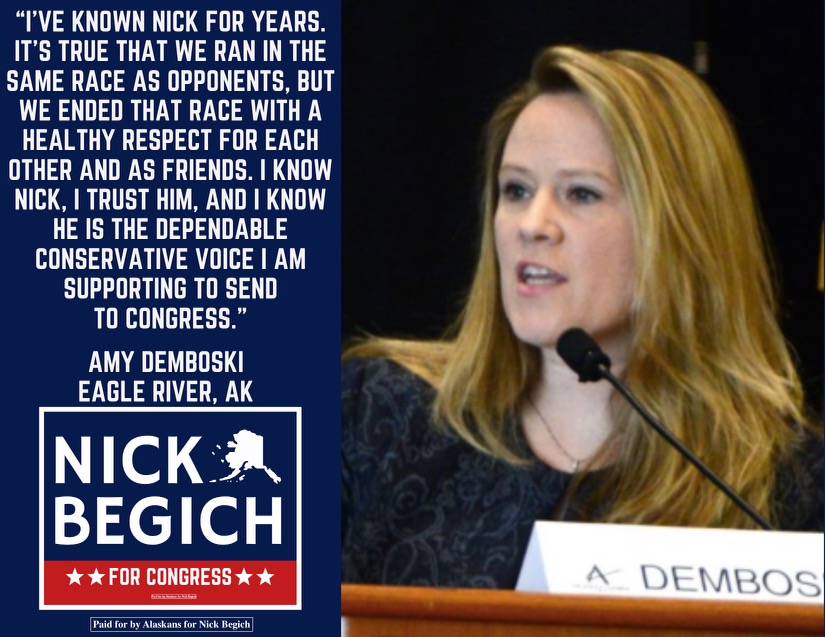
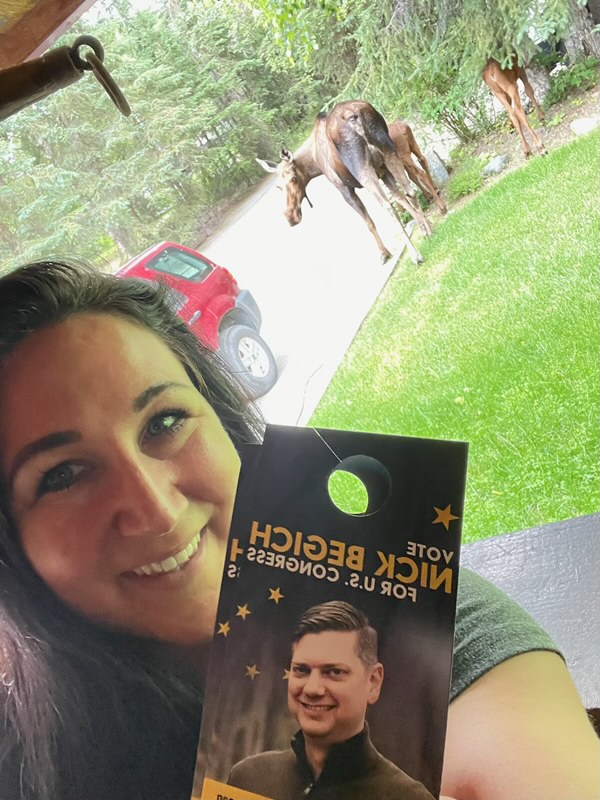
Notes from the trail: Mat-Su GOP women are with Nick for Congress, while March On Alaska women are with Constant and Peltola – The women’s vote is divided on the Left, it appears, between several candidates. On the right, they are coalescing around a couple of candidates.ย Read more here.

Speaking of Women’s March…

If they only cared as much about the shortage of baby formula as they do about abortion…

Baby formula is now so precious that it is being locked in cases on store shelves this week.

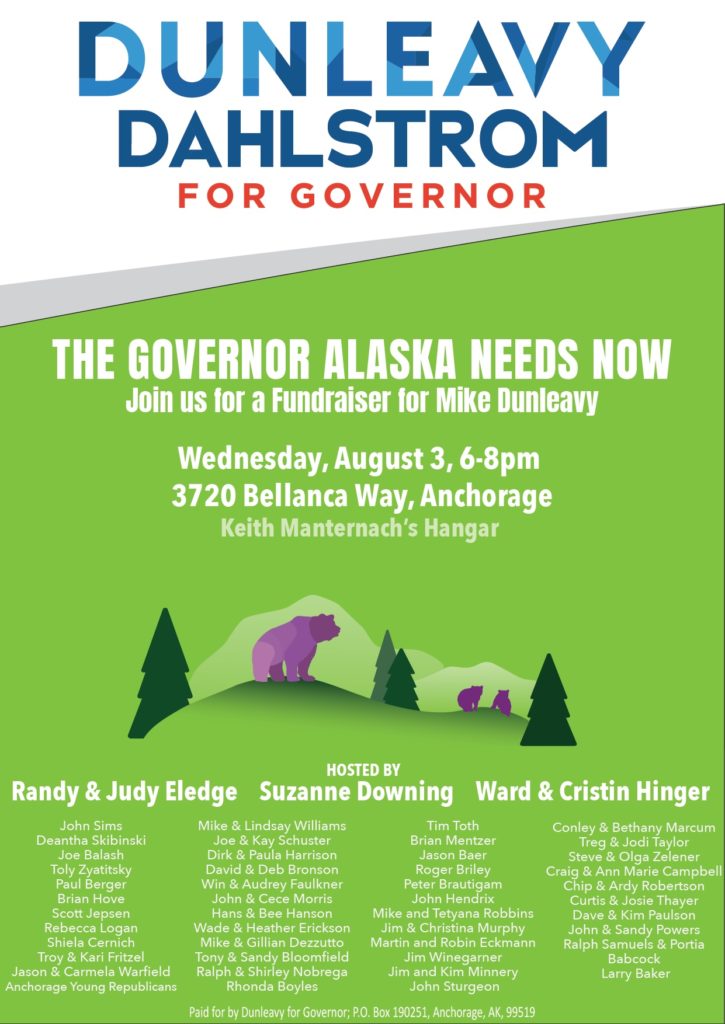
Notes from the trail: Dunleavy fundraiser, observations from the forum in Anchorage – At 36,126 ballots recieved, it it looks like close to 7% of the ballots have been voted and returned to Division of Elections, as of last Wednesday evening. We’re expecting a new number today.ย Read more here.

Checkย Must Read Alaskaย today for a new edition of “Notes from the trail.” It’s a series and I hope you like it.

Joe Usibelli — chairman, coal miner, philanthropist, dies – He helped build Alaska. Joe died at age 83 in Arizona, with his wife Peggy at his side.ย Read more here.

25 AGs sign letter asking Garland to enforce law prohibiting intimidation of judges – There has been a lot of bad behavior by the pro-abortion side, including actual threats against Supreme Court justices.ย The summer of rage is upon us.ย Read more here.

Bernadette Wilson of AFP speaking in the Valley – The head of Americans for Prosperity Alaska talks about the group’s priorities this year, including defeating HB 55, ending “certificate of need,” and more.ย Tune in at our Facebook page.

Today’s podcast will feature John Coghill, candidate for Congress. Tune in at our Facebook page at 9:30 am.
Podcast with Charlie Pierce – Kenai Borough Mayor has cut the mill rate and balanced the budget on the Kenai.ย Watch it here.
Podcast with Danika Baldwin – Instagram influencer is going big with her new Alaska travel business, and she has a zillion views on social media, as she shows off Alaska. John Quick interviews her.ย Tune in here.
Podcast with Rep. David Eastman – John Quick hosts this show with the representative from Wasilla; they talk about the PFD and more.ย Tune in here.
Podcast with Santa Claus – That guy named Santa Claus in North Pole, who serves on the City Council, was our podcast guest on Monday. He’s running for Congress to fill in for the late Congressman Don Young. On ourย Facebook feed hereย and onย podcast channels here.
Podcast with Rep. Laddie Shaw – John Quick talks with the retired Navy SEAL and lawmaker about what’s ahead in the final two weeks of session.ย More here.
Podcast with Tara Sweeney – Candidate for House Tara Sweeney joins us on Facebook live, and on all our stations, including Pandora.ย More here.
Podcast with Donna Arduin – A rock star of government fiscal health, Donna Arduin is the guest on theย Must Read Alaska Show, talking about things like working with Gov. Arnold Schwarzenegger.ย More here.
Podcast with Libertarian National Chair Tyler Harris – Libertarians taking over? John Quick talks with Tyler Harris, executive director of the Libertarian Party National Committee.ย More here.


Zack, tell us how you really feel about us!

The affable Zack Brown, who has served for the past couple of years as Congressman Don Young’s press secretary, decided to kick Alaskans in the teeth as he hits the exits.ย 

This must mean his candidate for Young’s replacement is not doing that well in the polls and that he doesn’t want to work for the ones who are rising with Alaska voters. He complains:

“Also when we blasted out one of his [Don Young’s) pro-COVID vaccine PSAs to our full 130,000 person email list many people were absolutely apoplectic in the replies they sent to a generally unmonitored inbox. It was hilarious and sad and discouraging all at once ยฏ\_(ใƒ„)_/ยฏ,” he wrote.ย 

Talk about disrespecting Alaskans. We knew the mailbox was unmonitored but did you have to say that out loud, Zack? And about that Don Young office vaccine mandate, that was kind of the last straw for a lot of Alaskans.

“Working in Congress is a dream fulfilled for me. But getting trolled online or on the phone/VM because my boss recognized Biden as the legitimate president or voted to make Juneteenth a federal holiday just isn’t worth it,” Brown continued.
About Juneteenth, how many days should federal workers get off? Asking for a friend. Regarding Joe Biden being legit, reasonable people can disagree.

Brown seems thankful he won’t have to tweet about those crazy ideas like election integrity and the grooming of children, or about social media censoring citizens:

“People have asked ‘Oh you don’t want to stay on the Hill and work for another member?’ And I shake my head and point to Jim Jordan’s entire twitter feed,” Brown wrote.

We kind of like Jim Jordan’s Twitter feed…


Who is running?
Marcus Sanders has filed for the House. He lists his address in Geneva Woods, the old District 18.
Stephanie Taylor has filed for the downtown seat for the Anchorage Municipal special election for Assembly.
The other candidate for the new Assembly seat:  Phillips, Robinโ€‹โ€‹ – Filed 05/10/2022  Hotch, Tasha – Filed 05/10/2022  Volland, Danielโ€‹ – Filed 05/03/2022  Forbes, Robโ€‹ – Filed 05/10/2022  Baker, Cliffโ€‹ – Filed 05/10/2022โ€‹โ€‹For the June 21, 2022 Special Municipal Election, ballot packages will be mailed to qualified Anchorage voters on May 31. To receive your ballot package at an address other than your Voter Registration mailing address, fill out an Application to Vote at a Temporary Addressโ€‹โ€‹.

Doyle Holmesย has filed for House for Willow. He is a Republican.Nathaniel DeMarsย has filed for House for Salcha. He is a Republican.Andrew Cizekย has filed for Senate for Soldotna/Kenai. He is nonpartisan.


COLUMNS
John Sturgeon: Safari Club International walks the walk – For hunting and access, this organization’s record stands tall.ย Read more here.
****
Art Chance: AFL-CIO trying to rob its members of the biggest pay raise they have ever seen – A full PFD during times of shortage would do a world of good for state workers, too.ย Read more here.
****
Jim Crawford: Legislators should listen to the people, not special interests – Read more here.
****

Win Gruening: Balancing Juneau’s budget is not that hard – Our columnist tried and found that, without the frills, Juneau can actually afford its government.ย Read more here.
****
The Federalist: Alaska’s election system a template for rigging by the Left – A pretty good summary of how Alaska went from having a good election system to having a completely embarrassing one. It all started with automatic PFD voter registration.ย Read more here.
****
Elaina Spraker: Not so fast, Mr. Pettyjohn, in characterizing Safari Club International – A member of the SCI group defends the reputation of an organization that seeks to protect hunting access.ย Read more here.
****
Dave Donley: Public schools were already overwhelmed by mission drift, and pandemic made it worse – The list of things that schools are expected to do has grown over the centuries and is now a mile long.ย Read more here.
****
Rep. Kevin McCabe: The right to personhood has science and logic that applies from conception forward – One group of Americans exists for which being human is not enough to be protected by law and the right to privacy: Pre-born children.ย Read more here.
****
Ryan Nelson: Palin quit Alaska for fame and fortune, wants second chance – From ACES to telling Ted Stevens to quit. No thanks.ย Read more here.
****
Murray Walsh: Sarah Palin’s political felonies – There are all kinds of reasons to not vote for Palin. Let’s start with her disloyalty to Alaska.ย Read more here.

Thank You for Your Donations to this Conservative News Project.

Here are the six legislators who will negotiate down the amount of Alaskans’ Permanent Fund dividends

Speaker Louise Stutes skipped over Rep. Neal Foster, co-chair of Finance and a senior member of the House, instead picking Rep. Kelly Merrick of Eagle River to co-lead the conference committee that negotiates the final version of this year’s Permanent Fund dividend.

Foster comes from a heavily pro-Permanent Fund dividend district and he probably asked to be excused from co-chairing the conference committee that is going to cut the dividend. Instead, an anti-dividend lawmaker, Rep. Merrick, is serving as chair for the three members from the House that sit on the committee. Her district is also pro-full-dividend.

The others on the House side of the conference committee are also anti-Permanent Fund dividend lawmakers — Daniel Ortiz from Ketchikan and Bart LeBon from Fairbanks.

On the Senate side of the committee there are two anti-full-dividend lawmakers, led by Sen. Bert Stedman, along with Sen. Click Bishop of Fairbanks. They are from the Senate Finance Committee that they co-chair; Sen. Bill Wielechowski, a pro-dividend Democrat, fills out the roster for the Senate.

The conference committee met today to hash out its organizational structure: Stedman is chair and Merrick vice chair, and will begin work on Monday negotiating the operating budget and the Permanent Fund dividend. No public testimony will be taken during this process.

Read: What happens next with operating budget, dividend?

With help from the administrators of the Alaska Energy Dudes and Divas Facebook page, here’s the list of who contributes to the six members of the conference committee:

Sen. Click Bishop

Sen. Click Bishop (Fairbanks) 2018 special interest campaign contributions:

  • $2,000.00 ASEA/AFSCME Local 52
  • $2,000.00 Teamster ALIVE – Gaming
  • $1,500.00 AGC/PAC
  • $1,000.00 Alaska Laborers Local 341
  • $1,000.00 ALPEC Voluntary Contributions Laborers’ Local 942
  • $1,000.00 Dentists of Alaska PAC
  • $1,000.00 TEAMSTER Alive PAC
  • $1,000.00 IUOE Local 302 PAC Account
  • $500.00 ABC Alaska PAC
  • $500.00 IBEW PAC
  • $500.00 Public Safety Employees Assn Political Action Committee
  • $500.00 AMAPAC
  • $500.00 NEA Alaska
  • $500.00 Employees Political Information Committee
  • $500.00 Alaska Realtors PAC
  • $250.00 Alaska Build PAC
  • $250.00 Alaska Sea Pilot PAC
  • $250.00 ATA Truck PAC
  • $200.00 Care Committee for the Advancement of Rural Electrification

Total: $14,950.00 – TOTAL 2018 special interest campaign contribution


Sen. Bert Stedman

Senator Bert Stedman (Sitka) 2020 special interest campaign contributions

  • $2,000.00 Teamster Alive – Gaming
  • $1,500.00 Alaska Republicans Inc
  • $1,000.00 Alaska Sea Pilot PAC Fund
  • $1,000.00 NEA-Alaska PACE
  • $1,000.00 AK. ST. Hospital & Nursing Home Assoc PAC
  • $1,000.00 IUOE Local 302 PAC
  • $1,000.00 ALPEC Voluntary Contributions Laborers Local 942
  • $1,000.00 Alaska Laborers Local 341 PAC
  • $1,000.00 Republican Women of Juneau
  • $1,000.00 IUOE Local 302 $1,000.00 IBEW PAC
  • $1,000.00 Capital City Republicans
  • $1,000.00 Dentists of Alaska PAC
  • $1,000.00 ASEA/AFSCME Local 52 PAC
  • $1,000.00 NEA-Alaska PACE
  • $500.00 Wells Fargo Bank Alaska P.A.C.
  • $500.00 ABC Alaska PAC
  • $500.00 BP Alaska Employee PAC
  • $500.00 Associated General Contractors PAC
  • $500.00 Alaska Realtors PAC Alaska Realtors PAC
  • $500.00 Conocophillips AK Employee PAC
  • $500.00 Plumbers & Pipefitters Local Union 262 PAC
  • $500.00 Wells Fargo Bank Alaska P.A.C.
  • $500.00 ALPAC $500.00 Capital City Republican
  • $500.00 Associated General Contractors PAC
  • $500.00 Alaska CHARR $500.00 Alaska Sea Pilots PAC
  • $500.00 ConocoPhillips AK Employee PAC PAC
  • $500.00 Alaska Realtors PAC
  • $500.00 Public Safety Employees Assn. PAC
  • $500.00 Alaska Professional Fire Fighters Assoc. PAC
  • $250.00 Public Safety Employees Assn. PAC
  • $250.00 Alaska Society of CPA
  • $250.00 Alaska State Chamber of Commerce
  • $200.00 Committee for the Advancement of Rural Elecric (PAC)
  • $150.00 Pacific Seafood Processors Assoc PAC

Total: $26,100.00 special interest campaign financial contributions


Rep. Daniel Ortiz

Rep. Dan Ortiz, Ketchikan, 2020 special interest campaign contributions

  • $250.00 Louise Stutes (Speaker of the House)
  • $2,000.00 APEA/AFT
  • $2,000.00 Public Employees Local 71
  • $2,000.00 Alaska Laborers Local 341
  • $1,000.00 IUOE Local 302
  • $1,000.00 Alaska State Employees Association AFSCME/ASEA Local 52
  • $1,000.00 IBEW Local #1547
  • $1,000.00 NEA Alaska
  • $1,000.00 Laborers Local 942 Fairbanks
  • $1,000.00 Alaska AFL CIO
  • $1,000.00 Plumbers & Pipefitters Local 262
  • $1,000.00 Carpenters Local 1243
  • $1,000.00 ASHNA PAC
  • $1,000.00 Carpenters Local 1281
  • $1,000.00 International Association of Firefighters Local 1204
  • $1,000.00 Laborers’ Local 942
  • $1,000.00 Alaska Sea Pilot Pac
  • $1,000.00 NEA-Alaska PACE
  • $1,000.00 IBEW PAC
  • $1,000.00 Alaska Professional Fire Fighters Assoc PAC
  • $1,000.00 ACS Employees PAC
  • $500.00 Alaska Correctional Officers Assoc. PAC
  • $500.00 Alaska CHARR PAC
  • $500.00 Alaska Center PAC
  • $500.00 Juneau Central Labor Council
  • $500.00 Alaska Sea Pilot PAC
  • $500.00 Alaska AFL CIO
  • $250.00 Tongass Democrats
  • $200.00 Alaska Build PAC
  • $200.00 Alaska IBU PAC
  • Total: $26,900.00 2020 special interest campaign contributions

Rep. Kelly Merrick

Rep. Kelly Merrick 2020 special interest campaign contributions

  • $2,000.00 Alaska Laborers Local 341 PAC
  • $2,000.00 ALPEC Voluntary Contributions Laborers Local 942
  • $2,000.00 Teamster Alive – Gaming
  • $1,000.00 Public Employees Local 71 PAC
  • $1,000.00 Alaska Laborers PAC
  • $1,000.00 ASEA/AFSCME Local 52 $1,000.00 – Juneau Central Labor Council
  • $1,000.00 UA Local 375
  • $1,000.00 Carpenters Local 1281
  • $1,000.00 ASEA/AFSCME PAC
  • $1,000.00 Alaska Laborers PAC
  • $500.00 BP Alaska Employee PAC
  • $500.00 Conoco Phillips AK Employee PAC
  • $500.00 Alaska AFL CIO
  • $500.00 Wells Fargo Bank Alaska
  • $500.00 Republican Women of Juneau
  • $500.00 Capital City Republicans
  • $500.00 Alaska Medical
  • $500.00 Associated General Contractors
  • $500.00 Conoco Phillips AK Employee PAC
  • $500.00 Dentists of Alaska PAC
  • $500.00 AK State Hospital & Nursing Home Assoc.
  • $500.00 Alaska CHARR PAC
  • $500.00 Capital City Republicans
  • $500.00 Conoco Phillips AK Employee PAC
  • $250.00 Alaska Professional Fire Fighters
  • $250.00 Alaska Miners Association
  • $250.00 Alaska Sea Pilot PAC Fund
  • $100.00 Valley Republican Women of Alaska
  • $50.00 Alaska Republican Party
  • Total: $21,900.00 – 2020 Special interest financial campaign contributions

Rep. Bart LeBon

Rep. Bart LeBon 2020 Special interest financial campaign contributions

  • $1,500.00 Republican Women of Fairbanks
  • $1,000.00 Alaska Miners Association PAC
  • $1,000.00 Capital City Republicans
  • $1,000.00 Alaska State Hospital & Nursing Home Association
  • $1,000.00 Laborers’ Local 942
  • $1,000.00 Alaska Miners Association
  • $1,000.00 ABC Alaska PAC
  • $1,000.00 Associated General Contractors of Alaska
  • $1,000.00 Edward Rasmuson
  • $500.00 Cathryn Rasmuson
  • $800.00 National Association of Insurance & Financial Advisors
  • $500.00 Republican Women of Fairbanks
  • $500.00 BP Alaska Employee PAC
  • $500.00 Alaska Professional Fire Fighters Association
  • Total: $12,300.00 – Special Interest Contributions

Sen. Bill Wielechowski

Sen. Bill Wielechowski 2020 Special Interest Contributions

$2,000.00 Alaska Correctional Officers Association
$2,000.00 Alaska Laborers Local 341
$2,000.00 IBEW Local 1547 PAC
$2,000.00 NEA Alaska Pace
$1,250.00 Alaska Sea Pilot PAC
$1,000.00 ACS Employees PAC
$1,000.00 ALPEC Voluntary Contributions Laborers’ Local 942
$1,000.00 Anchorage Police Dept. Employees Association
$1,000.00 APEA/AFT PAC
$1,000.00 ASEA/AFSCME Local 52 PAC
$1,000.00 International Union of Operating Engineers  PAC
$1,000.00 Laborers Local 942
$1,000.00 Public Employees Local 71 PAC
$1,000.00 Public Safety Employees Association PAC
$1,000.00 UA Local 375 Political Action Committee
$1,000.00 UCFW Local 1496
$1,000.00 United Association Local 367 PAC Fund
$500.00 United Association Local 367
$500.00 AK State Hospital & Nursing Home Association PAC
$500.00 Alaska Professional Fire Fighters Association Political Action Fund
$500.00 Alaska Realtors PAC
$500.00 Anchorage Central Labor Council
$500.00 United Brotherhood of Carpenters & Joiners of America Local 1243
$250.00 Alaska CHARR PAC
$250.00 International Association of Firefighters
$250.00 IUOE Local 302
$250.00 Tongass Democrats
$200.00 Alaska Build PAC
$200.00 University of Alaska Faculty Association
Total: $25,650.00 – 2020 Special Interest Contributions

Attorneys General ask nation’s top lawman to enforce law prohibiting intimidation of Supreme Court justices

Twenty-five state attorneys general, including Alaska’s Attorney General Treg Taylor, are calling on U.S. Attorney General Merrick Garland to enforce a federal law that prohibits people from targeting judgesโ€™ and justices’ homes in an attempt to intimidate them.

In a letter sent to Garland last week, the attorneys general pointed out that federal law prohibits picketers and protestors from targeting judgesโ€™ homes, โ€œwith the intent of interfering with, obstructing, or impeding the administration of justice.โ€

โ€œWe the undersigned Attorneys General act daily to uphold the rule of law,โ€ the state attorneys wrote to Garland. โ€œThese remarkable recent events provide you an opportunity to do the same.โ€

The letter was signed by attorneys general from Alaska, Arizona, Arkansas, Georgia, Idaho, Indiana, Kansas, Kentucky, Louisiana, Mississippi, Missouri, Montana, Nebraska, Ohio, Oklahoma, South Carolina, South Dakota, Tennessee, Texas, Utah, Virginia, West Virginia and Wyoming.

After a Supreme Court draft opinion was leaked earlier this month showed that the majority of Supreme Court justices have voted to overturn Roe v Wade, abortion rights activists published addresses of those justicesโ€™ homes. For several days, organized protests have taken place outside of them, and threats of violence have been made against them.

Over 100 protestors marched and chanted in front of Justice Samuel Alito’s home last week; he is the justice whose draft opinion was leaked to the media by an unknown person working for the U.S. Supreme Court.

The letter to Garland says the U.S. Attorney General is obligated to uphold the law, and they point to threats of violence and actual violence perpetrated by abortion activists over the past week that have gone without punishment, even while Garland has ordered the Department of Justice to surveil parents who have protest school board policies relating to Covid and transgender students.

โ€œYou were quick to respond to the purported โ€˜threatโ€™ of parents speaking out at local school board meetings (though the basis for your threat assessment was shaky to say the least). Here, in the face of escalating extremism directed at the judicial branch, you have an obvious role to play,โ€ the attorneys general wrote.

โ€œCongress recognized that pressuring judges to change their votes by protesting outside their homes directly threatens the rule of law,โ€ the letter continued โ€œYou profess to share those concerns, having unequivocally stated that attacking a courthouse โ€˜to prevent judges from actually deciding casesโ€™ plainly constitutes โ€˜domestic extremism, domestic terrorism.โ€™โ€

Notes from the trail: Mat-Su GOP women are with Nick for Congress, and March On women support Constant, Peltola

Valley endorsement: The Mat-Su Republican Women’s Club unanimously endorsed Nick Begich for Congress on Saturday. That follows endorsement from the Fairbanks Republican Women’s Club and a Kenai Republican women’s club. He’s on the way to collecting the whole set of women GOP clubs. Also on Saturday, Nick received an endorsement from Mayor William Overway of Kachemak City, a hamlet east of Homer. That makes seven Alaska mayors endorsing NB3, who was spotted at a fundraiser in Homer on Saturday, with about 45 people in attendance, after doing events in Homer all day, and this morning was spotted on a plane to Juneau for the forum on Monday at the Baronet Hotel Treadwell Room.

Palin Soldotna event a success: There was a long line of people getting their pictures taken with Sarah Palin at Ginger’s Restaurant in Soldotna. She gave a very short speech to lots of excited people who left with yard signs. It was an upbeat event.

Running on abortion platform: Al Gross, running for Congress, spent his Saturday rallying for abortion in Wasilla with about 20 people. Last week, he stood on a corner in Anchorage and rallied for abortion with a much bigger crowd. It’s his topic for this race, but he still can’t get the Democrats’ endorsement.

Chris Constant: Not to be outdone on abortion, the Anchorage Assemblyman who is running for Congress put a third-person statement on his Facebook page that was not very nuanced, expressing sentiments for pro-abortion “without exception” right up to childbirth:

Crypto endorsement: The HODL PAC endorsed Nick Begich for Congress. It’s a crypto political action committee that says it will support crypto-friendly congressional candidates who will at least consider crypto-friendly legislation.

The Irish vote: Santa Claus, running for Congress to represent Alaska, is the candidate doing more radio interviews than any other congressional candidate for Alaska. He was on the Must Read Alaska Show podcast two weeks ago and yesterday was on a radio show in Ireland — Sean Moncrieff’s “Newstalk.” It’s a nine-minute section available on Spotify.

District 35’s unique ballot: Those in Sitka have the most unique ballot of all, with Sarah Palin at the top left, and Santa Claus on the right. Our educated guess is that Santa is going to get more votes in this area of the state than Palin. At the 2016 Democrat Party caucus in Sitka, Vermont Sen. Bernie Sanders won by a landslide, with 77% of the caucus vote for president. Claus identifies as a Bernie independent, progressive socialist. Ballots in Alaska are alphabetized, but a different name appears in each one of the 40 House districts. Nearly all of the 48 candidates, then, will appear at the top in at least one district.

Alaska Women March On endorsement: The far-left arm (or one of them) of the Alaska Democratic Party has endorsed both Chris Constant and Mary Peltola for Congress.

Still Zooming with the Democrats: Alaska Young Democrats met via Zoom on Saturday, with guests Emil Notti and Mary Peltola, both running for Congress.

For the children: Heidi Drygas’ family is finishing a bout with Covid-19, so she has not been seen campaigning for a few days. Heidi is using her daughter to campaign for abortion, which is already (apparently) protected by the Alaska Constitution. Drygas is gubernatorial candidate Bill Walker’s running mate and she has been extremely diligent with masking. Juneau, where she lives, is experiencing an uptick in Covid cases.

Doubling down on anti-PFD: Bill Walker, who famously took half of Alaskans’ Permanent Fund dividends in 2016 and started the trend the Legislature has continued to this day, doubled down by thanking the House and industry lobbying groups for cutting the PFD again: “Thanks in particular to organizations working to rebuild Alaska that spoke up for fiscal conservatism, including the @alaskachamber, @alaskaminers, @AKAFLCIO, @AGCAlaska, @AKAlliance & @AEDCweb, and to the ADN Editorial Board for helping Alaskans recognize what’s going on here,” he said on Twitter. He is running for governor because his first term ended badly and he’s hoping for a second chance.

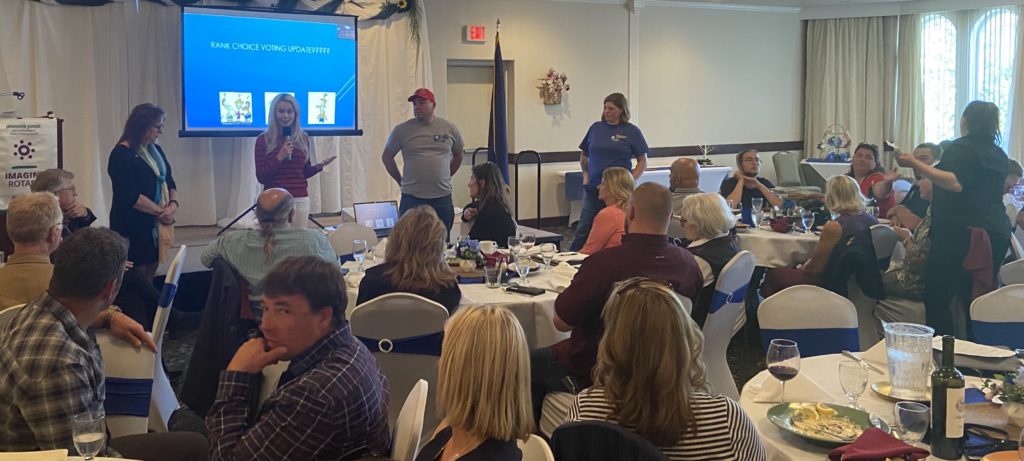
Making the rounds: Tuckerman Babcock, running for state Senate for the Kenai Peninsula, was invited to give presentation to Soldotna Senior Center on Thursday on the topic of ranked choice voting. He was also an invited guest at a community welcome dinner at Princess Lodge in Cooper Landing.

Read: Notes from the campaign trail II: Palin a no-show in Bethel

Notes from the campaign trail II: Palin a no show in Bethel

Read: Notes from the campaign trail 1: Ballots coming in

Notes from the campaign trail: 5,000 ballots are in already

Joe Usibelli, Sr., coal miner, UAF supporter, has passed

Joe Usibelli, Sr., whose contributions to Alaska and to the University of Alaska Fairbanks have been transformational, has passed.

He was not only the force behind Alaskaโ€™s largest coal operation, but he and his wifeย Peggy Shumaker shared their success and contributed generously to the University of Alaska Fairbanks.

As a 1959 graduate of UAF with a degree in civil engineering, and a member ofย the first varsity rifle team, Joeโ€™s philosophy was to give back, to share his success,ย and to provide for others, wrote University of Alaska President Pat Pitney in a statement. “He was a testament to the power of individual philanthropy and believed that those who give of their resources create vibrant communities. Joe was dedicated to creating a vibrant UAF, a vibrant community in Healy and was supportive of the families who lived there and worked at Usibelli Coal Mine. He also was dedicated to the successful restoration of the natural landscape on land previously mined well before it was required by the federal government.”

Pitney continued, “Joe and family members funded the Emil Usibelli Distinguished Teaching, Research and Public Service Awards for faculty. Joe co-chaired the fundraising efforts for the University of Alaska Museum of the North addition. Then, in 2014, Peggy and Joe gifted the museum $1 million to anchor renovations in the Alaska Gallery. Through Usibelli Coal Mine’s corporate social responsibility program, the Usibelli Foundation and personal gifts from members of the Usibelli family, more thanย $8.5 millionย has been donated to the university through scholarships, faculty awards, capital projects, event sponsorships and athletics.”

But he will be remembered for so much more than his philanthropy, Pitney said. He will be remembered for his love of family, his tireless enthusiasm, his success in building an important energy company that supports so many families, and for his life-long commitment to Alaska.

From the Usibelli Coal Mine website: Usibelli Coal Mine, Inc. is a fourth generation, family-owned, business and the only operational coal mine in Alaska. Emil Usibelli founded the company in 1943. His son, Joe Usibelli Sr. was the chairman of the Board of Directors. Joe Usibelli Jr., Emil’s grandson, is president of UCM.

Mining began in Healy in the early 1900s in an area known as Suntrana. An abundance of naturally exposed outcroppings of coal seams is highly visible and resulted in the Alaskan pioneers tunneling directly into the coal seams to secure fuel for steam driven riverboats and the railroad. Underground mining operations began to prosper in the Suntrana area. Many of these historic mine sites are located in the Healy Creek Valley.

Emil Usibelli was an Italian immigrant who came to Alaska in 1935. He worked as an underground miner in the Evan Jones Mine near Palmer in the Matanuska Valley. A year later, he moved to Suntrana and worked underground for the Healy River Coal Company. After being laid off due to injuries sustained while mining, Emil started a logging operation and supplied timbers to the Suntrana Mine.

During World War II, Ladd Army Air Field in Fairbanks became an important military base. To reduce its dependency on a single fuel supplier, the military began exploration work on military coal reserves east of the Suntrana mines in an area known as the Healy Creek Valley. Emil Usibelli was hired to do that exploration work.? In 1943, Emil and a friend Thad Sandford decided to go into the coal mining business.? They were among several others who obtained coal leases from the U.S. Army. With a one-year contract to supply 10,000 tons of coal to the U.S. Army’s Ladd Army Air Field (known today as Fort Wainwright U.S. Army post), Emil began operations with a small International TD-40 dozer and a converted GMC logging truck.? The dozer was used to push the overburden off the coal outcrops and then push the exposed coal into the truck bed. His methods of mining were viewed with skepticism by the underground miners but he met his contract obligations.

Read more about the historic Usibelli legacy at this link.

John Sturgeon: Safari Club International walks the walk for conservation and hunting in Alaska

By JOHN STURGEON

As the president of Safari Club International Alaska, I would like to respond to some of the claims made in an opinion piece in Must Read Alaska from April 27, 2022, titled, โ€œFritz Pettyjohn: Sarah Palin, Trump, and Alaska lands.โ€ I found a number of points made by the author to be not just problematic, but completely false and inaccurate.ย 

To be clear, Safari Club International and SCI Alaskaโ€™s Chapter supports hunting and fishing access for everyone. We understand the value in hunting and conservation and how the two go hand-in-hand. Safari Club International’s motto is โ€œFirst for Huntersโ€ and we definitely walk the talk.

To characterize Safari Club International as โ€œwealthy trophy huntersโ€ is absolutely false. The vast majority of members are ordinary hunters that love the outdoors and want to provide food for themselves and their families. They cherish the time in the field with friends and family that provide memories for a lifetime. It is Safari Club International’s goal to enable them to do just that and here is how we do that.

Safari Club International advocates for hunters rights in Juneau and Washington. With the constant attacks on our hunting traditions that is a full time job.

Safari Club International is first for youth education in hunting and shooting sports. We sponsorย wilderness leadership grants for teachers and award scholarships for outdoor careers. We sponsor numerous youth shooting programs.

Safari Club International is most proud of our hunting programs for wounded warriors. Each year we contribute over $40,000 for various hunting programs for our veterans. Every year the State awards six special moose hunting permits to Purple Heart recipients. Safari Club International Alaska sponsors all six of those veterans including transportation, licenses, tags, meat processing, and the shipment of the meat.ย 

Lastly we support Fish and Game’s efforts to manage Alaskaโ€™s wildlife. In 2022 Safari Club International Alaska wrote a check to the department for over $300,000. When matched with federal grant funds, the department has over $1.2 million to help manage Alaskaโ€™s precious wildlife.ย 

ย I would hope that next time Mr. Pettyjohn will do his homework before mischaracterizing Safari Club International’s membership and its goals. SCI remains โ€œFirst for Hunters.โ€

John Sturgeon is president of Safari Club International Alaska.