Monday, May 11, 2026
Home Blog Page 888

What happens next with budget, dividend?

On a drizzly Saturday morning in Juneau, the pressure cooker that is the Alaska State Capitol boiled over.

The Alaska House of Representatives, which had been high-centered for nearly a week, finally took a vote on ratifying the budget passed on Tuesday by the State Senate. The vote occurred after a firestorm of support for the Senate version of the budget from constituents across the state, asking for ratification of the statutory Permanent Fund dividend. 

Along with that support came significant opposition from some of the state’s largest special interest groups. Opposed to the size of the Permanent Fund dividend in the Senate budget, a campaign to label the vote as one for “unsustainable government spending” went into overdrive this past week.

While the House continued to delay its vote, the influence from third-party groups began having a material impact within the Capitol and on lawmakers. Spanning the political spectrum, a mixture of public shaming tactics, visits from lobbyists, and letters from trade associations mounted up a pressure press on representatives considering a yes vote.

The pressure worked. Saturday’s failed ratification vote, called a concurrence vote, came after lengthy floor debate. Representatives from both parties crossed the aisle to vote both for and against the Senate version of the budget. By a vote of 18-22, the state’s operating budget, which is the only duty of the Legislature under the Alaska Constitution, is now still unfinished as the session careens towards May 18, the last day legally egislators can meet without a special session. 

Debate on the floor was tense but mostly cordial. The differences of opinion overwhelmingly centered along the size of the Permanent Fund dividend. Some remarks revealed the conflicting feelings of legislators, such as Rep. Geran Tarr, an Anchorage Democrat.

In a voice that at times nearly cracked, Tarr recounted her district’s high poverty rate, and the life-changing effects a statutory Permanent Fund dividend would have on her constituents. Tarr’s concerns were conflicted by the need to get other legislation passed, including her signature bill on victims’ rights. 

Tarr ultimately voted no, along with a majority of her mostly-Democrat caucus. Joining Tarr were Reps. David Eastman and Chris Kurka, both Republicans of Wasilla. Both lawmakers made remarks about the unsustainability of the Senate’s budget number, as well as the lack of firm prohibitions on abortion funding from state Medicaid dollars (the Alaska Constitution requires taxpayer funded abortions, despite years of defunding attempts by governors and lawmakers). 

What took place after the vote raised more than a few eyebrows. Speaker Louise Stutes appointed the House’s negotiating team to wrangle over the differences in the budget with the Senate. The team, called a conference committee, has almost every year been chaired by the co-chairs of the Finance Committee and the ranking Finance Committee member from the minority caucus. But not this year.

Stutes selected Rep. Kelly Merrick of Eagle River to chair the committee, and appointed Rep. Dan Ortiz of Ketchikan and Rep. Bart LeBon of Fairbanks. Each one of the three members Stutes chose has voted publicly against a Permanent Fund dividend that is calculated according to law. Notably absent from being appointed to the conference committee was Rep. Neal Foster of Nome. Foster, a rural Democrat and the co-chair of the Finance Committee, actually guided the House building of the operating budget. 

The omission of Foster from the negotiating team points to one likely outcome: Foster’s district overwhelmingly supports a full statutory dividend, and his ability to maneuver in favor of a lower dividend is limited. By removing Foster from the conference committee, the ability to lower the dividend amount in the negotiations shields him from a decision that would pit him against either his district or his caucus. The makeup also allows Kelly Merrick the ability to vote for a higher dividend without risking it being adopted by the House negotiating team. 

What happens next is unclear. The Alaska Senate will likely go into its floor session shortly and be asked to seat its own negotiating team. Tradition would be that the Senate Finance co-chairs, Sens. Bert Stedman of Sitka and Click Bishop of Fairbanks, be appointed along with a Senate Democrat.

Stedman has a history of hard negotiations, employing legislative tactics that have been characterized as bullying and coercive by his opponents, while deemed necessary by his supporters.

The ire of a negotiation effectively led by Stedman in the House, and indeed much of the Senate, is palpable. 

But what is clear is both the House and the Senate benefit from the negotiating teams being at least constituted. This is because the rules governing how bills move through committees are accelerated, under a provision called the 24-hour rule. With that rule in effect, the list of legislation that will begin passing and be part of the session’s endgame will grow exponentially, including items such as crime, elections, education, and state employee pay. 

Time is not on lawmakers’ side. With adjournment required at the latest by midnight on Wednesday, the Legislature will need significant collaboration and breakthroughs in negotiation to ward off the chance of missing the deadline, and threatening a government shutdown on July 1.

Gov. Dunleavy reacts, says the full PFD is needed because Alaska families are facing serious financial hardship

Governor Mike Dunleavy issued a statement regarding Saturday’s failed concurrence vote on HB 281 in the Alaska House, a bill that would have provided a statutory Permanent Fund dividend, a robust capital budget, and increased education funding.

“It is important for Alaskans to remember the budget process is not yet concluded,” Dunleavy said, hinting that he was still hopeful that the Legislature would resolve the matter appropriately in conference committee.

“I continue to believe the revenue picture is in Alaska’s favor, I continue to believe the budget should be balanced, and I continue to believe the amount of uncertainty in the world due to inflation and higher prices allows state government to have a final budget that is balanced and helps Alaskans – because we have the tools to make that happen.

“We as policy makers need to understand that the serious financial issues facing Alaskan families, mainly rising costs due to inflation, should be at the forefront of the budget process.

“We can never lose sight of why we are here, it’s the people of Alaska.”

Earlier, the Alaska House of Representatives denied Alaskans their full Permanent Fund dividend for the six year in a row.

Breaking: House slaughters full dividend, 22-18

After a couple of hours of debate on Saturday, the Alaska House of Representatives voted down the full Permanent Fund dividend, which was embedded as an appropriation item in the operating budget sent from the Senate to the House for concurrence.

For years, the Legislature has said it could not pay a full dividend to Alaskans because there was not enough money in the budget, what with the lower prices of oil. But this year, State coffers are flush with money, oil prices are high, the budget is one of the largest in history, and the capital budget is the largest in a decade, and yet the dividend was voted down by the House. Opponents of the larger PFD who spoke on the House floor said it was a bad use of the state’s money. Rep. David Eastman said the budget was too big and was unsustainable. Rep. James Kaufman made a similar argument, saying he wants a fiscal plan. Rep. Bart LeBon said the budget doesn’t balance. Rep. Chris Kurka said that without a guarantee there would be no state funds spent on abortions, he would be a no vote.

Read: Governor reacts

The House will send the rejected budget back to the Senate, which has a choice of backing down from its offer, which includes the full PFD, or naming Senate members to a conference committee to hash out the differences between the House and Senate budgets.

Speaker Louise Stutes named Rep. Kelly Merrick as chair of the House portion of the upcoming conference committee, along with Rep. Bart LeBon and Rep. Daniel Ortiz. All three were “no” votes on the full PFD. Conference committee is made of of three members from each body.

Also voting against the full PFD were Reps. Matt Claman, Harriet Drummond, David Eastman, Bryce Edgmon, Zack Fields, Sara Hannan, Grier Hopkins, Andy Josephson, James Kaufman, Jonathan Kreiss-Tomkins, Chris Kurka, Calvin Schrage, Liz Snyder, Ivy Spohnholz, Andi Story, Louise Stutes, Geran Tarr, Steve Thompson, and Adam Wool.

Notes from the trail IV: Dunleavy fundraiser, and observations from the forum in Anchorage

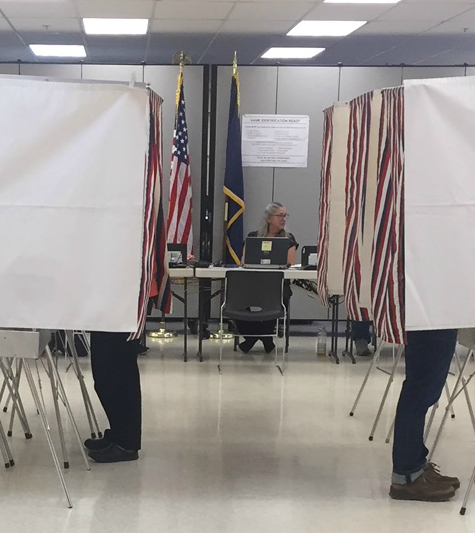
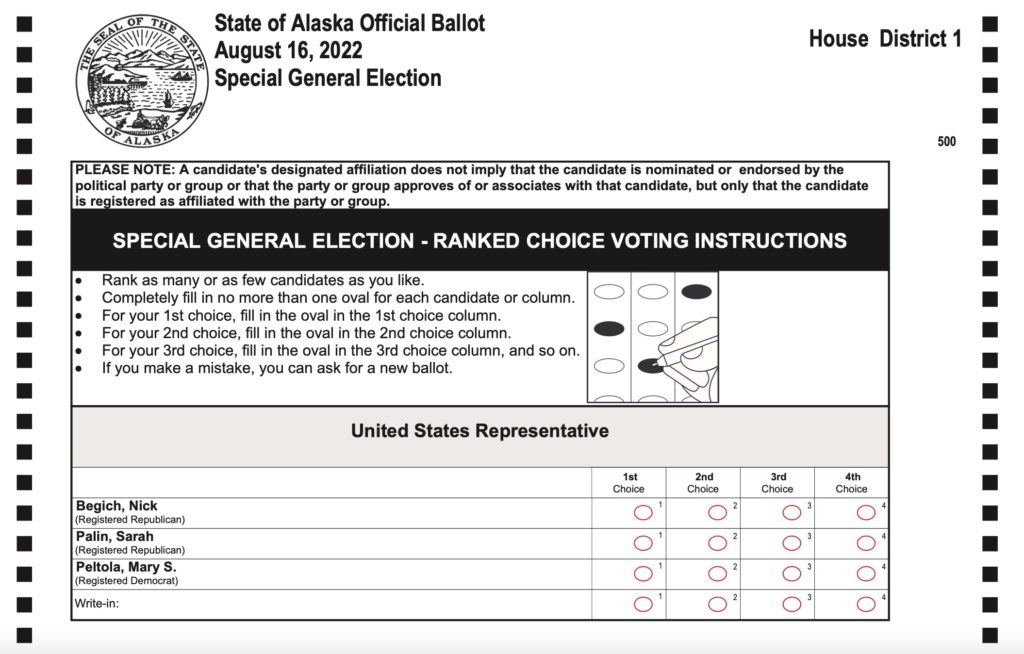
How many have voted? At 36,126 ballots recieved, it it looks like close to 7% of the ballots have been voted and returned to Division of Elections, as of Wednesday evening. The last midterm turnout was about 20%, and with mail-in for this one, Alaskans might expect 30% turnout in this special primary election. Given that, the votes in so far total between 25% and 35% of the election. This special election ends on June 11 — that is the day the ballot must be postmarked by.

Correction: Not that Ben Stevens. MRAK reported that Ben Stevens of ConocoPhillips was endorsing Mary Peltola for Congress but evidently there is some other Ben Stevens out there, and this publication apologizes to the one we thought was the Ben Stevens mentioned on Peltola’s website.

Fundraisers: The fundraiser for Gov. Mike Dunleavy at Orso’s in Anchorage had some big names in attendance: Joe Balash of Oil Search/Santos, Lisa Herrington (real estate), Ben Stevens and Erec Isaacson of ConocoPhillips, Chuck Schuman (Pacific Data Port), Dana Pruhs (AEA), Albert Fogle (Moda Health), Kim Gerondale (Construction Machinery Inc.), and Curtis Thayer (AEA), to name a few.

Notes from forum: At the AOGA/Mining/Alliance forum, question was asked of the congressional candidates: “Would you have voted for the PRO Act?” Josh Revak was the only Republican who held up a “Yes” paddle in the lightning round for favoring the PRO Act. (Only five Republicans voted for the PRO Act, which is an anti-business piece of legislation also known as “Protecting the Right to Organize Act.” It’s a deal-killer for small business owners.) Probably Revak just lost the Jim Jansen endorsement with that.

When asked, “Would you have voted for the infrastructure bill?” Nick Begich and Sarah Palin were the only ones who said no, they would not. Only 13 Republicans in Congress voted in favor of Biden’s infrastructure bill in Congress.

250 tickets were sold for the event and the place was filled. Candidates attending were Nick Begich, Chris Constant, Jeff Lowenfels, Sarah Palin, Al Gross, Tara Sweeney, John Coghill, and Mary Peltola. The most progressive answers of the morning came from Peltola. Later on Twitter, she took 10 tweets to clarify her comments on drilling in the Arctic. It was quite the backpedaling essay.

Nick Begich speaks at the campaign HQ grand opening.

Grand opening: Nick Begich for Congress opened campaign headquarters on Northern Lights, next to Once Upon a Child. About 50 people were in attendance. Introducing him at the event were … wait for it …. Jim and Faye Palin.

Palin heads to Soldotna: Sarah Palin will have a meet and greet in Soldotna on Saturday, 3:30-5:30 pm, at Ginger’s Restaurant. Ginger’s is owned by Margaret Ward’s sister Mary Lou Diamond. Margaret and Jerry Ward are campaign coordinators for Sarah for Alaska.

The DOM Team economy: Congressional candidate Chris Constant posted a white paper for how he would fix Alaska’s economy. Number one on the list was to support unions. Then he would spend infrastructure money, you know, taxes from working people. Then move everything to the green economy with renewable energy, and after that he would work on affordable housing, and more money for education. Not a GDP to be found anywhere in his paper. Read the paper here.

(Must Read Alaska is still trying to figure out the meaning of the “DOM Team” in the byline on the Chris Constant white paper. “Dirty Old Man?” Dominatrix? Is it Tom Sconce? Blue Alaskan? Who will confess to writing this stuff for him?)

Art Chance: The AFL-CIO is trying to rob its members of the biggest pay raise they have ever seen — a full PFD

By ART CHANCE

“We do want more, and when it becomes more, we shall still want more.   And we shall never cease to demand more until we have received the results of our labor.”   Samuel Gompers, President, American Federation of Labor (1919)

I can do wordy and pedantic with the best of them, but I’m going to try to make this short and maybe not so sweet.  

The goons with the AFL-CIO are warning the members of the House Majority to shut up and vote against a $5,500 statutory Permanent Fund Dividend and energy assistance payment because it might cause the plebes to have unrealistic expectations. What arrogance.

Read: AFL-CIO strong-arming House to vote against full dividend

Those of us who know a bit about State government know there are four rackets who believe that all the General Fund revenue of the State belongs to them: unionized State employees, the education racket, the welfare racket, and the healthcare racket. The plebes can get any scraps that are left over.

The State government has about 16,000 unionized employees, and all but a few hundred correctional officers are in AFL-CIO-affiliated unions. Those unions have a legal duty to represent the employees in their bargaining units in matters of wages, hours, and terms and conditions of employment.

Now the goons who are supposed to represent those employees are telling their chattel in the Legislature to vote against the statutory Permanent Fund Dividend and the energy stipend. Remember, these goons are supposed to work to improve the wages of the employees they represent.

The average wage of a State employee is around $75,000 per year. The statutory Permanent Fund dividend and the energy stipend is $5,500. That PFD and stipend represents about a 7% wage increase for an average employee. If you’re a $30,000 per year clerk or other entry-level employee, the ones who could most use the money, it is over twice that percentage wage increase.

So, in order to assure their control over the Operating Budget and the votes of the state representatives they own, the union goons are ordering the chattel representatives to vote against giving the employees they represent a significant raise.

I was a part of negotiating every State employee labor agreement between 1987 and 2006. The most money I or anybody who worked with or for me ever put on the table in those years was the 6.5% I offered the Marine Engineers to buy back some serious restrictions on management rights that the Sheffield Administration had given them years before.

In order to maintain their power over their chattel legislators, and maybe cow some wavering ones, the union goons have ordered the union-owned members of the Legislature to refuse to give even their own members the largest raise State employees have ever seen.

Power corrupts. Were I still a State employee I might have a serious issue with my union; whose side are they on?

Art Chance is a retired Director of Labor Relations for the State of Alaska, formerly of Juneau and now living in Anchorage. He is the author of the book, “Red on Blue, Establishing a Republican Governance,” available at Amazon. 


Will House meet Saturday to vote on budget?

After days of unexplained delays and heightening tension in the Capitol, the Alaska House of Representatives is scheduled to convene at 10 am on Saturday to vote on whether to accept or reject the Senate’s version of the state operating budget, which has $5,500 in Permanent Fund and energy relief payments for Alaskans.

House Speaker Louise Stutes has lost control of her binding caucus, as members peeled off to vote in favor of the overdue payment. Alaskans haven’t had a legal Permanent Fund dividend amount since former Gov. Bill Walker took half of their dividends in 2016. Alaska oil was trading at over $112 a barrel on Friday.

If the budget with the full PFD is rejected, a group of six lawmakers (three appointed by House Speaker, three by Senate President) will make the decision about what stays and what goes, as they sort out the differences between the two legislative bodies. It’s well accepted that conference committee members will strip the full PFD, if given the power to do so.

The Legislature by law must gavel out by May 18. If it doesn’t complete its work, it would need to go into special session. Meanwhile, special interest groups have begun to swarm the Capitol with messages to oppose the full Permanent Fund dividend. The Anchorage Chamber of Commerce, the Alaska Bankers Association, Alaska General Contractors, Anchorage Economic Development Corp. and others have been sending letters to lawmakers letters opposing the full PFD.

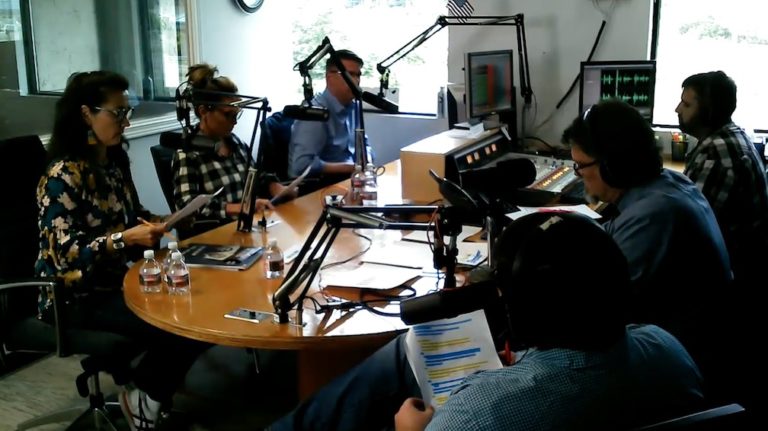
Mike Porcaro on his afternoon radio show on KENI said if business interests oppose the full dividend, then next time oil companies want the public’s allegiance to fight increases in oil taxes, they shouldn’t bother to ask for that help, as Alaskans will remember this day.

Meanwhile, the calendar for non-budget items keeps growing in the House, as legislation backs up:

Baby formula crisis: Over 33 percent shortage in Alaska

At a time when young families are praying the Alaska Legislature will give them their full statutory Permanent Fund dividend so they can buy groceries and gas, baby formula is now in short supply.

The situation appears to be worsening after over two months of shortages.

Alaska now has a 33 percent deficiency in the supply of the needed food for infants who can’t take mother’s milk or who need specialized formula due to medical conditions, according to industry sources. Many parents use the Women, Infants, and Children (WIC) program to help them afford the expensive, proper food for their growing children.

Now, the Biden Administration is under attack for sending pallets of baby formula to warehouses along the U.S.-Mexico border for illegal immigrants coming into the United States, while shelves are bare in American stores.

Rep. Kat Cammack, a Republican Congresswoman Kat Cammack of Florida, said on Wednesday that a border patrol officer in Texas told her he had taken pallets of formula to a warehouse to ensure immigrant babies would be able to eat.

President Joe Biden, meanwhile, met with the CEOs of Walmart, Target, and other stores to learn about the struggles retailers are having getting formula for their shelves. The president may set sanctions on price gouging, and increase imports of formula, while the manufacturers try to resupply the nation. White House spokesperson Jen Psaki was noncommittal about the progress being made to stave off a complete collapse of the baby formula supply chain.

In addition to a broken supply chain, there was a major recall of infant formula in March by the largest manufacturer of the product, Abbott Nutrition. Government officials said the supply issue was supposed to be resolved in March, but then the date was pushed back to April. Now, the stores are still seeing bare shelves.

It’s the kind of stress that young parents never forget — the inability to feed their babies because there is no food on the shelves and what is there is being marked up.

Gov. Mike Dunleavy issued a statement today about the problem developing in Alaska:

“I’m concerned that our most vulnerable are now bearing the brunt of supply chain issues. As families now struggle to get the proper formula for their babies, please consult your doctor to ensure the little ones get the proper nutrients they need. Here is some information on the situation we have received from Alaska Health and Social Services: A Nationwide formula shortage affecting Alaska started in mid-February due to a voluntary recall by Abbott. Since then, the supply chain issues have impacted the matter further. Formula-fed infants are dependent on formula availability for their well-being, growth, and development. Unfortunately, there are no recommended substitutes for infant formula. The Women, Infants, and Children (WIC) program has monitored the situation since the beginning of the recall. We have a contract with Abbott providing a substantial rebate for participation that is paid back to the state to offset the overall costs of the formula. It reduces the federal spending to the program. Approximately 95% of formula-fed WIC infants have been prescribed Abbott products.During the recall, we were allowed the flexibility for participants to purchase a wide variety of formulas. However, we are unclear how long we will be given this flexibility,” Dunleavy said.

According to Datasembly, a “provider of real-time product pricing, promotions, and assortment data for retailers,” baby formula out-of-stock rates continue to climb in May.

Datasembly’s analysis shows the stocks of formula were relatively stable for the first half of 2021, with out-of-stock fluctuation between 2-8%. The analysis shows that in April of 2022, baby formula shortages hit 30% and jumped to 40% at the end of April.

For the first week of May the nationwide out-of-stock situation for baby formula continues to climb.  The nation-wide OOS percentage is now at 43% for the week ending May 8th.

Sen. Tom Cotton of Arkansas wrote to Food and Drug Administration Commissioner Robert Califf this week demanding answers about the dangerous shortage of infant formula and asking how the FDA is planning to combat the issue.

“Millions of babies rely on formula for their nutritional needs. Major retailers are limiting the amount of infant formula customers can purchase per visit, and families are being forced to pay higher prices and fees to obtain adequate food for their child. This places an additional burden on hardworking Americans already spending more on necessities due to inflation,” he wrote.

“I hope that the FDA understands the extraordinary strain this crisis has placed on parents and children alike and is doing everything in its power to re-open the Abbott plant,” Cotton wrote.

Text of the letter may be found here.

Blogger’s partisan lie about redistricting board member makes it into court, offered as truth to judge by lawyer

A lie told by partisan Alaska blogger writer Matt Buxton has also made its way as factual evidence into the official court record in a case involving the political redistricting of Anchorage.

Eva Gardner, the lawyer offering the same lie as Buxton has now presented it in her brief to Superior Court Judge Thomas Matthews. It appears the blogger and the lawyer have been coordinating, with the Gardner letting the blogger lead with the lie, and then the Gardner repeating it as fact to the judge.

Buxton, who attacks Must Read Alaska as ones of his main lines of business, wrote in a story this week that a writer for Must Read Alaska had labeled two members of the Alaska Redistricting Board “bitches of the first order” in an email to Alaska Redistricting Board member Budd Simpson.

The record unequivocally shows (story below) that the accused MRAK writer made no such statement, and although the Buxton story was picked up by the recently launched partisan blog Alaska Beacon, and by other mainstream media outlets, the lie has now reached even further — into the courts themselves, via a brief filed by the lawyer opposing the redistricting map that places Eagle River and Girdwood into the same Senate district.

Read: Big Oops: Partisan Alaska Beacon passes on lies from partisan blogger

The lawyer promulgating the Buxton lie to Judge Thomas Matthews concluded from the lie that “Member Simpson appears to have been preoccupied by partisan politics and various political parties’ preferences in a way that improperly influenced his vote for Option 3B.”

In other words, Gardner and Buxton made false allegations, allowing Gardner to draw false conclusions:

The Redistricting Board is defending itself against challenges to its final maps for Anchorage, which it adjusted after Democrats filed a lawsuit against the initial Senate districts that the board had drawn.

Every 10 years, the political boundaries change in Alaska, to even out population areas as they are represented by House and Senate members. The current redistricting process began last August and was finalized in November, but lawsuits have prevented the map from being finalized. Only one remaining dispute is before the court, and it involves Anchorage Senate districts that the Democrats are trying to push toward their own interests.

Judge Matthews is expected to rule by Monday, but is working with an argument that uses a partisan blogger as its foundational document, and who has offered up a lie for the purposes of changing the redistricting outcome.

That in itself will open up a line for the Redistricting Board to take the decision to the Supreme Court and expose the coordination between Buxton and the lawyer for the plaintiffs.

Jim Crawford: Legislators should listen to the people, not the special interests, and pay the dividend for a change

By JIM CRAWFORD

“The most irresponsible budget in Alaska History” is the way organized labor blasts the budget currently under consideration by the House.  It passed the Senate with a vote of 5 against and 15 for the budget. 

Wow, maybe this is the year the legislators will listen to the people instead of special interests. 

In a prior column, I asked you to watch the National Education Association double their invoice to the state. That’s the bill that folks like lobbyist and legislator Zack Fields, laughingly call “savings” when describing how to double the education budget. 

Let’s be straight with each other. Education has not been cut a dime this year. Instead, Big Labor has rolled the dice to get a twofer for our pathetic and failing education system. They asked for $2.4 billion instead of $1.2 billion for the state portion of spending. 

The most amazing statement by liberals like Fields is the redefinition of savings. I read financial statements for a living; every Alaskan should read them, too. In a quick gathering of public financial statements today I found over $93 billion of savings in cash and investments.  That is in addition to the savings we hold to cover retirement obligations of PERS and TRS.  

Name me another state that has that kind of cash per capital.  You can’t because there isn’t any state that has ready cash to meet any contingency, as we have in Alaska. The Earnings Reserve Account of the Alaska Permanent Fund has $10.4 billion in ready cash. Those funds can be spent by a simple majority of the Legislature, if we have a need that passes public muster.

Tying the dividend to today’s state earnings instead of Fund earnings is pure genius in confusion politics. Those who advocate the full dividend do so on the basis of a state statute, which defines the obligation as 50% of earnings of the fund, with no calculation of current earnings from outside the Fund. That formula will always be sustainable, although it may go up or down depending on performance.  That accountability of the up and down provides management with accountability of the Fund. To confuse the issue with other earnings is disingenuous.  

Haven’t we had enough “hide the money” games from Juneau?

The Operating Budget is based upon what we have coming in, versus what’s going out. That’s the Legislature’s and governor’s jobs to add or cut according to our means. This year’s Spring forecast showed an all- in surplus of $3.44 billion.  If you listen to the ones who will anything to hide the real earnings, “the budget is unsustainable, so we must put more billions into savings to make it even more unsustainable”. Please share with your Legislator that matching up income and expense is their job.  Adding a $1.2 billion in more education expense does not make the problem easier to solve, it makes it tougher.  

House members: Vote yes for the budget that the Senate passed, and then come home. Let the public decide whether you did well or not.  Pay out the full dividend to your shareholders, and do it now.   

Jim Crawford is the former President of Permanent Fund Defenders, pfdak.com, an Alaska based educational nonprofit corporation based in Eagle River, Alaska.  Jim is a third generation, lifelong Alaskan who co-chaired the Alaskans Just Say No campaign to stop the raid on the Permanent Fund in 1999.  He also served Governor Hammond as a member of the Investment Advisory Committee which formed the investment and corporate strategy of the Alaska Permanent Fund Corporation in 1975.