Meanwhile, the commercial fishermen themselves, or at least their official representatives, were meeting with a state court judge to demand a reversal of an Alaska Department of Fish and Game’s decision to close setnet fisheries to protect a struggling run of Chinook salmon.
Carl Bauman, the attorney representing them, wanted a temporary restraining order (TRO) imposed on Commissioner of Fish and Game Doug Vincent Lang because he has, according to Bauman’s court filings, “violated so many points of applicable federal and state laws (constitutional, statutory, regulatory, and case law)” that there is a need for “TRO and injunctive relief to the Court to stop the continuing harm.”
Bauman’s went on to list all the bad things Vincent-Lang has done, the most interesting of them being the suggestion that Vincent-Lang and the state Board of Fisheries have violated the interstate commerce clause of the U.S. Constitution by allowing the dipnet fishery to help provide food security for ordinary Alaskans.
“Does the Board have the authority to establish a new and expanding fishery for Alaska-resident-only, personal-use (dipnetting) that is at odds with Alaska Statute 16.43, CFEC, which has decimated the interstate commerce and the commercial fishery that CFEC was established to protect,” Bauman’s TRO filing asked.
All this acronym-laced gobbledegook will here need some unpacking for the average reader…
A new law will allow up to five state-tribal compact schools in Alaska.
Sen. Gary Stevens, R-Kodiak, sponsored Senate Bill 34, which authorizes the schools for five years.
“This is a historic opportunity to embrace our unique Alaska Native heritages, providing a means for local tribal governments to determine their own path for educating young Alaskans,” Stevens said.
The bill provides no funding, according to its fiscal note.
“Any costs associated with the negotiations and development of the report to the legislature will be absorbed within the Department of Education and Early Development’s operating budget,” the note said.
The tribes have until December to tell the Department of Education if they want to negotiate. The DOE will then submit the plans to the Legislature.
“We collectively want to maintain our language, culture, and traditional ways of life,” said Julie Kitka, President of the Alaska Federation of Natives in a statement. “Educational compacting is one way that we can improve education for our tribal children.”
Dunleavy signed the bill Thursday, the same day he signed legislation formally recognizing Alaska’s tribes.
“Today is a historic day for Alaska and one that is long overdue,” said Rep. Tiffany Zulkosky, D-Bethel, who sponsored House Bill 123. “While the inherent sovereignty of Alaska Tribes has been consistently affirmed in Federal policy, in rulings by the Supreme Court, and by Executive Order in 2018, the signing of House Bill 123 provides formal recognition in statute for the first time in our state’s history. I hope today is looked back on as the beginning of a new chapter of collaboration and partnership between the State and Alaska’s Tribes.”
The law is just a formal recognition of the state’s federal 229 tribes and does not change Alaska’s authority, according to a news release from Dunleavy’s office.
“House Bill 123 codifies in law what Alaskans have long recognized: the important role that Native Tribes play in our past, present, and future,” Dunleavy said.
A similar initiative was expected to be on the November ballot, but the bill’s passage has eliminated the need for voter approval.
“The formal recognition through this legislation is an historic step for us to have a successful relationship with the state,” Kitka said. “The cultural survival of our Indigenous people is dependent on our ability to maintain our values, practice our traditions, and maintain freedom to live our lives well with dignity and respect for each other.”
Dunleavy also signed a bill that causes the State of Alaska to formally recognized the 229 tribes in Alaska.
HB 123 does not impact the current legal status of Alaska tribes or change the State’s responsibility or authority. However, it does formally recognize Alaska’s indigenous people.
“House Bill 123 codifies in law what Alaskans have long recognized: the important role that Native Tribes play in our past, present, and future,” said Dunleavy. “I congratulate all the legislators who nearly unanimously voted for this bill and our hosts today, Julie Kitka with the Alaska Federation of Natives and Emily Edenshaw with the Alaska Native Heritage Center. I also want to thank Emil Notti and Willie Hensley for attending and speaking at this historic bill signing – we can’t tell the story of Native rights and unity without Willie and Emil.”
The bill signing ceremony was held at the Alaska Native Heritage Center and hosted by Alaska Federation of Natives President Julie Kitka and ANHC Executive Director Emily Edenshaw. T
he bill’s signing was celebrated by key authors and advocates of AFN and Alaska Native Claims Settlement Act Emil Notti and Willie Hensley. The signing of HB 123 signifies the State’s desire to foster engagement with Alaska Natives and tribal organizations.
“Today is a historic day for Alaska and one that is long overdue,” said Rep. Tiffany Zulkosky, the bill’s sponsor. “While the inherent sovereignty of Alaska tribes has been consistently affirmed in federal policy, in rulings by the Supreme Court, and by executive order in 2018, the signing of House Bill 123 provides formal recognition in statute for the first time in our State’s history. I hope today is looked back on as the beginning of a new chapter of collaboration and partnership between the State and Alaska’s tribes.”
“The cultural survival of our Indigenous people is dependent on our ability to maintain our values, practice our traditions, and maintain freedom to live our lives well with dignity and respect for each other,” said Julie Kitka, president of the Alaska Federation of Natives. “We have strengthened our tribal governments and have initiated multiple efforts to continue our path to self-determination and self-governance. The formal recognition through this legislation is an historic step for us to have a successful relationship with the state.”
The bill is similar to an initiative intended to go to voters this fall; however, the bill and the initiative were substantially similar, eliminating the need for the ballot initiative.
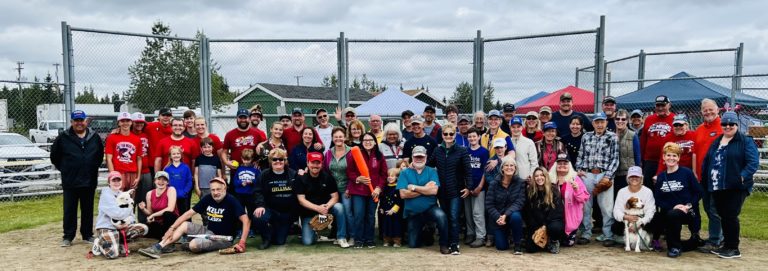
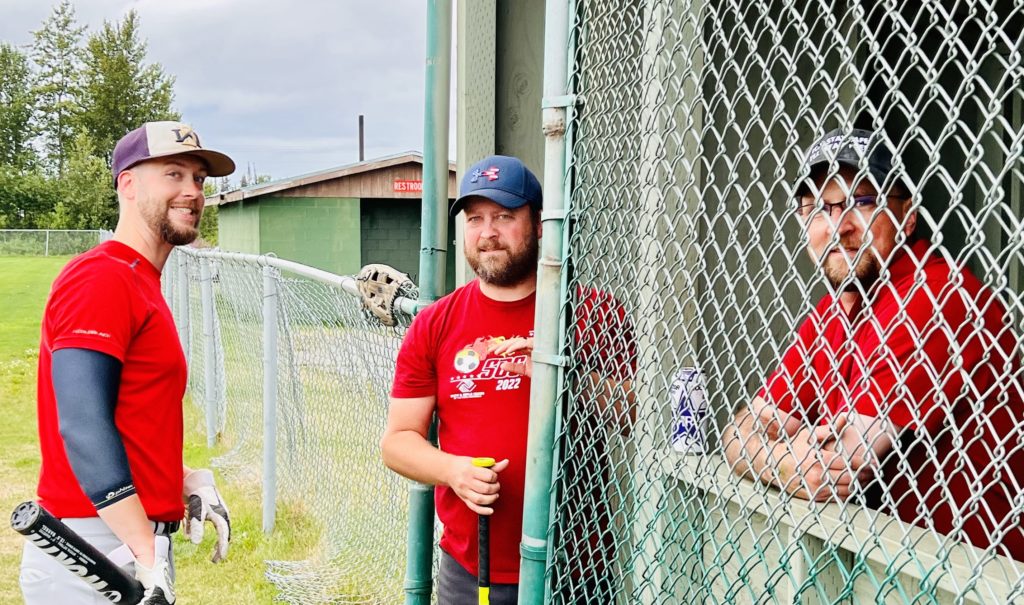
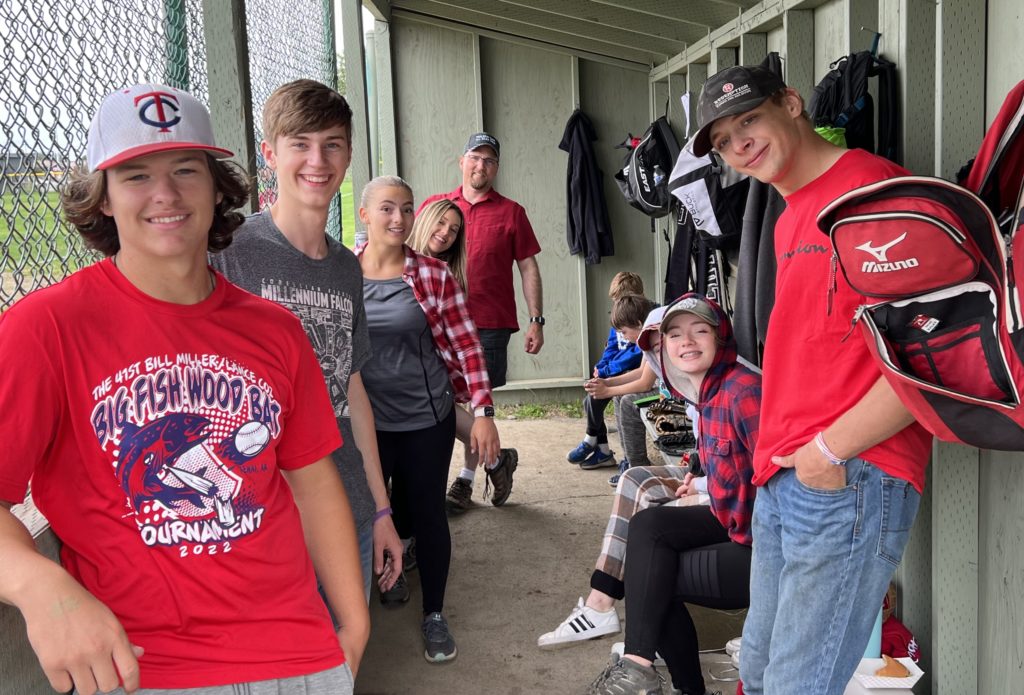
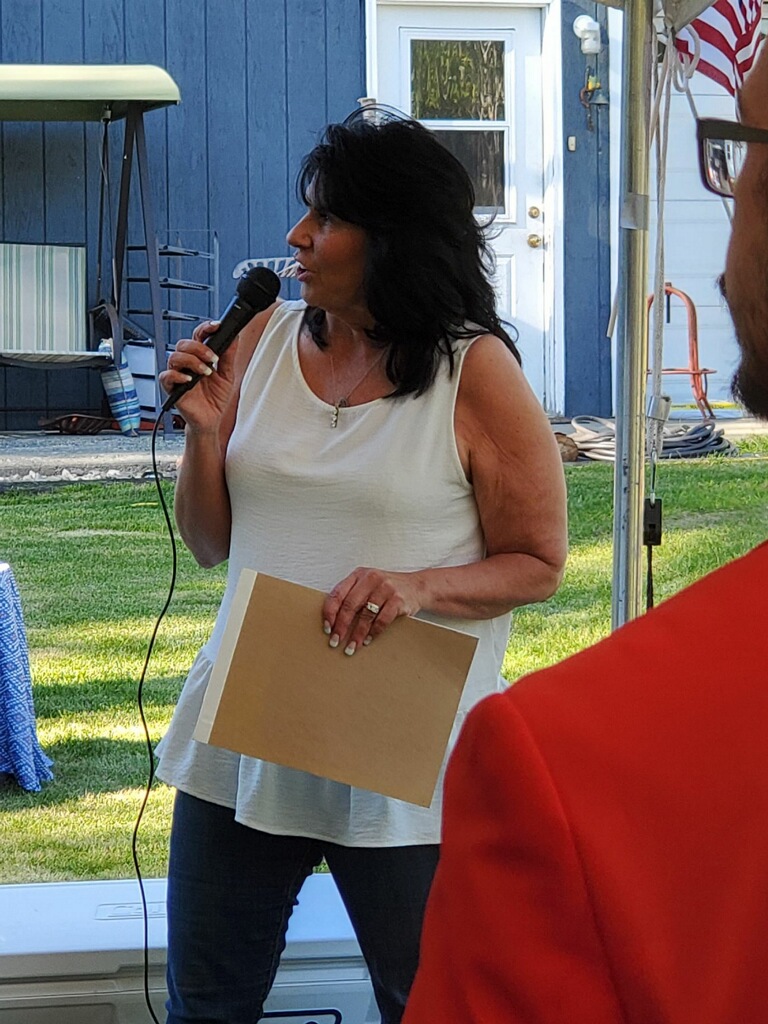
The second annual Republican softball game in Kenai on Saturday was also a joint fundraiser for Districts 6, 7, and 8 Republicans, with over 75 attending the game as spectators, players, and supporters at the Kenai Park Strip Ballpark, where the weather was cloudy but not rainy.
Representatives Ben Carpenter, Ron Gillham, and Kenai Assemblyman Bill Elam were among the players who reported in for teams. Jeff Vance, husband of Rep. Sarah Vance of Homer, also played, while Kenai Borough Mayor Charlie Pierce was an umpire. Rep. Vance was also at the event all day.
District 7’s team included candidate Justin Ruffridge and the man he is challenging — Rep. Gillham — on the field together.
Senate Seat C candidate Heath Smith was on the field for District 6.
There were three teams, one for each district, and the tournament had a round-robin of five-inning games. District 8 was the overall winner. Ringers on that team were Rep. Carpenter and Assemblyman Elam.
Tuckerman Babcock, running for State Senate, was at the ballpark all day helping out, while Jesse Bjorkman, also running for Senate, made an appearance to spectate for an hour.
On site early to set up were Chairmen of their districts George Hall-6, Dave Peck-7, Wayne Ogle-8, all at the park by 9 am.
District 6 Vice Chair Charlie Franz was the auctioneer for the outcry auction for desserts. District 8 Chair Wayne Ogle, Helen Ogle, and Barb Blakeley ran the concession stand, while District 6 Secretary/Treasurer Cassie Lawver, Terrell Brewer and Kim Bates led dessert team.
District 7 Precinct Leader Garrett Ennis and Mayor Charlie Pierce’s Special Assistant Dil Uhlin served as classic baseball play-by-play announcers.
It was pure Americana in Kenai for politicos. Unlike at Thursday night’s Congressional Baseball Game at the Nationals Park, when Democrat Rep. Linda Sanchez flipped the bird to the Republican team, no middle fingers were extended in Kenai.
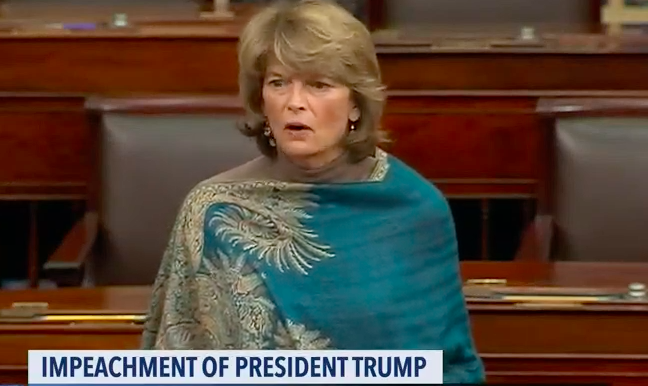
Alaskans for LISA is pro-Lisa Murkowski Super PAC currently running ads attacking Kelly Tshibaka for wanting to shut down by-mail birth control pills, something Tshibaka vehemently denies.
The only thing in question regarding birth control is distribution of morning-after pills by mail and without prescription. Essentially, those drugs induce a miscarriage, complete with blood and passage of the fetus. Miscarriages typically lead to a hospital visit. Proponents of artificial ones aren’t mentioning this little fact. Perhaps they should. It’s interesting Alaskans for LISA chose this particular avenue of attack, doing their level best to misrepresent what Tshibaka has been saying.
Regardless of your position on the abortion wars, which at least this group of Lisa Murkowski supporters have determined to be the hill upon which they have chosen to die, I find it instructive to look at who is actually involved, and most importantly, to follow the money.
Alaska Public Media on July 21 ran a piece about the deep pockets in support of Lisa’s reelection. Alaskans for LISA raised $2.4 million, $1.5 million from Ken Griffin of Illinois. The billionaire is ranked as one of the world’s 50 richest individuals, according to the Bloomberg Billionaires Index. He is believed to be worth $28.9 billion.
Outside money. Hedge fund money. Dark money. I thought Ballot Measure 2 was supposed to stop that.
What else is at 510 L Street? We have the Anchorage official office of Sen. Lisa Murkowski, just down the hall in Suite 600. We also have the corporate office of Cashion Gilmore & Lindemuth, where Scott Kendall is proudly listed as a member in Suite 601. Kendall wrote an opinion piece in the ADN cheerleading passage of Ballot Measure 2 and the brave new world of jungle primaries and ranked choice voting. He is known as the BM2 author and prime mover behind the political group that used Outside dark money to convince Alaskans to pass Ballot Measure 2.
It’s interesting that Murkowski’s legal representative in 2010 and her former chief of staff are still involved in things that arguably will directly impact her reelection, and that their offices are in the same building, on the same floor, within spitting distance of one another.
Whatever you may think about Lisa Murkowski, and depending on who you are, the swampiness of all this is breathtaking.
Also breathtaking is Alaskans for LISA’s funding from the Chicago hedge fund billionaire.
Those of us involved in the Cook Inlet salmon wars have long noted the apparent close, bordering on incestuous relationship between ADF&G Commercial Fish office in Soldotna and the United Cook Inlet Drift Association, sharing the same building at 43961 Kalifornsky Beach Road, Suite B Soldotna.
You don’t share close proximity with other fellow travelers unless it provides some advantage to individual or shared goals. We see it in the Cook Inlet salmon wars. Are we seeing the same sort of thing in support of Murkowski’s 2022 reelection?
While I am sure everything is being done to the letter of the law, it is the swampiness gives me pause. And it is the swampiness after 21 years in Washington DC that ought to be the most important reason of all to vote against Murkowski. For if giving herself over to the swamp has resulted in no benefit to Alaska, what good is she?
Alex Gimarc lives in Anchorage since retiring from the military in 1997. His interests include science and technology, environment, energy, economics, military affairs, fishing and disabilities policies. His weekly column “Interesting Items” is a summary of news stories with substantive Alaska-themed topics. He was a small business owner and information technology professional.
I’m often asked how difficult it is working multiple jobs as a citizen legislator. No surprise, it’s challenging. While some people think otherwise, for many legislators, serving as an elected official comes at significant personal cost: Lost income, lost family time, and the stress of trying to represent tens of thousands of Alaskans with very diverse views and issues.
Most legislators are serving during the prime career and earning years of life. As I explain later, that’s important. Unless they are set on being a career politician, it’s not an easy decision to put a career on hold or balance the demands of a second job needed to pay the bills.
Some may ask, is it worth the cost, the sacrifice? The persistent answer I always reach – yes. What happens in Juneau affects us all. The Alaska my children and grandchildren inherit is the driving force and leaving Alaska better than I found it. Public service should be considered a privilege not a prize.
With re-districting requiring 59 of Alaska’s 60 legislative seats to be up for election this year, it’s a good time to ponder why we should want part time citizen legislators vs. a career political class.
Would Alaskans prefer a full-time legislature and career politicians? Would we be better off if we did? If so, the only people who’d be able to serve would be the wealthier, retired or Alaskans with a working spouse whose job is good enough to pay the bills. I do not believe Alaskans want an elitist political class.
Look at Washington D.C. for what career politicians give us. Corruption, crony capitalism, crushing debt, special interest run amok, and much more. It’s a long list. Some legislators in Alaska have served two or three decades, a few even longer. Very few people, human nature being what it is, can resist the temptation of power and its corrosive effects over time. As Lord Acton once wrote, “power tends to corrupt, and absolute power corrupts absolutely.”
A citizen legislature has people from all walks and phases of life, not just a career political class. Many legislators have been or are top income earners and retirees, nothing wrong there. However, a part time citizen legislature has many who must work a job outside the legislature. They are tied to the private sector economy and community in ways which bring a critical perspective to how they govern, thus providing a more balanced legislative body.
For example, when a legislator returns to their other job, they interact with people struggling to get by and better understand the value of the Permanent Fund dividend to average Alaskans. Or how increased government spending, or regulation, may introduce unintended consequences such as tax burdens or job losses thereby influencing their legislative actions. Real world concerns, not just those inside the political bubble of Juneau or political circles.
The reality is most working-class legislators don’t stay in office too long, they can’t afford to. If they don’t exit stage left after a few terms, they probably had other plans in mind, ergo career politician.
Can you imagine an Alaskan legislature under the control of just retirees or wealthy? A career political class with little in common to the vast majority of working-class Alaskans who must survive in the private sector? Our state government is already under significant influence from special interest. Why would we want to model D.C. and cede power to a state oligarchy — rule by a few or dominant class?
The choice is yours; it always has been.
Sen. Mike Shower represents Senate Seat O, Wasilla, Big Lake, Chikaloon, and areas east to Valdez, and north to Anderson, in the Alaska Legislature.
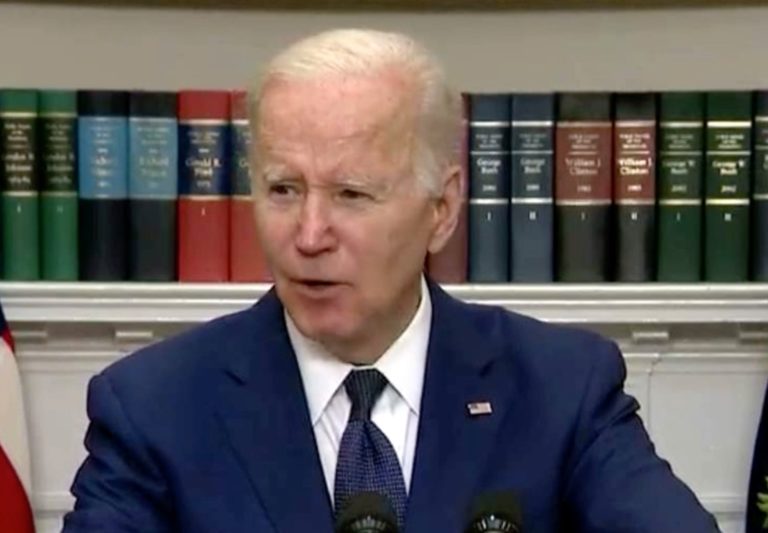
Late Saturday morning, President Joe Biden tested positive for Covid for the second time this month, and has gone into another period of isolation.
The White House doctor wrote that a small percentage of people who receive the Paxlovid drug that Biden began as soon as he tested positive have a second onset of Covid.
Biden had tested negative on Tuesday, Wednesday, Thursday and Friday, after finishing a 10-day isolation for Covid, in which he had mild symptoms. At this time he has not experienced a recurrence of symptoms, said Dr. Kevin C. O’Connor in the White House memo.
“This being the case, there is no reason to reinitiate treatment at this time, but we will obviously continue close observation,” he wrote. All travel on the president’s schedule has been canceled for the 10-day period, including his traditional weekend trip home to his house in Delaware.
Paxlovid is an antiviral pill treatment made by Pfizer, which also manufactures one of the main so-called vaccines for Covid. Biden tested negative soon after taking Paxlovid, but the infection came back four days after his period of isolation ended.
More than 40,000 prescriptions for Paxlovid are being written every day and more than 3 million Americans have used the medication to reduce the severity of the disease, which has become endemic across the globe. The president’s chief medical adviser, Dr. Anthony Fauci, even took two courses of Paxlovid when he caught Covid in June.
The Biden Administration has pushed Paxlovid as an important weapon in the fight against the Covid virus. But the drug seems to be most effective for unvaccinated elderly people, helping them keep out of the hospital if they get Covid, and the rebound cases appear to be happening among those who are vaccinated, who get Covid anyway, and then take a course of Paxlovid, like the president; Biden has received two booster shots in addition to his original two Covid vaccination shots.
A recent Israeli study showed that Nirmatrelvir (Paxlovid) therapy was associated with a 67% reduction in Covid hospitalizations and an 81% reduction in Covid-19 mortality in patients 65 years and above. “However, no significant benefit in avoidance of severe Covid-19 outcomes was shown in younger adults,” the study concluded.
The House of Representatives on Friday passed gun control legislation, House Resolution 1808, on a vote of 217-213. The bill will advance to the Senate, where it is predicted to languish.
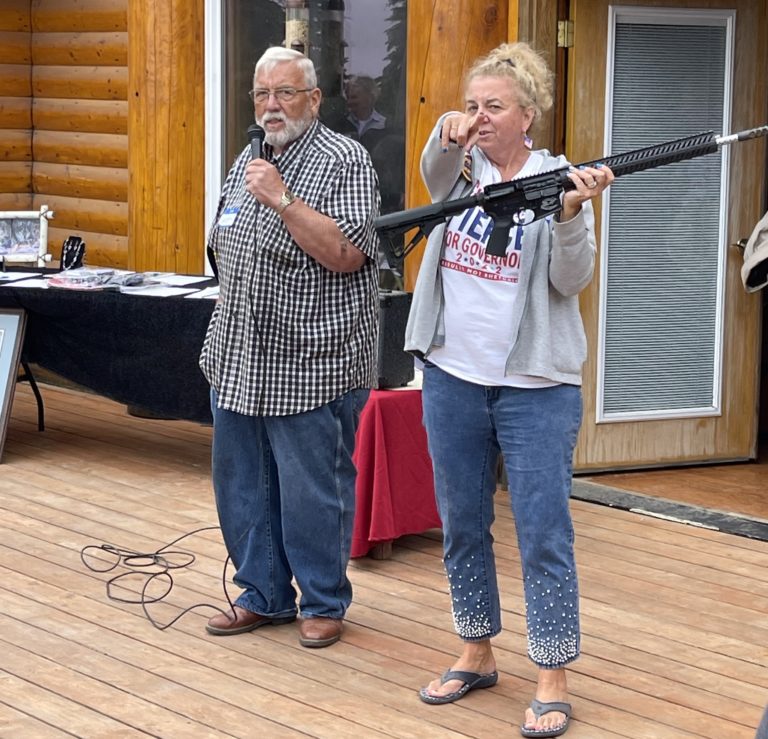
HR 1808 would ban nearly all semiautomatic firearms and standard capacity magazines, including the AR-15, an example of which is shown above being auctioned off in Nikiski, Alaska. It would also ban the AK-47.
The bill would ban many types of striker-fired handguns, which are among the most commonly owned firearms today. Striker-fired pistols are easy to use: After a shooter manually racks the slide to chamber a round, each subsequent trigger pull fires a single round, then ejects the spent casing, and loads another round into the chamber, rearming the firing pin, so the next round can be shot.
The House measure calls these firearms “assault weapons.” Many hunters in Alaska use AR-15s for caribou. There are more than 24.4 million of these types of firearms are currently in the possession of American citizens, according to the firearm blog, The Reload.
“More than 4.5 million ARs. AKs, and similar rifles were bought by American civilians since the last time their circulation was estimated, according to a new report. The National Shooting Sports Foundation (NSSF), the gun industry’s trade group, found there are now at least 24,446,000 of the guns in civilian hands. It said 2.7 million were produced or imported in 2020 alone–the most for any year on record,” the writer said.
“This is a truly significant figure that demonstrates – again – the popularity of this commonly-owned style of rifle,” Joe Bartozzi, NSSF President, said in a statement to The Reload. “The firearm industry responds to market demand and this shows that during the elevated period of firearm sales that began in 2020, this particular style of rifle is the top choice for law-abiding citizens for hunting, recreational shooting and self-defense.”
This bill makes it a crime to knowingly import, sell, manufacture, transfer, or possess a semiautomatic “assault weapon” or large capacity ammunition feeding devices.
AK-47. Photo credit: NRA
The proposed ban does not apply to a firearm that is manually operated by bolt, pump, lever, or slide action; permanently inoperable; is an antique; and the bill does not specify a brand or model by name.
The bill exempts from the prohibition the following, with respect to a SAW or LCAFD:
importation, sale, manufacture, transfer, or possession related to certain law enforcement efforts, or authorized tests or experiments;
importation, sale, transfer, or possession related to securing nuclear materials; and
possession by a retired law enforcement officer.
After Congress approved similar legislation in 1994, Democrats lost control of the House and Senate. That ban expired in 2004, and polling data this year suggests the public would again be punishing to lawmakers, should the bill pass.
“The sweeping gun control law would also ban many triggers, and inhibit the use of lawfully acquired suppressors, another large part of our industry. For many of us, these arbitrary standards of what makes an ‘assault weapon’ would cover every item that we produce, guaranteeing the failure of our businesses,” said Gun Owners of America in a letter to Senate Majority Leader Chuck Schumer and Minority Leader Mitch McConnell.
“A majority of all gun owners, especially the 14 million new gun owners who bought firearms to defend themselves during a period of unrest, would become owners of so-called “semiautomatic assault weapons” and thus be subject to undue and unconstitutional mandates from Congress.
“Time and time again, these commonly owned firearms have been used for self-defense. According to a 2021 National Firearms Survey from Georgetown University’s McDonough School of Business Research, there are an estimated 1.67 million defensive uses of a firearm each year. This means that firearms are at least as likely to be used to save lives than to take lives, if not many times more,” Gun Owners of America said in its letter. “As recognized by the federal government after the expiration of the Assault Weapon Ban of 1994, these laws do nothing to save lives or reduce crime. Instead, you will be limiting our customers’ ability to defend themselves adequately against criminals.”
Another bill working its way through the House is House Resolution 2814, which would repeal the Protection of Lawful Commerce in Arms Act, and make firearm manufacturers responsible for crimes committed using the firearms they make and sell.
The bill is seen “as ridiculous as suing automotive manufacturers for pedestrian deaths based upon the malevolence of the drivers, rather than the deficiencies of the car’s design,” the Gun Owners of America Letter said.
The National Rifle Association was equally unimpressed: “Barely a month after the Supreme Court’s landmark decision in NYSRPA v. Bruen, gun control advocates in Congress are spearheading an assault upon the freedoms and civil liberties of law-abiding Americans. The promises made in HR 1808 are nothing short of a lie based on willful ignorance of the disastrous 1994 Clinton Gun Ban which failed to produce any significant drop in crime. With more than 24 million potentially-banned firearms in common use, these draconian restrictions fall in blatant opposition to the Supreme Court’s rulings in Bruen, Caetano v. Massachusetts, and DC v. Heller. Their refusal to recognize this reality places everyone at risk. Any legitimate attempt to address our nation’s surge in violent crime cannot commence until anti-gun legislators step away from the radicals who defund our police departments, support prosecutors who refuse to prosecute dangerous criminals, and promote no cash bail policies that have turned once proud communities into a playground of lawlessness and fear.”
Just 17 days remain before the primary election for all seats on the ballot, and the special general election for Congress. Apply for your absentee ballot here.
No, you will not be mailed a ballot this time — this is going to be an in-person election except for those who request a ballot be sent to them. Just like the old days. The deadline to apply for an absentee ballot is Aug. 6, the same day that regional offices will open from 10 am to 4 pm for absentee and early in-person voting.
A fundraiser for Rep. Laddie Shaw and aspiring House Rep. Jamie Allard drew 50 people out on a hot Thursday evening to the Main Event in Anchorage. A few ice-cold beers were in hand.
The Main Event is a popular venue these days for many Republican candidates. Spotted at the fundraiser were luminaries such as House candidate Dan Saddler, House Rep. David Nelson, hunting legend Mel Gillis, business legend Charlie Bussell, emcee Steve Strait, and a host of citizens who regularly attend Anchorage Assembly meetings. We didn’t spot any Republican Party officers, and we didn’t see Assemblyman Chris Constant or Assemblyman Forrest Dunbar, but there were plenty of well-wishers for Allard and Shaw.
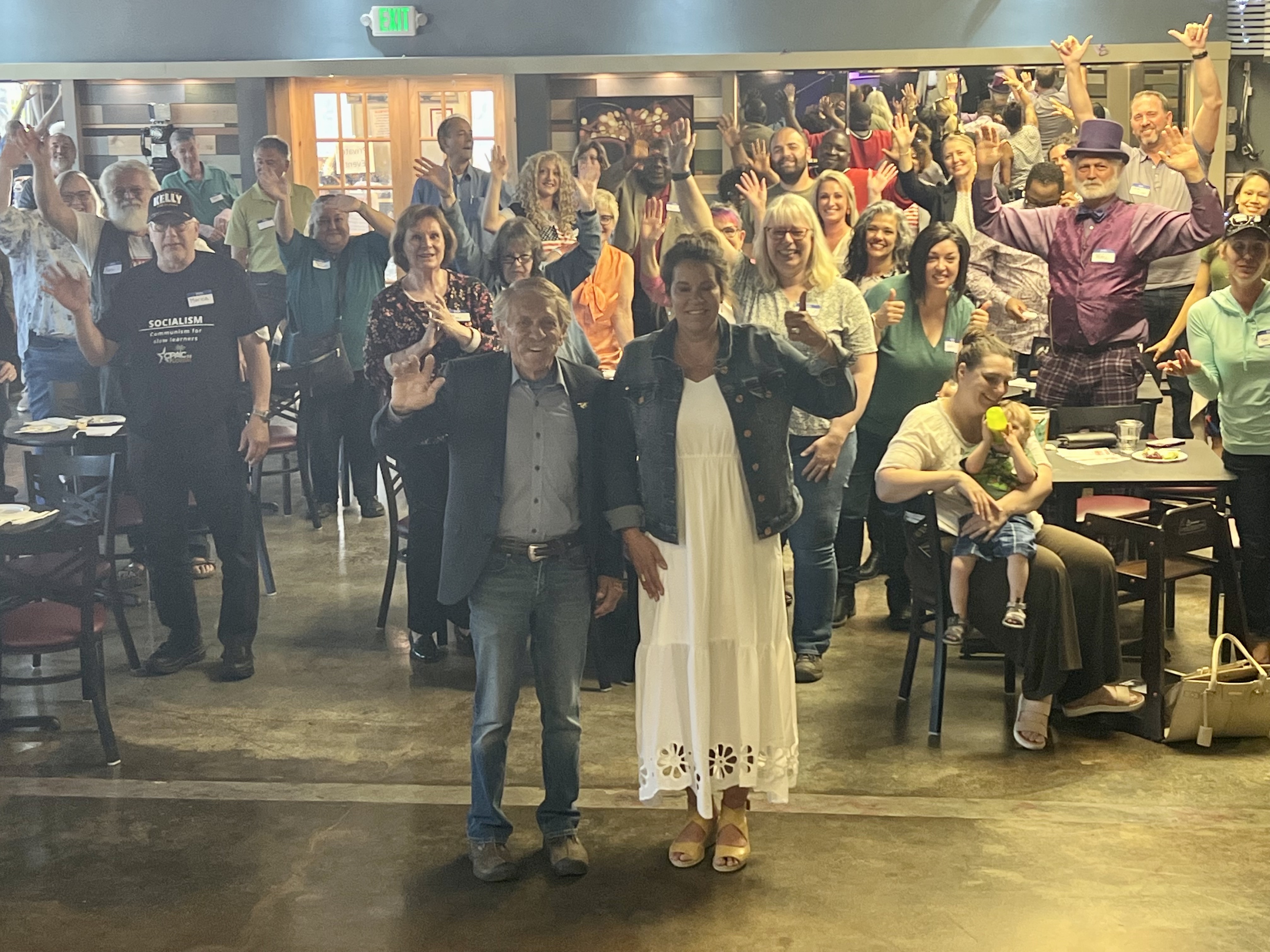
In addition to the estimated $10,000 raised for the campaigns of Allard and Shaw, another $1,375 was raised for scholarships for the Gold Star Peak program, which helps the surviving families of those who have been killed in battle. The group photo above shows the love for veterans, and Gold Star families.
Fairbanks race: Municipal elections in most of the state (except Anchorage and the Mat-Su) are on Oct. 4. Filing for the Oct. 4 election ended at 5 pm today, July 29 for the Fairbanks election. Early voting in this election begins Sept. 19.
Spotted at the Glacier Brewhouse in downtown Anchorage was Fairbanks mayoral candidate David Pruhs with a group of people having a lunchtime fundraiser for his campaign. We think we saw Kenny Gerondale, president of Construction Machinery Inc.; Dana Pruhs of Pruhs Construction, Ashley Reed, Mike Baker, Jason Warfield, Nick Begich, Perry Green, and several others were in the group.
Juneau forum: A forum by the Juneau Radio Center (KINY) for the three congressional candidates on the special general election ballot is scheduled for Aug. 1.
So far, all three special general election candidates, Mary Peltola, Nick Begich, and Sarah Palin, have RSVP’d. But Palin has already ducked out of a commitment to a forum in Fairbanks, so there may be just two.
Before the event, there is a reception for Palin at the Rie Munoz Gallery from 3-5 pm on July 31, which means Palin is scheduled to be in Juneau for 24 hours. The Begich meet-and-greet is from 4-7 pm on Aug. 1 at Mendenhall Auto.
Edie Grunwald, Dharna and Nick BegichRep. Cathy TiltonMayor Glenda Ledford, Rep. Kevin McCabe
Cathy Tilton fundraiser: About 50 people stopped by the Rep. Cathy Tilton fundraiser in the Valley on Thursday, where we spotted Rep. Kevin McCabe, Wasilla Mayor Glenda Ledford, Crystal Nygard, Sen. Mike and Michelle Shower, Assemblyman Jesse Sumner, Rep. Kevin McCabe, MatSu school board candidate Kathy McCollum, Mat-Su Borough Assemblywoman Dee and George McKee, Mat-Su Borough Mayor Edna and Noel DeVries, Lieutenant Governor candidate Edie Grunwald, Ron and Janet Johnson, and many others.
Tilton has served the Chugiak-Wasilla area since being elected in 2014, and is currently Republican Minority Leader.
Peltola fundraiser in Soldotna: Mary Peltola, the Democrat for Congress, is having a fundraiser on Aug. 3 in Soldotna on the Kenai Peninsula. For some reason, there’s an actual business listed as a sponsor, “907 Moving Company,” which probably needs to be dealt with by her fundraising team, since corporations can’t participate in elections like this. It’s an FEC violation.
Republican Senate Majority Fundraiser in Soldotna: At The Catch Restaurant, Gov. Dunleavy was the keynote speaker and the fund for the Senate Majority netted $12,300 in donations. Spotted at the event were Senate candidate Tuckerman Babcock, Rep. Ron Gillham, Rep. Ben and Amy Carpenter, Lt. Gov. Candidate Nancy Dahlstrom, Sen. Roger Holland, Alaska Republican Party District 8 Chairman Wayne Ogle, and Ketchikan’s Trevor Shaw, who is assistant secretary of the Alaska Republican Party. Also, Nelson San Juan, who is assistant commissioner of Labor, Rena Bretz from the Dunleavy campaign, and Jill Schaefer, who reps for the governor on the Kenai.
Endorsement: The Orutsararmiut Native Council in Bethel and the Organized Village of Kwethluk have endorsed Mary Peltola for Congress. Tuckerman Babcock for Alaska Senate says his endorsement list just grew to 318 individual endorsements. Josiah Henry of Delta Junction joined the list of over 100 endorsers of Nick Begich.
Signs: Tuckerman Babcock for Senate has a huge number of signs all over the Kenai Peninsula. At last count it was 87 of the 4×8 signs, perhaps the most of any candidate in the history of elections on the Kenai.
Secretary of Interior Deb Haaland has gotten involved in the election season in an unusual way — she’s written an op-ed in an Indian-focused news blog imploring Native Americans to get out and vote in order to ensure that Native votes can turn the tables and drive our country toward progress.” The Interior Secretary has enormous power over tribes in America, along with the ability to bestow all kinds of benefits and gifts. This is the Secretary of Interior engaging in targeted messaging to a specific racial and tribal group; it is a form of electioneering using her partisan position to drive the Democrat vote.
Her op-ed was written in her capacity as a member of the Biden cabinet and we include for Must Read Alaska readers without further comment:
By DEB HAALAND | SECRETARY OF THE INTERIOR
Many people don’t know that Native Americans didn’t have the right to vote in federal elections until we were granted U.S. citizenship in 1924 and that it wasn’t until the 1960s that the last state granted us the right to vote in state elections. This is the sad and ironic truth — even though Indigenous communities in North America are some of the oldest democracies in the world. Participating in governing is a time honored and sacred tradition in our Indigenous communities. Our ancestors and relatives survived against seemingly insurmountable odds, which is why we owe it to them to make our voices heard at the ballot box. This is why I became an organizer in the first place. I knew that generations of laws restricting the right to vote for Native people impacted our participation in elections, and that it would take a concerted effort to register voters; ensure they had the information about voting dates, locations and hours; and personal outreach to increase voter participation.
With my voting rights champion, WWII veteran Miguel Trujillo in my mind, I would lace up my sneakers, drive out to remote communities in New Mexico, and go door to door. I can’t count how many times I knocked on someone’s door and heard that it was the first time anyone had ever reached out to them to register to vote. Since my organizing days in the early 2000s, we’ve made strides to increase the Native vote. But as we fast forward to today, we face the same battles. Recent attempts such as closing certain polling locations, limiting early voting, changing polling location hours, and even drawing maps to hush the voices of specific populations are consistent attempts to restrict voting access. With President Biden’s support, we are working with states to expand access to voting at Department of the Interior-operated post-secondary Tribal institutions. In May, I was proud to announce that Haskell Indian Nations University (Haskell) in Kansas and the Southwestern Indian Polytechnic Institute (SIPI) in New Mexico will be designated voter registration agencies under the National Voter Registration Act. This action seeks to remove barriers to voting by allowing these institutions to facilitate voter registration opportunities for enrolled students and members of those communities.
These may seem like small steps, but to the students at Haskell, SIPI and Native communities everywhere, this is one way we can live up to our democratic Indigenous roots. Participatory democracy is part of who we are as people – collaboration, consensus and common good are built into our cultures and traditions. Voting is sacred and we must use our voices in every election. Our votes reflect our values and the issues we care about. When we vote, we can impact the direction of the country, because our votes determine who has the power to make decisions for our communities. From school board, to governor, to President – leadership matters. Our communities will thrive when leaders in elected office know and understand the federal government’s obligations to Tribal nations. When I was in Congress, I heard from many Tribal leaders about how much more efficient it was to walk into a meeting with an elected leader who already understood and knew what trust responsibility meant and what government-to-government relationships are. It is inspiring for young people to see themselves in an elected leader, and it is one of the many reasons I believe strongly that representation matters.
Your voice and your vote can make a difference. There are places in this country where Native votes can turn the tables and drive our country toward progress. The strides we’re taking for Native people at all levels of government can and will be slowed down if we don’t use the power of our votes to make our voices heard. I encourage everyone to learn about the candidates on the ballot, reach out to your election officials, and vote in the upcoming elections.
Secretary Deb Haaland is the first Native American to serve as a cabinet secretary. She is a member of the Pueblo of Laguna and a 35th generation New Mexican.