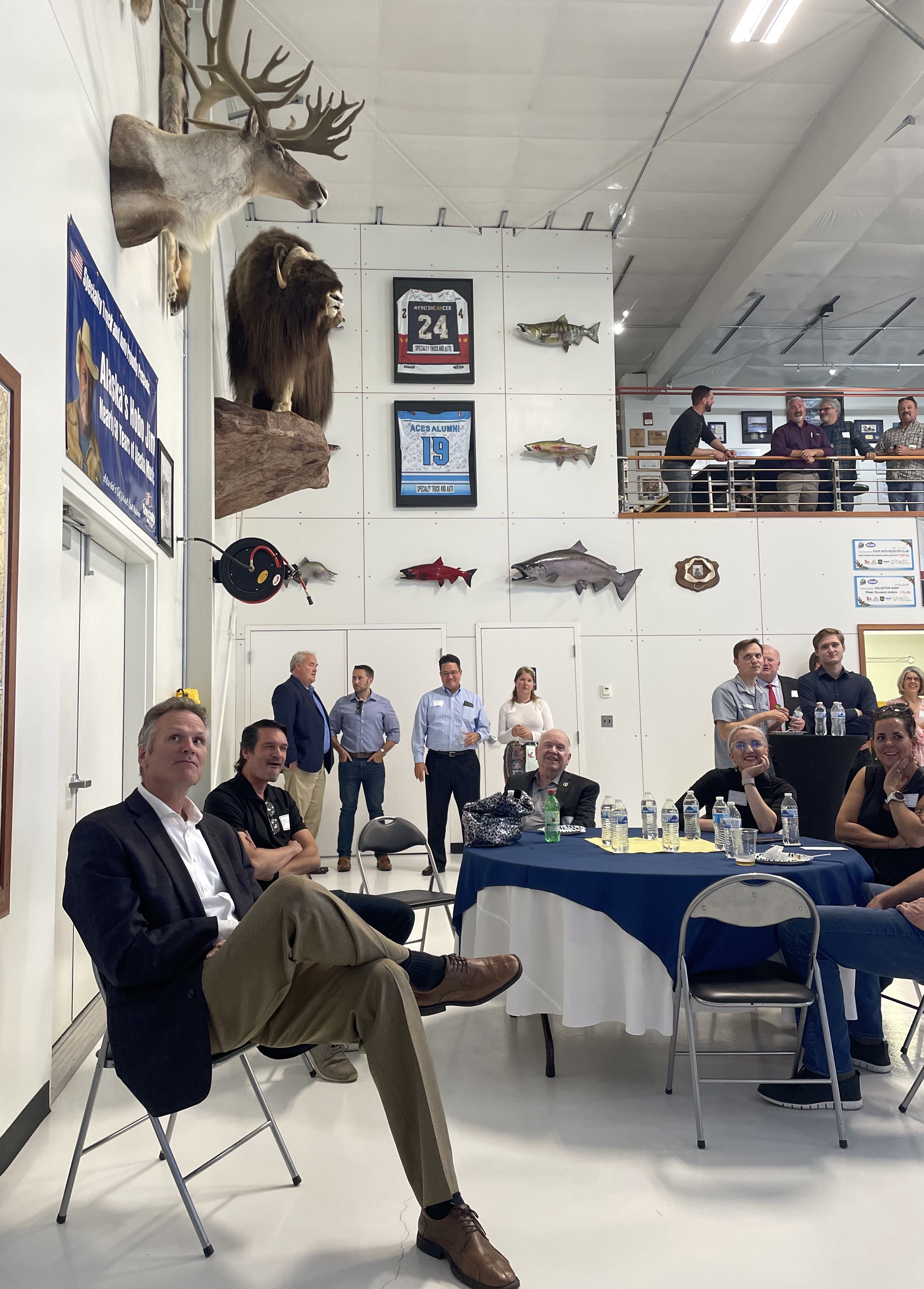
Money: Fundraising season — and it’s a big one this year — has not tapped every wallet, evidently. Gov. Mike Dunleavy had his most successful in-state fundraiser yet on Wednesday evening at a hangar near the airport. His re-election campaign raised over $50,500, at last calculation.
Spotted at the event were Mayor Dave and Deb Bronson, Rep. Sara Rasmussen, Rep. David Nelson, Mike Robbins, Judy Eledge, and a whole host of business owners and operators. Eledge was the emcee; she ran a slide show of old Dunleavy photos from his youth, and she had some humorous commentary for each one of the photos. The governor blushed a few times at the sight of himself wearing red sweat pants and white high-top basketball shoes, but seemed relaxed and enjoying the show; the photos were provided in secret to Eledge by his wife Rose Dunleavy.
Gov. Dunleavy watches a slide show with photos from his younger years in rural Alaska.
Bill Walker ad attacking the Permanent Fund dividend.
Running on a smaller PFD: Bill Walker for Governor’s new ad says “What good is a $6,700 PFD if it means no PFD in the future?” The ad is trying to make the point that smaller PFDs, like the pint-sized Permanent fund dividend that Walker gave to Alaskans in 2016-2018, is good medicine for them.
Peltola gives up on ANWR: Mary Peltola, the Democrats’ candidate for Congress, said at a Kenai candidates’ forum that she doesn’t think there’s anything that can be done to pursue more production in Arctic National Wildlife Refuge.
Endorsements: Ken Koelsch, former mayor of Juneau and longtime Republican, endorsed Nick Begich for Congress.
Events: Valdez Gold Rush Days started Wednesday and run through Sunday.
Alaska Federation of Natives is having a “get out the Native vote” event on Aug. 9, from 9-11 am, via Zoom at this registration link.
Sarah Palin went to Dallas, Texas this week to appear on stage at CPAC.
Palin at CPAC: The interview with Sarah Palin at CPAC, the Conservative Political Action Conference in Dallas, Texas, on Thursday, where she was interviewed by Charlie Gerow for 19 minutes, at thisC-Cpan link.
A group of Anchorage citizens, including two former mayors, filed a petition application with the Anchorage Municipal Clerk with the goal of putting the question directly to voters: Can the Assembly simply decide on its own to remove the mayor, or is this still the job of the voters?
The petition is in response to AO 2022-60, the ordinance passed last month by the Assembly that gives the Assembly the unprecedented power to remove the mayor for the flimsiest of reasons under the category of “breach of public trust.” The Assembly, which leans far left, is looking for a way to get rid of Mayor Dave Bronson, without waiting for a recall election that would be instigated by the public.
Bronson vetoed the ordinance’s passage but on Monday, the Assembly leftist majority overrode his veto.
Municipal Clerk Barbara Jones has 10 days to respond to the application for a petition. Jones maintains she has 30 days to respond, however. When asked by the sponsors for a timeline for all steps needed to get the matter in front of the voter, Jones refused to answer, saying it should be obvious to everyone.
Former mayor George Wuerch is one of lead sponsors, along with former mayor Dan Sullivan. The two believe that Anchorage Ordinance 2022-60 is a violation of the separation of powers. AO-2022-60 allows the Assembly to serve as complainant, jury, and judge for such offenses as the ill-defined “culpable indifference” that the Assembly may use as a reason to remove the mayor.
“This ordinance is a bridge too far,” said former Mayor Dan Sullivan, pictured above on the right at City Hall. “The petition we filed today really represents the proper separation of powers between executive branch and the legislative branch of the city. The ordinance — 2022-60 — allows them to serve as the judge and jury on whatever they deem to be improper conduct, which is written vaguely enough so it could be that they simply disagree with the mayor’s policy. The voters of the city should have the right to weigh in and that is what the recall part of the charter does.”
Sullivan said the mayor serves a three-year term, and there is a recall process already in place in the city charter.
“The mayor’s removal should also be by the people, not just the legislative branch. And if they are worried about mayor doing something criminal, that is the role of the legal system,” he said.
The 10 other cosponsors of the petition application include former Assembly members Ernie Hall, Bill Starr, Craig Campbell, Debbie Ossiander, Dan Kendall, Crystal Kennedy, and Erica Johnson. Citizens Bruce Schulte and Trina Johnson also were signers of the application for petition.
If the petition is granted by Municipal Clerk Jones, the group attempting to overturn the ordinance will have to get at least 7,500 signatures of Anchorage voters on the petition within 90 days in order to then get it to the ballot. If the petition is not granted, there are legal avenues to help the group get the petition. The process of overturning ordinances is difficult, expensive, and time-consuming and has not been attempted in many years.
The Biden administration on Thursday declared monkeypox a national public health emergency. It came shortly after Biden had appointed Robert Fenton to head the coordinated national response.
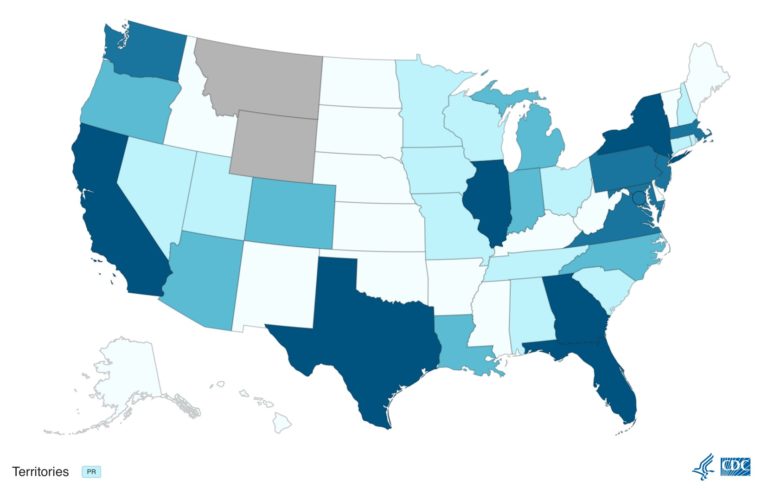
The declaration may hasten the distribution of vaccines and tests as case numbers grow. As of Wednesday, 6,617cases had been diagnosed in all but two states, with the heaviest outbreaks in New York, California, Illinois, Florida, Georgia, and Texas.
“This public health emergency will allow us to explore additional strategies to get vaccines and treatments out more quickly to the impacted communities,” Fenton said. “It will allow us to get more data from jurisdictions so we can effectively track and attack this outbreak.”
New York, California, and Illinois issued public health emergency declarations earlier this week.
The disease is almost exclusively within the gay community of men having sex with multiple men, but, like HIV, that will change in time to include other people having sex with multiple partners. For instance, sex workers may be at risk, as would those with promiscuous lifestyles.
We’re prepared to take our response to the next level in addressing this virus, and we urge every American to take monkeypox seriously and to take responsibility to help us tackle this virus,” Xavier Becerra, secretary of the Department of Health and Human Services, said during a media briefing.
The World Health Organization, on its website, says, “Most reported cases so far have been identified through sexual health or other health services in primary or secondary health-care facilities and have involved mainly, but not exclusively, men who have sex with men.”
The Centers for Disease Control and Prevention, on its website, says, “Monkeypox can spread to anyone through close, personal, often skin-to-skin contact,” and “contact can happen during intimate contact, including oral, anal, and vaginal sex or touching the genitals or anus of a person with monkeypox.” It also says, “A pregnant person can spread the virus to their fetus through the placenta.”
The WHO has advised men to reduce the number of their sexual partners.
“For men who have sex with men, this includes, for the moment, reducing your number of sexual partners, reconsidering sex with new partners, and exchanging contact details with any new partners to enable follow-up if needed,” said the WHO’s Director-General Dr. Tedros Ghebreyesus.
The WHO and CDC say the virus can also spread through direct contact with monkeypox rash, scabs, or body fluids from a person with monkeypox, or touching objects, fabrics, and surfaces that someone with monkeypox has used.
Over 90% of all reported monkeypox cases are in young men; however, many have pushed for the destigmatization of those most likely to be infected.
Sarah Palin lover Ron Duguay may be all done with one Dina Gaille of Florida, but Gaille, whoever she is, is not done with him. And Sarah Palin appears to be right in the middle of this Facebook drama, with Gaille trolling both Palin and her new squeeze Duguay on Facebook and Twitter.
The social media trolling by the Gaille social media account has been going on since last December, on and off.
A series of posts by Gaille — or her account — shows she’s one unhappy customer after Duguay evidently ran off with Palin last November, as Gaille tells it. Gaille’s account posted a series of comments under a completely unrelated Facebook entry by congressional candidate Nick Begich, who had put photos of the Arctic Thunder Air Show on his Facebook page. Among the evidence Gaille posted, were photos of herself and Duguay when they were apparently much closer, but before Palin came into the picture.
There’s no telling if any of it is real. After all, this is social media.
Dina Gaille comments on Palin in Rangers jersey.Dina Gaille relays Christmas story.
On Twitter, another person identifying as Gaille has written that Palin had sent a steamy message to Duguay.
The message is too hot to handle in this blog; it’s not even clear how Gaille intercepted the email, but she says that Palin wrote it using a Bitcoin-related address that Duguay also used; Gaille called it “sneaky.”
Must Read Alaska has attempted to contact Gaille, but has not been able to reach her.
With Palin in the news in Alaska as she runs for Congress, the Gaille social media account, dormant on the topic for months, is at it again, posting warnings that Palin is hot after Duguay and not paying attention to Alaska:
“Well Alaskans need to know that Sarah is distracted with her new Boi in Florida!” Gaille wrote this week, using the term “boi,” which she indicates is a Palin term in the steam email to Duguay. “She’s here at his home often! Based on the attached email that I came across in complete she may want to work on her emotions! Apparently she emailed her feelings after having sex with her new boi! Who is weak enough to do something so foolish! I’m actually embarrassed for her! Would make a great SNL skit don’t you think!”
Gaille’s post says that Duguay went to Palin’s house the day after Christmas and stayed for three weeks. Gaille posted on Dec. 29 that people should look out for Palin due to her lack of self control:
At the time of the Gaille social media slams were going on this past winter and early spring, the romance with Duguay was still top secret, and Palin’s associates told People Magazine that Palin and Duguay were “just friends who met through hockey.” Duguay was with her in New York City during her trial against the New York Times for defamation, and the media blew up over the two of them eating at a restaurant after Palin had tested positive for Covid.
“After the former Alaska governor and vice presidential hopeful, 57, was seen at an Upper East Side restaurant this week in Manhattan with the retired New York Rangers player, speculation sparked about a new romance,” People wrote.
“The pair was photographed at Elio’s eatery on Wednesday evening, and Page Six reported on Friday that they have been an item since late last year.
“However, a Palin source tells PEOPLE they’re “just friends” who “met through hockey.” (Duguay could not be reached for comment.),” People Magazine wrote.
Gaille, the social media person in Florida, appears to corroborate that account with her social media commentary.
Palin, former governor and media personality, is subject to plenty of scrutiny of her policy and political judgment. But since she’s now single and living in the fast lane of New York and the luxury community of Ponte Vedra, Fla., there’s at least one Florida ex of Duguay who has some stories to tell, and she’s telling them on her own terms.
While Todd Palin filed for divorce from Palin in 2019, Duguay and Sports Illustrated Swimsuit Issue model Kim Alexis divorced in 2016. Before her, Duguay was married to California model Robin Bobo. He also dated Charlies Angels‘ actress Farrah Fawcett in the 1980s. Some websites say he also dated Patti LuPone, Cher, Bianca Jagger, and Cheryl Tiegs.
But there’s no mention online of him dating anyone named Dina Gaille, except for the photos that she has posted of the two of them when they may — or may not — have been an item:
With Duguay’s long history with beautiful women, it is difficult to know if this is just a passing romance for him. If Palin loses her bid for Congress, will he go from being Ron Duguay to Ron Du-gone? Time will tell.
The recent passing of Rep. Don Young, our state’s longest-serving member of Congress, was a gut-punch to all Alaskans. His seniority as Dean of the House and years of experience served Alaska well. He was undeniably unique and his replacement will have big shoes to fill.
The August special election to complete the remaining five months of Young’s term and the November general election to choose his successor are occurring at a perilous time in the history of our state and nation.
Alaska’s resource industries are under assault by Biden administration officials in their foolish war to eliminate American fossil fuels and over-regulate mining. Even worse, America is becoming more dependent on oil and strategic minerals from foreign sources that are either hostile to the U.S, have little regard for environmental safeguards, or both.
Our country is divided like never before. Members of Congress must reverse, not advance, the polarization that has plagued it for years. That is the only way Congress can rein in spending to moderate inflation, lower the cost of living, and help fully recover the U. S. economy.
It will take someone with uncommon qualifications to be effective at addressing these dual challenges.
For that reason, Nick Begich, Republican candidate for Congress, will be my first choice on both ballots.
Unlike his uncles and namesake grandfather, Nick Begich is a life-long Republican. While he was born in Alaska, he was raised Outside by his maternal grandparents. His conservative roots were evidenced early when he joined his high school Republican club as a ninth grader.
He earned a BBA in Entrepreneurship from Baylor University and an MBA from Indiana University before entering the private sector in several endeavors. Today, as the CEO and founder of FarShore Partners, a global software development company with over 120 full-time employees, Nick is a self-made success story. He returned to Alaska 20 years ago and resides in Chugiak, Alaska with his wife, Dharna, a pharmacist, and their 9-year-old son, Nicholas.
Ironically, Nick Begich has been criticized for the success he has earned (he lent his campaign $650,000) but voters should find it refreshing to connect with a candidate who became prosperous before getting into politics.
After co-chairing Don Young’s 2020 congressional campaign, Nick was one of the few candidates to declare his candidacy for Congress before Alaska’s lone House seat became vacant. Since Don Young’s passing, dozens of Johnny-come-lately’s have jumped into the race. Meanwhile, for the past 10 months, Nick has crisscrossed the state, sometimes holding up to four events in one day, while listening to Alaskans articulate how their area can best be served in the next Congress.
Nick’s skill in understanding other viewpoints, explaining his positions, and finding common ground has netted him an impressive list of endorsements from every area of the state, including the sole endorsement of the Alaska Republican Party. His familiarity with a wide range of issues from school choice to resource development to monetary policy and artificial intelligence will be an asset in a freshly elected House of Representatives that will include many new faces.
It’s very likely that next year both houses of Congress will be under Republican control, and it is in Alaska’s best interest to elect a member of that party. A freshman Democrat will have little hope of positively influencing the direction of legislation that would benefit Alaska – especially considering the Biden administration has already demonstrated its intention to lock-up Alaska and its resources.
Unlike President Biden, Nick Begich sees Alaska as the answer to America’s over-reliance on foreign oil and the key to America’s energy security. He realizes that a balanced approach which moves the United States toward a “greener economy” necessitates producing oil, gas, and critical minerals that will support that effort.
No Democrat can or will effectively advocate that. And too many other Republican challengers lack the skill to do so.
Nick Begich believes that the future of Alaska and America are inextricably linked. Alaska’s abundant resources can be developed responsibly to help make America a world leader again.
Electing Nick Begich to the U. S. Congress is the first step.
After retiring as the senior vice president in charge of business banking for Key Bank in Alaska, Win Gruening became a regular opinion page columnist for the Juneau Empire. He was born and raised in Juneau and graduated from the U.S. Air Force Academy in 1970. He is involved in various local and statewide organizations.
In an opinion piece published by Must Read Alaska, U.S. Senate candidate Kelly Tshibaka accuses U.S. Sen. Lisa Murkowski and her supporters of lying about Tshibaka’s public position on birth control.
Tshibaka objects to a TV spot by Alaskans for Lisa, an independent expenditure group, supporting Sen. Murkowski’s re-election, that calls out Tshibaka for standing up before a friendly crowd at a Kenai restaurant and state she would ban birth control through the U.S. mail system.
Kelly Tshibaka gets it wrong. Again. In Tshibaka’s own words she clearly said she wants to make receiving birth control pills by mail illegal.
See for yourself:
I support Sen. Lisa Murkowski because she always tries to do the right thing for Alaska. Being a U.S. senator is a tough job. Lisa respects people who have differing viewpoints. She strongly supports women making their own healthcare and reproductive decisions. Her record speaks for itself.
Kelly Tshibaka is simply too extreme and is wrong for Alaska.
Kristina Woolston is a wife, mother, and professional businesswoman who lives in Anchorage.
The mural featuring a timeline of Anchorage was painted over yesterday so that a new mural by artist Crystal Worl can be painted in its place on a building owned by Barbara and Larry Cash.
The new mural will honor Native culture and is part of a “reindigenization” of downtown. Worl’s mural is a project of the Anchorage Museum, Anchorage Downtown Partnership, Alaska Pacific University, Roadmap for a Vital and Safe Anchorage, and SALT, LLC.
Bob Patterson painted the old mural, called “Anchorage History” across the 120-foot width of the building that faces the City Hall parking lot. In the old mural, several turning point events were highlighted, including the arrival of Captain James Cook in 1778. But the timeline stopped in 1997, the year the mural was painted.
“While the original mural accurately depicts events throughout Anchorage’s history, it fails to include the perspectives of Indigenous Peoples; this is where the new mural will serve the community,” said the explanation from Alaska Pacific University, which describes the new project as “Indigenizing the G Street mural.”
“This is a tremendous opportunity to really look at the longer history of this space,” Anchorage resident, Amanda Moser, said in the explanation at APU. “Alaska’s Indigenous people are still here and still driving change and moving things forward in Anchorage.”
Tlingit-Athabascan-Yupik and Filipina, Worl lives in Juneau and is the co-owner of The Trickster company with her brother. She recently painted a mural depicting Native leader Elizabeth Peratrovich on the side of the Juneau library.
The mural to be painted has a lot more color than the old one. A representation of it is shown here:
A small-but-noisy rockslide occurred on Railroad Dock in Skagway on Wednesday at about 5 pm. There were no injuries reported. The slide is located at what is called the north slide area, the same area where a slide occurred June 23.
Passengers from the Norwegian Encore were being tendered back to their ship in small boats that provided by Holland America’s Noordam, which was also in port. Other ships in port today were the Majestic Princess and Radiance of the Sea.
The security booth at the dock was said to be struck by rocks. The area remains unstable, but ships have been moved away from the rockslide path. Contracted geotechnical engineers recently compiled a report showing that the risk of slides continues at the site.
Skagway is the busiest cruise ship port in Alaska.
Alaskans wanting to vote by absentee ballot in the Aug. 16 primary and special general election have until Aug. 6 to request a ballot packet from the Division of Elections.
You may request an absentee ballot using the online absentee ballot system, which requires a valid Alaska driver’s license or state ID card number when applying, and that must match the information on file at the Division of Motor Vehicles. If you have no valid driver’s license or state ID, you may apply using the paper absentee ballot application form. Apply on line here. Apply using a fillable paper application here.
The special general election will determine who will serve in Congress until January, when the next congressional representative is sworn in. There are also numerous offices up for election: Governor, U.S. Senate, and 59 State House and Senate seats.
Other options include:
Vote By Mail – Find more information about voting by mail.
Early Voting locations and times are now available at this link.
Mailed ballots must be postmarked on or before Election Day. Primary election ballots must be received by the division no later than 10 days after Election Day. General election and REAA election ballots must be received 10 days after Election Day when mailed from within the U.S. and from U.S. territories of Puerto Rico, Guam, The Virgin Islands and American Samoa. Ballots mailed from outside the U.S. must be received 15 days after Election Day.
The 15-day wait for overseas ballots is primarily to accommodate military voters.