Former State Sen. Ben Stevens has died at age 63. His passing was unexpected.
Benjamin Aavan Stevens was born March 18, 1959, the son of former U.S. Sen. Ted and Ann Stevens. Ben served as senator and was elected Senate President, and was a member of the Republican Party. Later in life, he was chief of staff to Gov. Mike Dunleavy, and at the time of his death worked for ConocoPhillips.
During his life he had worked as a commercial fisherman and as the president of Cook Inlet Tug and Barge. He was married to Elizabeth Stevens.
Ben received his B.A. in economics at Arizona State University and earned his Master of Business Administration from George Washington University.
Ben Stevens was a victim of a relentless investigation by the FBI during his time in office, but he was never convicted of any of the charges the FBI pursued in its never-ending witch-hunt.
Former Sen. Lyda Green said, “I am just devastated to hear this news. I loved him. We got along so well and he was welcome at my office at any time and I was at his. He was one of the most politically astute members I ever worked with. He had such great history, knowing government at a totally different level because of his growing up in D.C. He was so smart.”
Stevens’ mother Ann died in a plane crash in 1978, and he deeply grieved her passing. His father died in a plane crash on Aug. 9, 2010, near Dillingham.
The Stevens family has not made an announcement.
Erec Isaacson, president of ConocoPhillips Alaska, issued a statement on Friday morning:
“The entire ConocoPhillips family is deeply saddened by the sudden passing on Thursday evening of our friend and colleague, Ben Stevens. Our sympathies are with his family and loved ones during this difficult time. Ben was a valued leader at ConocoPhillips Alaska and leaves a significant legacy in the state of Alaska. Ben will be deeply missed not only by his family and colleagues, but in the broader Alaska community.”
The Outside financiers of Ballot Measure 2, the 2020 law voters passed to make campaign funding more transparent and to enact jungle primaries and ranked choice voting, now want to get around complying with the very law they wrote.
Scott Kendall, a campaign operative who has worked for Sen. Lisa Murkowski and Gov. Bill Walker, was one of the main engines behind the Alaskans for Better Elections ballot initiative that brought Ballot Measure 2 to life and convinced voters that it would get rid of “dark money” in Alaska elections. He is a repeat complainant against Republican candidates for violating what he sees as Alaska election regulations.
Now that Ballot Measure 2 has passed, however, he and a group he is aligned with don’t want to comply with it. Unite America, a dark money group that tricked Alaskans into voting for Ballot Measure 2, asked the Alaska Public Offices Commission if they can be excused from the “dark money” provision and not reveal their top donors.
“Unite America (UA) is a political organization based in Denver, Colorado that supports moderate-left candidates for elective office and advocates for changes in laws affecting the election process that UA claims will benefit centrist candidates but that are also supported by left-of-center and radical-left interests. Unite America is a ‘hybrid political action committee’ that allows it to operate as both as a Super PAC allowed to make unlimited, independent expenditures to help candidate campaigns and also as a traditional PAC that makes direct contributions to candidate campaigns,” writes InfluenceWatch.org, which tracks influencers in the political arena. Wherever Unite America is working in elections, it is working for liberal-Democrat candidates.
Unite America asked the Alaska Public Offices Commission in early September whether a $30,000 donation to an AFL-CIO campaign group called Putting Alaskans First Committee would fall under the “dark money” provisions of Ballot Measure 2. Putting Alaskans First is working to elect Democrat Matt Claman for Senate, liberal Republican-in-name-only Kelly Merrick for Senate, and Democrat Scott Kawasaki for Senate. The group is working against Republican Sen. Mia Costello. On the Kenai, the group has worked against Tuckerman Babcock for Senate and supports his opponent, NEA representative Jesse Bjorkman. Putting Alaskans First has also spent tens of thousands of dollars opposing Mike Dunleavy for governor.
Since the first $30,000, Unite America has put another $100,000 into Putting Alaskans First, according to filings with APOC.
The Alaska Public Offices Commission staff said that Unite America’s plan to reveal its true sources of funding didn’t meet the spirit of Ballot Measure 2, and that the staff would recommend to the commission to reject that plan. A decision by the commission itself could come in December, long after the election.
The letter from the Unite America attorneys argue against Ballot Measure 2 provisions, while the commission staff Tom Lucas’ opinion on the matter quotes Scott Kendall, author of Ballot Measure 2, extensively.
“UAP [Unite America] attached a letter from Scott Kendall to its advisory opinion request. Mr. Kendall was the primary author of BM2. The letter is addressed to Alaska Public Offices Commission Executive Director, Heather Hebdon. In the letter, Mr. Kendall states that the purpose of the ‘dark money’ provisions of BM2, ‘was to end the practice of obscuring true sources of contributions to independent expenditure groups by funneling them through intermediaries’. Here, UAP is the intermediary. The true sources of the money it intends on contributing to Alaska independent expenditure groups are its contributors,” wrote Lucas.
“However, Mr. Kendall goes on to warn:
“In Short, the Dark Money provision in Ballot Measure 2 did not give APOC the authority to regulate contributions made for purposes other than impacting candidate elections in Alaska. To the extent an entity receives funds for non- campaign purposes and keeps those funds segregated from campaign funds, the non-campaign funds do not fall within Ballot Measure 2 or under APOC’s authority at all.”
“Here, the funds contributed by UAP are not segregated from the funds UAP uses for other purposes. Instead, UAP simply tapped its general fund to make its contribution to PAFC and intends on doing the same thing for future contributions to Alaska independent expenditure groups.”
Lucas concludesthat Unite America’s proposed method of identifying the true sources of the funds it contributes to Alaska independent expenditure groups does not comply with the intent or letter of BM2.
“If UAP funds its contributions to Alaska independent expenditure groups through its general fund, it must name all true sources of the funds used for those contributions since February 28, 2021, on its first Statement of Contributions Report and only previously unreported contributions thereafter,” Lucas wrote.
See where Putting Alaskans First is spending all of its money this election cycle, at this link.
“Here, UAP proposes to choose for itself which of its contributors will be considered the true sources of its contributions using no uniform methodology. This, it cannot do because it violates the clear intent of BM2 and the letter of the statutes enacted,” Lucas wrote.
Key takeaway:
Unite America, dark money from Outside the state, funded and is intertwined with Alaskans for Better Elections, which is connected directly with Scott Kendall, who is one of Alaskans for Better Elections architects and the author of the “dark money” provision that Unite America is now trying to skirt. Kendall is also a backer of Sen. Lisa Murkowski and Bill Walker for governor, and has worked against other Republicans on the ballot.
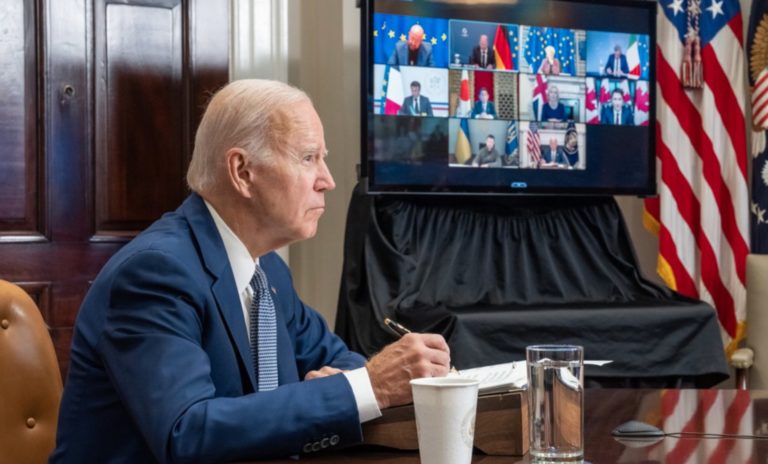
Saudi Arabia’s Foreign Ministry threw U.S. President Joe Biden under the bus this week by revealing that Biden had “suggested” the Kingdom to postpone a decision by OPEC+ to cut oil production. Biden wanted OPEC to hold off until closer to the midterm elections, when a price spike would not drastically effect the fortunes of Biden and the Democrats at the ballot box. Saudi Arabia is the de facto leader of OPEC and OPEC+, which includes Russia.
In spite of the Biden suggestion that cuts be delayed, OPEC announced the cuts anyway last week at its meeting in Vienna, Austria. It has cut exports by 2 million barrels a day.
This week, Biden hit back at Saudi Arabia with a veiled threat, telling Jake Tapper on CNN that there would be “consequences” for what the Saudis have done in shutting off the valves.
“There’s going to be some consequences for what they’ve done, with Russia,” Biden said. “I’m not going to get into what I’d consider and what I have in mind. But there will be, there will be consequences.” This is a president of the United States threatening another world leader in order to gain electoral advantage and it’s the kind of foreign-interference-in-election activity that the Democrat-led House of Representatives said President Donald Trump engaged in, which led to his first impeachment.
Saudi Foreign Minister Prince Faisal bin Farhan said the decision by OPEC+ was economic and was taken unanimously by its member states.
“The Government of the Kingdom of Saudi Arabia would first like to express its total rejection of these statements that are not based on facts, and which are based on portraying the OPEC+ decision out of its purely economic context,” the Foreign Ministry said.
The White House doubled down on linking Saudi Arabia with Russia:
“We believe by the decision that OPEC+ made last week, (Saudi Arabia is) certainly aligning themselves with Russia,” White House Press Secretary Karine Jean-Pierre said at a Tuesday press availability. “And right now, this is not the time to be aligning with Russia, especially with this brutal, unprecedented war that they started in Ukraine.”
A statement from the Ministry of Foreign Affairs regarding the statements issued about the Kingdom following the OPEC+ decision
An official at the Foreign Ministry in the Kingdom of Saudi Arabia stated that the government of the Kingdom of Saudi Arabia has viewed the statements issued about the Kingdom following the OPEC+ decision announced on October 5, 2022, which have described the decision as the Kingdom taking sides in international conflicts and that it was politically motived against the United States of America.
The Government of the Kingdom of Saudi Arabia would first like to express its total rejection of these statements that are not based on facts, and which are based on portraying the OPEC+ decision out of its purely economic context. This decision was taken unanimously by all member states of the OPEC+ group.
The Kingdom affirms that the outcomes of the OPEC+ meetings are adopted through consensus among member states, and that they are not based on the unilateral decision by a single country. These outcomes are based purely on economic considerations that take into account maintaining balance of supply and demand in the oil markets, as well as aim to limit volatility that does not serve the interests of consumers and producers, as has been always the case within OPEC +.
The OPEC+ group makes its decisions independently in accordance with established independent practices followed by the international organizations.
The Government of the Kingdom of Saudi Arabia would also like to clarify that based on its belief in the importance of dialogue and exchange of views with its allies and partners outside the OPEC + group regarding the situation in the oil markets, the Government of the Kingdom clarified through its continuous consultation with the US Administration that all economic analyses indicate that postponing the OPEC+ decision for a month, according to what has been suggested, would have had negative economic consequences.
The Government of the Kingdom of Saudi Arabia affirms that any attempts to distort the facts about the Kingdom’s position regarding the crisis in Ukraine are unfortunate, and will not change the Kingdom’s principled position, including its vote to support UN resolutions regarding the Russian-Ukrainian crisis, based on the Kingdom’s position on the importance for all countries to adhere to the United Nations Charter, principles of international law, and the Kingdom’s rejection of any infringement on the sovereignty of countries over their territories.
The Kingdom stresses that while it strives to preserve the strength of its relations with all friendly countries, it affirms its rejection of any dictates, actions, or efforts to distort its noble objectives to protect the global economy from oil market volatility.
Resolving economic challenges requires the establishment of a non-politicized constructive dialogue, and to wisely and rationally consider what serves the interests of all countries.
The Kingdom affirms that it view its relationship with the United States of America as a strategic one that serves the common interests of both countries. The Kingdom also stresses the importance of building on the solid pillars upon which the Saudi-US relationship had stood over the past eight decades. These pillars include mutual respect, enhancing common interests, actively contributing to preserve regional and international peace and security, countering terrorism and extremism, and achieving prosperity for the peoples of the region.
A Dittman Research Poll that was in the field from Oct. 4-8 in Alaska has the freshest forecasting of the Alaska congressional race, where the candidates for Nov. 8 include two Republicans, a Libertarian, and a Democrat incumbent.
Nick Begich, the Republican, has pulled ahead of former Gov. Sarah Palin and is within 3.4 points of Congresswoman Mary Peltola, who won the special general election in August to complete Congressman Don Young’s term. That puts Nick Begich within the margin of error of winning for this poll, in which Palin is eliminated in the second round, after Chris Bye, the Libertarian, who is the first eliminated.
For the final round of voting among survey participants, Peltola wins with 51.7%, and Nick Begich comes in second at 48.3 In the Round 3 result, Palin is eliminated in Round 2, with just 24.2%.
The results show that Nick Begich is still gaining momentum. During a nearly identical Sept. 6-14 poll by the Dittman Research group, it was Nick Begich who was eliminated in after Round 2, and Peltola bested Palin, 57.6% to 42.4%.
The latest poll shows the lowest numbers yet for Palin, who came in second in the special general election in August.
Under the new ranked choice voting, system, a candidate can win outright if he or she gets 50%+1 votes in the first round. If no candidate makes that threshold, then the candidate with the fewest votes is eliminated and that candidate’s voters get their second pick counted. The counting continues in rounds until two candidates remain. The one who has the most votes in that round of counting wins.
While it’s impossible to say why Peltola’s support has slumped, her position on Second Amendment, abortion, and her alignment with President Joe Biden and House Speaker Nancy Pelosi may have something to do with it. She has come out against oil development in the 10-02 Coastal Plain, Alaska oil and gas storehouse in the Arctic, and has voted to put more veterans on food stamps — all hardline Democrat positions that have begun to define her voting record, as opposed to her campaign promises.
Dittman, Alaska’s leading polling and survey firm, is not polling on behalf of any of the candidates in the House race.
Just in time for the midterm elections, the House Democrats’ special committee investigating the disruption in the U.S. Capitol on Jan. 6, 2021 has issued a subpoena for former President Donald J. Trump.
The partisan committee reconvened on Thursday explore evidence related to the Capitol rally that turned unruly in an attempt by some to stop the certification of the flawed 2020 election that brought Joe Biden into power.
“Claims that President Trump actually thought the election was stolen are not supported by fact and are not a defense,” said Rep. Liz Cheney, who will not be returning as a House member in January due to her voters in Wyoming turning against her. “There is no defense that Donald Trump was duped or irrational. No president can defy the rule of law and act this way in a constitutional republic.”
“We must seek the testimony under oath of January 6th’s central player,” Cheney said, noting that the committee has credible evidence that multiple individuals engaged in criminal acts that need to be referred to law enforcement.
Democrat Chairman Rep. Bennie Thompson of Mississippi said, “The need for this committee to hear from Donald Trump goes beyond fact,” Thompson said. “This is a question about accountability to the American people. He must be accountable. He is required to answer for his actions. What Donald Trump proceeded to do after the 2020 election is something no president has done before in our country. In a staggering betrayal of his oath, Donald Trump attempted a plan that led to an attack on a pillar of our democracy.”
There have been eight hearings so far, the last one in July. Thursday’s hearing will probably be the last one before the midterm elections, but is almost certain to have an effect on the election outcome, since the process has been so polarizing to the country.
The committee says it has a videotaped recording of a witness inside Trump’s inner circle that show that Trump never intended to concede the election. The committee said Trump was driving the entire plan to disrupt the certification of the Electoral College.
“Trump did nothing to stop the deadly violence for obvious reasons: He thought it was all justified, he incited it, and he supported it,” Democrat Rep. Jamie Raskin of Maryland said. “Despite desperate pleas from Congress, his family and advisers, Trump sat in the White house dining room blithely watching the carnage unfold on Fox News,” Raskin said.
The committee, using its power to influence the midterm elections, posted the entire proceedings for Thursday on Twitter:
The Select Committee has laid out the multi-part plan led by Donald Trump to overturn the 2020 election.
Today, the committee will present new testimony, never-before-seen footage, and more details about the ongoing threat to American democracy. https://t.co/qD4vVAtBqn
The recent decision by the oil Organization of the Petroleum Exporting Countries (OPEC) and its related nations like Russia have brought the world to the “tipping point” for a global recession, according to the the International Energy Agency.
“The relentless deterioration of the economy and higher prices sparked by an OPEC+ plan to cut supply are slowing world oil demand, which is now expected to contract by 340 kb/d y-o-y in 4Q22. Demand growth has been reduced to 1.9 mb/d in 2022 and to 1.7 mb/d next year, down by 60 kb/d and 470 kb/d, respectively, from last month’s Report. World oil demand is now forecast to average 101.3 mb/d in 2023,” the IEA reported.
“The OPEC+ bloc’s plan to sharply curtail oil supplies to the market has derailed the growth trajectory of oil supply through the remainder of this year and next, with the resulting higher price levels exacerbating market volatility and heightening energy security concerns,” said the October oil market report.
“Benchmark crude oil prices spiked by around $14/bbl from a September low and Brent once again flirted with triple digits. With unrelenting inflationary pressures and interest rate hikes taking their toll, higher oil prices may prove the tipping point for a global economy already on the brink of recession,” the report said.
“The stronger economic headwinds have led us to lower our forecast for world oil demand growth for 2023 by 470 kb/d from last month’s Report, to 1.7 mb/d. Our revisions are underpinned by further downgrades to global GDP growth expectations from major institutions, with recession now expected in several European countries and risks increasing for emerging and developing economies. For this year, world oil demand growth has been further reduced, to 1.9 mb/d from 3.2 mb/d expected before Russia’s invasion of Ukraine. The still relatively robust headline figure masks a sharp slowdown underway, with demand now forecast to contract by 340 kb/d y-o-y in 4Q22, despite increased gas-to-oil switching in power generation and industry,” the group wrote, anticipating sluggish economies and war-related impacts.
“The decline in OPEC+ supply will be smaller than the announced 2 mb/d reduction in production targets, with the majority of the alliance’s members already producing well below their ceilings due to capacity constraints. Our current estimate is for a decrease of around 1 mb/d in OPEC+ crude oil output from November, with the bulk of the cuts delivered by Saudi Arabia and the UAE. Further production losses could come from Russia in December, when an EU embargo on crude oil imports and a ban on maritime services go into full effect. Russian officials have threatened to cut oil production in order to offset the negative impact of proposed price caps.”
In the past, spikes in oil prices have spurred a strong investment response leading to greater supply from non-OPEC producers.
But, the agency warned, “this time may be different. US shale producers, traditionally the most responsive to changing market conditions, are struggling with supply chain constraints and cost inflation – and, so far, they are maintaining capital discipline. This casts doubt on suggestions that higher prices will necessarily balance the market through additional supply.”
The IEA cautioned of energy security risks worldwide.
“Even taking into account lower demand expectations, it will sharply reduce a much needed build in oil stocks through the rest of this year and into the first half of 2023. At end-August, OECD industry inventories remained a steep 243 mb below the five-year average, at 2 736 mb. They would have been significantly lower had it not been for the release of 185 mb of IEA member country government stocks from March through August. The recent wave of market disruptors underscores that energy security is as important today as it was 48 years ago when the IEA was founded. Now, as then, commercial and residential consumers are taking measures to reduce their energy bills and those effort could well have a lasting impact on oil markets.”
As Alaskans make their decisions about who will best protect the national economy and their personal economic stability, the federal government released news of the latest setback, which has occurred under the trifecta of Democrats running the U.S. House, U.S. Senate and the White House:
U.S. core inflation has reached a 40-year high, the biggest annual rise since August of 1982. The consumer price index rose 8.2% in September. Excluding energy and food, prices rose 6.6%.
“Prices rose last month for housing, medical care, airline fares and other services, threatening to keep inflation high for a while,” the Wall Street Journal reported on Thursday.
Mary Peltola is focused on what she knows — fish and tribes — to the exclusion of everything else. Sarah Palin has left Alaska for New York City with her boyfriend for a week.
Nick Begich is meeting with Alaskans every day, and hearing every day about how federal policies have impacted their lives. They’re telling him that they are reeling from the effects of the Democrat-led economy.
“Just this week, three different people told me stories about how they can no longer afford to buy a house,” Nick Begich said. “Two of these stories came from young Alaskans striking out on their own for the first time. One came from a retiree who was hoping to relocate in the state from rural Alaska to Fairbanks.”
Others have described to the Republican Begich how they can no longer afford their commute to work.
“A guy I met who is a small business owner had to take his kid out of after-school activities because his family can no longer afford them,” Nick said.
“These are not just numbers on a page. These are people’s lives, their savings, their futures, and hopes and dreams that are evaporating. Not because of an unwillingness to work hard, but because of Washington D.C. politicians who are ignorant of how their policies are destroying the American dream, and harming families,” he said.
“This is the central issue of the campaign. There are a lot of other things that some politicians want to talk about, but it’s the only thing that matters right now. If you don’t live in a country where you are rewarded for your effort, all these other side issues become moot.”
The average price of gas in Alaska is $5.521 a gallon, according to AAA. In rural Alaska, the price is much higher. Around dining room tables, there’s more rice and potatoes, and fewer bits of protein and vegetables. Milk and eggs are worth their weight in gold.
“There is absolutely no good reason that Alaskans should be experiencing such hardship,” Nick said. “But there is reason to be hopeful. We have the resources. What we need most is discipline in Congress. We need to get government back in its traditional role and we need to let the private sector flourish. Low taxes. Smart deregulation. And right now, a return to energy independence.”
Peltola, the Democrat, is on record saying that developing the 10-02 area Coastal Plain of the Arctic National Wildlife Refuge is “unprofitable” and is not worth the investment. The Coastal Plain was specifically set aside for future oil and gas exploration and development, but the radical environmentalists have kept it shut down for decades.
Begich disagrees with Peltola on that.
“It’s not government’s role to determine what is profitable and what is not profitable. It’s not government’s role to pick winners and losers. It is government’s role to define the rules of the game, remain consistent, and ensure that the people have the fullest opportunity to achieve life, liberty, and the pursuit of happiness.”
Alaskans will start voting for their representation in Congress on Oct. 24, when early and absentee-in-person voting begins. The election ends on Nov. 8, and results may not be known for several days after that, due to the new ranked choice voting system in place, which delays the ability for Alaskans to know who won until overseas votes are received.
The U.S. Centers for Disease Control and Prevention didn’t want to release data on Covid-19 vaccine adverse reactions. Its lawyers fought hard to keep the lid on the information taxpayers had paid for, but after two lawsuits and months of litigation, a nonprofit public interest group based in Texas obtained over 144 million rows of health entry data from approximately 10 million users of the CDC’s adverse reaction database.
The group analyzed the data and came away with disturbing news: Hundreds of thousands of the users of the V-safe phone app reporting system had told the CDC they ended up seeking medical care as a result of their Covid-19 vaccination.
Of those, 144 Alaskans reported adverse reactions through the V-safe app, with 83 of those in Anchorage, according to the data table from ICAN.
The CDC created the V-safe app to provide “personalized and confidential health check-ins via text messages and web surveys” so people can easily share with government how they or their dependents feel after getting a Covid-19 vaccine. The information is supposed to help the CDC monitor the safety of the vaccines in near real time, the CDC says on its website.
According to ICAN (Informed Consent Action Network), 7.7% V-Safe users reported that they required medical attention through a telehealth appointment, urgent care clinic, emergency room, or hospitalization, after receiving a Pfizer, Moderna or Johnson & Johnson Covid vaccine. That’s 782,913 people out of the 10 million users analyzed.
In addition, ICAN says about 25% of the V-safe app users reported symptoms from the vaccine that caused them to miss work or school, or prevented them from participating in normal daily activities.
ICAN also discovered 71 million reports of symptoms from the approximately 10 million users, or an average of over 7 reported symptoms per person using V-safe. Symptoms included over 4 million reports of joint pain. Around 2 million of these joint pain reports were mild, over 1.8 million were moderate, and over 400,000 were severe joint pain.
Since V-safe only included less than 4 percent of people that received a Covid-19 vaccine, tens of millions of Americans probably had an immune reaction to the Covid-19 vaccine in their joints that resulted in debilitating pain and potential long-term harm, ICAN said.
In a separate study, the arthritis result from vaccines were higher. “One case (6.25%) each of arthritis was reported in patients receiving Moderna, AstraZeneca, and Covaxin vaccines. Symptom onset was observed in half of all cases after the second dose, with an average duration of onset after 7.38 days and all reported cases occurring within two and a half weeks,” according to a peer-reviewed study in the scientific publication Cureus.
Approximately 13,000 infants under the age of 2 were registered by their parents with V-safe. Among those, over 33,000 symptoms were reported by their parents. The most common symptoms were irritability, sleeplessness, pain, and loss of appetite.
“These are very concerning since babies cannot speak and hence these symptoms are how they often communicate that something is wrong,” ICAN observed in its report. In other words, it’s not known what underlying discomfort the babies were experiencing.
ICAN’s data dashboard, shown above, has summaries of the results of the data analysis at this link.
“At the Informed Consent Action Network, you are the authority over your health choices and those of your children. In a medical world manipulated by advertising and financial interests, true information is hard to find and often harder to understand. Our goal is to put the power of scientifically researched health information in your hands and to be bold and transparent in doing so, thereby enabling your medical decisions to come from tangible understanding, not medical coercion,” the group explains.
Ballot Measure 1 isn’t just about calling a constitutional convention to propose amendments to the Alaska Constitution. It’s also about the power of dark money, special interest money.
“Defend Our Constitution”, the group opposing Ballot Measure 1, is telling voters to fear a convention, because it would be controlled by dark money, special interest money, from the Lower 48.
This is a blatant lie.
There is no dark money pushing Ballot Measure 1. All the dark money being spent in this referendum is opposing it. Specifically, the notorious leftists at the Sixteen Thirty Fund have contributed $1,851,500. This is two-thirds of the money “Defend Our Constitution” has raised. They got another $500,000 from the NEA, the outside special interest group.
In contrast ConventionYES has raised $21,395, all in small donations. Not a dime of dark money.
So is it “game over” for Ballot Measure 1? Normally a campaign being outspent over 100-1 doesn’t have a chance.
Not so in this case. Look at the APOC report for evidence. The Sixteen Thirty Fund contributed $500,000 on July 29. This was enough to enable Defend our Constitution to outspend its opponents 30-1. But that wasn’t enough of an edge. They needed more money, because not enough Alaskans were being fooled by their campaign of fear and disinformation.
So at the end of September the NEA and the Sixteen Thirty Fund kicked in an additional $1.8 million.
The great irony of the campaign for Ballot Measure 1 is that if it succeeds, and a convention is called, the power of dark money will be defeated. If you don’t like outside dark money corrupting Alaska politics, vote yes on Ballot Measure 1. By doing so you’re telling the Sixteen Thirty Fund to stay out of our politics.
Ballot Measure 1 will pass if enough voters understand that it’s the only way to protect the Permanent Fund dividend from the legislature. Put the dividend in the Constitution. Take all the politics out of it. Over the last six years Alaskans have witnessed the sorry spectacle of endless legislative squabbling over the dividend. A lot of politicians in Juneau hate the dividend. They think they should spend the money, not the people. The large PFD of 2022 was the result of an unusual alignment in the legislature, one which is not likely to be repeated. If the people want more such dividends in the future they need to pass Ballot Measure 1.
The campaign for Ballot Measure 1, and a Permanent Permanent Fund Dividend, is in its final stages. ConventionYES doesn’t have, and will not have, the resources to effectively counter the lies and distortions of “Defend Our Constitution.” They’ve got millions of dollars of outside dark money at their disposal.
What ConventionYES does have is the truth, so it has a chance. Its message is compelling, and simple. Vote for your dividend, vote yes on Ballot Measure 1.
It’s up to individual Alaskans to spread this message among their family, friends, co-workers and neighbors. It has to be a classic grass roots movement. It’s the people vs. the powerful, the truth vs. a campaign of lies, the grass roots vs. dark money.
In other words, it’s up to you.
Fritz Pettyjohn served in the Alaska Legislature in the 1980’s.