Friday, May 15, 2026
Home Blog Page 811

Rep. Andy Josephson’s HB 17 would protect gender expression, like what a shop teacher expresses in Canada

68

At first glance, a reader would be forgiven for thinking it’s a hoax: A photo of a teacher in Oakville, Ontario, Canada, who appears to be wearing large water balloons with massive nipples under his sheer shirt, has gone viral on social media. At last count, the video of him sawing a wooden board in a classroom has been seen over 750,000 times.

The Oakville Trafalgar High School teacher wears large prosthetic breasts with nipples so massive they appear to be a hazard in shop class, where he demonstrates the use of a chop saw perilously close to the fake nipples.

It’s not fake. That is, the man is actually a teacher in a Canadian high school wearing fetish garments to school.

The local school district for Oakville Trafalgar High School says male teacher Kayla Lemieux’s gender expression must be respected and cannot be criticized. Lemieux has been identifying as a woman for one year.

In fact, the school district has issued a written defense of Lemieux’s gender expression. Gender “identity” is protected in Canada.

That type of gender expression protection is the intent of a bill in Alaska during the last legislative session. Prime sponsor Rep. Andy Josephson pushed House Bill 17, which would add gender identity and “expression” to the list of protected classes covered by the Alaska Human Rights Commission. Legislators who signed on as cosponsors include Reps. Grier Hopkins, Sara Hannan, Geran Tarr, Harriet Drummond, Calvin Schrage, Ivy Spohnholz, Jonathan Kreiss-Tomkins, Andi Story, Liz Snyder and Zack Fields.

To be clear, the gender identity expression become teachers forcing their fetishes on children under the cover of “inclusion.” In this sexual identity era, science is ignored for political correctness and transgender men make mockery of women and their bodies — wholly acceptable to the “woke” government officials who run our cities and schools.

The Halton District School Board in Oakville says its official policy is to recognize “the rights of students, staff, parents/guardians and community members to equitable treatment without discrimination based upon gender identity and gender expression. Gender identity and gender expression are protected grounds under the Ontario Human Rights Code.

Male teachers wearing prosthetic breasts to school is the kind of expression HB 17 would have protected had it not died in committee in March of this year. Several of its cosponsors are up for reelection this year, including Josephson, Hopkins, Hannan, Drummond, Schrage, Story, and Fields.

New record: Two million illegals cross U.S. southern border in one year, an all-time high

TOM JOYCE | THE CENTER SQUARE

 More than two million migrant encounters have occurred along the U.S.-Mexico border in fiscal year 2022 as of August.

This is an all-time high and driven partly by an increased influx of people coming from what U.S. Customs and Border Patrol refer to as the failing communist regimes of Cuba, Venezuela, and Nicaragua. They comprised 35% of the migrant encounters at the U.S.-Mexico border in August 2022. There was a 175% increase in people from these countries being spotted around the border over the past year.

“Failing communist regimes in Venezuela, Nicaragua, and Cuba are driving a new wave of migration across the Western Hemisphere, including the recent increase in encounters at the southwest U.S. border,” CBP Commissioner Chris Magnus said in a press release. “Our dedicated teams of skilled agents continue to work around the clock to secure our border and safely and humanely process and vet every individual encountered, but those fleeing repressive regimes pose significant challenges for processing and removal.”

There were 203,598 migrant encounters at the southern border last month. Most were apprehensions (181,160) of migrants who entered the country illegally. A much smaller portion (22,427) were migrants and asylum-seekers processed at legal ports of entry.

With one month left of the fiscal year, CBP agents along the southern border had encountered more than 2.1 million migrants.

That beat the record set in fiscal year 2021 (1.7 million migrant encounters).

About one million of the migrants encountered at the border have been expelled to Mexico or another country subject to Title 42, which was used to mitigate the spread of coronavirus. Title 42 does not carry any criminal or immigration penalties, unlike other deportations.

Alex Gimarc: In support of a constitutional convention

By ALEX GIMARC

It’s that time again.  Our once-a-decade opportunity as Alaskans to hold a constitutional convention is on the November ballot as Ballot Measure No. 1 – Shall there be a constitutional convention?   This question is built into the state constitution in Article 2, Constitutional Conventions, Constitutional Amendments, Sec. 15.50.070.

The question first hit the ballot in the 1970 election. It narrowly passed. But the state judiciary got themselves involved, taking exception with the language of the ballot initiative and summarily threw out the results of the vote. Essentially, the state courts decided that Alaskan voters didn’t understand what they were voting for, a standard they conveniently abandoned in 2020 with Prop 2, the 30+ page rewrite of state election law.

The second time around in 1972, the question failed roughly 2:1, about the same vote in the four subsequent times it was on the ballot.

This time around, it appears that battle has finally been joined, with dark money from the Soros-backed Sixteen Thirty Fund funding near continuous ads in opposition to a possible convention since Sept. 1. I thought 2020’s Prop 2 was supposed to make all that disappear.  Apparently not.

Other, local organizations have formed in support and opposition to a possible convention.  On the pro convention side, these include Republicans and the former head of Alaska Right to Life.  In opposition, we have a list of all the usual big government suspects, including but not limited to various unions, numerous cities, numerous commfish organizations, and any number of non-profits, none of which have been historically in support of a balanced budget, a smaller, less intrusive, or more responsive state government.

The list of those in opposition all by itself makes a convincing argument to support having a convention.

The campaign in opposition at this point seems (like the Petola congressional campaign for November) to be using abortion as their wedge issue, arguing that if such a convention is held, the right to privacy created by the Alaska Supreme Court out of thin air, channeling their inner Brennan and Blackmum (1973 Roe v. Wade authors).  I believe this is dead wrong, as the Supreme Court Dodd opinion specifically throws the entire question back to the state legislatures, rather than state courts.  

On the political right, the most vociferous supporters of a convention are those who would enshrine the PFD permanently into the state constitution.

From my perspective, this is incredibly high-stakes poker, for if we open the constitution up with a convention, literally anything can happen from a complete rewrite to proposal of some unknown number of constitutional amendments.  Those of us on the political right will be playing at a disadvantage, as we do not organize or show up in massive numbers like the political left does.  The most recent demonstration of this was the end of the Redistricting Board cycle earlier this year.

If we vote to pass this, We. Must. Show. Up. when time comes for a convention.

My position in support of this puts me in opposition to some very respected people on my side of the political fence. I understand the concern. I really do. Still, there are some very significant things that need to be addressed that will not make it through the legislative process with the government as it currently is structured and operating.  

One example would be how to put the state judiciary back into its constitutional box. Over the last few years, judges rewrote election laws on the fly, picked and chose which ballot initiatives they wanted to proceed, and earlier this year even took for themselves the power of the purse, finding a gubernatorial spending veto unconstitutional. This must end, and the only way I know of to end it is via constitutional convention. There are other issues, equally important to their advocates on both sides of the political fence.

My guess that the product of a convention would be some unknown number of proposed amendments presented to Alaskan voters for approval. Alaskan voters will have the final say. I fully expect this to be fought every step of the way in state and federal court (lawfare).

From here, I believe it is time for a convention. A quick look at the opposition should easily tell us who is benefiting from the status quo.  Hint:  it isn’t the average Alaskan, who is supposed to be in charge in this state.    

Alex Gimarc lives in Anchorage since retiring from the military in 1997. His interests include science and technology, environment, energy, economics, military affairs, fishing and disabilities policies. His weekly column “Interesting Items” is a summary of news stories with substantive Alaska-themed topics. He was a small business owner and Information Technology professional.

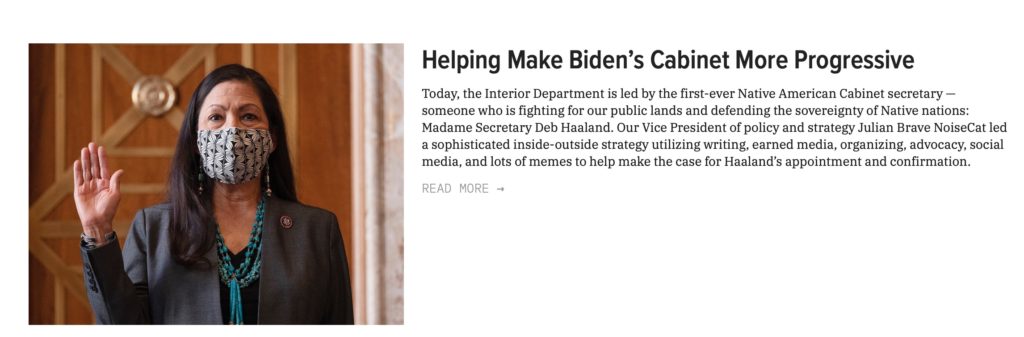
Senators and Peltola urge Deb Haaland to permit Willow

34

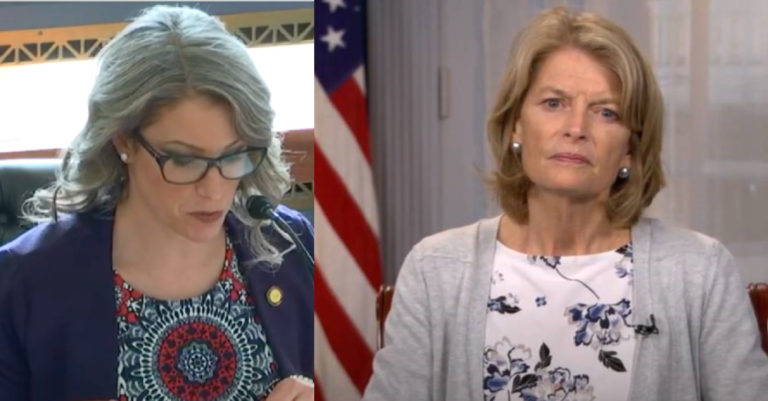
U.S. Sen. Lisa Murkowski and Dan Sullivan and Congresswoman Mary Peltola today sent a letter to Secretary of the Interior Deb Haaland, urging her Bureau of Land Management to complete the permitting process for the Willow Project in the National Petroleum Reserve in Alaska by the end of the year, so that construction can start this winter.

In their letter, the Alaska delegation noted that the project has been developed under the strictest environmental standards in the world and is strongly supported by Alaska Native leaders, labor leaders, the State of Alaska, lawmakers from both parties, and President Joe Biden.

“The expeditious approval of this crucial project would greatly benefit Alaska, our nation, and the world, while demonstrating the Administration’s commitment to addressing inflation, high energy costs, the need for greater energy security, and environmental justice initiatives,” the delegation wrote. “After years of study and review, both the Administration and Alaskans can feel confident that the Project will abide by the strictest environmental considerations in the world, while being constructed and operated by a company with an impressive record of safe and responsible development on the North Slope.

“We believe the final SEIS should identify the preferred alternative; appropriately weight the purpose of energy production in the NPR-A; and recognize the public interest in supporting energy security and responsible resource development. The permitting process must be completed by the end of 2022 at very latest so the project’s proponent can make a final investment decision and hire Alaskans in time for the winter construction season. That decision will not be possible, and none of those jobs will be created, in the absence of a clean and timely Record of Decision (ROD).”

Political observers have noted that the Democrats controlling the White House are likely to allow the Willow project to be permitted in order to help the campaign of Peltola, as she runs for the two-year congressional seat.

The Willow discovery was announced by Conoco-Phillips in 2017, and could produce more than 100,000 barrels of oil per day. It would create thousands of construction jobs and hundreds of permanent jobs, and contribute tax revenue to federal, state and local entities. The proposed project would consist of drill sites, access and infield roads, pipelines, a processing plant and other facilities to support production and transportation of petroleum from federal oil and gas leases in the NPR-A while minimizing impact to the environment and subsistence resources. 

In 2021, federal Judge Sharon Gleason voided an earlier Bureau of Land Management approval of ConocoPhillips’ Willow development, by declaring that the federal agency had not considered greenhouse gases as an effect of the project. Gleason also complained that the environmental impact statement should have either included an estimate of emissions resulting from oil consumption as a result of Willow or it should have explained why such data could not be estimated. She also said she wanted more protection for caribou in the Teshekpuk Lake area.

Second Amendment: Alaska Attorney Gen. Taylor signs warning to credit card companies tracking gun sales

22

A coalition of 24 states’ attorneys general, including Alaska Attorney General Treg Taylor, signed a letter alerting the chief executive officers of three major credit card companies that the recent creation of a “merchant category code” for the processing of firearms purchases from gun stores is potentially a violation of consumer protection and antitrust laws.

Visa, Mastercard, and American Express decided earlier this month to ‘separately categorize sales at gun shops.’ The decision means any purchase of a firearm with a credit card will be tracked and that information may be passed to the government. It is a de facto national gun registry.

In the letter to the CEOs of American Express, Mastercard, and Visa, the attorneys general say the monitoring and tracking of firearms purchases creates a “list of gun buyers” and creates the obvious risk that law-abiding consumers’ information will be obtained and misused by those who oppose Americans exercising their Second Amendment rights.

“Giant financial companies must not use their combined market power to circumvent our representative democracy,” said Tennessee Attorney General Jonathan Skrmetti. “As Attorney General, I protect the people of Tennessee from corporate collusion that threatens to undermine their constitutional rights. Working together with my colleagues from other states, we will marshal the full scope of our lawful authority to stop this abuse.”

Montana Attorney General Austin Knudsen said “it invites potential future invasions of consumer privacy and further coordination between corporations and government agencies to erode Americans’ fundamental right to keep and bear arms.”

The new code for gun stores the credit card companies intend to adopt is the result of transnational collusion between large corporations leveraging their market power to further progress toward their desired social outcomes. Activists pressured the International Organization for Standardization to adopt this policy as a means of circumventing and undermining the American legislative process.

“Press releases from public officials make clear that the new merchant code was created and adopted in concert with various state actors, which may additionally create the potential for both civil and criminal liability for conspiracy to deprive Americans of their civil rights,” the coalition of attorneys general wrote. “Social policy should be debated and determined within our political institutions. Americans are tired of seeing corporate leverage used to advance political goals that cannot muster basic democratic support. The Second Amendment is a fundamental right, but it’s also a fundamental American value. Our financial institutions should stop lending their market power to those who wish to attack that value.”

To read the letter, click here.

The following state attorneys general joined Tennessee and Montana: Alabama, Alaska, Arkansas, Arizona, Florida, Georgia, Indiana, Kansas, Kentucky, Louisiana, Mississippi, Missouri, Nebraska, New Hampshire, Ohio, Oklahoma, South Carolina, Texas, Utah, Virginia, Wyoming, West Virginia.

FAA won’t reduce hours needed to become co-pilot

6

In the middle of a major shortage of pilots that affects millions of passengers, the Federal Aviation Administration has rejected a proposal to cut in half the number of hours required to become a co-pilot.

In April, Republic Airways filed a petition with the FAA to have its pilot school be treated on the same basis as military aviation training. Those who were former military pilots can get qualified to co-pilot commercial jets with 750 hours of experience, while under the current FAA regulations, in effect since 2013, civilians must have 1,500 hours. Republic, under its subsidiary Leadership In Flight Training Academy, trains pilots for several major airlines. It’s the first airline-owned flight academy.

The rule that now prevents people from being able to co-pilot impacts regional airlines the most, and has led to an overall acute shortage of pilots in the pipeline to fly the larger jets as well. As a result, airlines like Alaska Airlines have reduced the number of routes they fly.

The U.S. Bureau of Labor Statistics says the U.S. airline industry needs to hire 14,500 new pilots each year until 2030. Only 5,000-7,500 new pilots are coming into the pipeline annually.

Republic played the “diversity card” in its petition to the FAA, stating that the 1,500 hours that are required are creating barriers for minorities, and that “the industry has not been successful in opening opportunities for diverse students, which requires a renewed industry-wide commitment to diversity, equity, and inclusion.” The industry has made “little progress in reaching minority industry participants via the existing avenues.”

The U.S. military is also having a hard time retaining pilots as some pilots leave for commercial service. Total Air Force, including Active, Guard, and Reserve, was short 1,650 pilots in 2021.

U.N. Secretary calls for higher taxes on oil, coal, natural gas to help with climate and ‘rising food and energy prices’

24

United Nations Secretary General Antonio Guterres on Tuesday called for governments around the world to increase taxes on coal, oil, and natural gas companies to offset the cost of climate change and inflation.

“Today, I am calling on all developed economies to tax the windfall profits of fossil fuel companies,” Guterres said. “Those funds should be redirected in two ways: to countries suffering loss and damage caused by the climate crisis, and to people struggling with rising food and energy prices.”

His remarks came at the U.N.’s General Assembly in New York City. He blamed fossil fuel companies for “feasting on hundreds of billions of dollars in subsidies and windfall profits” and called on first-world countries to tax more and use those taxes to help vulnerable and poor nations facing the effects of climate change.

“Today, I am calling on all developed economies to tax the windfall profits of fossil fuel companies,” he told diplomats gathered for the annual meeting. “Those funds should be redirected in two ways: to countries suffering loss and damage caused by the climate crisis, and to people struggling with rising food and energy prices.”

At a separate event on Sept. 19, he laid the foundation for his call for higher taxes on fossil fuels:

“We need to save our planet — which is quite literally on fire. This means addressing the triple planetary crisis of climate breakdown, biodiversity loss and pollution. It means supporting the Global Biodiversity Framework to transform how we use and preserve our natural gifts for the future. And it means moving away from our suicidal dependence on fossil fuels and jump-starting the renewable energy transition in every country — and supporting developing countries as they make this shift and adapt to the changes around them.”

Read more about his remarks at the United Nations website at this link.

Two drug felons busted again as large quantity of deadly fentanyl, meth and heroin seized in Kodiak

11

On Sept. 16, Alaska State Troopers Statewide Drug Enforcement Unit and Coast Guard Investigative Service in Kodiak concluded part of a several-month investigation into the trafficking of controlled substances in Kodiak, during which 11,457 blue “M30” fentanyl pills were seized, along with 3.15 pounds of crystal methamphetamine, 89 grams of tar heroin, five handguns and $58,722 in cash.

Mark Daniel Nason, 55, of Kodiak, a 12-time convicted felon of violent offenses, was stopped by officers in the Safeway parking lot in Kodiak while he was getting into his vehicle. A search of his vehicle showed Nason had a loaded handgun within reach, along with a large quantity of controlled substances. He was locked up in the Kodiak Jail for multiple charges of Misconduct Involving a Controlled Substance and Misconduct Involving Weapons. 

Nason has a violent history. He lived in the Montana Creek area in the Mat-Su Borough in 2001, where he was convicted in Palmer Superior Court for shooting his then-pregnant 19-year-old girlfriend in the buttocks. He was 33 at the time and was sentenced to 18 years in prison. In 1994, he had been charged with attempted murder after shooting at an Alaska Regional Hospital security guard who would not allow him through a locked door. Nason has other convictions on his record at the Alaska Court System, stemming back to the 1980s.

Adam Ross, 42, of Kodiak, was stopped at a Sawmill Circle address and arrested while attempting to flee. Ross was remanded to the Kodiak jail for multiple counts of Misconduct Involving a Controlled Substance. 

Ross is a convicted felon for the sale of controlled substances. Ross had been arrested in 2014 on the Seward Highway at Mile 99 for possession of cocaine, heroin, methamphetamine and the investigation found the heroin was prepackaged for distribution. During that arrest, he tried to hide the drugs under the seat of the Trooper’s vehicle.

A common user amount is one fentanyl pill, 0.1 grams of heroin and 0.1 grams of methamphetamine. There are 10 user doses per gram of heroin and methamphetamine. One fentanyl pill has the potential to cause a fatal overdose, depending on the user tolerance or how much is already in someone’s system. Fentanyl is 50 times stronger than heroin and up to 100 times stronger than morphine. Two milligrams of fentanyl can be lethal.

Over 11,000 doses is a sizable haul for law enforcement. In 2020, there were just 1,447.82 grams and 150 dosage units of fentanyl seized in Alaska by the State Drug Enforcement Unit.

The estimated profit from the seized drugs, if sold in Kodiak, may have been approximately $656,000.

Monkeypox: Two more cases in Alaska, as vaccine eligibility expands

8

After a few weeks of holding steady at three cases of monkeypox in Alaska, two more were added by the CDC this week. It’s likely the prior three cases had already resolved by the time the most recent two were added to the national database.

The CDC shows that monkeypox is still a health concern in the male gay community since first being reported in the U.S. in May. Monkeypox first came to Alaska in late July with one case. Four of the five cases in Alaska have been in Anchorage.

The disease is now found in all 50 states with a total of 23,893 cases diagnosed since the first case discovered in May. The daily average of new diagnoses has trended down since reaching a peak in August, as the vaccine for the disease became more available.

While the risk of becoming infected with monkeypox virus remains low for most Alaskans, the Alaska Department of Health has now broadened eligibility for the vaccine to include anyone who believes they are at increased risk for infection. 

“We are moving away from tiered eligibility to decrease barriers and increase access to vaccines for Alaskans at risk for monkeypox infection or exposure,” said Department of Health Staff Physician Dr. Lisa Rabinowitz. “The JYNNEOS vaccine that protects against human monkeypox virus is now available in Alaska for anyone who self-identifies as being at increased risk of infection.” That means if you want the vaccination, you can get it.

The new eligibility language appears on the department’s monkeypox webpage.

Monkeypox vaccination is not recommended for the general public, the department said. It it is recommended for those at increased risk for infection. Transmission of monkeypox primarily occurs from close, personal skin-to-skin contact with someone who has a monkeypox rash.

The current epidemiology suggests that people with two or more sexual partners and who are gay, bisexual, or men who have sex with men or transgender people are at increased risk. Data to identify groups at increased risk beyond men having sex with with multiple male or transgender partners are limited. 

In addition to those considered at increased risk based on the current epidemiology, others potentially at risk might include sex workers, people with intimate or household contact with men having sex with multiple men/transgenders, and people with increased risk of direct occupational exposure to monkeypox, including some health care workers.

The JYNNEOS vaccine is a two-dose vaccine. People should get the second dose four weeks after the first dose. Protection begins building after the first dose, but people will not have the greatest protection until two weeks after the second dose. 

As of Sept. 19, over 450 first doses of JYNNEOS vaccine have been administered in Alaska, according to the Alaska Immunization Program within the Division of Public Health. 

People who self-identify as being at increased risk for monkeypox infection should contact their local public health center  or call the Alaska COVID and Monkeypox Helpline (hours are 9 a.m. – 6:30 p.m. on weekdays) at 907-646-3322 if they wish to be vaccinated. In Anchorage, Fairweather, LLC is offering the vaccine seven days a week from 9 a.m. until 5 p.m. at its Tikahtnu Commons clinic (1130 N. Muldoon Road, Suite 110). People can make an appointment with Fairweather on PrepMod.