Home Blog Page 796

Amy Demboski takes over drive-time morning radio on 650 KENI, after departure of Dan Fagan

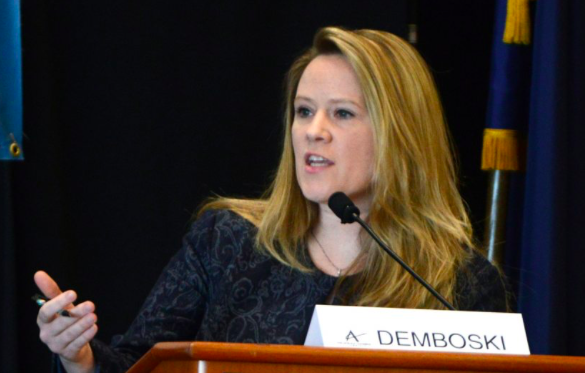
At 6:10 am Tuesday, drivers in Anchorage who were used to hearing Dan Fagan’s voice on the Dan Fagan Show on 650 KENI, were greeted by another well-known voice — Amy Demboski, who has agreed to host the show on an interim basis.

Demboski was the firebrand Anchorage Assemblywoman for Chugiak-Eagle River, served in the administration of Gov. Mike Dunleavy as a deputy commissioner, and was recently hired, and ultimately fired by Mayor Dave Bronson, whom she had served as Anchorage Municipal manager since he was elected by voters in May of 2021.

Demboski will host a two-hour show from 6-8 am Monday through Friday, she said.

On Thursday, Fagan hung up the microphone on his popular show after four years, saying that he just needed a change and felt burned out on Alaska politics.

Darrel Dean, the show’s engineer, bantered with Demboski for the show’s first segment, as the two talked about the latest Division of Motor Vehicles change to requiring only rear license plates on cars.

“This is the first surprise of 2023,” said caller Jamie Allard, who was just elected to the Alaska House of Representatives. She was the first caller for the show and called in to wish Demboski well.

Demboski has done radio before, hosting her own popular talk radio show several years ago. The number to call into the Morning Drive with Amy Demboski show is 907-522-0650.

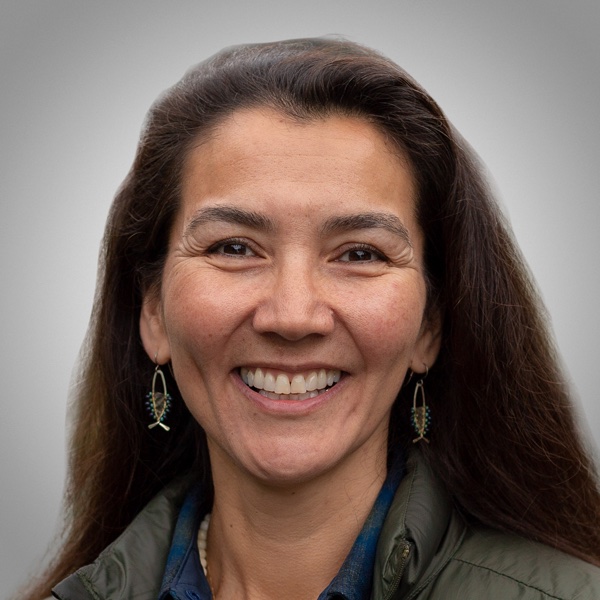
Peltola announces major staff changes that ditch the bipartisan appeal she led with earlier

Rep. Mary Peltola announced the departure of three key members of her official Washington, D.C. staff, including Senior Policy Advisor Larry Persily, Interim Communications Director Josh Wilson, and her Interim Director of Scheduling and Operations Paula Conru.

Although when she started her career in Congress much was made about how she hired Republicans (Persily is not among those), she is getting a staff of almost-all Democrats. Alex Ortiz of Ketchikan, her chief of staff who served as Congressman Don Young’s final chief of staff, may be the final remaining non-Democrat in her office.

Persily is nonpartisan and a longtime Alaskan, while Josh Wilson worked for Republicans in Congress before taking a job with Otter Public Relations, which led to him earning Peltola as a client shortly after her election. Conru, a longtime Alaskan, was Congressman Young’s scheduler and had worked for Republican Gov. Sean Parnell.

When Peltola first took office, her public relations team heralded how bipartisan she is.

“When Ortiz and Wilson spoke with Roll Call last week (Conru declined to be interviewed), Peltola had more registered Republicans and independents (four) working for her than Democrats (three). ‘Which is kind of incredible,’ Ortiz said. ‘And really speaks to a lot of the amazing qualities that she has,'” Roll Call reported in September.

“Both Ortiz and Wilson described themselves as GOPers who decided to work specifically for Mary Peltola, not Republican reprobates,” the publication reported. Read that story here.

“I think part of it is an Alaska thing and part of it is a practical thing, because I want to achieve for Alaska,” Ortiz told the reporter. “Ultimately, that is far more important to me than party.”

“She said, ‘When I get to DC, I want to be bipartisan.’ That’s a typical — like, everybody says that,” Wilson told the reporter. “But she’s probably the first [Democratic] representative who, when she arrived here, the first thing she did was hire three Republicans.”

Peltola has since hired many D.C. insiders from the left side of the political aisle, including:

Elizabeth Othmer is the new legislative director and counsel. Othmer served as Legislative Counsel for New Mexico Rep. Melanie Stansbury, a Democrat. Othmer was born and raised in Santa Fe, New Mexico.

Simone Auger is a new legislative assistant covering natural resources issues. Auger previously worked as legislative assistant for Oregon Rep. Kurt Schrader, a Democrat, for whom she was the 2020 Mark O. Hatfield Congressional Fellow for the Confederated Tribes of the Grand Ronde Community of Oregon.

Logan Basner, who was previously a special assistant to Peltola in Anchorage, has been promoted to a legislative assistant for transportation, infrastructure, and labor issues for the D.C. office. Basner was born and raised in Palmer and was chief of staff to Alaska State Rep. Tiffany Zulkosky, a Democrat, and a legislative aide to Rep. Zack Fields, a Democrat. He worked for Alaska Federation of Natives and was Zulkosky’s campaign manager.

Emily Larsen, who was previously a staff assistant for Peltola, has been promoted to a legislative correspondent. Born and raised in Maine, she recently graduated from American University, where she studied justice and law with a concentration in terrorism and security. She interned for Maine Sen. Angus King, an independent; and for Maine Rep. Jared Golden, a Democrat.

Lauren Noland was hired away from Sen. Lisa Murkowski’s office to be a legislative correspondent. Noland previously worked for the late Congressman Don Young. She was raised in Chugiak and is a U.S. Army veteran.

Bre Klayum joins the office as scheduler and office manager. Klayum previously served as deputy scheduler for Sen. Dan Sullivan. She was born and raised in Eagle River and graduated from Montana State University with bachelor’s degrees in history and political science. 

“Ensuring a smooth and seamless transition for Alaskans was my top priority while I served out the remainder of Congressman Don Young’s term,” said Peltola. “Larry, Josh, and Paula were instrumental in helping me establish an office in D.C. and have worked tirelessly for Alaskans over the last several months. All three have a long record of public service and I’m extremely grateful for the time they spent in my office. I wish them all the best as they enter the next chapters of their lives.”

Countdown clock to 100 million on Medicaid, or one out of every three Americans

By the end of February, nearly one out of every three Americans will be enrolled in Medicaid, the safety-net health care program that includes Obamacare, all paid for by tax dollars for those without private insurance. It’s a sign that the nation is well on its way to the tipping point that will result in fully socialized medical care.

Last week, the Foundation for Government Accountability launched a public website project to track Medicaid enrollment data as reported by each state. The countdown clock forecasts enrollment in Medicaid will reach 100 million individuals in approximately 75 days. 

In 2017, some 184,000 people in Alaska were covered by Medicaid, or about 25% of the population. FGA now puts the Alaska number at 260,334, or nearly 37% of the state’s current population.

At the beginning of January, 98,987,931 Americans were projected to be enrolled in the federal health insurance program, FGA calculated.

“For years, FGA has been warning about the rising number of people on government welfare programs. Now, we’re nearing a grim milestone—nearly one-third of the country will be on Medicaid,” said Hayden Dublois, FGA Data and Analytics Director. “Our research and data show as welfare enrollment increases, workforce participation decreases. We’re in the midst of a nationwide workforce crisis, yet the Biden administration is pushing policies to entice people into government dependency at record levels while limiting opportunities to achieve the American Dream.” 

The sharp rise in enrollment is largely due to the federal government’s continued extension of the Covid-19 public health emergency, which locks states in “Medicaid handcuffs.” While the emergency is in effect, states receive extra Medicaid funding on the condition that everyone enrolled remains locked into the program. This has led to an additional 24 million enrollees, more than 21 million of whom would previously not have qualified because they earn too much money or are otherwise ineligible. 

“The pandemic-era policy keeping more than 21 million ineligible enrollees on Medicaid is costing taxpayers more than $16 billion per month. Despite the recently enacted legislation allowing states to redetermine eligibility beginning in April, the Biden administration is slow walking the process and hoping states will be sluggish to act,” Dubois said. “In approximately 76 days, 100 million people will be on Medicaid. States should begin preparing now so that they can remove the millions of ineligible enrollees and reclaim program integrity as quickly as possible.”

Six degrees of separation: FTX scam-man Bankman-Fried to go before judge with curious link to Alaska

Sam Bankman-Fried, the bad boy of cryptocurrency crime and illegal Democratic Party and candidate donations, will appear in a Manhattan courtroom on Jan. 3, before U.S. District Judge Ronnie Abrams.

Bankman-Fried founded FTX, a cryptocurrency exchange, in 2019. He gave away hundreds of millions of dollars to Democrat candidates and causes. By the end of 2022, he was in jail for essentially stealing the investments of thousands of cryptocurrency pioneer investors, laundering the money through a sub-company called Alameda Research, and giving it to political entities on the Left, likely influencing the outcome of 2022 elections, and possibly the control of the U.S. Senate because the of the sheer size of the resources he made available to Democrats.

While Bankman-Fried funded mostly Democrats, including the Alaska Democratic Party, he also funded the campaign of Sen. Lisa Murkowski, a liberal Republican who has represented Alaska in Washington D.C. since 2002. He admitted to making other secret donations to political action committees that were backing various candidates.

Bankman-Fried, who was arrested in the Bahamas, was released from jail on a $250 million bail and placed on home detention at his parents’ house in Palo Alto, California, as he awaits trial.

The Jan. 3 hearing is not the trial itself. At the hearing, Bankman-Fried is expected to plead not guilty on eight charges, which include federal crimes such as wire fraud, conspiracy to commit wife fraud, securities fraud, money laundering, defrauding the Federal Election Commission and campaign finance violations.

“The charges in the Indictment arise from an alleged wide-ranging scheme by the defendant to misappropriate billions of dollars of customer funds deposited with FTX, the international cryptocurrency exchange founded by the defendant, and mislead investors and lenders to FTX and to Alameda Research, the cryptocurrency hedge fund also founded by the defendant. Bankman-Fried was arrested yesterday in the Bahamas on these charges and will be presented before a Bahamian magistrate judge today,” the Dec. 13 indictment alleged.

“One month ago, FTX collapsed, causing billions of dollars in losses to its customers, lenders, and investors.  Now, a federal grand jury in New York has indicted the former founder and chief executive officer of FTX and charged him with crimes related to the phenomenal downfall of that one-time cryptocurrency exchange, including fraud on customers, investors, lenders, and our campaign finance system.  As today’s charges make clear, this was not a case of mismanagement or poor oversight, but of intentional fraud, plain and simple,” U.S. Attorney Damian Williams said in the indictment.

Bankman-Fried made “millions of dollars in political contributions funded by Alameda Research to federal political candidates and committees in advance of the 2022 election.  To conceal the fact that those contributions were paid for using funds from a corporation and to evade contribution limits and reporting requirements, Bankman-Fried caused contributions to be reported in the names of co-conspirators rather than in the name of the true source of the funds,” the indictment revealed.

The judge in the case was appointed by former President Barack Obama. Judge Ronnie Abrams is the daughter of legendary attorney Floyd Abrams, who represented The New York Times during lawsuits involving the Pentagon Papers. The Pentagon Papers, officially called the Report of the Office of the Secretary of Defense Vietnam Task Force, was an official Pentagon classified report of the United States’ secret military involvement in Vietnam from 1945 to 1967, spanning presidencies of Harry S. Truman to Richard Nixon.

The Pentagon Papers had been leaked to the New York Times and the Washington Post, but the matter was being held up by the U.S. Supreme Court, which was deciding whether the newspapers could print the classified documents.

Meanwhile, U.S. Sen. Mike Gravel of Alaska received a separately leaked copy of the Pentagon Papers from Daniel Ellsberg and read it into the Congressional Record, essentially making the contents a public document that could be printed by anyone.

Web of leftist election influence: FTX connected to Data for Progress, Biden’s pick of Sec. Haaland for Interior, and to a flip-Alaska-blue project

FTX’s foundation funded ProPublica, a news provider that paid for Anchorage Daily News attacks on Gov. Dunleavy

Will FTX’s Sam Bankman-Fried’s donations to Republicans ever be revealed? Group files complaint with FEC

FTX scandal: Sam Bankman-Fried ran crypto exchange like a ‘personal fiefdom,’ and assets are ‘stolen or missing’

RIP, FTX: Democrat Ponzi scheme whose founder conned billions and gave millions to leftist candidates like Peltola

Crypto-con Sam Bankman-Fried arrested on the eve of his testimony before congressional committee

Read the indictment: Did Bankman-Fried’s money-laundering operation buy Alaska’s congressional seat?

Sen. Lisa Murkowski received max campaign funding from FTX’s Sam Bankman-Fried, who ripped off investors to support Democrats in office

CDC pushes LGBTQ curriculum for schools

By TYLER O’NEIL | THE DAILY SIGNAL

Just days after Christmas, the Centers for Disease Control and Prevention republished a “self-assessment tool” urging teachers, administrators, school health staff, and others to become an “awesome ally” by advocating for LGBTQ causes in school.

The document cites multiple LGBT activist groups, including a division of the Southern Poverty Law Center (SPLC).

The CDC did not respond to The Daily Signal’s request for comment about the document, which it originally published in October 2020.

“School administrators: Our LGBTQ inclusivity self-assessment tool can help you quickly gauge inclusivity at your school,” the CDC’s Division of Adolescent and School Health posted on Twitter on Tuesday. “See your score today and learn ways to increase inclusivity.”

The document, “LGBTQ Inclusivity in Schools: A Self-Assessment Tool,” appears on the CDC’s youth website in a section “For Schools” and under the drop-down “Tools for Supporting LGBTQ Youth.”

“Schools play a critical role in supporting the health and academic development of all youth, including the success of lesbian, gay, bisexual, transgender, and queer/questioning (LGBTQ) youth,” the document states. “Creating and sustaining inclusive school environments, policies, programs, and practices that include LGBTQ youth is one strategy for improving the health and academic success of all youth.”

The document notes that it includes resources from non-governmental organizations “focused on improving school inclusivity” and that the resources do not represent the CDC’s official opinion. The document further notes that the self-assessment tool is optional, not required, but it touts the document as “a focused, reasonable, and user-friendly approach to identify strategies to increase LGBTQ inclusivity in schools.”

The tool includes four assessments, one each for all users, administrators, educators, and school health services staff. The tool includes three scores: “Commit to Change,” “Beginning to Break Through,” and “Awesome Ally.”

The general self-assessment encourages education leaders to adopt certain mindsets, such as “I cannot assume a student’s gender, gender identity, or sexual orientation,” and urges them to adopt “inclusive” terminology, such as “using individuals’ chosen names/pronouns” and rejecting terms like “boyfriend” and “girlfriend” for “neutral terms” like “partner.” 

It also encourages leaders to “advocate for LGBTQ inclusive and affirming materials in all school and classroom environments” and to participate in the school’s Gay-Straight Alliance. 

This section also lists resources from activist groups such as GLAAD, the Human Rights Campaign, and PFLAG, along with the infamous “Gender Unicorn” graphic presenting biological sex as inherently different from gender identity.

The next section encourages administrators to alter their school health policies to include explicit anti-bullying and nondiscrimination policies for LGBTQ students, to allow “students to use the bathroom/locker room which aligns to their chosen gender,” to allow students to alter their paperwork “to present their chosen name and pronouns, rather than their legal name,” and to allow students “access to age-appropriate LGBTQ content and information.” It also encourages administrators to let teachers “develop LGBTQ inclusive curricula” and to support teachers attending LGBTQ trainings.The document also encourages

The document encourages educators to put up “visual labels” such as “rainbow flags, pink triangles, unisex bathroom signs” marking a classroom as “a safe space for LGBTQ students.” It urges them to teach with “LGBTQ inclusive” content and to attend LGBT trainings. 

The document also urges teachers to “describe anatomy and physiology separate from gender (e.g., ‘a body with a penis’ and ‘a body with a vagina’).”

Finally, the document urges health services staff to set up “visual labels” to demonstrate support for LGBT causes in the school’s clinic, to offer intake forms with separate sections for “gender identity and sex at birth,” to use students’ chosen names and pronouns, to offer “LGBTQ-specific health pamphlets” at the school clinic, to “describe anatomy and physiology separate from gender,” and to attend LGBT trainings.

Read the rest of this story at The Daily Signal.

Starlink rescues rural Alaska using satellite broadband, without subsidies

By SHAWN WILLIAMS

It’s finally here. Customers in rural Alaska are checking the mail and setting up their Starlink. What this means for rural Alaska residents is obvious – faster broadband and lower prices – but what does it mean for rural Alaska telecoms?

Competition is good. It drives innovation, encourages efficiency, and keeps your marketing department on their toes. The fact competition in rural Alaska was almost non-existent is noteworthy. Nearly all broadband customers are price sensitive if the speed and quality of service are comparable. Simply stated, residents will go to the provider with the lowest price for broadband. (Just look at the effect big box stores and Amazon Prime had on Alaska’s hometown retailers.)

The Federal Communications Commission sends nearly $400M a year to incumbent Alaska telecoms for user subsidies (USF Alaska Plan, E-rate, and Rural Healthcare) and since 2020, the USDA ReConnect program has awarded $322M for new fiber build-outs. In the last 6 months, the NTIA Tribal Broadband Connectivity program delivered $290M for new fiber build-outs in Alaska villages.

Over the last five years, that’s $2.6B. The fiber-based telecoms have always shared that the high cost of laying and maintaining fiber and microwave in rural Alaska has justified higher retail pricing in those areas. At a recent symposium, one provider put their middle mile expense at 83% of costs.

Starlink, on the other hand, was awarded $885.5M (over 10 years) by the FCC – then its award was canceled.

That didn’t stop Elon Musk from marching forward (using his own money) into the hard-hitting world of licenses, permits and a very healthy fiber lobby. Based on reports, thousands of Starlink terminals are arriving throughout the state, even before the constellation is fully commissioned. And there’s more direct-to-consumer competition coming with Amazon’s Kuiper, Telesat’s Lightspeed, and China’s GalaxySpace promising to cover the globe with affordable broadband.

Back to rural Alaska. Residents statewide can now get fast broadband, after buying the Starlink dish for about $650 delivered. A new market entrant with ubiquitous coverage and impressive broadband means that every single broadband provider in Alaska, regardless of technical capabilities, is now playing on a level playing field. The new, written-in-the-sky standard for broadband in rural Alaska is a minimum of 25/3 for a maximum $110 per month and sometime in Q1 2023, Starlink will likely be participating in the FCC’s Affordable Connectivity Program, bringing that cost down to $35 for qualifying households.

The federal government should not be limiting low-cost middle mile solutions when it comes to serving broadband in rural Alaska, yet the FCC, NTIA and USDA all do. Congressional direction has maintained technology neutral awards, but regulations at the agency level ignore those requirements by including technical requirements. This limits service providers to terrestrial backhaul, thereby unnecessarily increasing costs and limiting connectivity.

When it comes to the telecoms operating in rural Alaska, the paramount focus should be thinking creatively and getting middle mile costs as low as possible, ultimately meeting Starlink’s price and performance. One easy way to achieve this is by taking advantage of the new satellite middle mile covering Alaska and hybridizing existing microwave and C-band satellite networks. LEO (like the OneWeb Network) and/or GEO HTS (like the Aurora Network) can be added to any network in any community.

Alaska telecoms must adapt, utilize new satellite technology, and truly compete – just like Elon.

Shawn Williams is the VP of Government Affairs and Strategy for Pacific Dataport in Anchorage. He’s a 40-year resident of Alaska, the former Assistant Commissioner of Commerce for the State of Alaska, and a member of the Karuk Tribe of California. He’s earned a BA in Economics at the University of Alaska, Anchorage and an Executive MBA in Strategic Leadership at Alaska Pacific University.

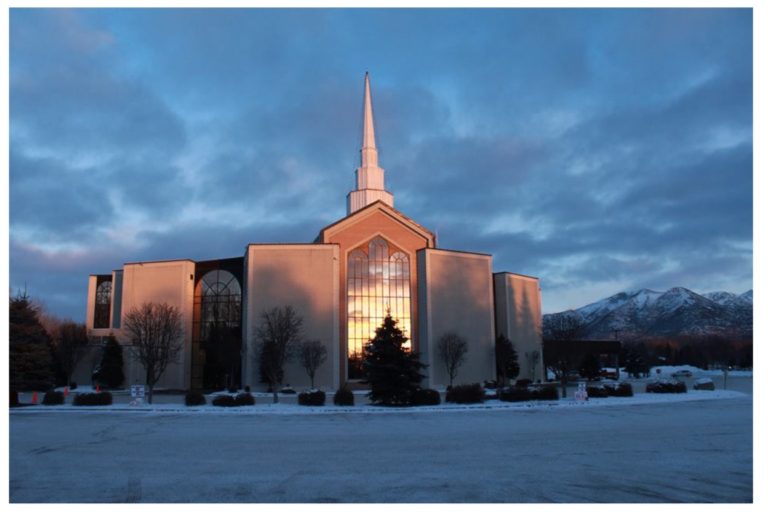
Anchorage Baptist Temple changes its name to Mountain City Church

The well-known Anchorage Baptist Temple, which was founded before Alaska Statehood, has adopted a new name: Mountain City Church. Anchorage Christian School will become Mountain City Christian Academy.

“The church will change its name to match its expanding vision – transforming every Alaskan with the salt, light, and love of Christ,” said Pastor Ron Hoffman. Throughout this past year, Pastor Hoffman has been casting the vision for all the congregants to be Christ-centered world changers, starting with reaching their neighbors, Anchorage, and all of Alaska with the Gospel. 

In 1956 the church was planted as “Baptist Bible Church” on DeBarr Road. It grew and then moved to Northern Lights Blvd., and became Anchorage Baptist Temple under former Pastor Jerry Prevo. Through radio and TV ministry, ABT started reach all of Alaska, not just Anchorage.

“No, renaming the church will not erase the legacy,” Hoffman said. “This is a history we never want to forget.” He said the church will build a history wall as a way to remember where it came from and where it’s going.

But he explained that the word “temple” is now more associated with false religion today, and the church wants be be seen as a true place of worship.

For more information, visit the church’s new website at www.mountaincity.church or check it out on Facebook or Instagram @mtncity.church.

Read about Must Read Alaska’s interview with Pastor Hoffman and his mission to reach all Alaskans at this link:

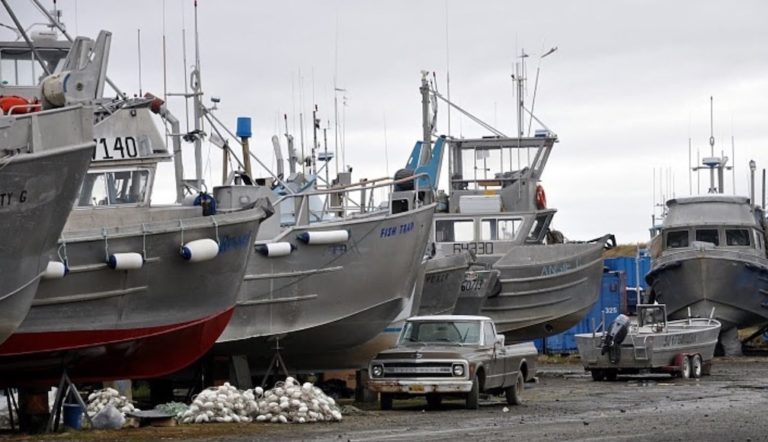
Omnibus has millions for study of Alaska fisheries

By KIM JARRETT | THE CENTER SQUARE

The $1.7 trillion spending bill passed by Congress and signed by President Joe Biden includes millions for Alaska’s fisheries and creates yet another task force to study the decline of Alaska’s salmon.

The Alaska Salmon Research Task Force will have between 13 and 19 members, with most of them appointed by the Secretary of Commerce. Alaska Gov. Mike Dunleavy is allowed to appoint just one member.

The task force will be created 90 days from Dec. 23, the day Biden signed the omnibus bill into law. The task force is to turn in its report within a year. 

An additional $65 million is in the package for grants to restore Pacific salmon populations. Those grants are available to Alaska and five other states.

The bill also included $300 million for fishery disasters, and another $300 million is included for administrative costs. The funding is not exclusive to Alaska, according to U.S. Sen. Lisa Murkowski. Earlier this month, the U.S. Department of Commerce declared six fishery disasters in Alaska, including the 2022/2023 closure of the Alaska Bristol Bay Red King Crab and Bering Sea Snow Crab Fisheries.

The Alaska Department of Fish and Game announced in October that fishing Bristol Bay red king crab would be closed for the second year in a row.

The spending package includes $2.75 million for the Bering Sea Fisheries Research Foundation to monitor the Bering Sea’s commercial fisheries. Among the other allocations is $1 million to the University of Alaska Fairbanks for research on seasonal weather forecasting. 

“Our fisheries and oceans provide foundational food security and economic opportunity for Alaskans statewide. I’m proud to champion our marine environment and cornerstone species like salmon and crab in this year-end package,” Murkowski said in a statement. “Alaskans advocated for these projects, we worked together to deliver on them, and we can now look forward to their implementation for our state.” 

U.S. Dan Sullivan voted against the spending package but said he supported some of its provisions, including the ones backing the state’s fisheries.

“However, this is a more than $1.7 trillion dollar spending bill consisting of 4,155 pages, with thousands more in supporting documents, negotiated and agreed to only by House and Senate leadership, and their staff,” Sullivan said in a statement. “We were given approximately 48 hours to read and analyze it. Decisions were made behind closed doors, many of which are clearly beyond the expertise of those making them, and the legislative process once again provided no meaningful opportunity for further input from Senators.”  

Kim Jarrett’s career spans over 30 years with stops in radio, print and television. She has won awards from both the Georgia Press Association and the Georgia Association of Broadcasters.

New year, new variant of Covid shows how tough it is for boosters to keep up with mutations

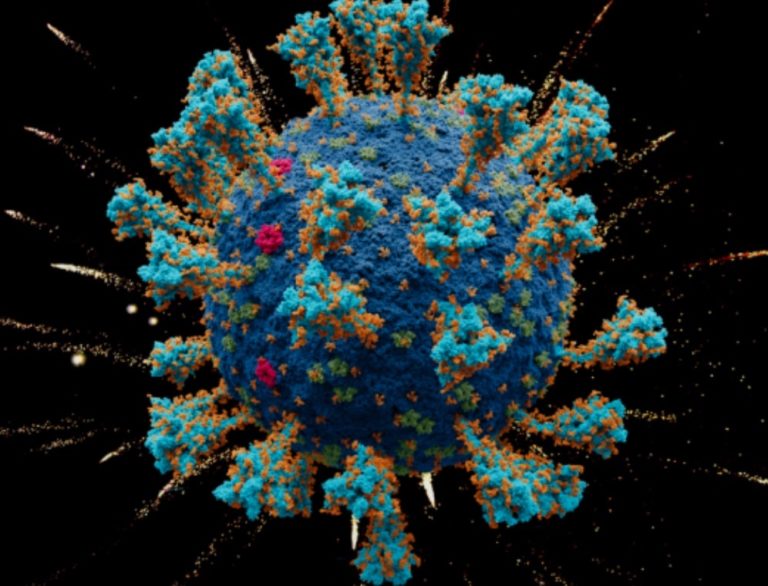
The Omicron variants were all the rage in Covid news in early 2022. But with the new year, a new Omicron variant of Covid has roared onto the scene and is now sweeping the East Coast, where over 75% of known cases are of the newest version.

Delta is done, and the Omicron BQ.1 and BQ.1.1 variants that dominated cases in the fall are waning. The newest mutation, XBB.1.5, accounts for over 40.5% of Covid infections around the country, the Centers for Disease Control and Prevention reports.

That’s a jump of 21% from where the mutation was on the chart just one week ago. It’s being seen in the Northeast portion of the country, where over 80% of the population has been vaccinated and boosted against Covid, but scientists are now casting doubt on the efficacy of those boosters against this variant. XBB.1.5 is highly immune evasive, scientists report, warning that breakthrough cases and reinfections are likely.

Yet it’s not clear that XBB.1.5 causes more severe illness or is a greater threat than previous strains of Covid. During the last week of 2022, some 2,530 Americans died with Covid, compared to 17,048 during the same week in 2021.

The XBB strain has been detected in at least 70 other counties, the World Health Organization said. The variant has not yet made its grand appearance in Alaska, although is now thought to be 18% of cases in the Seattle area.

A study published the scientific journal Cell reports that BQ and XBB variants are “barely susceptible to neutralization” by current vaccines and the newest omicron boosters. The new aggressive variants could “further compromise the efficacy of current COVID-19 vaccines and result in a surge of breakthrough infections as well as re-infections,” the researchers from Columbia University said in the article titled, “Alarming antibody evasion properties of rising SARS-CoV-2 BQ and XBB subvariants.”

One year ago, another study from Columbia University cast doubts on whether the new vaccines, rolled out in 2021, were effective against the now spent Omicron virus, reporting that the variant flavor of the day was “markedly resistant” to vaccines and boosters. In the United States, more than 614 million doses of Covid vaccine have been given and many people have had up to four booster shots.

The most recent updated (bivalent) boosters became available in September for people aged 12 years and older, but these newest scientific studies are throwing shade on the booster’s ability to defend against the new versions of Covid.