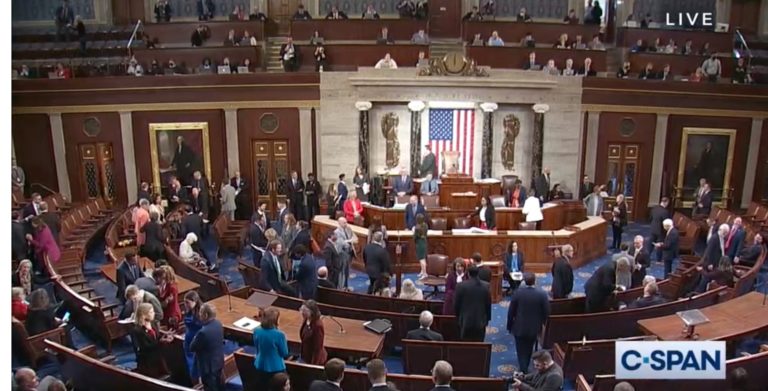
U.S. Rep. Kevin McCarthy lost again on the sixth round of voting for U.S. House Speaker on Wednesday.
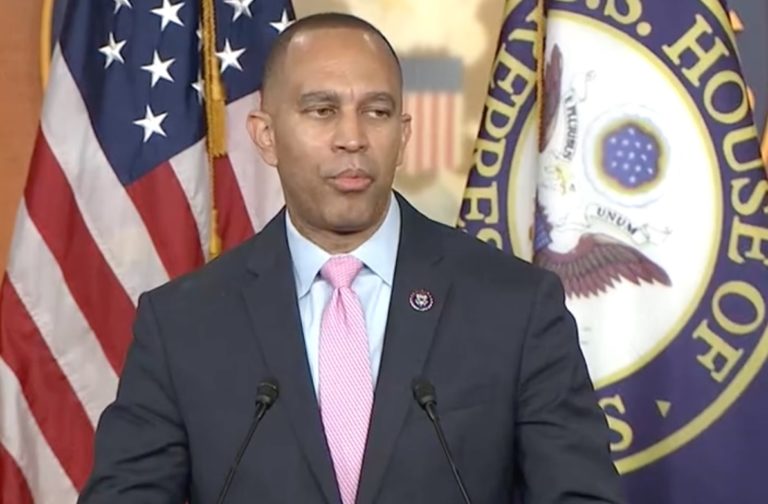
Six times, Alaska’s Rep. Mary Peltola voted with the Democrats for election conspiracy theorist Hakeem Jeffries, the Queens, N.Y. radical who is the new face of the Democratic Party.
Peltola, when she ran for office, promised Alaskans she would continue the bipartisan legacy of Congressman Don Young, who represented Alaska for 49 years. But her many votes have proven that those were just campaign words, not meant to be taken seriously. She has voted for the far left of the spectrum to lead the House of Representatives, something Congressman Young would not have done.
“Don Young worked in a very bipartisan way. He had more seniority than any other member of the House has ever had, and he welcomed every single congressman into their position, personally. So, he had a very long history of bipartisanship, and I want to emulate that, and I want to emulate his hard work on constituent issues,” she told reporters in August, in a “bipartisan” refrain she has repeated many times since, while voting in a highly partisan manner.
McCarthy needs 218 votes to become the next speaker. During the last round of voting, 20 Republicans voted for a Republican who was not McCarthy, up from 19 votes during earlier rounds of voting, which have occurred over the past two days. A last-minute plea by former President Donald Trump to elect McCarthy did not create any movement in the Freedom Caucus, the more conservative wing of the House.
The U.S. House has adjourned until 4 pm Alaska Time, when it’s expected to again attempt to elect a speaker. This story is likely to be superseded by events.
Nearly half of Americans now believe Covid-19 vaccines may be to blame for the uptick in unexplained deaths, and more than a quarter say someone they know could be among the victims, according to the latest Rasmussen Reports national online and telephone poll.
Alaska lost a number of healthy individuals — many of them young or middle-aged men in the prime of their life dying from unexplained heart attacks — in 2021. Just like other Americans, Alaskans are are showing concern about the number of high school, college, and professional athletes who are dropping dead from heart ailments at rates much higher than seems normal.
Dr. Peter McCullough, a cardiologist who is among the leading critics of the still-experimental Covid vaccine, and who is usually referred to by mainstream media as a spreader of misinformation, commented on NFL player Damar Hamlin’s mid-game heart attack, which occurred Sunday: “Sudden cardiac death should be very unusual — Covid-19 can cause heart damage, but I think the leading concern is vaccine-induced myocarditis.”
In 2016, the American College of Cardiology reported there were approximately 100 to 150 sudden cardiac deaths during competitive sports each year. The estimated incidence of SCD among athletes versus non-athletes was found to be 0.44 per 100,000 person-years, and 13 per 100,000 person-years, respectively, the medical group said at this link.Must Read Alaska was not able to quantify how many of these deaths occurred in 2022.
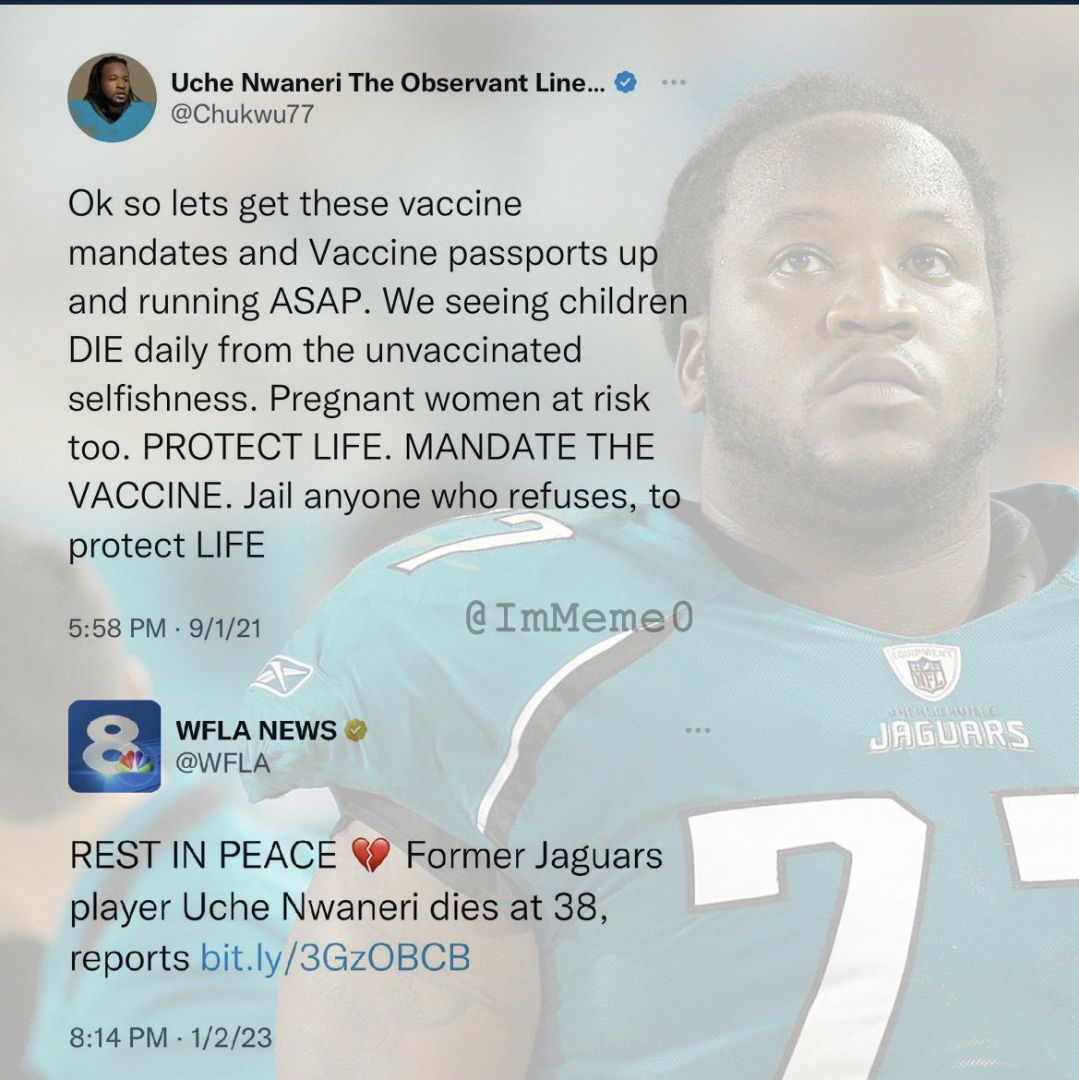
Also last week, former Jacksonville Jaguars offensive guard Uche Nwaneri dropped dead of a non-game-related heart attack at the age of 38. He had been a strong advocate for the Covid vaccine and had said people unvaccinated should be jailed. Last month, well-known media and political personalities dropped dead of heart attacks in their 30s and 40s.
Are these sudden cardiac deaths related to vaccines? Neither social media nor mainstream media are reliable sources of information on this question. But that does not stop the Washington Post from quickly debunking any links between vaccines and heart attacks:
“Here’s the rub: This claim has been debunked repeatedly. The story of athletes dropping dead from coronavirus vaccines has its roots in mysterious Austrian websites with ties to that country’s far-right populist party, the Freedom Party. Those stories were then recycled by right-wing media in the United States and then eventually came out of the mouth of a U.S. senator,” wrote Washington Post fact checker Glenn Kessler in this story about how, as the writer implied, Sen. Ron Johnson was repeating right-wing misinformation.
But Sen. Ron Johnson of Wisconsin says he has heard too many stories from athletes, many of whom signed up for the vaccinations to do their part to end the Covid pandemic. Read more about his research and watch his press conference from July 2, 2021 here.
The Rasmussen survey finds that 49% of American adults believe it is likely that side effects of Covid-19 vaccines have caused a significant number of unexplained deaths, including 28% who think it’s very likely.
Thirty-seven percent don’t say a significant number of deaths have been caused by vaccine side effects, including 17% who believe it’s not at all likely. Another 14% are not sure.
Twenty-eight percent of adults say they personally know someone whose death they think may have been caused by side effects of Covid-19 vaccines, while 61% don’t and another 10% are not sure, the poll showed.
“The documentary Died Suddenly has been criticized as promoting “debunked” anti-vaccine conspiracy theories but has been seen by some 15 million people,” Rasmussen Reports said, hinting that the documentary may have influenced people’s views on the Covid vaccines.
Forty-eight percent of Americans believe there are legitimate reasons to be concerned about the safety of Covid-19 vaccines, while 37% think people who worry about vaccine safety are spreading conspiracy theories. Fifteen percent are not sure.
The Rasmussen Report poll was of 1,000 American adults and was conducted between Dec. 28-30, 2022. The margin of sampling error is +/- 3 percentage points with a 95% level of confidence.
Seventy-one percent of those who took the poll say they have received a Covid-19 vaccination, while 26% have not.
Concerns about vaccine safety were much higher among the unvaccinated. Seventy-seven percent of adults who have not gotten Covid-19 vaccinations believe it’s at least somewhat likely that side effects of Covid-19 vaccines have caused a significant number of unexplained deaths. Among those who have gotten the vaccine, just 38% consider unexplained deaths from the vaccine at least somewhat likely.
The Centers for Disease Control and Prevention has disputed the claims that the vaccines are causing deadly myocarditis, and has this summary of its findings.
Voting for the Kenai Borough special election for mayor starts Jan. 30 with absentee in-person voting, with the final day for voting set for Feb. 14. The deadline to register to vote in this election is Jan. 15.
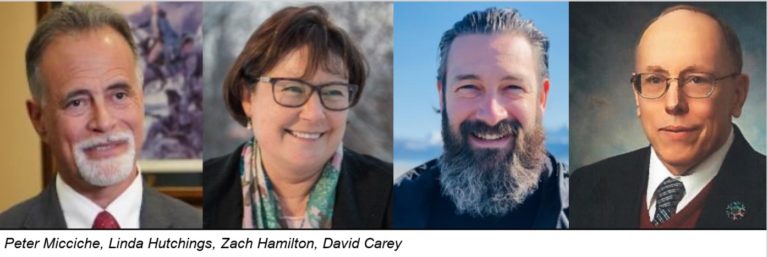
Four candidates are on the ballot for replacing former Mayor Charlie Pierce, who resigned last fall. They are outgoing Alaska Senate President and former mayor of Soldotna Peter Micciche, Soldotna City Council member Linda Hutchings, business owner and U.S Air Force veteran Zachary Hamilton, and former borough mayor, Soldotna city mayor, and Kenai Borough Assembly member David Carey.
The term for the office expires in October of 2023, which would be the end of Mayor Pierce’s term. The winner has to get 51% of the vote or the top two leading vote-getters will face a runoff on March 7.
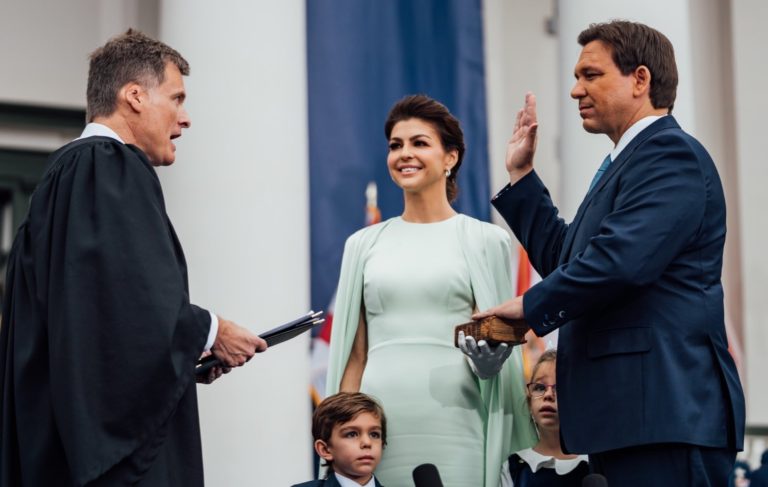
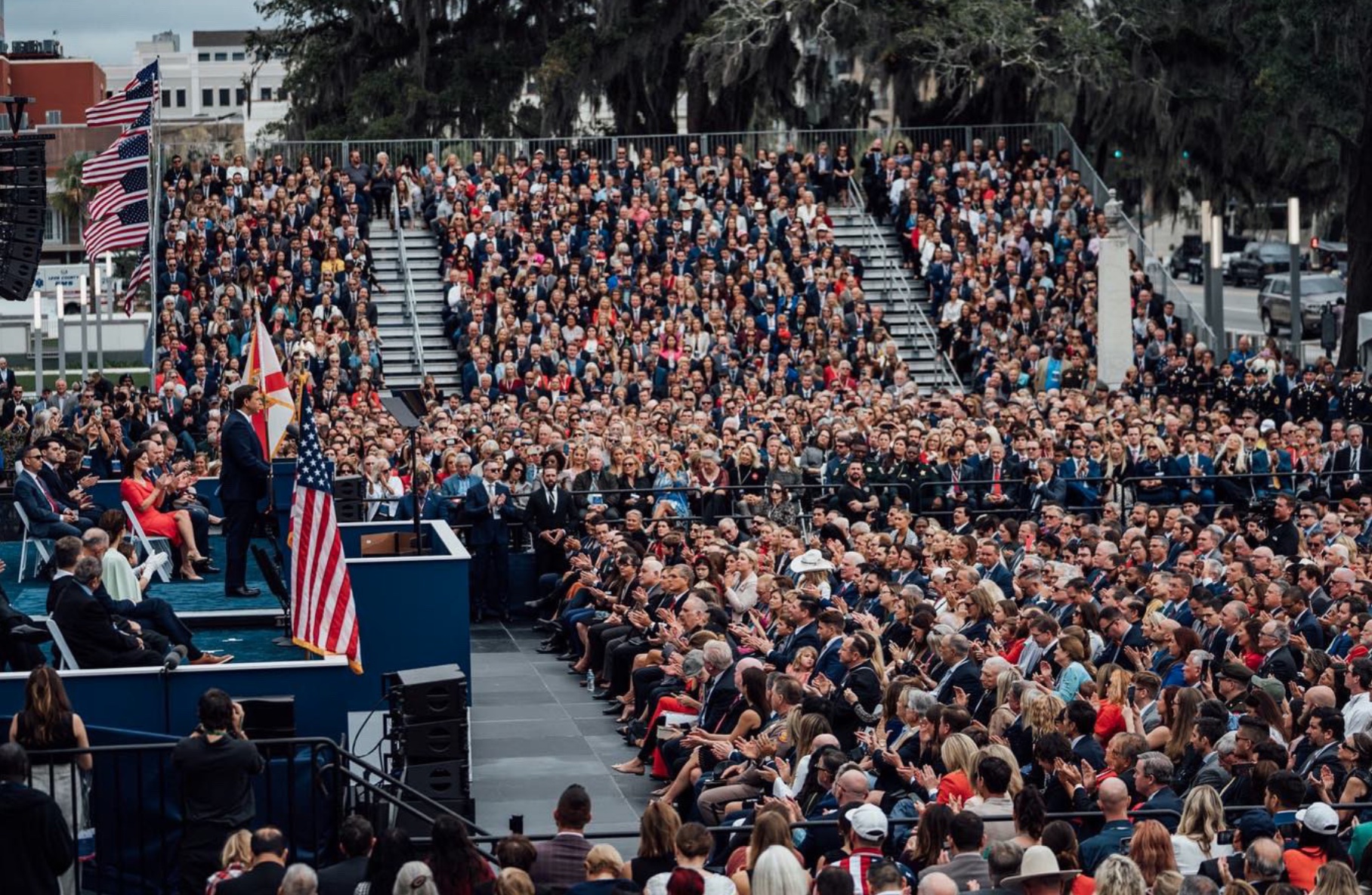
The presidential contest is less than a year away. Florida Gov. Ron DeSantis showed his presidential timbre on Tuesday as he delivered his second inaugural address as the newly reelected governor on the steps of the Florida Capitol Building in Tallahassee.
Gov. Ron DeSantis delivers his inaugural address to a standing-room-only crowd at the Capitol in Tallahassee.
In his address, DeSantis highlighted the progress that Florida has made to improve the lives of its residents as a result of his administration priorities, including guaranteeing access to high-quality education, creating a robust economy that continues to grow faster than the nation’s, providing access to resources for those recovering from hurricanes, and investing record funding into the Everglades and Florida’s critical water resources.
Concluding his speech, DeSantis reaffirmed his commitment to ensuring the state remains the “Free State of Florida,” and set priorities for his second term in office and blasted the “woke” ideology.
“We reject this woke ideology. We seek normalcy, not philosophical lunacy! We will not allow reality, facts, and truth to become optional. We will never surrender to the woke mob. Florida is where woke goes to die!,” he said to thunderous applause.
Governor DeSantis blasts Permanent Washington: The federal govt "wields its authority through a sprawling, unaccountable, out-of-touch bureaucracy that does not act on behalf of us, but instead looms over us and imposes its will on us."#FLInauguration2023#TheFreeStateofFloridapic.twitter.com/XefrAjDPnG
The address in its entirety is a study in both noteworthy speechwriting and delivery, and shows that DeSantis will be worth watching as the presidential election season begins:
Mr. Chief Justice, members of the Cabinet, and fellow citizens:
From the Space Coast to the Suncoast, from St. Johns to St. Lucie, from the streets of Hialeah to the speedways of Daytona, from the Okeechobee all the way up to Micanopy.
Freedom lives here, in our great Sunshine State of Florida!
It lives in the courage of those who patrol the streets and keep our communities safe, it lives in the industry of those who work long hours to earn a living and raise their families, it lives in the dedication of those who teach our children, it lives in the determination of those who grow our food, it lives in the wisdom of our senior citizens, it lives in the dreams of the historic number of families who have moved from thousands of miles away because they saw Florida as the land of liberty and the land of sanity.
Over the past few years, as so many states in our country grinded their citizens down, we in Florida lifted our people up.
When other states consigned their people’s freedom to the dustbin, Florida stood strongly as freedom’s linchpin.
When the world lost its mind – when common sense suddenly became an uncommon virtue – Florida was a refuge of sanity, a citadel of freedom for our fellow Americans and even for people around the world.
In captaining the ship of state, we choose to navigate the boisterous sea of liberty rather than cower in the calm docks of despotism.
We face attacks, we take hits, but we weather the storms, we stand our ground, and we do what is right.
As the Book of Psalms reminds us, “I will not fear though tens of thousands assail me on every side.”
We have refused to use polls and to put our finger in the wind – leaders do not follow, they lead.
We have articulated a vision for a free and prosperous state.
We have, through persistence and hard work, executed on that vision.
We have produced favorable results.
And now we are here today because the people of Florida have validated our efforts in record fashion.
Florida shows that results matter. We lead not by mere words, but by deeds.
Four years ago, we promised to pursue a bold agenda. We did just that and we have produced results:
We said we would ensure that Florida taxed lightly, regulated reasonably, and spent conservatively – and we delivered.
We promised we would enact big education reforms – and we delivered.
We said we would end judicial activism by appointing jurists who understand the proper role of a judge is to apply the law as written, not legislate from the bench – and we delivered.
We promised to usher in a new era of stewardship for Florida’s natural resources by promoting water quality and Everglades restoration efforts – and we delivered.
We said we would stand for law and order and support the men and women of law enforcement – and we delivered.
We promised to remedy deficiencies in Florida’s election administration and to hold wayward officials accountable – and we delivered.
We said we would support the areas in Northwest Florida stricken by Hurricane Michael – and we delivered.
And when Hurricane Ian came last year, the state coordinated a massive mobilization of response personnel, facilitated the fastest power restoration on record, and even quickly rebuilt key bridges that had been wiped out by the storm. We have stood by the people of Southwest Florida and we will continue to do so in the weeks, months and years ahead.
Because of these efforts and others, Florida is leading the nation:
We are #1 in these United States in net in-migration
Florida is the #1 fastest growing state
We are #1 in new business formations
Florida is #1 in tourism
We are #1 in economic freedom
Florida is #1 in education freedom
And we rank #1 in parental involvement in education
Florida also ranks #1 in public higher education
This is a record we can all be proud of.
And we are far from done:
Florida has accumulated a record budget surplus, and we need to enact a record amount of tax relief, particularly for Florida families who are grappling with inflation.
We must ensure school systems are responsive to parents and to students, not partisan interest groups, and we must ensure that our institutions of higher learning are focused on academic excellence and the pursuit of truth, not the imposition of trendy ideology.
Florida must always be a great place to raise a family – we will enact more family-friendly policies to make it easier to raise children and we will defend our children against those who seek to rob them of their innocence.
We will always remain a law-and-order state, we will always support law enforcement, and we will always reject soft-on-crime policies that put our communities at risk.
Florida is now in a golden era for conservation of our treasured natural resources. Our momentum is strong and we will finish what we started – we will leave Florida to God better than we found it!
This much we pledge and so much more.
It is often said that our federalist constitutional system – with fifty states able to pursue their own unique policies – represents a laboratory of democracy.
Well these last few years have witnessed a great test of governing philosophies as many jurisdictions pursued a much different path than we have pursued here in the state of Florida.
The policies pursued by these states have sparked a mass exodus of productive Americans from these jurisdictions – with Florida serving as the most desired destination, a promised land of sanity.
Many of these cities and states have embraced faddish ideology at the expense of enduring principles.
They have harmed public safety by coddling criminals and attacking law enforcement.
They have imposed unreasonable burdens on taxpayers to finance unfathomable levels of public spending.
They have harmed education by subordinating the interests of students and parents to partisan interest groups.
They have imposed medical authoritarianism in the guise of pandemic mandates and restrictions that lack a scientific basis.
This bizarre, but prevalent, ideology that permeates these policy measures purports to act in the name of justice for the marginalized, but it frowns upon American institutions, it rejects merit and achievement, and it advocates identity essentialism.
We reject this woke ideology.
We seek normalcy, not philosophical lunacy!
We will not allow reality, facts, and truth to become optional.
We will never surrender to the woke mob.
Florida is where woke goes to die!
Now Florida’s success has been made more difficult by the floundering federal establishment in Washington, D.C.
The federal government has gone on an inflationary spending binge that has left our nation weaker and our citizens poorer, it has enacted pandemic restrictions and mandates – based more on ideology and politics than on sound science – and this has eroded freedom and stunted commerce.
It has recklessly facilitated open borders: making a mockery of the rule of law, allowing massive amounts of narcotics to infest our states, importing criminal aliens, and green lighting the flow of millions of illegal aliens into our country, burdening communities and taxpayers throughout the land.
It has imposed an energy policy that has crippled our nation’s domestic production, causing energy to cost more for our citizens and eroding our nation’s energy security, and, in the process, our national security.
It wields its authority through a sprawling, unaccountable and out-of-touch bureaucracy that does not act on behalf of us, but instead looms over us and imposes its will upon us.
The results of this have been predictably dismal.
This has caused many to be pessimistic about the country’s future. Some say that failure is inevitable.
Florida is proof positive that We the People are not destined for failure.
Decline is a choice. Success is attainable. And freedom is worth fighting for.
Now fighting for freedom is not easy because the threats to freedom are more complex and more widespread than in the past – the threats can come from entrenched bureaucrats in D.C., jet-setters in Davos, and corporations wielding public power.
But fight we must.
We embrace our founding creed that our rights are not granted by the courtesy of the State, but are endowed by the hand of the Almighty.
We reject the idea that self-government can be subcontracted out to technocratic elites who reduce human beings to mere data points.
We insist on the restoration of time-tested constitutional principles so that government of, by and for the people shall not perish from this earth.
Florida has led the way in preserving what the father of our country called the “sacred fire of liberty.”
It is the fire that burned in Independence Hall when 56 men pledged their lives, their fortunes and their sacred honor to establish a new nation conceived in liberty.
It is the fire that burned at a cemetery at Gettysburg when the nation’s first Republican president pledged to this nation a “new birth of freedom.”
It is the fire that burned among the boys who stormed the beaches of Normandy to liberate a continent and to preserve freedom for the world.
It is the fire that infused a young preacher’s dream, relayed at the steps of the Lincoln Memorial, that the Declaration of Independence said what it meant and meant what it said: all men are created equal.
It is the fire that led a resolute president to stand in Berlin and declare “tear down this wall,” staring down the communists and winning the Cold War.
It is our responsibility here in Florida to carry this torch.
We do not run from this responsibility; we welcome it.
We will be on our guard.
We will stand firm in the faith.
We will be courageous.
We will be strong!
And we thank God and are proud to be citizens of the great Free State of Florida!
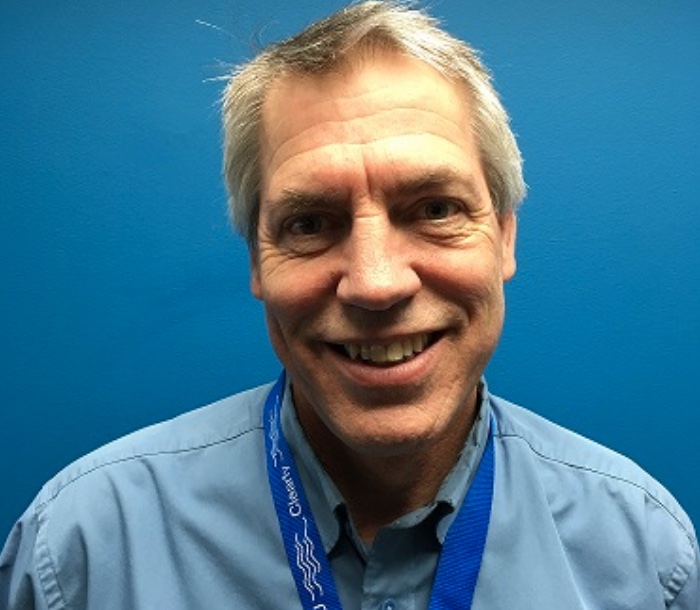
Anchorage Mayor Dave Bronson has selected Grant Yutrzenka as the chief fiscal officer for the Municipality of Anchorage. The prior CFO, Travis Frisk, left in July and Yutrzenka has been the acting chief fiscal officer since September. He was as the assistant general manager and chief fiscal officer for Anchorage Water and Wastewater Utility.
Yutrzenka has over 30 years of financial and management experience in public accounting, fisheries, and telecommunications working for Anchorage Municipal Light and Power, as well as in the private sector for companies like UniSea Inc., GCI, and Alutiiq/3 SG, LLC.
He has served on the boards of Anchorage Community Development Authority, Solid Waste Services, Cross Country Alaska, and the Anchorage Junior Nordic League.
“Grant’s breadth and depth of experience in management, finance and accounting, spanning both the public and private sectors, has well-prepared him to serve as the Municipality’s next CFO, a role he has ably performed in an Acting capacity these last few months,” Mayor Bronson said.
Yutrzenka has a Bachelor’s degree in business administration with an emphasis in accounting from the University of Alaska – Anchorage. His appointment must be approved by the Anchorage Assembly.
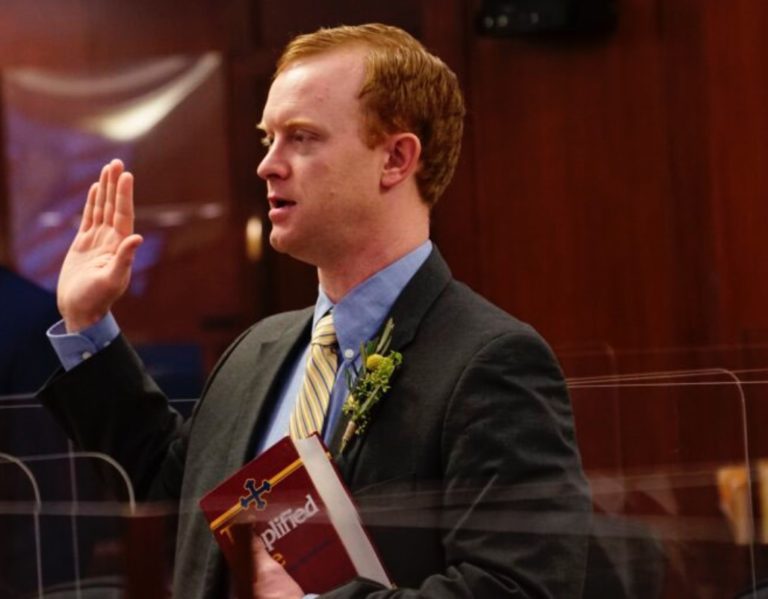
The Wasilla political activist who challenged the right of Rep. David Eastman to represent his district in the Alaska House of Representatives will not appeal the ruling made against his attempt to overthrow a legally elected legislator.
Judge Jack McKenna said Dec. 23 that the lawsuit that claimed that by belonging to the Oath Keepers, Eastman intended overthrow the government did not hold water. Randall Kowalke, who brought the lawsuit, will not appeal the ruling.
McKenna says that while the Oath Keepers are an organization he believes took concrete action to overthrow by violence the United States government, Rep. Eastman took no such action and “does not and did not possess a specific intent to further the Oath Keeper’s [sic] words or actions aimed at overthrowing the United States government. The court therefore finds that he is not disqualified from holding public office…”
Kowalke was asking that the court to force the Division of Elections to make Eastman ineligible to serve because of his membership in an association that has up to 38,000 members, mostly former military and police officers. The Oath Keepers leadership was involved in events on Jan. 6, 2021 at the U.S. Capitol, when a few hundred citizens disrupted the certification of the Electoral College vote that made Joe Biden president. The group’s founder, Stewart Rhodes, and at least one other member have been convicted of seditious conspiracy.
“The right of voters in Wasilla to elect their own representatives has been preserved, but the price they were asked to pay to defend that right demonstrates the extent to which Alaska courts have been weaponized against conservative candidates and voters. It is unconscionable that the Constitution was retooled to allow this type of lawfare to take place in Alaska,” Eastman said in a statement to Must Read Alaska, after Kowalke and the partisan Northern Justice Project filed their intent to not appeal the ruling.
Eastman said the lawsuit itself is an attack on his district, and an attempt to deprive voters of the representation they voted for. He won his most recent election by more than 51% on the first ballot.
“My constituents are putting together fundraisers right now, and several are putting off paying bills, just to get us through the expense of this political inquisition. Lawfare is a weaponization of the courts against the innocent, in this case my family and my constituents,” Eastman said. And this doesn’t even factor in the costs the taxpayers had to pay for the inquisition!”
Eastman called it attack by some in Anchorage on the right of those in Wasilla to choose their own elected representatives.
“Today I happen to be the one on the front lines of the battle over whether Wasilla will get to choose for itself on Election Day or be forced in future election cycles to settle for candidates that political activists in Anchorage or some well off person in New York City is ‘OK’ with,” he said.
The Democrat-led majority in the House last year attempted to also deprive his district of representation by trying to eject him from the House due to his visit to the U.S. Capitol on Jan. 6, 2021, when he went to support President Donald Trump. And the House Committee on Committees attempted to strip him of all of his committee memberships.
The lawyer for the Northern Justice Project who spoke to the Associated Press said that there are so few cases filed nationally, and he and his legal group didn’t want to end up creating case law that would prevent others from being successfully challenged in the future in other places in the country.
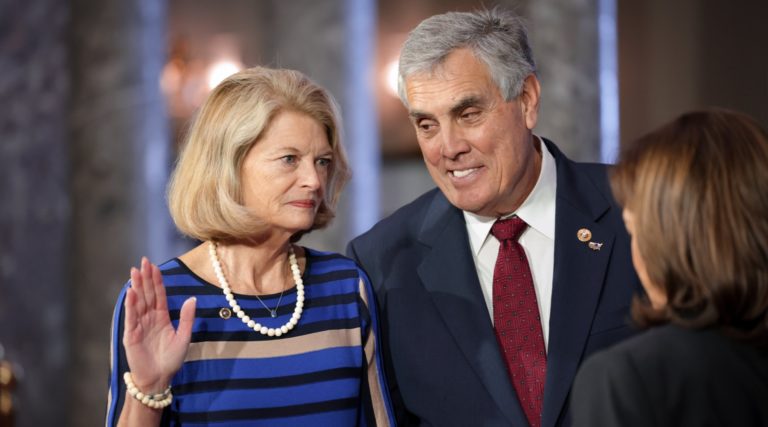
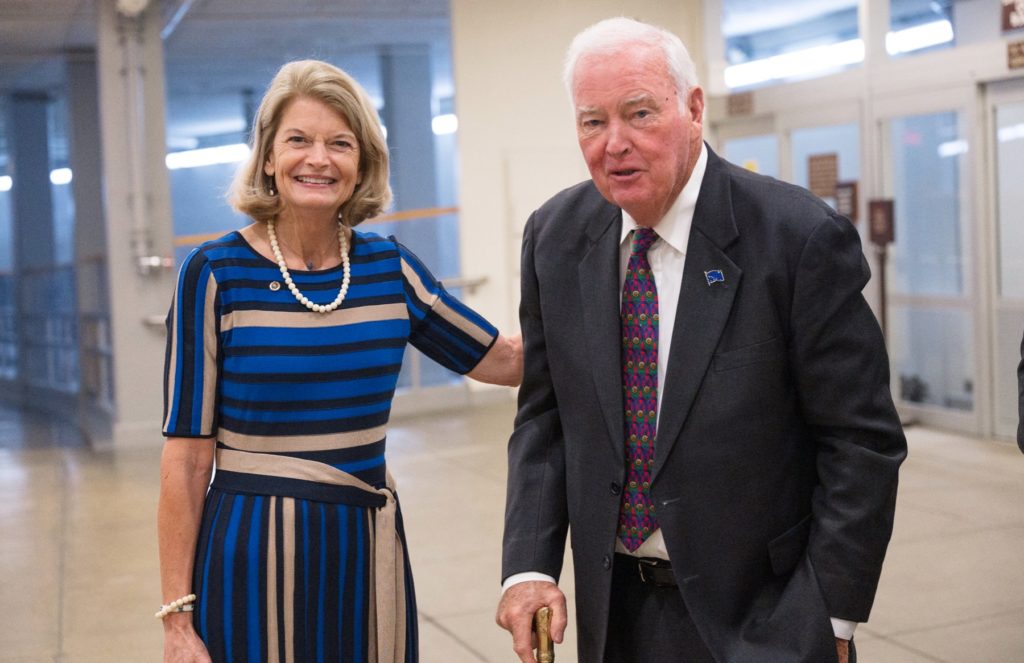
Sen. Lisa Murkowski, reelected in November to represent Alaska in the U.S. Senate, swore her oath of office today in Washington, D.C.
“I’m humbled to take the Oath of Office to continue representing the state I love, and ready to get back to work on Alaskans’ behalf. I thank Alaskans for their support and the trust they have placed in me, and will do my absolute best to represent all who live in the 49th state,” she wrote.
Sen. Lisa Murkowski and former Sen. and Gov. Frank Murkowski, who attended her swearing in ceremony in the nation’s capitol on Tuesday.
Murkowski was appointed by her father Sen. Frank Murkowski in 2002 to finish out the term for him, as he had been elected governor for Alaska. She has fended off competition ever since, including running a successful write-in campaign against Republican Party nominee Joe Miller in 2010.
A Republican, Murkowski benefitted from Ballot Measure 2, passed by voters in 2020, which enabled her to avoid a Republican primary. Although the Alaska Democratic Party advanced a candidate, many Democrats voted for Murkowski, as they have also done in her past elections.
Murkowski is 15th in seniority in the Senate and sixth among Republicans. She is expected to maintain her position as vice chair of the Indian Affairs Committee and as a senior member on the Appropriations Committee, as well as Energy and Natural Resources, and Health, Education, Labor, and Pensions Committees.
Sen. Frank Murkowski and many members of Lisa Murkowski’s family were present in the U.S. Capitol for her swearing in today.
Senate Democrats today voted for Washington’s Democratic Sen. Patty Murray as first woman to serve as Senate President Pro Tempore: The head of the Senate. She will probably chair the Senate Appropriations Committee.
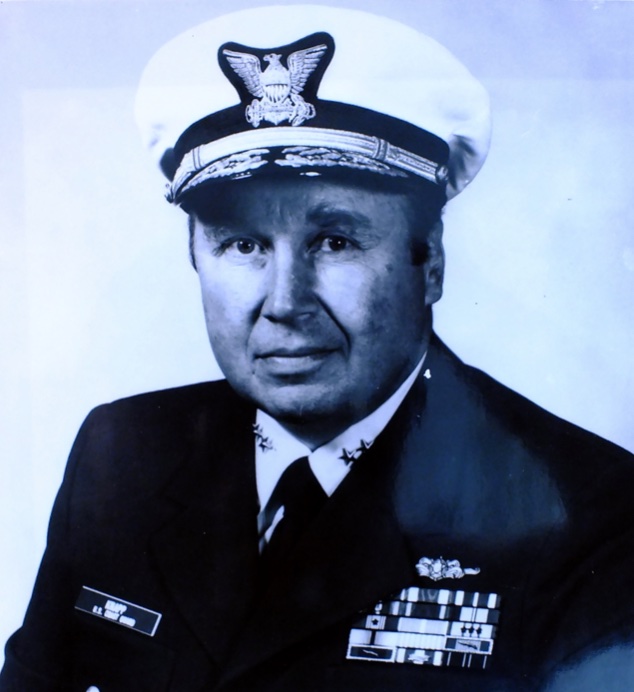
Richard Knapp, retired U.S. Coast Guard commander in Juneau and former Alaska Department of Transportation commissioner under Gov. Bill Sheffield, passed away on Jan. 2, 2023. He was 93 and had lived in Juneau since being assigned there by the Coast Guard in 1980.
Knapp was promoted to rear admiral in the Coast Guard in 1978. He served on six ships, for which he was the commander of four. He was promoted to commander of the 17th Coast Guard District in Southeast Alaska in 1980. Then, he was in command when a cruise ship caught fire in the Gulf of Alaska.
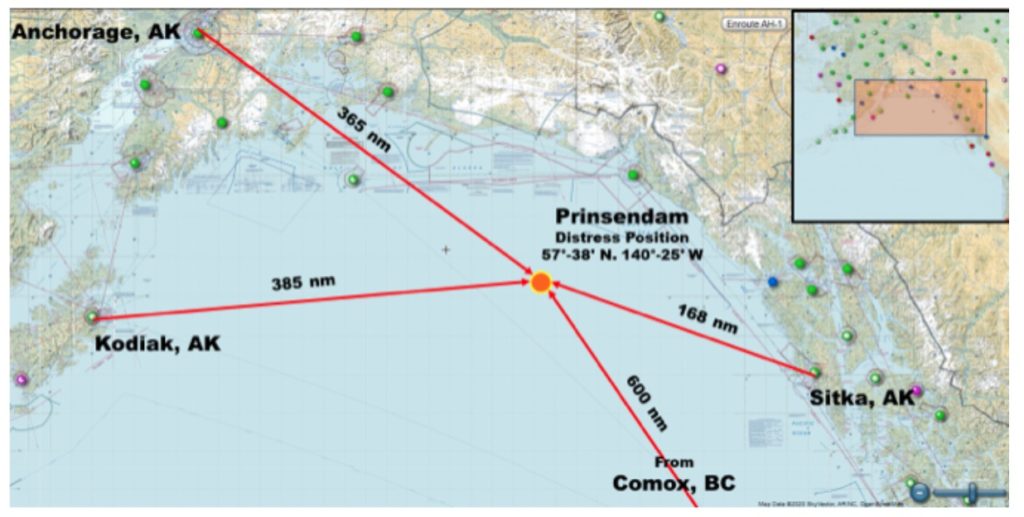
On Oct. 4, 1980, just after midnight, the Prinsendam, a Holland America Line cruise ship, with more than 500 passengers and crew on board, reported a fire in the engine room, and the ship was being abandoned. Passengers and crew got into lifeboats as the ship burned in the Gulf of Alaska. The Coast Guard, Air Force and Canadian and civilian rescuers coordinated to bring everyone to safety under harrowing circumstances. Many of the passengers were elderly tourists; in heavy 12- to 15-foot seas and stiff winds, they were lifted from the lifeboats by helicopter and taken to a nearby tanker, the Williamsburg, and others taken to Yakutat and Sitka. The ship was towed toward Seattle but eventually it sank in stormy seas.
A detailed recount of the dramatic rescue can be read at this link.
Knapp had also served as vice president of the Alaska Railroad Corporation, and was the senior vice president of Harbor Enterprises, Inc. He graduated from the U.S. Coast Guard Academy and from George Washington University, where he earned a masters degree in business administration. An oral history of Knapp’s life and times is at this link.
After his retirement in 1984, Knapp was involved in various civic callings, such as chairing a group that was pushing for a road to Juneau. He served on the Juneau Chamber of Commerce board and was appointed to the Marine Transportation Advisory Board by Gov. Sean Parnell.
In 2009, he was named Juneau Citizen of the Year by the Juneau Chamber of Commerce. Knapp was widowed in 2013, when his wife Pamela passed. He lived in West Juneau until recent years when he required more help and moved to a senior facility in Haines, where he was well cared for.
His friends in Juneau remained close to him throughout his life and in 2017 took him on a cruise with them through the Panama Canal. The ship’s captain was so impressed to have a retired Coast Guard commander on board, especially one who had commanded a Coast Guard ship through the canal in eras gone by, that he gave Knapp and his friends a private tour of the bridge.
Alaska’s only voice in the U.S. House of Representatives cast Alaska’s vote for election-denier Rep. Hakeem Jeffries, a radical Democrat from Queens, New York, for Speaker of the House.
Rep. Mary Peltola, a Democrat, joined all other Democrats in voting for Jeffries in a roll-call vote taken on Tuesday afternoon, during the opening session of the 118th Congress.
Update: During the historic second vote, Peltola stayed with the Democrats and voted for Jeffries again.
Democrats stuck together in their support for the big city radical leftist, with 212 voting for Jeffries, with Republicans giving 203 votes to GOP Rep. Kevin McCarthy.
A band of Republicans broke off from the main group of Republicans and voted for someone other than McCarthy, who is the elected nominee for Republicans. Of the 19 Republican defectors, 10 voted for Rep. Andy Biggs of Arizona, and 9 voted for others such as Rep. Jim Jordan.
Although Jeffries has more votes on the first ballot than McCarthy, he does not have enough to become speaker; he needs 218 votes and the House only has 212 Democrats, all of whom supported him. It’s unlikely there are enough Republicans to defect and elect the New York radical to lead the House. To win, a speaker must get the majority of votes of those present and voting.
Jeffries has become more radical during his five terms in Congress. He joined the Congressional Progressive Caucus and in 2019, and he was quickly selected as one of the House impeachment managers for the Democrats’ first attempt to remove former President Donald Trump. He became an acolyte of lead impeachment manager Rep. Adam Schiff.
Jeffries made the closing arguments before the U.S. Senate during the first impeachment trial, and said that acquitting Trump would be the “death blow” to the U.S. Constitution. Later, as Democrats tried to force a federal takeover of elections and prohibit voter ID laws, Jeffries called for the Senate to “detonate the filibuster” and said that voter ID laws are a “Jim Crow-era relic.” Jeffries has said that Republicans are a cult.
In 2016, Jeffries said the election of Trump was “illegitimate” because of Russian influence. Mainstream media covered for him, saying that he was not an election denier.
House Republican leader McCarthy is the the GOP conference’s nominee for Speaker. The House will now take a second vote. Meanwhile, Rep. Biggs has stated that McCarthy should withdraw his name. Rep. Jim Jordan has risen to renominate Kevin McCarthy for the House as a second vote is being queued up.
Expect this story to be superseded by quickly moving events in the House.